
Technologies
XR Is Going Mainstream. Does That Mean We’ll All Be Glasses Wearers Now?
«The time is now» for XR, says Google’s Rick Osterloh. Are you ready to buy in?
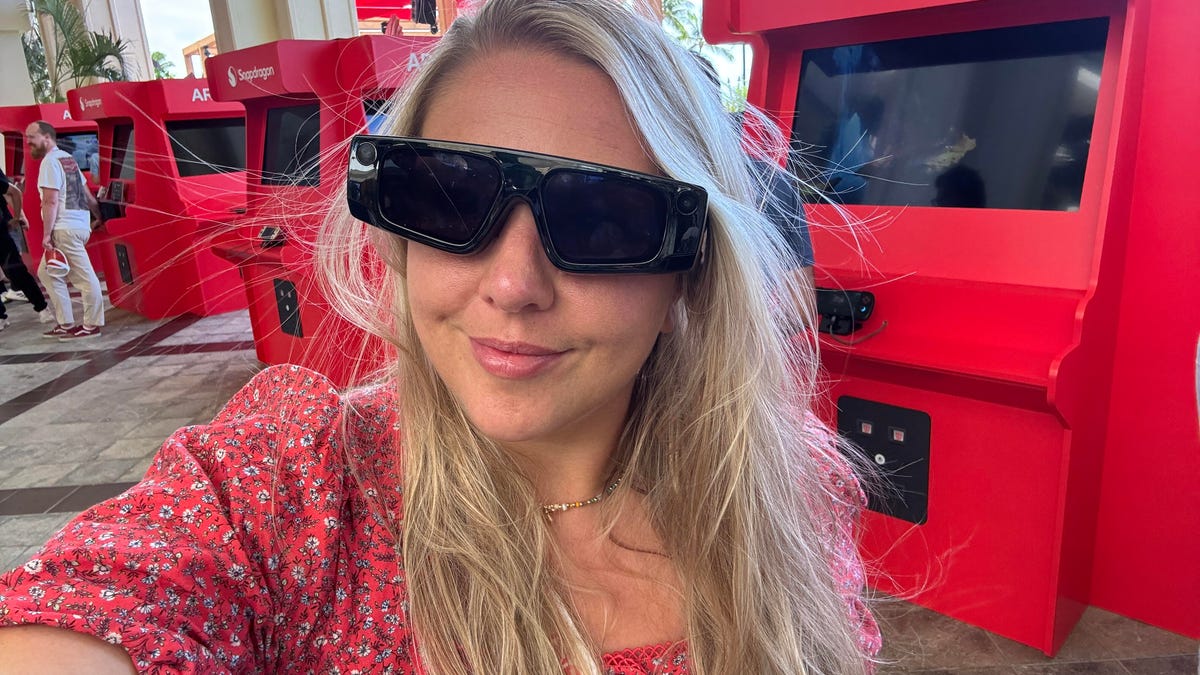
I’m standing in the lobby of a hotel in Hawaii, gazing into the glaring sun through the lens of Snap AR Spectacles and wondering if this is my future.
The glasses are an updated version of the ones I tried out last year at the Snapdragon Summit in Hawaii. Rather than playing with Moo Deng — a fun little novelty — I’m using them for things I do every day on my phone: Browsing the internet and scrolling through social videos.
Right here is evidence of Snap bringing productivity and genuinely useful features to its glasses, which are still a clunky developer version for now, before it eventually turns Spectacles into a bona fide consumer device. Like my colleague Scott Stein, who tried the Spectacles out several weeks ago, I’m most impressed with the AI-powered live translation feature. It allows me to see my conversation partner’s words translated into French subtitles in real time just below her face, making it easy for us to converse naturally without breaking eye contact.
To me, the progression is clear: The Spectacles seem to be growing up, taking themselves more seriously and finding their true purpose. This is part of a wider trend of XR devices (mixed reality), which feel as though they’re on the cusp of having a major mainstream breakthrough.
Trace the idea of XR back to its earliest days, and you will find clunky virtual reality headsets that were groundbreaking in their time and showed us a vision of wearable screens that ultimately didn’t lead to mainstream adoption. Even Apple’s much-hyped mixed-reality headset, the Vision Pro, has struggled to establish broad appeal beyond the pros and rich bros.
But many people in tech think we’re about to hit a watershed moment for XR.
«The time [for XR] is now,» said Rick Osterloh, SVP of devices and services at Google, speaking at the Snapdragon Summit. «The technology’s ready and a bunch of products are going to really change the user experience.»
Google has been working on XR products for a long time, said Osterloh, but the combination of underlying silicon, such as Qualcomm’s chips, and AI breakthroughs means the tech «is now ready to be able to create a new, brand new computing experience that’s really powerful.»
The concept of a breakthrough moment for XR doesn’t appear to be just wishful thinking either. Sales volumes of Meta’s Rayban glasses, also powered by Qualcomm, have increased more than 12x from the end of last year to now, Alex Katouzian, Qualcomm’s group general manager for mobile, compute and XR told me.
«It’s like massive amounts… the traction on it is really good,» he said. «And then the China customers are coming out with glasses, after glasses, after glasses. Xiaomi is doing a really good job.»
AI supercharging XR
Other than Snapdragon chips, there’s one technology that seems to be igniting the XR product category. «AI is breathing life into it,» said Katouzian.
As I discovered in my Snap Spectacles demo, AI can elevate an XR experience to make it feel truly immersive and seamless. The combination of sensors that could pick up my conversation partner’s speech and visualize where she was standing, along with the AI that could translate her speech, made me understand, perhaps for the first time in all my years of demoing this technology, why I might choose to wear smart glasses even though I’m not a glasses wearer.
Live translation has almost become a litmus test for consumer AI applications over the past year, including earlier this month, as Apple launched the AirPods Pro 3. It tackles an obvious communication challenge and is practical enough that people can easily take advantage of, said Dino Bekis, Qualcomm’s VP of wearables, in an interview.
XR and glasses, in particular, feel like a natural lens through which people can interact with AI, said Bekis. «It’s the same way we interface with the world,» he said. «It sees what you see. It can hear what you hear.»
For Bekis, XR’s breakthrough moment is due to a combination of factors — the quality of AI agent capability, connectivity and the ability to make very small power-sensitive devices.
«We’re just now getting to a point where embedded displays and all these things are starting to happen in a way that actually can translate into real, meaningful, personal devices,» he said. «It’s the beginning.»
But what if you’re like me: Hesitant about wearing glasses for comfort reasons? Bekis told me that we’re actually similar in this respect. It might feel unnatural for some people, he acknowledged, in which case they might opt out but choose to have other wearables instead that can still provide crucial sensor data that can contribute to an immersive AI experience.
People should choose the form factors that feel natural to them, he added. From there, it’s the job of the tech companies to make everything work together, regardless of which choices people make.
«It’s not just really about the glasses as much as [it’s] also about this collection of devices that you’re carrying around on your person on a regular basis — the ability for these different devices to interact, share some of this sensory information and then be able to then pull that together in an interesting way for you to digest,» he said.
The jury’s still out for me on whether I’d be willing to embrace XR by adopting glasses as so many people around the world seem to be doing. But in the meantime, I like the idea that XR could be something I dabble in for specific experiences, while I let my watch, my earbuds, my phone and whatever other wearable devices might emerge in the near future do the heavy lifting.
Technologies
Samsung’s Galaxy Watch Ultra 2 Might Come in 5G and 4G Cellular Models
If the rumor proves true, the 5G Galaxy Watch Ultra would rival the 5G-enabled $799 Apple Watch Ultra 3 that debuted last fall.
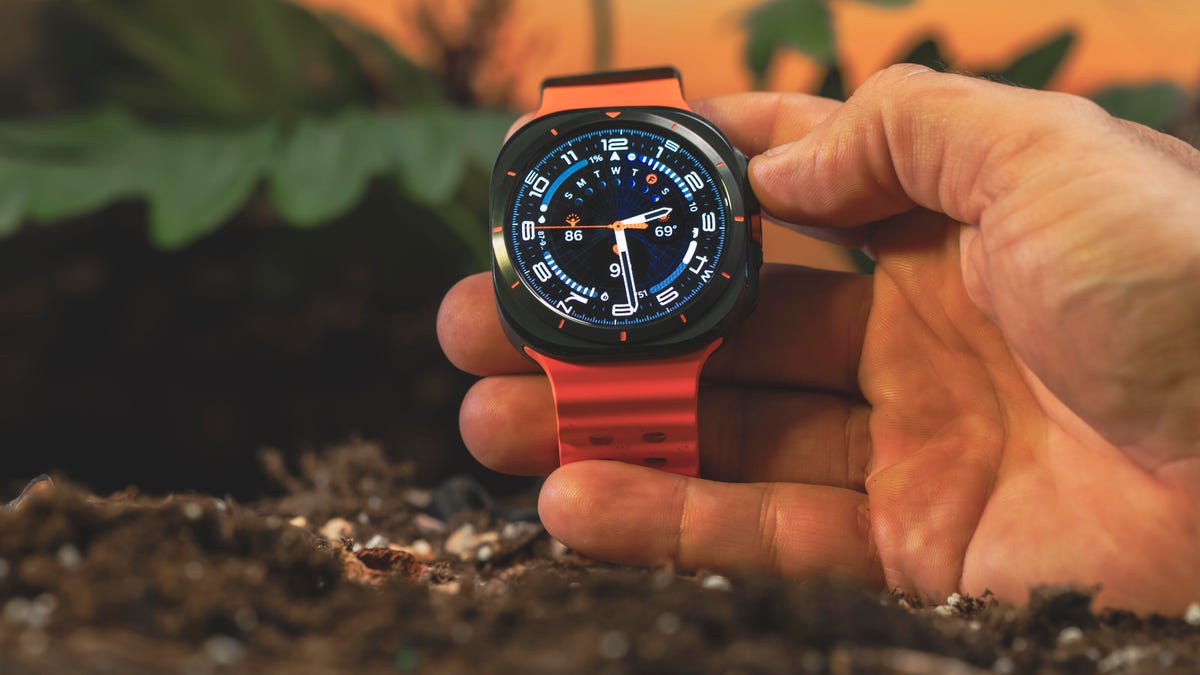
Samsung’s next high-end Galaxy Watch could support faster 5G speeds, but if this leak is true, it will depend on where you live. The rumored Samsung Galaxy Watch Ultra 2 might come in 5G and 4G cellular models, with availability for each smartwatch depending on the country.
According to the Dutch website Galaxy Club (and spotted by SamMobile), Samsung’s servers may have revealed a series of model numbers that point to 5G, 4G and Wi-Fi-enabled editions of the next Galaxy Watch Ultra, which would succeed the original model that debuted in 2024.
A representative for Samsung did not immediately respond to a request for comment.
The Galaxy Club website speculates that the 5G edition would be sold in the US and Korean markets, while the 4G edition would sell in the rest of the world. In the US, a 5G version of the Galaxy Watch Ultra would rival the 5G-enabled $799 Apple Watch Ultra 3, which debuted last fall. The 4G edition would have broader compatibility worldwide, since the earlier network is far more established.
It will likely be a few months until we hear anything official about the Galaxy Watch Ultra 2. Samsung typically unveils its new watches in the summer alongside its Galaxy Z Fold and Z Flip foldable phones. Last year, Samsung unveiled the Galaxy Watch 8 and the Galaxy Watch 8 Classic, but otherwise left the prior 2024 Ultra in the lineup for those looking for a larger 47mm smartwatch.
Technologies
2 Cases Show Supreme Court Isn’t Holding ISPs Responsible for Piracy
Technologies
Today’s NYT Connections Hints, Answers and Help for April 8, #1032
Here are some hints and the answers for the NYT Connections puzzle for April 8, No. 1032.
Looking for the most recent Connections answers? Click here for today’s Connections hints, as well as our daily answers and hints for The New York Times Mini Crossword, Wordle, Connections: Sports Edition and Strands puzzles.
Today’s NYT Connections puzzle is kind of tough. The purple category is a fun one, once you see the connection. Read on for clues and today’s Connections answers.
The Times has a Connections Bot, like the one for Wordle. Go there after you play to receive a numeric score and to have the program analyze your answers. Players who are registered with the Times Games section can now nerd out by following their progress, including the number of puzzles completed, win rate, number of times they nabbed a perfect score and their win streak.
Read more: Hints, Tips and Strategies to Help You Win at NYT Connections Every Time
Hints for today’s Connections groups
Here are four hints for the groupings in today’s Connections puzzle, ranked from the easiest yellow group to the tough (and sometimes bizarre) purple group.
Yellow group hint: In the group.
Green group hint: Appearance details.
Blue group hint: Often found in gyms.
Purple group hint: They help you see.
Answers for today’s Connections groups
Yellow group: Cohort member.
Green group: Aesthetic.
Blue group: Kinds of bar apparatuses.
Purple group: Eyewear in the singular.
Read more: Wordle Cheat Sheet: Here Are the Most Popular Letters Used in English Words
What are today’s Connections answers?
The yellow words in today’s Connections
The theme is cohort member. The four answers are associate, colleague, fellow and peer.
The green words in today’s Connections
The theme is aesthetic. The four answers are design, look, scheme and style.
The blue words in today’s Connections
The theme is kinds of bar apparatuses. The four answers are monkey, parallel, pull-up and uneven.
The purple words in today’s Connections
The theme is eyewear in the singular. The four answers are contact, goggle, shade and spectacle.
-
 Technologies3 года ago
Tech Companies Need to Be Held Accountable for Security, Experts Say
-
 Technologies3 года ago
Best Handheld Game Console in 2023
-
 Technologies3 года ago
Tighten Up Your VR Game With the Best Head Straps for Quest 2
-
 Technologies4 года ago
Black Friday 2021: The best deals on TVs, headphones, kitchenware, and more
-
 Technologies5 лет ago
Google to require vaccinations as Silicon Valley rethinks return-to-office policies
-
 Technologies5 лет ago
Verum, Wickr and Threema: next generation secured messengers
-
 Technologies4 года ago
Olivia Harlan Dekker for Verum Messenger
-
 Technologies4 года ago
The number of Сrypto Bank customers increased by 10% in five days