

Technologies
I Played Ghost of Yotei. It’s a Stunning Follow-Up That Proves the Ghost’s Legend Lives On
Review: The massive samurai epic expands on Ghost of Tsushima’s best ideas, creating a superior game.

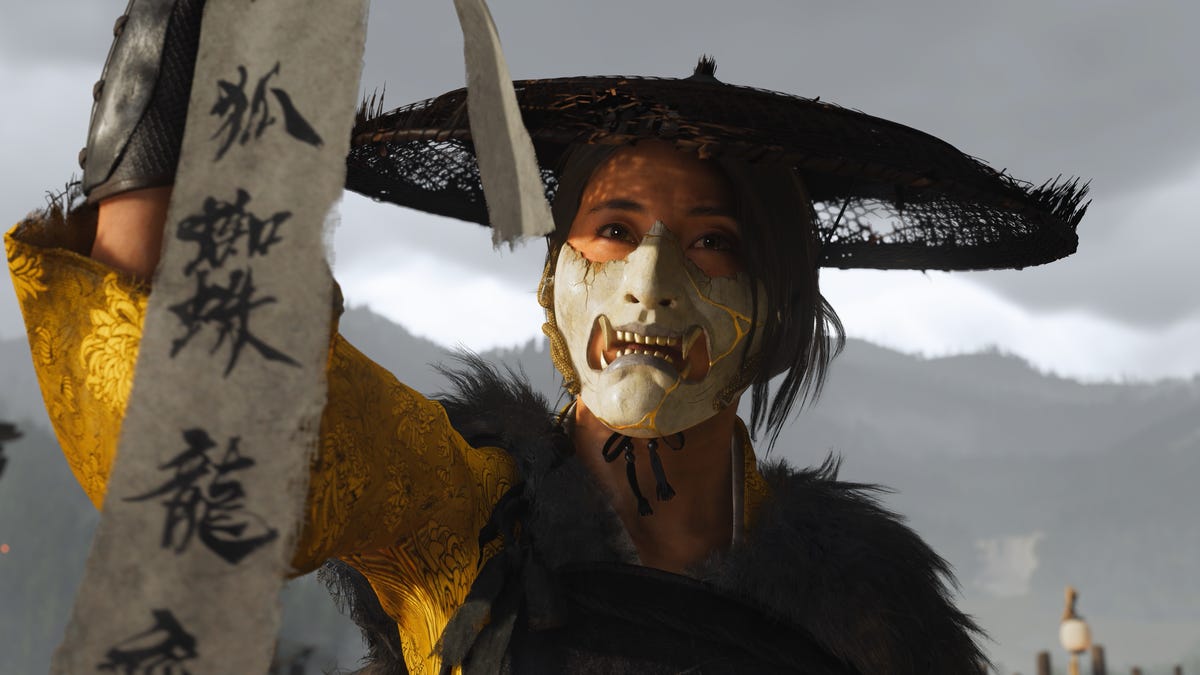
Ghost of Tsushima was the final hurrah for the PlayStation 4, released just four months before the PlayStation 5 arrived. Ghost of Yotei, its PS5-exclusive follow-up from developer Sucker Punch, expands on all the positives from the first game, addresses the few criticisms I had of Tsushima and lives up to all expectations. It’s a bigger world with a grander story, while giving you so much more to do.
Yotei takes place 300 years after the events of Tsushima in a different region of Japan, in Ezo, where Mount Yotei overlooks the land. The hero this time around is Atsu, a mercenary who participated in the Battle of Sekigahara and has returned to her homeland.
Atsu is on a revenge mission to take down the Yotei Six, a band of masked warriors who killed her family. What she finds out is that this roving band of samurai didn’t just come across her home and commit a random act of violence. Instead, it was destiny guiding them all to that one moment that would change the entire region.
Living the life of a Ghost
If you played Tsushima, you’ll feel right at home in Yotei but new players will pick things up fairly quickly, too.
Atsu begins with a katana but soon unlocks a range of melee and ranged weapons from traveling masters, each weapon suited to different foes. For example, dual blades excel at fast combos, the sickle-and-chain kusarigama can break shields and bombs, and bows can handle crowd control and range attacks. Switching tools midfight is often essential, making combat more strategic than in Tsushima.
Don’t miss any of our unbiased tech content and lab-based reviews. Add CNET as a preferred Google source on Chrome.
The enemies themselves will make use of Atsu’s different weapons, also, turning combat into a bit of a rock-paper-scissors match, trying to guess the best weapon for each scenario — something the different weapon masters help her learn. This leads to an improvement in the enemies themselves, as there’s more strategy when dealing with them. Yes, Atsu using a katana can defeat every enemy, but there are benefits to switching things up. Weapon changes are quite common with the tougher enemies and bosses, which again makes those fights more interesting.
To improve her arsenal, Atsu can gather upgrade components across the land and take them from enemies. With enough money and materials, she can upgrade her weapons, armor and the amount of ammo she can carry. Atsu’s armor, like her weapons, can be swapped depending on fighting style, with one armor more about reducing damage taken, another improving her bow attacks and one designed to improve her stealth attacks. There’s also a range of masks and headwear obtained from bosses and found throughout the region, but these are mainly for cosmetic purposes and don’t provide any benefits.
Straight out of a samurai film
Yotei’s world is far denser than Tsushima’s, with returning pursuits like bamboo cutting, hot springs and shrine exploration joined by new diversions such as painting nature scenes, learning shamisen songs to find new areas or gain other benefits, gambling mini-games and bounty hunts. Together, they create a map packed with meaningful activities instead of empty space.
The most notable addition is the wolves’ den. Atsu develops a bond with a wolf who just happens to have dens all over the region. Coming across one will begin a chase sequence where the wolf takes you to a camp where its friends have been captured. The two of you will take on the captors and, once cleared, Atsu will gain a point in the wolf skill tree that will trigger the wolf’s arrival in fights.
There’s a ton to do in Yotei, so it’s very easy to get distracted for hours instead of pursuing the main missions. This would contribute to the exceptionally long game time, where you can spend 10 to 15 hours in just the starting region of the game before even starting in the next area.
Another favorite side mission is the teachings of Takezo. Early on, Atsu will come across a tree with papers hanging from the branches that have names written on them. They look almost like decorations. This is where you meet Uegatsu, a storyteller who sings a tale about a legendary samurai in that region. His disciples are scattered across the land waiting for someone to give them a glorious fight, and each one has their own personality. I loved how cinematic the buildup to these one-on-one fights was. One particular warrior left dead bodies of his victims as a calling card, and Atsu has to use a special wind chime to find him in this cat-and-mouse-like sequence. Defeating all of Takezo’s disciples will bring him out of retirement and set up a tremendously difficult fight atop Mt. Yotei.
In the story, Yotei starts off with a fairly typical revenge plot, but what makes it interesting is the pacing. There’s this intense buildup when working your way to one of the Yotei Six, with the exception of the first member, Snake, whom Atsu fights in the tutorial. Each member played a role in the death of Atsu’s family, so you’re getting an understanding of them as well as Atsu’s story, and everything comes together piece by piece.
This is where the story excels over Ghost of Tsushima, which started off amazing, trailed off a bit and then had a very exciting climax. With Yotei, it’s not just about building up a legend but also about telling a compelling story. There’s so much that unravels the further into the game you get, not only about what happened that tragic night to Atsu and her family, but also about what led up to that moment and who her parents were.
Along with this epic story is this incredible cinematic presentation. Sucker Punch went all out with cutscenes done in the Cinemscope aspect ratio with black bars on the top and bottom to give them a more theatrical look. There are even additional presentation options based on legendary Japanese film directors. There’s a black-and-white filter for the look of an Akira Kurosawa movie, but for those who want a more grindhouse-type experience, there is a Takashi Miike filter. For those unfamiliar, Miike is notable for his horror movie Audition and Ichi the Killer, with the latter being more of the inspiration for the cinematic mode, as every attack will cover Atsu in blood to an almost ridiculous degree. There’s a third mode named after Shinichiro Watanabe, who directed the anime series Cowboy Bebop and Samurai Champloo, and it features a lo-fi beats soundtrack that adds some chill vibes while playing.
What I also really enjoyed were the big battles that Atsu can participate in. She’ll join up with Clan Matsumae, an army going up against Lord Saito, and its battles will sometimes come in handy and other times just get in Atsu’s way. At times, she’ll join their ranks, and it creates these cinematic moments where she charges into fights in a similar fashion to Kurosawa’s Seven Samurai. There’s one moment in particular where a big group jumps on their horses and charges into battle against Saito’s forces, and you’re not intended to take down all the enemies by yourself. It feels like an actual skirmish is going on. I loved it.
In general, Yotei is an improvement over Tsushima, although it keeps the same artistic look as the original. There are still these incredible fields of eye-popping colors to create a dream-like landscape. Playing it on a standard PS5, I didn’t experience much in the way of dropped frames or any lag. However, I did notice a couple of instances where the beautiful landscapes looked blocky from a distance, which tells me the system took an extra couple of seconds to load the proper assets for that area.
Voice acting was absolutely top-notch with the Japanese audio. There is so much dialogue that is acted so well, whether it be the main character or just the random groups of enemies taunting you. There were only a few instances where I could hear a bit of disjointed or unnatural delivery, but again, this was rare.
Even a legendary sword can have a rough edge
As a whole, I found just a few negatives throughout the game to be aware of. The first one is pretty common and likely could be easily fixed with a patch, and that’s enemy AI. There were so many fights where I’m surrounded by enemies, getting ready for them to attack, and they just didn’t. For instance, there is a terror effect Atsu can have on an enemy that will have them cower in fear when you’re dropping them left and right, but in a lot of instances, they just refused to attack. It’s at these moments that you have to continue attacking an enemy in hopes of getting them to drop their guard, and eventually, others will start attacking.
Aside from that AI problem, there was one puzzle that gave me a bit of trouble. For starters, the clues were vague, and I had to try some different solution combinations to get past it. In another part, I came across a small area where I fell through what I thought was solid ground. Also, standoffs, a reaction event where Atsu can defeat an enemy with one strike, didn’t trigger the option to take out an additional enemy like they were supposed to. I also had these annoying moments of angling Atsu’s placement just right to get in the correct proximity of a character to interact with them. However, those were the only things I could say were even noticeably off when playing through the game over 30-plus hours.
Is Ghost of Yotei worth playing?
Sucker Punch had the difficult task of improving on a game some might consider perfect. Not only did they complete the task, but made it look effortless with Ghost of Yotei. The game has all the same great elements that made the original so enjoyable, yet improved on practically every aspect with hardly any flaws.
Ghost of Yotei will be released on Oct. 2 for the PlayStation 5 for $70.
Technologies
Razer’s Wolverine V3 Pro 8K Controller Won’t Replace My Mouse and Keyboard, but Here’s Where It Shines
I applaud the absurdly high polling rate, six extra remappable buttons and TMR sticks, but let me tell you why I’m sticking with my keyboard and mouse for most games I play.
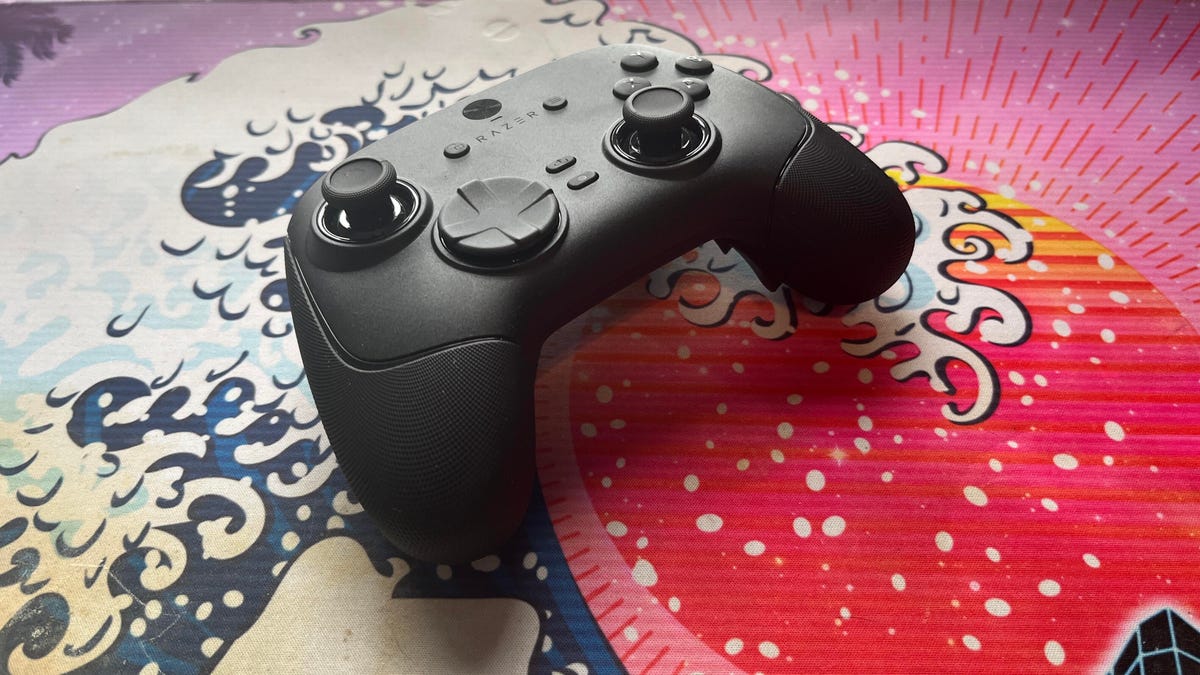
The Razer Wolverine V3 Pro 8K PC controller was not built for me, but admittedly, this has more to do with me as a gamer than the controller itself. I grew up playing the PlayStation 3 and PS4 consoles, cutting my teeth on slim, compact DualSense controllers. Over the past five years, I’ve gamed exclusively on my PC and have grown accustomed to the increased precision of a mouse and keyboard.
The Razer Wolverine V3 Pro 8K PC controller is the antithesis of a DualSense controller. It’s a chunky piece of hardware that might feel natural if you were raised on an Xbox and its bulky controllers, but it took me multiple gaming sessions to get acclimated to the sheer size of the Wolverine V3 and how it fit into my hands, especially since I don’t use a claw grip.
Size aside, this is a PC controller with every bell and whistle you can think of — and its price of $200 reflects that. The 8,000Hz polling rate ensures buttery smooth inputs with no lag, and tunnel magnetoresistance joysticks make every in-game movement feel fluid and calculated. Six extra remappable buttons help you up your game — they’re super handy for hero shooters like Marvel Rivals and hectic games like Battlefield 6. This is a premium product for gamers who are hoarding some serious hardware.
Its price is in line with other premium controllers. One of CNET’s best Xbox controllers is the Wolverine V3 Pro for Xbox, which also costs $200. Similar controllers like the Scuf Instinct Pro and Vitrix Pro BFG are in the same ballpark, pricewise, but the Wolverine V3 Pro 8K PC has a winning combination of competitive variables that make it feel exceptionally easy to use.
This controller is chock full of top-of-the-line technology and feels satisfying to use, but it needs to clear a high bar to feel truly worthwhile as a dedicated PC controller.
Chunky controller, satisfying feedback
When CNET’s Josh Goldman reviewed the Wolverine V3 Pro Xbox wireless controller, he called it «just about perfect.» If it isn’t broken, don’t fix it: Razer replicated many of its successes with the Wolverine V3 Pro PC controller.
The Wolverine V3 Pro 8K PC is the same size as the Wolverine V3 Pro Xbox controller, which is to say it’s a bit chunkier than a standard Xbox wireless controller, but it’s surprisingly much lighter than its Xbox cousin. It weighs just 220 grams, which is appreciably lighter than the Xbox version that weighs 304 grams. And while the Wolverine V3 Pro 8K PC is nowhere near as slim as a DualSense controller, it’s still much lighter than its Sony competitor — a stock DualSense controller weighs 280 grams.
Every button on this controller has a crisp, clean clickiness that scratches the same mental itch that a good mechanical keyboard might. Whether you’re gripping the trigger, pressing a button or squeezing one of the four remappable back paddles, you’ll hear incredibly satisfying auditory feedback that leaves no doubt that the controller is receiving your inputs. At one point, while I sat through a particularly long matchmaking queue, I found myself squeezing the triggers to entertain myself — the snappy pops were enough to keep me off TikTok.
The biggest difference between the V3 Pro Xbox and V3 Pro PC controllers is the variable polling rate — that dictates how often your controller is communicating with the computer. It’s like a refresh rate for your crosshair positioning.
The Wolverine V3 Pro Xbox just can’t compete here: That controller has a wired 1,000Hz polling rate for PC gameplay. The V3 Pro PC controller can be toggled for multiple polling rates, with an 8,000Hz maximum setting. This means the PC controller can report your input data eight times faster than the Xbox controller.
Every movement, turn and button press feels incredibly fluid. It’s safe to say that there’s no input lag with the Wolverine V3 PC controller, but I don’t think it matters too much for moment-to-moment first-person shooter gameplay. If you’re driving a car (or a tank) and you need to stop on a hairpin, you might appreciate Razer’s HyperPolling technology. If you’re not playing a tactical shooter like Counter-Strike or Rainbow Six: Siege, that 8,000Hz polling rate is overkill — if you’re a casual gamer crushing Call of Duty public lobbies with your pals, you’re probably not going to notice it in any of your firefights.
Better than a mouse and keyboard? That’s a little more complicated
I tested out the Wolverine V3 Pro 8K PC controller on Marvel Rivals, ARC Raiders and Battlefield 6 (my current first-person shooter obsession). It’s an extremely solid choice for at least two of these games, and I likely won’t be using my DualSense controller anytime soon.
I had a great time firing magic bolts in Marvel Rivals and rolling tanks through the streets of Cairo in Battlefield 6, but this is a controller that was supposedly designed for high-level shooter gameplay. I’m saddened to report that, when it comes to dominating a first-person shooter match or competing to survive in an extraction shooter, I’d much rather stick to a mouse and keyboard.
In close-range battles, I didn’t feel like the Wolverine controller particularly helped me gain an advantage over my opponents. Mouse-and-keyboard players were often able to lock onto me quicker, even with a high look sensitivity and built-in aim assist. And I felt outmaneuvered and outgunned by mouse-and-keyboard players in the fastest-paced fights. But the controller’s precision TMR thumbsticks made it easy to quickly lock my crosshairs onto enemies and mow them down from afar with light machine guns or sniper rifles in long-range battles.
I also find it useful for games like Battlefield that have a lot of buttons to micromanage during moment-to-moment gameplay. If you want to swap your fire mode from automatic to single-fire, mount your weapon’s bipod against a flat surface or pull out an invaluable class gadget, you’ll be reaching across your keyboard to do so. The six remappable buttons on the Wolverine V3 Pro 8K PC are great for these situations; I loved that I could tap fire my hulking light machine gun by gripping one of the controller’s back paddles.
The controller really shone for vehicle combat, though. I found myself gravitating toward my mouse and keyboard for infantry gunplay, but anytime I’d jump into a tank, I’d reach across my desk and grab the Wolverine again. Having pressure-sensitive triggers helps with any in-game driving: A slight squeeze lets me cautiously move forward, scanning for enemy mines, while fully pulling the trigger down helps me speed out of dangerous situations. Rebinding automatic repair jobs and weapon switches to the back paddles also helped me focus more on in-game combat, which helped me keep my armored vehicles in the fight for longer. With my DualSense controller, I’d have to awkwardly fumble with the D-Pad to activate my vehicle abilities. The Wolverine controller is the definitive way for a Battlefield tank enthusiast to play.
Outside of standard first-person shooter gameplay, I also found the Wolverine V3 PC controller to be handy for hero shooters — with some caveats. When I play Marvel Rivals, I mainly play tanks that require an extensive amount of ability usage but very little aim. Characters like Doctor Strange thrive when you can quickly string inputs together, and rebinding the controls to the Wolverine’s back paddles is great for that.
On the other hand, speedy divers that need to jump in and out of the enemy team’s backline and aim-intensive snipers feel tougher to play with the Wolverine controls, and I’d swap back to my mouse and keyboard whenever I wanted to switch off tank characters and fulfill another role for my team.
One game I don’t recommend the Wolverine V3 Pro PC for is ARC Raiders. While the remappable buttons make it easy to reach for healing items and grenades, losing out on the precision aim of a mouse and keyboard just isn’t worth it in a game where one death can set your progress back by several real-life hours. The controller lets me hold my own against killer ARC robots, but once real players join the mix, I’d rather use my tried-and-true PC hardware setup.
That’s not to say that the Wolverine controller is terrible for a tactical third-person shooter: The back paddles are a great way to quickly access any healing items, grenades and other consumables you’re carrying, which could be the difference between life and death. But when I have teammates depending on me to help them escape with their hard-earned loot, I just don’t trust the Wolverine controller to help me aim better than I can with my trusty mouse and keyboard.
For playing first-person shooters like Call of Duty or Apex Legends at breakneck speeds, the Wolverine V3 Pro 8K PC likely won’t replace your mouse and keyboard. But if your ideal competitive game centers on slower gunplay and long-range firefights, this is the most precise controller I’ve ever laid hands on (and you’ll receive a healthy heaping of help from aim assist to boot).
For the games I like to play, the Wolverine V3 Pro PC controller hasn’t become my primary gaming peripheral. Instead, it’s become a great situational swapout that complements my mouse and keyboard. As much as I like keeping it on deck for a long gaming session, $200 is a high price for a part-time controller.
Technologies
The Most Exciting Video Game Rumors and Leaks Ahead of 2026
Technologies
Today’s NYT Mini Crossword Answers for Wednesday, Dec. 17
Here are the answers for The New York Times Mini Crossword for Dec. 17.

Looking for the most recent Mini Crossword answer? Click here for today’s Mini Crossword hints, as well as our daily answers and hints for The New York Times Wordle, Strands, Connections and Connections: Sports Edition puzzles.
Need some help with today’s Mini Crossword? Read on. And if you could use some hints and guidance for daily solving, check out our Mini Crossword tips.
If you’re looking for today’s Wordle, Connections, Connections: Sports Edition and Strands answers, you can visit CNET’s NYT puzzle hints page.
Read more: Tips and Tricks for Solving The New York Times Mini Crossword
Let’s get to those Mini Crossword clues and answers.
Mini across clues and answers
1A clue: Nod (off)
Answer: DOZE
5A clue: Naval submarine in W.W. II
Answer: UBOAT
7A clue: Tricky thing to do on a busy highway
Answer: MERGE
8A clue: Heat-resistant glassware for cooking
Answer: PYREX
9A clue: Put into groups
Answer: SORT
Mini down clues and answers
1D clue: Break up with
Answer: DUMP
2D clue: Falls in line, so to speak
Answer: OBEYS
3D clue: Legendary vigilante who cuts a «Z» with his sword
Answer: ZORRO
4D clue: Rarin’ to go
Answer: EAGER
6D clue: Common reminder for an upcoming appointment
Answer: TEXT
Don’t miss any of our unbiased tech content and lab-based reviews. Add CNET as a preferred Google source.
-
 Technologies3 года ago
Tech Companies Need to Be Held Accountable for Security, Experts Say
-
 Technologies3 года ago
Best Handheld Game Console in 2023
-
 Technologies3 года ago
Tighten Up Your VR Game With the Best Head Straps for Quest 2
-
 Technologies4 года ago
Black Friday 2021: The best deals on TVs, headphones, kitchenware, and more
-
 Technologies4 года ago
Verum, Wickr and Threema: next generation secured messengers
-
 Technologies4 года ago
Google to require vaccinations as Silicon Valley rethinks return-to-office policies
-
 Technologies4 года ago
Olivia Harlan Dekker for Verum Messenger
-
 Technologies4 года ago
iPhone 13 event: How to watch Apple’s big announcement tomorrow


