
Technologies
The Next Digimon Game’s Deep Customization Could Be Catnip for Pokemon Breeders
Digimon Story Time Stranger is shaping up to be its own blend of complex RPG combat and monster growth.

I’m halfway through my 3-hour demo playing Digimon Story Time Stranger when I finally muster the courage to de-evolve one of my most powerful monsters. Why? So I can build them back up from level 1 to be even stronger — and grow them along a different evolutionary path. For casual players, this may sound excessive. For hardcore role-playing game fans keen on building their fighters to the peak of performance, these expansive possibilities are exactly what they’ve been waiting for.
Digimon Story Time Stranger, from publisher Bandai Namco due out Oct. 3, is the next game to explore the Digimon franchise. While Digimon’s digital world and quirky monster design have always given it a unique flavor, it’s always been in the shadow of Nintendo’s cultural colossus Pokemon, which reigns supreme in the monster-collecting RPG subgenre.
But Digimon Story Time Stranger introduces enough ways to alter and grow its monsters that it could step out on its own as a robust alternative to Pokemon. There’s a complex battle system for calculating weaknesses, myriad items to equip that give different attacks and a host of ways to build stats. All of that combines for a rich depth of combat with quality-of-life considerations that remove some tedium from the level-up grind.
Digimon Story Time Stranger’s plot feels like anime
Players will have plenty of time to dig into those complexities when playing through Digimon Story Time Stranger, which is set in modern-day Japan. Players take on the role of an agent of ADAMAS, an organization exploring anomalies, which generally means the appearances of digital lifeforms wandering into our world — the eponymous Digimon.
In my demo, I played through the first hour of the game in which my agent fought enemy monsters while exploring a walled-off section of the Shinjuku district of Tokyo. In the chaos of meeting a mysterious girl and being saved from a giant rampaging Digimon, my agent got sucked into the digital realm. That’s where you’ll find the game’s main conflict: a war between more benign monsters living in harmony and a bellicose faction of Digimon called the Titans.
In the full game, players will have to tour the digital realm and quell conflicts between the two sides in around a dozen areas, all while growing a fighting team. I got a tease of the machinations happening in the background as a cutscene revealed a few posh children (who may be more powerful than they appear) speaking about the war, suggesting they could be manipulating the greater conflict from afar.
Based on what I saw, the game’s story feels like an anime plot, and likely lasts dozens of hours. I didn’t play enough to speculate on where it’ll go, aside from leaning on familiar tropes like building friendships and turning enemies to allies, but I dug deeply into the gameplay enough to seriously recommend Pokemon players give Digimon Story Time Stranger a solid look.
Digimon Story Time Stranger’s deep systems should appeal to Pokemon diehards
While I’m more of a casual Pokemon fan, I know the fanbase has a core population of players who strive to breed, raise and train their monsters to their absolute limits of stats and power. They’re the fans I’m talking to when I say that Digimon Story Time Stranger has the complexity to give Pokemon a run for its money among the hardcore monster-training demographic.
First, there’s the turn-based combat. Digimon have a series of moves keyed to 11 elemental types — fire, water, earth, dark, light and so on. Use the right attack and it’ll get a damage boost, perhaps to 200%. Each Digimon also has a digital identity, mainly split along three types: data, which are weak to viruses, which are weak to vaccines, which are weak to data, in a rock-paper-scissors sort of cycle. If you combine these with the right attack from the right kind of Digimon type, you can boost damage up to 300% — and beyond.
Thankfully, the game has several ways it eases the rougher parts of this complexity. You can use items or switch Digimon without using a turn. Your agent character also has powerful Cross Arts with varying effects like dealing damage or boosting your monsters’ defense and attack. When you’re out of battles, you can just stand still for a moment to recover your Digimon team’s health and special attack energy, with no need to waste items. And you can even ride some Digimon to travel faster.
But growing your Digimon is a whole other level of complexity that gives hardcore players a lot of options. First and foremost are the evolutions («digivolutions» in the game’s parlance): When your Digimon satisfies certain requirements, like having high enough stats, you can transform them into a more powerful monster. While Digimon’s eclectic creature design means you could be evolving, say, a fluffy mammal into a battle tank, there’s no denying how much more effective that stronger monster will be.
You can also go the other way, de-evolving them back to their base form in order to transform them during a second evolution that may learn different attacks or have other advantages. With four tiers of forms and multiple options at each, there’s a lot of ways to transition the same monster up and down the evolutionary tree.
You’ll want to stick with the same monsters, too. The more they fight for you, the stronger their bond will be, allowing them to keep stat bonuses even when evolving or de-evolving. This is complicated by the way you get Digimon in the first place: Defeat enough of the same monster in the field and you’ll be able to generate one of your own. But you may want to hold off, as defeating twice as many means you’ll be able to produce one with an even higher level cap (from 20 to 25, say) and more maximum stats. You may be torn between a monster you caught earlier and one you can generate later that’s more powerful.
Complicating this even further are personalities, affecting which stats grow faster when leveling up. These can be viewed on a 4×4 grid on a Digimon’s status screen, and certain items can shift their personality.
The consequence of de-evolving your favorite monsters is that they’ll drop to level one, keeping only the stats bonuses from your bond with them. But you can stow them in a Digifarm to have them passively level up as you go about your adventures, returning them to fighting potency over time.
These are just the basics of Digimon Story Time Stranger that I got to see in a few hours of playtime, and while the game’s differences from Pokemon may be a bit jarring to fans of that franchise, its depth should be tantalizing to the monster trainers out there. Since the next Digimon comes out Oct. 3, that gives folks two weeks to try it out before the upcoming Pokemon Legends: Z-A is released on Oct. 16.
Digimon Story Time Stranger will be released on Oct. 3 for PC, PS5 and Xbox Series X/S.
Technologies
Google’s Pixel 10A Is Coming to Japan With an Exclusive Blue Edition and Special Wallpaper
This model comes with creatively designed stickers and a special look for Pixel’s 10th anniversary.
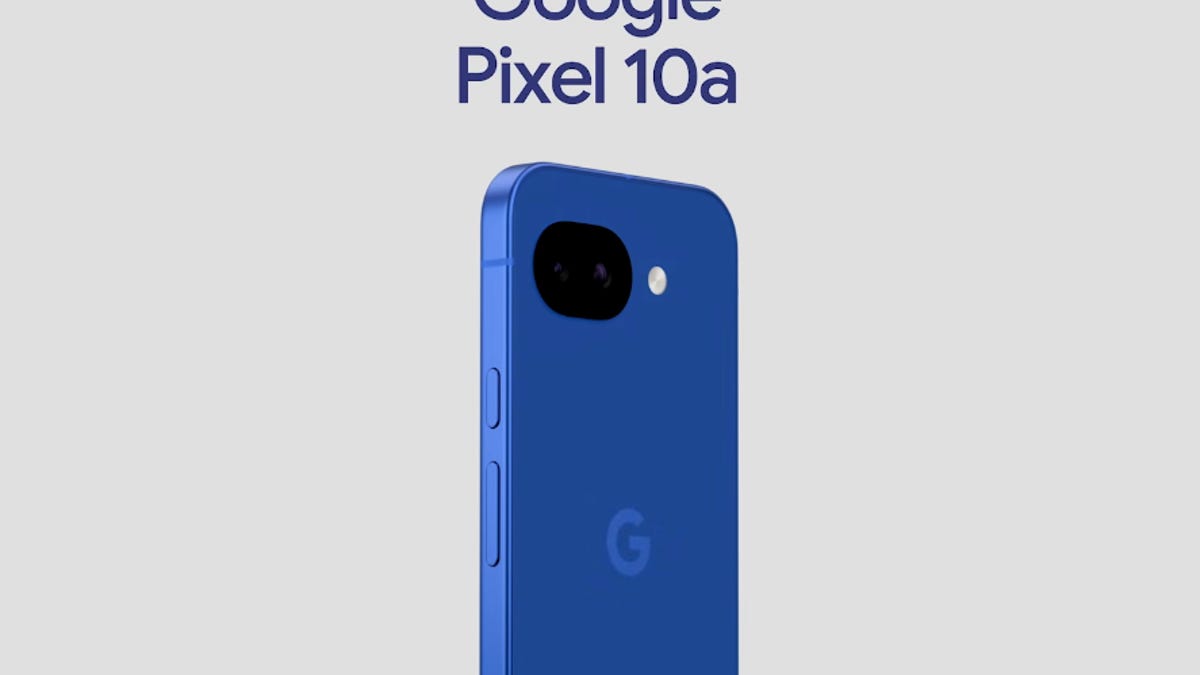
Don’t be blue: Google is releasing an Isai blue edition of the Pixel 10A to celebrate the Android phone line’s 10th anniversary, setting it apart with its own sticker set, specialized wallpaper and custom icons. But it’ll only be available in Japan.
Announced Tuesday on the Google Japan blog, the Isai blue Pixel 10A has a dark blue look and includes bonus decorations designed in collaboration with Japan’s Heralbony art company. These include an exclusive bumper case and stickers for customization.
This edition of the Pixel 10A will arrive in Japan on May 20, following the April 14 release of the Pixel 10A in its original colors of lavender, berry, fog and obsidian. The Isai blue model costs 94,900 yen, which roughly translates to $595, and includes 256GB of storage.
This makes it slightly less expensive than the US model’s 256GB edition, but it comes with a number of fun extras at no additional cost.
Google’s creation of a country-specific model for Japan may also reflect strong sales in that market. In 2023, the IDC analytics firm (via 9to5Google) reported that the Pixel 7 series accounted for 10.7% of the country’s market share, a 527% increase from 2022.
Technologies
Can’t Wait for New Emoji? Here’s How to Create Your Own on iPhone
Apple Intelligence-enabled iPhones can create custom emoji in a few easy steps.
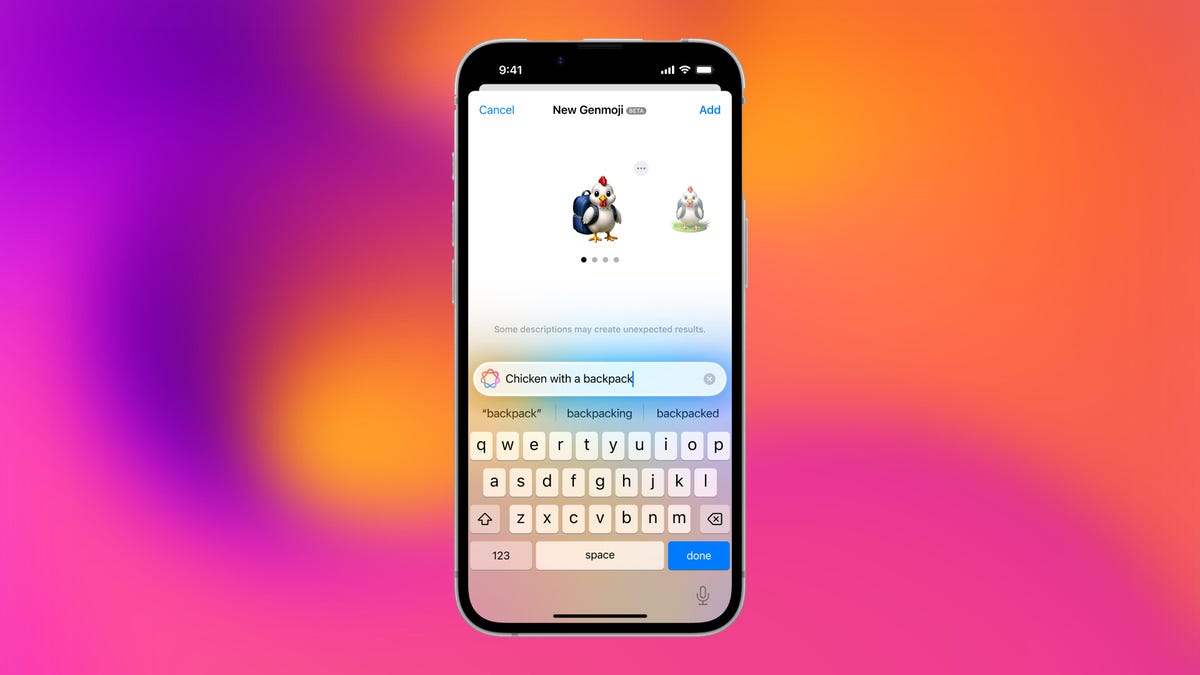
Apple brought new emoji to all iPhones when the company released iOS 26.4 on March 24. The new emoji include «» orca, «» distorted face and «» hairy creature — or as we might normally call it, Sasquatch. According to Emojipedia, there are 3,953 emoji with more on the way, including a pickle. But there’s no emoji for a dog wearing pajamas, a plate with burgers and fries and many other things. But if you have Genmoji on your iPhone you can create these emoji and many more.
Apple released iOS 18.2 in 2024 and the company introduced its own emoji generator, called Genmoji, to Apple Intelligence-capable iPhones at that time. The Unicode Standard, a universal character encoding standard, is responsible for creating new emoji, and approved emoji are added to all devices once a year. With Genmoji, you don’t have to wait for new emoji to appear on your iPhone each year. You can just create them as you need them.
Read on to learn how to use Genmoji on iPhone to create your own custom emoji. Just note that only iPhones with Apple Intelligence, like the iPhone 17 lineup, can use Genmoji at this time.
Note: The new emoji may not display correctly for Apple users whose devices aren’t on a 26.4 software version.
How to make custom emoji
1. Open Messages and go into a chat.
2. Tap the plus (+) button next to your text box.
3. Tap Genmoji.
You can then type a description of an emoji into the text box near the bottom of your screen and tap the check mark on your keyboard to enter that description into Genmoji. You can also tap different suggestions and themes that are right above the text box. And with iOS 26 or later, you can also combine and use emoji to create others rather than describing a new emoji or using suggestions.
Your iPhone will generate a series of new emoji for you to pick from according to your description, and you can swipe through these new emoji. When you find the one you want, tap Add in the top right corner of your screen and the new emoji will be available to use as an emoji, tapback or a sticker. Now you don’t have to wait for the Unicode Standard to propose, create and bring new emoji to devices.
For more iOS news, here’s what to know about iOS 26.4 and iOS 26.3. You can also check out our iOS 26 cheat sheet for other tips and tricks.
Technologies
Save Over 20% on This Handy 10,000-mAh Anker Nano Power Bank
Keep your devices charged on the go with this Anker Nano power bank, now down to just $46.
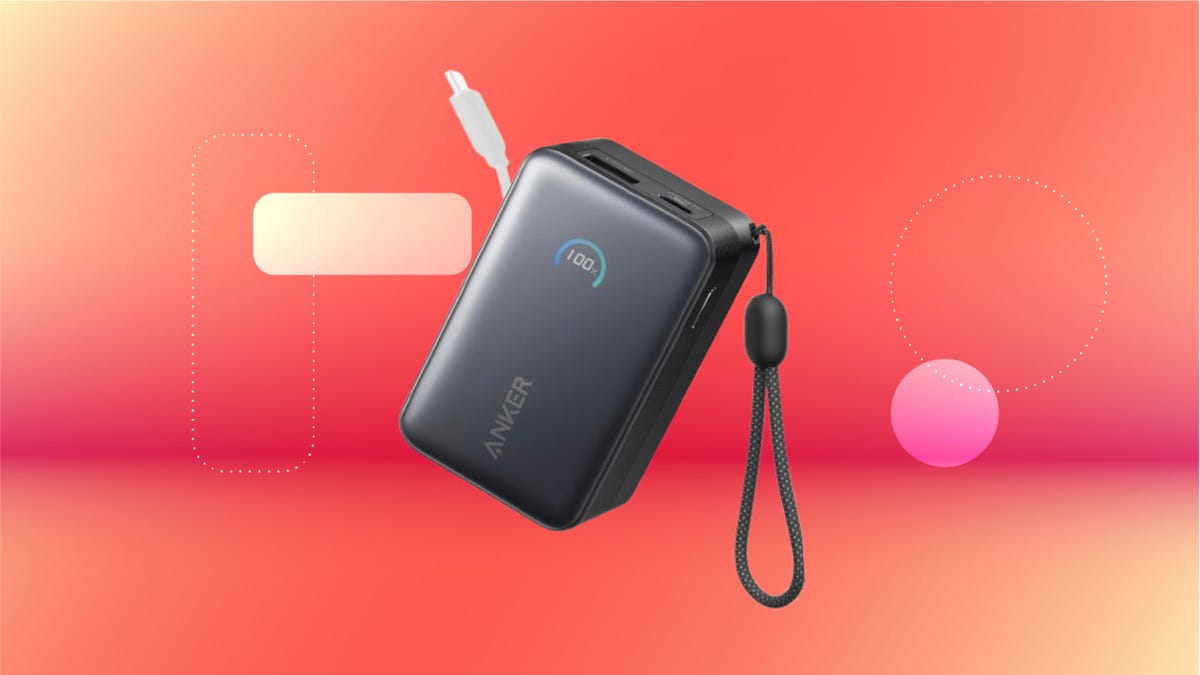
We’ve just spotted the Anker Nano 45-watt portable power bank for just $46 at Amazon right now. This saves you $14 — a 23% discount on its list price. Though it’s $6 more than the lowest-ever price we saw during Black Friday, it’s still a solid discount when you take the rising cost of tech accessories into account. It also matches the lowest price we’ve seen in 2026. It comes in four colors: black, green, pink and white. They’re all on sale for the same price.
This Anker Nano portable charger weighs approximately 8.2 ounces and measures a compact 3.21×1.99×1.42 inches. Despite its small size, it has a retractable cable and supports fast charging in compatible Apple, Samsung, Google Pixel and other smartphones. It also has a large 10,000-mAh capacity and a smart display so you always know how much juice is left in your power bank.
The Nano can charge an iPhone 17 to up to 50% battery in an estimated 20 minutes, and is powerful enough to charge tablets and laptops. Need to charge your devices while charging your power bank? You can do so safely thanks to pass-through charging so you’ll never have to go without battery life.
We’ve also compiled a list of the best power banks for iPhones and for Android, in case this deal isn’t quite a fit for you.
Why this deal matters
If you travel, have a long commute time or are otherwise always on the go, a portable charger can help you keep your devices fully powered. This 45-watt Anker Nano power bank is compact, includes a loop that lets you keep track of it easily and has a built-in cable so you don’t have to keep up with extra cords. Amazon’s $14 discount makes this a solid deal for anyone looking for a compact power bank.
-
 Technologies3 года ago
Tech Companies Need to Be Held Accountable for Security, Experts Say
-
 Technologies3 года ago
Best Handheld Game Console in 2023
-
 Technologies3 года ago
Tighten Up Your VR Game With the Best Head Straps for Quest 2
-
 Technologies4 года ago
Black Friday 2021: The best deals on TVs, headphones, kitchenware, and more
-
 Technologies5 лет ago
Google to require vaccinations as Silicon Valley rethinks return-to-office policies
-
 Technologies5 лет ago
Verum, Wickr and Threema: next generation secured messengers
-
 Technologies4 года ago
Olivia Harlan Dekker for Verum Messenger
-
 Technologies4 года ago
The number of Сrypto Bank customers increased by 10% in five days