
Technologies
Final Fantasy Tactics: Ivalice Chronicles Director Says ‘That’ Boss Fight Still Wrecks Him
You’re not the only one who struggled against Wiegraf.
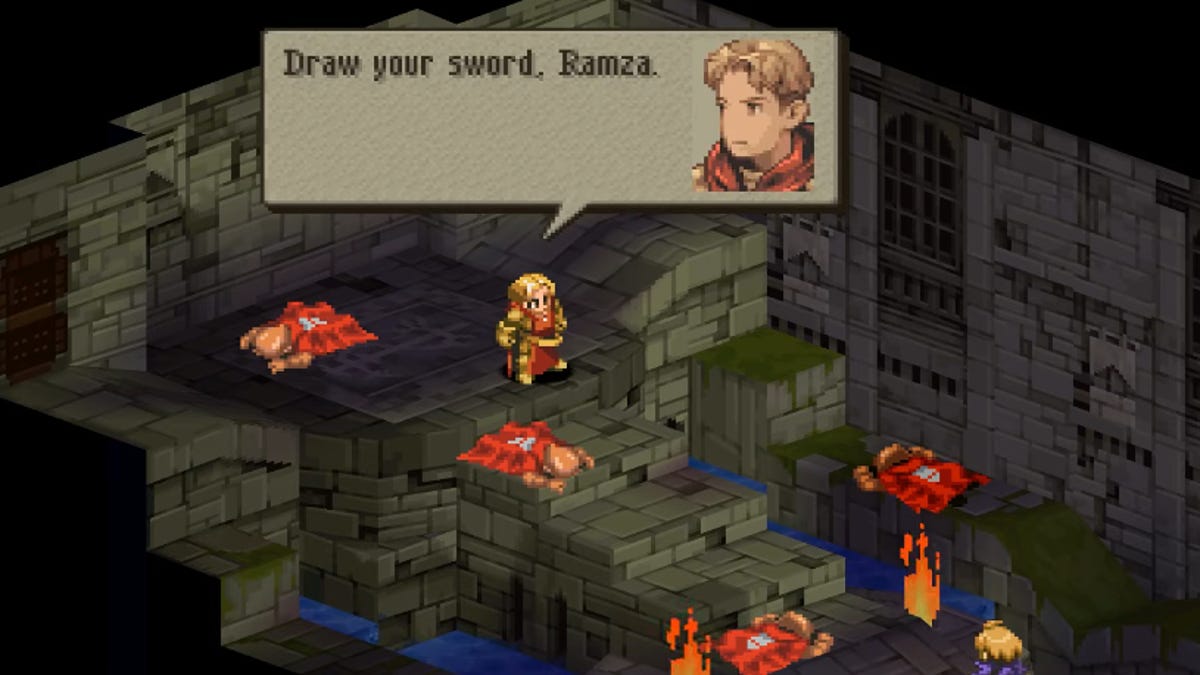
Last week was the first time I picked up Final Fantasy Tactics since finishing it back in 1998. One infamous boss battle scarred me so badly that I never went back — and given its reputation among fans, I know I’m not alone. So when I had the chance to talk with Kazutoyo Maehiro, part of the original dev team and now director of the upcoming remaster, Final Fantasy Tactics: Ivalice Chronicles, I jumped at it. I needed to know why they made that one fight so brutal.
My question for Maehiro: «Back then — 28 years ago — what was the original team even thinking with this fight?»
He laughed, as did the Square Enix PR team and interpreter in the room, clearly familiar with this question. Though it isn’t his favorite or the hardest fight — that honor goes to the Zeirchele Falls battle, a plot turning point that frustrated countless players with its early difficulty spike — the infamous fight I asked about looms far larger in players’ memories.
Arriving late in Chapter 3, the battle unfolds as two back-to-back encounters that form a brutal marathon. First up is a one-on-one duel between Ramza, the player’s protagonist, and Wiegraf, a recurring antagonist. Without careful preparation, this fight alone can feel impossible. After defeating him, players immediately battle Belias, the demon possessing Wiegraf, alongside his summoned monsters. For many, this moment is where their Tactics playthrough ended.
«At the time, having a battle that’s difficult for the sake of being difficult wasn’t necessarily seen as the correct thing to do,» Maehiro said through his interpreter. «In a way, it wasn’t necessary that we were trying to intentionally make it that difficult. It’s more so that it ended up being that way. And in retrospect, when I look back, I do think that the decision to make that battle as difficult as it was was the correct one.»
The new Final Fantasy Tactics: Ivalice Chronicles is a remaster of the original PlayStation game, which launched in 1998 in the US (1997 in Japan) following the blockbuster Final Fantasy VII. Unlike the main series, Tactics embraced the tactical RPG format popularized by Sega’s Shining Force and Nintendo’s Fire Emblem, requiring players to think carefully about unit positioning, abilities and turn order. Mistakes could wipe out your party quickly, a design choice that cemented the game as both beloved and intimidating.
The remaster lightly updates the game’s visuals, including its iconic character sprites and polygonal environments, while focusing on enriching other elements, such as adding fully voiced dialogue. Even minor enemies get voice lines, adding cinematic flair. The accents feel a bit theatrical, as if they’re voicing scenes from Game of Thrones, but they suit the game’s dark narrative of betrayal and political intrigue. Ramza’s journey through a war-torn kingdom was mature storytelling that I didn’t fully appreciate at 19 years old, but it resonates much more strongly now.
The most striking upgrades are «quality of life» improvements. Battles and dialogue can now be sped up with a fast-forward button — a godsend for a game known for its slow pace. My time with the preview was short, as it only included the first few battles of the game. It ended at the Dorter Trade City fight, the game’s first truly challenging battle, introducing new enemy types and set on a map filled with structures of varying heights.
Dorter Trade City is a pivotal introduction to a key element of the game’s combat. The vertical position of a character can be both beneficial and harmful: They can easily attack enemies farther away from a higher vantage point, but at that height, an enemy attack pushing them over the edge could mean instant death. A key disadvantage for players in the original and the remaster is that the computer-controlled opponents know all the pros and cons of certain heights, while the player has to learn on the fly. What I played in my preview felt true to the original game, especially that familiar crushing feeling of losing a battle due to misplayed moves.
Maehiro emphasized that players struggling with battles like these in the new Ivalice Chronicles now have options. Difficulty can be lowered and fights can be restarted instantly or abandoned entirely, making the game more accessible without losing its core challenge.
As mentioned earlier, Maehiro was on the original FF Tactics team as an evnt planner, responsible for directing scripted events such as character movement and animations during story sequences. At the time, he was a new developer, and now, years later, he can look back at his younger self — full of hunger and determination.
ç»I would feel very disappointed if I were to let down my past original team members,» he said. «In that sense, I really couldn’t let this project fail, and I felt some pressure from that as well. Looking through the archival material that exists in the past as well, it helped me reflect on my time over the past 28 years as a game designer. Having been able to come back to Final Fantasy Tactics after all that does make my chest swell with pride.»
Since the original Final Fantasy Tactics, Maehiro has worked on major Square Enix projects, including Vagrant Story, Final Fantasy XII and the MMORPG Final Fantasy XIV: A Realm Reborn, eventually becoming creative director for 2023’s Final Fantasy XVI. But his connection to Tactics remains personal, especially when it comes to character jobs, a system that defined its depth and replayability, enabling players to customize their units with a dizzying array of options.
With over 20 jobs players assign to their characters, ranging from staples like Knight and Archer to unconventional picks like Calculator and Time Mage, Maehiro has his favorites. For efficiency, he prefers the Ninja, who can dual-wield weapons and throw items for big damage. For pure fun, though, he loves the Orator (originally called Mediator), a talking-based magic class capable of recruiting enemies, boosting allies or intimidating foes. It’s a fitting choice for a designer whose career has been built on strategy and storytelling.
Will I play Ivalice Chronicles and return to the game that left a mark on me almost three decades ago? Yes, but I’m going to make use of every QoL feature available to avoid spending days trying to defeat Wiegraf. I’m no longer a college kid wasting time to avoid studying; I’m an adult now, wasting time between writing assignments.
Final Fantasy Tactics: Ivalice Chronicles comes out on Sept. 30 for $50 on the Nintendo Switch, Switch 2, PC, PS4, PS5 and Xbox Series X and S.
Technologies
Google’s Pixel 10A Is Coming to Japan With an Exclusive Blue Edition and Special Wallpaper
This model comes with creatively designed stickers and a special look for Pixel’s 10th anniversary.
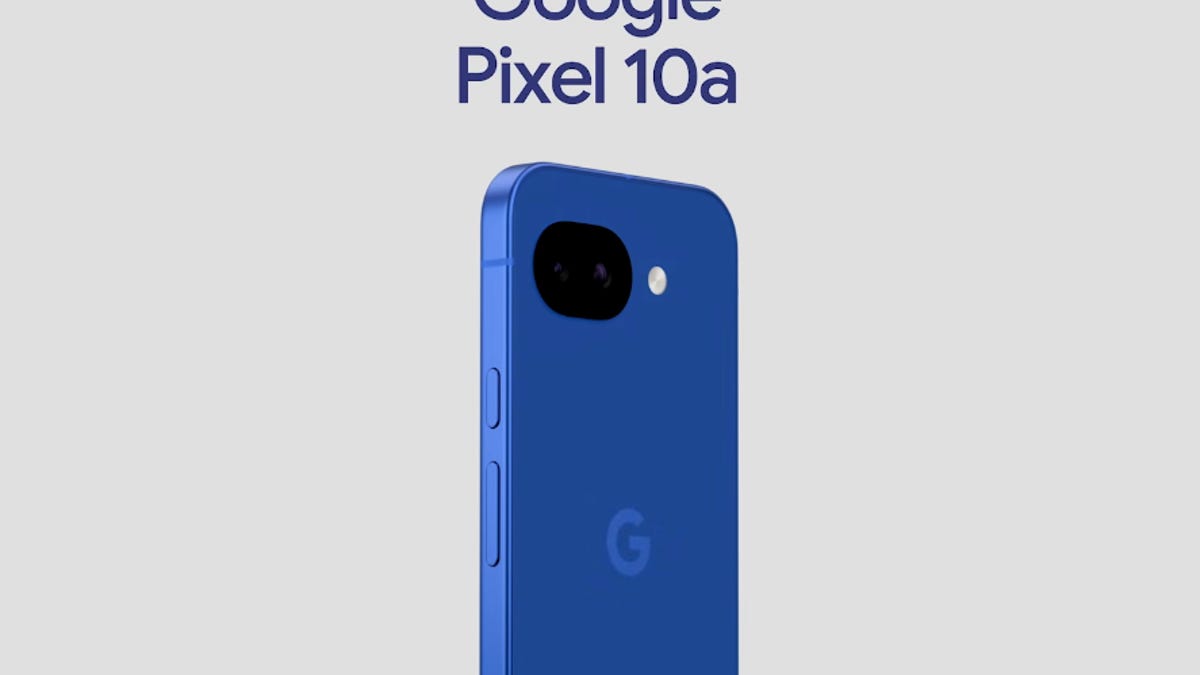
Don’t be blue: Google is releasing an Isai blue edition of the Pixel 10A to celebrate the Android phone line’s 10th anniversary, setting it apart with its own sticker set, specialized wallpaper and custom icons. But it’ll only be available in Japan.
Announced Tuesday on the Google Japan blog, the Isai blue Pixel 10A has a dark blue look and includes bonus decorations designed in collaboration with Japan’s Heralbony art company. These include an exclusive bumper case and stickers for customization.
This edition of the Pixel 10A will arrive in Japan on May 20, following the April 14 release of the Pixel 10A in its original colors of lavender, berry, fog and obsidian. The Isai blue model costs 94,900 yen, which roughly translates to $595, and includes 256GB of storage.
This makes it slightly less expensive than the US model’s 256GB edition, but it comes with a number of fun extras at no additional cost.
Google’s creation of a country-specific model for Japan may also reflect strong sales in that market. In 2023, the IDC analytics firm (via 9to5Google) reported that the Pixel 7 series accounted for 10.7% of the country’s market share, a 527% increase from 2022.
Technologies
Can’t Wait for New Emoji? Here’s How to Create Your Own on iPhone
Apple Intelligence-enabled iPhones can create custom emoji in a few easy steps.
Apple brought new emoji to all iPhones when the company released iOS 26.4 on March 24. The new emoji include «» orca, «» distorted face and «» hairy creature — or as we might normally call it, Sasquatch. According to Emojipedia, there are 3,953 emoji with more on the way, including a pickle. But there’s no emoji for a dog wearing pajamas, a plate with burgers and fries and many other things. But if you have Genmoji on your iPhone you can create these emoji and many more.
Apple released iOS 18.2 in 2024 and the company introduced its own emoji generator, called Genmoji, to Apple Intelligence-capable iPhones at that time. The Unicode Standard, a universal character encoding standard, is responsible for creating new emoji, and approved emoji are added to all devices once a year. With Genmoji, you don’t have to wait for new emoji to appear on your iPhone each year. You can just create them as you need them.
Read on to learn how to use Genmoji on iPhone to create your own custom emoji. Just note that only iPhones with Apple Intelligence, like the iPhone 17 lineup, can use Genmoji at this time.
Note: The new emoji may not display correctly for Apple users whose devices aren’t on a 26.4 software version.
How to make custom emoji
1. Open Messages and go into a chat.
2. Tap the plus (+) button next to your text box.
3. Tap Genmoji.
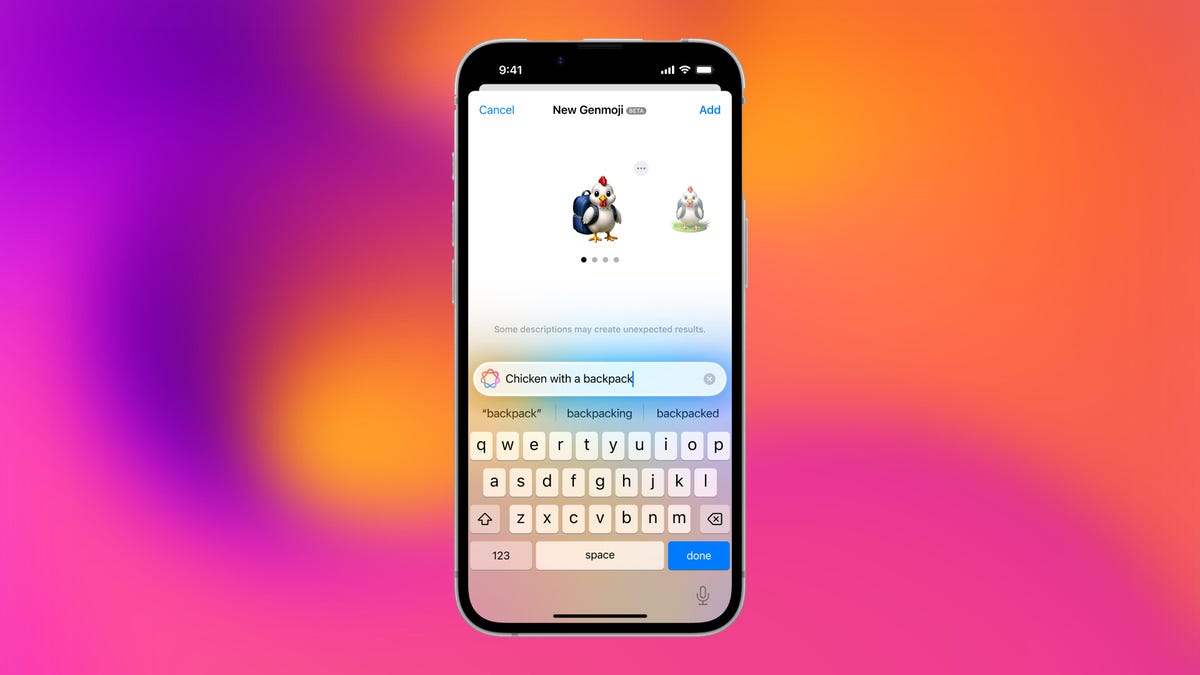
You can then type a description of an emoji into the text box near the bottom of your screen and tap the check mark on your keyboard to enter that description into Genmoji. You can also tap different suggestions and themes that are right above the text box. And with iOS 26 or later, you can also combine and use emoji to create others rather than describing a new emoji or using suggestions.
Your iPhone will generate a series of new emoji for you to pick from according to your description, and you can swipe through these new emoji. When you find the one you want, tap Add in the top right corner of your screen and the new emoji will be available to use as an emoji, tapback or a sticker. Now you don’t have to wait for the Unicode Standard to propose, create and bring new emoji to devices.
For more iOS news, here’s what to know about iOS 26.4 and iOS 26.3. You can also check out our iOS 26 cheat sheet for other tips and tricks.
Technologies
Save Over 20% on This Handy 10,000-mAh Anker Nano Power Bank
Keep your devices charged on the go with this Anker Nano power bank, now down to just $46.
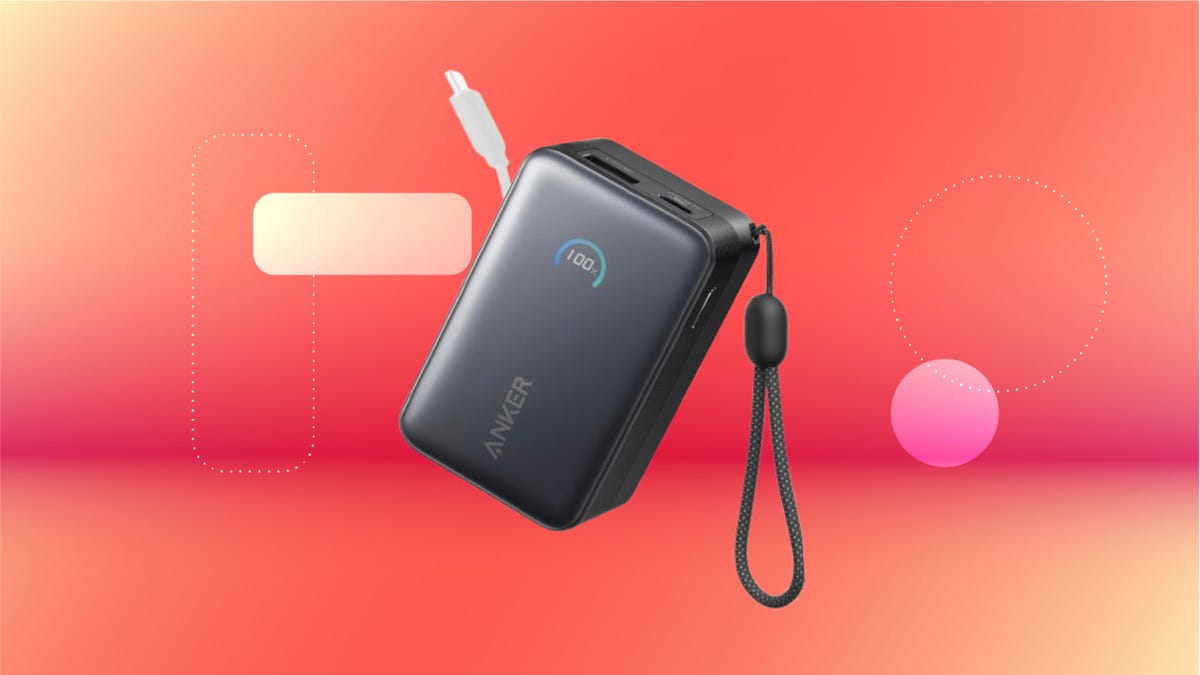
We’ve just spotted the Anker Nano 45-watt portable power bank for just $46 at Amazon right now. This saves you $14 — a 23% discount on its list price. Though it’s $6 more than the lowest-ever price we saw during Black Friday, it’s still a solid discount when you take the rising cost of tech accessories into account. It also matches the lowest price we’ve seen in 2026. It comes in four colors: black, green, pink and white. They’re all on sale for the same price.
This Anker Nano portable charger weighs approximately 8.2 ounces and measures a compact 3.21×1.99×1.42 inches. Despite its small size, it has a retractable cable and supports fast charging in compatible Apple, Samsung, Google Pixel and other smartphones. It also has a large 10,000-mAh capacity and a smart display so you always know how much juice is left in your power bank.
The Nano can charge an iPhone 17 to up to 50% battery in an estimated 20 minutes, and is powerful enough to charge tablets and laptops. Need to charge your devices while charging your power bank? You can do so safely thanks to pass-through charging so you’ll never have to go without battery life.
We’ve also compiled a list of the best power banks for iPhones and for Android, in case this deal isn’t quite a fit for you.
Why this deal matters
If you travel, have a long commute time or are otherwise always on the go, a portable charger can help you keep your devices fully powered. This 45-watt Anker Nano power bank is compact, includes a loop that lets you keep track of it easily and has a built-in cable so you don’t have to keep up with extra cords. Amazon’s $14 discount makes this a solid deal for anyone looking for a compact power bank.
-
 Technologies3 года ago
Tech Companies Need to Be Held Accountable for Security, Experts Say
-
 Technologies3 года ago
Best Handheld Game Console in 2023
-
 Technologies3 года ago
Tighten Up Your VR Game With the Best Head Straps for Quest 2
-
 Technologies4 года ago
Black Friday 2021: The best deals on TVs, headphones, kitchenware, and more
-
 Technologies5 лет ago
Google to require vaccinations as Silicon Valley rethinks return-to-office policies
-
 Technologies5 лет ago
Verum, Wickr and Threema: next generation secured messengers
-
 Technologies4 года ago
Olivia Harlan Dekker for Verum Messenger
-
 Technologies4 года ago
The number of Сrypto Bank customers increased by 10% in five days