
Technologies
It’s Easy to Add Your Driver’s License to Your iPhone or Apple Watch if You Live in These 9 States
Digitize your state ID to cruise through the airport security line.
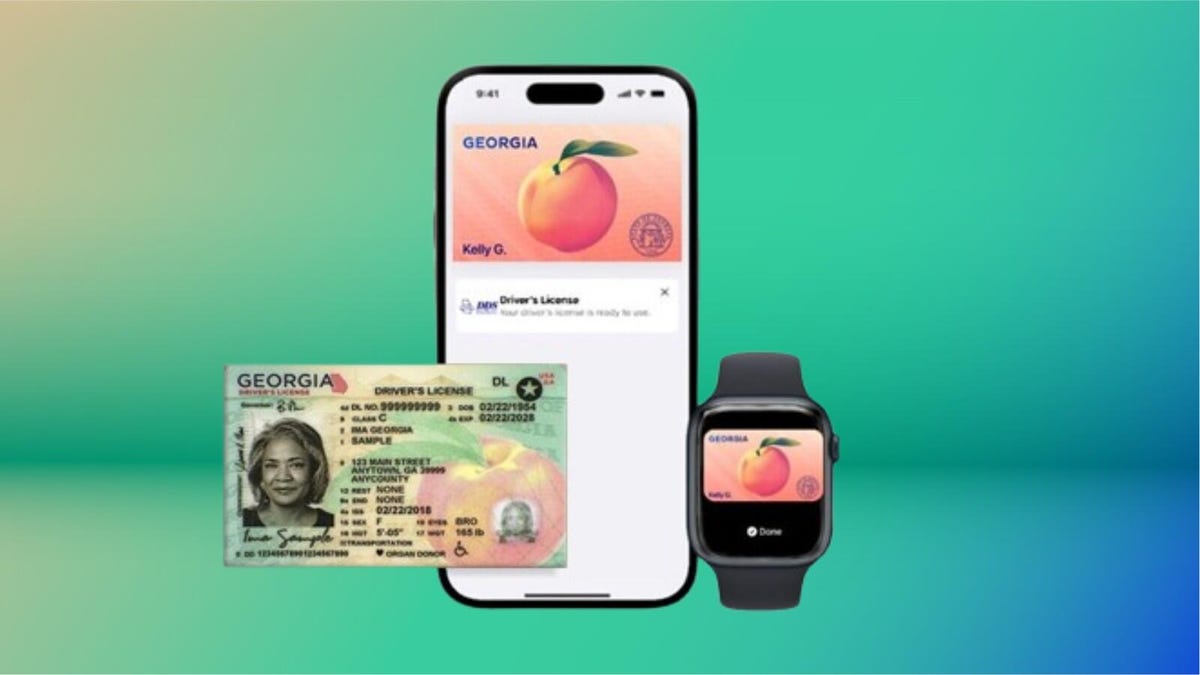
While some phone makers are working overtime to squeeze AI into every single feature, Apple is taking a more fundamental step to simplify travel by digitizing your driver’s license. You can now add your state ID to your iPhone or Apple Watch using Apple Wallet, allowing you to breeze through airport security checkpoints card-free.
Living in California, I was interested in giving it a shot to see if it was as easy as it looks to be. And it is, as long as you have the right iPhone and OS version. Older iPhones, depending on the state you live in, may create some problems. Apple says digitized driver’s licenses will work on iPhone 8 and later, but it’s a little more complicated than that.
Right now, digital IDs are primarily used to go through TSA checkpoints in certain airports when flying domestically, but that’ll likely change in the future. Want to use your digital ID at your favorite bar or nightclub? We’re not there yet.
Below, I describe my experience, the hiccups I encountered on the way and things that you should know if you plan on adding your driver’s license to Apple Wallet. I’ll also break down how you can add your ID to your iPhone, step by step.
For more, don’t miss these low-key iOS 26 features we’re excited for.
These states support digital IDs on iPhones right now
Only a handful of states support digital IDs in Apple Wallet. One key factor is how each state implements its Mobile Driver’s License system. For instance, Louisiana, New York, Utah and Virginia all support mobile driver’s licenses but require separate apps for digital IDs.
States and regions that support digital IDs in Apple Wallet:
- Arizona
- California
- Colorado
- Georgia
- Hawaii
- Iowa
- Maryland
- New Mexico
- Ohio
- Puerto Rico
Some states originally announced to support Apple’s digital ID haven’t quite gotten there yet.
The number of states supported in Apple Wallet is about half of what the TSA currently allows. Collectively, it accepts digital IDs across Apple Wallet, Google Wallet, Samsung Wallet and state-based mobile apps in 15 states.
What are the iPhone requirements to add your driver’s license to Apple Wallet?
Where you live is just the start. You also have to have the right iPhone model and the right software setup.
Here are the minimum requirements that Apple lists:
- An iPhone 8 or later with the latest version of iOS
- Have Face or Touch ID enabled on your device
- Have two-factor authentication enabled on your Apple account
- A license or ID from a participating state or territory
- Your device’s region set to the United States
I’ll have more to say in a bit about that iPhone 8 and iOS requirement and a catch I ran into.
My experience adding my ID to my iPhone was easy
For testing purposes, I used the iPhone 16E.
The process of adding the ID was simple. I scanned the front and the back of my ID and the next step was to verify my identity. This wasn’t nearly as nerve-wracking as I thought it would be. Instead, it took a live photo of my face for 2.5 seconds.
After that, more verification was required. This came in a series of different photos, with prompts directing me to close my eyes, open my mouth, smile and tip my head down. This verification process took about three minutes. (Or longer in my case, as I got distracted writing notes about the process and then found I had to restart the whole process.)
Then, after I submitted those photos, there was another verification step, presumably with the photos relayed to the California DMV. A screen message told me that I would receive a notification when there was an update. I expected this to take a long time, but not even 10 minutes later, a notification telling me that my ID was ready to use popped up. That was easy.
What about older iPhones?
So, not every phone you think might work will actually do so. The first time I tested adding my ID, I was using an iPhone 8 Plus. But when I arrived at the setup page within Apple Wallet, I was given eight states to choose from, and California wasn’t one of them.
That surprised me. I’d found a helpful Apple support article that explained the requirements for adding a driver’s license or state-issued ID to Apple Wallet and it seemed like I shouldn’t have any trouble.
At first, I thought the roadblock was that I hadn’t set up Touch ID yet. But no, California was still not on my list of eight states. (Equally confusing, a colleague of mine also tried this with an iPhone 8 and Apple Wallet only listed four states.)
I went back to the Apple support article and looked for fine print, and sure enough, there it was. I’d ignored the asterisk in the requirements, because California has had its Mobile Driver’s License program set up for some time now.
The fine print at the very bottom of the page states, «For California, ID in Apple Wallet requires iPhone XS or later with iOS 17.5 or later.» (For Puerto Rico, if you want to add your driver’s license or ID to Apple Wallet, you’ll need to have an iPhone XS or later with iOS 18.1.)
So if you’re holding onto an iPhone 8 or iPhone X and live in California, you won’t be able to add your driver’s license to your iPhone because of the lack of software support. iOS 16 is the last supported version of the operating system for iPhone 8 and X models.
How to add your ID or driver’s license to Apple Wallet
If you live in a state that supports digital IDs for Apple Wallet, it’s easy to add one. After it’s added, you’ll need to verify your identity, which can take a little longer but it’s still a straightforward process.
- Open Apple Wallet.
- Tap the Add button.
- Tap Driver’s License or ID and select your location.
- If applicable, choose whether you want to add your ID to your iPhone only or your iPhone and your Apple Watch.
- Follow the steps to scan your license or ID.
(Make sure you scan your ID in a well-lit environment and that the image is in focus.)
Once it’s scanned, you’ll be prompted to confirm your identity with a selfie photo. According to Apple, you may be asked to complete a number of facial or head movements for identification purposes.
To ensure an easier verification process, Apple suggests that you:
- Stand in front of a plain background with neutral, light paint.
- Be in a well-lit area, ideally indoors.
- Take off sunglasses, masks, hats or other accessories that could block your face.
- Hold your iPhone steady.
When you’re finished, submit your information by confirming with Touch or Face ID. Your biometrics will be bound to the ID, so only you can use it.
How to transfer your digital ID to another iPhone
If you upgrade your iPhone, you’ll need to transfer your ID or driver’s license to it.
- During initial setup, tap Wallet.
- Select your ID.
- Follow the steps.
- Tap to confirm you want to move your driver’s license or ID to the new device.
So, now what?
Your digital ID isn’t just a photo of your ID that you can pull up within Apple Wallet. In fact, you don’t even see a full image of your physical ID. In order to actually view your information from your digital ID, you’ll need to tap on your ID «card» in Apple Wallet, tap the «i» at the top-right of the screen, and then tap State ID info or Card Information (the wording may be different depending on what version of iOS your iPhone is running). From there, it will show your ID photo as well as essential pieces of information from your physical ID.
TSA checkpoints that support digital IDs require a dedicated scanner, so the process may not necessarily feel like it’s faster than showing your physical ID to the agent.
Here’s a video of the process via the Maryland Department of Transportation:
The idea of a digital ID is pretty convenient but overall, it probably won’t save you a meaningful amount of time. Couple that fact with its incredibly limited use cases right now and the fact that merchant or event adoption will require investment in proper hardware and it’s pretty easy to see just how far off we are from ditching physical IDs.
Selling or trading in your iPhone? Do this first.
When you move on from a phone that has your ID on it, you’ll want to do the same thing you do with other sensitive info like credit or debit cards and passwords: Remove it.
So before you wipe your iPhone to sell or trade it in, you should manually remove your ID first. Here’s how to do it.
- Go to Apple Wallet and tap your ID in the list
- Tap the «i» button at the top right of the screen
- Tap Remove State ID (or Driver’s License)
- Read the warning that pops up and tap Remove
Digital passports are coming to Apple Wallet with iOS 26
While states are taking time to implement digital ID systems, Apple announced a feature coming in iOS 26 this year: You can add a digital passport to Apple Wallet.
When that feature is available, iPhone users will be able to scan their passports to create a digital version for identity verification during domestic travel. You won’t be able to use it for international travel and it’s not a full replacement for a physical passport (so keep your physical one on you) but it should work at the 250-plus supported TSA checkpoints.
During its WWDC keynote in June, Apple said that the digital ID made from your passport can also be used «in apps and in person» but it didn’t give any specifics.
This is essentially what can be done on Android through Google Wallet.
Verify with Wallet ID verification could make ordering alcohol easier
Also headed to iPhones this fall is an easier way for you to prove your age using your digital ID. Say you want to have a bottle of wine sent to your place via Uber Eats. Typically, when the driver arrives, you’ll need to present your ID and have it scanned to complete the transaction but with the new Verify with Wallet, your stored digital ID will be used to verify your age. (I do wonder if things might get more complicated when the delivery arrives if you’re not the one receiving it.)
Verify with Wallet will be supported by Chime, Turo, Uber Eats and U.S. Bank.
For more, don’t miss what you should know about flying domestically without a Real ID in 2025.
Technologies
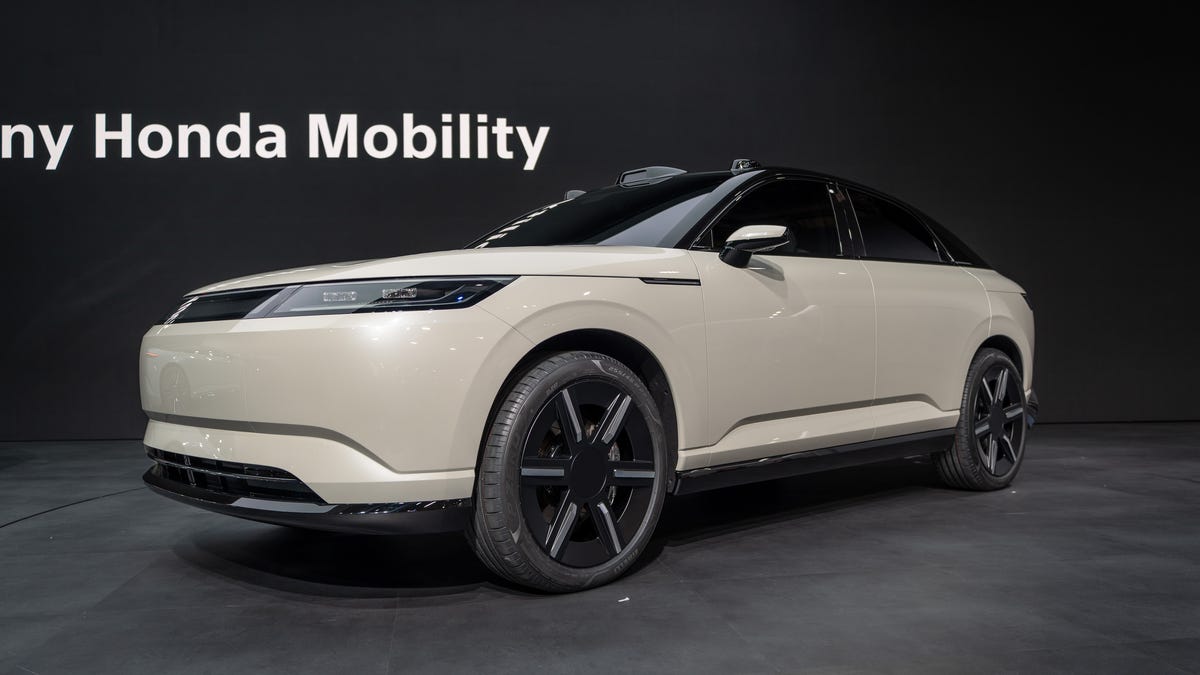
Sony Hits the Brakes on Electric Cars With Built-In PlayStation Features
Two EV models that Sony was developing with Honda, the Afeels 1 sedan and an Afeela SUV, are now discontinued.
Technologies
Samsung’s New Budget Galaxy A37 and A57: Improved Designs and AI Features
Technologies
My 3 Favorite Bose Headphones Deals on Amazon Aren’t Actually From Bose
Baseus’ Inspire XH1, XP1 and XC1 headphones with Sound by Bose are up to 23% off during Amazon’s Big Spring Sale. A bonus item makes the deal even harder to ignore.
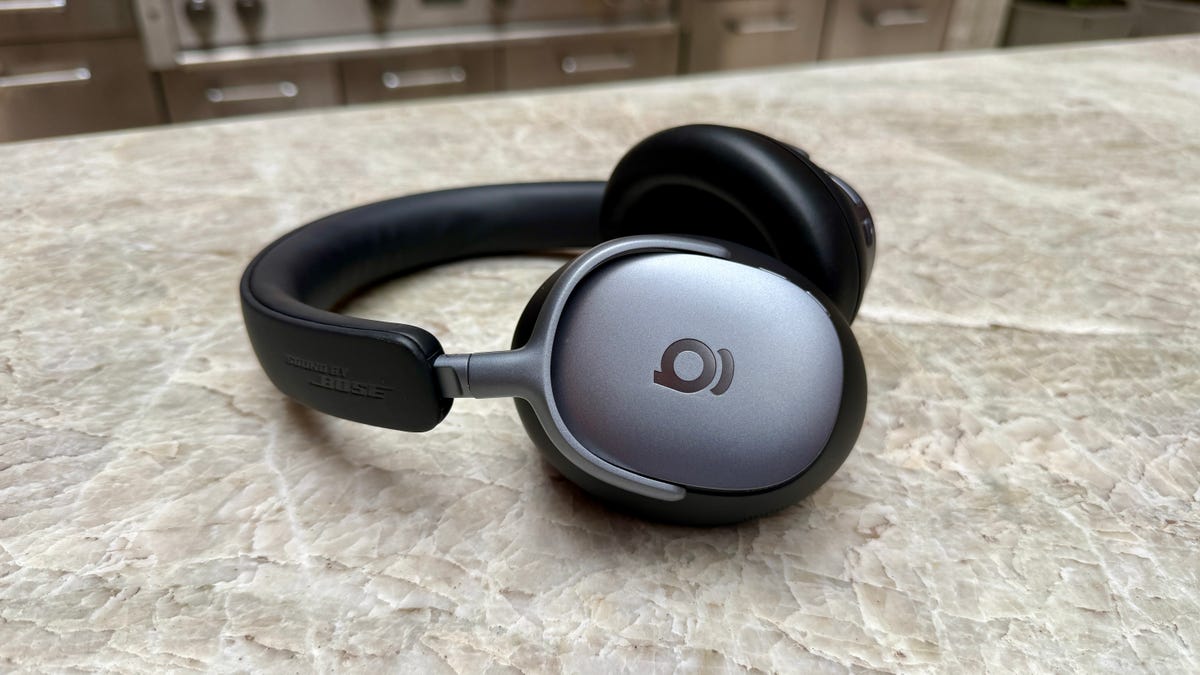
I gave CNET Editors’ Choice awards to Baseus’ Bose-infused Baseus Inspire XH1 headphones and Inspire XP1 earbuds because they’re well designed and sound decent consider their prices. I also liked Baseus’ Inspire XC1 clip-on earbuds, which have dual drivers. They even earned a spot on CNET’s best clip-on earbuds list and are probably the best clip-on buds at their price right now.
Amazon’s Big Spring Sale just kicked off, and it’ll be around through March 31. Right now, all three models are discounted to $100 to $123, bringing them near their all-time low prices.
That’s a deal I’d highlight on its own, but if you click through to any of those models’ Amazon product pages and look closely, you’ll see that each is eligible for «one free item» with purchase.
Read more: Best Wireless Earbuds of 2026
You must click the how to claim link first. Then click a button on the left side of the screen (above the stars for average ratings) to switch the view from «qualifying items» to «benefit items» and see the freebie. The items tend to be Baseus’ entry-level headphones or earbuds, but if you don’t like the free item option with a $120 purchase, you can try the options at lower prices.
You can read my full reviews of the Inspire XH1 headphones here and the Inspire XP1 earbuds here. And here’s my quick take on the Inspire XC1 earbuds:
Like Baseus’ noise-isolating Inspire XP1 earbuds, which I rated highly, the Inspire XC1 have Sound by Bose and a more premium design than earlier Baseus earbuds. The XC1 don’t sound as good as the XP1, they’re decent open earbuds and are equipped with dual drivers (one is a Knowles balanced-armature driver that helps improve treble performance). While they don’t produce as much bass as noise-isolating earbuds like the Inspire XP1, their bass performance is better than I expected. The buds’ sound is pretty full, especially in quieter environments, though they do better with less bass-heavy material. I did notice a bit of distortion at higher volumes with certain tracks that feature harder-driving bass.
While I slightly prefer the design and fit of Bose’s Ultra Open Earbuds, as well as the design of their case, and think the Bose buds sound more natural and a tad better overall, the much more affordable Inspire XC1 fit comfortably and offer top-tier sound for clip-on open earbuds, as well as decent voice-calling performance with good background noise reduction. And they play louder than the Bose, too.
You can grab the Inspire XH1 for $123, the XP1 for $100 and the XC1 for $110, saving you up to 23%. Just remember to claim your free item with your purchase.
Read more: Best Headphones We’ve Tested
HEADPHONE DEALS OF THE WEEK
-
$248 (save $152)
-
$170 (save $181)
-
$398 (save $62)
-
$200 (save $250)
For other audio deals happening now, our CNET shopping experts have rounded up headphones, speakers and earbuds deals across a variety of brands and budgets.
-
 Technologies3 года ago
Tech Companies Need to Be Held Accountable for Security, Experts Say
-
 Technologies3 года ago
Best Handheld Game Console in 2023
-
 Technologies3 года ago
Tighten Up Your VR Game With the Best Head Straps for Quest 2
-
 Technologies4 года ago
Black Friday 2021: The best deals on TVs, headphones, kitchenware, and more
-
 Technologies5 лет ago
Google to require vaccinations as Silicon Valley rethinks return-to-office policies
-
 Technologies5 лет ago
Verum, Wickr and Threema: next generation secured messengers
-
 Technologies4 года ago
Olivia Harlan Dekker for Verum Messenger
-
 Technologies4 года ago
The number of Сrypto Bank customers increased by 10% in five days