
Technologies
The Beats Studio Pro Headphones Shocked Me by Becoming an Essential Part of My Everyday Life
I was surprised by how often I started reaching for these over-ear headphones, thanks to their surprising comfort and sound quality. Right now, most colors are on sale for $300, a $50 discount.
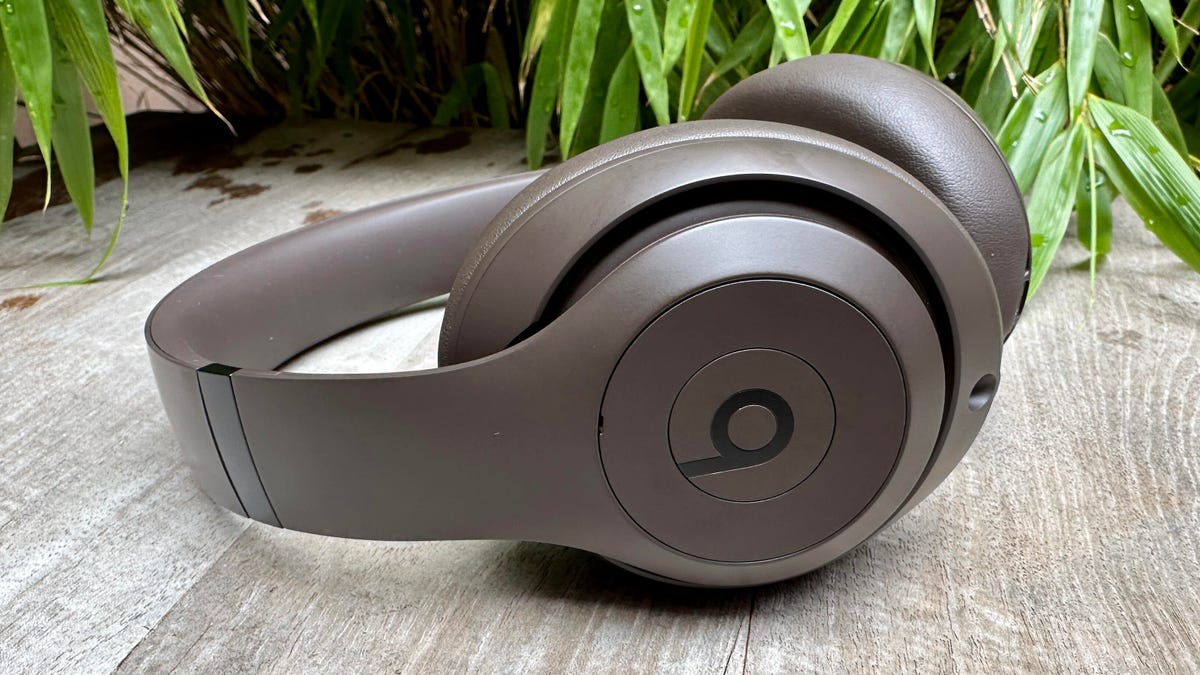
It all started when my beloved Apple AirPods just stopped working one day. No matter what I did, attempting to charge and revive them, they simply would not turn on, and I had to finally accept that they’d had a good run, and it was time to put them to rest. RIP.
That put me in a tricky predicament, though. I use headphones at least 4 to 5 hours a day, and I desperately needed new ones immediately. I knew I was due for an upgrade, but the AirPods weren’t on sale at the time. But coincidentally, the Beats Studio Pro were.
I didn’t expect to fall in love with a pair of headphones so quickly, especially because I loved my Apple buds so much. I was just hoping for solid noise cancellation and good sound quality, but the Beats delivered so much more — and now they’re an essential part of my daily routine, practically an extension of my ears. Like I said, I get a lot of mileage out of them every single day. Whether I’m writing, commuting, doing chores or taking my precious pup out for a walk, the Beats Studio Pro are there with me. And now, most colors are $50 off on Amazon.
HEADPHONE DEALS OF THE WEEK
-
$300 (save $51)
-
$299 (save $151)
-
$220 (save $180)
Here’s how the Beats Studio Pro work
Let’s start with the specs. The Beats Studio Pro are premium over-ear headphones that bring serious upgrades to the iconic Beats design. Think of these as the grown-up, more refined cousin of the Beats Solo series. They’re still stylish, still punchy, but with significantly better sound quality and comfort. Here are some key features of the Beats Studio Pro:
Hey, did you know? CNET Deals texts are free, easy and save you money.
- Active Noise Cancellation and Transparency Mode: Two core features that let you tune out the world or stay aware, depending on your mood. The ANC is excellent, especially for this price, and it’s great for navigating travel, open offices or city streets.
- USB-C Lossless Audio: A game-changer for audiophiles. With USB-C, you can listen to lossless audio directly from your device — no compression, just crystal-clear sound.
- Spatial Audio with dynamic head tracking: This creates an immersive, surround-sound-like experience.
- Custom 40mm drivers: Deliver balanced sound, with punchy bass, crisp mids and smooth highs.
- Battery: Up to 40 hours with ANC off or 24 hours with it turned on. That’s more than enough to get you through several workdays or even a full international flight without scrambling for a charger.
- Built-in microphones and voice-targeting beamforming tech: Translation: your voice will sound clear on calls, even in a noisy space.
They also pair effortlessly with both Apple and Android devices, thanks to support for Find My, Google Fast Pair and one-touch pairing.
CNET audio expert David Carnoy closely reviewed these earphones and found both the sound quality and voice-calling performance impressive.
«The noise canceling is quite effective,» Carnoy wrote in his review. «It’s the adaptive variety, so it’s not a fixed setting, and occasionally I’d hear it shift in strength as it adjusted to the ambient noise around me, whether I was on the subway or walking the streets of New York.»
Why I’m obsessed with my Beats
There are plenty of great headphones out there. So what sets these apart for me?
First and foremost, I love the comfort. I’ve worn lots of over-ear headphones that start to ache or feel heavy after an hour or so. I also have several ear piercings — five in my left ear and three in my right — and that means many over-ear headphones push the earring into my skin, digging in until it’s quite painful.
Not these. The earcups are plush, the clamping force is just right, and the memory foam actually makes a difference. I can wear them for hours without fatigue, which is saying something when you log four to five hours a day in them.
The sound quality is also great. Beats used to have a reputation for overly bass-heavy tuning, but the Studio Pro strikes a beautiful balance. There’s still that satisfying low-end thump when I’m listening to pop, hip hop or K-pop, but it doesn’t overpower the vocals or mids. Whether I’m streaming Hozier for the umpteenth hour, catching up on podcasts or listening to a new audiobook, everything sounds great.
Finally, the ANC and Transparency Mode are shockingly good. I’ve used my Beats in loud coffeeshops, on airplanes and while vacuuming, and they efficiently block out noise like a champ. But when I need to hear what’s going on (like when I run into one of my neighbors while I’m walking my dog), a quick button press switches me into Transparency Mode, and I can hear them clearly. It’s seamless.
I would also be remiss if I didn’t mention their style. Frankly, they just look cool. I know that’s not the most important thing, but the sleek matte finish, the minimalist design and the range of colors make these headphones feel like a fashion accessory as much as a tech device. I have the «Earth» color headphones, and they look so gorgeous with any outfit. My one request, though, (Beats execs, I’m sure you’re reading this!) would be to make these in a sage green color. Pretty please?
They’d make a great gift for any audiophile
Buying tech for someone else can be tricky, but I think the Beats Studio Pro are a pretty safe bet for anyone for a few reasons.
For one, they work across platforms, so it doesn’t matter if your gift recipient is team iPhone or Android. The intuitive pairing process, native device integration and wide compatibility make these user-friendly for just about anyone.
They’re also great for all types of use cases. Daily commuters? Check. Frequent flyers? Definitely. College students pulling all-nighters, or music lovers who want to hear every nuance of a track? Absolutely. These can suit really any type of person, day in and day out.
The Beats just feel premium, too. This is the kind of gift someone might not splurge on for themselves, but they would certainly be grateful to open up these Beats, no matter the occasion. If you’re shopping for a summer birthday or anniversary, these are a hit waiting to happen.
Why this Beats deal matters
Let’s get down to numbers. The Beats Studio Pro normally retail for $350 or $450, depending on the color you select. That’s pretty pricey. But right now, most colors are marked down to about $300.
I keep a pretty close eye on tech deals, and huge discounts don’t come around often, especially on newer, high-demand models. That means I don’t expect a much bigger sale on this product anytime soon. Considering the quality, durability and features packed into these headphones, you’re getting a lot for your investment, including flagship-level ANC, excellent sound and cross-platform support for less than the cost of most premium earbuds.
My final thoughts on my Beats Studio Pro headphones
In a world full of flashy gadgets and fleeting trends, the Beats Studio Pro are the real deal. They’ve become an essential part of my everyday life, not because they’re trendy or hyped, but because they work. They’re reliable, comfortable and sound fantastic. If this discount puts them in your price range, it’s a great time to pull the trigger and buy them.
Technologies
Today’s Wordle Hints, Answer and Help for April 7, #1753
Here are hints and the answer for today’s Wordle for April 7, No. 1,753.
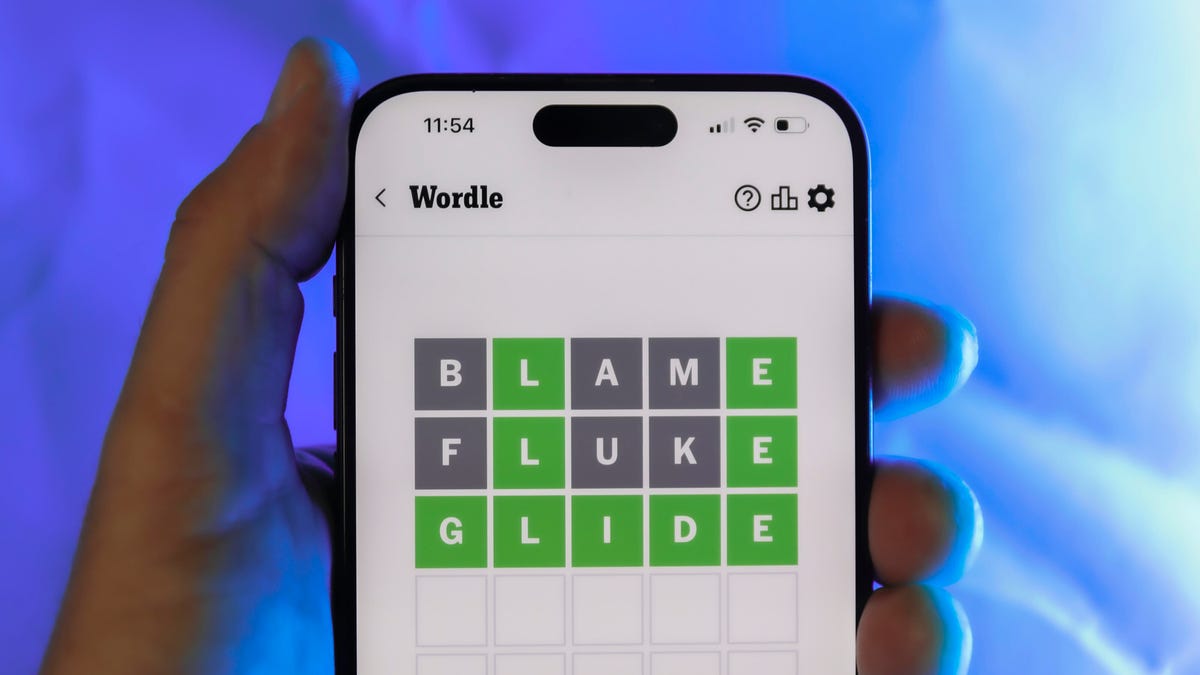
Looking for the most recent Wordle answer? Click here for today’s Wordle hints, as well as our daily answers and hints for The New York Times Mini Crossword, Connections, Connections: Sports Edition and Strands puzzles.
Today’s Wordle puzzle wasn’t too tricky, for a change. If you need a new starter word, check out our list of which letters show up the most in English words. If you need hints and the answer, read on.
Read more: New Study Reveals Wordle’s Top 10 Toughest Words of 2025
Today’s Wordle hints
Before we show you today’s Wordle answer, we’ll give you some hints. If you don’t want a spoiler, look away now.
Wordle hint No. 1: Repeats
Today’s Wordle answer has one repeated letter.
Wordle hint No. 2: Vowels
Today’s Wordle answer has one vowel, but it’s the repeated letter, so you’ll see it twice.
Wordle hint No. 3: First letter
Today’s Wordle answer begins with D.
Wordle hint No. 4: Last letter
Today’s Wordle answer ends with E.
Wordle hint No. 5: Meaning
Today’s Wordle answer can relate to something that is closely compacted.
TODAY’S WORDLE ANSWER
Today’s Wordle answer is DENSE.
Yesterday’s Wordle answer
Yesterday’s Wordle answer, April 6, No. 1752, was SWORN.
Recent Wordle answers
April 2, No. 1748: SOBER
April 3, No. 1749: SINGE
April 4, No. 1750: SANDY
April 5, No. 1751: ENVOY
What’s the best Wordle starting word?
Don’t be afraid to use our tip sheet ranking all the letters in the alphabet by frequency of uses. In short, you want starter words that lean heavy on E, A and R, and don’t contain Z, J and Q.
Some solid starter words to try:
ADIEU
TRAIN
CLOSE
STARE
NOISE
Technologies
Today’s NYT Mini Crossword Answers for Tuesday, April 7
Here are the answers for The New York Times Mini Crossword for April 7.
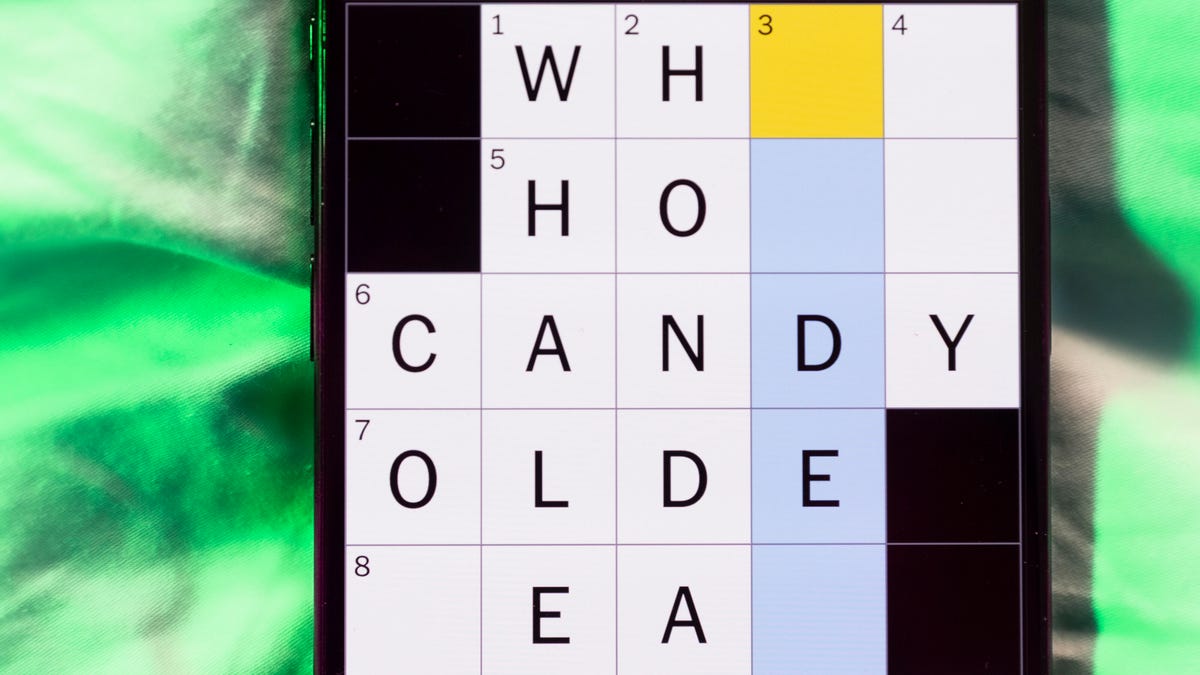
Looking for the most recent Mini Crossword answer? Click here for today’s Mini Crossword hints, as well as our daily answers and hints for The New York Times Wordle, Strands, Connections and Connections: Sports Edition puzzles.
Need some help with today’s Mini Crossword? Read on for all the answers. And if you could use some hints and guidance for daily solving, check out our Mini Crossword tips.
If you’re looking for today’s Wordle, Connections, Connections: Sports Edition and Strands answers, you can visit CNET’s NYT puzzle hints page.
Read more: Tips and Tricks for Solving The New York Times Mini Crossword
Let’s get to those Mini Crossword clues and answers.
Mini across clues and answers
1A clue: Informative commercial, for short
Answer: PSA
4A clue: Something you trace to draw a Thanksgiving turkey
Answer: HAND
5A clue: ___ Johnson, former Prime Minister of the U.K.
Answer: BORIS
6A clue: Opposite of include
Answer: OMIT
7A clue: Crosses (out)
Answer: XES
Mini down clues and answers
1D clue: City with the Notre-Dame Cathedral
Answer: PARIS
2D clue: Bad mood
Answer: SNIT
3D clue: About eight minutes of the average half-hour sitcom
Answer: ADS
4D clue: Remote worker’s office, perhaps
Answer: HOME
5D clue: Word that can follow each group of circled letters (and hints at its shape)
Answer: BOX
Technologies
NASA’s Artemis II Breaks Record With Trip Around The Moon
-
 Technologies3 года ago
Tech Companies Need to Be Held Accountable for Security, Experts Say
-
 Technologies3 года ago
Best Handheld Game Console in 2023
-
 Technologies3 года ago
Tighten Up Your VR Game With the Best Head Straps for Quest 2
-
 Technologies4 года ago
Black Friday 2021: The best deals on TVs, headphones, kitchenware, and more
-
 Technologies5 лет ago
Google to require vaccinations as Silicon Valley rethinks return-to-office policies
-
 Technologies5 лет ago
Verum, Wickr and Threema: next generation secured messengers
-
 Technologies4 года ago
Olivia Harlan Dekker for Verum Messenger
-
 Technologies4 года ago
The number of Сrypto Bank customers increased by 10% in five days