
Technologies
I Watched a $30,000, 116-Inch TV. Now I Need a Bigger Living Room
I spent a couple of hours with the Hisense 116UX TV, which has an RGB mini-LED backlight and a superfast 165Hz panel. Also, it’s big.
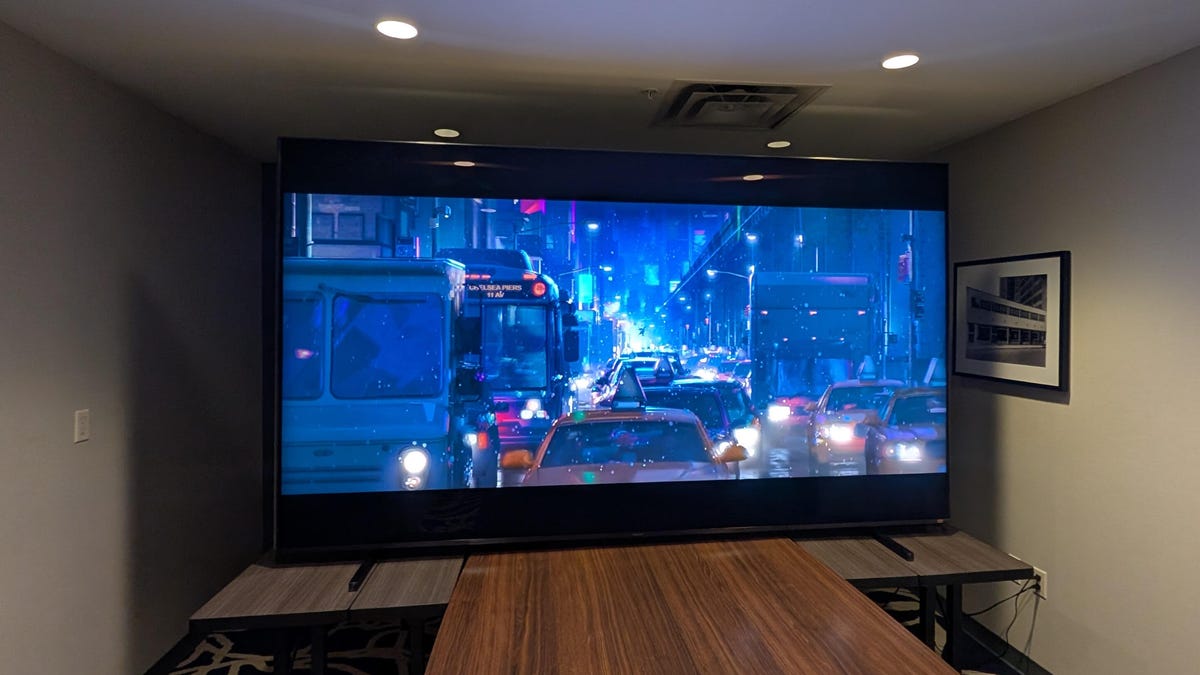
The whole TV industry is moving towards bigger and bigger screens, and the new Hisense 116UX takes the concept to a room-filling extreme. This is a 116-inch 4K TV that costs as much as a decent new car. But it’s not just any 116-inch, $30,000 TV. Hisense built some sophisticated tech under the hood, and I got some hands-on time with it.
I can confirm that this is a truly massive screen. Like, absolutely huge. A real unit. To give you an idea of how big it is, I’m 6 feet tall and I could not touch one end and the other at the same time. I can also confirm that I kinda want one.
Read more: Best TVs of 2025
Unique tech, meet gigantic TV
First announced at CES, this Hisense 116UX is a different type of TV than the $20,000, 115-inch TCL we looked at last year. That was a «hang out with your buddies and watch the game» kind of TV. This Hisense is not just an inch larger diagonally and 10 grand more expensive, it’s squarely aimed at the (very) well-heeled video quality aficionado.
The LCD-based Hisense 116UX uses the company’s proprietary RGB, mini-LED backlight combined with quantum dots and 3,584 local dimming zones. As the name «RGB» suggests, each individual backlight is broken up into a trio of red, green and blue mini-LEDs. Representatives for the company said these zones can also be divided further through software, and that at full pelt the screen is capable of 8,000 nits peak brightness.
The TV is set for gaming on with a native 165Hz Panel and support for AMD FreeSync Premium Pro and Auto Low Latency Mode.
Though it lacks the level of anti-glare tech found on high-end Samsungs like the S95F I reviewed recently, Hisense’s TV has the company’s own Anti-Reflection Pro to ward off (though not completely obscure) reflected light.
Like most TVs from companies not called LG or Samsung, the 116UX runs on the Google TV operating system. If you have a Google smart home or Android phone it should integrate really well as a result.
And similar to recent Samsung remotes, 116UX comes with a suitably large remote control with a little photoelectric panel for charging with your overhead lights. Maybe it also charges from reflected light of the huge panel? It’s certainly bright enough.
The TV was the room
I spent a couple of hours with the Hisense 116UX, in Hisense’s New York demo room, which was only just big enough to fit the TV. I was reminded of Magritte’s painting of a massive apple in a small room. I watched some movie scenes, including scenes from Spider-Man Into the Spider-Verse and Oppenheimer.
Apart from the size, I came away with the impression that this TV is great for HDR movies, as exemplified by its surprisingly deft handling of Oppenheimer. In the test scene I used, the Hisense was able to both bring out bright pinpricks of light while also able to show the hills and sky without banding.
Spider-Man showed how bright and colorful this TV could get. The huge screen was also able to keep up with the movie’s frenetic action scenes without smearing.
I tested its light output using a Konica Minolta LS-100 light meter, which registered an impressive 7,923 nits — pretty much exactly what Hinsense claimed. It’s also double the 65-inch Hisense U8Q, the brightest TV I’ve ever measured at CNET, and roughly four times brighter than the 65-inch LG G5, the brightest OLED TV.
While I didn’t test the TV’s gaming prowess, I have no doubt it would be a real blast to rid Mars of a new demonic scourge on a screen that truly is larger than life.
I listened to the 116UX for a little bit but it sounded disappointedly «like a TV,» with boomy lower mids and a vocal forwardness. If you can afford a TV like this, you can afford a sound system to go with it, and I will (maybe) come with you to help you buy it.
A big price tag to match
Is this the holy grail of TVs? For some, perhaps. Would I have one in my home? Yes, but only if I could find a rich benefactor to buy it for me — along with a bigger apartment. For its $30,000 price tag you could buy a hell of a lot of a lot of movie tickets instead. Like around 2,000 of them. But that’s hardly the point. This is currently the best (and only) 116-inch TV available, and if you really want to make your living room seem small, the Hisense 116UX is more practical and fun than a monster-sized piece of fruit.
Technologies
Today’s Wordle Hints, Answer and Help for April 7, #1753
Here are hints and the answer for today’s Wordle for April 7, No. 1,753.
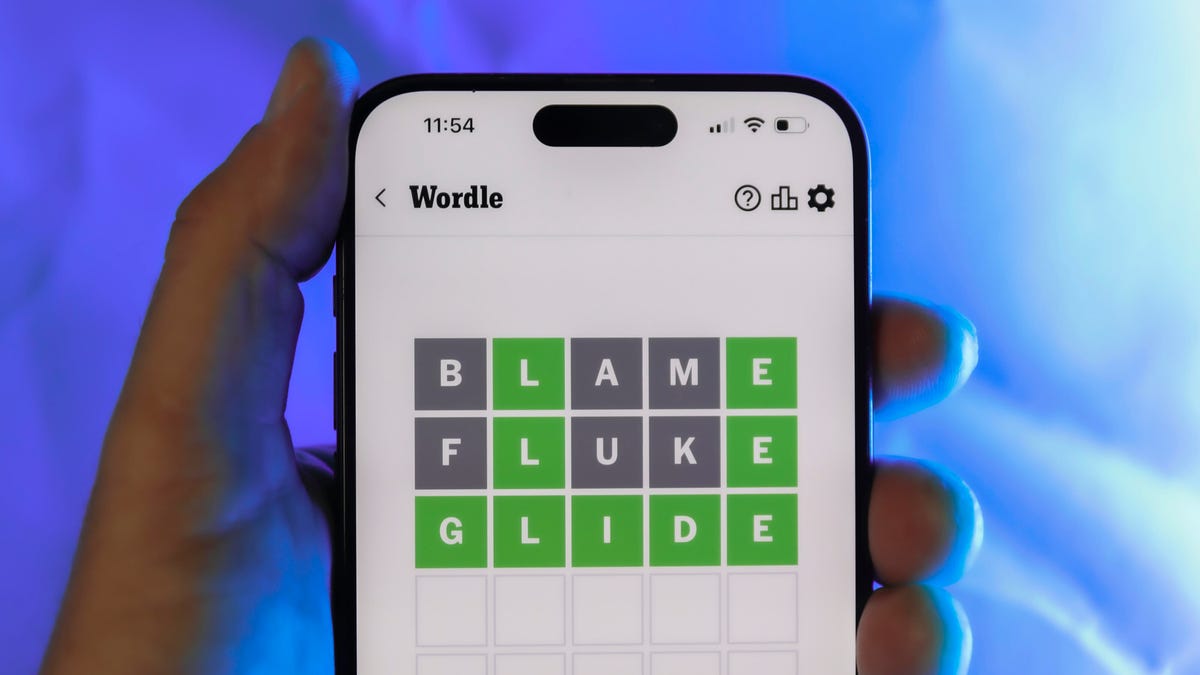
Looking for the most recent Wordle answer? Click here for today’s Wordle hints, as well as our daily answers and hints for The New York Times Mini Crossword, Connections, Connections: Sports Edition and Strands puzzles.
Today’s Wordle puzzle wasn’t too tricky, for a change. If you need a new starter word, check out our list of which letters show up the most in English words. If you need hints and the answer, read on.
Read more: New Study Reveals Wordle’s Top 10 Toughest Words of 2025
Today’s Wordle hints
Before we show you today’s Wordle answer, we’ll give you some hints. If you don’t want a spoiler, look away now.
Wordle hint No. 1: Repeats
Today’s Wordle answer has one repeated letter.
Wordle hint No. 2: Vowels
Today’s Wordle answer has one vowel, but it’s the repeated letter, so you’ll see it twice.
Wordle hint No. 3: First letter
Today’s Wordle answer begins with D.
Wordle hint No. 4: Last letter
Today’s Wordle answer ends with E.
Wordle hint No. 5: Meaning
Today’s Wordle answer can relate to something that is closely compacted.
TODAY’S WORDLE ANSWER
Today’s Wordle answer is DENSE.
Yesterday’s Wordle answer
Yesterday’s Wordle answer, April 6, No. 1752, was SWORN.
Recent Wordle answers
April 2, No. 1748: SOBER
April 3, No. 1749: SINGE
April 4, No. 1750: SANDY
April 5, No. 1751: ENVOY
What’s the best Wordle starting word?
Don’t be afraid to use our tip sheet ranking all the letters in the alphabet by frequency of uses. In short, you want starter words that lean heavy on E, A and R, and don’t contain Z, J and Q.
Some solid starter words to try:
ADIEU
TRAIN
CLOSE
STARE
NOISE
Technologies
Today’s NYT Mini Crossword Answers for Tuesday, April 7
Here are the answers for The New York Times Mini Crossword for April 7.
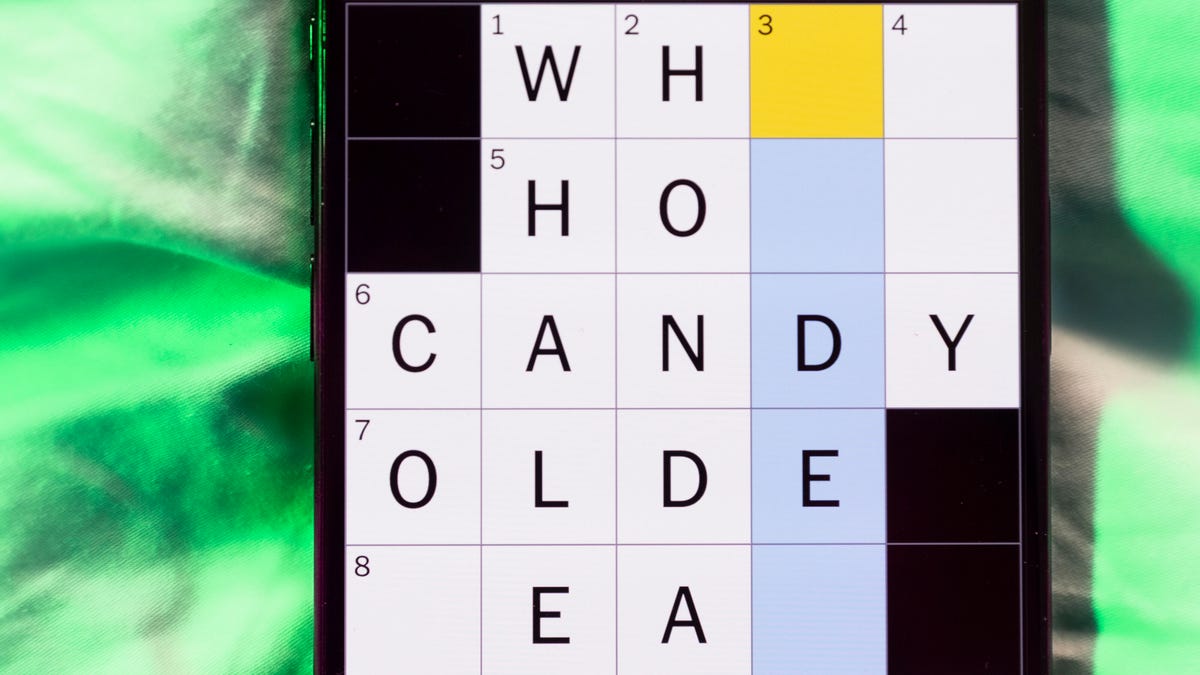
Looking for the most recent Mini Crossword answer? Click here for today’s Mini Crossword hints, as well as our daily answers and hints for The New York Times Wordle, Strands, Connections and Connections: Sports Edition puzzles.
Need some help with today’s Mini Crossword? Read on for all the answers. And if you could use some hints and guidance for daily solving, check out our Mini Crossword tips.
If you’re looking for today’s Wordle, Connections, Connections: Sports Edition and Strands answers, you can visit CNET’s NYT puzzle hints page.
Read more: Tips and Tricks for Solving The New York Times Mini Crossword
Let’s get to those Mini Crossword clues and answers.
Mini across clues and answers
1A clue: Informative commercial, for short
Answer: PSA
4A clue: Something you trace to draw a Thanksgiving turkey
Answer: HAND
5A clue: ___ Johnson, former Prime Minister of the U.K.
Answer: BORIS
6A clue: Opposite of include
Answer: OMIT
7A clue: Crosses (out)
Answer: XES
Mini down clues and answers
1D clue: City with the Notre-Dame Cathedral
Answer: PARIS
2D clue: Bad mood
Answer: SNIT
3D clue: About eight minutes of the average half-hour sitcom
Answer: ADS
4D clue: Remote worker’s office, perhaps
Answer: HOME
5D clue: Word that can follow each group of circled letters (and hints at its shape)
Answer: BOX
Technologies
NASA’s Artemis II Breaks Record With Trip Around The Moon
-
 Technologies3 года ago
Tech Companies Need to Be Held Accountable for Security, Experts Say
-
 Technologies3 года ago
Best Handheld Game Console in 2023
-
 Technologies3 года ago
Tighten Up Your VR Game With the Best Head Straps for Quest 2
-
 Technologies4 года ago
Black Friday 2021: The best deals on TVs, headphones, kitchenware, and more
-
 Technologies5 лет ago
Google to require vaccinations as Silicon Valley rethinks return-to-office policies
-
 Technologies5 лет ago
Verum, Wickr and Threema: next generation secured messengers
-
 Technologies4 года ago
Olivia Harlan Dekker for Verum Messenger
-
 Technologies4 года ago
The number of Сrypto Bank customers increased by 10% in five days