
Technologies
Microsoft Is Getting Rid of Passwords in One Month. Here’s What You Need to Do ASAP
You’ll still be able to access your passwords, but Microsoft’s new approach is a safer way to log into your accounts.

If you rely on Microsoft Authenticator to store your passwords, time is winding down.
Starting in August, Microsoft will require you to use passkeys instead of keeping all of your Microsoft passwords on its mobile app and your old passwords will vanish.
But that’s not bad news. Passkeys can cut out risky password habits that 49% of US adults have, according to a recent CNET survey. Making it a practice to use the same password for multiple accounts or include personal hints, like your birthday, can be risky. It could be an easy giveaway for hackers to guess, which can lead to identity theft and fraud.
Here’s what you need to know about Microsoft’s timeline for the switch and how to set up passkeys for your Microsoft accounts before it’s too late.
Microsoft Authenticator will stop supporting passwords
Microsoft Authenticator houses your passwords and lets you sign into all of your Microsoft accounts using a PIN, facial recognition such as Windows Hello, or other biometric data, like a fingerprint. Authenticator can be used in other ways, such as verifying you’re logging in if you forgot your password, or using two-factor authentication as an extra layer of security for your Microsoft accounts.
In June, Microsoft stopped letting users add passwords to Authenticator, but here’s a timeline of other changes you can expect, according to Microsoft.
- July 2025: You won’t be able to use the autofill password function.
- August 2025: You’ll no longer be able to use saved passwords.
If you still want to use passwords instead of passkeys, you can store them in Microsoft Edge. However, CNET experts recommend adopting passkeys during this transition. «Passkeys use public key cryptography to authenticate users, rather than relying on users themselves creating their own (often weak or reused) passwords to access their online accounts,» said Attila Tomaschek, CNET software senior writer and digital security expert.
Why passkeys are a better alternative to passwords
So what exactly is a passkey? It’s a credential created by the Fast Identity Online Alliance that uses biometric data or a PIN to verify your identity and access your account. Think about using your fingerprint or Face ID to log into your account. That’s generally safer than using a password that is easy to guess or susceptible to a phishing attack.
«Passwords can be cracked, whereas passkeys need both the public and the locally stored private key to authenticate users, which can help mitigate risks like falling victim to phishing and brute-force or credential-stuffing attacks,» Tomaschek added.
Passkeys aren’t stored on servers like passwords. Instead, they’re stored only on your personal device. More conveniently, this takes the guesswork out of remembering your passwords and the need for a password manager.
How to set up a passkey in Microsoft Authenticator
Microsoft said in a May 1 blog post that it will automatically detect the best passkey to set up and make that your default sign-in option. «If you have a password and ‘one-time code’ set up on your account, we’ll prompt you to sign in with your one-time code instead of your password. After you’re signed in, you’ll be prompted to enroll a passkey. Then the next time you sign in, you’ll be prompted to sign in with your passkey,» according to the blog post.
To set up a new passkey, open your Authenticator app on your phone. Tap on your account and select «Set up a passkey.» You’ll be prompted to log in with your existing credentials. After you’re logged in, you can set up the passkey.
Technologies
TikTok to Let Apple Music Users Stream Full Songs Without Ever Leaving the App
TikTok and Apple Music come together to introduce two new features to the music listening experience.
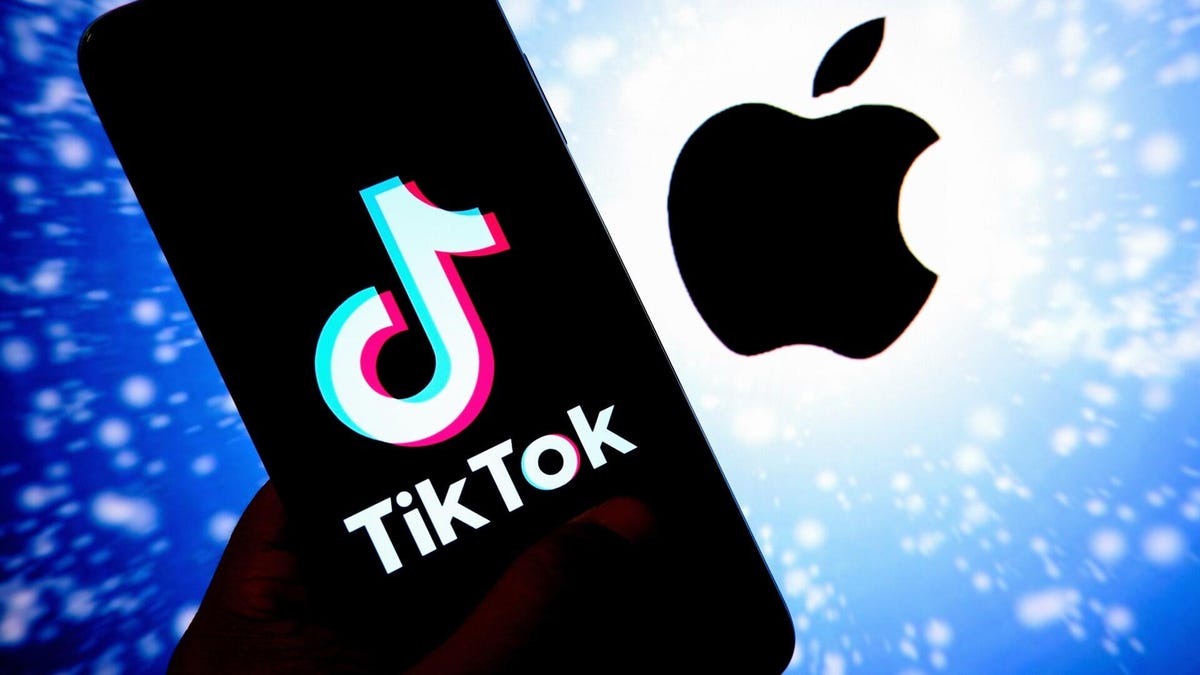
If you’ve ever scrolled TikTok, caught a snippet of a tune, and thought, «I wish I could play this song all the way through,» this is for you. TikTok and Apple Music announced on Wednesday that they have partnered on two new features, Play Full Song and Listening Party. The goal is to offer listeners a seamless music listening experience without ever leaving the social media app.
Apple Music subscribers who discover a song on their TikTok For You Page or on the Sound Detail Page will be able to click Play Full Song to open the Apple Music player and listen to the track in its entirety. From there, subscribers to the music streaming service will be able to save the song as a favorite, add it to a playlist on Apple Music and listen to a customized stream of recommended songs.
When a full-length song is played, the stream will pay artists through Apple Music.
«Tapping into the music you love should feel effortless,» Ole Obermann, co-head of Apple Music, said in a statement. «With Play Full Song, Apple Music subscribers can move easily from discovering a track on TikTok to listening to it in full instantly, without breaking the flow. This integration not only makes it easier for fans to discover, listen to, and engage with the artists they love, but also creates a powerful new pathway for artists — turning moments of discovery into deeper connection and sustained engagement in one simple, seamless experience.»
Listening Party sounds somewhat like Spotify‘s feature of the same name. Fans join a shared, real-time session where they listen to the same tracks together and interact live, with the songs streamed through Apple Music inside TikTok. Musicians can also join and chat with their fans.
«TikTok is where music discovery and culture move at the speed of the community,» Tracy Gardner, global head of music business development at TikTok, said in a statement. «Thanks to Apple Music, Play Full Song gives fans a seamless way to go from discovery to full-length listening, and Listening Party provides a shared place to experience music together in real time. It’s all about bringing artists and fans closer, and turning shared moments into lasting connections.»
Play Full Song and Listening Party will launch globally on TikTok over the next few weeks.
Technologies
AI Chatbots Are Making People All Think the Same, Study Says
A new paper argues that humans are losing varied ways of thinking due to the use of chatbots, and that’s concerning.

Part of what makes us human is the unique ways we think and solve problems. But using large language models like ChatGPT might be eroding this uniqueness and leading humans to think and communicate the same way, according to a group of scientists and psychologists who have co-authored a new opinion paper.
«Individuals differ in how they write, reason, and view the world,» Zhivar Sourati, a computer scientist of the University of Southern California and first author for the paper, said in a statement.
«When these differences are mediated by the same LLMs, their distinct linguistic style, perspective and reasoning strategies become homogenized, producing standardized expressions and thoughts across users,» Sourati continued.
The paper, published Wednesday in the journal Trends in Cognitive Sciences, examines how hundreds of millions of people worldwide use the same handful of chatbots and what that means for our individuality.
Thinking inside the box
Pew Research found that one-third of all Americans used ChatGPT last year, double the 2023 figure. And chatbot use is much more common among teens: Two-thirds say they use chatbots, and almost a third use them daily.
Businesses are also going all in on artificial intelligence. Stanford found that 78% of organizations reported using AI in 2024, up from 55% in 2023.
So we’re using AI a lot. But the danger is that we could lose the diversity in the ways we think. The team points out that LLMs generate writing that varies less than what people come up with on their own.
Part of the reason LLMs may be pushing homogenized thought, according to the paper’s authors, is the data used to train them.
«Because LLMs are trained to capture and reproduce statistical regularities in their training data, which often overrepresent dominant languages and ideologies, their outputs often mirror a narrow and skewed slice of human experience,» Sourati says.
Why diverse thinking matters
There’s a good reason why the authors warn against this trend. Homogenized thought reduces pluralism, which is essentially the idea that multiple perspectives are good for society as a whole.
«This value of pluralism is rooted in the long-held principle that sound judgment requires exposure to varied thought,» the authors write in the paper. «Unchecked, this homogenization risks flattening the cognitive landscapes that drive collective intelligence and adaptability,»
So we use different ways of thinking to figure out more solutions to a problem. If we lose the ability to think and communicate differently, it could affect how we adapt to new situations.
«The concern is not just that LLMs shape how people write or speak, but that they subtly redefine what counts as credible speech, correct perspective, or even good reasoning,» Sourati says.
The authors also say that this trend even impacts people who don’t use chatbots.
«If a lot of people around me are thinking and speaking in a certain way, and I do things differently, I would feel a pressure to align with them, because it would seem like a more credible or socially acceptable way of expressing my ideas,» Sourati says.
Technologies
SXSW 2026 Updates: What We Expect on Tech and Culture From Austin
-
 Technologies3 года ago
Tech Companies Need to Be Held Accountable for Security, Experts Say
-
 Technologies3 года ago
Best Handheld Game Console in 2023
-
 Technologies3 года ago
Tighten Up Your VR Game With the Best Head Straps for Quest 2
-
 Technologies4 года ago
Black Friday 2021: The best deals on TVs, headphones, kitchenware, and more
-
 Technologies5 лет ago
Google to require vaccinations as Silicon Valley rethinks return-to-office policies
-
 Technologies5 лет ago
Verum, Wickr and Threema: next generation secured messengers
-
 Technologies4 года ago
Olivia Harlan Dekker for Verum Messenger
-
 Technologies4 года ago
iPhone 13 event: How to watch Apple’s big announcement tomorrow