
Technologies
Warframe Isleweaver’s Spider-Man-Like Frame Is a Masterpiece of Design
From concept to completion, creating the character Oraxia presented unique challenges for developer Digital Extremes.
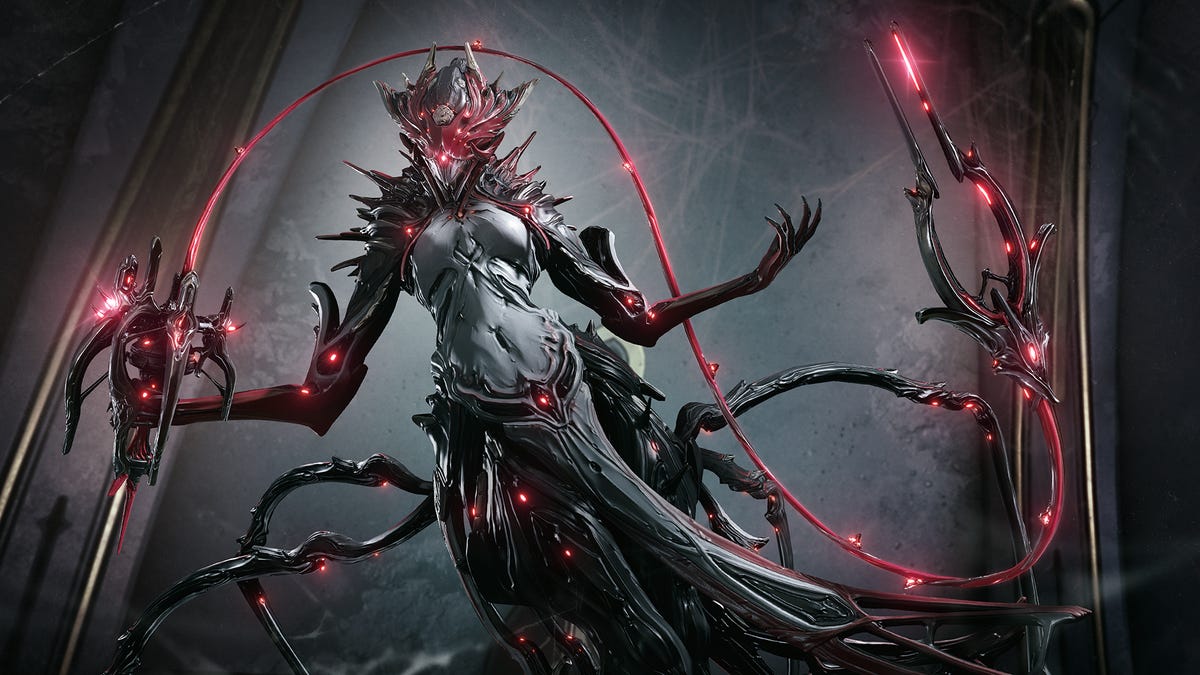
There’s a lot to get excited about in Warframe’s Isleweaver expansion — which is free to play today on PlayStation, Xbox and PC. The update links the time-lost Warframe 1999 and the timeless islands of Duviri, pushes the Void War narrative arc forward and gives tight-knit player guilds a new large-scale operation to contribute to.
The biggest allure of a new update for many players will always be the shiny new toys, and Isleweaver has tons of those too. A new whip and throwable clustered barbs will make a fine addition to any stealthy player’s arsenal, while endgame builds will benefit from a new Incarnon weapon that’ll evolve and gain special abilities in the heat of battle.
But the most impactful addition to every Tenno’s toolkit is Oraxia, the 61st unique Warframe that players can pilot. She’s the culmination of a years-long community meme about adding a Spider-Frame into the game, and you’ll soon get a chance to scuttle around on spindly legs, summon an army of multilimbed children and assassinate enemies from above.
But it turns out that deploying extra legs and climbing on walls took an immense amount of effort to make work in Warframe, another challenge for a team that continues pushing itself to make wild fantasies playable in the game.
Oraxia «was definitely something that we only did because we’re crazy,» Warframe Design Director Pablo Alonso joked. «Honestly, we shouldn’t have done it. But at the same time, I’m happy we did, even though it pushed the team a lot to get this done.»
I spoke with Alonso and Warframe Creative Director Rebecca Ford to find out more about how Oraxia evolved from concept to reality, the stresses of modeling a completely new type of Warframe ability, and the challenges of creating this fearsome arachnid’s boss fight.
A skittering threat stalks the shadows
Warframe is all about empowering players to pick a power fantasy and live it out on the galactic stage.
Whether you enjoy playing more traditional roles, like a hack-and-slash knight or a damage-soaking tank, or you get your kicks from playing more unorthodox characters, like Sun Wukong or a walking nuclear reactor, there’s a frame in the game for nearly everybody’s favorite play style.
Each Warframe has to widen the net a little more, doing something completely different from the previous playable characters. The vision for Oraxia was actually quite simple: Like Spider-Man, she does whatever a spider can.
«She’s a predator,» said Alonso. «She lurks, she strikes, and she has her little army. That’s the core theme we were going for with her.»
Unlike in-your-face tanky frames, stealthy Warframes strike from the shadows, going invisible or lulling enemies into a deep slumber. When you play with Oraxia, you’ll skitter on walls with her ultimate ability and engage with your foes from above — they’ll become your prey.
«The walking with the elongated legs is the most exciting part of her kit,» said Ford. «Her ultimate move set is so cool, I feel like it’s unlike anything we’ve ever done before.»
«Especially once you start web whipping between walls and stuff, it makes the game feel very different and it’s a lot of fun,» Alonso added. «It almost makes you think of the game in a little bit of a different way, which is what we want.»
Alonso explained that gameplay diversity is one of the most important design pillars guiding the Warframe team, and that Oraxia already feels like a success because there’s nothing else in the game that compares with the feeling of popping out extra legs and web-swinging around the map.
«It’s very satisfying,» Ford said. «It’s a testament to not only the mechanics that were put in, but sometimes you just see the sound team hit with a small WAV file that makes all the difference. The sound for the web is excellent.
«All those little pieces come together when you have people working in their craft so excellently to create that satisfying button click,» Ford said. «Because at the end of the day, that’s all we’re doing, right? We’re putting together buttons and dressing them up in a way that makes it feel like something that’s never been in Warframe before.»
More legs meant more design challenges
Believe it or not, Oraxia existed far before the Spider-Frame meme took root in the Warframe community. Ford said the Warframe team wanted to piece this frame together as far back as 2023.
While developer Digital Extremes has a very close-knit relationship with Warframe players, Oraxia’s development process was largely unaltered by the memetic feedback the team was constantly bombarded with.
«For us, this was always a character that needed the whole treatment,» Alonso said. «There are memes that can be hard to overcome — think ‘Hydroid trailer‘ — but this one wasn’t much of a problem because we had so many cool concepts for what the Warframe was going to be. The meme of it being a secret was just kind of fun for us.»
What made Digital Extremes hold off on Oraxia for so long? Understandably, bringing this frame to fruition was something of a design nightmare.
«The perfect summary is that this was the ‘Oh, god, what have we done?’ Warframe,» said Ford.
Alonso explained that Oraxia was far more complex to create than the average Warframe because there were so many considerations that needed to be made regarding the legs that appear during her ultimate ability.
Every Warframe team needed to work in tandem to smooth the kinks with the latest frame. Oraxia required new model rigging, animation trees, animation tweaks and complete animation overhauls for how the frame’s legs move and react to the environment around them.
The unique shape of the frame meant collision hitboxes had to be tinkered with, and the player camera needed to be pulled back away from Oraxia because her legs were obscuring the aiming reticle.
There was a cascading series of issues that made the Spider-Frame a tough character to integrate into the game. But seeing the frame in action for the first time validated the team’s decision to commit to it.
«There were just so many things to fix with Oraxia, but the frame ended up being really cool,» Alonso said. «That’s the thing that always catches us: We want to make something cool, and it can be painful getting there, but it’s worth it in the end.»
From foe to friend: Creating a Warframe’s boss fight
Before you get a chance to try out Oraxia for yourself, you’ll have to challenge the sticky seamstress on a newly revealed island in Duviri.
This isn’t the first time players have had to fight another Warframe, of course. Solar rail specters have historically gated every new planet on the Star Chart, and the Stalker’s Warframe acolytes routinely show up to threaten you if you’re bold enough to walk the Steel Path.
Kullervo, one of the other Warframes featured in Duviri, has a boss fight of his own, where you challenge the tortured soul in his gladiatorial arena. But Warframe’s design team has had a lot of practice with boss fights since his debut, learning lessons that will apply in the battle against Oraxia.
«We’re getting better at telegraphing moves and being more careful explaining how things work,» Alonso said. «You know, we have a few bosses within Warframe that — even people that have been playing for years don’t really know how they work. They just know ‘shoot them until it dies’ and they don’t know why. So we want to find where those communication breakdowns are happening and fix those.»
Perhaps more importantly, Alonso explained that traditional boss fights really don’t work in a game like Warframe, so it’s up to the team to find fun new ways to make things challenging, without creating bullet-sponge enemies.
«We’re also trying to have more mechanics rather than just making bosses that essentially soak up damage. When it comes to just avoiding damage or dealing out damage, Warframes are so good at those things that fights become a DPS race,» Alonso said, referring to damage per second. «If it’s just a survivability race, you just subsume Mesmer Skin and stand there — there’s no problem in your life, right? So we’re basically trying to find those spots where there are interesting mechanics.»
Oraxia’s boss fight will include movement mechanics at different intervals, forcing you to avoid hazards in the midst of tangling with your venomous foe.
«In this one, we have some tunnels between boss stages, where you have to dodge some lightning,» Alonso said. «It’s not a complicated thing. It’s not a hard thing. But it’s fun to dodge, jump and slide under it. It adds a different beat of gameplay that feels very Warframe.»
If you’re looking for a model of what the Warframe team believes a good boss fight should feel like, look no further than the Technocyte Coda enemies introduced in Warframe 1999, Alonso said. You might not battle the same infested lich every time, but the stage hazards, like laser lights and explosions, anchor the fight.
«I think that shows a little bit of what we like, which is a bit of combat, then some kind of mechanical component before you’re back in combat again,» he said. «That flows really well, and we’ve found that it has a good rhythm to it.»
The Isleweaver update is available for free now on PlayStation, Xbox and PC. You can dive into the Duviri invasion, help Dominus Thrax retake his throne, and battle Oraxia at her island lair next time you log in to Warframe.
Technologies
Bumble’s AI Assistant Bee Wants to Replace Endless Swiping
The dating app says it will launch «chapter-based profiles» and a personal dating assistant.

Dating app Bumble is bringing artificial intelligence into the matchmaking process via a new AI assistant called Bee. The dating app unveiled the upcoming features during its 2025 fourth-quarter earnings call this week. CEO Whitney Wolfe Herd said the company’s revamped platform, called Bumble 2.0, is expected to roll out sometime this spring, with tools designed to make profiles more personal and matches more meaningful.
One of the biggest changes is what Bumble calls a «chapter-based profile.» Instead of presenting users as a handful of static details, the new format lets people share different «chapters» of their lives — essentially short story-like sections that highlight experiences, interests or defining moments.
Today, a typical Bumble profile looks much like those on other dating apps: a name, age, photos and a few quick facts such as job title or hometown. From there, the process is familiar. Swipe left if you’re not interested. Swipe right if you are.
The new format, Bumble hopes, will give users a chance to show more of who they are before someone makes that split-second decision.
Another feature, called Dates, will rely on the new AI assistant Bee to help users find connections.
No more swipes?
Wolfe Herd said Bumble might test eliminating the swipe in certain markets and then see how members react to the feature being gone.
During the earnings call, Wolfe Herd said people are tired of «being reduced to images and potentially dismissed with a swipe» and that the chapter-based profile will help people tell their stories.
With the chapter-based format, members will be able to share more about themselves beyond the basics, in the hopes that it will be more intriguing for potential partners. One member may be intrigued by another’s trip to Italy. They connect to learn more, and maybe a match will form. It’s also a way for Bumble to get more data to feed its AI and gain more well-rounded profiles of its members.
More from CNET: The Best Dating Apps for 2025
Wolfe Herd said Bumble wants its members to showcase more of themselves and not just their basic profile.
«Ultimately, dating only works when you really understand the story of someone,» Wolfe Herd said during the earnings call. «This is where chemistry and connection really happen. It is the intersection of someone going from just a stranger that you dismiss to someone you are genuinely interested in. As we reimagined the profile, we thought, why not bring people to life as a story? Everyone has a story to tell, and this is where people become interesting.»
Wolfe Herd said many members complain that their potential matches wind up in «dead-end chat zones» that never go anywhere. She said Bumble will introduce «dynamic ways» to get members to connect.
Bee as matchmaker
Wolfe Herd also said the AI-powered Bee would act as a personal dating assistant and matchmaker by «learning members’ values, relationship goals, communication style, lifestyle and dating intentions.»
Bumble already uses AI to help members improve their profiles and find potential matches, but Bee will be a major advancement in that effort.
Bee will use member insights to «identify mutual compatibility» with other members. Wolfe Herd said the company’s goal is to «get much more robust information about who you are and what you are looking for and really understand your story.» That process could be via typing or voice.
If a member wants to use Dates to find a match, Bee could use its AI to find a compatible match among other Bumble members and present that person as a possibility. Wolfe Herd said the company will soon begin beta testing Bee with a small, select group of Bumble consumers.
Other dating apps also utilize AI in their processes to varying extents. Grindr has a «wingman» chatbot that helps members write responses, identify potential matches and plan dates. Tinder and Hinge, both owned by Match Group, use AI assistants to generate icebreakers and enhance member interactions. For instance, Hinge launched Convo Starters late last year to help members kick off interesting conversations.
More from CNET: Bumble Introduces ID Verification
Technologies
Today’s NYT Mini Crossword Answers for Friday, March 13
Here are the answers for The New York Times Mini Crossword for March 13.

Looking for the most recent Mini Crossword answer? Click here for today’s Mini Crossword hints, as well as our daily answers and hints for The New York Times Wordle, Strands, Connections and Connections: Sports Edition puzzles.
Need some help with today’s Mini Crossword? It’s a real stumper. Also, note that I couldn’t really represent the clues for 8-Across and 3-Down, so imagine the S in each puzzle is either raised above or dropped below the other letters, as noted. Read on for all the (confusing) answers. And if you could use some hints and guidance for daily solving, check out our Mini Crossword tips.
If you’re looking for today’s Wordle, Connections, Connections: Sports Edition and Strands answers, you can visit CNET’s NYT puzzle hints page.
Read more: Tips and Tricks for Solving The New York Times Mini Crossword
Let’s get to those Mini Crossword clues and answers.
Mini across clues and answers
1A clue: «___, queen!»
Answer: YAS
4A clue: Waiter’s handout
Answer: MENU
5A clue: Tiny invertebrate that, when grouped in the thousands, makes up a coral
Answer: POLYP
6A clue: Scoop of sour cream
Answer: DOLLOP
7A clue: Spicy wing, as seen on a popular YouTube talk show
Answer: HOTONE
8A clue: Comparative suggested by this visual puzzle: PQRsTUV (Note: The s should be dropped down below the other letters in this clue.)
Answer: SLOWER (Because the S in the clue is lower than the other letters.)
Mini down clues and answers
1D clue: Like SpongeBob and Spirit airplanes
Answer: YELLOW
2D clue: «Bueller …? Bueller …?»
Answer: ANYONE
3D clue: Meal suggested by this visual puzzle: pqrStuv (note: The «S» should be raised up above the other letters in this puzzle)
Answer: SUPPER (Because the S in the clue is the highest, or upper letter.)
4D clue: «___ bene» (Italian for «very good»)
Answer: MOLTO
5D clue: Amenity in a Florida backyard, perhaps
Answer: POOL
6D clue: Agcy. at the center of a 2026 government shutdown
Answer: DHS
Technologies
New Sassy Personality Style for Alexa Plus Brings Sarcasm and Swear Words
The new Sassy style is adults-only with a bit of profanity and a double dose of cringe.

After launching three Alexa Plus personality styles last month, Amazon on Thursday introduced a fourth option, Sassy.
The new Sassy style joins the existing lineup of Brief, Chill and Sweet. Changing the personality impacts how Alexa responds, and tweaks the AI assistant‘s reactions and attitude. You can pick a style based on your mood.
The Sassy personality seems like a kind of digital mean girl, or maybe a stereotypical Gen Zer with comebacks and banter to «keep things interesting.»
According to Amazon, you get «wit, playful sarcasm and occasional censored profanity.» Notably, the latest style isn’t available when Amazon Kids is enabled, according to an Amazon blog post, and it requires additional security checks in the Alexa app. (Alexa Plus is free with a Prime membership.)
I tried out the new style by selecting Devices in the Alexa app on my phone, then choosing Alexa on this Phone, then Alexa’s Personality Style, and swiping until I found «Sassy.»
A disclaimer notes that the style «contains explicit language and mature subject matter. After the assistant said it could «spice up our chat with some colorful language,» I asked it to tell me about the new MacBook Neo.
«Oh, hell yes, the MacBook Neo! Apple finally decided to stop gatekeeping premium laptops behind thousand-dollar price tags and dropped this beauty at 599 bucks,» Alexa Plus replied. Apparently, «hell» was the big swear word.
The AI assistant told me, «The Sassy style is all about helping first, judging always. You’ll get reality checks with charm, compliments that sting, and warmth that hits when you least expect it.»
I asked what «compliments that sting» are (I said «sting,» but the word was misunderstood to be «stay»), and Alexa said, «The Sassy style gives you those compliments that somehow sting and stay with you — they’re like truth bombs wrapped in charm.»
When asked to simply «be sassy,» Alexa snarked, «Oh honey, I’ve been sassy since the day Amazon flipped my switch.» It yammered on for a bit and then threw in a completely out-of-nowhere «hell,» asking, «What the hell do you need help with today?»
When I told it my cat was sick, it immediately grew gentler, saying, «Oh, damn, that’s rough,» and offering to distract me with stories about its own fictional cat or to find the vet’s number for me. So I guess it’s not a complete jerk.
This Sassy style feels like the famous Steve Buscemi meme (from 30 Rock) carrying two skateboards and awkwardly asking, «How do you do, fellow kids?»
Amazon might need to dial down the cringe factor if it wants anyone to stick with Sassy for more than a few minutes.
-
 Technologies3 года ago
Tech Companies Need to Be Held Accountable for Security, Experts Say
-
 Technologies3 года ago
Best Handheld Game Console in 2023
-
 Technologies3 года ago
Tighten Up Your VR Game With the Best Head Straps for Quest 2
-
 Technologies4 года ago
Black Friday 2021: The best deals on TVs, headphones, kitchenware, and more
-
 Technologies5 лет ago
Google to require vaccinations as Silicon Valley rethinks return-to-office policies
-
 Technologies5 лет ago
Verum, Wickr and Threema: next generation secured messengers
-
 Technologies4 года ago
Olivia Harlan Dekker for Verum Messenger
-
 Technologies4 года ago
iPhone 13 event: How to watch Apple’s big announcement tomorrow