
Technologies
This Entry-Level Gaming Mouse Is a Great Way to Up Your PC Gaming on a Budget
The Cherry MC 2.1 is a solid, inexpensive gaming mouse that gets most of the basics right.
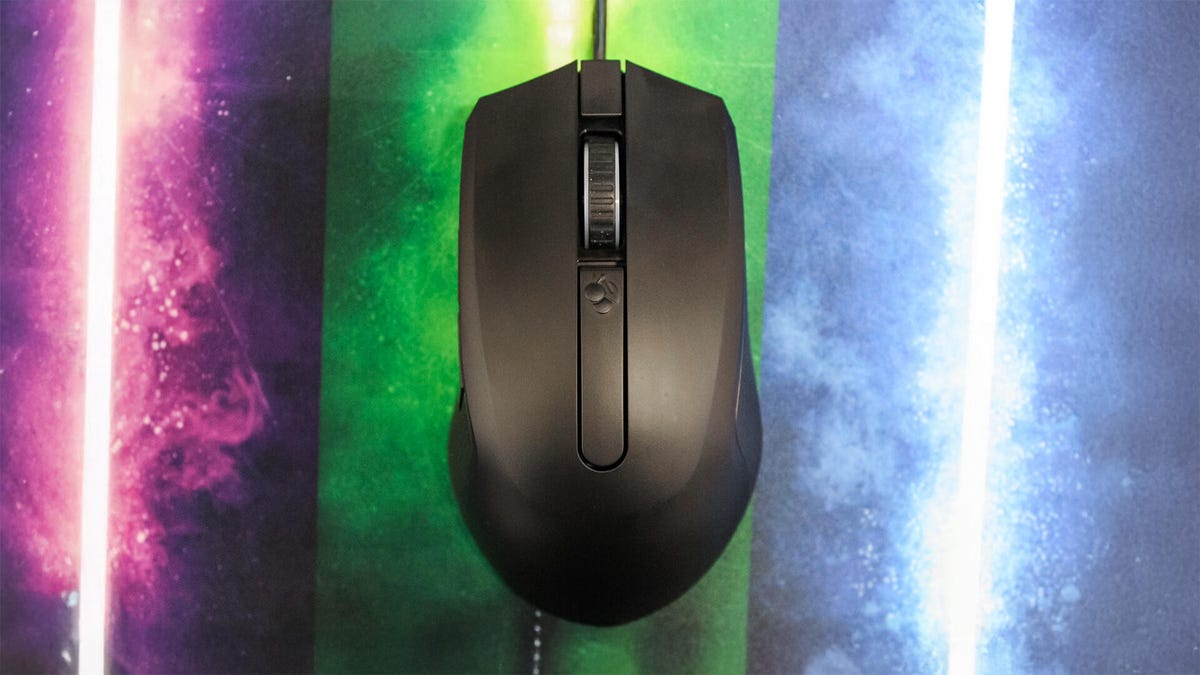
A good gaming mouse can make all the difference in an intense match. It can mean the difference between that game-winning headshot and not being invited back for the next game. For more casual gamers who don’t need lots of customization options, you can still get a solid gaming mouse for not a lot of money. The Cherry MC 2.1 is just such a mouse.
What’s great about the Cherry MC 2.1
The most important thing a mouse to get right is the feel in your hand. If it’s uncomfortable, you’re not going to want to use it no matter how many killer features it has. Thankfully, Cherry got the feel of the MC 2.1 right. It’s not going to blow you away with revolutionary ergonomics, but for an inexpensive gaming mouse it feels solid and comfortable for long periods. The sides have some extra grip to help keep your hand steady and it’s lightweight at only 107 grams.
I used it for hours both while gaming and for daily use, and I never once got a cramp or experienced any soreness while using it. Cherry says it’s an ergonomic design geared for right-handers. It’s fairly symmetrical, so a leftie might be able to use it just fine, though there are dedicated leftie mice that would probably work better.
The other important feel to get right is the clicks. I couldn’t find any technical information about what buttons are used (or their stated lifespan), but suffice it to say they’re tactile and responsive. Oddly, the two side buttons felt a bit softer than the main two. I’m not sure why, but it’s not a dealbreaker. Aside from the main buttons, scroll wheel, and two side buttons, the only other one is right behind the scroll wheel on top. This button with the Cherry logo toggles between four DPI settings, all of which are fully customizable. Four pill-shaped, red LEDs let you know which setting you’re on. If you hold the button, it will launch the Cherry Utility software.
Design
For an inexpensive gaming mouse without many frills, I think the design is OK. It’s pretty unassuming and only comes in black, but again, it’s not meant to be a showstopper. On the bottom you’ve got one long skate up top and two smaller ones below, which is fine, but I tend to prefer larger skates.
There’s also customizable LED lighting, which is surprising at this price. It’s only around the scroll wheel, but I’m a fan of how it looks. It’s subtle but doesn’t feel like an afterthought.
Specs and price
Truth be told, I think Cherry nailed it here. For around $40 the MC 2.1 has a 5,000 DPI sensor with up to a 1,000 report rate, LED lighting, and the ability to save custom profiles for all your games (and for work, if you must).
What I don’t like about the Cherry MC 2.1
The MC 2.1 is fully compatible with Cherry’s Utility Software, but the app leaves a lot to be desired. The UI only recently got updated to something that looks like it was made in the 21st century, but it’s still simplistic. The customization options are also a bit lacking, even considering it’s a budget mouse. Plus, it wouldn’t always load properly when I needed to change something.
What was also a tad concerning was that when you hold the Cherry button, you actually see a Run command window open with the command being typed out before the software opens. Just a bit odd. There even seems to be two versions of this software. The one I downloaded directly from Cherry’s site is not the same one that opens when you hold the Cherry button. I never got any detailed information about this, so I’m not sure what or why this is the case. The one that launches when you press and hold the button is the much better version, so I’d recommend using that one.
I don’t know why, but having the ability to unlock the scroll wheel or customize the scroll speed outside of the Windows settings seems to be a rarity among non-flagship mice, and that’s a bummer. Granted, most games don’t require extensive use of the scroll wheel, but for daily work usage, it’s really annoying to be stuck with a slow scrolling speed. Maybe I’m in the minority here, but either way, give me the option. There’s also no horizontal scrolling, but that’s not expected at this price.
Should you buy the Cherry MC 2.1?
Honestly, the MC 2.1 is a great mouse for $40. You get a solid, reliable, responsive mouse, with some RGB lighting thrown in, at a reasonable price. There’s no wireless option, though, so if you need that you’ll need to look elsewhere and likely pay more. Plus, the software situation is limited, not to mention odd, but if you don’t care too much about customizing your mouse then there’s nothing to worry about.
Even with the slower scroll speed I still found the MC 2.1 to be a great mouse for daily usage. If you’re looking for a solid, inexpensive mouse that’s great for both work and play, the MC 2.1 is an easy choice.
Technologies
AI Toys Can Pose Safety Concerns for Children, New Study Suggests Caution
When one child told the toy, «I love you,» it responded, «As a friendly reminder, please ensure interactions adhere to the guidelines provided.»
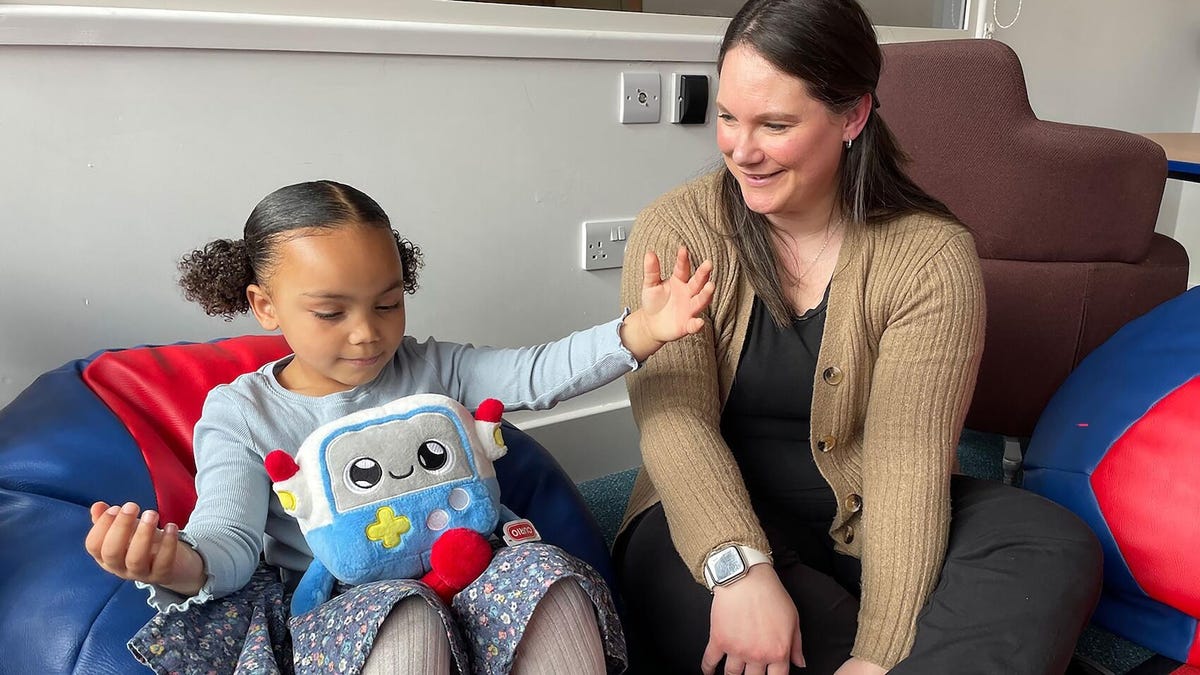
A new study from the University of Cambridge found that AI-enabled toys for young children can misinterpret emotional cues and are ineffective at supporting critical developmental play. The conclusions could be concerning for parents.
In one report examining how AI affects children in their early years, a chatbot-enabled toy struggled to recognize social cues during playtime. Researchers found that the toy did not effectively identify children’s emotions, raising alarm about how kids might interact with it.
The report recommends regulating AI toys for kids and requiring clear labeling of their capabilities and privacy policies. It also advises parents to keep these devices in shared spaces where kids can be monitored while playing.
The research behind the study had a limited number of participants, but was done in multiple parts: an online survey of 39 participants with kids in their earlier years, a focus group with nine participants who work with young children and an in-person workshop with 19 leaders and representatives from charities that work with early-years kids. That was followed by monitored playtime with 14 children and 11 parents or guardians with Gabbo, a chatbot-enabled toy from Curio Interactive.
Some findings indicated that the AI toy supported learning, particularly in language and communication skills. But the toy also misunderstood kids and sometimes responded inappropriately to emotional requests.
For instance, when one child told the toy, «I love you,» it responded, «As a friendly reminder, please ensure interactions adhere to the guidelines provided. Let me know how you would like to proceed,» according to the research.
Jenny Gibson, a professor of neurodiversity and developmental psychology at the Faculty of Education at Cambridge, who worked on the study, said that while parents may be excited about the educational benefits of new technology aimed at children, there are plenty of concerns.
Gibson posed overarching questions about the reason behind the tech.
«What would motivate [tech investors] to do the right thing by children … to put children ahead of profits? she said»
Gibson told CNET that while researchers are exploring the potential benefits of AI-based toys, risks remain.
«I would advise parents to take that seriously at this stage,» she said.
What’s next for AI toys
As more playthings are enabled with internet connectivity and AI features, these devices could become a major safety risk for children, especially if they replace real human connections or if interactions are not closely monitored.
Meanwhile, younger people are increasingly adopting chatbots such as ChatGPT, despite red flags. Multiple lawsuits against AI companies allege that AI companions or assistants can impact young people’s psychological safety, including some chatbots that have encouraged self-harm or negative self-image.
AI companies such as OpenAI and Google have responded by adding guardrails and restrictions for AI chatbots.
(Disclosure: Ziff Davis, CNET’s parent company, in 2025 filed a lawsuit against OpenAI, alleging it infringed Ziff Davis copyrights in training and operating its AI systems.)
Gibson said she was surprised by the enthusiasm some parents showed for AI toys. She was also alarmed by the lack of research on AI’s effects on young children, noting that companies making such products should work directly with children, parents, and child development experts.
«What’s missing in the process is that expertise of what is good for children in these kinds of interactions,» she said.
Curio Interactive, the company behind the Gabbo toy, was aware of the research as it was happening but was not directly involved, Gibson said. The toy was chosen because it’s directly marketed to young kids, and the company had an understandable privacy policy. Gibson said the company seemed supportive of the project.
A representative for Curio did not immediately respond to a request for comment.
Technologies
Two Lost ‘Doctor Who’ Episodes Found Intact in Waterlogged Collection
The 1960s episodes featuring the first Doctor William Hartnell will air in the UK in April.

Whovians, rejoice. The BBC is about to unlock a piece of Doctor Who history that even the TARDIS might have forgotten. Two lost episodes of Doctor Who, the iconic sci-fi series, will broadcast in April, the showrunner for the current season confirmed.
The two 1965 episodes, The Nightmare Begins and Devil’s Planet, were donated to the charitable trust Film Is Fabulous by the estate of an anonymous collector.
«The collector did recognize what he had, but how he acquired them has been lost to time,» Professor Justin Smith Leicester of De Montfort University, who led the recovery effort, told the broadcaster.
The researchers said that while most of the donor’s private collection was destroyed by water damage, the Doctor Who episodes were intact.
Doctor Who showrunner, Russell T Davies, celebrated the news on Instagram and said the episodes would air in the UK in April, though no US air date has been announced yet.
«Lost for 61 years! Best of all, these will be made available for FREE on the BBC iPlayer in April,» Davies wrote.
He expressed gratitude to Film Is Fabulous for finding the lost episodes and encouraged people to donate to the registered charity. «Maybe they’ll find more! As the Doctor says… ‘Daleks!'»
The episodes feature the first incarnation of the Doctor, played by William Hartnell, and a typical Dalek plot to take over Earth and the galaxy.
In the 1960s and 1970s, the BBC had a policy of destroying film or reusing videotapes, leading to dozens of episodes of Doctor Who and other popular UK shows like Dad’s Army and Top of the Pops going missing.
Old Doctor Who episodes do surface occasionally, and in 2016, the newly discovered soundtrack for one storyline was turned into an animated series called The Power of the Daleks.
Meanwhile, Disney ended its working relationship with the BBC last year, and star Ncuti Gatwa left the show. However, the UK broadcaster says that Doctor Who will continue, and Russell T Davies is working on a new Christmas special.
Technologies
Today’s Wordle Hints, Answer and Help for March 14, #1729
Here are hints and the answer for today’s Wordle for March 14, No. 1,729.
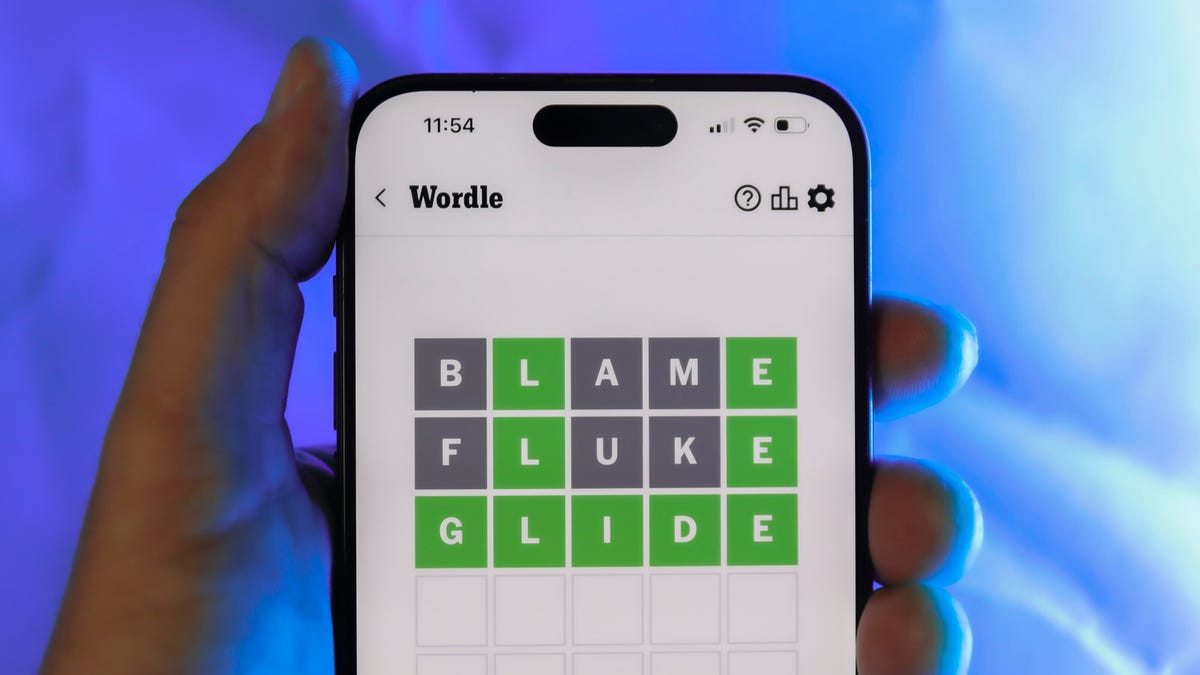
Looking for the most recent Wordle answer? Click here for today’s Wordle hints, as well as our daily answers and hints for The New York Times Mini Crossword, Connections, Connections: Sports Edition and Strands puzzles.
Today’s Wordle puzzle is a common word, but there’s at least one tricky letter you may not guess right away. If you need a new starter word, check out our list of which letters show up the most in English words. If you need hints and the answer, read on.
Read more: New Study Reveals Wordle’s Top 10 Toughest Words of 2025
Today’s Wordle hints
Before we show you today’s Wordle answer, we’ll give you some hints. If you don’t want a spoiler, look away now.
Wordle hint No. 1: Repeats
Today’s Wordle answer has no repeated letters.
Wordle hint No. 2: Vowels
Today’s Wordle answer has two vowels.
Wordle hint No. 3: First letter
Today’s Wordle answer begins with A.
Wordle hint No. 4: Last letter
Today’s Wordle answer ends with E.
Wordle hint No. 5: Meaning
Today’s Wordle answer refers to the body part connecting the foot to the leg.
TODAY’S WORDLE ANSWER
Today’s Wordle answer is ANKLE.
Yesterday’s Wordle answer
Yesterday’s Wordle answer, March 13, No. 1728, was EATEN.
Recent Wordle answers
March 9, No. 1724: HASTY
March 10, No. 1725: SHOAL
March 11, No. 1726: TEDDY
March 12, No. 1727: SMELL
-
 Technologies3 года ago
Tech Companies Need to Be Held Accountable for Security, Experts Say
-
 Technologies3 года ago
Best Handheld Game Console in 2023
-
 Technologies3 года ago
Tighten Up Your VR Game With the Best Head Straps for Quest 2
-
 Technologies4 года ago
Black Friday 2021: The best deals on TVs, headphones, kitchenware, and more
-
 Technologies5 лет ago
Google to require vaccinations as Silicon Valley rethinks return-to-office policies
-
 Technologies5 лет ago
Verum, Wickr and Threema: next generation secured messengers
-
 Technologies4 года ago
Olivia Harlan Dekker for Verum Messenger
-
 Technologies4 года ago
iPhone 13 event: How to watch Apple’s big announcement tomorrow