
Technologies
Adobe’s New Firefly AI App Lets You Try AI Image and Video Generation for Free
Both the iOS and Android versions of the app give you free credits to experiment with Adobe’s AI.
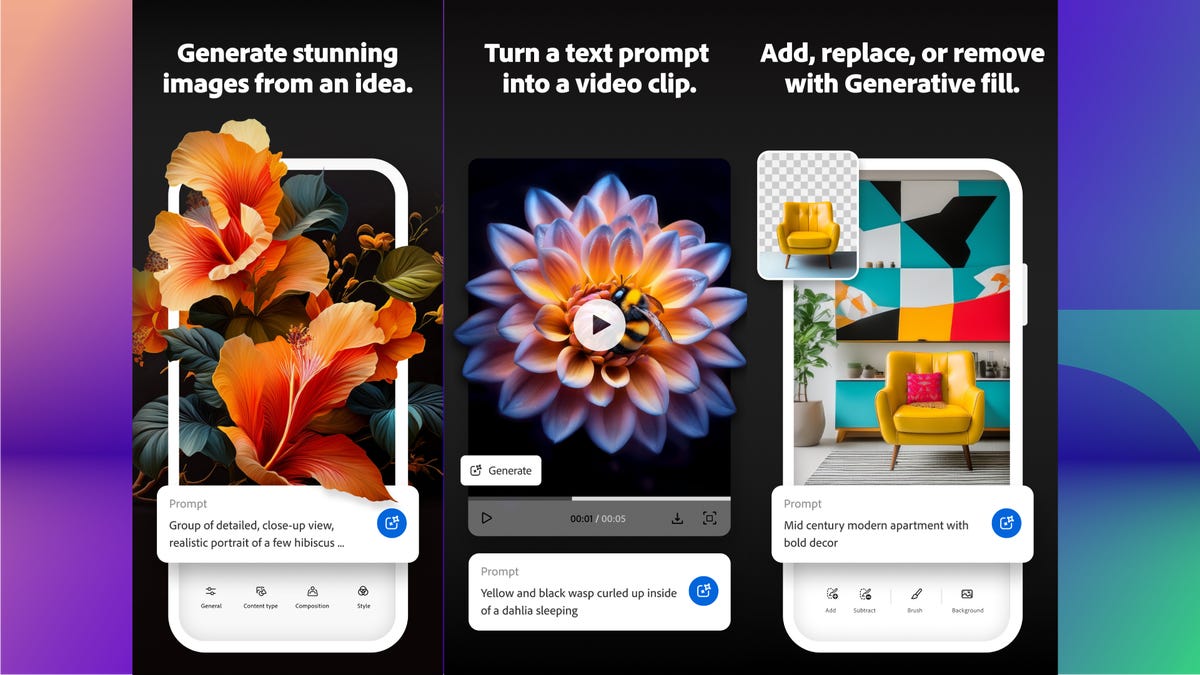
Adobe’s Firefly AI is now available as mobile apps for iPhones and Androids, the company announced on Tuesday. These apps are free to download and let you use Firefly to create AI images and videos on the go. Plus, the app comes with a few free generative credits for you to experiment with Adobe’s AI.
Adobe is also expanding its roster of third-party AI partners to include six new models from Ideogram, Pika, Luma and Runway. Google’s latest AI models are also joining the lineup, including the internet-famous Veo 3 AI video generation model with native audio capabilities and the Imagen 4 text-to-image model support. Finally, its moodboarding AI program, Firefly Boards, is generally available today after months in beta.
Here’s everything you need to know about Adobe’s newest batch of Firefly AI updates. For more, check out our favorite AI image generators and what to know about AI video models.
Firefly AI for iOS and Android users
Adobe’s Firefly mobile apps will let you access its AI image and video capabilities from your phone. A mobile app felt like the next natural step, since Adobe saw that mobile web usage of Firefly noticeably increased after Adobe’s Firefly video capability launched in early 2025.
Not every Firefly feature will be available at launch, but for now, we know that these features will be included: text-to-image, text- and image-to-video, generative fill, and generative expand. You can download the app now from the Apple App Store and Google Play Store.
The app is free to download, but you’ll need a Firefly-inclusive Adobe plan to really use the app. In the hopes that you’ll sign up for a full plan, Adobe gives you 12 free generation Firefly credits (10 for images, two for videos, which doesn’t shake out to many of each). So you can use those to see if Firefly is a good fit for you.
Firefly plans start at $10 per month for 2,000 credits (about 20 videos), increasing in price and generation credits from there. Depending on your Adobe plan, you may already have access to Firefly credits, so double-check that first.
Adobe’s six new AI models from Google, Runway and more
Adobe’s also adding new outside AI creative models to its offerings, including image and video models from Ideogram, Pika, Luma and Runway. You might recognize the name Runway from its deal with Lionsgate to create models for the entertainment giant. Ideogram, Pika and Luma are all other well-known AI creative services. Google’s Veo 3 AI video generator is also joining, bringing its first-of-its-kind synchronized AI audio capabilities, along with the latest generation of Google’s AI image model.
This is the second batch of third-party models that Adobe has added to its platform. Earlier this spring, Adobe partnered with OpenAI, Google and Black Forest (creator of Flux) to bring the companies’ AI models to Adobe. What’s unique about this is that all third-party models have to agree to Adobe’s AI policy, which prevents all the companies from training on customers’ content — even if the individual companies don’t have that policy on their own, it’s standardized across all models offered through Adobe. This is also true for the new models added today. For AI-wary professional creators who make up the majority of Adobe users, that’s a bit of good news.
You’ll need a paid Firefly plan to access outside models; otherwise, you’ll just have access to the Adobe models. Here are all the AI models available through Adobe:
- Adobe Firefly Image 3
- Adobe Firefly Image 4
- Adobe Firefly Image Ultra
- Flux 1.1 Pro
- Flux 1 Kontext
- Google’s Imagen 3
- OpenAI’s image generation model
- (new) Ideogram 3
- (new) Google’s Imagen 4
- (new) Runway’s Gen-4 Image
For video, you can use:
- Adobe Firefly Video
- Google Veo 2
- (new) Google Veo 3
- (new) Luma AI Ray 2
- (new) Pika’s text-to-video generator
Adobe’s own Firefly AI models are trained on a combination of Adobe Stock and other licensed content. You can learn more in Adobe’s AI guidelines and approach to AI.
AI moodboarding gets a boost
Other Adobe updates include the general release of its moodboarding program, Firefly Boards, which has been in beta since April. Moodboarding is a practice that lets you cluster together different elements, like colors and shapes, to evoke specific moods and aesthetics. It’s a good initial step for planning content and campaigns.
You can use the infinite canvas to brainstorm and plan content. You can generate images and videos in Boards using Adobe and non-Adobe models; the setups are very similar to generating in the regular Firefly window. Boards are collaborative, so you can edit with multiple people. A new one-click arrange button can help you organize and visualize your files more easily, a much-requested feature that came out of the beta.
Firefly boards are synced up with your Adobe account. So you can select a photo in a Board, open it in Photoshop and edit it. Those changes will then be synced up with your Firefly Board in less than a minute, so you can always see the latest version of your file without needing to be limited to editing in Boards.
For more, check out Premiere Pro’s first generative AI feature and the best Photoshop AI tools.
Technologies
Today’s NYT Connections: Sports Edition Hints and Answers for April 12, #566
Here are hints and the answers for the NYT Connections: Sports Edition puzzle for April 12 No. 566.
Looking for the most recent regular Connections answers? Click here for today’s Connections hints, as well as our daily answers and hints for The New York Times Mini Crossword, Wordle and Strands puzzles.
Today’s Connections: Sports Edition is a tough one. Remember, sometimes surnames are also words that have meanings, and vice-versa. If you’re struggling with today’s puzzle but still want to solve it, read on for hints and the answers.
Connections: Sports Edition is published by The Athletic, the subscription-based sports journalism site owned by The Times. It doesn’t appear in the NYT Games app, but it does in The Athletic’s own app. Or you can play it for free online.
Read more: NYT Connections: Sports Edition Puzzle Comes Out of Beta
Hints for today’s Connections: Sports Edition groups
Here are four hints for the groupings in today’s Connections: Sports Edition puzzle, ranked from the easiest yellow group to the tough (and sometimes bizarre) purple group.
Yellow group hint: Put ’em together for…
Green group hint: College towns.
Blue group hint: Fire it in there!
Purple group hint: Not leg.
Answers for today’s Connections: Sports Edition groups
Yellow group: Expression of approval.
Green group: SEC cities.
Blue group: Hall of Fame pitchers.
Purple group: ____ arm.
Read more: Wordle Cheat Sheet: Here Are the Most Popular Letters Used in English Words
What are today’s Connections: Sports Edition answers?
The yellow words in today’s Connections
The theme is expression of approval. The four answers are applause, clapping, hand and ovation.
The green words in today’s Connections
The theme is SEC cities. The four answers are Auburn, Austin, College Station and Oxford.
The blue words in today’s Connections
The theme is Hall of Fame pitchers. The four answers are Feller, Fingers, Grove and Plank.
The purple words in today’s Connections
The theme is ____ arm. The four answers are dead, fore, side and stiff.
Technologies
Today’s NYT Mini Crossword Answers for Sunday, April 12
Here are the answers for The New York Times Mini Crossword for April 12.
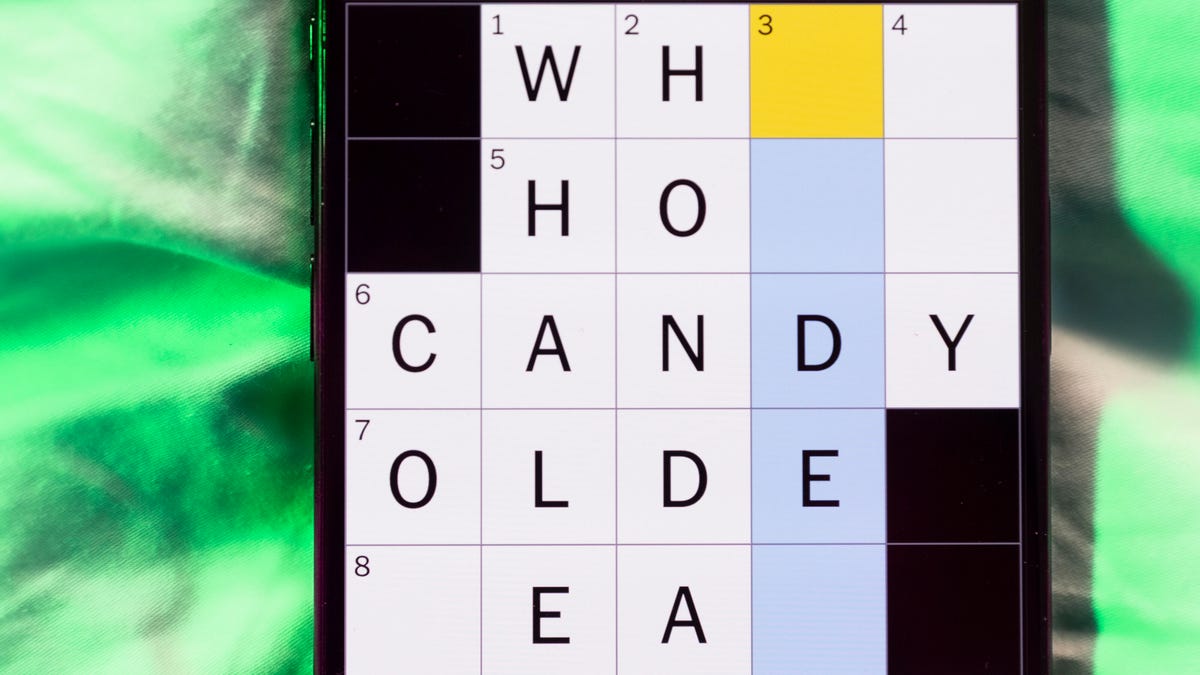
Looking for the most recent Mini Crossword answer? Click here for today’s Mini Crossword hints, as well as our daily answers and hints for The New York Times Wordle, Strands, Connections and Connections: Sports Edition puzzles.
Need some help with today’s Mini Crossword? I found 4-Across to be a stumper for a little while, and I even grew up on a farm! Read on for all the answers. And if you could use some hints and guidance for daily solving, check out our Mini Crossword tips.
If you’re looking for today’s Wordle, Connections, Connections: Sports Edition and Strands answers, you can visit CNET’s NYT puzzle hints page.
Read more: Tips and Tricks for Solving The New York Times Mini Crossword
Let’s get to those Mini Crossword clues and answers.
Mini across clues and answers
1A clue: First-aid case
Answer: KIT
4A clue: Rooster giving directions on a farm, maybe
Answer: VANE
5A clue: Showing little enthusiasm
Answer: TEPID
6A clue: Borough said to be the birthplace of hip-hop
Answer: BRONX
7A clue: Bird of prey
Answer: HAWK
Mini down clues and answers
1D clue: «Bam!»
Answer: KAPOW
2D clue: Bold way to solve a print crossword
Answer: ININK
3D clue: Spinoff of a popular lecture series
Answer: TEDX
4D clue: Aloe ___
Answer: VERA
5D clue: «Frankly …,» in a text
Answer: TBH
Technologies
Today’s Wordle Hints, Answer and Help for April 12, #1758
Here are hints and the answer for today’s Wordle for April 12, No. 1,758.
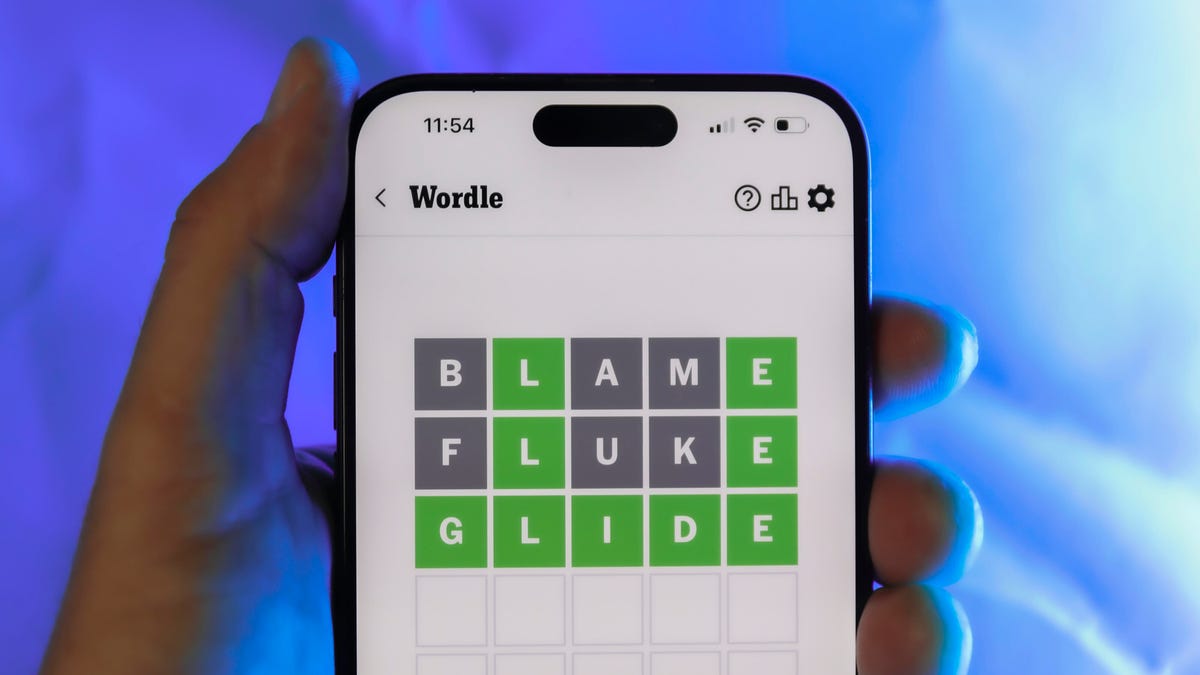
Looking for the most recent Wordle answer? Click here for today’s Wordle hints, as well as our daily answers and hints for The New York Times Mini Crossword, Connections, Connections: Sports Edition and Strands puzzles.
Today’s Wordle puzzle is a tough one, with a double letter that could throw you off. If you need a new starter word, check out our list of which letters show up the most in English words. If you need hints and the answer, read on.
Read more: New Study Reveals Wordle’s Top 10 Toughest Words of 2025
Today’s Wordle hints
Before we show you today’s Wordle answer, we’ll give you some hints. If you don’t want a spoiler, look away now.
Wordle hint No. 1: Repeats
Today’s Wordle answer has one repeated letter.
Wordle hint No. 2: Vowels
Today’s Wordle answer has two vowels, plus one sometimes vowel.
Wordle hint No. 3: First letter
Today’s Wordle answer begins with A.
Wordle hint No. 4: Last letter
Today’s Wordle answer ends with Y.
Wordle hint No. 5: Meaning
Today’s Wordle answer can refer to a narrow passageway between or behind buildings.
TODAY’S WORDLE ANSWER
Today’s Wordle answer is ALLEY.
Yesterday’s Wordle answer
Yesterday’s Wordle answer, April 11, No. 1757, was PRUDE.
Recent Wordle answers
April 7, No. 1753: DENSE
April 8, No. 1754: INLET
April 9, No. 1755: LADEN
April 10, No. 1756: CAROM
-
 Technologies3 года ago
Tech Companies Need to Be Held Accountable for Security, Experts Say
-
 Technologies3 года ago
Best Handheld Game Console in 2023
-
 Technologies3 года ago
Tighten Up Your VR Game With the Best Head Straps for Quest 2
-
 Technologies4 года ago
Black Friday 2021: The best deals on TVs, headphones, kitchenware, and more
-
 Technologies5 лет ago
Google to require vaccinations as Silicon Valley rethinks return-to-office policies
-
 Technologies5 лет ago
Verum, Wickr and Threema: next generation secured messengers
-
 Technologies4 года ago
Olivia Harlan Dekker for Verum Messenger
-
 Technologies4 года ago
The number of Сrypto Bank customers increased by 10% in five days