
Technologies
The Turtle Beach Stealth 700 Gen 3 Headphones Are Fantastic for Gaming, With One Big Compromise
I love everything about these headphones… but I hate using them in public.
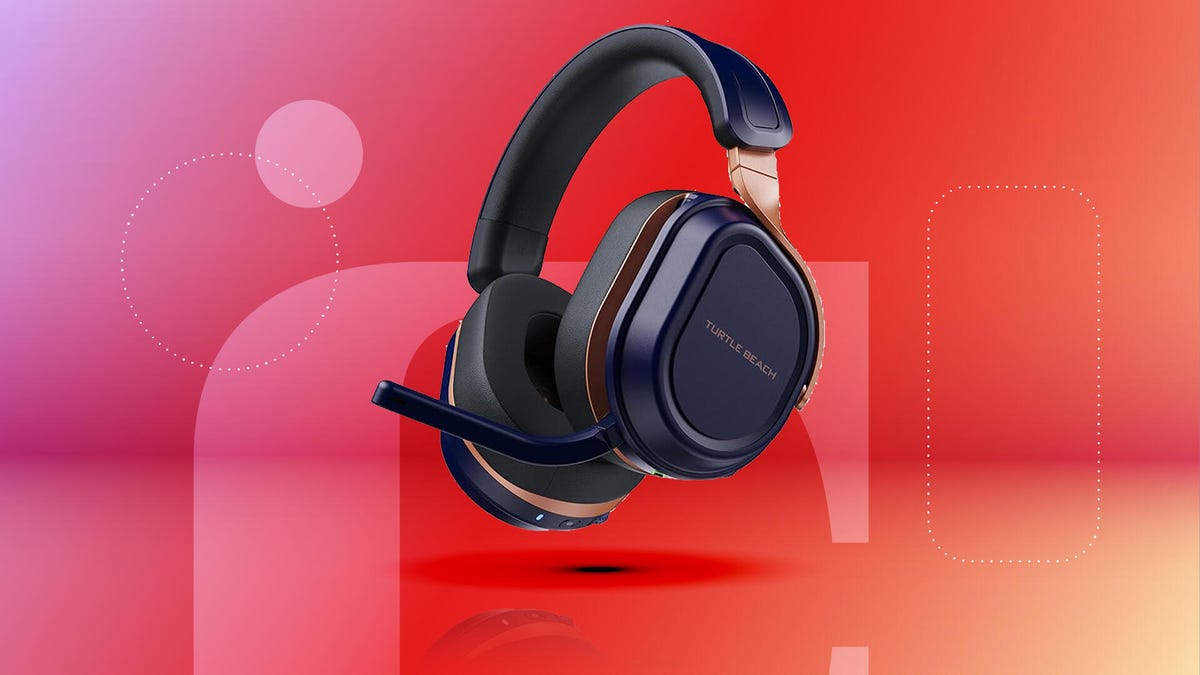
Turtle Beach is no stranger to good gaming headsets. As far as my friends were concerned, they were essential if you wanted to be considered a «serious» gamer. The company’s Stealth 700 Gen 3 sits just below its Stealth Pro line and offers an impressive range of features for $200. For starters the headphones has big, 60mm drivers, plus multiple wireless transmitters as well as Bluetooth. The PC version even includes the option for 24-bit audio, sadly at the cost of Xbox compatibility.
Speaking of compatibility, the non-24-bit version will work with PC, Xbox, PlayStation and any Bluetooth device like a phone or Nintendo Switch. The CrossPlay button on the right earcup lets you instantly switch between the wireless transmitters. You can even stream audio from a Bluetooth-connected device and the wireless transmitter simultaneously so you can listen to an epic playlist from your phone while dominating on the battlefield.
What I like about the Turtle Beach Stealth 700 Gen 3
The ear cups are quite comfortable. The cushions are memory foam and covered in a leatherette material that never got uncomfortable or hot for me while wearing them for long periods. Turtle Beach also has what they call «ProSpecs» technology, which is supposedly glasses-friendly. As a spectacle-clad gamer, I appreciated how comfortable they were while wearing my glasses. Other headsets I’ve worn were not as accommodating.
The mic is cleverly hidden away in the left ear cup, and when you pull it down, it automatically unmutes. For the Gen 3, Turtle Beach has added AI-assisted noise reduction to the microphone, which worked very well for me during video calls. I don’t play many multiplayer games, so I wasn’t able to test it out during gameplay. Judging by my experience on several video calls I’d say it works well. I wouldn’t say it’s significantly better than what any other company is doing, but it’s good at what it does.
The left earcup also houses the power button, USB-C charging port, two control wheels — one of which is remappable. There’s also a remappable Mode button which by default toggles Turtle Beach’s Superhuman hearing mode which increases the sounds of gunshots and footsteps. On the right earcup is the Bluetooth pairing button, Bluetooth volume control wheel and CrossPlay button for switching between sources.
What I don’t like about the Turtle Beach Stealth 700 Gen 3
As my colleague Lori Grunin pointed out in her Stealth Pro review, having a single Bluetooth button can be a double-edged sword. Since Bluetooth headphones automatically connect to the most recently connected device the headphones are always jumping back and forth between devices. So this might take a moment to remedy at the start of a play session.
To be honest, with all the buttons and controls on the Stealth 700, it took me a while to learn them all. At times it became annoying. I’d have to remember which wheel controlled volume for which device. Sometimes I’d hit one when trying to readjust the headset. What I’d really have liked was a master volume wheel that decreased everything at once.
Oddly, I noticed that the power indicator light around the power button would blink rapidly while it was on instead of remaining solid green. It wasn’t a deal-breaker for me since I couldn’t see it, but it seemed the opposite of what a blinking light means on other gear.
There’s a bit of a downside to those big drivers and extra cushiony ear cups: the Stealth 700 is a bit heavy. It never became uncomfortable or painful, but I would instantly feel them with even the slightest head movement. I was always conscious that they were on my head and I always had to be careful of never moving my head too quickly.
What might be a bigger dealbreaker for some, and became more of an issue for me the longer I used them, is the lack of any sort of active noise cancellation. With lots of far cheaper headphones offering noise canceling, albeit not gaming headsets, that seems a drawback for the price of the Stealth 700s. I also liked these headphones enough to use them as my daily headphones, but trying to work in a coffee shop without any noise cancellation can be tough.
The lack of noise cancellation likely helps Turtle Beach’s claim that the Stealth 700 gets up to 80 hours of battery life. That’s pretty impressive for a gaming headset like this. While 80 hours may be technically achievable, you’ll likely never see battery life that high. For me, while gaming an average of 2 to 3 hours a day, a charge lasted about two weeks. Turtle Beach also claims it can fast charge to give you 3 hours of gaming time in about 15 minutes.
Customization of the buttons and EQs takes place in the Turtle Beach Swarm II app, which also lets you adjust mic levels, chat settings and most other typical gaming adjustments. The software can be a bit confusing, even glitchy, at times though. It had trouble recognizing the 700 headset a few times, especially when connected via Bluetooth.
Should you buy the Stealth 700 Gen 3?
The third generation of the Stealth 700 headset is a significant upgrade from the Gen 2 and it offers quite a few more substantial features than other headsets at this price. If you’re in the market for a new gaming headset, the Stealth 700 will give you just about everything you could ask for and then some… except noise canceling.
Lastly, there are three versions of the Stealth 700 Gen 3. The Xbox version is compatible with every platform. The Playstation is compatible with PC and the PC versions is capable of 24-bit audio as well as being compatible with PlayStation. All versions can also connect to Bluetooth devices.
Technologies
Did You Download the White House App? Here Are Its Hidden Security Risks
Cybersecurity researchers have serious concerns about how the app was built.

The White House mobile app has been available for both Android and iOS users for over a week now, and the Trump administration is proudly touting that the app has received 2 million downloads on the White House Instagram page. However, the app’s threats to your personal data, online security and privacy concerns make it something you should think twice about downloading.
The White House announcement says the app’s goal is to deliver «unparalleled access to the Trump administration.» However, there are many security concerns, including location tracking and sketchy features. The White House has not responded to a request for comment.
The big question is, should you download it? I don’t recommend it. Here’s why.
What’s in The White House App?
When I downloaded it soon after its release, the app opened with music and a brief collage video of President Donald Trump. It has pages on affordability, including the prices of things like eggs and milk (but not gas). There’s an overtime calculator. And there are links to articles from Trump’s favored news outlets, like Fox News and Newsmax, along with White House press releases.
The app also features livestreams and videos of press briefings, links to the White House’s social feeds and photos of the president.
Why I deleted The White House app so fast
Behind all those tabs are hair-raising privacy and security issues that have the internet and experts alarmed.
One X user, @Thereallo1026, decompiled the White House app and blogged about it, reporting that the Android app tracks your location as often as every 4.5 minutes and shares a lot of other information, like your notifications and perhaps even your phone number, with a third-party server.
Another red flag is that the code for YouTube embeds comes from a personal GitHub account. Thereallo said that if that GitHub account gets compromised, it can affect every user of the White House’s app.
Another cybersecurity researcher, Atomic Computer Services, posted similar concerns about the iOS app. The researchers found that the app reported to the App Store that it did not collect location data, when in fact it included the capability to do GPS tracking. It’s unclear whether that tracking actually happens, but the code is there, Atomic Computer said.
Other concerns identified by Atomic Computer included the removal of privacy consent banners from third-party content viewed in the app and minimal security protections. «We’ve audited apps for startups with three employees that had better security than this,» Atomic Computer wrote.
Pieter Arntz, a researcher at the cybersecurity software provider Malwarebytes, said in an email to CNET that the White House app relies heavily on third-party sources for things like notifications and widgets.
«In practical terms, that means external providers can influence what data is collected and when features like location‑based messaging are enabled, because much of that logic is configured on their servers rather than baked into the app code itself,» Arntz said. «For a high‑profile government app, the more these decisions sit with outside companies, the harder it is to guarantee strict data‑minimization and full transparency to users about how their information is handled.»
Government-sponsored apps to inform people are commonplace, but this one poses significant risks, experts said. A spokesperson for the Center for Democracy and Technology, which advocates for transparency and privacy in government technology, told CNET that «mobile apps can be a helpful tool for making government more accessible. But this administration has given people a lot of reasons to worry about their privacy, and this app only raises more questions about what the federal government is doing with our personal data.»
For me, this app is a hard pass. I deleted it 10 minutes after downloading it.
Technologies
Amazon Is Pulling Support for Kindles From 2012 or Earlier. What to Do Now
If there’s a book you’ve been waiting to read on your old Kindle device, make sure you download it before May 20.
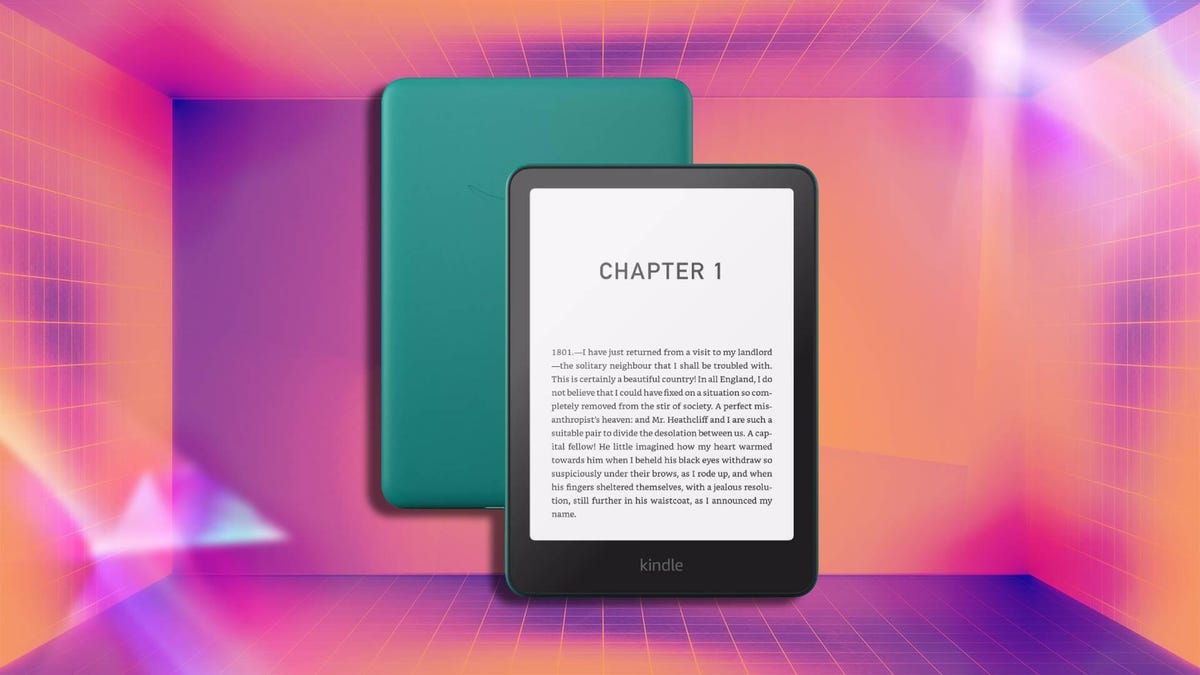
That Kindle device you’ve been holding onto for 15 years now has an expiration date, as Amazon will end support for Kindle models from 2012 or earlier on May 20. An Australian Kindle user first reported the change before Amazon confirmed the news to PCMag and said it will soon email users in the US.
The books that you already downloaded on your Kindle device won’t disappear after next month, but you won’t be able to connect to the network to buy, borrow or download new ones.
If you still have a book that you want to finish reading on one of these devices, make sure that you don’t deregister the device or do a factory reset. In the email shared by an Australian user on Reddit, Amazon says if you deregister or reset the device, you won’t be able to re-register the device or use it at all afterward.
A representative for Amazon has not yet responded to a request to comment from CNET.
The company also included a promo code in the email for 20% off select new Kindle devices and an ebook credit that’s added to your account after you purchase a new device. However, there’s no word on whether this discount is limited to Australia or if a version will be offered to US users.
Switching devices
Kindle devices released in 2012 or earlier will lose the ability to download books after May 20. The devices that will be affected are:
- Kindle 1st and 2nd Generation
- Kindle DX and DX Graphite
- Kindle Keyboard
- Kindle 4
- Kindle Touch
- Kindle 5
- Kindle Paperwhite 1st Generation
The first-generation model for Kindle was released in 2007, and e-readers have improved a bit in the time since. Amazon told Engadget that fewer than 3% of its users still use these old devices.
In the email to customers, the company said users will still be able to access their Kindle library and the Kindle store using the Android, iOS or desktop app. You can still read and download books by using the Kindle app on your phone or PC.
If this service loss feels like a good time to move on from the Kindle world, there are other e-reader options. Calibre is a free, open-source ebook manager that offers a range of features, like reading and organizing ebooks from multiple sources, as well as downloading news articles and websites.
If you’re looking for a newer Kindle model or a different reading tablet, check out the CNET list for this year’s best e-readers.
Technologies
Overwatch’s Next Hero Is Sierra, but Does That Mean the Rumors Were Wrong?
The new damage hero joins the roster next week, but lore and gameplay details are still under wraps.

After adding five new heroes in February, Overwatch just gave players another look at the new hero coming in season 2 next week. While we didn’t get gameplay details, the new hero trailer revealed that hero 51 is Sierra, and season 2 will be titled Summit.
The game dropped its first look at Sierra last week, and a few details in the new artwork seemed to be in line with expectations that she’s an ally of damage hero Ashe. Ashe’s Deadlock Gang is mentioned in the new trailer, although Sierra is working with Overwatch in trying to stop them. We don’t know yet whether Sierra has ties to other Overwatch heroes and factions.
Alec Dawson, Overwatch’s associate game director, said in February that the next hero would be another damage hero with a «really satisfying skill shot,» which we maybe glimpsed in the trailer when Sierra fires some kind of homing dart onto Emre after he steals something from Watchpoint: Grand Mesa. We also see her use a fully automatic rifle as well as tether to her drone for some aerial maneuvering, which could be hints at the rest of her kit.
While I do love a good skillshot, I also feel like the game has been struggling with damage hero releases over the past year — particularly heroes who have the ability to quickly eliminate someone out of nowhere. The newest damage heroes Anran and Emre didn’t have this problem, but the previous two, Freja and Vendetta, were consistently banned after release because of their quick time to kill, combined with their ability to consistently surprise enemies. I’m hoping Sierra’s skillshot is less bursty.
Even before the art was revealed last week, fans had started to speculate that Overwatch’s season 2 hero would be Frankie, a member of Ashe’s Deadlock Gang. She appeared in the Deadlock Rebels novel by Lyndsay Ely, which follows Ashe and the hero now known as Cassidy early in their outlaw careers. In the book, Frankie makes contact with the two characters by sending them a tiny fly-like drone — perhaps a smaller version of the drone in Sierra’s character art.
Respectfully… y’all aren’t ready for this one 😮💨🔥
Join us Apr 8 at 9am PT for the premiere of our latest Hero Trailer as we kick off the next chapter in the Reign of Talon 💪 pic.twitter.com/1Etxn68tax— Overwatch (@PlayOverwatch) March 31, 2026
The trailer shows Sierra working to stop the Deadlock Gang (who are helping Emre and Freja steal weapons for Talon), but it’s unclear whether Sierra is another character entirely or whether she’s Frankie after taking a different path.
The game’s Reign of Talon season 1 is wrapping up in the next week. The current season kicked off the year-long storyline about Vendetta taking over Talon and also introduced five new heroes into the roster. Devs have promised another new hero each season during the storyline, and today’s hero trailer gives us a few more hints about Sierra.
-
 Technologies3 года ago
Tech Companies Need to Be Held Accountable for Security, Experts Say
-
 Technologies3 года ago
Best Handheld Game Console in 2023
-
 Technologies3 года ago
Tighten Up Your VR Game With the Best Head Straps for Quest 2
-
 Technologies4 года ago
Black Friday 2021: The best deals on TVs, headphones, kitchenware, and more
-
 Technologies5 лет ago
Google to require vaccinations as Silicon Valley rethinks return-to-office policies
-
 Technologies5 лет ago
Verum, Wickr and Threema: next generation secured messengers
-
 Technologies4 года ago
Olivia Harlan Dekker for Verum Messenger
-
 Technologies4 года ago
The number of Сrypto Bank customers increased by 10% in five days