
Technologies
Crisol is a BioShock-Like Cult Horror Shooter Using Your Blood For Bullets
At Summer Game Fest, I got to try out Blumhouse’s next game, a sanguiphilic first-person shooter set on a cursed island coming later this year.
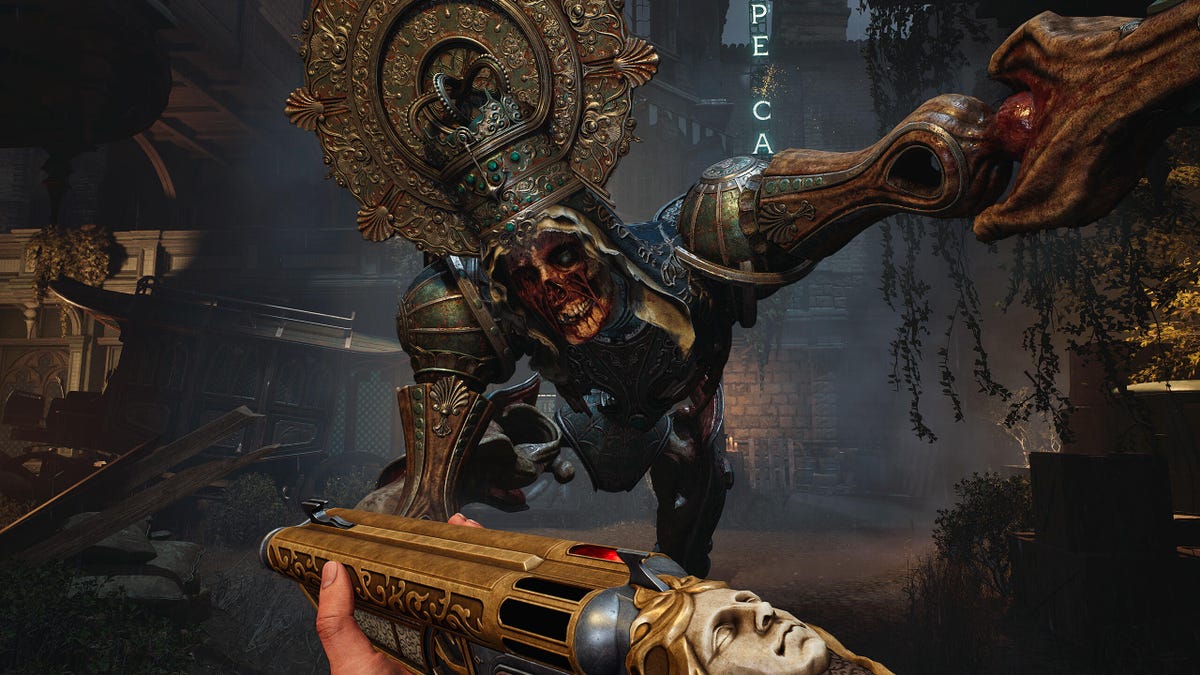
One of the best things about Summer Game Fest is discovering games that blend some of your favorite classics into something wholly new. Crisol: Theater of Idols is a game with clear BioShock influence in its first-person shooter exploration, but melds some cult horror from games like Resident Evil 4 into the mix. On top of it all, to reload your gun, you’ve gotta sacrifice your own blood — and take a chunk from your own health bar.
It’s a novel mechanic that combines with the gothic, nautical setting for a promising approach to horror action games. Crisol is being developed by Vermila Studios, which was acquired by Embracer Group in 2020, but the game is being published by Blumhouse Games. After playing through a 20-minute demo of his new game, the studio’s CEO David Carrasco explained how its game is a course correction for horror games.
«We’ve thought for a long time that survival horror was getting to where you didn’t have that survival element so much,» Carrasco said. «We wanted to give it an extra layer of tension by using your blood, your holy blood, to defeat these unholy monsters.»
I certainly felt it in the demo. As I stalked the moonlit cobblestone streets of an island teeming with unholy, creepy marionette creatures, knowing every missed shot was a bit of lost life. Survival horror games give players weapons to quench fear (or in their absence, amplify it, as with the Amnesia series), but tying my guns’ efficacy to my health made me slow down and pick my shots, amping up the fear as enemies closed in — «keeping that tension constantly in the back of your head,» as Carrasco put it.
While I felt the slightest concern for players with poor aim, there are health-restoring syringes sitting in the corners of abandoned shops and buildings. Crisol also has a mechanic where players can harvest blood (and thus, chunks of life) from dead animals lying around. Tying weapons to health is a twist on another survival horror game trope of saving heavy weapons ammo for dangerous bosses later on, Carrasco noted — in Crisol, you’ll always be able to use your big guns…for a price.
In Crisol, players take on the role of Gabriel, captain of the Tercios Del Sol, a command of soldiers under a sun-worshiping religion that takes on holy missions. He receives a divine order to go to an old island that’s spun off into its own sea religion, Tormentosa, and deal with idol statues that have come alive and begun rampaging around.
When I asked what inspired Crisol, Carrasco was up-front that Bioshock and a number of Resident Evil games (4, 7 and 8 specifically) had the right mix of artistic design and gameplay Vermila Studios was looking for. Dishonored was another source for its heavy emphasis on art.
«Sprinkle in Spanish folklore, religious undertones, and in the end, with all of those fantastic and crazy and brutal inspirations make something that will be unique and memorable,» Carrasco said.
Spanish folklore is underutilized compared to the Japanese, Nordic and American mythology that appears in many games, Carrasco said. Vermila Studios, based in the Spanish city of Madrid, drew on its home country’s history and culture — and though the island players visit in Crisol doesn’t explicitly take place in Spain, players will be able to connect the dots with the cathedrals, old architecture, polychromatic statues and stained-glass windows that make up the game’s visual language.
That blend applies to religion, too: players will run into a faith following on Crisol’s island that follows religions of the sea and sun, which I saw a bit of in the demo, with deification of mermaids and other pseudo-pagan effects. But Carrasco acknowledges the Catholic influence in the game, too.
«We’ve taken a lot of religious inspiration from different religious, like the Catholic Church, which has a lot of deeply rooted components in the Spanish culture, but [also] some other, older religions, even cults from very old history,» Carrasco said, affirming that there’s no explicit connection to the Catholic church or Christianity. «We do have holy blood, but it’s not like a Christ or any connection to the reality of religions nowadays.»
As I wander the cobbled streets of the demo, I see how all these elements blend into Crisol’s visual language. Vermila Studio has a larger-than-usual art department, Carrasco noted, with around 20 people working for five years scribbling out drafts of enemies and locations to give the game a look and feel that felt familiar, fantastical and plausible at the same time — that it really could be on an island out to sea.
As players explore the 10- to 14-hour game, they’ll experience the creeping horror of the cult’s presence, but Vermila isn’t relying on a lot of jump scares, Carrasco said, which can lose their impact if overused. Rather, the game will rely on the tension of enemies behind and pursuing you, from those you run out of blood bullets (and health) to defeat, to those unaffected by your weapons.
In the second half of the demo, I ran into what Carrasco was talking about: a tall, hulking marionette monster with an impossibly wide smile that called out to me, shrugging off my bullets as I darted into buildings to evade its pursuit. Like other invulnerable pursuit bosses (Mr. X in Resident Evil 2, Jack Baker in Resident Evil 7), I had to sneak around while finding bolt cutters to clip chained-off doors. I also had to roll up a gate agonizingly slowly, expecting my stalker to close in on me at any second.
I escaped into a mermaid-themed restaurant and the demo ended, but the vibes of the game stuck with me. They clearly appealed to Blumhouse, too, who were interested in Crisol’s dramatic art style and its blood mechanics. For Vermila Studios, Blumhouse was a good fit for its track record of bringing in new artists and projects that may be smaller but bring something new to the table.
«For us, being a part of this Blumhouse lineup is just like a partnership made in heaven — or hell, maybe — where they understand horror and what tickles that,» Carrasco said.
Crisol: Theater of Idols is coming to PC, PS5 and Xbox later in 2025.
Technologies
How to Use the New Blood Pressure Tool on Your Samsung Galaxy Watch
You’ll need additional hardware to use the blood pressure monitoring tool on your Samsung Galaxy smartwatch.
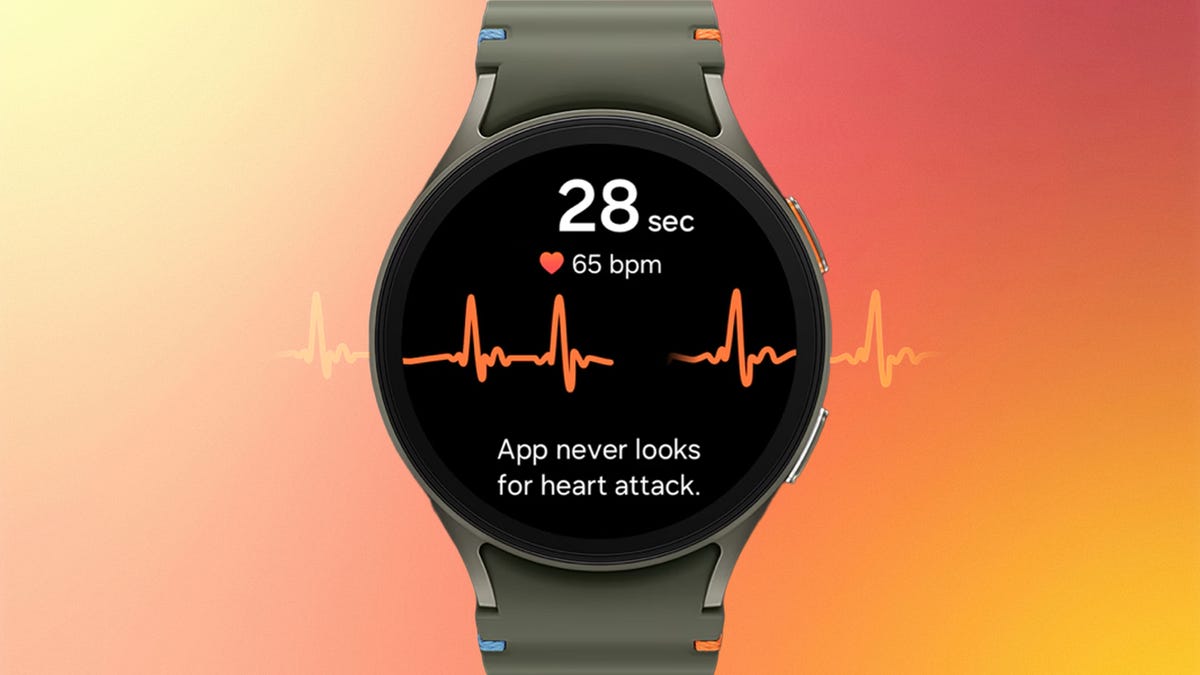
After years of regional limits, Samsung is finally unlocking blood pressure monitoring for Galaxy Watch users in the U.S. Starting Tuesday, the feature is rolling out to the current Galaxy Watch 8 series as well as older models dating back to the Galaxy Watch 4. It’s a major addition for anyone tracking cardiovascular trends, but you shouldn’t expect a simple «plug and play» experience.
For starters, you’ll need to own (or buy) a traditional upper-arm blood pressure cuff to calibrate the feature on the smartwatch. And you’ll have to download a separate app, the Samsung Health Monitor app, on your smartphone. Then you’ll have to recalibrate with the cuff every 28 days to ensure accurate readings.
In other words, the blood pressure monitor requires a blood pressure monitor to function.
Samsung first introduced blood pressure monitoring on its watches in 2020, gradually rolling it out in other countries, but regulatory holdups kept it from being usable in the US.
Unlike Samsung’s ECG and sleep apnea detection features (both FDA-cleared), the blood pressure feature has not received FDA clearance and is intended for wellness purposes only. This means it is not a diagnostic tool and should not be used to identify or treat high blood pressure. Readings are also on-demand only, so you have to manually take them through the watch rather than having it happen automatically in the background.
That last part may change. Samsung’s announcement also noted that passive blood pressure trend monitoring is coming later this year.
Apple debuted FDA-cleared hypertension alerts on newer Apple Watch models in September 2025, which passively monitor and alert owners when it detects signs of high blood pressure. Oura and other wearable companies are working toward similar features through long-term data trends, though true on-demand blood pressure readings remain out of reach for most mainstream consumer smartwatches.
The blood pressure feature is compatible with Galaxy Watch 4 and will only work on watches paired with a Samsung Galaxy phone running Android 12 or higher. It will not be available on other Android phones or on Samsung’s Galaxy Fit tracker. And even if you check all those boxes, you might not get it right away. Samsung says it’s rolling out the feature in phases.
If you do have access (and a cuff handy), setup is fairly straightforward. Once your watch is connected to your phone, download the Samsung Health Monitor app, enable blood pressure tracking and follow the calibration steps while using your upper-arm cuff. Just know you’ll need that cuff nearby anytime you want to keep your readings accurate.
Technologies
Google Upgrades Maps Features With More Gemini and Faster Photo Uploads
Google Maps strengthens its crowdsourcing efforts for its 500 million contributors.
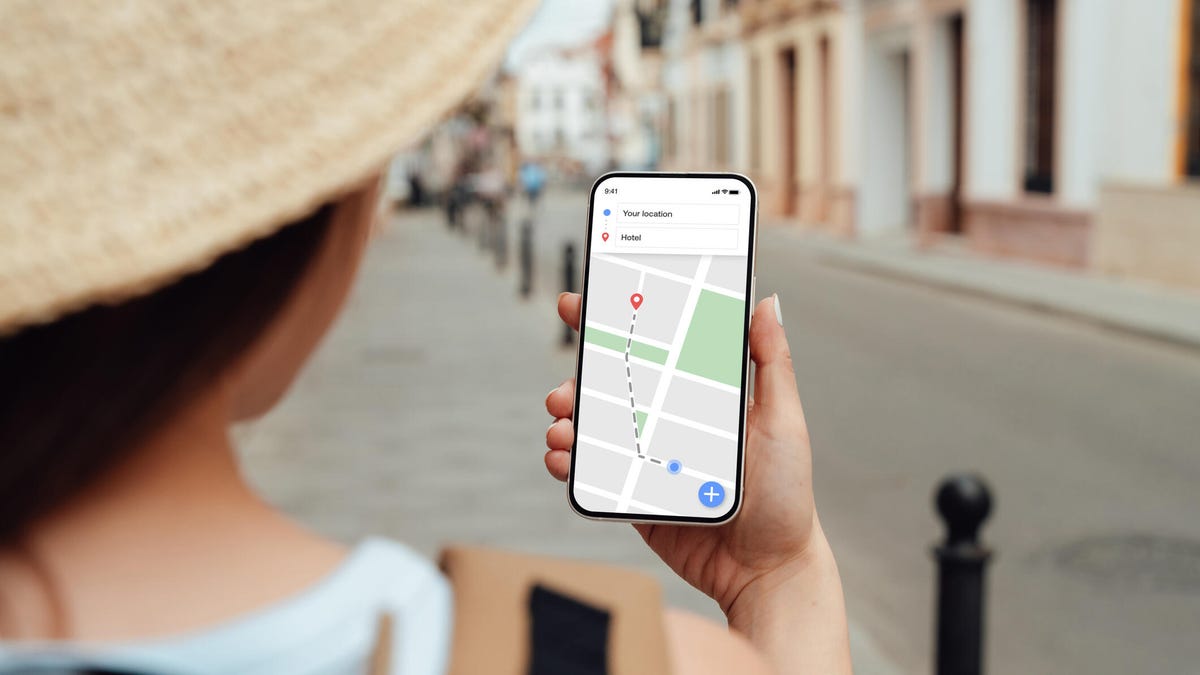
Google announced three new features for Maps on Tuesday that should streamline sharing your experiences. Despite being a strong maps application itself, Google relies on everyday users to contribute their reviews, photos and videos so others doing research can make more informed decisions about places they plan to visit. With the new updates to Google Maps, you can access your photos faster to contribute to information about places you’ve been. You can also choose to have Google’s AI model, Gemini, caption your photos and more quickly check the contributions you’ve made in the past.
New photo and video recommendations
It’s not hard to share photos or videos for a location on Google Maps, but the app will now offer photo and video suggestions from your saved images — if you give it permission to do so. The new feature will appear on the Contribute tab at the bottom of the maps app. When scrolling through the view, you’ll see photo and video recommendations or the option to upload other photos.
How the specific photo and video recommendations are determined isn’t clear, but the new feature will likely use a photo’s geolocation if that setting is enabled in your camera’s settings.
A Google representative didn’t immediately respond to a request for comment.
This feature is now available globally on Android and will expand to iOS in the coming months.
Gemini will auto-caption your photos
Google’s giving your photos some Gemini power by automatically analyzing and captioning them once you’ve selected them to share. This could be helpful in situations where you have selected several photos you don’t care to caption.
If you don’t like what Gemini comes up with, you can edit or remove the caption completely before publishing your photos to Maps.
Gemini captions are available in English on iOS and will expand to other languages globally and Android in the future.
New ways to view your contributions
You can now show off your prior contributions to Google’s Local Guide community program.
When you contribute, you gain points, and the more you contribute, the more you can level up as a Local Guide. All your points and badges are now prominently displayed on your profile. Google’s also adding gold profiles for high-level contributors, so you know you’re reading reviews from experienced users.
The new contributor updates are rolling out now on Android, iOS and desktop.
Technologies
This New Health-Tracking Pet Collar Is Like a Smartwatch for Dogs and Cats
Tractive announces two new smart collars armed with GPS tracking, AI-powered health monitoring and other tech tools.
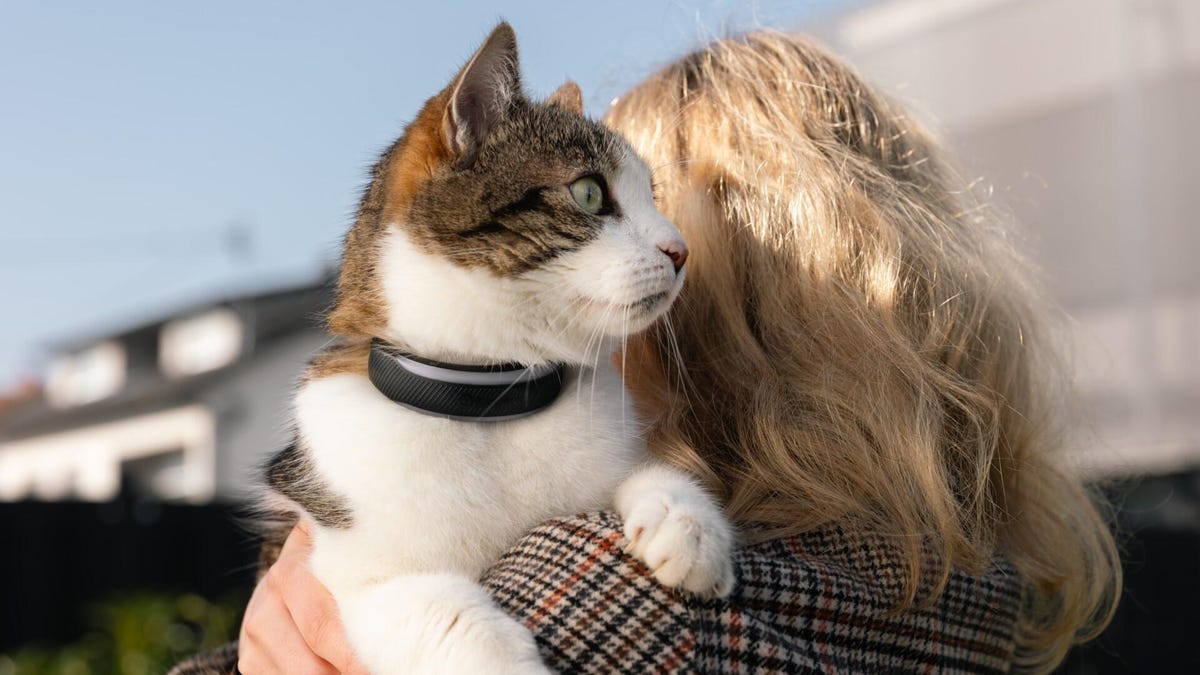
Our pets can’t speak up and tell us how they’re feeling, or why and where they are hiding. Tractive, an Austria- and Seattle-based tech company that creates GPS tracking devices for pets, announced on Wednesday two new smart collars that, according to the press release, «will redefine pet care for millions of families.»
Is your pet stressed, breathing unusually or scratching too much? Much like the basic health-tracking features you can find on a smartwatch, the collars — the Cat 6 Mini ($79) and Dog 6 XL ($89) — are designed to track this behavior and communicate the issues to help maintain your dog or cat’s quality of life.
«Pets can’t tell us when something is wrong, but their bodies can,» Michael Hurnaus, CEO and founder of Tractive, said in a statement. «With cutting-edge sensors on every tracker, learnings from millions of pets and AI-powered insights, we’re turning one of the world’s largest pet data platforms into clear, simple information so pet parents can act sooner and care even better.»
When it comes to tracking collars, dogs have usually been the target pet audience for such devices. Tractive’s new Cat 6 Mini collar aims to provide the same service for your feline friend. You can use it to monitor your cat’s respiratory rate and resting heart rate and identify any health concerns early. It’s expected to ship on May 31.
The Dog 6 XL collar, an upgrade from the company’s previous dog wearable, is designed for dogs weighing over 55 pounds. It’s more durable for outdoor use and offers up to four weeks of battery life between charges. It comes equipped with a scratch-monitoring system that flags unusual scratching behavior caused by allergies, skin irritants and other stressors.
You can also use the app to access your pet’s travels and mark safe zones regarding walks, entries and exits. An AI-powered health hub displays your pet’s overall health stats and also acts as a GPS tracker in case your dog or cat goes missing.
How would a veterinarian interact with the data collected on the device?
A Tractive representative told CNET, «In our experience, veterinarians are most interested in baseline resting heart and respiratory rate, so it’s less about monitoring these vitals in real time during recovery from anesthesia/acute care and more about understanding if the baseline is changing day to day to identify the onset of new conditions or manage existing ones.»
Even though the collars use a SIM card and require a strong cellular connection to work properly, they can capture activity, sleep and health data while offline. However, without connectivity, the devices «ultimately will not provide any utility,» the representative confirmed.
You’ll need to download the accompanying app and select a separate subscription plan at an added cost. The one-year plan costs $120, the two-year plan costs $168, and the five-year plan costs $300.
-
 Technologies3 года ago
Tech Companies Need to Be Held Accountable for Security, Experts Say
-
 Technologies3 года ago
Best Handheld Game Console in 2023
-
 Technologies3 года ago
Tighten Up Your VR Game With the Best Head Straps for Quest 2
-
 Technologies4 года ago
Black Friday 2021: The best deals on TVs, headphones, kitchenware, and more
-
 Technologies5 лет ago
Google to require vaccinations as Silicon Valley rethinks return-to-office policies
-
 Technologies5 лет ago
Verum, Wickr and Threema: next generation secured messengers
-
 Technologies4 года ago
Olivia Harlan Dekker for Verum Messenger
-
 Technologies4 года ago
The number of Сrypto Bank customers increased by 10% in five days