
Technologies
I Wear My Beats Studio Pro Headphones 4 Hours a Day — and They’re Over 50% Off Now
Most colors are on sale for $170, bringing these earphones to 51% off.
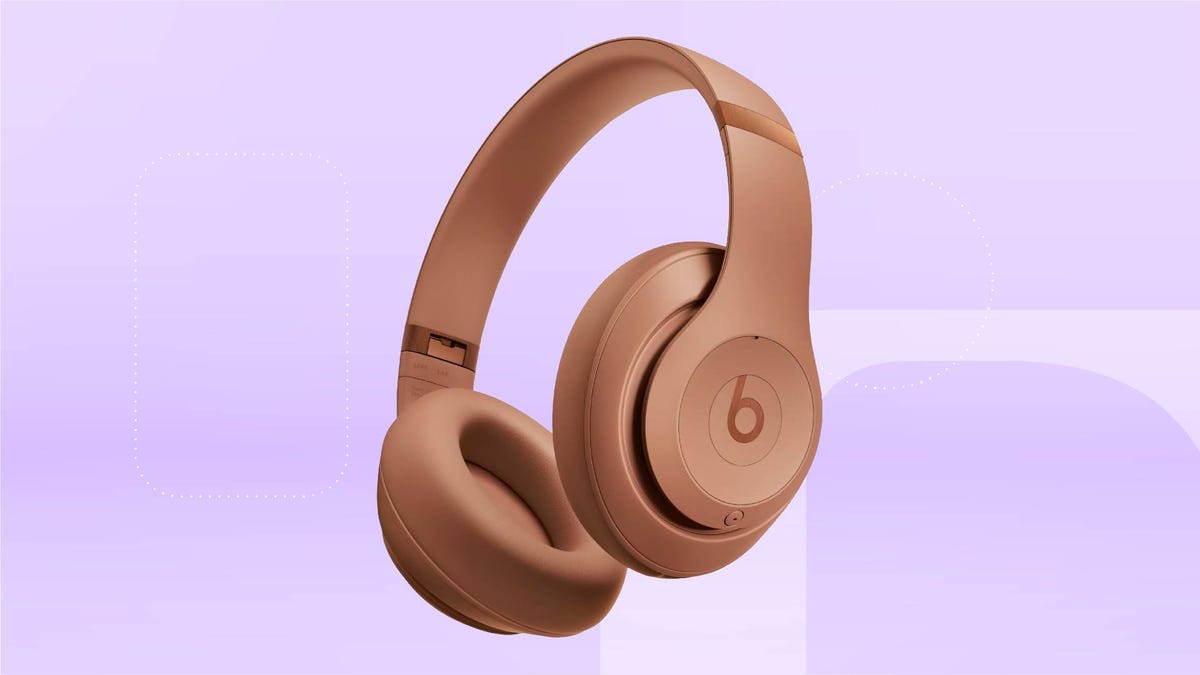
It all started when my beloved Apple AirPods just stopped working one day. No matter what I did, attempting to charge and revive them, they simply would not turn on, and I had to finally accept that they had a good run, and it was time to put them to rest. RIP.
That put me in a tricky predicament, though. I use headphones at least 4 to 5 hours a day, and I desperately needed new ones immediately. I knew I was due for an upgrade, but the AirPods weren’t on sale at the time. But coincidentally, the Beats Studio Pro were.
I didn’t expect to fall in love with a pair of headphones so quickly, especially because I loved my Apple buds so much. I was just hoping for solid noise cancellation and good sound quality, but the Beats delivered so much more — and now they’re an essential part of my daily routine, practically an extension of my ears. Like I said, I get a lot of mileage out of them every single day. Whether I’m writing, commuting, doing chores or taking my precious pup out for a walk, the Beats Studio Pro are there with me. And now, most colors are a solid 51% off right now on Amazon.
If you’ve been eyeing a pair or looking for a thoughtful gift, now’s the time to grab them. Let me explain why.
Hey, did you know? CNET Deals texts are free, easy and save you money.
HEADPHONE DEALS OF THE WEEK
-
$250 (save $101)
-
$298 (save $102)
-
$329 (save $120)
Here’s how the Beats Studio Pro work
Let’s start with the specs. The Beats Studio Pro are premium over-ear headphones that bring serious upgrades to the iconic Beats design. Think of these as the grown-up, more refined cousin of the Beats Solo series. They’re still stylish, still punchy, but with significantly better sound quality and comfort. Here are some key features of the Beats Studio Pro:
- Active Noise Cancellation and Transparency Mode: Two core features that let you tune out the world or stay aware, depending on your mood. The ANC is excellent, especially for this price, and it’s great for navigating travel, open offices or city streets.
- USB-C Lossless Audio: A game-changer for audiophiles. With USB-C, you can listen to lossless audio directly from your device — no compression, just crystal-clear sound.
- Spatial Audio with dynamic head tracking: This creates an immersive, surround-sound-like experience.
- Custom 40mm drivers: Deliver balanced sound, with punchy bass, crisp mids and smooth highs.
- Battery: Up to 40 hours with ANC off or 24 hours with it turned on. That’s more than enough to get you through several workdays or even a full international flight without scrambling for a charger.
- Built-in microphones and voice-targeting beamforming tech: Translation: your voice will sound clear on calls, even in a noisy space.
They also pair effortlessly with both Apple and Android devices, thanks to support for Find My, Google Fast Pair and one-touch pairing.
CNET audio expert David Carnoy closely reviewed these earphones and found both the sound quality and voice-calling performance impressive.
«The noise canceling is quite effective,» Carnoy wrote in his review. «It’s the adaptive variety, so it’s not a fixed setting, and occasionally I’d hear it shift in strength as it adjusted to the ambient noise around me, whether I was on the subway or walking the streets of New York.»
Why I’m obsessed with my Beats
There are plenty of great headphones out there. So what sets these apart for me?
First and foremost, I love the comfort. I’ve worn lots of over-ear headphones that start to ache or feel heavy after an hour or so. I also have several ear piercings — five in my left ear and three in my right — and that means many over-ear headphones push the earring into my skin, digging in until it’s quite painful.
Not these. The earcups are plush, the clamping force is just right, and the memory foam actually makes a difference. I can wear them for hours without fatigue, which is saying something when you log four to five hours a day in them.
The sound quality is also great. Beats used to have a reputation for overly bass-heavy tuning, but the Studio Pro strikes a beautiful balance. There’s still that satisfying low-end thump when I’m listening to pop, hip hop or K-pop, but it doesn’t overpower the vocals or mids. Whether I’m streaming Hozier for the umpteenth hour, catching up on podcasts or listening to a new audiobook, everything sounds great.
Finally, the ANC and Transparency Mode are shockingly good. I’ve used my Beats in loud coffeeshops, on airplanes and while vacuuming, and they efficiently block out noise like a champ. But when I need to hear what’s going on (like when I run into one of my neighbors while I’m walking my dog), a quick button press switches me into Transparency Mode, and I can hear them clearly. It’s seamless.
I would also be remiss if I didn’t mention their style. Frankly, they just look cool. I know that’s not the most important thing, but the sleek matte finish, the minimalist design and the range of colors make these headphones feel like a fashion accessory as much as a tech device. I have the «Earth» color headphones, and they look so gorgeous with any outfit. My one request, though, (Beats execs, I’m sure you’re reading this!) would be to make these in a sage green color. Pretty please?
They’d make a great gift for any audiophile
Buying tech for someone else can be tricky, but I think the Beats Studio Pro are a pretty safe bet for anyone for a few reasons.
For one, they work across platforms, so it doesn’t matter if your gift recipient is team iPhone or Android. The intuitive pairing process, native device integration and wide compatibility make these user-friendly for just about anyone.
They’re also great for all types of use cases. Daily commuters? Check. Frequent flyers? Definitely. College students pulling all-nighters, or music lovers who want to hear every nuance of a track? Absolutely. These can suit really any type of person, day in and day out.
The Beats just feel premium, too. This is the kind of gift someone might not splurge on for themselves, but they would certainly be grateful to open up these Beats, no matter the occasion. If you’re shopping for graduation season, Father’s Day or a summer birthday, these are a hit waiting to happen.
Why this Beats deal matters
Let’s get down to numbers. The Beats Studio Pro normally retail for $350 or $450, depending on the color you select. That’s pretty pricey. But right now, most colors are 51% off, bringing the price down to about $170.
That’s some of the lowest prices I’ve seen, and I keep a pretty close eye on tech deals. Sales like this don’t come around often, especially on newer, high-demand models, so when they do, it’s worth jumping on. Considering the quality, durability and features packed into these headphones, $170 is honestly a steal. You’re getting flagship-level ANC, excellent sound and cross-platform support for less than the cost of most premium earbuds.
My final thoughts on my Beats Studio Pro headphones
In a world full of flashy gadgets and fleeting trends, the Beats Studio Pro are the real deal. They’ve become an essential part of my everyday life, not because they’re trendy or hyped, but because they work. They’re reliable, comfortable and sound fantastic. And now that they’re seeing a deep discount, it’s a great time to pull the trigger and buy them.
Technologies
Today’s NYT Mini Crossword Answers for Saturday, March 14
Here are the answers for The New York Times Mini Crossword for March 14.
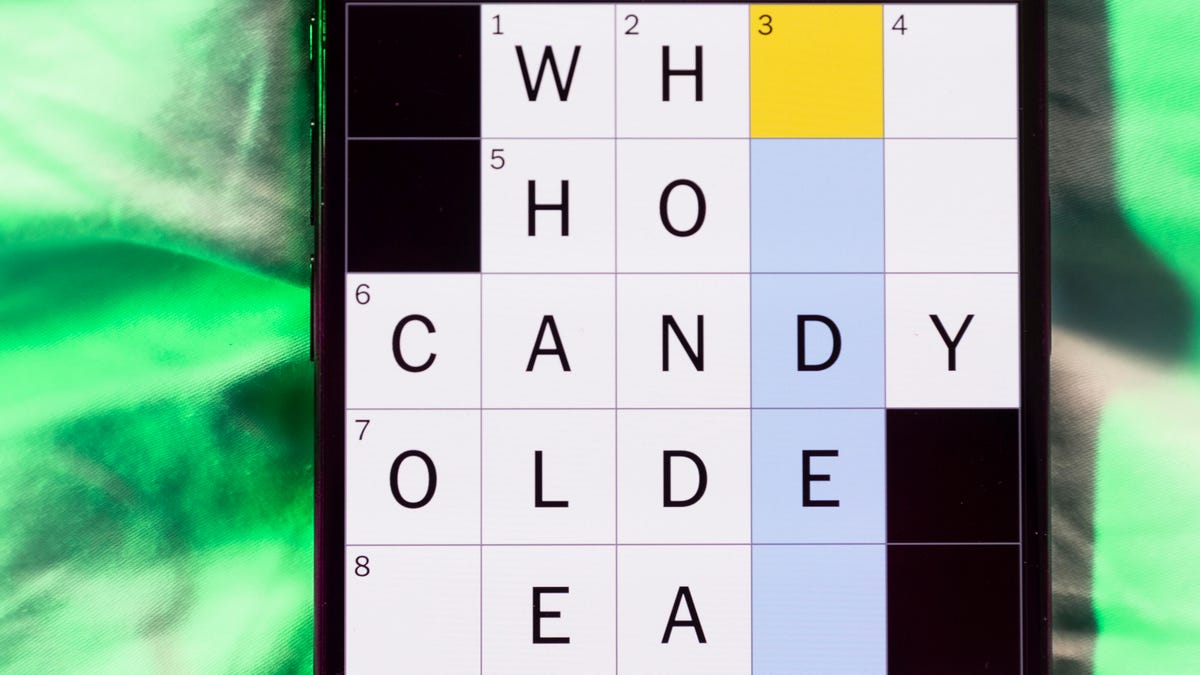
Looking for the most recent Mini Crossword answer? Click here for today’s Mini Crossword hints, as well as our daily answers and hints for The New York Times Wordle, Strands, Connections and Connections: Sports Edition puzzles.
Need some help with today’s Mini Crossword? It’s the extra-long Saturday version, and a few of the clues are tricky. Read on for all the answers. And if you could use some hints and guidance for daily solving, check out our Mini Crossword tips.
If you’re looking for today’s Wordle, Connections, Connections: Sports Edition and Strands answers, you can visit CNET’s NYT puzzle hints page.
Read more: Tips and Tricks for Solving The New York Times Mini Crossword
Let’s get to those Mini Crossword clues and answers.
Mini across clues and answers
1A clue: Book parts: Abbr.
Answer: PGS
4A clue: Silicon Valley company that operates a fleet of robotaxis
Answer: WAYMO
6A clue: To a much greater degree
Answer: WAYMORE
8A clue: Contents of a scuba diver’s tank
Answer: AIR
9A clue: South Korean automaker
Answer: KIA
10A clue: Stop on a train route
Answer: STATION
12A clue: Actress Merman of «Anything Goes»
Answer: ETHEL
13A clue: Find another purpose for
Answer: REUSE
Mini down clues and answers
1D clue: Employee’s hourly calculation
Answer: PAYRATE
2D clue: Workout spot
Answer: GYM
3D clue: «Great» mountains of Tennessee, familiarly
Answer: SMOKIES
4D clue: One giving you the dish?
Answer: WAITER
5D clue: Baltimore M.L.B. player
Answer: ORIOLE
6D clue: Used to be
Answer: WAS
7D clue: Suffix with Caesar or Euclid
Answer: EAN
11D clue: Night that NBC once aired «30 Rock» and «The Office»: Abbr.
Answer: THU
Technologies
AI Toys Can Pose Safety Concerns for Children, New Study Suggests Caution
When one child told the toy, «I love you,» it responded, «As a friendly reminder, please ensure interactions adhere to the guidelines provided.»

A new study from the University of Cambridge found that AI-enabled toys for young children can misinterpret emotional cues and are ineffective at supporting critical developmental play. The conclusions could be concerning for parents.
In one report examining how AI affects children in their early years, a chatbot-enabled toy struggled to recognize social cues during playtime. Researchers found that the toy did not effectively identify children’s emotions, raising alarm about how kids might interact with it.
The report recommends regulating AI toys for kids and requiring clear labeling of their capabilities and privacy policies. It also advises parents to keep these devices in shared spaces where kids can be monitored while playing.
The research behind the study had a limited number of participants, but was done in multiple parts: an online survey of 39 participants with kids in their earlier years, a focus group with nine participants who work with young children and an in-person workshop with 19 leaders and representatives from charities that work with early-years kids. That was followed by monitored playtime with 14 children and 11 parents or guardians with Gabbo, a chatbot-enabled toy from Curio Interactive.
Some findings indicated that the AI toy supported learning, particularly in language and communication skills. But the toy also misunderstood kids and sometimes responded inappropriately to emotional requests.
For instance, when one child told the toy, «I love you,» it responded, «As a friendly reminder, please ensure interactions adhere to the guidelines provided. Let me know how you would like to proceed,» according to the research.
Jenny Gibson, a professor of neurodiversity and developmental psychology at the Faculty of Education at Cambridge, who worked on the study, said that while parents may be excited about the educational benefits of new technology aimed at children, there are plenty of concerns.
Gibson posed overarching questions about the reason behind the tech.
«What would motivate [tech investors] to do the right thing by children … to put children ahead of profits? she said»
Gibson told CNET that while researchers are exploring the potential benefits of AI-based toys, risks remain.
«I would advise parents to take that seriously at this stage,» she said.
What’s next for AI toys
As more playthings are enabled with internet connectivity and AI features, these devices could become a major safety risk for children, especially if they replace real human connections or if interactions are not closely monitored.
Meanwhile, younger people are increasingly adopting chatbots such as ChatGPT, despite red flags. Multiple lawsuits against AI companies allege that AI companions or assistants can impact young people’s psychological safety, including some chatbots that have encouraged self-harm or negative self-image.
AI companies such as OpenAI and Google have responded by adding guardrails and restrictions for AI chatbots.
(Disclosure: Ziff Davis, CNET’s parent company, in 2025 filed a lawsuit against OpenAI, alleging it infringed Ziff Davis copyrights in training and operating its AI systems.)
Gibson said she was surprised by the enthusiasm some parents showed for AI toys. She was also alarmed by the lack of research on AI’s effects on young children, noting that companies making such products should work directly with children, parents, and child development experts.
«What’s missing in the process is that expertise of what is good for children in these kinds of interactions,» she said.
Curio Interactive, the company behind the Gabbo toy, was aware of the research as it was happening but was not directly involved, Gibson said. The toy was chosen because it’s directly marketed to young kids, and the company had an understandable privacy policy. Gibson said the company seemed supportive of the project.
A representative for Curio did not immediately respond to a request for comment.
Technologies
Two Lost ‘Doctor Who’ Episodes Found Intact in Waterlogged Collection
The 1960s episodes featuring the first Doctor William Hartnell will air in the UK in April.

Whovians, rejoice. The BBC is about to unlock a piece of Doctor Who history that even the TARDIS might have forgotten. Two lost episodes of Doctor Who, the iconic sci-fi series, will broadcast in April, the showrunner for the current season confirmed.
The two 1965 episodes, The Nightmare Begins and Devil’s Planet, were donated to the charitable trust Film Is Fabulous by the estate of an anonymous collector.
«The collector did recognize what he had, but how he acquired them has been lost to time,» Professor Justin Smith Leicester of De Montfort University, who led the recovery effort, told the broadcaster.
The researchers said that while most of the donor’s private collection was destroyed by water damage, the Doctor Who episodes were intact.
Doctor Who showrunner, Russell T Davies, celebrated the news on Instagram and said the episodes would air in the UK in April, though no US air date has been announced yet.
«Lost for 61 years! Best of all, these will be made available for FREE on the BBC iPlayer in April,» Davies wrote.
He expressed gratitude to Film Is Fabulous for finding the lost episodes and encouraged people to donate to the registered charity. «Maybe they’ll find more! As the Doctor says… ‘Daleks!'»
The episodes feature the first incarnation of the Doctor, played by William Hartnell, and a typical Dalek plot to take over Earth and the galaxy.
In the 1960s and 1970s, the BBC had a policy of destroying film or reusing videotapes, leading to dozens of episodes of Doctor Who and other popular UK shows like Dad’s Army and Top of the Pops going missing.
Old Doctor Who episodes do surface occasionally, and in 2016, the newly discovered soundtrack for one storyline was turned into an animated series called The Power of the Daleks.
Meanwhile, Disney ended its working relationship with the BBC last year, and star Ncuti Gatwa left the show. However, the UK broadcaster says that Doctor Who will continue, and Russell T Davies is working on a new Christmas special.
-
 Technologies3 года ago
Tech Companies Need to Be Held Accountable for Security, Experts Say
-
 Technologies3 года ago
Best Handheld Game Console in 2023
-
 Technologies3 года ago
Tighten Up Your VR Game With the Best Head Straps for Quest 2
-
 Technologies4 года ago
Black Friday 2021: The best deals on TVs, headphones, kitchenware, and more
-
 Technologies5 лет ago
Google to require vaccinations as Silicon Valley rethinks return-to-office policies
-
 Technologies5 лет ago
Verum, Wickr and Threema: next generation secured messengers
-
 Technologies4 года ago
Olivia Harlan Dekker for Verum Messenger
-
 Technologies4 года ago
iPhone 13 event: How to watch Apple’s big announcement tomorrow