
Technologies
WWDC 2025 Is Just Hours Away: How to Watch and See if iOS 26 Debuts
Apple’s big summer event is imminent. Here are all the details you need if you want to tune in.

Apple’s annual summer software event, WWDC, begins Monday at Apple Park HQ in Cupertino, California. CNET will be there to bring you all the news as it happens, including our first impressions of iOS 19 — which may end up being called iOS 26. You can watch the event online from anywhere in the world.
Apple has already revealed the lineup for its developer conference, which is scheduled to take place from June 9 to June 13, with a mix of online and in-person sessions. The company has scheduled a special event for the first day, from which it will stream its keynote and Platforms State of the Union Address.
This is the point in the year when Apple traditionally unveils major software updates, including the latest versions of iOS, iPadOS and WatchOS, for the iPhone, iPad and Apple Watch, respectively. It’s exciting whether or not you’re planning to invest in a new Apple product this year, as the new software will also roll out to most of the company’s most recent devices, breathing new life into your iPhone for another year or so.
As always, iOS 19 likely won’t arrive until later in the year (probably after the annual September iPhone event), but WWDC will let us know what to expect, as well as potentially giving us insight into new Apple Intelligence tools. In the meantime, check out our iOS 19 wish list of features that CNET staff hope will be coming with this next big software update.
We should also note that it might not even be called iOS 19 — one rumor suggests Apple is changing its numbering system and this iteration will be called iOS 26. Better tune in to see if the rumor is true. CNET has editors and writers attending in person to report on live WWDC 2025 developments as they break.
How to watch WWDC
The June 9 keynote is scheduled to take place at 10 a.m. PT and will detail «groundbreaking updates coming to Apple platforms,» according to a press release. During the keynote, we expect to see the company announce its plans for iOS 19 and other software updates across iPad, Mac, Apple Watch and Apple TV.
The platforms state of the union will take place on the same day at 1 p.m. PT, offering «a deeper dive into the new tools MacOS, TVOS, VisionOS and WatchOS.»
You can watch both events online via apple.com, the Apple TV app and the Apple YouTube channel.
What is WWDC?
WWDC is a conference for the developers who create the apps we use across our Apple devices, from our iPhones to our MacBooks, to learn about new tools and features they can take advantage of that year. However, the event also garners significant attention from beyond the developer community, since it tells us all we need to know about what to expect from the next generation of software updates that will come to our devices.
The online event is free to attend for all developers, and anyone who is curious can tune into Apple’s keynote. But those who want to attend the June 9 event at Apple Park in person need to apply online. In the days following, students and developers will attend sessions where they can engage more deeply with the changes to Apple’s platforms, which will allow them to ensure their apps are fully compatible with and that they take advantage of those changes.
«We’re excited to mark another incredible year of WWDC with our global developer community,» said Susan Prescott, Apple’s vice president of worldwide developer relations. «We can’t wait to share the latest tools and technologies that will empower developers and help them continue to innovate.»
What to expect at WWDC 2025
If rumors are to be believed, Apple’s operating systems are set for a dramatic design overhaul this year. According to Bloomberg, iOS 19, iPadOS 19 and MacOS 16 will all feature new icons and menus, which will also change how our devices are controlled and navigated. The aim is reportedly to create a more cohesive style across platforms that will be reminiscent of VisionOS, the operating system designed for the company’s mixed-reality headset.
But that’s not all — Apple will likely use WWDC to outline the progress it’s made in the field of AI. «I’m looking forward to seeing more details about Apple Intelligence and the new features that will become available,» said Francisco Jeronimo, VP of devices at IDC. «This is critical for Apple, as Google Gemini and the Android vendors have taken significant steps forward with their AI offerings.»
Last year at WWDC 2024, Apple announced iOS 18 and Apple Intelligence — as well as updates to Siri that have yet to materialize.
It’s highly unlikely we’ll see Apple unveil any hardware at this event, although rumors are heating up about next-generation AirTags and a possible iPhone 17 Air. If these are true, they’re more likely to come later in the year.
Technologies
Today’s NYT Mini Crossword Answers for Saturday, March 14
Here are the answers for The New York Times Mini Crossword for March 14.

Looking for the most recent Mini Crossword answer? Click here for today’s Mini Crossword hints, as well as our daily answers and hints for The New York Times Wordle, Strands, Connections and Connections: Sports Edition puzzles.
Need some help with today’s Mini Crossword? It’s the extra-long Saturday version, and a few of the clues are tricky. Read on for all the answers. And if you could use some hints and guidance for daily solving, check out our Mini Crossword tips.
If you’re looking for today’s Wordle, Connections, Connections: Sports Edition and Strands answers, you can visit CNET’s NYT puzzle hints page.
Read more: Tips and Tricks for Solving The New York Times Mini Crossword
Let’s get to those Mini Crossword clues and answers.
Mini across clues and answers
1A clue: Book parts: Abbr.
Answer: PGS
4A clue: Silicon Valley company that operates a fleet of robotaxis
Answer: WAYMO
6A clue: To a much greater degree
Answer: WAYMORE
8A clue: Contents of a scuba diver’s tank
Answer: AIR
9A clue: South Korean automaker
Answer: KIA
10A clue: Stop on a train route
Answer: STATION
12A clue: Actress Merman of «Anything Goes»
Answer: ETHEL
13A clue: Find another purpose for
Answer: REUSE
Mini down clues and answers
1D clue: Employee’s hourly calculation
Answer: PAYRATE
2D clue: Workout spot
Answer: GYM
3D clue: «Great» mountains of Tennessee, familiarly
Answer: SMOKIES
4D clue: One giving you the dish?
Answer: WAITER
5D clue: Baltimore M.L.B. player
Answer: ORIOLE
6D clue: Used to be
Answer: WAS
7D clue: Suffix with Caesar or Euclid
Answer: EAN
11D clue: Night that NBC once aired «30 Rock» and «The Office»: Abbr.
Answer: THU
Technologies
AI Toys Can Pose Safety Concerns for Children, New Study Suggests Caution
When one child told the toy, «I love you,» it responded, «As a friendly reminder, please ensure interactions adhere to the guidelines provided.»
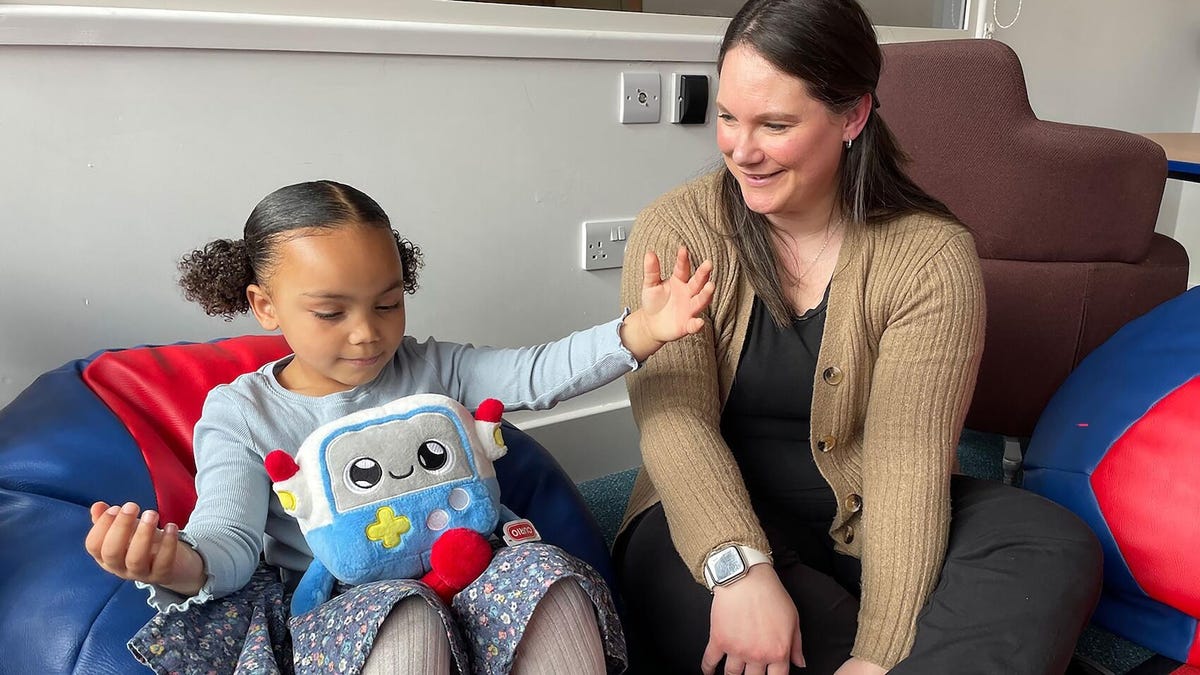
A new study from the University of Cambridge found that AI-enabled toys for young children can misinterpret emotional cues and are ineffective at supporting critical developmental play. The conclusions could be concerning for parents.
In one report examining how AI affects children in their early years, a chatbot-enabled toy struggled to recognize social cues during playtime. Researchers found that the toy did not effectively identify children’s emotions, raising alarm about how kids might interact with it.
The report recommends regulating AI toys for kids and requiring clear labeling of their capabilities and privacy policies. It also advises parents to keep these devices in shared spaces where kids can be monitored while playing.
The research behind the study had a limited number of participants, but was done in multiple parts: an online survey of 39 participants with kids in their earlier years, a focus group with nine participants who work with young children and an in-person workshop with 19 leaders and representatives from charities that work with early-years kids. That was followed by monitored playtime with 14 children and 11 parents or guardians with Gabbo, a chatbot-enabled toy from Curio Interactive.
Some findings indicated that the AI toy supported learning, particularly in language and communication skills. But the toy also misunderstood kids and sometimes responded inappropriately to emotional requests.
For instance, when one child told the toy, «I love you,» it responded, «As a friendly reminder, please ensure interactions adhere to the guidelines provided. Let me know how you would like to proceed,» according to the research.
Jenny Gibson, a professor of neurodiversity and developmental psychology at the Faculty of Education at Cambridge, who worked on the study, said that while parents may be excited about the educational benefits of new technology aimed at children, there are plenty of concerns.
Gibson posed overarching questions about the reason behind the tech.
«What would motivate [tech investors] to do the right thing by children … to put children ahead of profits? she said»
Gibson told CNET that while researchers are exploring the potential benefits of AI-based toys, risks remain.
«I would advise parents to take that seriously at this stage,» she said.
What’s next for AI toys
As more playthings are enabled with internet connectivity and AI features, these devices could become a major safety risk for children, especially if they replace real human connections or if interactions are not closely monitored.
Meanwhile, younger people are increasingly adopting chatbots such as ChatGPT, despite red flags. Multiple lawsuits against AI companies allege that AI companions or assistants can impact young people’s psychological safety, including some chatbots that have encouraged self-harm or negative self-image.
AI companies such as OpenAI and Google have responded by adding guardrails and restrictions for AI chatbots.
(Disclosure: Ziff Davis, CNET’s parent company, in 2025 filed a lawsuit against OpenAI, alleging it infringed Ziff Davis copyrights in training and operating its AI systems.)
Gibson said she was surprised by the enthusiasm some parents showed for AI toys. She was also alarmed by the lack of research on AI’s effects on young children, noting that companies making such products should work directly with children, parents, and child development experts.
«What’s missing in the process is that expertise of what is good for children in these kinds of interactions,» she said.
Curio Interactive, the company behind the Gabbo toy, was aware of the research as it was happening but was not directly involved, Gibson said. The toy was chosen because it’s directly marketed to young kids, and the company had an understandable privacy policy. Gibson said the company seemed supportive of the project.
A representative for Curio did not immediately respond to a request for comment.
Technologies
Two Lost ‘Doctor Who’ Episodes Found Intact in Waterlogged Collection
The 1960s episodes featuring the first Doctor William Hartnell will air in the UK in April.
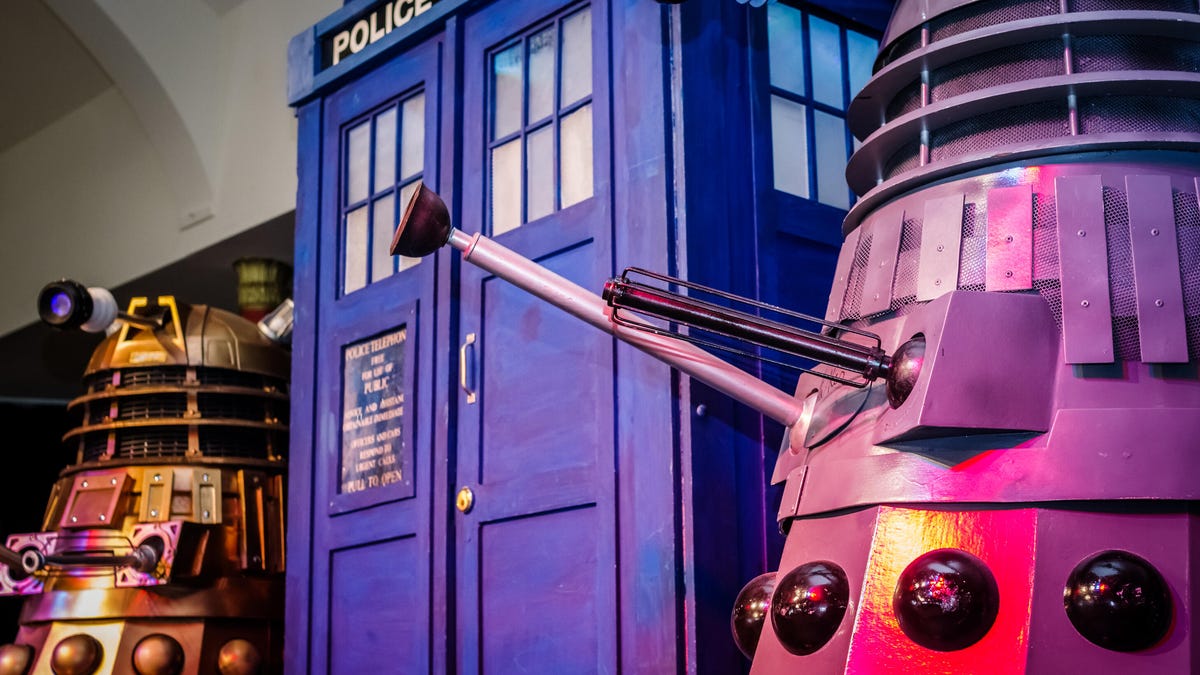
Whovians, rejoice. The BBC is about to unlock a piece of Doctor Who history that even the TARDIS might have forgotten. Two lost episodes of Doctor Who, the iconic sci-fi series, will broadcast in April, the showrunner for the current season confirmed.
The two 1965 episodes, The Nightmare Begins and Devil’s Planet, were donated to the charitable trust Film Is Fabulous by the estate of an anonymous collector.
«The collector did recognize what he had, but how he acquired them has been lost to time,» Professor Justin Smith Leicester of De Montfort University, who led the recovery effort, told the broadcaster.
The researchers said that while most of the donor’s private collection was destroyed by water damage, the Doctor Who episodes were intact.
Doctor Who showrunner, Russell T Davies, celebrated the news on Instagram and said the episodes would air in the UK in April, though no US air date has been announced yet.
«Lost for 61 years! Best of all, these will be made available for FREE on the BBC iPlayer in April,» Davies wrote.
He expressed gratitude to Film Is Fabulous for finding the lost episodes and encouraged people to donate to the registered charity. «Maybe they’ll find more! As the Doctor says… ‘Daleks!'»
The episodes feature the first incarnation of the Doctor, played by William Hartnell, and a typical Dalek plot to take over Earth and the galaxy.
In the 1960s and 1970s, the BBC had a policy of destroying film or reusing videotapes, leading to dozens of episodes of Doctor Who and other popular UK shows like Dad’s Army and Top of the Pops going missing.
Old Doctor Who episodes do surface occasionally, and in 2016, the newly discovered soundtrack for one storyline was turned into an animated series called The Power of the Daleks.
Meanwhile, Disney ended its working relationship with the BBC last year, and star Ncuti Gatwa left the show. However, the UK broadcaster says that Doctor Who will continue, and Russell T Davies is working on a new Christmas special.
-
 Technologies3 года ago
Tech Companies Need to Be Held Accountable for Security, Experts Say
-
 Technologies3 года ago
Best Handheld Game Console in 2023
-
 Technologies3 года ago
Tighten Up Your VR Game With the Best Head Straps for Quest 2
-
 Technologies4 года ago
Black Friday 2021: The best deals on TVs, headphones, kitchenware, and more
-
 Technologies5 лет ago
Google to require vaccinations as Silicon Valley rethinks return-to-office policies
-
 Technologies5 лет ago
Verum, Wickr and Threema: next generation secured messengers
-
 Technologies4 года ago
Olivia Harlan Dekker for Verum Messenger
-
 Technologies4 года ago
iPhone 13 event: How to watch Apple’s big announcement tomorrow