
Technologies
My Favorite Mobile Strategy Game Just Returned From the Dead After 10 Years
Battle Nations is a hybrid base builder and turn-based combat game, and after a decade, it’s still one of the best strategy experiences on the app store.
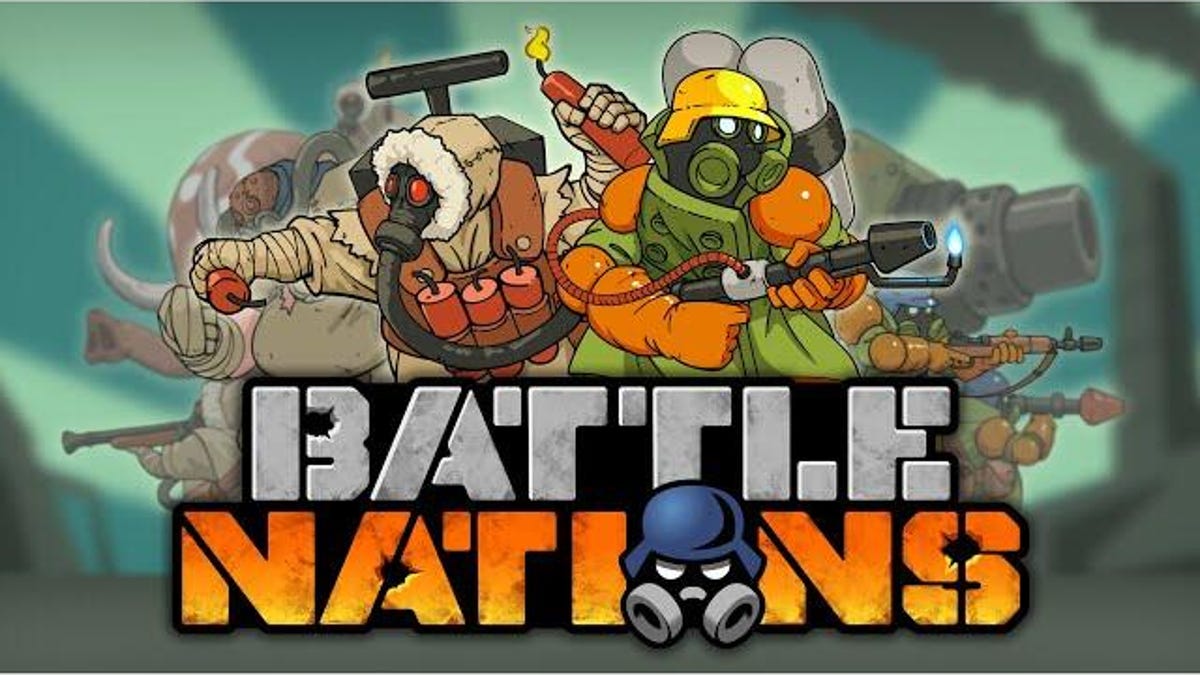
The original Battle Nations, a free-to-play, turn-based military strategy game developed by Studio Z2Live, tragically shut down on Sept. 28, 2016. Battle Nations Rewritten, a new iteration created by a group of dedicated fans, came back to mobile game stores on May 20, 2025. Long live Battle Nations Rewritten.
I formed a Battle Nations guild with my friends back in middle school to take on some of the game’s raids, but we were always severely under-leveled and outnumbered by our enemies. Battle Nations was released during the heyday of mobile gaming, completely revolutionizing what I believed the platform could do. Endless runners like Jetpack Joyride and Subway Surfers gave way to Battle Nations afternoons, filled with planning our group conquests, and it was glorious.
This version of the game is a complete remake of the original since most of the source code was lost. Battle Nations Rewritten was created by a group of fans who formed their own game studio, Madrona Games.
This team of developers has spent the last several years ironing out legal proceedings with the game’s original publisher, King, to gain the rights to use the Battle Nations trademark. Madrona’s developers honed their skills with the release of another game, Tank Tactics, while publishing beta builds for their Patreon subscribers.
A tight-knit community of Battle Nations fans approached a major corporation with their own take on an old property and didn’t have their fan project taken down. Z2Live was acquired by King in 2015, which is a company that was acquired by Activision Blizzard in 2016, which itself was later acquired by Microsoft in 2023 — and despite this, Madrona Games was able to make peace with Battle Nations’ parent company regardless of large gaming corporations’ penchant for suing fan projects using their IP.
Now, Battle Nations is back in all its former glory, allowing a whole new generation of players to build an outpost and expand their military forces in the name of the emperor.
What is Battle Nations about?
Battle Nations was lampooning fascistic empires before Helldivers 2 made it cool. You’re the captain of the 95th Rifle Company of the Imperial Army, a once-renowned military presence that is starting to crack under siege from a rebel army.
As flames of conflict approach the capital, the teenage emperor sends your unit to a far-flung continent in search of resources to create a new superweapon. It’s your job to grow a budding outpost into a massive military complex, fighting off rebels, vicious local fauna and gas-mask clad warriors that your chauvinistic lieutenant has deemed as «raiders.»
Your allies are all pretty atrocious people, but their ignorance is constantly made the butt of the joke in Battle Nations’ narrative writing. Raiders and rebels are consistently better outfitted and more competent than your team, which forces you to work even harder to stay combat-ready as you advance further into the game.
Part city-building simulator and part grid-based tactical battler, Battle Nations appeals to many different types of strategy gamers. I personally enjoyed crafting zany units and utilizing them to defend my outpost as I grew my city-state’s economy.
Once players reach a high enough level, they’ll be able to learn from raider allies to master mammoths and raptors, conduct medical experiments to turn their basic units into zombies and even hire the Team Fortress 2 mercenaries in a bizarre crossover with Valve. (The launch trailer seems to suggest that the famed mercenaries will return in the fan version.)
These advances are only made possible through economic prosperity and strong supply lines. Players need to create warehouses, expand their borders to resource deposits and build facilities to process raw materials into stronger forms if they want to build the best units. I’ve never been gifted at planning out my builds, but the best urban planners will find a great framework to create efficient (and pretty-looking) army bases.
As your outpost grows strong enough, you’ll start to supplement your foot troops with tanks, helicopters and other heavy vehicles. One of my fondest memories was recovering my first Recon Vehicle unit (a lightly-armored APC outfitted with twin miniguns) from an area overrun by wildlife and feeling unstoppable — only for that unit to become a staple of my army months later.
The progression of power is addicting, and combat becomes increasingly complex as you level up and unlock more units. I can’t wait to dive back into Battle Nations’ take on turn-based combat, even if it means I have to start all over with the bog-standard riflemen.
What’s next for Battle Nations Rewritten?
The new Battle Nations isn’t shipping with every multiplayer feature included in the original game quite yet.
Madrona Games has promised that subsequent updates will restore many of the social elements missing from the launch build.
That means the friends list and guilds will be added soon. One of my favorite features from the original Battle Nations was the ability to let an ally raid resource deposits on your outpost to help them resupply materials they were low on, and it’ll be great to see that collaborative gameplay make a return.
Gaining certain resources for ranking up your units largely hinges on interacting with other players, so being unable to visit other outposts is stymying my inevitable rise to the top of the food chain.
Boss strikes are also on the docket for a swift return, allowing players to combine their military might to chip away at a boss enemy’s health bar (and earning sweet rewards if they’re able to fully defeat it).
Beyond returning features, the developers plan to add «new narrative arcs, seasonal operations, time-limited events and more to keep the world of Battle Nations evolving.»
Madrona Games’ Battle Nations Rewritten is launching on every platform that the original Battle Nations was on. That means you’re able to download the game from the App Store, Google Play Store and Steam for free now.
Technologies
Today’s NYT Strands Hints, Answers and Help for March 14 #741
Here are hints and answers for the NYT Strands puzzle for March 14, No. 741.
Looking for the most recent Strands answer? Click here for our daily Strands hints, as well as our daily answers and hints for The New York Times Mini Crossword, Wordle, Connections and Connections: Sports Edition puzzles.
Does today’s date seem memorable to you? If so, today’s NYT Strands puzzle might be easy. Some of the answers are difficult to unscramble, so if you need hints and answers, read on.
I go into depth about the rules for Strands in this story.
If you’re looking for today’s Wordle, Connections and Mini Crossword answers, you can visit CNET’s NYT puzzle hints page.
Read more: NYT Connections Turns 1: These Are the 5 Toughest Puzzles So Far
Hint for today’s Strands puzzle
Today’s Strands theme is: A math teacher’s favorite dessert.
If that doesn’t help you, here’s a clue: 3.14
Clue words to unlock in-game hints
Your goal is to find hidden words that fit the puzzle’s theme. If you’re stuck, find any words you can. Every time you find three words of four letters or more, Strands will reveal one of the theme words. These are the words I used to get those hints but any words of four or more letters that you find will work:
- RITE, SPIT, TIPS, STAT, STATE, GIVE, RUST, FINE, LAZE, SURE, PEAL
Answers for today’s Strands puzzle
These are the answers that tie into the theme. The goal of the puzzle is to find them all, including the spangram, a theme word that reaches from one side of the puzzle to the other. When you have all of them (I originally thought there were always eight but learned that the number can vary), every letter on the board will be used. Here are the nonspangram answers:
- VENT, CRUST, FRUIT, EDGES, GLAZE, FILLING, LATTICE
Today’s Strands spangram
Today’s Strands spangram is HAPPYPIDAY. To find it, start with the H that’s six rows down and three to the right from the upper-left corner, and make — well, a pie shape.
Toughest Strands puzzles
Here are some of the Strands topics I’ve found to be the toughest.
#1: Dated slang. Maybe you didn’t even use this lingo when it was cool. Toughest word: PHAT.
#2: Thar she blows! I guess marine biologists might ace this one. Toughest word: BALEEN or RIGHT.
#3: Off the hook. Again, it helps to know a lot about sea creatures. Sorry, Charlie. Toughest word: BIGEYE or SKIPJACK.
Technologies
Today’s NYT Mini Crossword Answers for Saturday, March 14
Here are the answers for The New York Times Mini Crossword for March 14.

Looking for the most recent Mini Crossword answer? Click here for today’s Mini Crossword hints, as well as our daily answers and hints for The New York Times Wordle, Strands, Connections and Connections: Sports Edition puzzles.
Need some help with today’s Mini Crossword? It’s the extra-long Saturday version, and a few of the clues are tricky. Read on for all the answers. And if you could use some hints and guidance for daily solving, check out our Mini Crossword tips.
If you’re looking for today’s Wordle, Connections, Connections: Sports Edition and Strands answers, you can visit CNET’s NYT puzzle hints page.
Read more: Tips and Tricks for Solving The New York Times Mini Crossword
Let’s get to those Mini Crossword clues and answers.
Mini across clues and answers
1A clue: Book parts: Abbr.
Answer: PGS
4A clue: Silicon Valley company that operates a fleet of robotaxis
Answer: WAYMO
6A clue: To a much greater degree
Answer: WAYMORE
8A clue: Contents of a scuba diver’s tank
Answer: AIR
9A clue: South Korean automaker
Answer: KIA
10A clue: Stop on a train route
Answer: STATION
12A clue: Actress Merman of «Anything Goes»
Answer: ETHEL
13A clue: Find another purpose for
Answer: REUSE
Mini down clues and answers
1D clue: Employee’s hourly calculation
Answer: PAYRATE
2D clue: Workout spot
Answer: GYM
3D clue: «Great» mountains of Tennessee, familiarly
Answer: SMOKIES
4D clue: One giving you the dish?
Answer: WAITER
5D clue: Baltimore M.L.B. player
Answer: ORIOLE
6D clue: Used to be
Answer: WAS
7D clue: Suffix with Caesar or Euclid
Answer: EAN
11D clue: Night that NBC once aired «30 Rock» and «The Office»: Abbr.
Answer: THU
Technologies
AI Toys Can Pose Safety Concerns for Children, New Study Suggests Caution
When one child told the toy, «I love you,» it responded, «As a friendly reminder, please ensure interactions adhere to the guidelines provided.»

A new study from the University of Cambridge found that AI-enabled toys for young children can misinterpret emotional cues and are ineffective at supporting critical developmental play. The conclusions could be concerning for parents.
In one report examining how AI affects children in their early years, a chatbot-enabled toy struggled to recognize social cues during playtime. Researchers found that the toy did not effectively identify children’s emotions, raising alarm about how kids might interact with it.
The report recommends regulating AI toys for kids and requiring clear labeling of their capabilities and privacy policies. It also advises parents to keep these devices in shared spaces where kids can be monitored while playing.
The research behind the study had a limited number of participants, but was done in multiple parts: an online survey of 39 participants with kids in their earlier years, a focus group with nine participants who work with young children and an in-person workshop with 19 leaders and representatives from charities that work with early-years kids. That was followed by monitored playtime with 14 children and 11 parents or guardians with Gabbo, a chatbot-enabled toy from Curio Interactive.
Some findings indicated that the AI toy supported learning, particularly in language and communication skills. But the toy also misunderstood kids and sometimes responded inappropriately to emotional requests.
For instance, when one child told the toy, «I love you,» it responded, «As a friendly reminder, please ensure interactions adhere to the guidelines provided. Let me know how you would like to proceed,» according to the research.
Jenny Gibson, a professor of neurodiversity and developmental psychology at the Faculty of Education at Cambridge, who worked on the study, said that while parents may be excited about the educational benefits of new technology aimed at children, there are plenty of concerns.
Gibson posed overarching questions about the reason behind the tech.
«What would motivate [tech investors] to do the right thing by children … to put children ahead of profits? she said»
Gibson told CNET that while researchers are exploring the potential benefits of AI-based toys, risks remain.
«I would advise parents to take that seriously at this stage,» she said.
What’s next for AI toys
As more playthings are enabled with internet connectivity and AI features, these devices could become a major safety risk for children, especially if they replace real human connections or if interactions are not closely monitored.
Meanwhile, younger people are increasingly adopting chatbots such as ChatGPT, despite red flags. Multiple lawsuits against AI companies allege that AI companions or assistants can impact young people’s psychological safety, including some chatbots that have encouraged self-harm or negative self-image.
AI companies such as OpenAI and Google have responded by adding guardrails and restrictions for AI chatbots.
(Disclosure: Ziff Davis, CNET’s parent company, in 2025 filed a lawsuit against OpenAI, alleging it infringed Ziff Davis copyrights in training and operating its AI systems.)
Gibson said she was surprised by the enthusiasm some parents showed for AI toys. She was also alarmed by the lack of research on AI’s effects on young children, noting that companies making such products should work directly with children, parents, and child development experts.
«What’s missing in the process is that expertise of what is good for children in these kinds of interactions,» she said.
Curio Interactive, the company behind the Gabbo toy, was aware of the research as it was happening but was not directly involved, Gibson said. The toy was chosen because it’s directly marketed to young kids, and the company had an understandable privacy policy. Gibson said the company seemed supportive of the project.
A representative for Curio did not immediately respond to a request for comment.
-
 Technologies3 года ago
Tech Companies Need to Be Held Accountable for Security, Experts Say
-
 Technologies3 года ago
Best Handheld Game Console in 2023
-
 Technologies3 года ago
Tighten Up Your VR Game With the Best Head Straps for Quest 2
-
 Technologies4 года ago
Black Friday 2021: The best deals on TVs, headphones, kitchenware, and more
-
 Technologies5 лет ago
Google to require vaccinations as Silicon Valley rethinks return-to-office policies
-
 Technologies5 лет ago
Verum, Wickr and Threema: next generation secured messengers
-
 Technologies4 года ago
Olivia Harlan Dekker for Verum Messenger
-
 Technologies5 лет ago
iPhone 13 event: How to watch Apple’s big announcement tomorrow