
Technologies
I Wear My Beats Studio Pro Headphones at Least 4 Hours a Day — and They’re Finally on Sale
Most colors are on sale for under $200, bringing these earphones to 43% off post-Memorial Day.

It all started when my beloved Apple AirPods just stopped working one day. No matter what I did, attempting to charge and revive them, they simply would not turn on, and I had to finally accept that they had a good run and it was time to put them to rest. RIP.
That put me in a tricky predicament, though. I use headphones at least four to five hours a day, and I desperately needed new ones immediately. I knew I was due for an upgrade, but the AirPods weren’t on sale at the time. But coincidentally, the Beats Studio Pro were.
I didn’t expect to fall in love with a pair of headphones so quickly, especially because I loved my Apple buds so much. I was just hoping for solid noise cancellation and good sound quality, but the Beats delivered so much more — and now they’re an essential part of my daily routine, practically an extension of my ears. Like I said, I get a lot of mileage out of them every single day. Whether I’m writing, commuting, doing chores or taking my precious pup out for a walk, the Beats Studio Pro are there with me. And now, most colors are a solid 43% off right now on Amazon in this holdover Memorial Day deal.
If you’ve been eyeing a pair or looking for a thoughtful gift, now’s the time to grab them. Let me explain why.
For more Memorial Day deals that are still live, explore our roundup of all the current sales and these top Memorial Day mattress deals.
Hey, did you know? CNET Deals texts are free, easy and save you money.
HEADPHONE DEALS OF THE WEEK
-
$200 (save $151)
-
$229 (save $120)
-
$298 (save $102)
Here’s how the Beats Studio Pro work
Let’s start with the specs. The Beats Studio Pro are premium over-ear headphones that bring serious upgrades to the iconic Beats design. Think of these as the grown-up, more refined cousin of the Beats Solo series. They’re still stylish, still punchy, but with significantly better sound quality and comfort. Here are some key features of the Beats Studio Pro:
- Active Noise Cancellation and Transparency Mode: Two core features that let you tune out the world or stay aware, depending on your mood. The ANC is excellent, especially for this price, and it’s great for navigating travel, open offices or city streets.
- USB-C Lossless Audio: A game-changer for audiophiles. With USB-C, you can listen to lossless audio directly from your device — no compression, just crystal-clear sound.
- Spatial Audio with dynamic head tracking: This creates an immersive, surround-sound-like experience.
- Custom 40mm drivers: Deliver balanced sound, with punchy bass, crisp mids and smooth highs.
- Battery: Up to 40 hours with ANC off or 24 hours with it turned on. That’s more than enough to get you through several workdays or even a full international flight without scrambling for a charger.
- Built-in microphones and voice-targeting beamforming tech: Translation: your voice will sound clear on calls, even in a noisy space.
They also pair effortlessly with both Apple and Android devices, thanks to support for Find My, Google Fast Pair and one-touch pairing.
CNET audio expert David Carnoy closely reviewed these earphones and found both the sound quality and voice-calling performance impressive.
«The noise canceling is quite effective,» Carnoy wrote in his review. «It’s the adaptive variety, so it’s not a fixed setting, and occasionally I’d hear it shift in strength as it adjusted to the ambient noise around me, whether I was on the subway or walking the streets of New York.»
Why I’m obsessed with my Beats
There are plenty of great headphones out there. So what sets these apart for me?
First and foremost, I love the comfort. I’ve worn lots of over-ear headphones that start to ache or feel heavy after an hour or so. I also have several ear piercings — five in my left ear and three in my right — and that means many over-ear headphones push the earring into my skin, digging in until it’s quite painful.
Not these. The earcups are plush, the clamping force is just right, and the memory foam actually makes a difference. I can wear them for hours without fatigue, which is saying something when you log four to five hours a day in them.
The sound quality is also great. Beats used to have a reputation for overly bass-heavy tuning, but the Studio Pro strikes a beautiful balance. There’s still that satisfying low-end thump when I’m listening to pop, hip hop or K-pop, but it doesn’t overpower the vocals or mids. Whether I’m streaming Hozier for the umpteenth hour, catching up on podcasts or listening to a new audiobook, everything sounds great.
Finally, the ANC and Transparency Mode are shockingly good. I’ve used my Beats in loud coffeeshops, on airplanes and while vacuuming, and they efficiently block out noise like a champ. But when I need to hear what’s going on (like when I run into one of my neighbors while I’m walking my dog), a quick button press switches me into Transparency Mode, and I can hear them clearly. It’s seamless.
I would also be remiss if I didn’t mention their style. Frankly, they just look cool. I know that’s not the most important thing, but the sleek matte finish, the minimalist design and the range of colors make these headphones feel like a fashion accessory as much as a tech device. I have the «Earth» color headphones, and they look so gorgeous with any outfit. My one request, though, (Beats execs, I’m sure you’re reading this!) would be to make these in a sage green color. Pretty please?
They’d make a great gift for any audiophile
Buying tech for someone else can be tricky, but I think the Beats Studio Pro are a pretty safe bet for anyone for a few reasons.
For one, they work across platforms, so it doesn’t matter if your gift recipient is team iPhone or Android. The intuitive pairing process, native device integration and wide compatibility make these user-friendly for just about anyone.
They’re also great for all types of use cases. Daily commuters? Check. Frequent flyers? Definitely. College students pulling all-nighters, or music lovers who want to hear every nuance of a track? Absolutely. These can suit really any type of person, day in and day out.
The Beats just feel premium, too. This is the kind of gift someone might not splurge on for themselves, but they would certainly be grateful to open up these Beats, no matter the occasion. If you’re shopping for graduation season, Father’s Day or a summer birthday, these are a hit waiting to happen.
Why this Beats deal matters
Let’s get down to numbers. The Beats Studio Pro normally retail for $350 or $450, depending on the color you select. That’s pretty pricey. But right now, most colors are 43% off, bringing the price down to about $199. (The matte white ones are even down to $170.)
That’s some of the lowest prices I’ve seen, and I keep a pretty close eye on tech deals. Sales like this don’t come around often, especially on newer, high-demand models, so when they do, it’s worth jumping on. Considering the quality, durability and features packed into these headphones, $199 is honestly a steal. You’re getting flagship-level ANC, excellent sound and cross-platform support for less than the cost of most premium earbuds.
My final thoughts on my Beats Studio Pro headphones
In a world full of flashy gadgets and fleeting trends, the Beats Studio Pro are the real deal. They’ve become an essential part of my everyday life, not because they’re trendy or hyped, but because they work. They’re reliable, comfortable and sound fantastic. And now that they’re seeing a deep discount, it’s a great time to pull the trigger and buy them.
Technologies
I Used to Tell People Wi-Fi 7 Routers Were a Waste of Money. CNET’s Lab Data Just Proved Me Wrong
Technologies
My Camera Test: Comparing the $499 Pixel 10A With the Galaxy S25 FE, Motorola Edge
The Pixel 10A’s cameras are similar to those on the 9A, but it still performs quite well compared to other phones in its price range.
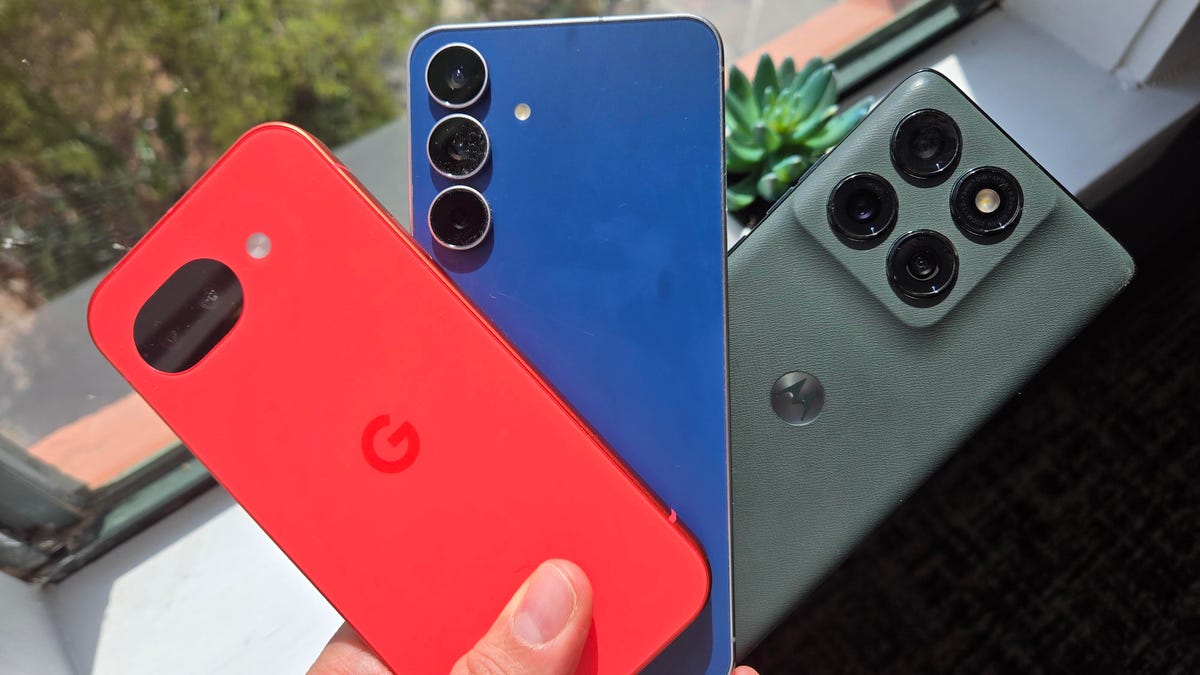
Google’s $499 Pixel 10A uses nearly the same cameras as last year’s Pixel 9A, but I wanted to see how its photos directly match up to its midrange Android rivals: the $650 Samsung Galaxy S25 FE and the $550 Motorola Edge.
I traveled with all three phones around St. Petersburg, Florida, checking how flexible each was in different environments, from bright outdoor settings to an indoor coffee shop and an evening brewery. All three environments can be challenging for the small image sensors on each phone.
While I find the cameras on all three phones to have different strengths and weaknesses depending on the setting, I’m quite impressed with how the Pixel 10A keeps up. In my tests, the photos include lots of detail, even though certain settings appear to involve a lot of processing to improve them.
Wide and telephoto cameras
Starting with photos taken on the sidewalk in downtown St. Petersburg, I notice that all three phones handle bright sunlight slightly differently, especially how it’s depicted on the street.
For the Pixel 10A, the sun provides a slight exposure mark over the Bay First sign at the top of the frame, but it remains fairly cordoned off to focus on the rest of the streetscape. Zooming in, you can see the Century 21 location, but the street is captured in the most detail, with the phone’s camera maintaining its natural gray color.
For both the Galaxy S25 FE and the Motorola Edge, the sun has a more pronounced effect on the rest of the image. The pavement’s color is notably brighter. I also find both the S25 FE and the Edge have slightly more clarity on the business signs on the Bay First building, including the aforementioned Century 21 logo.
Since the S25 FE and the Edge each include a telephoto camera that supports 3x optical zoom, I took a photo at that zoom with each phone. The Pixel 10A uses digital zoom on the phone’s 48-megapixel wide camera, but a lot of the scene’s detail remains preserved.
The Pixel’s zoom photo provides a clear view of the 7th St N sign, the trees and the plants. However, if you look further back at the next intersection, you’ll notice that the 7th St S sign and the Colony Grill are much harder to see. It’s those smaller details that are captured by the S25 FE and the Edge, both aided by telephoto cameras, making them more visible.
Of the three zoom photo examples, I feel like the S25 FE has the best color reproduction while also retaining details like the signs further back. Even though the photo was taken with the S25 FE’s 8-megapixel telephoto camera rather than its 50-megapixel wide camera, the colors remain complementary when comparing the 1x to the 3x. Meanwhile, the Edge’s 10-megapixel telephoto camera looks quite a bit different from the 50-megapixel wide camera — the whole image has a more yellowish hue.
Ultrawide cameras
Moving inside the Southern Grounds coffee shop, I decided to use the ultrawide cameras to capture my sausage, egg and cheese on toast. The three photos came out wildly different.
The Pixel 10A’s 13-megapixel ultrawide and S25 FE’s 12-megapixel ultrawide have a more balanced set of colors and details, in my opinion. The wheat toast appears lighter in the Pixel’s photo than in the darker hues captured by both the S25 FE and the Edge.
When zooming into my notebook, however, the Pixel and S25 FE captured more of the page markings, details that blur together more in the photo taken by the Edge. While the Edge’s 50-megapixel ultrawide camera is a higher-spec number, I noticed it had a harder time distinguishing toast levels, giving more of it a darker look. If I hadn’t eaten it myself, I’d have thought it was burned based on the Edge’s photo.
Night photography
Moving over to a nighttime setting, I used the three phones to take photos outside of 3 Daughters Brewing. I felt like all three did a decent job at producing the colors of the building, but they differ in how they handle light sources.
Both the Pixel and the S25 FE tone back the glare produced by the various lighting fixtures. Meanwhile, the Edge’s photos show noticeable streaks that dominate the sky. When inspecting the photos more closely, I find that the Galaxy captured a sharper view of the furniture, like in the Connect 4 set next to the blue chairs in the center of the frame. The same details are visible in the Pixel’s and the Edge’s depictions of the scene, but they appear smudgy by comparison.
This type of scene needs to take advantage of a phone’s processing power in order to iron out visibility issues, and I do find that the Edge appears to come up short here in this regard, with a lot of noticeable image noise.
Selfies
Each phone takes selfies with noticeable differences in style and color choices. For this test example, I’m in a well-lit daytime room with natural light from a window. The 12-megapixel front-facing camera on Google’s Pixel 10A brightened up my face as if there was a light in front of me, and captured a decent amount of the details of my hair and face.
The front-facing camera on Samsung’s Galaxy S25 FE shows a noticeably darker color tone, but it still captures a similar shade of orange on the wall behind me. Of the three photos, I felt like the S25 captures the most details, including strands of hair, and defaulted to a closer crop than the other two.
The photos taken by the 50-megapixel selfie camera on the Motorola Edge feel a bit smoothed out. The orange color on the wall is noticeably different from the Pixel and the S25 FE, though it does capture a lot of my face details, from hair strands to the fabric textures on my shirt.
The $499 Pixel 10A camera keeps up and, in some cases, exceeds the detail captured by the slightly more expensive $550 Motorola Edge and $650 Galaxy S25 FE. I’m quite impressed by how the Pixel camera handles colors and low-light environments, but the phone’s processing work sometimes makes scenes appear brighter than they are in real life.
The Galaxy S25 FE is no slouch either, with a third telephoto lens for capturing more detail farther away. While I did find the Motorola Edge to struggle in low light, it is one of the lowest-cost phone options currently available for someone who must have a 3x optical telephoto camera.
But if you can live without the telephoto lens, the Pixel 10A’s low cost and photography abilities will likely be a good fit for most people.
Technologies
Today’s NYT Strands Hints, Answers and Help for March 14 #741
Here are hints and answers for the NYT Strands puzzle for March 14, No. 741.
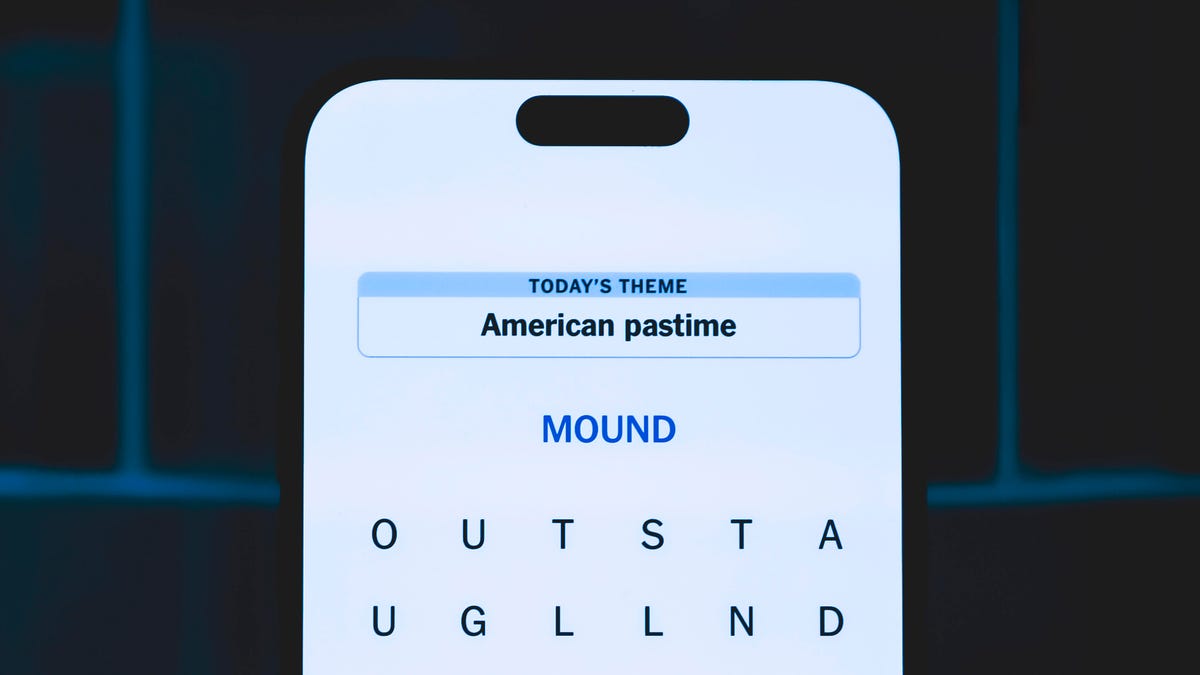
Looking for the most recent Strands answer? Click here for our daily Strands hints, as well as our daily answers and hints for The New York Times Mini Crossword, Wordle, Connections and Connections: Sports Edition puzzles.
Does today’s date seem memorable to you? If so, today’s NYT Strands puzzle might be easy. Some of the answers are difficult to unscramble, so if you need hints and answers, read on.
I go into depth about the rules for Strands in this story.
If you’re looking for today’s Wordle, Connections and Mini Crossword answers, you can visit CNET’s NYT puzzle hints page.
Read more: NYT Connections Turns 1: These Are the 5 Toughest Puzzles So Far
Hint for today’s Strands puzzle
Today’s Strands theme is: A math teacher’s favorite dessert.
If that doesn’t help you, here’s a clue: 3.14
Clue words to unlock in-game hints
Your goal is to find hidden words that fit the puzzle’s theme. If you’re stuck, find any words you can. Every time you find three words of four letters or more, Strands will reveal one of the theme words. These are the words I used to get those hints but any words of four or more letters that you find will work:
- RITE, SPIT, TIPS, STAT, STATE, GIVE, RUST, FINE, LAZE, SURE, PEAL
Answers for today’s Strands puzzle
These are the answers that tie into the theme. The goal of the puzzle is to find them all, including the spangram, a theme word that reaches from one side of the puzzle to the other. When you have all of them (I originally thought there were always eight but learned that the number can vary), every letter on the board will be used. Here are the nonspangram answers:
- VENT, CRUST, FRUIT, EDGES, GLAZE, FILLING, LATTICE
Today’s Strands spangram
Today’s Strands spangram is HAPPYPIDAY. To find it, start with the H that’s six rows down and three to the right from the upper-left corner, and make — well, a pie shape.
Toughest Strands puzzles
Here are some of the Strands topics I’ve found to be the toughest.
#1: Dated slang. Maybe you didn’t even use this lingo when it was cool. Toughest word: PHAT.
#2: Thar she blows! I guess marine biologists might ace this one. Toughest word: BALEEN or RIGHT.
#3: Off the hook. Again, it helps to know a lot about sea creatures. Sorry, Charlie. Toughest word: BIGEYE or SKIPJACK.
-
 Technologies3 года ago
Tech Companies Need to Be Held Accountable for Security, Experts Say
-
 Technologies3 года ago
Best Handheld Game Console in 2023
-
 Technologies3 года ago
Tighten Up Your VR Game With the Best Head Straps for Quest 2
-
 Technologies4 года ago
Black Friday 2021: The best deals on TVs, headphones, kitchenware, and more
-
 Technologies5 лет ago
Google to require vaccinations as Silicon Valley rethinks return-to-office policies
-
 Technologies5 лет ago
Verum, Wickr and Threema: next generation secured messengers
-
 Technologies4 года ago
Olivia Harlan Dekker for Verum Messenger
-
 Technologies5 лет ago
iPhone 13 event: How to watch Apple’s big announcement tomorrow