
Technologies
How Much Will the iPhone 17 Cost?
Tariffs could hike the price of the new iPhone, but other factors play a role, too. What to look for as the release day approaches.
The rumored iPhone 17 is getting plenty of attention for potential new features and upgrades, like more memory and a camera upgrade. And the prospect of an ultrathin iPhone just adds to the excitement as the expected release date approaches.
But of all the rumors about the new iPhone, one of the most persistent may be: How much will it cost?
There are a lot of factors that could affect the pricing for the rumored iPhone 17, including tariffs, production costs and the overall health of the US economy.
Apple did not respond to a request for comment.
We won’t know the exact price for the next iPhone until its release, which is expected to be in September. But we’ve pored over all the leaks, rumors and predictions about prices, and we found ways to help you save if a new iPhone is in your future.
How tariffs could affect the cost of the next iPhone
Amid President Donald Trump’s ongoing tariff bender, higher reciprocal tariffs are currently on pause. However, Trump took to social media on Friday, threatening Apple with a 25% tariff on all iPhones made outside the US. While there’s no timeline for this tariff rollout, there’s currently a 10% baseline tariff on all imports and a 30% tariff on goods from China, where Apple still manufactures most of its products. Those rates may also start to rise in July when the initial tariff pause expires, which could lead to higher prices on everything — including the rumored iPhone 17.
Apple appears to have dodged a lot of the initial tariff impact. It stockpiled phones before tariffs took effect, and Trump’s exemption list included many phones, laptops and other electronics that Apple produces.
The tech giant has also moved some US iPhone production from China to India, which currently has a lower tariff rate. However, Trump called out Apple CEO Tim Cook to instead move iPhone production to the US. Most experts consider this an unrealistic demand, especially in the short term, because of higher labor and production costs in the US. Estimates have suggested that a US-made iPhone would cost as much as $3,500.
That leaves prices for the next iPhone in limbo. Trump’s administration called the exemption list «temporary» in early April, saying that exemptions would end in «a month or two.» Around the same time, Trump said that semiconductors, which power tech products, will eventually be placed in a different «tariff bucket.» However, no details have been shared about the timeline or expected tariff percentages.
With all the reprieves appearing to be temporary, tariffs could still potentially affect prices by the time the rumored iPhone 17 is expected to be released.
If the original reciprocal tariff pause expires, for instance, taxes on imports from India would rise from 10% to 26% starting in July. If the 90-day pause for China expires, tariffs on that country would jump from 30% to 145% in August. Experts point out that a tariff rate hike doesn’t necessarily mean an iPhone’s price would increase at the same rate, but most expect at least some impact.
And where the phone is assembled is only part of the tariff equation. Apple sources components for the iPhone from dozens of other countries, which could also potentially affect the price.
Based on where tariffs stand now, here’s how much you could potentially pay for the next iPhone based on current iPhone 16 prices. These are estimates and not pricing from Apple:
How much could tariffs affect the price of an iPhone 17?*
| Current price | Current 10% tariff on goods from India | Potential 26% tariff for India | Current 30% tariff on goods from China | Potential 145% tariff for China | |
|---|---|---|---|---|---|
| iPhone 16E (128GB) | $599 | $659 | $830 | $779 | $1,614 |
| iPhone 16 (128GB) | $799 | $879 | $1,107 | $1,039 | $2,153 |
| iPhone 16 Plus (128GB) | $899 | $989 | $1,246 | $1,169 | $2,423 |
| iPhone 16 Pro (128GB) | $999 | $1,099 | $1,385 | $1,299 | $2,692 |
| iPhone 16 Pro Max (256GB) | $1,199 | $1,319 | $1,662 | $1,559 | $3,231 |
| iPhone 16 Pro Max (1TB) | $1,599 | $1,759 | $2,216 | $2,079 | $4,309 |
*Trump’s newly proposed 25% Apple tariff on iPhones manufactured outside the US could further increase the price of the next iPhone. We’ll keep this story up to date with the latest pricing information as we receive it.
What else could cause the new iPhone’s price to increase?
Trump immediately criticized retailers like Walmart and Amazon when they suggested that tariffs could result in higher prices, so it stands to reason that Apple won’t directly blame tariffs for potential price hikes to avoid a Trump tirade.
Rather, Apple could attribute the price increase to improved features and design costs. Regardless of tariffs, Apple has plans to raise iPhone prices this year, The Wall Street Journal reported.
Experts say Apple may be overdue for a price increase anyways. It’s been five years since the basic iPhone model increased in price, and each iteration of the iPhone generally improves on features from the last version.
My colleague Patrick Holland, CNET’s managing editor, has been reviewing phones for CNET since 2016 and tracking prices over the years. He notes that the base iPhone model hasn’t gone up in price since 2020.
His research points to the standard iPhone model’s price increasing approximately every five years, typically between $50 and $150. Based on this evidence and the iPhone 16’s current price of $799, we could expect the new iPhone to cost somewhere between $850 and $950.
What will the iPhone 17 Air cost?
Early rumors had the iPhone 17 Air topping the iPhone Pro in price. However, a March Bloomberg report suggested the phone could cost around $900, similar to the current iPhone 16 Plus’s price tag. Those estimates are based on the current costs and may not include the potential impact tariffs could have on an ultrathin iPhone’s price.
How the economy could affect iPhone prices
Uncertainty in the US economy — in part due to the aforementioned tariff turmoil — has left many wary about what’s to come. While the recent agreement with China to pause tariffs helped the stock market to mostly recover from the dive it took after Trump’s Liberation Day, that reprieve offers only temporary relief.
Concerns about the risks of higher unemployment and higher inflation have left the Federal Reserve in wait-and-see mode for lowering interest rates. Higher interest rates can cause companies like Apple to pull back on spending and investment. Combined with higher tariffs, that pullback could potentially lead to global supply chain disruptions. Fewer iPhones available in the market could lead to higher prices.
If inflation resurges, rising costs could force Apple to increase the next iPhone’s price.
One tiny bright side, in theory, is that a weakening economy could force Apple to hold off on raising prices so it can stay competitive. But that may not offer much consolation if you’re worried about spending money because of a potential recession.
Will older iPhones cost more, too?
One way to save on Apple products is to buy last year’s model instead of the newest release. However, if the new iPhone is dramatically more expensive when it’s released, demand could increase for the older models. That could lead to price hikes on older models, too.
The flip side of this is that if the new iPhone’s prices rise and you have an older iPhone, your old iPhone would also likely increase in value, Holland said.
Trading or selling a used iPhone can help offset the cost if you do decide to buy the new iPhone.
Other ways Apple could raise prices
Even if Apple decides to hold the next iPhone’s price steady, there are other ways for the tech giant to recoup increased costs.
Apple could potentially offset the impact of tariffs by raising the price on its services — including its music, news and data plans — according to supply chain expert Joe Hudicka.
«We’ll see those markups in the subscription services first because they’ll appear smaller,» he said. «Consumers will still pay, just not all at once.»
Should we believe rumors and speculation about iPhone prices?
So seriously, how much is a new iPhone going to cost? The truth is, we can’t say with any certainty what the final numbers will be. Our assessments are based on ever-changing tariff policies, past pricing trends, rumors and leaks that are sometimes based on insider knowledge. But until Apple releases the rumored iPhone 17, we can only offer our best estimates for how much the final price tag will be.
Technologies
I Used to Tell People Wi-Fi 7 Routers Were a Waste of Money. CNET’s Lab Data Just Proved Me Wrong
Technologies
My Camera Test: Comparing the $499 Pixel 10A With the Galaxy S25 FE, Motorola Edge
The Pixel 10A’s cameras are similar to those on the 9A, but it still performs quite well compared to other phones in its price range.
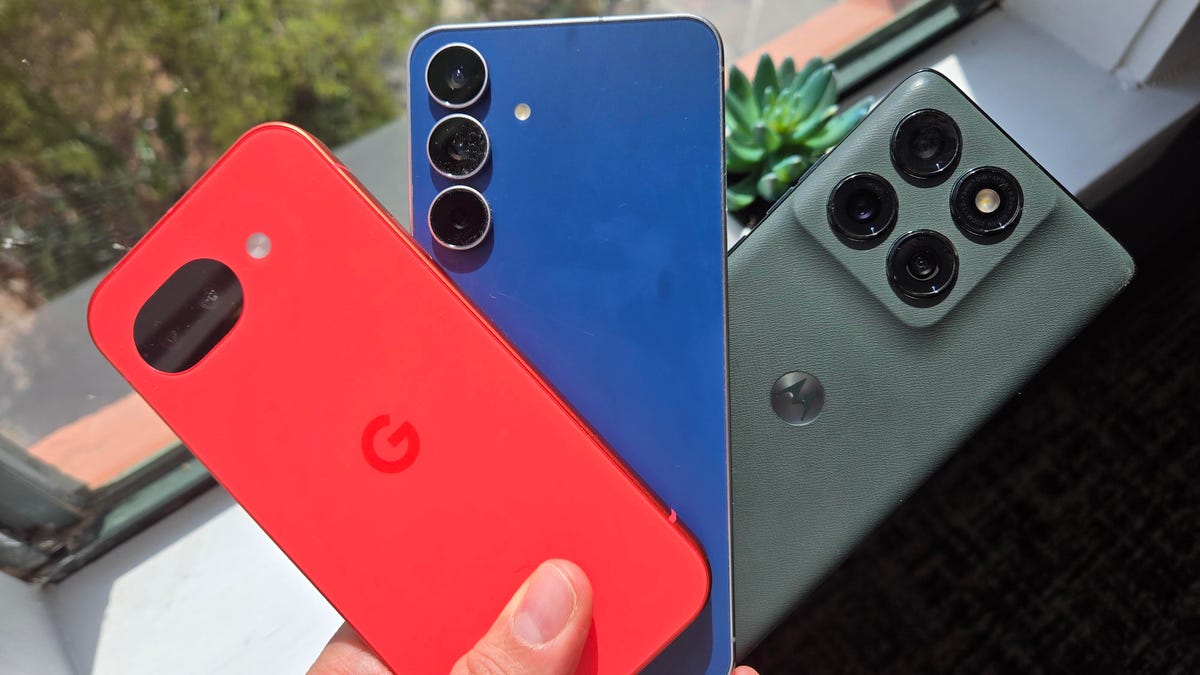
Google’s $499 Pixel 10A uses nearly the same cameras as last year’s Pixel 9A, but I wanted to see how its photos directly match up to its midrange Android rivals: the $650 Samsung Galaxy S25 FE and the $550 Motorola Edge.
I traveled with all three phones around St. Petersburg, Florida, checking how flexible each was in different environments, from bright outdoor settings to an indoor coffee shop and an evening brewery. All three environments can be challenging for the small image sensors on each phone.
While I find the cameras on all three phones to have different strengths and weaknesses depending on the setting, I’m quite impressed with how the Pixel 10A keeps up. In my tests, the photos include lots of detail, even though certain settings appear to involve a lot of processing to improve them.
Wide and telephoto cameras
Starting with photos taken on the sidewalk in downtown St. Petersburg, I notice that all three phones handle bright sunlight slightly differently, especially how it’s depicted on the street.
For the Pixel 10A, the sun provides a slight exposure mark over the Bay First sign at the top of the frame, but it remains fairly cordoned off to focus on the rest of the streetscape. Zooming in, you can see the Century 21 location, but the street is captured in the most detail, with the phone’s camera maintaining its natural gray color.
For both the Galaxy S25 FE and the Motorola Edge, the sun has a more pronounced effect on the rest of the image. The pavement’s color is notably brighter. I also find both the S25 FE and the Edge have slightly more clarity on the business signs on the Bay First building, including the aforementioned Century 21 logo.
Since the S25 FE and the Edge each include a telephoto camera that supports 3x optical zoom, I took a photo at that zoom with each phone. The Pixel 10A uses digital zoom on the phone’s 48-megapixel wide camera, but a lot of the scene’s detail remains preserved.
The Pixel’s zoom photo provides a clear view of the 7th St N sign, the trees and the plants. However, if you look further back at the next intersection, you’ll notice that the 7th St S sign and the Colony Grill are much harder to see. It’s those smaller details that are captured by the S25 FE and the Edge, both aided by telephoto cameras, making them more visible.
Of the three zoom photo examples, I feel like the S25 FE has the best color reproduction while also retaining details like the signs further back. Even though the photo was taken with the S25 FE’s 8-megapixel telephoto camera rather than its 50-megapixel wide camera, the colors remain complementary when comparing the 1x to the 3x. Meanwhile, the Edge’s 10-megapixel telephoto camera looks quite a bit different from the 50-megapixel wide camera — the whole image has a more yellowish hue.
Ultrawide cameras
Moving inside the Southern Grounds coffee shop, I decided to use the ultrawide cameras to capture my sausage, egg and cheese on toast. The three photos came out wildly different.
The Pixel 10A’s 13-megapixel ultrawide and S25 FE’s 12-megapixel ultrawide have a more balanced set of colors and details, in my opinion. The wheat toast appears lighter in the Pixel’s photo than in the darker hues captured by both the S25 FE and the Edge.
When zooming into my notebook, however, the Pixel and S25 FE captured more of the page markings, details that blur together more in the photo taken by the Edge. While the Edge’s 50-megapixel ultrawide camera is a higher-spec number, I noticed it had a harder time distinguishing toast levels, giving more of it a darker look. If I hadn’t eaten it myself, I’d have thought it was burned based on the Edge’s photo.
Night photography
Moving over to a nighttime setting, I used the three phones to take photos outside of 3 Daughters Brewing. I felt like all three did a decent job at producing the colors of the building, but they differ in how they handle light sources.
Both the Pixel and the S25 FE tone back the glare produced by the various lighting fixtures. Meanwhile, the Edge’s photos show noticeable streaks that dominate the sky. When inspecting the photos more closely, I find that the Galaxy captured a sharper view of the furniture, like in the Connect 4 set next to the blue chairs in the center of the frame. The same details are visible in the Pixel’s and the Edge’s depictions of the scene, but they appear smudgy by comparison.
This type of scene needs to take advantage of a phone’s processing power in order to iron out visibility issues, and I do find that the Edge appears to come up short here in this regard, with a lot of noticeable image noise.
Selfies
Each phone takes selfies with noticeable differences in style and color choices. For this test example, I’m in a well-lit daytime room with natural light from a window. The 12-megapixel front-facing camera on Google’s Pixel 10A brightened up my face as if there was a light in front of me, and captured a decent amount of the details of my hair and face.
The front-facing camera on Samsung’s Galaxy S25 FE shows a noticeably darker color tone, but it still captures a similar shade of orange on the wall behind me. Of the three photos, I felt like the S25 captures the most details, including strands of hair, and defaulted to a closer crop than the other two.
The photos taken by the 50-megapixel selfie camera on the Motorola Edge feel a bit smoothed out. The orange color on the wall is noticeably different from the Pixel and the S25 FE, though it does capture a lot of my face details, from hair strands to the fabric textures on my shirt.
The $499 Pixel 10A camera keeps up and, in some cases, exceeds the detail captured by the slightly more expensive $550 Motorola Edge and $650 Galaxy S25 FE. I’m quite impressed by how the Pixel camera handles colors and low-light environments, but the phone’s processing work sometimes makes scenes appear brighter than they are in real life.
The Galaxy S25 FE is no slouch either, with a third telephoto lens for capturing more detail farther away. While I did find the Motorola Edge to struggle in low light, it is one of the lowest-cost phone options currently available for someone who must have a 3x optical telephoto camera.
But if you can live without the telephoto lens, the Pixel 10A’s low cost and photography abilities will likely be a good fit for most people.
Technologies
Today’s NYT Strands Hints, Answers and Help for March 14 #741
Here are hints and answers for the NYT Strands puzzle for March 14, No. 741.
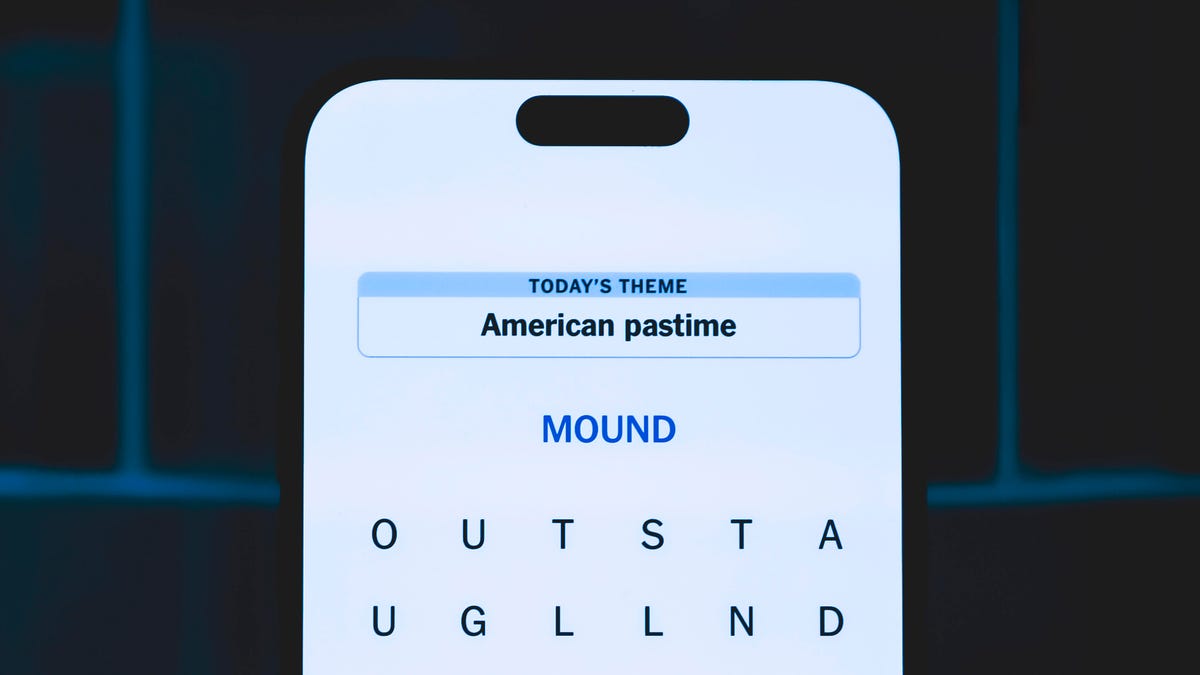
Looking for the most recent Strands answer? Click here for our daily Strands hints, as well as our daily answers and hints for The New York Times Mini Crossword, Wordle, Connections and Connections: Sports Edition puzzles.
Does today’s date seem memorable to you? If so, today’s NYT Strands puzzle might be easy. Some of the answers are difficult to unscramble, so if you need hints and answers, read on.
I go into depth about the rules for Strands in this story.
If you’re looking for today’s Wordle, Connections and Mini Crossword answers, you can visit CNET’s NYT puzzle hints page.
Read more: NYT Connections Turns 1: These Are the 5 Toughest Puzzles So Far
Hint for today’s Strands puzzle
Today’s Strands theme is: A math teacher’s favorite dessert.
If that doesn’t help you, here’s a clue: 3.14
Clue words to unlock in-game hints
Your goal is to find hidden words that fit the puzzle’s theme. If you’re stuck, find any words you can. Every time you find three words of four letters or more, Strands will reveal one of the theme words. These are the words I used to get those hints but any words of four or more letters that you find will work:
- RITE, SPIT, TIPS, STAT, STATE, GIVE, RUST, FINE, LAZE, SURE, PEAL
Answers for today’s Strands puzzle
These are the answers that tie into the theme. The goal of the puzzle is to find them all, including the spangram, a theme word that reaches from one side of the puzzle to the other. When you have all of them (I originally thought there were always eight but learned that the number can vary), every letter on the board will be used. Here are the nonspangram answers:
- VENT, CRUST, FRUIT, EDGES, GLAZE, FILLING, LATTICE
Today’s Strands spangram
Today’s Strands spangram is HAPPYPIDAY. To find it, start with the H that’s six rows down and three to the right from the upper-left corner, and make — well, a pie shape.
Toughest Strands puzzles
Here are some of the Strands topics I’ve found to be the toughest.
#1: Dated slang. Maybe you didn’t even use this lingo when it was cool. Toughest word: PHAT.
#2: Thar she blows! I guess marine biologists might ace this one. Toughest word: BALEEN or RIGHT.
#3: Off the hook. Again, it helps to know a lot about sea creatures. Sorry, Charlie. Toughest word: BIGEYE or SKIPJACK.
-
 Technologies3 года ago
Tech Companies Need to Be Held Accountable for Security, Experts Say
-
 Technologies3 года ago
Best Handheld Game Console in 2023
-
 Technologies3 года ago
Tighten Up Your VR Game With the Best Head Straps for Quest 2
-
 Technologies4 года ago
Black Friday 2021: The best deals on TVs, headphones, kitchenware, and more
-
 Technologies5 лет ago
Google to require vaccinations as Silicon Valley rethinks return-to-office policies
-
 Technologies5 лет ago
Verum, Wickr and Threema: next generation secured messengers
-
 Technologies4 года ago
Olivia Harlan Dekker for Verum Messenger
-
 Technologies5 лет ago
iPhone 13 event: How to watch Apple’s big announcement tomorrow