
Technologies
iPhone 16 Plus vs. iPhone 16 Pro Max: How the Latest Big iPhones Compare
Apple’s most advanced phones include the largest iPhones yet — here’s how their specs and features compare in the iPhone 16 era.
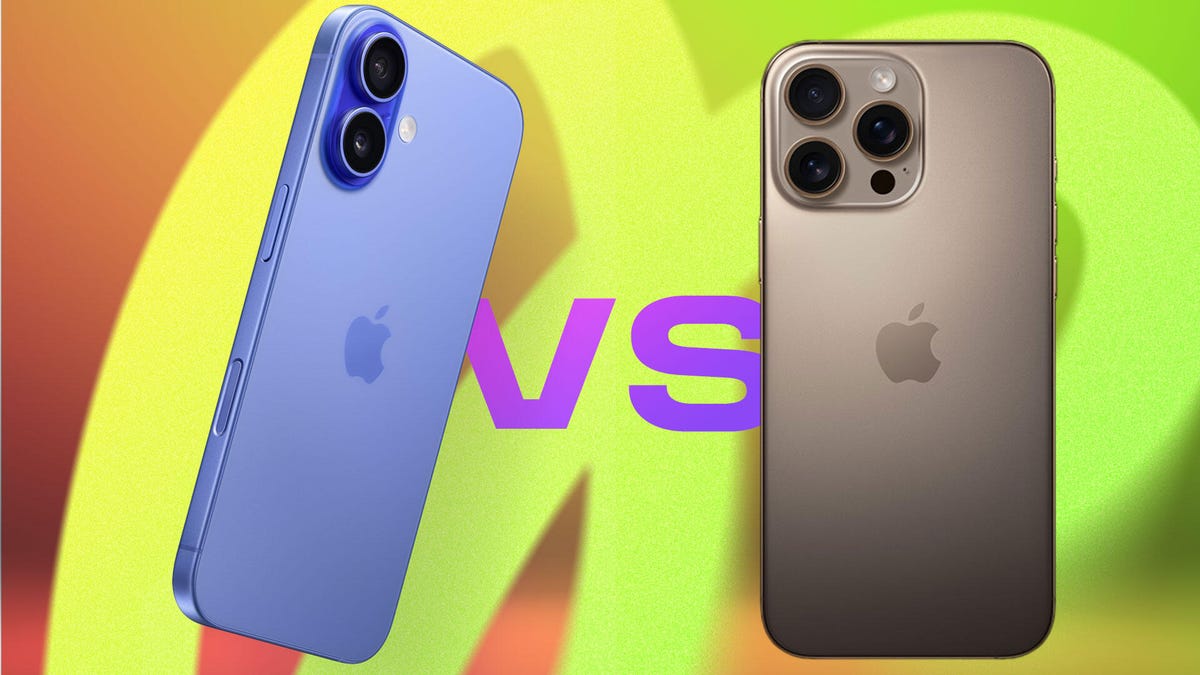
At its September 2024 Glowtime event, Apple unveiled its latest lineup of iPhone 16 handsets. These phones share a lot of new features, with the biggest differences being in size and the division between standard and premium phones. While the iPhone 16E released in 2025 corners the affordable market, the biggest iPhone 16 models remain the priciest, and there’s plenty to differentiate them. Here’s the iPhone 16 Plus versus the iPhone 16 Pro Max comparison.
The most prominent distinction between the two bigger phones is size, as they’re no longer tied for the title of largest iPhone on record. The iPhone 16 Plus still has a 6.7-inch display, but the iPhone 16 Pro Max has a 6.9-inch display, giving it the crown for the biggest iPhone ever made.
See more: Apple iPhone 16 Pro Review: Compelling Upgrade With My Favorite iPhone Feature in Years
That decision has knock-on effects: everything the iPhone 16 Plus is, the iPhone 16 Pro Max does a little better. That comes at a literal price, with the iPhone 16 Plus with 128GB of storage starting at $899 (£899, AU$1,599) and the iPhone 16 Pro Max with 256GB of storage starting at $1,199 (£1,199, AU$2,149).
More from the Apple event
That’s a sizable price gulf between the two, but there are a handful of things the even bigger phone packs that its now-smaller sibling doesn’t. The iPhone 16 Plus has a 48-megapixel fusion camera (with a neat new 12-megapixel 2x digital zoom feature) and 48-megapixel ultrawide camera; the iPhone 16 Pro Max has that and a 12-megapixel telephoto camera with 5x optical zoom. Both phones have a 12-megapixel TrueDepth front-facing camera for selfies and FaceID.
The Pro Max also has a higher video ceiling, recording 4K video at 120 frames per second, which is good for converting to slow motion; the Plus tops out at 4K video with 60 frames per second. Both phones can shoot Spatial Video, the depth-focused format of videos watchable only in Apple Vision Pro, at 1080p at 30 frames per second.
What the Pro Max does have over its cheaper sibling is more sensitive audio recording thanks to its four microphones over the Plus’s 3. Both phones get Audio Mix, a trio of professional toggles to direct the phone to record certain sound sources over others when recording a video: in-frame captures who’s speaking in front of the camera (even if people nearby are speaking off-camera), studio is built for podcasters and vloggers to make them sound like they’re nestled in the sound-damped walls of a studio and cinematic combines sounds toward the front of the screen (much like a standard movie mix).
Unsurprisingly, the iPhone 16 Pro Max has a more advanced A18 Pro chipset than the iPhone 16 Plus’s A18 silicon, though both support Apple Intelligence. The bigger phone has more maximum storage with 256GB, 512GB and 1TB options, while the Plus has 128GB, 256GB and 512GB configurations. Apple has not released the RAM on each model.
Where the Plus is 6.33×3.06×0.31 inches (160.9×77.8×7.8mm), the Pro Max is 6.42×3.06×0.32 inches (163×77.6×8.25mm). That also means the smaller phone is lighter at 199 grams (7.03 ounces), while the bigger handset is 227 grams (7.99 ounces). The Pro Max comes in a titanium frame with four colors: black, white, a silver-ish natural and a tan desert hue. The Plus has a more vibrant range of colors: black, white, pink, teal and ultramarine. Both phones are IP68 rated for dust and water resistance, and both pack USB-C ports.
Both phones’ displays have OLED Super Retina XDR and 460 pixels-per-inch resolution, so they’re equally as sharp, though the larger Pro Max logically has more pixels in its screen (2,868×1,320-pixel resolution) than the relatively smaller Plus (2,796×1,290-pixel resolution). The big difference is in display refresh rate, with the Pro Max topping out at 120 Hz with its ProMotion tech while the Plus retains the 60 Hz refresh rate that base iPhones have had for years. Both phones max out at 2,000 nits of brightness in direct sunlight, but they can dip down to a single nit in darkness, which helps preserve battery.
That extra space means more battery life (though in typical Apple fashion, we don’t have rough hourly usage rather than exact capacity figures). The iPhone 16 Pro Max tops out at up to 33 hours of video playback (or up to 29 hours if streaming the video), while the iPhone 16 Plus has up to 27 hours of video playback (or up to 24 hours if streaming it). Both phones have the same wired charging (up to 20 watt) as the previous generation, though MagSafe wireless charging has been bumped up to 25 watts if using a 30-watt or faster charger.
Both phones run iOS 18 out of the box, and both will get Apple Intelligence when it drops later in September. Apple didn’t reveal much more about its AI capabilities than was shown off at WWDC back in June. The generative AI will supercharge Siri, offer suggestions for spiffing up the tone of a message, automatically arrange your photos and offer more accurate contextual searches among them.
Apple’s also added AI-generated emoji, which you can whip up by submitting prompts — say, a cowboy frog on a diving board.
The big reveal is Visual Intelligence, which sees Apple’s AI applied to the camera. Visual Intelligence is able to search for whatever is in your viewfinder. This is summoned with a new hardware feature: the Camera Control button, which is found on both phones on the right side below the lock button. It’s capacitive and physically clicky, so you’ll be able to push in for Visual Intelligence or tap it to bring up its second functionality: acting as an extra camera setting toggle.
For example, when your camera app is open, you can run your finger along it to zoom in and out or change the aperture — and it’ll work as an extra menu within third-party apps, too. The Apple presentation showed it functioning in Snap.
Similarly, the Action Button is now on both the premium and standard phones, taking the place of the ringer-silent switch to act as a customizable app shortcut. It’s no longer exclusive to the premium handsets.
That shrinks the number of exclusives that the Pro Max holds over the Plus, making its $300 price differential harder to justify. True, it’s larger, with a third rear camera (telephoto), titanium frame and bigger battery. But with Apple Intelligence coming to both phones (it’s only drifting back to the iPhone 15 Pro and Pro Max models), the premium phones are harder to justify over their cheaper siblings.
For a more detailed comparison, check our specs sheet below:
iPhone 16 Plus vs. iPhone 16 Pro Max
| Apple iPhone 16 Plus | Apple iPhone 16 Pro Max | |
| Display size, tech, resolution, refresh rate, brightness | 6.7-inch OLED Super Retina XDR display; 2,796 x 1,290 pixel resolution | 6.9-inch OLED Super Retina XDR display; 2,868 x 1,320 pixel resolution |
| Pixel density | 460 ppi | 460 ppi |
| Dimensions (inches) | 6.33 x 3.06 x 0.31 inches | 6.42 x 3.06 x 0.32 inches |
| Dimensions (millimeters) | 160.9 x 77.8 x 7.8mm | 163 x 77.6 x 8.25mm |
| Weight (grams, ounces) | 199 g, 7.03 oz | 227 g, 7.99oz |
| Mobile software | iOS 18 | iOS 18 |
| Camera | 48-megapixel (fusion), 12-megapixel (ultrawide) | 48-megapixel (fusion), 48-megapixel (ultrawide), 5x telephoto |
| Front-facing camera | 12-megapixel | 12-megapixel |
| Video capture | 4K at 60fps; spatial video at 1080p at 30fps | 4K up to 120fps; spatial video at 1080p at 30fps |
| Processor | A18 | A18 Pro |
| RAM/storage | 128GB, 256GB, 512GB | 256GB, 512GB, 1TB |
| Expandable storage | No | No |
| Battery | Up to 27 hours video playback; up to 24 hours video playback (streamed). 20W wired charging. MagSafe wireless charging up to 25W with 30W adapter or higher; Qi2 up to 15W | Up to 33 hours video playback; up to 29 hours video playback (streamed). 20W wired charging. MagSafe wireless charging up to 25W with 30W adapter or higher; Qi2 up to 15W |
| Fingerprint sensor | None (Face ID) | None (Face ID) |
| Connector | USB-C | USB-C |
| Headphone jack | No | No |
| Special features | Apple Intelligence, Action button, Camera Control button, Dynamic Island, 1 to 2,000 nits display brightness range, IP68 resistance. Colors: black, white, pink, teal, ultramarine. | Apple Intelligence, Action button, Camera Control button, 4x audio mics, Dynamic Island, 1 to 2,000 nits display brightness range, IP68 resistance. Colors: black titanium, white titantium, natural titanium, desert titanium. |
| US price off-contract | $899 (128GB), $899 (256GB), $1,199 (512GB) | $1,199 (256GB), $1,399 (512GB), $1,599 (1TB) |
| UK price | £899 (128GB), £999 (256GB), £1,199 (512GB) | £1,199 (256GB), £1,399 (512GB), £1,599 (1TB) |
| Australia price | AU$1,599 (128GB), AU$1,799 (256GB), AU$2,149 (512GB) | AU$2,149 (256GB), AU$2,499 (512GB), AU$2,849 (1TB) |
Technologies
Samsung’s Galaxy Watch Ultra 2 Might Come in 5G and 4G Cellular Models
If the rumor proves true, the 5G Galaxy Watch Ultra would rival the 5G-enabled $799 Apple Watch Ultra 3 that debuted last fall.
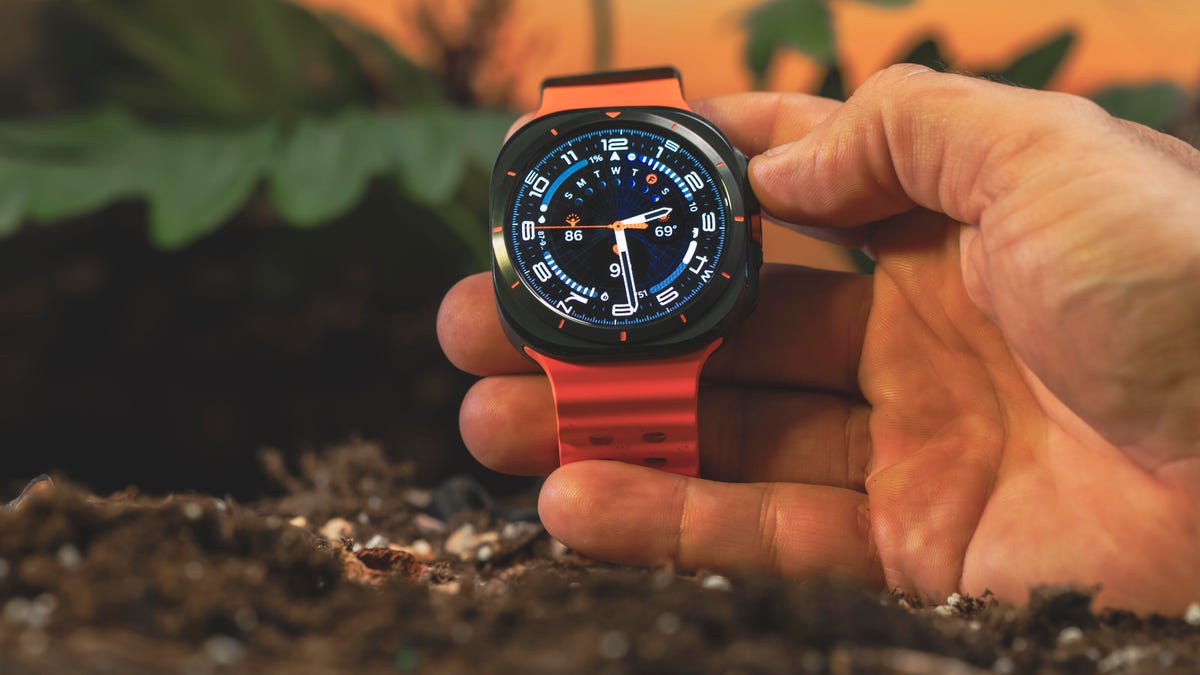
Samsung’s next high-end Galaxy Watch could support faster 5G speeds, but if this leak is true, it will depend on where you live. The rumored Samsung Galaxy Watch Ultra 2 might come in 5G and 4G cellular models, with availability for each smartwatch depending on the country.
According to the Dutch website Galaxy Club (and spotted by SamMobile), Samsung’s servers may have revealed a series of model numbers that point to 5G, 4G and Wi-Fi-enabled editions of the next Galaxy Watch Ultra, which would succeed the original model that debuted in 2024.
A representative for Samsung did not immediately respond to a request for comment.
The Galaxy Club website speculates that the 5G edition would be sold in the US and Korean markets, while the 4G edition would sell in the rest of the world. In the US, a 5G version of the Galaxy Watch Ultra would rival the 5G-enabled $799 Apple Watch Ultra 3, which debuted last fall. The 4G edition would have broader compatibility worldwide, since the earlier network is far more established.
It will likely be a few months until we hear anything official about the Galaxy Watch Ultra 2. Samsung typically unveils its new watches in the summer alongside its Galaxy Z Fold and Z Flip foldable phones. Last year, Samsung unveiled the Galaxy Watch 8 and the Galaxy Watch 8 Classic, but otherwise left the prior 2024 Ultra in the lineup for those looking for a larger 47mm smartwatch.
Technologies
2 Cases Show Supreme Court Isn’t Holding ISPs Responsible for Piracy
Technologies
Today’s NYT Connections Hints, Answers and Help for April 8, #1032
Here are some hints and the answers for the NYT Connections puzzle for April 8, No. 1032.
Looking for the most recent Connections answers? Click here for today’s Connections hints, as well as our daily answers and hints for The New York Times Mini Crossword, Wordle, Connections: Sports Edition and Strands puzzles.
Today’s NYT Connections puzzle is kind of tough. The purple category is a fun one, once you see the connection. Read on for clues and today’s Connections answers.
The Times has a Connections Bot, like the one for Wordle. Go there after you play to receive a numeric score and to have the program analyze your answers. Players who are registered with the Times Games section can now nerd out by following their progress, including the number of puzzles completed, win rate, number of times they nabbed a perfect score and their win streak.
Read more: Hints, Tips and Strategies to Help You Win at NYT Connections Every Time
Hints for today’s Connections groups
Here are four hints for the groupings in today’s Connections puzzle, ranked from the easiest yellow group to the tough (and sometimes bizarre) purple group.
Yellow group hint: In the group.
Green group hint: Appearance details.
Blue group hint: Often found in gyms.
Purple group hint: They help you see.
Answers for today’s Connections groups
Yellow group: Cohort member.
Green group: Aesthetic.
Blue group: Kinds of bar apparatuses.
Purple group: Eyewear in the singular.
Read more: Wordle Cheat Sheet: Here Are the Most Popular Letters Used in English Words
What are today’s Connections answers?
The yellow words in today’s Connections
The theme is cohort member. The four answers are associate, colleague, fellow and peer.
The green words in today’s Connections
The theme is aesthetic. The four answers are design, look, scheme and style.
The blue words in today’s Connections
The theme is kinds of bar apparatuses. The four answers are monkey, parallel, pull-up and uneven.
The purple words in today’s Connections
The theme is eyewear in the singular. The four answers are contact, goggle, shade and spectacle.
-
 Technologies3 года ago
Tech Companies Need to Be Held Accountable for Security, Experts Say
-
 Technologies3 года ago
Best Handheld Game Console in 2023
-
 Technologies3 года ago
Tighten Up Your VR Game With the Best Head Straps for Quest 2
-
 Technologies4 года ago
Black Friday 2021: The best deals on TVs, headphones, kitchenware, and more
-
 Technologies5 лет ago
Google to require vaccinations as Silicon Valley rethinks return-to-office policies
-
 Technologies5 лет ago
Verum, Wickr and Threema: next generation secured messengers
-
 Technologies4 года ago
Olivia Harlan Dekker for Verum Messenger
-
 Technologies4 года ago
The number of Сrypto Bank customers increased by 10% in five days