
Technologies
Here’s How to Watch Every Major US Space Launch for the Rest of 2025
Space launches have already made headlines this year. Here’s a look at upcoming launches you can watch from the comfort of home.
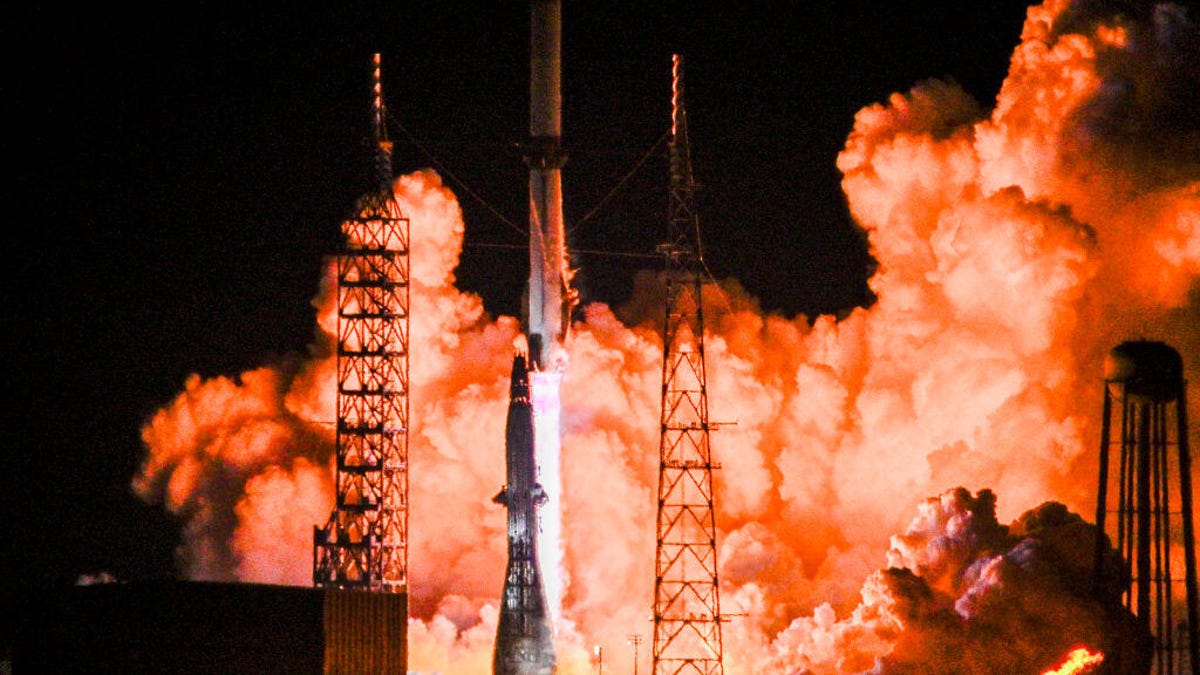
Space launches have been making headlines in 2025
agencies from around the world launched a total of 244 successful missions into orbit or space in 2024, which is the most in history. The US led the way with over half of those launches. Dozens of space launches are already planned for 2025.
Feel like watching a liftoff? Many of them will likely be streamed by NASA or from the YouTube channels of individual companies like SpaceX. Space launches are finicky, and the dates often change with little warning. But if you’re looking to keep an eye on the sky in 2025, the list below should help.
January
Blue Ghost Lunar Lander Mission 1 & Hakuto-R M2 Resilience
Launch date: Launched successfully on Jan. 15
Organization: SpaceX / NASA / Firefly Aerospace
Launch site: Kennedy Space Center, FL
Rocket: SpaceX Falcon 9 Block 5
This uncrewed mission, which launched on Jan. 15, will carry Firefly Aerospace’s Blue Ghost lunar lander to the moon, along with a payload of 10 NASA instruments designed to measure various metrics on the lunar surface, including position and navigation data, regolith behavior and Earth’s magnetosphere.
New Glenn’s Inaugural Launch
Launch date: Launched successfully on Jan. 16
Organization: Blue Origin / NASA
Rocket: Blue Origin New Glenn
Launch site: Launch Complex 36 at Cape Canaveral Space Force Station, FL
Blue Origin’s first test flight of its New Glenn rocket was originally scheduled for Jan. 13. However, a vehicle subsystem issue sprung up that would’ve taken too long to troubleshoot on the launch pad, so Blue Origin rescheduled the launch, and it successfully reached orbit on Jan. 16. In addition to the inaugural launch, the payload included Blue Ring Pathfinder, which was set to demonstrate its ability to communicate from orbit to ground.
Read more: New Glenn Rocket Launch Marks a Big Moment for Jeff Bezos’ Blue Origin
February
Lunar Trailblazer & Nova-C IM-2
Launch date: Successfully launched on Feb. 27
Organization: SpaceX / NASA / Intuitive Machines
Rocket: SpaceX Falcon 9 Block 5
Launch site: Kennedy Space Center, FL
The Lunar Trailblazer and Nova-C IM-2 mission lifted off successfully on Feb. 27. While the Nova-C IM-2 part of the mission is still going okay, the Lunar Trailblazer lost communications with NASA and is currently lost in space. The mission’s success will depend entirely on if NASA can reestablish contact, which the agency is still trying to do.
This mission will take the Intuitive Machines Nova-C lunar lander to the moon for its second mission. The trip also includes NASA’s PRIME-1 payload, which will be drilling into the moon and using a mass spectrometer to analyze materials beneath the surface.
SPHEREx & PUNCH
Launch date: Launched successfully on March 11
Organization: SpaceX / NASA
Rocket: SpaceX Falcon 9 Block 5
Launch site: Vandenberg SFB, CA
SpaceX and NASA originally planned to launch the SPHEREx and PUNCH missions in the last week of February 2025, but were delayed until the second week of March.
SpaceX sent its Falcon 9 rocket into orbit with NASA’s SPHEREx and PUNCH. SPHEREx is a two-year mission that will launch a satellite capable of detecting near-infrared light and optical light to gather data. PUNCH is four suitcase-sized satellites that will monitor the Sun’s corona to detect coronal mass ejections to eventually be able to predict when they’ll happen.
March
Crew-10
Launch date: Successfully launched on March 14
Organization: SpaceX / NASA / ROSCOSMOS / JAXA
Rocket: SpaceX Falcon 9 Block 5
Launch site: Cape Canaveral SFS, FL
A crewed flight to the International Space Station successfully launched on March 14, bearing American astronauts Anne McClain and Nichole Ayers, Russian astronaut Kirill Peskov and Japanese astronaut Takuya Onishi. Once they arrive at the ISS, Crew-9, along with Starliner astronauts Suni Williams and Butch Wilmore, will make its way back to Earth. Williams and Wilmore made near-constant headlines since their June trip to the ISS stretched from the expected eight days to more than eight months, but when Crew-10 arrived, they were finally able to go home.
Read more: NASA Crew-10 Astronauts Launch to ISS on SpaceX Rocket
Fram2
Exact date: Successfully launched on March 31
Organization: SpaceX
Rocket: Falcon 9 Block 5
Launch site: Cape Canaveral SFS, FL
The Fram2 mission is a crewed mission that took five passengers around Earth’s polar caps. Over the five-day mission, the crew conducted the first-ever human X-ray while in space, along with more research on how spaceflight affects the human body. They also studied STEVE, or Strong Thermal Emission Velocity Enhancement, which is a ribbon of hot gases that light up the night sky similar to aurora borealis. The crew consisted of Chun Wang, Jannicke Mikkelsen, Eric Philips and Rabea Rogge.
April
Project Kuiper (Vulcan #1 and Vulcan #2)
Launch date: April 28, 2025
Organization: United Launch Alliance / Kuiper Systems (Amazon)
Rocket: Vulcan VC6L and Atlas V 551
Launch site: Cape Canaveral SFS, FL
Thefirst two Project Kuiper launches were scheduled for March 2025 butwere delayed until April. Kuiper Systems is a subsidiary of Amazon andplans to launch a total of 3,276 satellites into orbit for broadbandinternet access to compete with the likes of SpaceX. There will be anumber of these going up throughout 2025 and beyond. After some delays,the first launch should be April 28, 2025.
May
Axiom Space Mission 4
Exact date: May 29, 2025
Organization: SpaceX / Axiom Space
Rocket: Falcon 9 Block 5
Launch site: Cape Canaveral SFS, FL
TheAxiom Space Mission 4 will send four people to the International SpaceStation where they’ll stay for a little over a week. The crew includesretired NASA astronaut Peggy Whitson, Indian astronaut ShubhanshuShukla, Polish engineer Sławosz Uznański and Hungarian astronaut TiborKapu.
EWS OD-1
Exact date: May 31, 2025
Organization: Northrop Grumman Space Systems
Rocket: Minotaur IV
Launch site: Vandenberg SFB, CA
The EWS OD-1 mission will deploy the Electro-Optical/Infrared Weather System into low Earth orbit as a tech demonstration, allowing various branches of the US military to evaluate its performance as a weather satellite for the Department of Defense. The launch is currently scheduled for May 31, 2025.
June
USSF-106
Exact date: June 30, 2025
Organization: United Launch Alliance
Rocket: Vulcan VC4S
Launch site: Cape Canaveral SFS, FL
This is a mission for the United States Space Force. It’ll deploy the NTS-3 navigation satellite along with NASA’s SunRISE mini-satellites, which will study solar activity. Other payloads are planned for this launch but haven’t been announced yet.
EscaPADE
Exact date: Q2 2025
Organization: Blue Origin / NASA
Rocket: New Glenn
Launch site: Cape Canaveral SFS, FL
The Escape and Plasma Acceleration and Dynamics Explorers (EscaPADE) mission is a joint venture between Blue Origin and NASA that will send science tools to Mars to study our red neighbor. The instruments will study the solar wind energy transfer through Mars’ magnetosphere. It’s one of Blue Origin’s biggest launches of the year. An exact date isn’t listed yet but June 2025 is set as the launch window
July
Crew-11
Exact date: July 2025
Organization: SpaceX / NASA
Rocket: Falcon 9 Block 5
Launch site: Cape Canaveral SFS, FL
The Crew-11 flight will take four more astronauts to the ISS in July 2025. For now, the exact launch date hasn’t been set in stone and neither has the crew. However, it’ll be just like the Crew-10 launch, where four astronauts will go to the ISS to conduct study and relieve the prior crew. An exact date hasn’t been scheduled yet, but NASA wants to launch it in July 2025.
August
Blue Moon Pathfinder
Launch date: August 2025
Organization: Blue Origin
Rocket: Blue Origin New Glenn
Launch site: Cape Canaveral SFS, FL
Blue Origin will finally begin testing on its Blue Moon Pathfinder MK1lunar lander. It isn’t going to the moon yet, but Blue Origin launchesalways get plenty of press before they go up. Eventually, Blue Originwants to use the Pathfinder to take supplies to the moon. Initially, launch was set for spring of 2025, but it appears August 2025 is the more likely launch window.
September
STP-S29A
Exact date: September 2025Organization: Northrop Grumman Space Systems / US Department of Defense
Rocket: Minotaur IV
Launch site: Vandenberg SFB, CA
STP-S29A is a fairly large mission from the US Department of Defense that’ll see Northrop Grumman launch several technology demonstrations into low Earth orbit. Included in the payload are 200 kilograms worth of CubeSats — very small satellites — for testing purposes. In addition, the STPSat-7 will also be deployed, which will track and catalog orbital debris.
September
IMAP
Exact date: September 2025
Organization: SpaceX / NASA
Rocket: Falcon 9 Block 5
Launch site: Cape Canaveral SFS, FL
The IMAP mission is a joint venture between SpaceX and NASA that’ll see the deployment of the Interstellar Mapping and Acceleration Probe, yet another instrument to measure how solar winds affect things in and around Earth. The probe houses 10 instruments that take various measurements. In addition, the mission will house a small lunar orbiter called Lunar Trailblazer, a solar sail called Solar Cruiser and a weather satellite to study ultraviolet emissions in the Earth’s exosphere.
October
TSIS-2
Exact date: October 2025
Organization: SpaceX / NASA
Rocket: Falcon 9 Block 5
Launch site: Cape Canaveral, FL
The Total and Spectral Solar Irradiance Sensor 2 is a probe from NASA that’ll measure the Sun’s energy input into Earth through solar irradiance measurements. This data will be added to the decades of other Sun-related data that NASA has to better understand just how much energy strikes Earth from the Sun. The TSIS-1 is aboard the ISS and measures similar criteria from there.
Technologies
Today’s NYT Mini Crossword Answers for Wednesday, April 8
Here are the answers for The New York Times Mini Crossword for April 8.

Looking for the most recent Mini Crossword answer? Click here for today’s Mini Crossword hints, as well as our daily answers and hints for The New York Times Wordle, Strands, Connections and Connections: Sports Edition puzzles.
Need some help with today’s Mini Crossword? Hint: It uses a lot of the letter Z for some reason. Read on for all the answers. And if you could use some hints and guidance for daily solving, check out our Mini Crossword tips.
If you’re looking for today’s Wordle, Connections, Connections: Sports Edition and Strands answers, you can visit CNET’s NYT puzzle hints page.
Read more: Tips and Tricks for Solving The New York Times Mini Crossword
Let’s get to those Mini Crossword clues and answers.
Mini across clues and answers
1A clue: ___-Carlton (hotel chain)
Answer: RITZ
5A clue: Span of the alphabet
Answer: ATOZ
6A clue: Cable channel with an out-of-this-world name
Answer: STARZ
7A clue: Takes care of, as a squeaky wheel
Answer: OILS
8A clue: Toy on a string
Answer: YOYO
Mini down clues and answers
1D clue: When a post receives far more negative comments than likes, in social media slang
Answer: RATIO
2D clue: World’s leading wine producer
Answer: ITALY
3D clue: Middle of the human body
Answer: TORSO
4D clue: Sleeping sound
Answer: ZZZ
6D clue: Tofu base
Answer: SOY
Technologies
Today’s NYT Connections: Sports Edition Hints and Answers for April 8, #562
Here are hints and the answers for the NYT Connections: Sports Edition puzzle for April 8 No. 562.

Looking for the most recent regular Connections answers? Click here for today’s Connections hints, as well as our daily answers and hints for The New York Times Mini Crossword, Wordle and Strands puzzles.
Today’s Connections: Sports Edition is a tough one. If you’re struggling with today’s puzzle but still want to solve it, read on for hints and the answers.
Connections: Sports Edition is published by The Athletic, the subscription-based sports journalism site owned by The Times. It doesn’t appear in the NYT Games app, but it does in The Athletic’s own app. Or you can play it for free online.
Read more: NYT Connections: Sports Edition Puzzle Comes Out of Beta
Hints for today’s Connections: Sports Edition groups
Here are four hints for the groupings in today’s Connections: Sports Edition puzzle, ranked from the easiest yellow group to the tough (and sometimes bizarre) purple group.
Yellow group hint: Working out.
Green group hint: Cover your face.
Blue group hint: NFL players.
Purple group hint: Leap.
Answers for today’s Connections: Sports Edition groups
Yellow group: Exercises in singular form.
Green group: Sporting jobs that require masks.
Blue group: Hall of Fame defensive ends.
Purple group: ____ jump.
Read more: Wordle Cheat Sheet: Here Are the Most Popular Letters Used in English Words
What are today’s Connections: Sports Edition answers?
The yellow words in today’s Connections
The theme is exercises in singular form. The four answers are crunch, plank, situp and squat.
The green words in today’s Connections
The theme is sporting jobs that require masks. The four answers are catcher, fencer, football player and goaltender.
The blue words in today’s Connections
The theme is Hall of Fame defensive ends. The four answers are Dent, Peppers, Strahan and Youngblood.
The purple words in today’s Connections
The theme is ____ jump. The four answers are broad, high, long and triple.
Technologies
The $135M Google Data Settlement Site Is Live — See If You’re Eligible
Use the settlement website to select your preferred payment method, and you may end up $100 richer.

You can now file a claim in the $135 million Google data settlement. The case centers on claims that Android devices transmitted user data without consent. Specifically, the class action lawsuit Taylor v. Google LLC contends that Google’s Android devices passively transferred cellular data to Google without user permission, even when the devices were idle. While not admitting fault, Google reached a preliminary settlement in January, agreeing to pay $135 million to about 100 million US Android phone users.
The official settlement website for the lawsuit is now live. The final approval hearing won’t occur until June 23, when the court will consider whether Google’s settlement is fair and listen to objections. After that, the court will decide whether to approve the $135 million settlement.
In the meantime, if you qualify and want to be paid as part of the settlement, you can select your preferred payment method on the official website. There, you can find information on speaking at the June 23 court hearing and on how to exclude yourself or write to the court to object by May 29.
As part of the settlement, Google will update its Google Play terms of service to clarify that certain data transfers do occur passively even when you’re not using your Android device, and that cellular data may be relied upon when not connected to Wi-Fi. This can’t always be disabled, but users will be asked to consent to it when setting up their device.
Google will also fully stop collecting data when its «allow background data usage» option is toggled off.
Who can be part of the settlement?
In order to join the Taylor v. Google LLC settlement, you must meet four qualifications:
- Be a living, individual human being in the US.
- Have used an Android mobile device with a cellular data plan.
- Have used the aforementioned device at any time from Nov. 12, 2017, to the date when the settlement receives final approval.
- You’re not a class member in the Csupo v. Google LLC lawsuit, which is similar but specifically for California residents.
The final approval hearing is on June 23, so you can add your payment method until then. The hearing’s date and time may change, and any updates will be posted on the settlement website.
If you choose to do nothing, you will still be issued a settlement payment, but you may not receive it if you don’t select a payment method.
How much will I get paid?
It’s not currently known exactly how much each settlement class member will receive, but the cap is $100. Payments will be distributed after final court approval and after any appeals are resolved.
After all administrative, tax and attorney costs are paid, the settlement administrator will attempt to pay each member an equal amount. If any funds remain after payments are sent, and it’s economically feasible, they will be redistributed to members who were previously and successfully paid. If it’s not economically feasible, the funds will go to an organization approved by the court.
-
 Technologies3 года ago
Tech Companies Need to Be Held Accountable for Security, Experts Say
-
 Technologies3 года ago
Best Handheld Game Console in 2023
-
 Technologies3 года ago
Tighten Up Your VR Game With the Best Head Straps for Quest 2
-
 Technologies4 года ago
Black Friday 2021: The best deals on TVs, headphones, kitchenware, and more
-
 Technologies5 лет ago
Google to require vaccinations as Silicon Valley rethinks return-to-office policies
-
 Technologies5 лет ago
Verum, Wickr and Threema: next generation secured messengers
-
 Technologies4 года ago
Olivia Harlan Dekker for Verum Messenger
-
 Technologies4 года ago
The number of Сrypto Bank customers increased by 10% in five days