
Technologies
Does the iPhone Have a Battery Aging Problem?
As another round of new iPhones nears, it’s time to take a closer look at how Apple’s batteries have withstood the test of time.
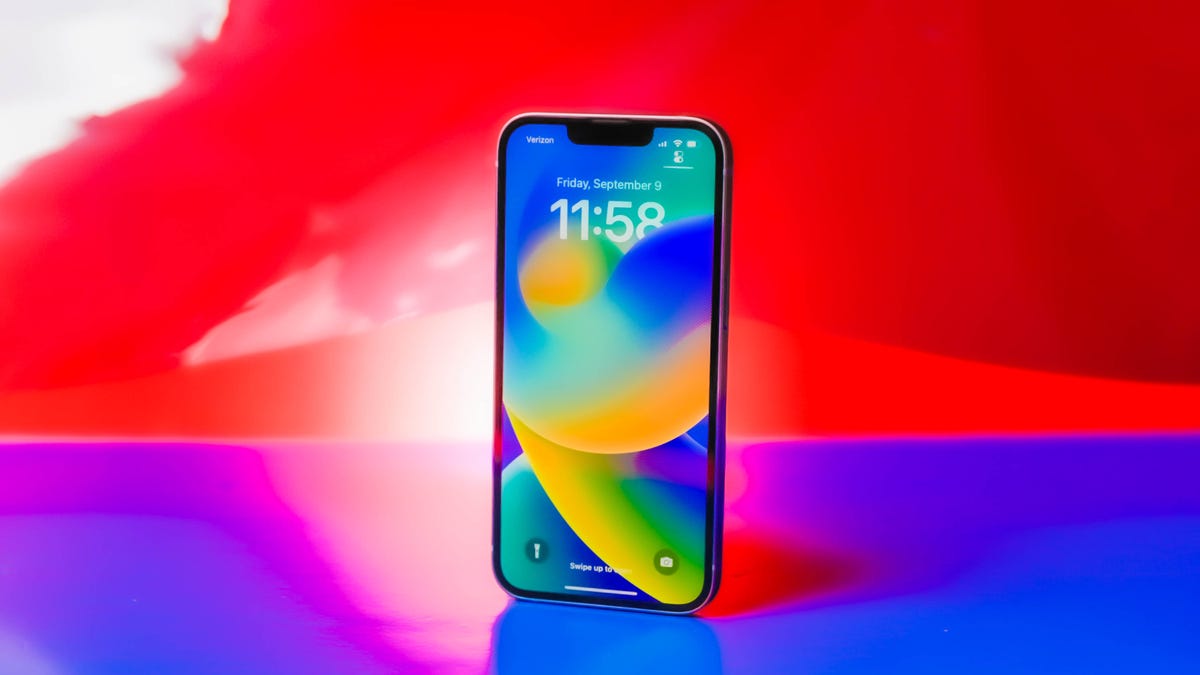
As happens nearly every year, September seems poised to bring about Apple’s latest batch of iPhones. The expansion of the iPhone 14 Pro and Pro Max’s «Dynamic Island» cutout seems like a near lock for the entire iPhone 15 line, as does the long-anticipated switch from Lightning to USB-C for wired charging.
When trying to figure out if Apple’s latest and greatest is worth the upgrade, an easy check is to see if you need a new battery. As we learned not too long ago, Apple will slow down the performance of iPhones with weaker battery health in order to preserve battery life. The 2017 «batterygate» scandal led to the company paying a $113 million settlement back in 2020 after an investigation was launched by 34 states and Washington, DC.
This month, a different $500 million settlement from a class action lawsuit stemming from the same issue was cleared by a judge.
Assuming you don’t pay for the AppleCare Plus insurance program, replacing a battery on most recent iPhones dating back to 2017’s iPhone X, will run $89 from Apple (not including tax or shipping if you’re sending your phone in).
Those who pay for AppleCare Plus, which ranges from $149 for two years of coverage on a third-generation iPhone SE all the way up to $269 for two years of coverage on an iPhone 14 Pro or Pro Max, can get a battery replacement from Apple for no cost if their battery’s maximum capacity falls below 80%.
Given the myriad of trade-in deals offered by Apple and wireless carriers, it may make sense to roll that money into what you’d spend on a new phone. Others, however, may be happy just replacing the battery and holding on for another year or two. Even if you don’t plan to upgrade this cycle, it is interesting to see how well recent iPhone batteries have lasted.
What is ‘battery health’ and a ‘maximum capacity’?
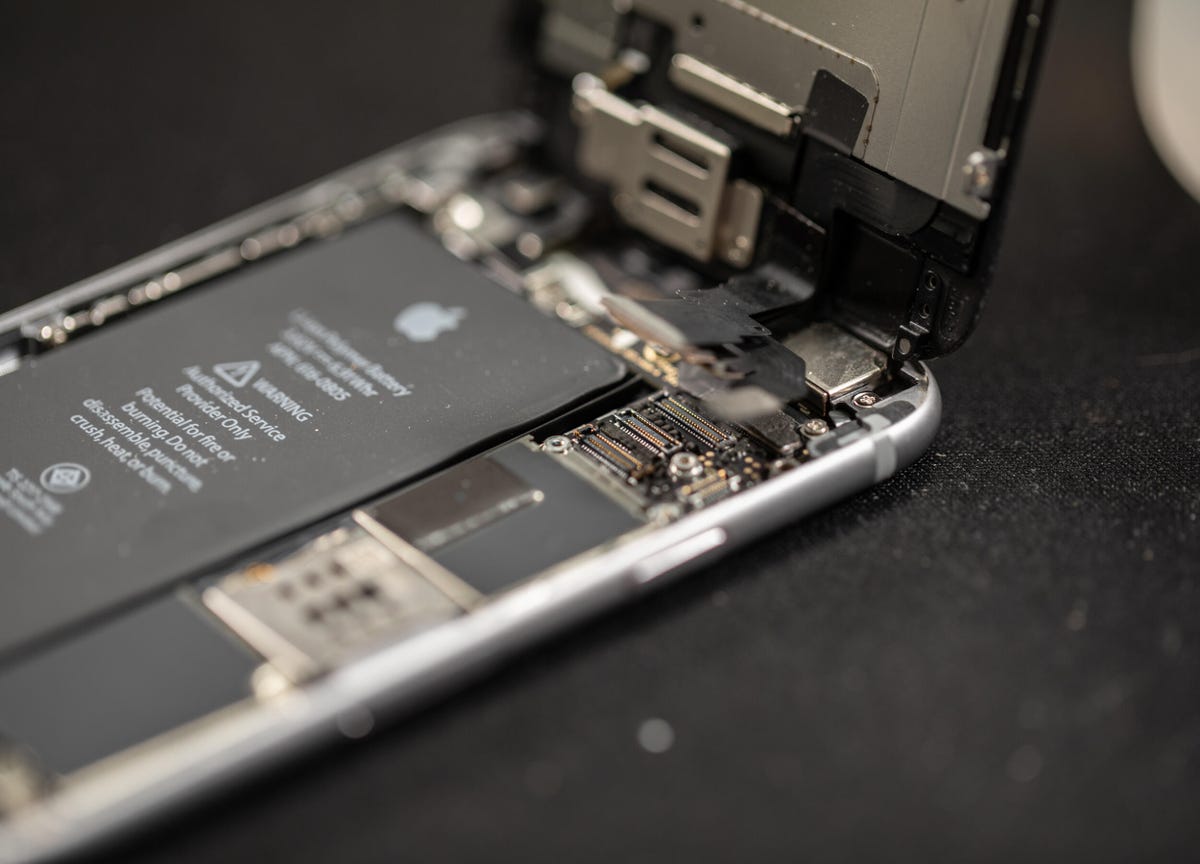
Lithium-ion batteries, like the ones found in most modern electronics, are finite resources that naturally degrade over time. As Apple describes on its website, these batteries work on what is known as «charge cycles» with one «cycle» taking place when you’ve discharged «an amount that equals 100% of your battery’s capacity.»
This doesn’t mean going from 100% to empty either. As Apple notes, «you might use 75% of your battery’s capacity one day, then recharge it fully overnight. If you use 25% the next day, you will have discharged a total of 100%, and the two days will add up to one charge cycle.»
As you use up cycles by using your phone, the amount it has diminishes. On a different support page, Apple says that the iPhone is designed to hold «up to 80% of its original capacity at 500 complete charge cycles when operating under normal conditions.»
While iOS doesn’t show how many charge cycles you’ve used, its «Maximum Capacity» section gives a peak into this metric.
Apple directed CNET to its various battery support pages when contacted for comment.
How you can check your battery health
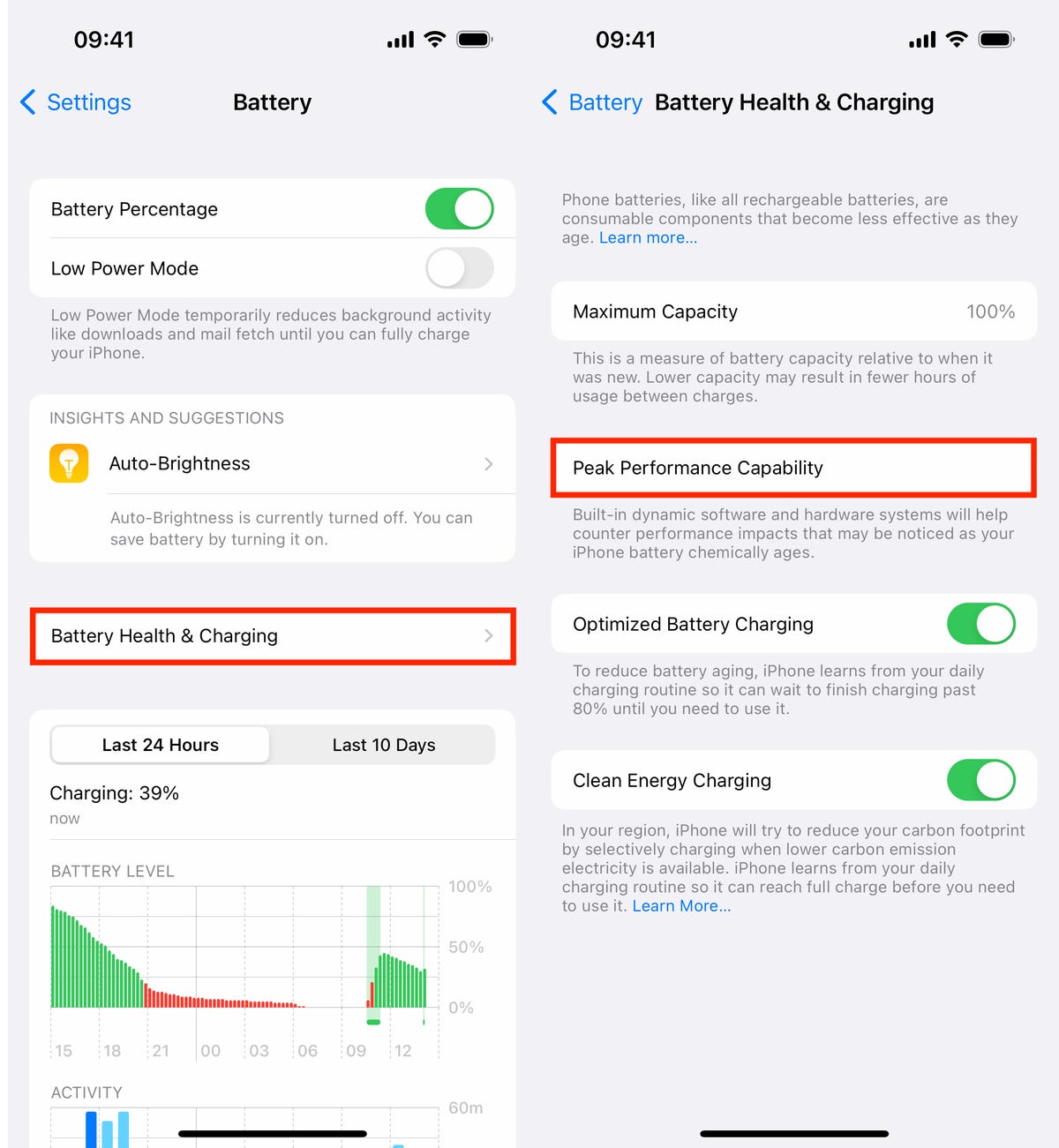
Apple gives steps for checking your battery health, and on most iPhones it can be done by going into Settings, then Battery and finally, Battery Health (or Battery Health & Charging). A «Maximum Capacity» section shows how much of your battery’s original capacity remains relative to when it was new.
If your battery is still operating normally, you’ll see that it has «peak performance capability» with small text underneath confirming that it’s «normal.»
If you’ve had a battery-related unexpected shutdown, you still may see peak performance but also a note that says Apple is using «performance management» to avoid future shutdowns. You can disable this setting if you want, though it will turn back on if another battery-related shutdown happens.
If your battery isn’t healthy, you may see a message alerting you that a replacement is needed if you want to get back to full performance or battery life. If your phone is otherwise fine for your needs, that $89 upgrade could be enough to get you back to running at full strength for a few more years.
What we learned: Your mileage will vary
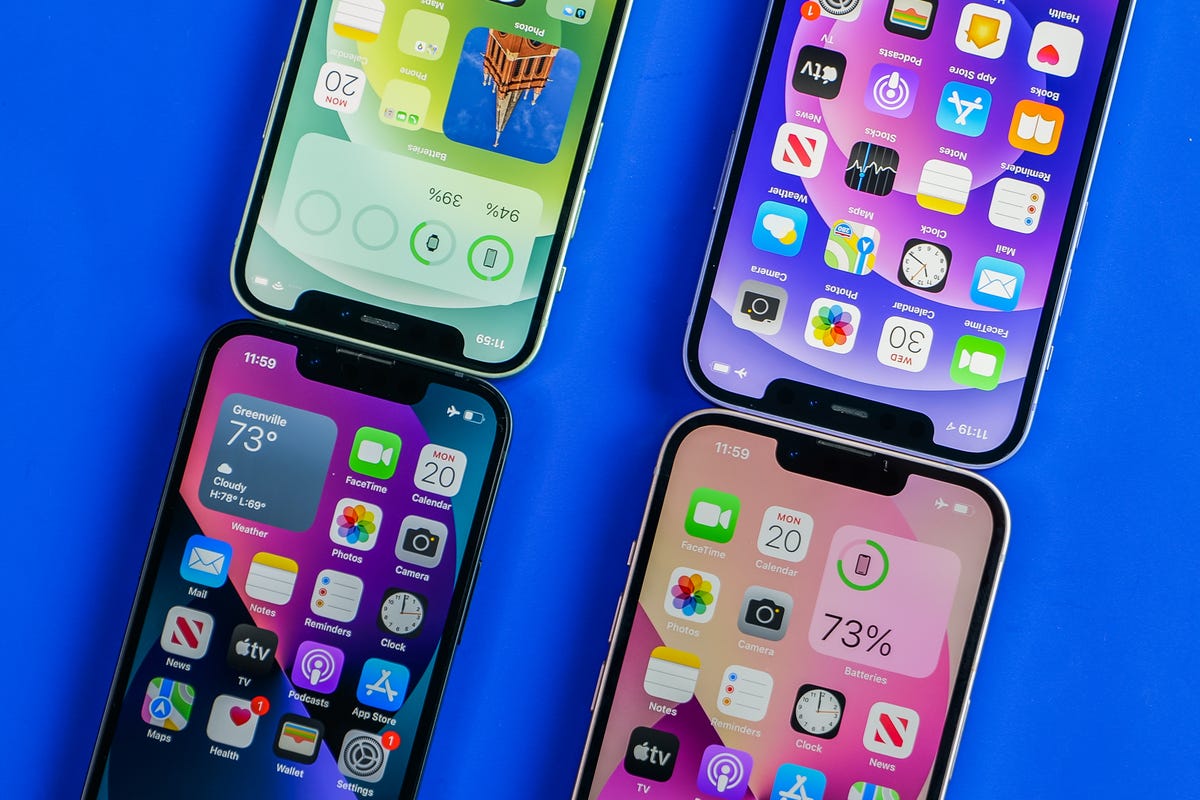
While by no means a scientific test, I polled 20 CNET staffers on Aug. 2 about their iPhones, looking at which model they used, when they purchased it and what its battery health was.
Nine CNET staffers were rocking the iPhone 12 line (either an iPhone 12, 12 Pro or 12 Pro Max), with most having purchased their phones at least 30 months ago. Battery max capacity across the line was surprisingly consistent: Even the oldest devices still were displaying a maximum battery capacity of at least 85%.
My colleague Bridget Carey also polled her followers on Instagram.
Two staffers were using iPhone 13 Pros, and their experiences couldn’t be more different. CNET computer expert Lori Grunin has had her iPhone for nearly 20 months and her battery’s maximum capacity was an impressive 95%. Commerce editor Russell Holly was not as lucky, with his iPhone 13 Pro showing just 73% max capacity nearly two years after purchasing it.
Results were similarly mixed for the nine CNET users who have upgraded their devices to the iPhone 14 line. Some, like CNET’s iPhone reviewer Patrick Holland, still have 100% max capacity on his iPhone 14 Pro Max nearly 11 months later. My own iPhone 14 Pro Max, meanwhile, shows a battery max capacity of 88% over roughly the same period.
I don’t seem to be alone, either, as Wall Street Journal reporter Joanna Stern tweeted out on Aug. 11 that her iPhone 14 Pro battery was at a similar level. Comments to the tweet showed some other iPhone 14 users getting similar results.
My iPhone 14 Pro is down to 88% battery capacity after less than a year.
Is it because I use my phone too much and have already hit 450 charge cycles?! (That’s what Apple Store says.) Is it from heat from fast charging? Is there something up with the battery?
My newsletter…— Joanna Stern (@JoannaStern) August 11, 2023
Most of CNET staff’s iPhone 14 models were the iPhone 14 Pro, with the battery’s maximum capacity generally 92% or better over a time period ranging from 9 to 11 months.
As Apple notes on that support page, rechargeable batteries are made up of «consumable components that become less effective as they chemically age.»
To help prevent random shutdowns, as the battery degrades, the iPhone’s iOS software will automatically take steps including slowing down the processor when opening apps, limiting screen refresh rates and brightness and even preventing you from using the camera’s flash.
As for what you can do if your iPhone’s battery is weak, disabling some iOS features could help give you a boost. And if you don’t want to trade it in for a new model or head to a store to replace the battery, Apple has even added the ability for people to replace iPhone batteries at home.
Technologies
Fitbit’s Kid-Friendly Smartwatch Gets a Sizable Amazon Spring Sale Discount
The now-$100 cellular connected smartwatch provides many phonelike benefits without handing over a full-fledged iPhone or Android.
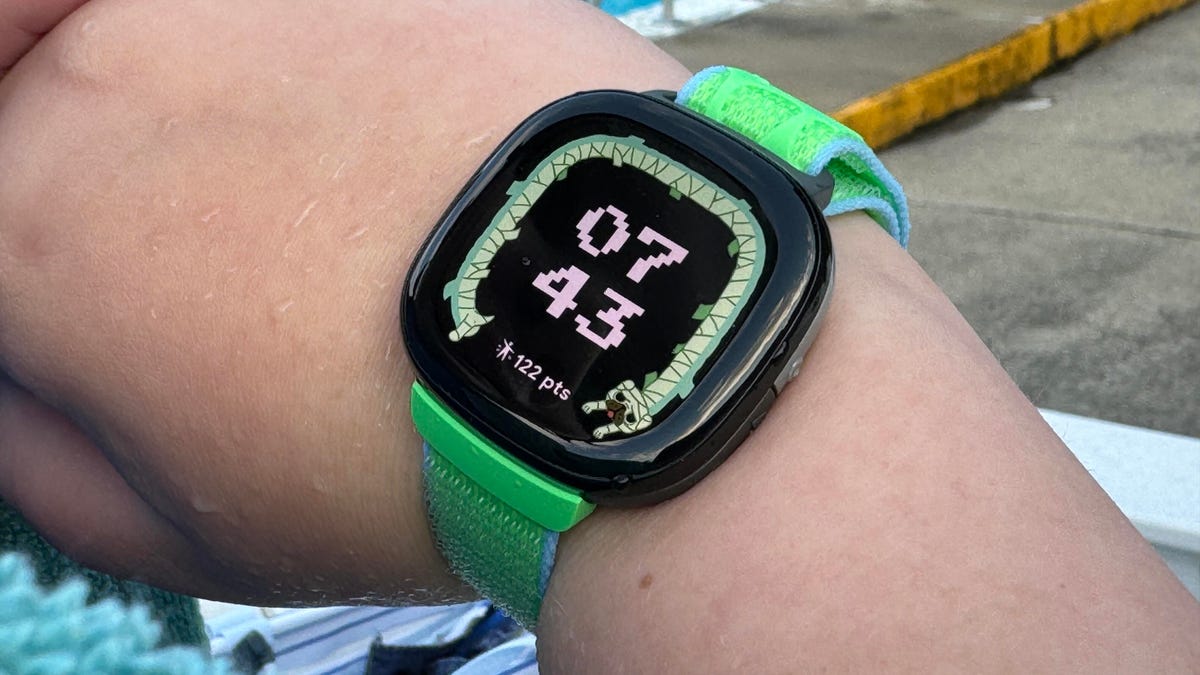
Google’s Fitbit Ace LTE is a cellular-connected smartwatch meant for kids, and with a discount from Amazon’s Big Spring Sale, the watch could be a lower-cost way for calling or texting your child without handing over a full-fledged phone.
The Fitbit Ace LTE is normally $180 but is discounted down to $100 during Amazon’s shopping event. That’s back down to the all-time low price we saw during Black Friday. CNET’s Scott Stein reviewed the watch when it was first released in 2024, noting that his 11-year-old son used it constantly for playing games and making phone calls.
The Ace gives parents a lot of control over who can call or text your child with the watch, for better and for worse. The watch does have a required cellular plan in order to work — at a cost of $10 a month, or $120 annually — and was updated to allow for siblings to call each other if they both have the watch. However, most communication controls are handled on Fitbit’s Ace app, and primarily allow a parent to call or text their child using the watch.
The Ace LTE does have its own health-related features as well, but doesn’t have access to app marketplaces in the way that the Apple Watch does or watches that run on Google’s Wear OS. This could be a selling point, or it could be limiting, depending on how much digital freedom is appropriate for your child.
Why this deal matters
If your kid isn’t ready to graduate to a phone yet, the Fitbit Ace LTE is a good stepping stone with decent parental controls. This is back down to the lowest price we’ve seen on this smartwatch, so if you’re looking for a convenient communications device for your child, this is a great opportunity.
Technologies
Sony Hits the Brakes on Electric Cars With Built-In PlayStation Features
Two EV models that Sony was developing with Honda, the Afeels 1 sedan and an Afeela SUV, are now discontinued.

Technologies
Samsung’s New Budget Galaxy A37 and A57: Improved Designs and AI Features
-
 Technologies3 года ago
Tech Companies Need to Be Held Accountable for Security, Experts Say
-
 Technologies3 года ago
Best Handheld Game Console in 2023
-
 Technologies3 года ago
Tighten Up Your VR Game With the Best Head Straps for Quest 2
-
 Technologies4 года ago
Black Friday 2021: The best deals on TVs, headphones, kitchenware, and more
-
 Technologies5 лет ago
Google to require vaccinations as Silicon Valley rethinks return-to-office policies
-
 Technologies5 лет ago
Verum, Wickr and Threema: next generation secured messengers
-
 Technologies4 года ago
Olivia Harlan Dekker for Verum Messenger
-
 Technologies4 года ago
The number of Сrypto Bank customers increased by 10% in five days