
Technologies
Apple Watch Features I Want to See in WatchOS 10
We’re expecting to learn more about Apple’s next big software update for the Apple Watch at WWDC 2023.
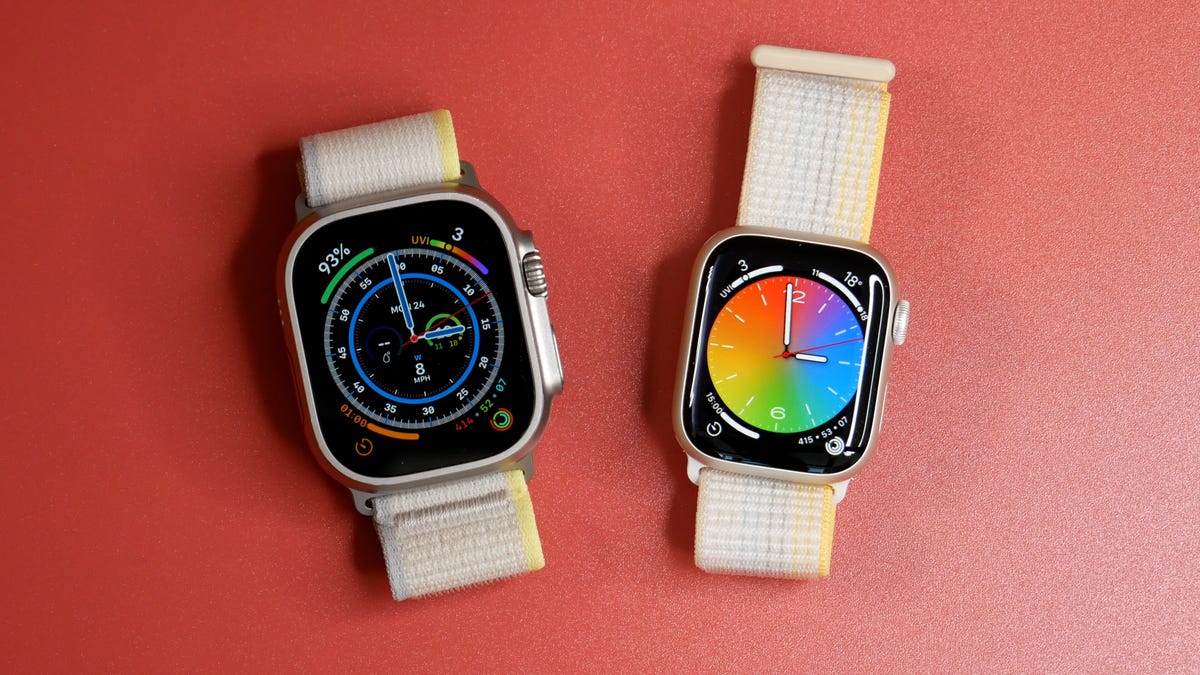
In the years since its launch, the Apple Watch has grown into a well-rounded fitness tracker and a useful smartphone companion. But there are several ways Apple could make it even more helpful in both areas, and I’m hoping to learn more about how Apple is doing just that at its Worldwide Developers Conference.
The Apple Watch already has a bevy of exercise options and can measure more health data points than I personally know what to do with. Yet it still lags behind competitors when it comes to delivering insights related to sleep and workout recovery. Fitness aside, I’d love to see more changes to the user interface that make it easier to get information quickly without requiring multiple taps and swipes.
Apple rarely discusses products or updates before formally announcing them, but it traditionally introduces new features for the Apple Watch at its developer conference. Software updates have become even more important for the Apple Watch in recent years, bringing upgrades that are arguably more meaningful than new hardware — like more running metrics and low power mode.
But there’s plenty of opportunity to further refine the Apple Watch’s software, especially by making more sense of all the health data it can gather.
Sleep chronotypes
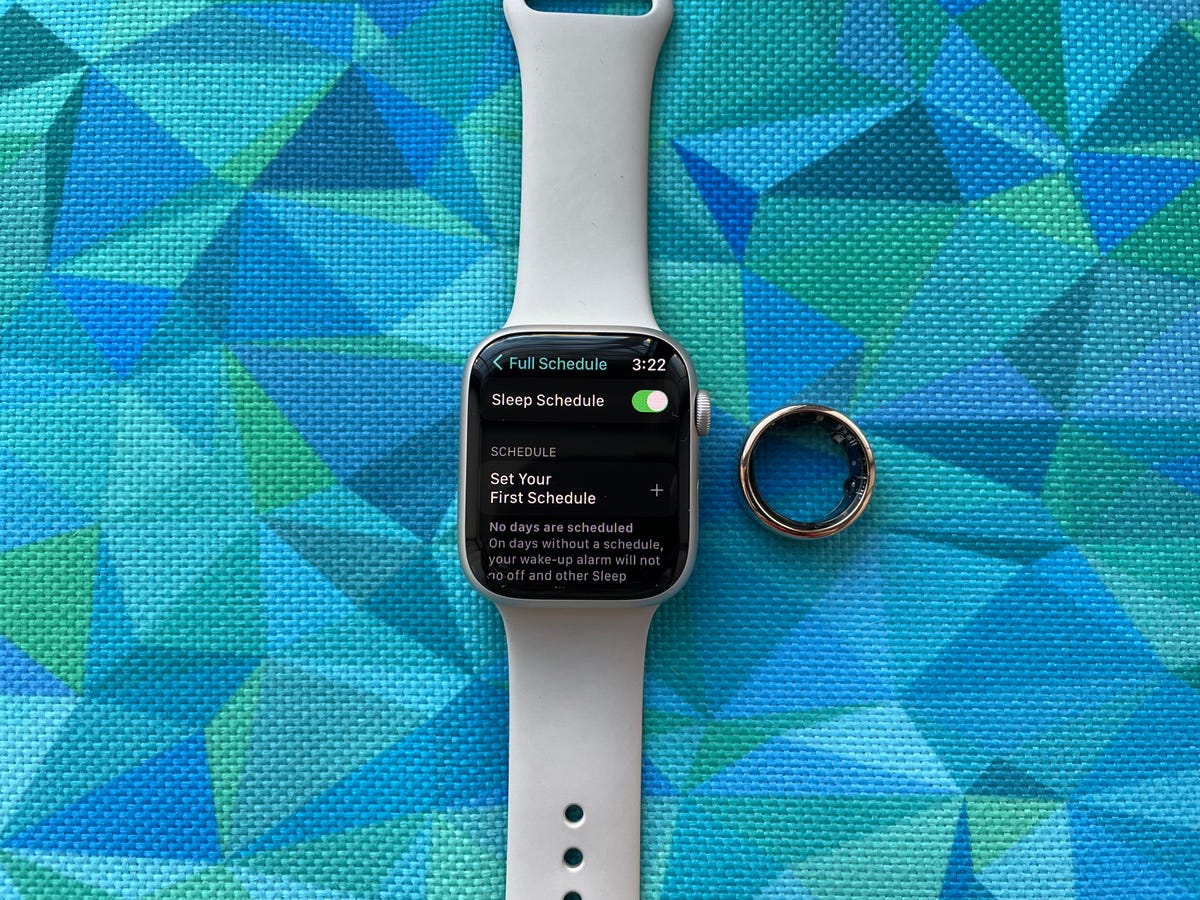
The Oura ring can tell whether you’re a morning or night person, unlike the Apple Watch
Your Apple Watch can show how long you slept and how much time you spent in specific stages of slumber, like deep and REM sleep. But brands like Oura and Citizen aim to take that a step further by issuing a chronotype based on your sleeping patterns and other data.
The term chronotype refers to whether your body has a natural preference for the morning or the evening. Oura measures this by analyzing your activity, sleep-wake cycle and body temperature; while Citizen crunches sleep data and alertness scores (which are generated after taking a test in the app).
I don’t expect Apple to mimic this exact approach, but it would be helpful to see more insights around how sleeping patterns tie into my overall energy levels throughout the day. There’s a lot more Apple could do when it comes to sleep tracking in general. While introducing sleep stage detection was a much-needed addition last year, I’d also still like to see some type of sleep score that summarizes the quality of my rest at a glance.
Recovery metrics
The Apple Watch is effective at getting me to move — maybe a little too effective. I obsess over closing at least one Activity Ring on a daily basis. But as I’ve written in the past, the Apple Watch could use more features aimed at workout recovery.
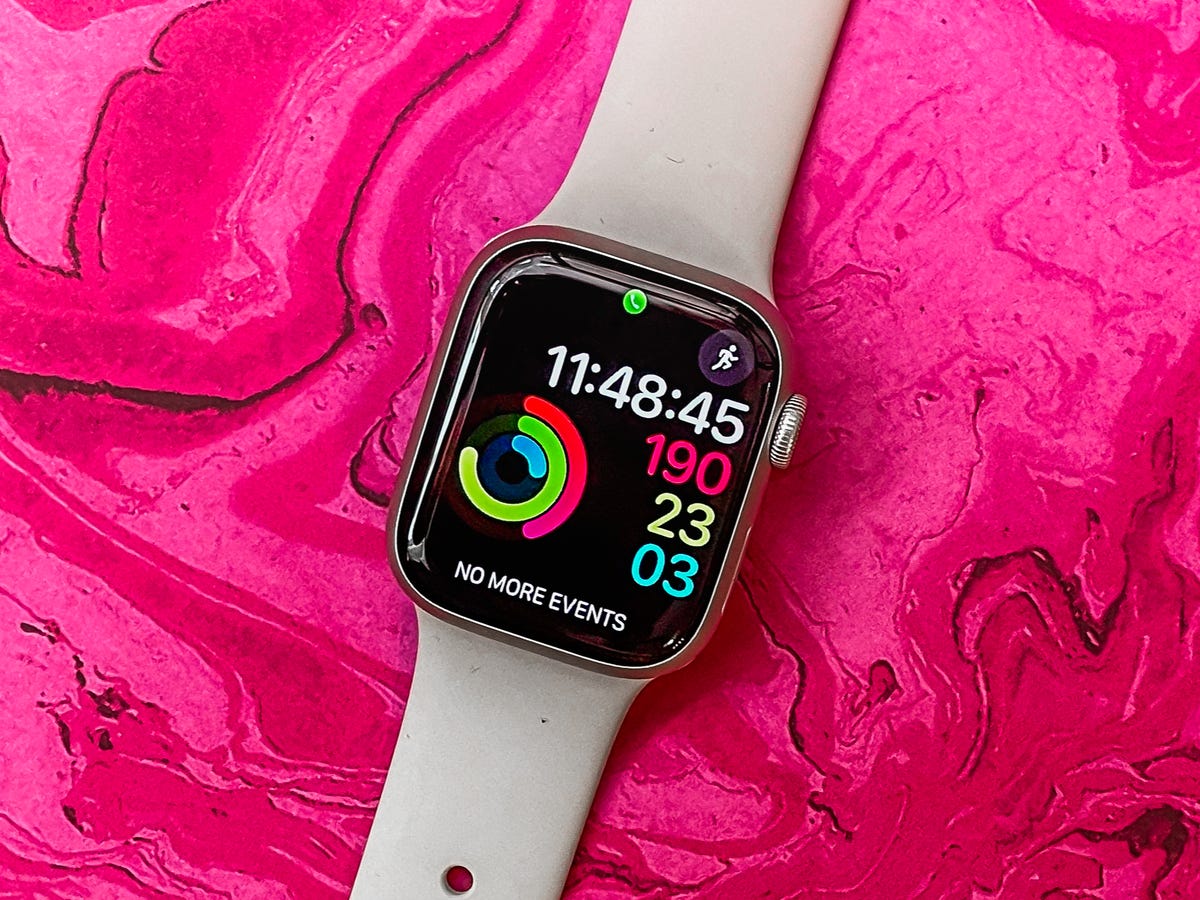
The Apple Watch’s Activity Rings motivate me to move. Now I just need a reminder to take a break.
The Apple Watch can encourage you to relax, get to bed on time or start moving when you’ve been inactive for too long. However, it doesn’t have any meaningful insights on how much rest you may need after a tough workout or a night of inadequate sleep.
Oura, Whoop and Fitbit all offer some type of recovery metric that helps you understand whether you’re ready for a big workout or need to take a rest day. They generally do this by examining sleep, activity and heart rate variability data among other factors. In the past, scores like these have helped me shake the guilt that comes with skipping a workout on days when I’m just not feeling up to it.
More customizable activity goals
My workout routine and activity levels vary by the day depending on how well rested I am, my workload, whether I’m commuting to the office and other factors. I wish I could adjust my activity goals to match. While you can easily change your activity goals by simply tapping the «Change Goals» button at the bottom of the activity summary on your watch, there’s no way to customize it according to the day. For example, I’d love to set a higher goal on days when I know I’ll get more steps in (i.e. the days I work from the office ) and at times when I’m usually well rested (the weekend), and lower it otherwise (i.e. my work-from-home days).
More QWERTY keyboard support
The Apple Watch Series 7 felt very similar to the Series 6 when I reviewed it in 2021. But there’s one feature that debuted on the Series 7 I miss when switching to older watches: the QWERTY keyboard. Yes, I know typing on such a tiny screen seems like more trouble than it’s worth, but hear me out.
There are plenty of times I’d like to quickly respond to a text message without reaching for my phone, such as when I’m waiting for the elevator at the office and my phone is buried in my bag, during a run or when my phone is across the room. The QWERTY keyboard has surprisingly become my favorite way to fire off a quick text in those circumstances.
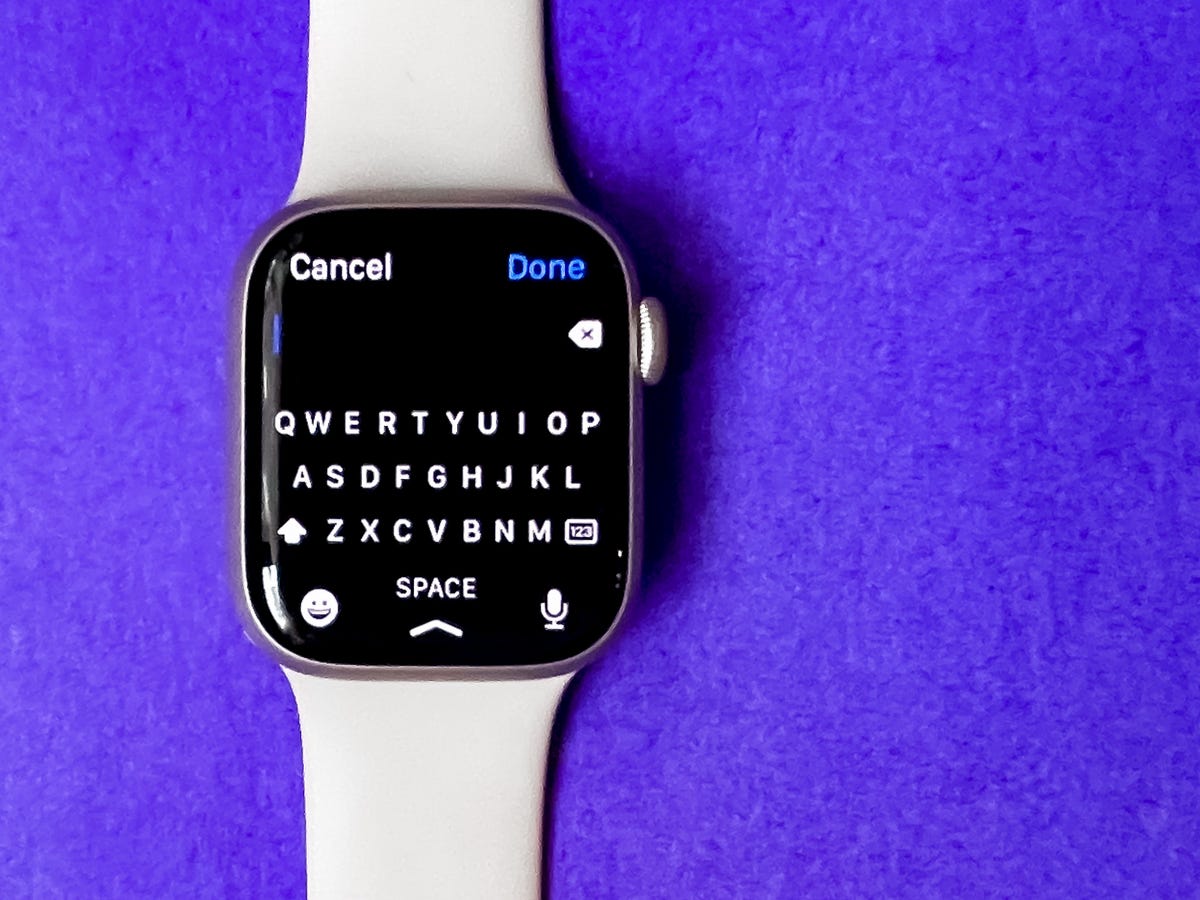
The Apple Watch Series 7’s keyboard
The QWERTY keyboard is currently available on the Apple Watch Series 7, Series 8 and Ultra because those watches have larger screens. While the bigger screen certainly makes it easier to tap and swipe, I could imagine the keyboard fitting just fine on the 44-millimeter version of older Apple Watches. It’s the one feature I really miss when switching back to an older watch like the Series 6. After all, even the Pixel Watch, which has a relatively small screen, has an on-screen keyboard.
Additional uses for the temperature sensor
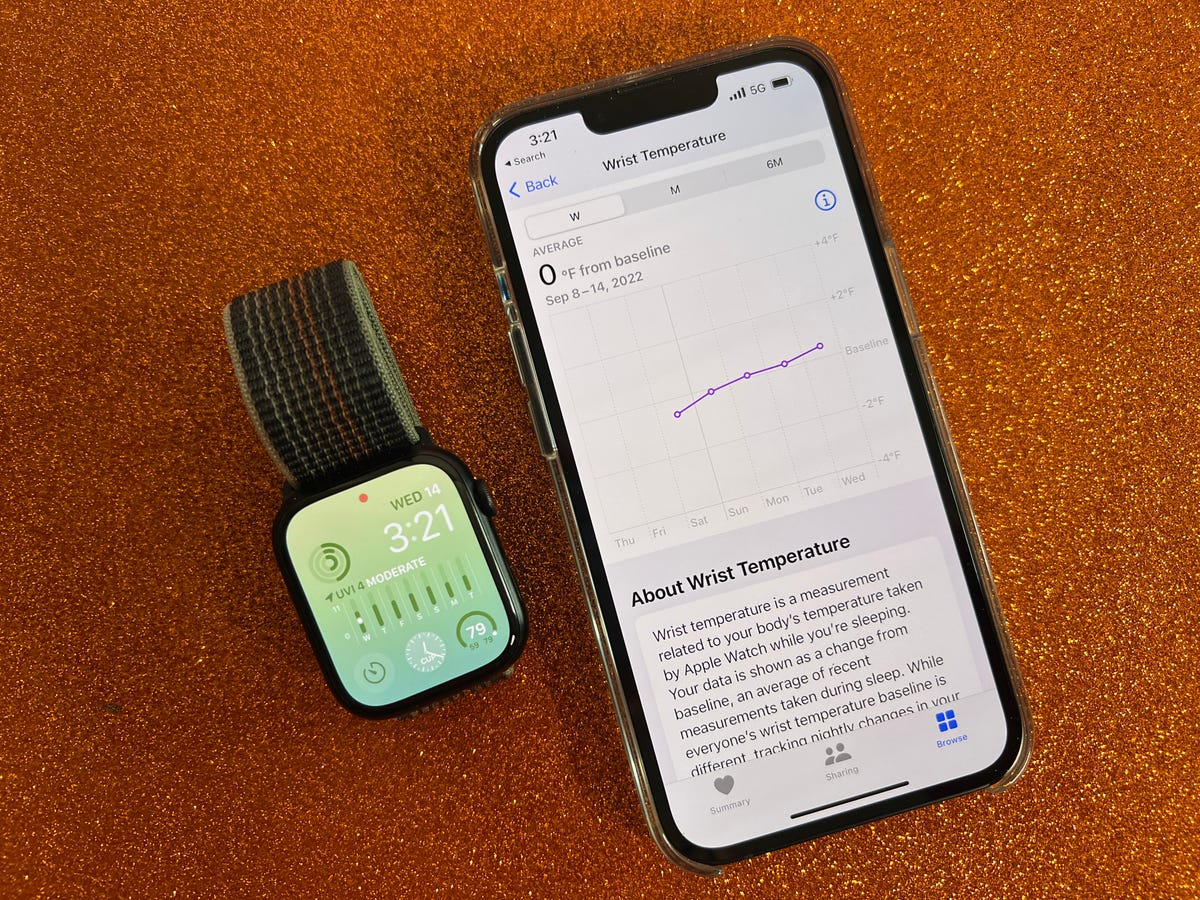
Temperature sensing shows up in the Health app. Readings are relative, so you’ll only see increases or decreases, not absolute numbers.
Apple debuted overnight temperature sensing in the Apple Watch Series 8 and Ultra. Right now, the technology is primarily used for providing retrospective ovulation estimates and improved period predictions. You can also view changes in your nighttime wrist temperature in Apple’s Health app, although there isn’t really a way to make sense of those numbers.
Apple should explore other ways to tie temperature data into new metrics. Oura, for example, uses temperature as one factor in determining that aforementioned readiness score. While I wouldn’t expect Apple to clone exactly what other gadget makers are doing, it would be interesting to see it somehow tie temperature readings into other insights.
Ahead of the Apple Watch Series 8 and Ultra’s arrival last year, Bloomberg reported that the Series 8 would be able to detect fevers. We haven’t seen such functionality yet, but if Bloomberg’s report is accurate, it suggests Apple is certainly thinking about future use cases.
An updated interface
The Apple Watch has existed for nearly a decade. While Apple has made many tweaks and additions to the software over the years, the general user interface remains the same. You still have two options for how apps are displayed, either in a list or a honeycomb format. Many interactions either come in the form of responding to a notification, tapping an app, or complication or dictating a request through Siri.
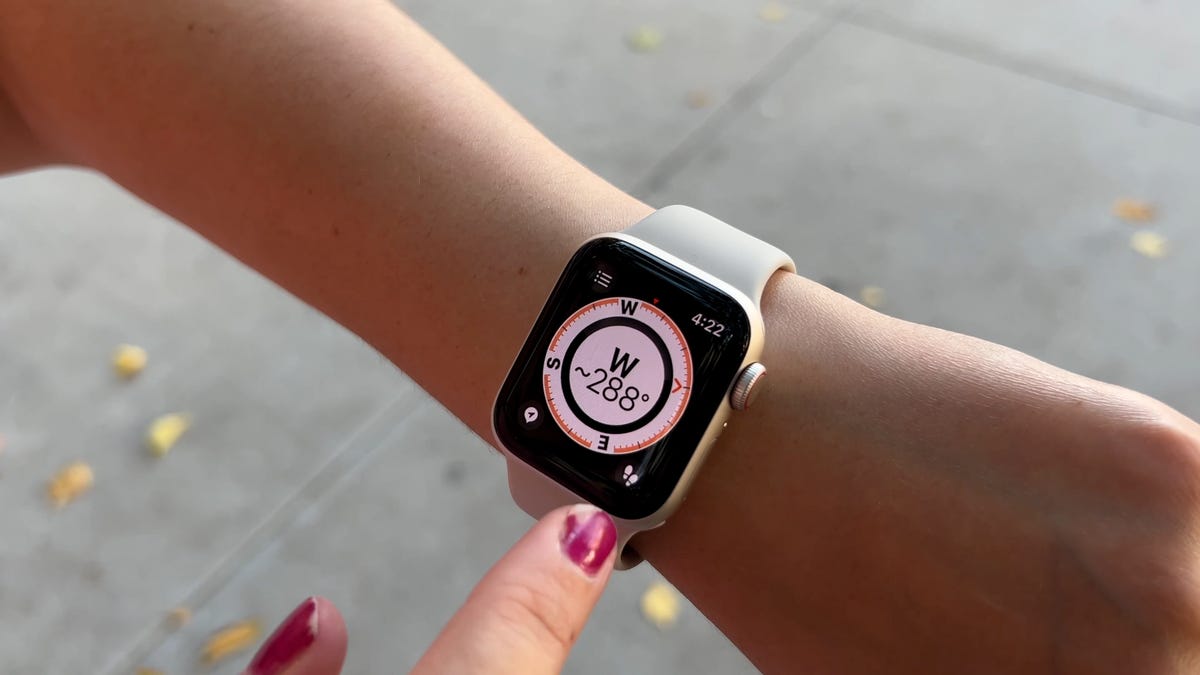
Apple Watch SE (2022)
In 2023, it’s time for a change. Precisely what that change is has yet to be determined, but I’d like to see any improvement that makes it easier to get things done with fewer taps and swipes. I also think the software could be more proactive. Imagine if your watch could suggest new customized watch faces decked out with complications based on your usage habits? The iPhone has gotten better at surfacing apps, contacts and other content intuitively, and I’d love to see more of that infused throughout the Apple Watch’s software too.
Bloomberg reports that some changes may indeed be coming in WatchOS 10. An April report said Apple is planning a big refresh that will make widgets a core part of the operating system, with the goal being to make it easier to see information at a glance.
Apple already gets many things right with the Apple Watch’s software; it’s one of the reasons why it’s the most popular smartwatch in the world. But additions like these could make it even easier to use while making it a more capable wellness tracker.
Technologies
TikTok to Let Apple Music Users Stream Full Songs Without Ever Leaving the App
TikTok and Apple Music come together to introduce two new features to the music listening experience.
If you’ve ever scrolled TikTok, caught a snippet of a tune, and thought, «I wish I could play this song all the way through,» this is for you. TikTok and Apple Music announced on Wednesday that they have partnered on two new features, Play Full Song and Listening Party. The goal is to offer listeners a seamless music listening experience without ever leaving the social media app.
Apple Music subscribers who discover a song on their TikTok For You Page or on the Sound Detail Page will be able to click Play Full Song to open the Apple Music player and listen to the track in its entirety. From there, subscribers to the music streaming service will be able to save the song as a favorite, add it to a playlist on Apple Music and listen to a customized stream of recommended songs.
When a full-length song is played, the stream will pay artists through Apple Music.
«Tapping into the music you love should feel effortless,» Ole Obermann, co-head of Apple Music, said in a statement. «With Play Full Song, Apple Music subscribers can move easily from discovering a track on TikTok to listening to it in full instantly, without breaking the flow. This integration not only makes it easier for fans to discover, listen to, and engage with the artists they love, but also creates a powerful new pathway for artists — turning moments of discovery into deeper connection and sustained engagement in one simple, seamless experience.»
Listening Party sounds somewhat like Spotify‘s feature of the same name. Fans join a shared, real-time session where they listen to the same tracks together and interact live, with the songs streamed through Apple Music inside TikTok. Musicians can also join and chat with their fans.
«TikTok is where music discovery and culture move at the speed of the community,» Tracy Gardner, global head of music business development at TikTok, said in a statement. «Thanks to Apple Music, Play Full Song gives fans a seamless way to go from discovery to full-length listening, and Listening Party provides a shared place to experience music together in real time. It’s all about bringing artists and fans closer, and turning shared moments into lasting connections.»
Play Full Song and Listening Party will launch globally on TikTok over the next few weeks.
Technologies
AI Chatbots Are Making People All Think the Same, Study Says
A new paper argues that humans are losing varied ways of thinking due to the use of chatbots, and that’s concerning.
Part of what makes us human is the unique ways we think and solve problems. But using large language models like ChatGPT might be eroding this uniqueness and leading humans to think and communicate the same way, according to a group of scientists and psychologists who have co-authored a new opinion paper.
«Individuals differ in how they write, reason, and view the world,» Zhivar Sourati, a computer scientist of the University of Southern California and first author for the paper, said in a statement.
«When these differences are mediated by the same LLMs, their distinct linguistic style, perspective and reasoning strategies become homogenized, producing standardized expressions and thoughts across users,» Sourati continued.
The paper, published Wednesday in the journal Trends in Cognitive Sciences, examines how hundreds of millions of people worldwide use the same handful of chatbots and what that means for our individuality.
Thinking inside the box
Pew Research found that one-third of all Americans used ChatGPT last year, double the 2023 figure. And chatbot use is much more common among teens: Two-thirds say they use chatbots, and almost a third use them daily.
Businesses are also going all in on artificial intelligence. Stanford found that 78% of organizations reported using AI in 2024, up from 55% in 2023.
So we’re using AI a lot. But the danger is that we could lose the diversity in the ways we think. The team points out that LLMs generate writing that varies less than what people come up with on their own.
Part of the reason LLMs may be pushing homogenized thought, according to the paper’s authors, is the data used to train them.
«Because LLMs are trained to capture and reproduce statistical regularities in their training data, which often overrepresent dominant languages and ideologies, their outputs often mirror a narrow and skewed slice of human experience,» Sourati says.
Why diverse thinking matters
There’s a good reason why the authors warn against this trend. Homogenized thought reduces pluralism, which is essentially the idea that multiple perspectives are good for society as a whole.
«This value of pluralism is rooted in the long-held principle that sound judgment requires exposure to varied thought,» the authors write in the paper. «Unchecked, this homogenization risks flattening the cognitive landscapes that drive collective intelligence and adaptability,»
So we use different ways of thinking to figure out more solutions to a problem. If we lose the ability to think and communicate differently, it could affect how we adapt to new situations.
«The concern is not just that LLMs shape how people write or speak, but that they subtly redefine what counts as credible speech, correct perspective, or even good reasoning,» Sourati says.
The authors also say that this trend even impacts people who don’t use chatbots.
«If a lot of people around me are thinking and speaking in a certain way, and I do things differently, I would feel a pressure to align with them, because it would seem like a more credible or socially acceptable way of expressing my ideas,» Sourati says.
Technologies
SXSW 2026 Updates: What We Expect on Tech and Culture From Austin
-
 Technologies3 года ago
Tech Companies Need to Be Held Accountable for Security, Experts Say
-
 Technologies3 года ago
Best Handheld Game Console in 2023
-
 Technologies3 года ago
Tighten Up Your VR Game With the Best Head Straps for Quest 2
-
 Technologies4 года ago
Black Friday 2021: The best deals on TVs, headphones, kitchenware, and more
-
 Technologies5 лет ago
Google to require vaccinations as Silicon Valley rethinks return-to-office policies
-
 Technologies5 лет ago
Verum, Wickr and Threema: next generation secured messengers
-
 Technologies4 года ago
Olivia Harlan Dekker for Verum Messenger
-
 Technologies4 года ago
iPhone 13 event: How to watch Apple’s big announcement tomorrow