

Technologies
Best Eco-Friendly and Recycled iPhone 13 Cases for 2023
Reduce, reuse, recycle. Check out these environmentally friendly iPhone 13 cases.


This story is part of Tech for a Better World, stories about the diverse teams creating products, apps and services to improve our lives and society.
The iPhone 14 has been out for a while now but that doesn’t mean your old reliable iPhone 13 is obsolete. If you don’t want to upgrade to the latest iPhone and instead keep your iPhone 13 in working order, you’ll want to use a good case to protect it. Those who care about the environment have plenty of recycled and biodegradable options to choose from, too. You don’t have to sacrifice protection or style either, as there’s a wide variety of environmentally friendly options available. We’ve rounded up some of the best eco-friendly iPhone 13 series cases below, though many are available for other iPhone generations as well.
Regular phone cases tend to turn into single-use items and end up in a landfill — especially with how often we upgrade our phones. Investing in a eco-friendly phone case is a great way to stop that cycle. We’ve collected some of the best environmentally conscious iPhone cases, which are all made of recycled plastic or fully biodegradable plant-based materials.
Eco cases can look and feel different from standard thermoplastic polyurethane, or TPU, cases, but most people probably won’t realize you’re using an eco-friendly case unless you tell them. Many offer good drop protection and all the cases on this list are compatible with wireless chargers. A few have MagSafe options.
Read more: Best Cases for iPhone 13, iPhone 13 Pro and iPhone 13 Pro Max


David Carnoy/CNET
Incipio’s Organicore cases are made with 100% compostable and biodegradable materials and also have eco-friendly packaging. Organicore cases offer 8-foot drop protection and are available in three color options: charcoal (pictured), natural and blue.
It feels similar to a firm plastic case and has a slight bit of grip to it. It also seems pretty protective and has raised edges to help protect your screen in the event you drop your phone face down.

Yes, ZWM stands for zero waste movement and its slim iPhone cases are made from renewable organic material that are completely biodegradable. The company says it’s also «climate neutral,» planting one new tree for every phone case sold.
ZWM cases come in a variety of color options and are some of the more attractive looking eco cases I’ve tried.

I’ve previously featured Nimble’s translucent Disc cases that are made out of recycled compact discs. Its Spotlight case for iPhone 13 is the company’s latest eco case. It’s kind of funky looking — yes, it spotlights its recycled nature — and even though it’s pretty slim, it does offer good drop protection, with a 15 -foot rating. Nimble says it’s made from 72% recycled materials, including recycled polycarbonate, TPU, silicone, and old plastic phone cases. It’s available in 3 color options.

David Carnoy/CNET
Casetify launched its Ultra Compostable Cases for the iPhone 12 and now has plenty of eye-catching designs for the iPhone 13. This eco model has 6.6-foot drop protection and is made with the 100% compostable, plant-based material.
Casetify also says the packaging is made of 100% sustainable, recycled and compostable materials including eco-friendly, nontoxic ink made from soybeans. The case has a raised edge design to protect your screen in the event of fall and is available in seven color options. The starting price is high at $52, but the case is customizable with personalization and prints.

Re/Casetify is Casetify’s line of eco cases that are made of recycled materials, including old, discarded phone cases, manufacturing scraps and plant derived bio-plastics. They come in a variety of color and print options ranging in price from $58 to $72 for models that include MagSafe.

Amazon
This is the only case on the list I haven’t yet tried, but the Amazon user reviews for it are positive and it costs less than $10. Inbeage says its case is built from 100% biodegradable plant-based biopolymers and harvested plants, including wheat straw and bamboo fiber. It fully covers your phone and has raised edges, so that should help with any face-down drops. It’s available in six color options.
Inbeage also sells a Fabric Bio Case for around $16. It also has decent reviews but doesn’t seem as durable as this case.
David Carnoy/CNET
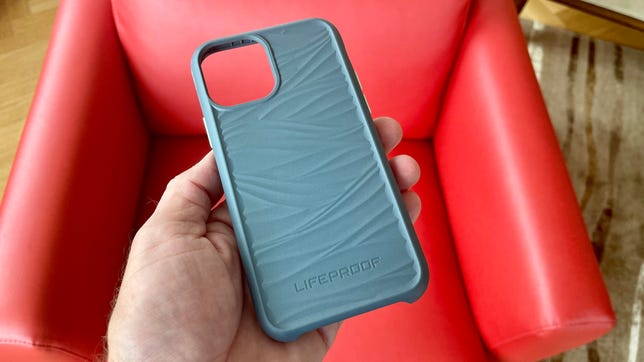
Lifeproof’s Wake case is made out of recycled ocean plastic (85% of it anyway). It’s attractively designed but I wouldn’t call it super tough — it isn’t enclosed at the bottom and has 6-foot drop protection. It comes in four colors, including gambit green, which I like. (If you’re going to get a «green» case, it might as well be green.)
David Carnoy/CNET
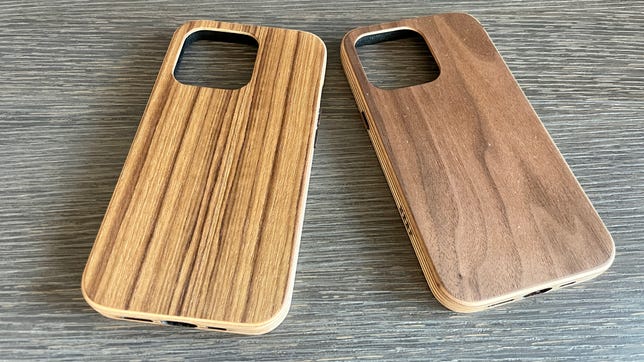
KerfCase has been making handmade wooden cases for a while, and its new Plywood case is not only more durable but less expensive than some, starting at $50, with 6-foot drop protection and a limited lifetime repair warranty. I like it better than other cases made of wood that I’ve tried. It’s also worth noting that Apple’s MagSafe charger will stick to the back of it, and KerfCase sells matching charging docks for the Apple MagSafe charger (yes, it’s an accessory for an accessory).
More accessories for your phone
- Best MagSafe and Magnetic Wireless Chargers for Apple iPhone 13
- Best MagSafe and Magnetic iPhone Accessories for 2023
- Best iPhone 14 Fast Chargers at the Lowest Prices We Can Find
- Best Cheap True-Wireless Earbuds in 2023
- Best Wireless Car Charger and Mount in 2023
- Best iPhone 2023: Apple Currently Sells 7 Different Models. Here’s How to Pick One
- Best iPhone 13 Case
Technologies
This Duck-Billed Microphone Protects Against Eavesdroppers, But It Sure Is a Look
At CES 2026, this privacy accessory drastically quiets your conversations, though if you use it in public, you’ll surely raise questions.


Ever wanted to have a phone conversation without others listening in? At CES 2026, I saw a solution to this privacy problem, the Mutalk 2, a wearable microphone that muted my voice from people around me. It also made me look like a cyberpunk platypus.
Coming from Japanese company Shiftall, the Mutalk 2 is a $200 accessory that you wear over your mouth and nose, sealed by a rubber gasket, with a plastic oval extending out for a few inches. It connects to phones or devices over Bluetooth or wired 3.5mm jack. In a demonstration, I wore the Mutalk and chatted over the phone with someone 10 feet away who could hear me clearly on the call, but could pick up only the barest mumbling otherwise.
There’s no getting around the Mutalk’s strangeness, and I would expect to raise eyebrows if I ever wore it in public, as strapping one on made me look like I was wearing a gas mask. To be fair to Shiftall, I don’t have the design chops to suggest a better look for a microphone that incorporates tech to muffle my voice. Granted, I could imagine plenty of reasons to use it in the comfort of one’s own home, like to chat with online friends while gaming late at night without worry of waking up roommates, partners or babies.
From my brief time with the Mutalk 2, it appears to work as intended, and $200 isn’t prohibitive compared to the prices of other microphones. While it undeniably looks odd, its design is more functional than exotic. After I adjusted its rubber straps that went around my head, the accessory sat comfortably enough on my face, and was light enough that it wouldn’t seem to drag down during a longer conversation. The rubber gasket that covers the mouth and nose is removable, making it easy to clean.
If you want private conversations while you’re out in public, there may be less obtrusive ways to go about it than the Mutalk 2, like a throat microphone. But Shiftall’s design has other benefits, such as blocking lip-reading. And it’s worth pointing out that some people out there would love to rock that cyberpunk platypus look. I mean, folks did line up to buy the Razer Zephyr RGB mask — some people embrace parts of the bleeding-edge technological future that’re different from anything else around.
Technologies
Cloudflare Says Winter Olympics Cybersecurity Is at Risk in Spat With Italian Regulators
But Cloudflare’s global head of policy tells CNET the company is open to an agreement with Italy.

The CEO of the networking company Cloudflare is lashing out at Italy in response to regulatory anti-piracy fines, threatening to withdraw from the country and potentially the 2026 Winter Olympics.
Don’t miss any of our unbiased tech content and lab-based reviews. Add CNET as a preferred Google source.
Italy announced on Jan. 8 that it had issued a fine of 14.2 million euros (approximately $16.5 million) against Cloudflare for failing to block access to pirated content. Soon after that, Cloudflare’s CEO Matthew Prince took to X to call out the fines, describing Cloudflare’s decision not to comply as a fight over censorship. Prince said that complying with Italy’s demands under its Piracy Shield policies would affect content globally.
Italy’s Piracy Shield is a program implemented by the country’s telecommunications regulator, AGCOM. In order to cut down on piracy in the country, such as hosting illegal streams of sporting events, the program allows IP holders to report content violations to a rapid-response automated system. However, some have complained that the 30-minute window given is not enough time for ISPs to properly vet complains, and is resulting in legitimate, non-pirated content being blocked as well.
«In other words, Italy insists a shadowy, European media cabal should be able to dictate what is and is not allowed online,» Prince said.
Yesterday a quasi-judicial body in Italy fined @Cloudflare $17 million for failing to go along with their scheme to censor the Internet. The scheme, which even the EU has called concerning, required us within a mere 30 minutes of notification to fully censor from the Internet any… pic.twitter.com/qZf9UKEAY5
— Matthew Prince 🌥 (@eastdakota) January 9, 2026
In his posts, Prince specifically mentioned the 30-minute timeframe that Italy requires for Cloudflare to disable access to suspected piracy traffic.
«We block pirate streams every time we find one,» he wrote. «We hate them.» But, he said, «we can’t put in place a system where a shadowy cabal can require us to remove GLOBALLY anything they don’t like on the internet within 30 minutes. That’s insane.»
Some of the proponents of Italy’s piracy rules are soccer teams that want to prevent the illegal streaming of their matches.
Prince went on to list steps his company might take, including pulling its cybersecurity service from the 2026 Milano Cortina Winter Olympics, removing Cloudflare servers from Italian cities and holding off on any plans to invest in the country. Prince also suggested he would get US government leaders involved, tagging Vice President JD Vance in his post. Prince also reposted a message addressed to the Italian prime minister, along with an article about Italy’s actions.
The Winter Olympics, scheduled to take place between Feb. 6 and Feb. 22 at sites across Lombardy and Northeast Italy, are a sensitive subject when it comes to cybersecurity, considering the potential that many may use VPN technology to view broadcasts of the event.
Door is open to an agreement, Cloudflare says
In an interview with CNET, a Cloudflare representative said that while the fine from Italy represents more than the company’s total revenue from the country, Cloudflare is still open to an agreement to avoid saying arrivederci to the country.
«We’re still evaluating, and we’re still open to working something out,» said Alyssa Starzak, Cloudflare’s deputy chief legal officer and global head of policy. «That would be a better solution. The hope is we can have some discussions for a more reasonable result.»
Starzak said the company has posted information and conducted outreach to Italian stakeholders about the ways Cloudflare is working to combat unauthorized streaming. But Italy’s law, she said, leaves no room for negotiation or nuance.
«It’s been very much a ‘You must do what we say’ » situation, she said.
Technologies
Transport Your Dungeons & Dragons Hero Off the Page With This Tabletop Gadget
At CES 2026, I found a couple ways that players and dungeon masters can use tech to upgrade their gameplaying experience.

As I walked around CES 2026, my eyes drifted over a poster awash with fantasy heroes, dastardly monsters and rolling dice — and I failed my saving throw to look away. If you’re a fellow tabletop gaming nerd, you might want to follow this pair of gadgets due out later this year.
Tabletop gaming continues to appeal to players with its deliberately analog gameplay, using miniatures, maps, dice and other physical trinkets to keep the focus on real-world play. The niche has grown in popularity over the decades, and a supporting industry has risen around it, offering third-party materials and accessories to enhance the experience. Digital gadgets and software have been added to this mix in recent years, and a new company, Arcalink, has its own supporting products for the avid Dungeons & Dragons player.
The first of Arcalink’s upcoming tabletop augmentations is a gadget that’s small but mighty. About the size of a film canister, the Arcalink One is a rectangular display around 2 to 3 inches long that’s covered in fantasy decorations. These can be swapped out, with one looking like a doorway in stone ruins and another appearing like a blue wizard’s portal (a third, not present but described to me, would look like a Mimic, the classic D&D monster that appears as a treasure chest to trick adventurers).
The Arcalink One’s screen shows a player’s avatar, and since it was built with the fantasy roleplaying game D&D in mind, animations for popular spells that can be triggered by voice commands. Tabletop RPGs encourage the theater of the mind, with players envisioning their characters through vocal descriptions, but the Arcalink One seems like a neat way for them to accessorize with a digital version of their hero (uploaded in JPG or MP4 file formats) that’s neither essential to play nor large enough to be obtrusive — a totemic treat to take from one game to another, swapping out character portraits by using the paired app.
The basilisk in the room is the price tag: the Arcalink One is expected to cost between $100 and $150, Arcalink founder Lizheng Liu told me. While the company hasn’t hashed out the final numbers, that first number is the device itself, and the high end of the range will bundle more of those clip-on decorations along with it.
Over $100 for an optional device is prohibitive for most tabletop players, but I imagine this would appeal to adventurers with deeper pockets who want a neat little plug-and-play gadget to bring more flair to the game table. Also, let’s not pretend tabletop fans aren’t already spending a good amount of money on accessories, dice and miniatures (looking at you, wargamers).
The company plans to let a select group of supporters start backing the Arcalink One in March or April, with a full Kickstarter crowdfunding campaign launching around June.
The second product, Arca Studio, is entirely digital: AI-powered software to help dungeon masters, the thankless gameplay managers who tell the story and give voice to their world’s denizens for their characters to experience. No, it’s not using generative AI to spit out campaign ideas — this AI software records your game sessions and will make it easy to go back and search for characters and plot events while planning ahead of your next game day.
Yes, this is a sort of gaming version of the AI summaries that productivity apps offer when, say, you’ve finished a video chat, but there are a few unique features tailored to tabletop gaming. One makes a word cloud grouping together recurring names and concepts in your campaign recordings to visualize the themes and frequent elements — great for dungeon masters to see which plot lines and adventure types they might be overusing to switch them up.
Arca Studio will launch around May or June and will be a subscription service, though Arcalink hasn’t decided on an expected monthly cost yet. It’s worth pointing out that anything could change in pricing or product features before these two products reach the market — and just like a good tabletop campaign, there might be some last-minute twists that change everything.
-
 Technologies3 года ago
Tech Companies Need to Be Held Accountable for Security, Experts Say
-
 Technologies3 года ago
Best Handheld Game Console in 2023
-
 Technologies3 года ago
Tighten Up Your VR Game With the Best Head Straps for Quest 2
-
 Technologies4 года ago
Black Friday 2021: The best deals on TVs, headphones, kitchenware, and more
-
 Technologies4 года ago
Google to require vaccinations as Silicon Valley rethinks return-to-office policies
-
 Technologies4 года ago
Verum, Wickr and Threema: next generation secured messengers
-
 Technologies4 года ago
Olivia Harlan Dekker for Verum Messenger
-
 Technologies4 года ago
iPhone 13 event: How to watch Apple’s big announcement tomorrow


