
Technologies
11 Hidden iOS 16 Features You Should Be Using on Your iPhone
These lesser-known iOS features and settings will quickly make you an iPhone expert.
It’s been half a year since Apple release iOS 16, and yet there are still new features and settings to discover on the iPhone’s latest software update. These lesser-known features are definitely not as popular as the main features, like the customizable lock screen or ability to unsend text messages, but they’re still worth exploring because they can unlock a whole new experience for you on your iPhone.

I’m going to walk you through everything you need to know about the best hidden gems in iOS 16, like password-protected photo albums, easily accessible Wi-Fi passwords and more.
Read more: All the New Features in iOS 16.3
And while you’re here, make sure you also brush up on the major new iOS 16 features you’ll love, and a few that you might just hate (luckily, there’s a fix).
View and share saved Wi-Fi passwords
Apple has allowed iOS users to share Wi-Fi passwords for a while now, but only by placing two Apple devices near each other. And if that feature didn’t automatically work, you couldn’t just dig out the password from your settings. Plus if you wanted to share a saved Wi-Fi password with someone else, like an Android user or someone on a computer, you had to remember the password. Until now.
In Settings, go to Wi-Fi and tap the tiny information icon to the right of the network you want the password for. To view the network password, tap the Password section and then use Face ID or enter your passcode to view it. You can then tap Copy to copy the password into your clipboard and share it.
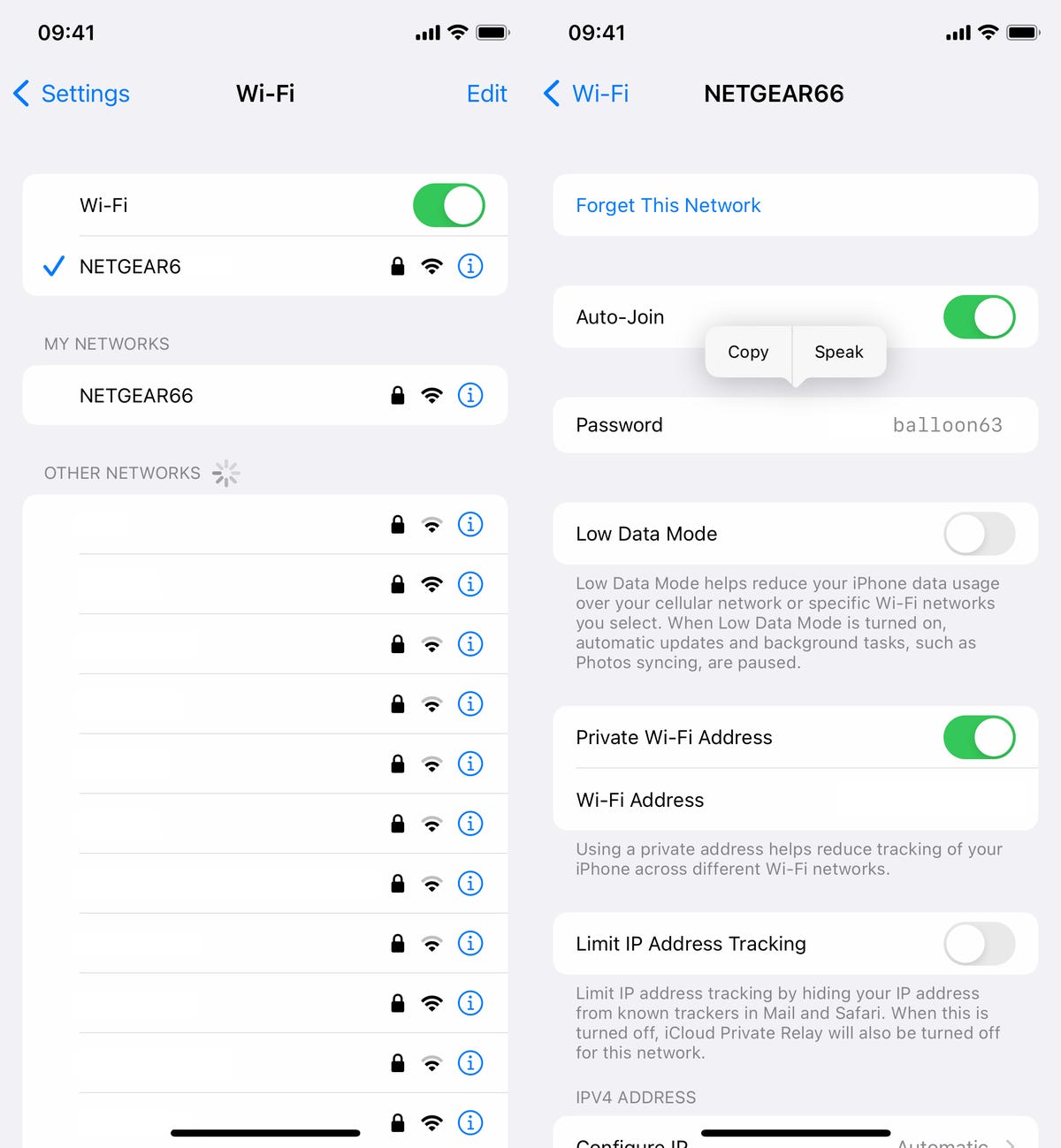
You can view the password for any Wi-Fi network you’ve ever connected to, as long as you’re currently connected to it or near enough that it appears under My Networks.
Screenshots by Nelson Aguilar/CNETFind and remove duplicate photos and videos
Maybe you’ve saved the same photo multiple times or downloaded a video more than once, resulting in duplicates littering up your photo album. It may not be a problem if you’ve got storage to spare, but you’re running out of space, you can now remove every single duplicate easily with iOS 16.
In Photos > Albums, you should see a new Duplicates album under Utilities. Apple scans through all of your photos and shows you any photo or video you’ve saved more than once in that album. From there, you can either delete any duplicates, or simply press Merge, which will keep the photo with the highest quality (and relevant data) and then move the others to the trash.

Merging will keep the highest quality photo and delete the rest.
Screenshots by Nelson Aguilar/CNETAlthough you’ll probably want to go through each set of duplicates, to ensure that they’re actually exact copies and not similar photos, you can also hit Select > Select All > Merge to remove every single photo and video that Apple thinks is a duplicate, all at once.
Hang up a phone or FaceTime call with Siri
Siri does a lot of things. You can use the virtual assistant to send a text message, get directions or play music — but one thing she’s never been able to do is hang up a phone call. Weird right? Now that’s finally a possibility with iOS 16.
In Settings, go to Siri & Search and first make sure Listen for «Hey Siri» is toggled on. If it is, you should see a new option underneath — Call Hang Up. Go into that option and toggle on Call Hang Up. When you’re on a phone call or FaceTime video chat, simply say, «Hey, Siri,» and ask her to hang up your current call.
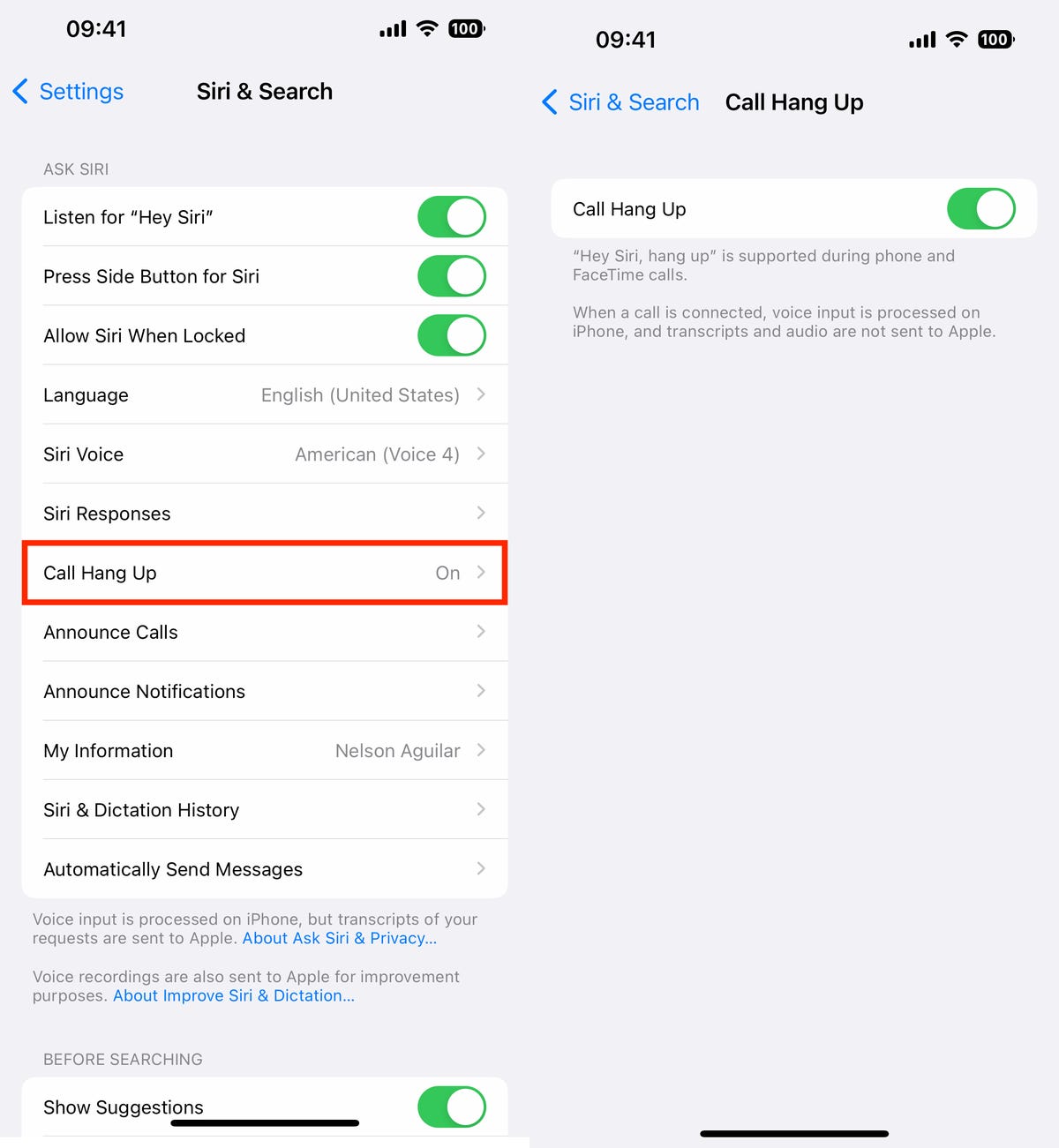
For this to work, Listen for «Hey Siri» must be toggled on first.
Screenshots by Nelson Aguilar/CNET Pair Nintendo Switch Joy-Cons with your iPhone
Apple has long allowed you to pair third-party controllers, like the PS5 Sony DualSense and Xbox Core Controller, to your iPhone and iPad, in order to more comfortably play mobile video games like the Apple Arcade library, Minecraft and Call of Duty. Now you can add another console controller to that list.
If you own a Nintendo Switch, you can now pair your Joy-Con controllers to your iPhone or iPad running iOS 16. To start, hold down the little black pairing button on the Joy-Con, until the green lights start running back and forth. This means the device is in pairing mode. Next, open your iPhone and go to Settings > Bluetooth and select the Joy-Con from the list. Repeat this step with the other Joy-Con.
Hidden and Recently Deleted albums are now password protected
The Hidden album in the Photos app is clearly not hidden, seeing as anyone can easily find it. That makes it impractical for adequately hiding private photos and videos. While Apple does have an option to make the Hidden album «invisible,» anyone with access to your phone could make it visible again and view everything inside.
Thanks to iOS 16, you can now lock the Hidden album. You don’t actually need to do anything to toggle this feature on. If you want to check it out, launch the Photos app and go to the Albums tab at the bottom of the screen. If you scroll down, you’ll see a tiny lock next to the Hidden and Recently Deleted albums. To view the contents of those albums, you’ll need to use Face ID or your passcode.
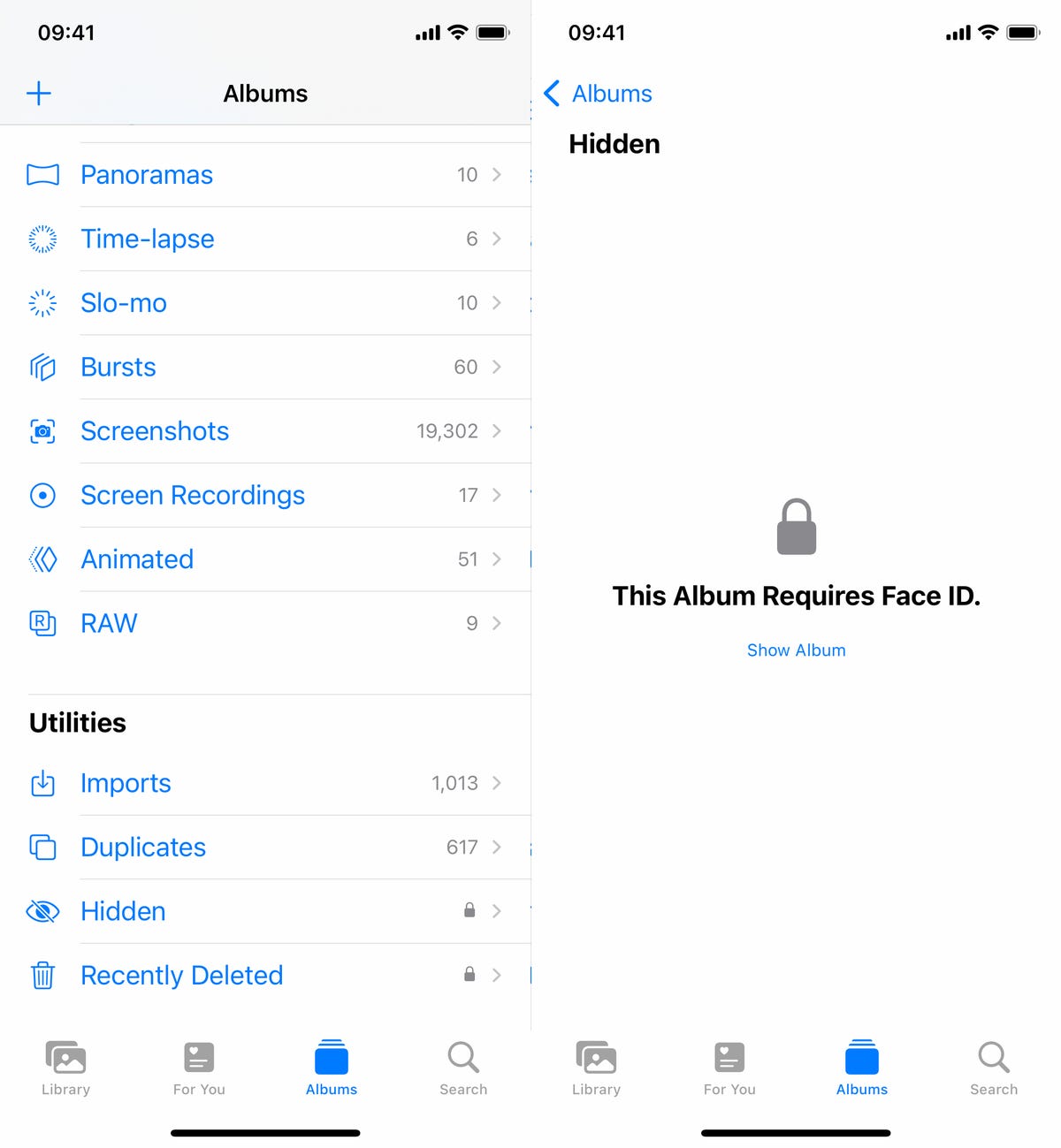
The Hidden and Recently Deleted albums now require Face ID to be accessed.
Screenshots by Nelson Aguilar/CNET Copy and paste photo and video edits
If you use the editor tool in the Photos app, you’ll be happy to learn that you can now copy and paste edits, including saturation, contrast and brightness, between photos. If you edit one photo or video and are happy with the look, you can paste those same exact edits to any other photo or video in your camera roll.
To do this, launch the Photos app and open a photo that’s been edited in full-screen. Next, tap on the three-dot menu in the top-right corner and then hit Copy Edits. This option will only appear if the photo has been edited within Photos, not any third-party photo editor. Finally, go to the photo you want to copy these edits over to, tap on the three-dot menu and then hit Paste Edits. After a second or so, you should see the photo edits appear.
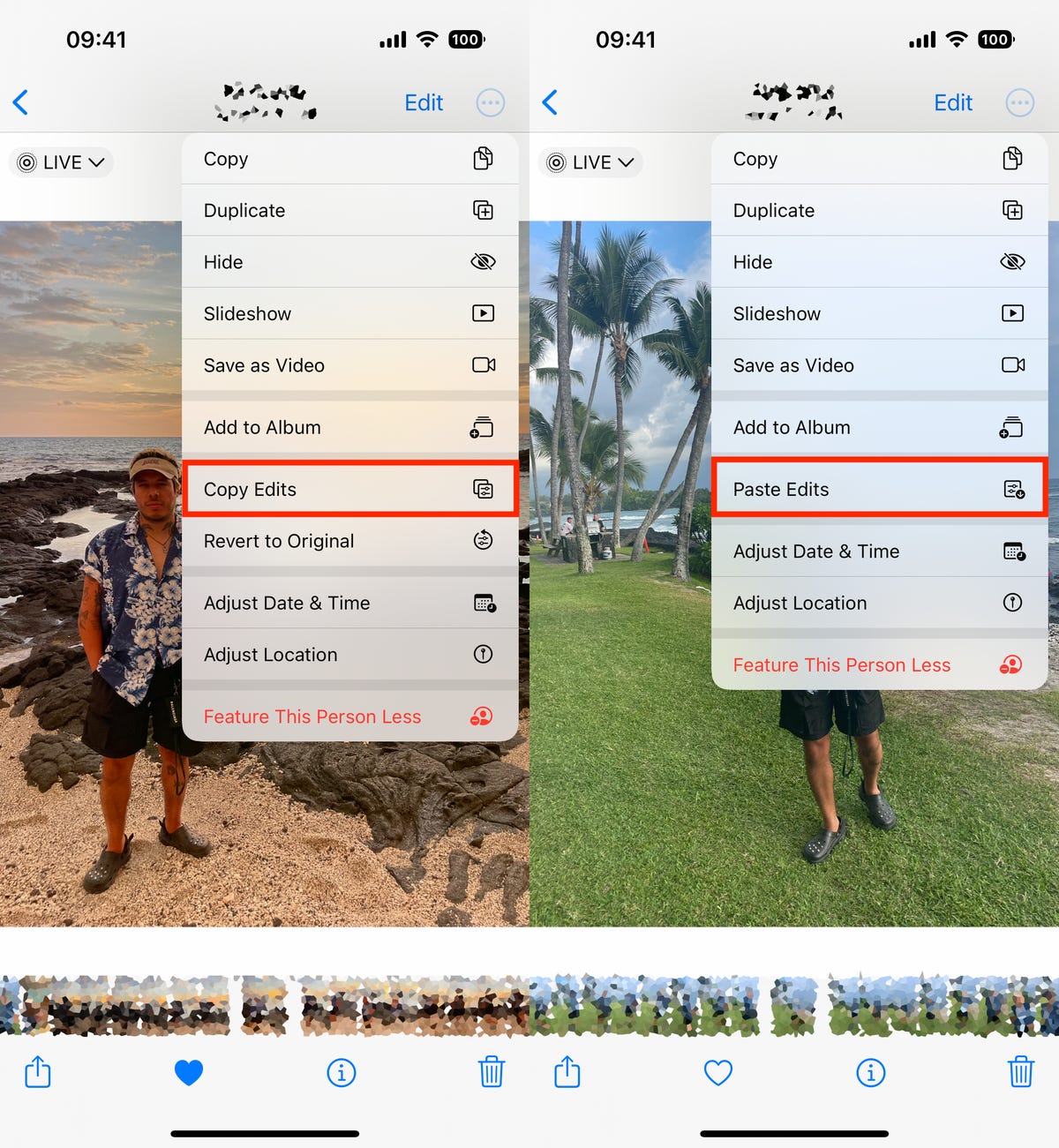
This feature works between photos and videos.
Screenshots by Nelson Aguilar/CNETBring haptic feedback to your keyboard
The iPhone has long had haptic feedback. It’s what you feel underneath your fingertips whenever you attempt to delete an app from your home screen or enter the incorrect password on your lock screen. Strangely enough, haptic feedback has never been available for the stock iOS keyboard — until now.
If you want to enable a slight vibration for every single key you type in, go to Settings > Sounds & Haptics > Keyboard Feedback and toggle on Haptic. The sound option you see is the loud and annoying clacking sound you might hear when you type in something and your phone isn’t on silent mode, so you can keep that disabled.
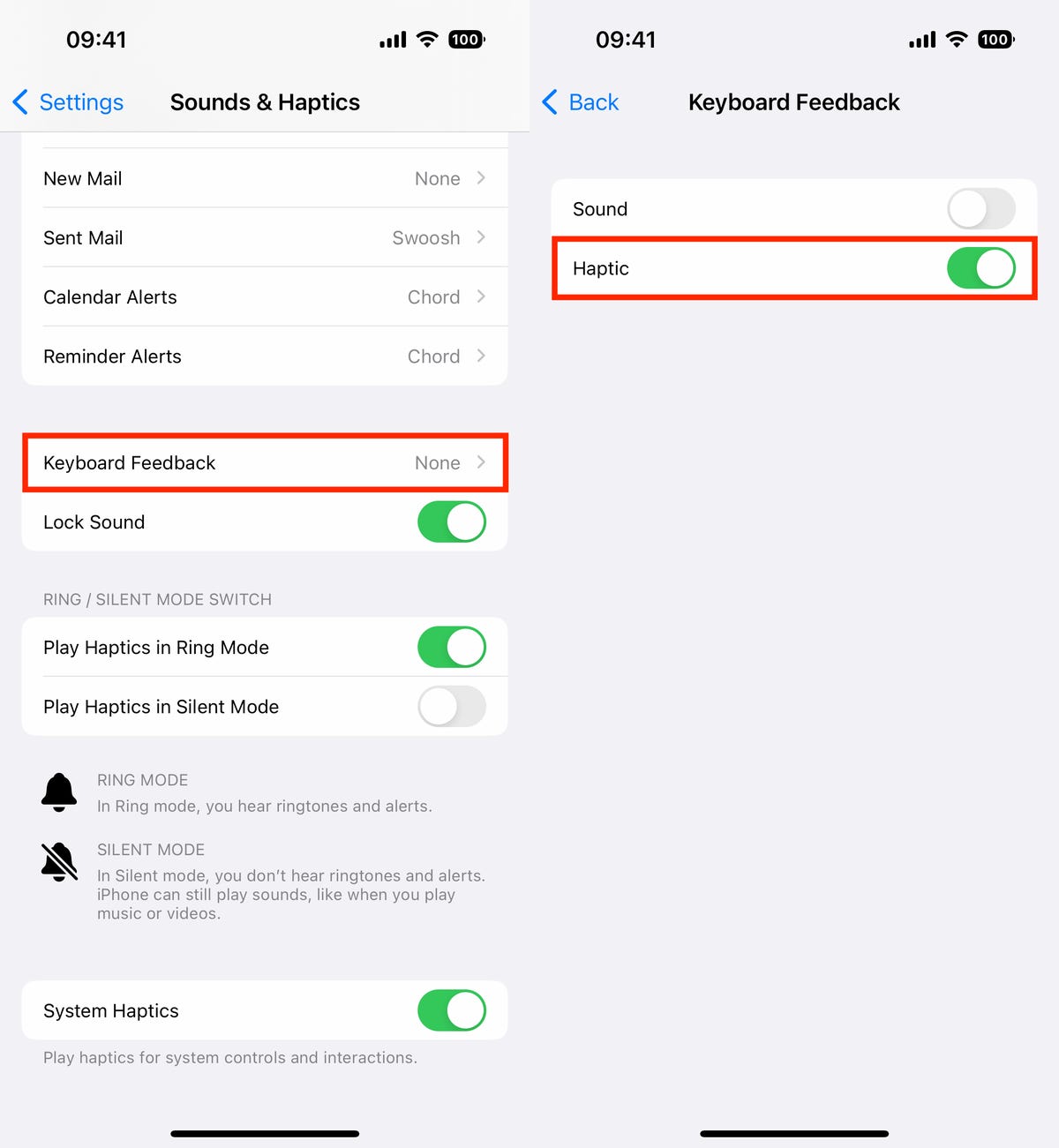
Every single time you type, you’ll feel a slight vibration for each key you hit.
Screenshots by Nelson Aguilar/CNETPin your favorite tabs in Safari
Safari caps your open tabs at 500, and if you’re nearing that limit, it might be pretty darn hard to find the exact tab you’re looking for. You could scroll endlessly, but there’s now an easier way to find the exact tab you’re looking for.
In Safari, if you press down on an open tab, you now have the option to hit Pin Tab. This will move that tab to the top of Safari, where it will exist as a tiny tab preview, permanently pinned there, which you can then tap to view. If you press down and unpin a tab, it will move to first in your grid of open tabs.
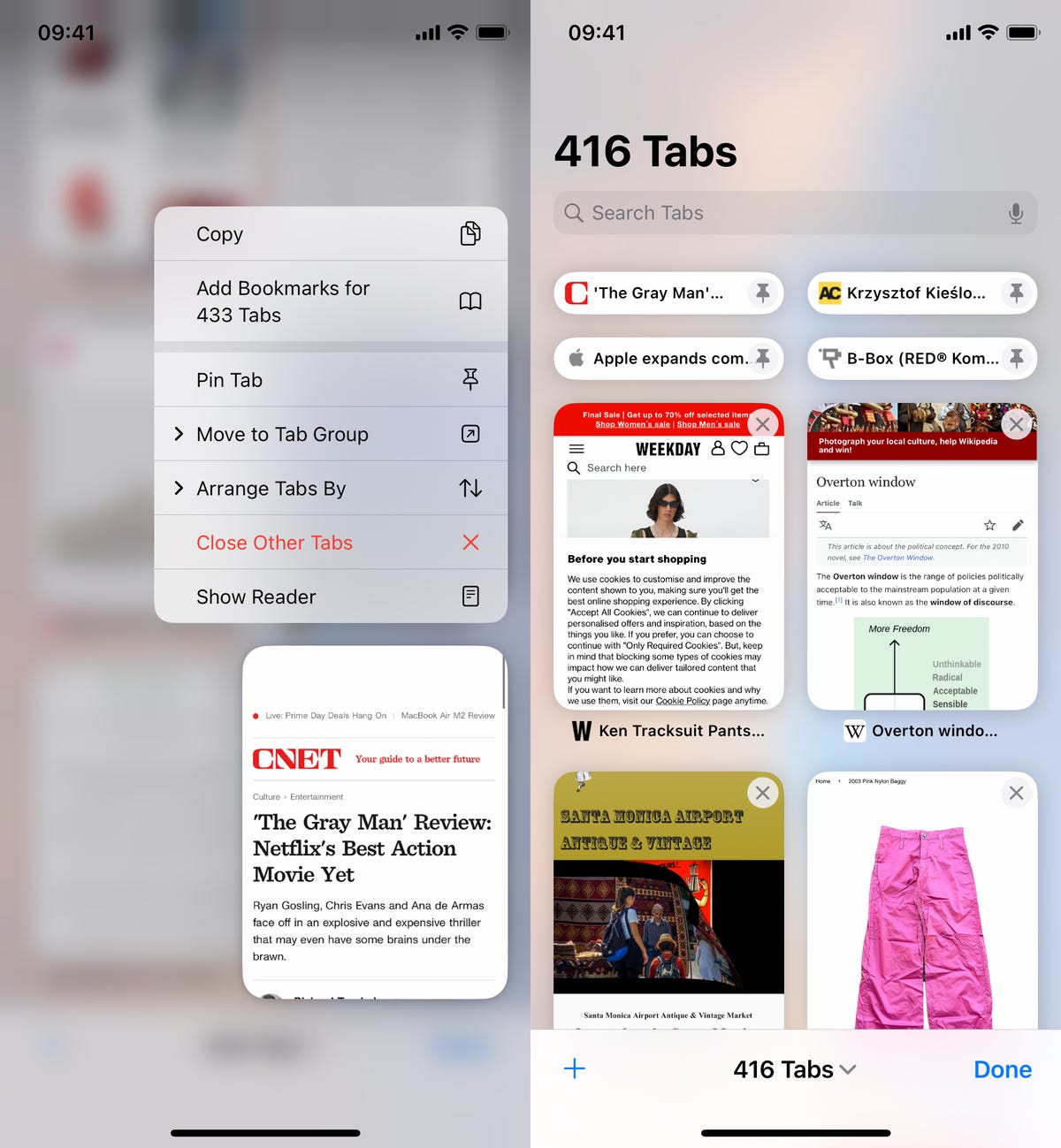
All your pinned tabs appear at the top of Safari.
Screenshots by Nelson Aguilar/CNETUse Face ID while you’re lying down
If you’ve ever tried to unlock your iPhone while it’s vertical, like when you’re lying on your side, you might have noticed that it doesn’t work. You have to place your iPhone in portrait orientation, or upright, for Face ID to work. With iOS 16, you can finally use Face ID to unlock your iPhone when it’s in landscape orientation. However, for this to work, you must have an iPhone 13 or 14 running iOS 16.
Copy your screenshots to your clipboard without saving them
You don’t need to save a screenshot to your photo album to share it with someone else. A new iOS 16 feature allows you to take a screenshot, copy it to your clipboard, delete it from your phone and paste it where you see fit. After you take a screenshot, tap the screenshot preview that appears, hit Done on the top-right and then tap Copy and Delete to copy the screenshot to your clipboard.
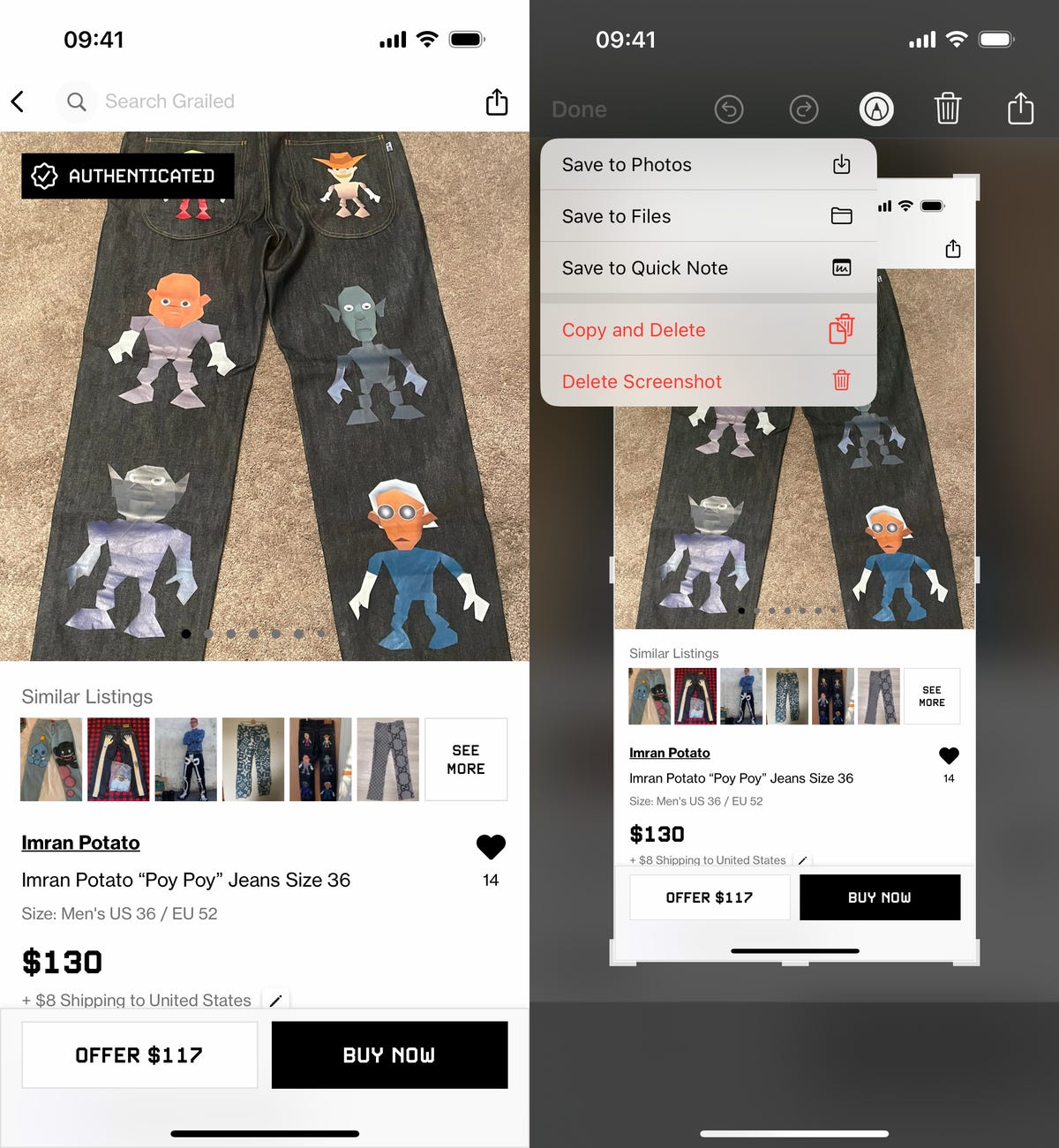
If you take a lot of screenshots, this feature can help you save storage.
Screenshots by Nelson Aguilar/CNETRemove more preinstalled Apple apps
Since iOS 10, you’ve been able to remove some preinstalled iOS applications like Stocks, Maps and Calculator — but not all of them. With the release of iOS 16, you can add three more apps to this list of ones you can remove: Find My, Clock and Health. However, deleting these apps can negatively affect and break support with other apps and connected devices, like your Apple Watch.
For more on iOS 16 and the iPhone, check out our iOS 16 cheat sheet.
Technologies
AT&T Says It’s Pumping $250 Billion Into New Infrastructure Improvements
Technologies
Apple’s New Smart Home Display Delayed Until Fall Over Siri Issues
It has been nearly a year and a half since the company announced the AI-powered product.
Your home could get smarter with Apple’s Siri, but it will have to wait a few more months. Bloomberg reported the iPad-shaped AI home hub won’t be ready until September, several months after the company was hoping to launch it this spring. Apple engineers first need to complete work on a new and improved Siri assistant for the home device, code-named J490, according to Bloomberg.
Apple was hoping to release J490 this month, along with a slew of other new devices, including the iPhone 17e, MacBook Neo, MacBook Air M5, new Pro models, and iPad Air M4. Apple first teased the smart home display in November 2024.
A representative for Apple did not immediately respond to a request for comment.
Siri is Apple’s virtual assistant that uses voice recognition and AI to fulfill a variety of tasks and commands, along with intriguing uses. You might use Siri to find your iPhone — «Hey Siri, where are you?» — or to hear the weather forecast — «Siri, what will the weather be today?» Siri is available on iPhones, MacBooks and iPads. It was launched in 2011 as a feature of the iPhone 4S.
As CNET reported last month, Apple engineers have struggled to push the upgraded Siri assistant out the door. It isn’t fast enough, gets confused by complex commands and doesn’t interact well with other Apple AI models. The company is also wrestling with how much personal data to access to inform the AI, and the new Siri is not yet able to complete in-app tasks, such as finding a photo and posting it to socials, all with one command.
It has been nearly two years since Apple announced that it would give Siri a major upgrade. In the meantime, competitors like Alexa Plus and Gemini for Home have entered the marketplace.
Tech tester Jon Rettinger, whose YouTube channel has 1.66 million subscribers, says the repeated delays in upgrading Siri can «erode» confidence in Apple’s ability to keep up in the AI race.
«Apple as a whole is still one of the strongest companies on the planet. But their AI play is clearly the weakest link in an otherwise very strong chain,» Rettinger told CNET.
Rettinger said he has had issues getting Siri to complete basic commands, such as setting two alarms at the same time, and that it’s a bit of «a mess» right now.
«Having said that, the iPhone has such massive market penetration that I’m not sure it will actually matter in the end. Which is kind of wild when you think about it,» Rettinger said.
Facial recognition for residents
The hardware for the forthcoming smart home display has already been finished. It resembles an iPad and can be either attached to a wall or rest on a half-domed-shaped base, the Bloomberg report said.
The device will be equipped with facial recognition, so when residents walk up to it, they will be shown personalized data such as music preferences, news headlines, appointments, reminders, tasks and so on.
The screen interface will include a bunch of circular app icons, similar to the display on an Apple Watch. The Bloomberg report said the smart home display will be the first of several home devices by Apple. Future products include a tabletop robotic limb with a 9-inch screen, a smart security camera and a Face ID-enabled smart doorbell.
Technologies
The Pixel 10A Is Available. Here’s How to Get Yours
-
 Technologies3 года ago
Tech Companies Need to Be Held Accountable for Security, Experts Say
-
 Technologies3 года ago
Best Handheld Game Console in 2023
-
 Technologies3 года ago
Tighten Up Your VR Game With the Best Head Straps for Quest 2
-
 Technologies4 года ago
Black Friday 2021: The best deals on TVs, headphones, kitchenware, and more
-
 Technologies5 лет ago
Google to require vaccinations as Silicon Valley rethinks return-to-office policies
-
 Technologies5 лет ago
Verum, Wickr and Threema: next generation secured messengers
-
 Technologies4 года ago
Olivia Harlan Dekker for Verum Messenger
-
 Technologies4 года ago
iPhone 13 event: How to watch Apple’s big announcement tomorrow