

Technologies
Meta Cuts Prices on Quest 2, Quest Pro VR Headsets
The 256GB Quest 2 and Quest Pro price changes kick in March 5, but we recommend you hold off for the Quest 3.

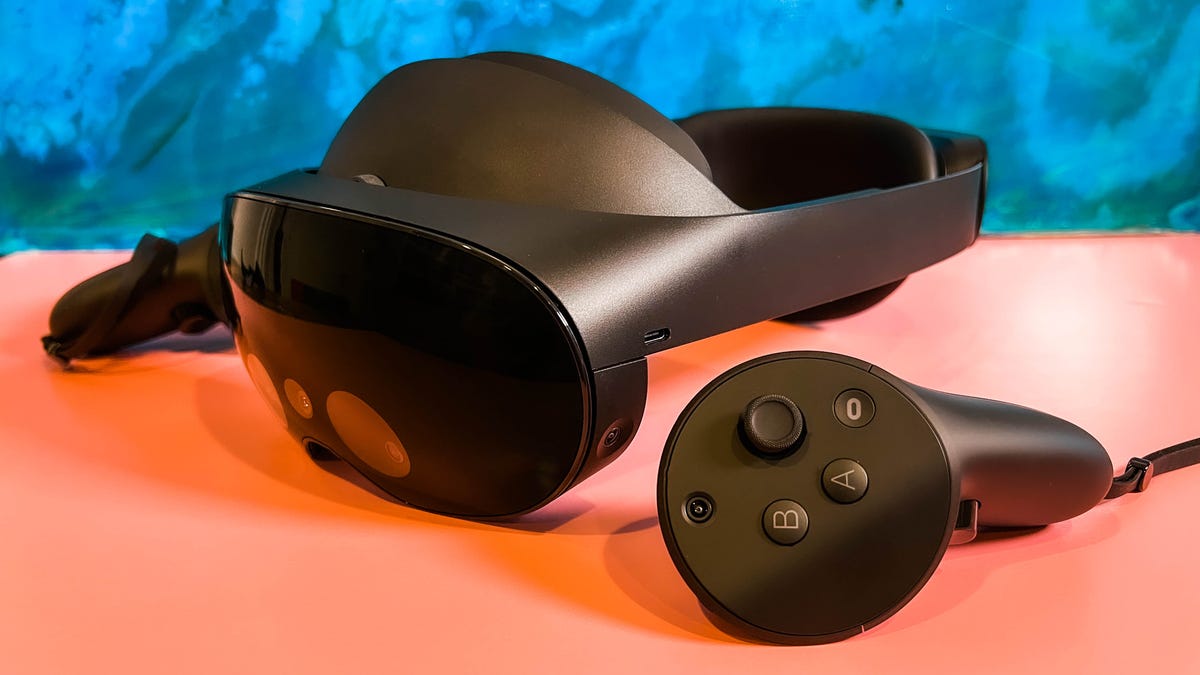
Meta’s reducing prices on its VR headsets again. The news comes less than a year after Meta (formerly Facebook) increased the price of the Meta Quest 2 VR headset (formerly, and sometimes still, the Oculus Quest 2).
The changes, announced by CEO Mark Zuckerberg this morning, go into effect March 5. The entry-level Quest 2 with 128GB of storage is still $400, but the model with 256GB storage is now down to $430, making it a $30 step-up for double the app space vs. $100 more previously. International prices were not immediately available but $430 is roughly £360 or AU$640.
The Meta Quest Pro, which started at $1,500 (AU$2,550, £1,500) last October and is nearing its half-year anniversary, got a temporary price drop to $1,100 earlier this year. It’s now down to $1,000.
I wouldn’t recommend you get either of these headsets, though — not now, at least. The Quest 2 is a great standalone VR headset with tons of games, and remains CNET’s pick as the best overall VR headset, but it’s two and a half years old and Meta’s Quest 3 successor is expected this fall. According to a leaked internal meeting at Meta, which The Verge received, it’ll be more expensive than the Quest 2, but it should be smaller, have improved mixed-reality features and have a faster processor. After that, Meta may have an even more affordable new headset in 2024.
Also, the 128GB storage on the base Quest 2 is probably more than enough for most people (although, at $430, I’d be more tempted by the 256GB upgrade).
The Meta Quest Pro, aimed at work instead of gaming, has a better display, color passthrough cameras, and eye and face tracking cameras. But it’s still not significantly better enough to merit an extra $600 over the Quest 2, and Meta’s clearly had difficulty selling them.
Plus, there are likely to be other VR headset contenders arriving throughout 2023.
According to Meta’s press release, «Pricing changes will go into effect for the 256GB Meta Quest 2 SKU on March 5 in the following countries: Australia, Austria, Belgium, Canada, Denmark, Finland, France, Germany, Iceland, Italy, Japan, Netherlands, Norway, South Korea, Spain, Sweden, Switzerland, Taiwan, the UK and the US. The Meta Quest Pro price drop will take effect March 5 in the US and Canada and March 15 in all other countries where Meta Quest Pro is supported.»
Technologies
Netflix Is Buying Warner Bros. in an $83B Deal. Here’s What It Means for You
The acquisition will see massive franchises including Harry Potter and Friends brought into the same portfolio as Stranger Things and Squid Game.

Netflix took its next step towards becoming one of the most dominant forces in the global entertainment industry on Friday by announcing its acquisition of Warner Bros, HBO and its streaming business HBO Max. The $82.7 billion deal will see the entertainment giant acquire the studio and streaming arm of Warner Bros. Discovery, following the latter company’s earlier announcement this year that it’s splitting in two. WBD is expected to spin off its Discovery business in the third quarter of 2026.
By acquiring Warner Bros., HBO and HBO Max, Netflix not only will boost its own catalog of shows and films — which already includes big hitters such as Stranger Things, Wednesday and Squid Game, with Warner Bros. properties Harry Potter, Friends and Batman — but will also see it play host to HBO shows including Game of Thrones and Succession.
«Our mission has always been to entertain the world,» said Netflix co-CEO Ted Sarandos in a statement. He promised the deal would bring audiences «more of what they love and help define the next century of storytelling.»
Greg Peters, co-CEO of Netflix, praised WBD’s longevity and executive team, adding, «With our global reach and proven business model, we can introduce a broader audience to the worlds they create — giving our members more options, attracting more fans to our best-in-class streaming service, strengthening the entire entertainment industry and creating more value for shareholders.»
The big question for most Netflix subscribers will likely be how the acquisition might affect monthly subscription costs. Netflix is our top pick of the many streaming services you have available to you, but one of the few downsides we note in our review is that the premium plans are already on the pricey end of the spectrum.
It’s too early to say what the knock-on impact on pricing might look like, but streaming services are getting increasingly expensive, and this acquisition is unlikely to reverse that trend. While it’s unclear whether Netflix plans to merge both streaming apps into a single offering, the company said that the agreement will enable it to «optimize its plans for consumers, enhancing viewing options and expanding access to content.»
The deal, which values Warner Bros. Discovery at around $72B after debt, was unanimously approved by the boards of both companies. It’s expected to allow Netflix to grow its production capacity for original titles and invest in more original content. Netflix said that it expects to maintain Warner Bros.’ current operations, and still expects theatrical releases for films (like The Batman Part II) to be business as usual.
What’s next if the transaction clears any regulatory hurdles? «If this deal makes it through regulatory approval, Netflix will cement itself as the Goliath of streaming services now with the combined weight of HBO Max and the content studios behind it all,» said Forrester VP, research director, Mike Proulx. «This deal changes the calculus of the streaming wars, representing a seismic shift in the entertainment industry.»
Technologies
These Top Samsung Galaxy Z Fold 6 Deals Slash the Price of This Folding Handset
Technologies
Lenovo Legion Tab vs. RedMagic Astra: Which Small Tablet Is the Gaming Champion?
They’re both compelling gaming tablets, but only one can claim the crown.
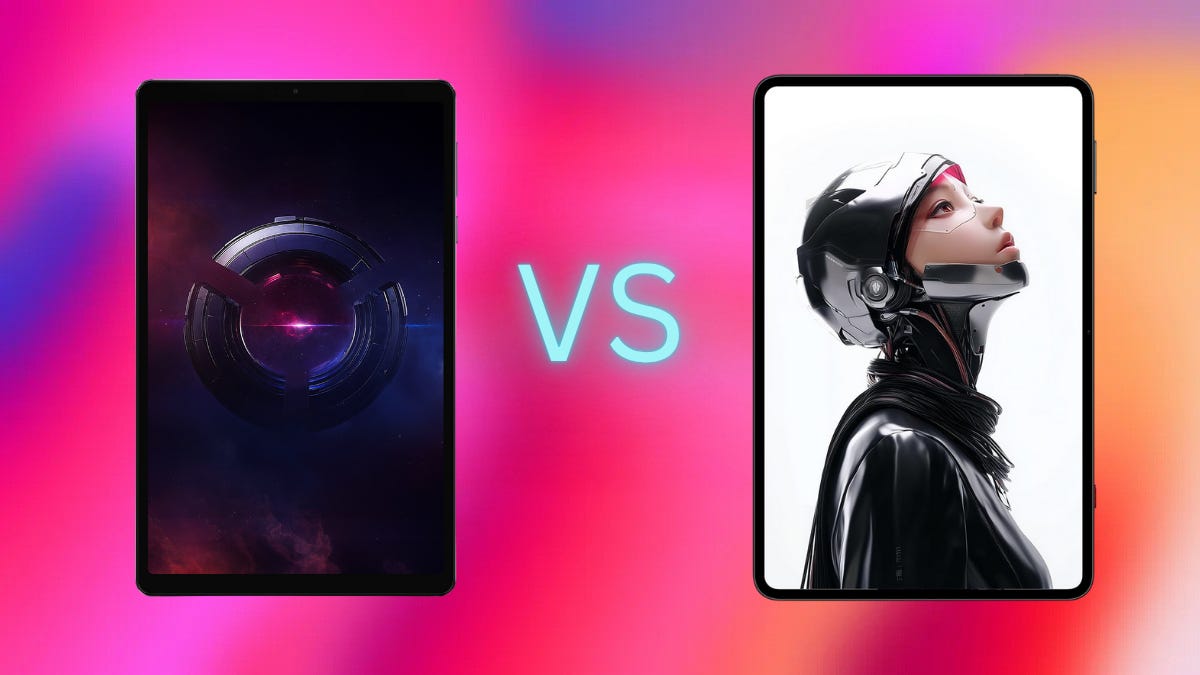
The world of handheld gaming continues to grow, and apparently, our phones are no longer large enough for us to game on. For the past few years, if you wanted a larger screen for gaming but didn’t feel like strapping a Razer Kishi V3 Pro XL to a giant 13-inch tablet just to play Call of Duty: Mobile (or dropping $1,500 bucks for the privilege), you would grab the iPad Mini for a solid, slightly larger gaming experience.
Fortunately, two companies known for producing high-quality gaming hardware have entered the market, aiming to capture some of Apple’s market share and cater to the substantial Android gaming market.
The Legion Tab Gen 3 from Lenovo and the RedMagic Astra Tablet both offer compelling gaming experiences for similar prices. But which one is truly the champion of tiny tablets? I put them head-to-head for a few weeks to help figure that out.
Design
Aside from being generic black slabs of metal and glass, the most noticeable design difference between them is the semi-transparent strip on the back of the Astra Tablet, which shows off some cool design elements. The only downside is that my fingers stick to it whenever I’m using the tablet, but that’s a small price to pay for something that looks so much better than just a black piece of metal.
This glass strip also houses the physical cooling fan surrounded by a small RGB ring. The Legion Tab has no RGB or really any standout design characteristics; it doesn’t even come in a different color, unlike the Astra which you can get in white.
The Astra also has more rounded, iPhone-esque corners, while the Legion Tab retains the squared-off, rectangular, asymmetrical edges that were popular a few years ago, and it appears somewhat outdated.
The Astra tablet has some extra features over the Legion Tab like a fingerprint sensor in the power button, which I would argue is table-stakes for any nonbudget device in 2025. It has a Magic Key which, thankfully, does not activate AI, but lets you choose from a few different actions. By default, it launches the company’s gaming software (more on that later), but you can also set it to things like Do Not Disturb, and a few others.
However, the Legion Tab does have one thing that might be a game-changer for some: two USB-C ports. The one on the right side of the front camera is a USB 2.0 port, used for charging, OTG and audio. The second USB-C port, located at the bottom, is positioned opposite the front camera and supports USB 3.2 Gen 2, offering data transfers of up to 10Gbps and display output as well.
I know most people don’t want to hook up their tablets to an external monitor, but I did, and the Legion Tab is absolutely the better device for it. I could never get audio to work properly on the Astra tablet while using a second display, but it worked fine on the Legion Tab. If you do plan to use a monitor, the Legion Tab is the way to go, especially since it has a much better desktop mode.
Display & Specs
Again, the displays on both tablets are fairly similar, with a few key differences. The Legion Tab has an 8.8-inch screen while the Astra is slightly larger at 9.06 inches. Both have high-resolution 2K-plus displays (2,560×1,600 and 2,400×1,504, respectively) with 165Hz refresh rates. The Astra’s display is an OLED panel, which does look a bit better and is technically better, but the LCD screen on the Legion Tab still looks fantastic. I have no issues with either one.
On the spec front, these tablets start to get a bit farther apart. For starters, the Legion Tab launched in early 2025 at CES with the Snapdragon 8 Gen 3 chip. It’s a solid processor, but the much more powerful Snapdragon 8 Elite was announced more than two months before the Legion Tab launched. Whether the Legion Tab is a victim of bad timing or Lenovo made a cost-cutting decision, it doesn’t have the newer, better processor that powers the Astra.
There’s also only one configuration of the Legion Tab with 12GB of LPDDR5x RAM and 256GB of UFS 4.0 storage. 256GB is pretty small for a gaming device, and the top-end Astra has 24GB of RAM with 1TB of storage. Granted, you’ll have to pay a lot more to get those things, but it’s a huge difference and certainly something to consider if you’re a hardcore gamer.
Another big difference is battery life. The Legion Tab sports a 6,550 mAh battery with 65-watt charging, while the Astra’s battery is 8,200 mAh and supports up to 80-watt fast charging. To be fair, the battery life on the Legion Tab is still quite good — mileage will certainly vary depending on usage — and I never felt like I had to constantly charge it. Lenovo also includes a fast charger in the box, which is a nice addition. On the other hand, a bigger battery with faster charging always wins.
Audio is very similar on both tablets, with each housing stereo speakers. The Legion Tab supports Dolby Atmos, and the Astra uses DTX tuning. Both sound great, with loud, full sound that’s fine for gaming or streaming.
Performance
As you might expect from the specifications, both devices performed exceptionally well in my testing. I never experienced any slowdowns or stutters while playing anything. From Genshin Impact to CoD Mobile, everything ran wonderfully.
|
|
Legion |
Astra |
|
Wild Life Unlimited |
17,320 |
23,187 |
|
Geekbench 6 CPU — single core |
2228 |
2641 |
|
Geekbench 6 CPU — multi core |
6600 |
7990 |
|
Geekbench 6 GPU |
16624 |
19223 |
|
Octane 2.0 |
75924 |
158865 |
I did notice a slightly faster response time from the Astra, which I also expected due to the better specs. For shorter, more typical gaming sessions though, you won’t be able to tell a difference between the two. Longer gaming sessions, however, might be a bit different.
One of RedMagic’s biggest differentiators is its proprietary cooling system, which it designed a few years ago and has been continually improving. It’s pretty impressive what it’s been able to cram into a device so small. The main component is a dual-layer vapor chamber that sits above and below the CPU, ensuring the chip stays running at peak speeds for longer.
Essentially, this means the Astra should be able to maintain peak performance for longer, without heating up very much. In my testing, I never managed more than about an hour at a time, but it never slowed down or got hot.
Software
Both software experiences are good overall; however, they both come preloaded with a fair amount of ads, thinly designed as games. Aside from that, the software is fast and clean with no major issues. There are a few quirks here and there, like the auto brightness not really working on the Legion Tab and some translation issues on the RedMagic, but I was perfectly fine using both.
Lenovo and RedMagic offer different versions of a dedicated gaming overlay (Legion Space and Game Space, respectively) that function much like the multiplexer software on gaming PCs — the bundled software that lets you tweak the GPU and other settings to maximize performance.
When you’re playing a game, you can open a slide-out menu that gives you a bunch of options for tweaking the CPU, GPU and a few other things. Aside from turning off notifications while in game, most people won’t ever need to mess with it, but it’s there if you want to try it out.
Neither company is great about software updates, however. The Legion Tab launched with Android 14 and is currently running Android 15. But Lenovo only committed to three Android version updates, and Android 16 is already rolling out. So that means you’re basically only getting one year of support.
The Astra is even worse off I’m afraid because while it launched with Android 15, RedMagic makes no commitments to software updates, and from past experience, you’ll be lucky to get one or two, eventually.
However, as these devices are meant to be primarily gaming devices anyway, not having the most up-to-date software isn’t too big a deal. Not to mention, these are really your only options in the Android world anyway.
If I had to pick one, I’d probably go with Lenovo since they are a much bigger company, and I have a bit more faith in them than I do in RedMagic. But they both need to do better on updates.
Final Thoughts
As cliché as it sounds, the ultimate winner here is us. We finally have really solid small gaming tablets that aren’t the iPad Mini. Apart from the fantastic Nexus 7 tablet, which seems like a distant memory (if you don’t know, ask your parents), the small Android tablet market has been dominated by either cheap, borderline unusable tablets or devices designed specifically as digital babysitters.
Both the Legion Tab Gen 3 and the RedMagic Astra tablet are fantastic devices for either gaming or streaming. And they’re powerful enough that you could get some work done in a pinch if you really needed to, particularly with a portable monitor and keyboard.
And the prices aren’t terrible either. Both start at $549 with 12GB of RAM and 256GB of storage, although I’ve seen the Legion Tab drop as low as $380 on Lenovo’s website. The 16/512GB Astra is $699, and the top-end 24GB/1TB model is $899.
At $380, the Legion Tab is absolutely the better deal, especially since you get a charger, case, folio cover and a tempered glass screen protector with an easy-install kit all included in the box. The Astra might not be worth the extra money, unless you really want the higher performance. And all you get in the box is a cable.
But if the Lenovo isn’t discounted and they’re both priced at $549, I have to go with the Astra tablet. It’s just better at almost everything. And it’s a bit more future-proof.
Lenovo Legion Tab Gen 3 vs. RedMagic Astra Tablet
| Lenovo Legion Tab Gen 3 | RedMagic Astra Tablet | |
| Processor | Snapdragon 8 Gen 3 | Snapdragon 8 Elite |
| Display | 8.8-inch LCD, 2560×1600, 165Hz, 900 nits max brightness | 9.06-inch OLED, 2,400×1,504, 165Hz, 1,600 nits max brightness |
| Storage | 12GB RAM, 256GB Storage | 12, 16, 24GB RAM, 256, 512GB, 1TB Storage |
| Dimensions | 8.21 x 5.10 x 0.32 inches (208.54 x 129.46 x 7.79mm) | 8.14 x 5.28 x 0.27 inches (207 x 134.2 x 6.9mm) |
| Weight | 350g | 370g |
| Ports | 1 x USB-C 2.0 (charging, OTG, audio) | USB-C 3.2 Gen 2 (10Gbps data, display out) |
| 1 x USB-C 3.2 Gen 2 (10Gbps data, display out) | ||
| Audio | 2 x stereo speakers with Dolby Atmos | 2 x stereo speakers with DTS:X Ultra |
| Front Camera | 8MP | 9MP |
| Rear Camera | 13MP, 2MP Macro | 13MP |
| Connectivity | Wi-Fi 7, Bluetooth 5.4 | Wi-Fi 7, Bluetooth 5.4 |
| Battery & Charging | 6,550mAh, 65W charging | 8,200mAh, 80W fast charging |
| Special Features | 2nd USB-C port, case, screen protector, screen cover, charger included in box | Dedicated hardware key, hardware cooling fan, RGB |
| Android Version | Android 15 (2 OS upgrades, 4 years of security updates) | Android 15 (no promised updates) |
-
 Technologies3 года ago
Tech Companies Need to Be Held Accountable for Security, Experts Say
-
 Technologies3 года ago
Best Handheld Game Console in 2023
-
 Technologies3 года ago
Tighten Up Your VR Game With the Best Head Straps for Quest 2
-
 Technologies4 года ago
Black Friday 2021: The best deals on TVs, headphones, kitchenware, and more
-
 Technologies4 года ago
Verum, Wickr and Threema: next generation secured messengers
-
 Technologies4 года ago
Google to require vaccinations as Silicon Valley rethinks return-to-office policies
-
 Technologies4 года ago
Olivia Harlan Dekker for Verum Messenger
-
 Technologies4 года ago
iPhone 13 event: How to watch Apple’s big announcement tomorrow


