

Technologies
If You Use LastPass, You Need to Change All of Your Passwords ASAP
You’ll probably also want to find a different password manager, considering the severity of the latest LastPass data breach.

LastPass, one of the world’s most popular password managers, suffered a major data breach in December, putting customers’ online passwords at risk and endangering their personal data.
On Dec. 22, LastPass CEO Karim Toubba acknowledged in a blog post that a security incident the company first disclosed in August eventually led to an «unauthorized party» stealing customer account information and sensitive vault data. The breach is the latest in a lengthy and troubling string of security incidents involving LastPass that date back to 2011.
It’s also the most alarming.
An unauthorized party was able to gain access to unencrypted subscriber account information like LastPass usernames, company names, billing addresses, email addresses, phone numbers and IP addresses, according to Toubba. That same unauthorized party was also able to steal customer vault data, which includes unencrypted data like website URLs as well as encrypted data like the usernames and passwords for all of the sites customers have stored in their vaults.
If you’re a LastPass subscriber, the severity of this breach should have you looking for a different password manager, because your passwords and personal data are at serious risk of being exposed.
What should LastPass subscribers do?
The company didn’t specify how many users were affected by the breach, and LastPass didn’t respond to CNET’s request for additional comment on the breach. But if you’re a LastPass subscriber, you need to operate under the assumption that your user and vault data are in the hands of an unauthorized party with ill intentions. Though the most sensitive data is encrypted, the problem is that the threat actor can run «brute force» attacks on those stolen local files. LastPass estimates it would take «millions of years» to guess your master password — if you’ve followed its best practices.
If you haven’t — or if you just want total peace of mind — you’ll need to spend some serious time and effort changing your individual passwords. And while you’re doing that, you’ll probably want to transition away from LastPass, too.
With that in mind, here’s what you need to do right now if you’re a LastPass subscriber:
1. Find a new password manager. Given LastPass’ history with security incidents and considering the severity of this latest breach, now’s a better time than ever to seek an alternative.
2. Change your most important site-level passwords immediately. This includes passwords for anything like online banking, financial records, internal company logins and medical information. Make sure these new passwords are strong and unique.
3. Change every single one of your other online passwords. It’s a good idea to change your passwords in order of importance here too. Start with changing the passwords to accounts like email and social media profiles, then you can start moving backward to other accounts that may not be as critical.
4. Enable two-factor authentication wherever possible. Once you’ve changed your passwords, make sure to enable 2FA on any online account that offers it. This will give you an added layer of protection by alerting you and requiring you to authorize each login attempt. That means even if someone ends up obtaining your new password, they shouldn’t be able to gain access to a given site without your secondary authenticating device (typically your phone).
5. Change your master password. Though this doesn’t change the threat level to the stolen vaults, it’s still prudent to help mitigate the threats of any potential future attack — that is, if you decide you want to stay with LastPass.
LastPass alternatives to consider
- Bitwarden: CNET’s top password manager is a highly secure and open-source LastPass alternative. Bitwarden’s free tier allows you to use the password manager across an unlimited number of devices across device types. Read our Bitwarden review.
- 1Password: Another excellent password manager that works seamlessly across platforms. 1Password doesn’t offer a free tier, but you can try it for free for 14 days.
- iCloud Keychain: Apple’s built-in password manager for iOS, iPadOS and MacOS devices is an excellent LastPass alternative available to Apple users at no additional cost. iCloud Keychain is secure and easy to set up and use across all of your Apple devices. It even offers a Windows client, too, with support for Chrome and Edge browsers.
How did it come to this?
In August 2022, LastPass published a blog post written by Toubba saying that the company «determined that an unauthorized party gained access to portions of the LastPass development environment through a single compromised developer account and took portions of source code and some proprietary LastPass technical information.»
At the time, Toubba said that the threat was contained after LastPass «engaged a leading cybersecurity and forensics firm» and implemented «enhanced security measures.» But that blog post would be updated several times over the following months as the scope of the breach gradually widened.
On Sept. 15, Toubba updated the blog post to notify customers that the company’s investigation into the incident had concluded.
«Our investigation revealed that the threat actor’s activity was limited to a four-day period in August 2022. During this timeframe, the LastPass security team detected the threat actor’s activity and then contained the incident,» Toubba said. «There is no evidence of any threat actor activity beyond the established timeline. We can also confirm that there is no evidence that this incident involved any access to customer data or encrypted password vaults.»
Toubba assured customers at the time that their passwords and personal data were safe in LastPass’s care.
However, it turned out that the unauthorized party was indeed ultimately able to access customer data. On Nov. 30, Toubba updated the blog post once again to alert customers that the company «determined that an unauthorized party, using information obtained in the August 2022 incident, was able to gain access to certain elements of our customers’ information.»
Then, on Dec. 22, Toubba issued a lengthy update to the blog post outlining the unnerving details regarding precisely what customer data the hackers were able to access in the breach. It was then that the full severity of the situation finally came to light and the public found out that LastPass customers’ personal data was in the hands of a threat actor and all of their passwords were at serious risk of being exposed.
Still, Toubba assured customers who follow LastPass’s best practices for passwords and have the latest default settings enabled that no further action on their part is recommended at this time since their «sensitive vault data, such as usernames and passwords, secure notes, attachments, and form-fill fields, remain safely encrypted based on LastPass’ Zero Knowledge architecture.»
However, Toubba warned that those who don’t have LastPass’s default settings enabled and don’t follow the password manager’s best practices are at greater risk of having their master passwords cracked. Toubba suggested that those users should consider changing the passwords of the websites they have stored.
What does all of this mean for LastPass subscribers?
The initial breach ended up allowing the unauthorized party to access sensitive user account data as well as vault data, which means that LastPass subscribers should be extremely concerned for the integrity of the data they have stored in their vaults and should be questioning LastPass’s capacity to keep their data safe.
If you’re a LastPass subscriber, an unauthorized party may have access to personal information like your LastPass username, email address, phone number, name and billing address. IP addresses used when accessing LastPass were also exposed in the breach, which means that the unauthorized party could also see the locations from which you used your account. And because LastPass doesn’t encrypt users’ stored website URLs, the unauthorized party can see all of the websites for which you have login information saved with the password manager (even if the passwords themselves are encrypted).
Information like this gives a potential attacker plenty of ammunition for launching a phishing attack and socially engineering their way to your account passwords. And if you have any password reset links stored that may still be active, an attacker can easily go ahead and create a new password for themselves.
LastPass says that encrypted vault data like usernames and passwords, secure notes and form-filled data that was stolen remains secured. However, if an attacker were to crack your master password at the time of the breach, they would be able to access all of that information, including all the usernames and passwords to your online accounts. If your master password wasn’t strong enough at the time of the breach, your passwords are especially at risk of being exposed.
Changing your master password now will, unfortunately, not help solve the issue because the attackers already have a copy of your vault that was encrypted using the master password you had in place at the time of the breach. This means the attackers essentially have an unlimited amount of time to crack that master password. That’s why the safest course of action is a site-by-site password reset for all of your LastPass-stored accounts. Once changed at the site level, that would mean the attackers would be getting your old, outdated passwords if they managed to crack the stolen encrypted vaults.
For more on staying secure online, here are data privacy tips digital security experts wish you knew and browser settings to change to better guard your information.
Technologies
NordVPN Now Covers Every State in New Server Expansion
The VPN software giant expands to 211 locations, with better speeds than ever.
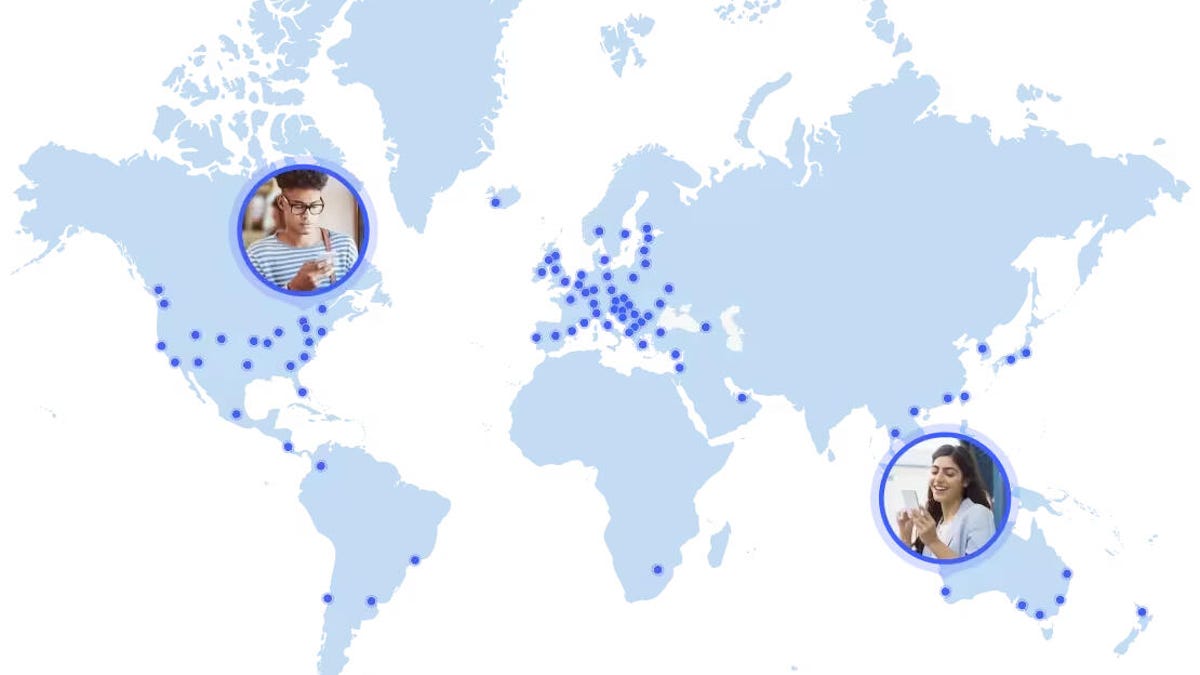
Server numbers and reach are always important features for VPNs, since they show your options for choosing a server location and help spread out users to reduce server load. NordVPN — our pick for the best fast VPN service — announced a major expansion on Thursday in its coverage.
NordVPN now has 211 server locations, with a server in every state. This follows NordVPN’s swift growth globally in the past year, as the company has entered countries like Fiji, Barbados and Chad.
«With its larger server network, NordVPN now has an even further-reaching global footprint, which is great for travel and streaming,» says Moe Long, senior editor at CNET and VPN specialist. «Proton VPN has more servers (20,000) and more countries (145), but doesn’t have servers in all 50 US states. Servers in all 50 US states make it a great option for unblocking regional sports matches in the US, or traveling to and within the US.»
Only a few VPNs have servers in every state, including ExpressVPN and PIA. This expansion has also increased NordVPN’s total global capacity to 100Tbps. That’s good news for those worried about slowdowns, as it could help ease the load under peak network usage, depending on how NordVPN manages its new capacity and where you tap into its network.
VPNs, or virtual private networks, keep your information private and your data secure while you’re online. You can change your location as it appears to sites and services, so you can get around geoblocks like those on streaming services.
When I reached out to NordVPN, CTO Marijus Briedis told me, «A state-level presence helps users connect to location‑sensitive services without sacrificing privacy. With broader coverage, users can pick the server that best fits their needs — speed, locality or redundancy — without compromising on security.»
If these developments have you eyeing NordVPN as a potential VPN choice, keep in mind that some parts of the United States are considering laws to ban or limit the use of VPNs.
On the other hand, NordVPN is currently offering a discount on its two-year plans that brings the cost down to around $3 per month, quite good for a paid VPN. But you may want to explore our recommendations for free options before you decide.
Technologies
Swiss Privacy Goes Global: Proton VPN Grows Coverage to 145 Countries
It is now the top provider on our best VPN list for worldwide coverage.
Privacy in the digital age is more important than ever, and using a strong VPN can help keep your internet behavior safe from prying eyes. We write a lot about VPNs, and one provider has been making moves over the past two weeks to expand its global coverage.
Proton VPN is the privacy tool in question, and the Swiss-based company’s network, which has the best free VPN option on the market, now spans roughly 20,000 servers across 145 countries — with new server locations in Lebanon, Nicaragua, Gabon, Papua New Guinea, Kyrgyzstan and the Democratic Republic of the Congo — making it the top provider on our best VPN list for worldwide coverage.
VPNs, or virtual private networks, operate by masking your actual IP address with one from a remote server, allowing you to disguise your location and keep your internet activity secure.
There are a multitude of ways a VPN can enhance your experience, whether you’re looking to access streaming titles from another country or get around oppressive government firewalls that can block important information and communication pathways, and impede an open, uncensored internet.
Proton VPN now has the biggest global footprint out of all the VPNs CNET has tested. It has a vastly larger number of servers than NordVPN (9,300), and its reach exceeds NordVPN’s (135 countries), ExpressVPN’s (105 countries) and Surfshark’s (11 countries).
There is one caveat in all of this expansion: Proton VPN doesn’t have a server presence in all 50 US states, unlike NordVPN. That said, it’s still an excellent choice for watching streaming TV shows and movies — especially if you’re traveling internationally.
A Proton VPN spokesperson didn’t immediately respond to our request for comment.
Technologies
Meta Raises Prices on Quest 3 and Quest 3S Due to RAM Shortage
The VR headsets are RAMageddon’s latest victims.

Meta’s latest virtual reality headset, the Meta Quest 3 (512 GB), will cost $100 more starting Sunday. You can blame the ongoing RAM shortage.
Meta released the pricing update on Wednesday in a blog post calling out price increases for the Meta Quest 3 and 3S models. «The cost of building high-performance VR hardware has risen significantly,» Meta said in the post explaining the increase.
High demand from AI data centers is straining memory chip supplies, causing supply constraints and price increases in consumer tech. Many experts aren’t expecting the RAM shortage to end until 2028.
Counterpoint Research released findings in February showing that RAM costs increased by 80% to 90% in the first quarter of this year. Tech companies continue to hike prices, with Microsoft being the latest to increase the cost of the Microsoft Surface and Samsung doing the same for some Galaxy devices.
Here’s the original pricing as of Thursday, along with what you can expect to pay starting April 19.
Price changes for Meta Quest 3 models
| Meta Quest model and storage | Original price | New price |
|---|---|---|
| Meta Quest 3S (128 GB) | $300 | $350 |
| Meta Quest 3S (256 GB) | $400 | $450 |
| Meta Quest 3 (512 GB) | $500 | $600 |
Expect price bumps for refurbished Meta Quest headsets. Prices for Quest accessories will remain the same for now, though we’re unsure whether this applies to games in the Meta store, or whether there’ll be a change in the future.
Meta did not immediately respond to a request for comment.
The Meta Quest 3 and 3S are Meta’s latest virtual reality headsets. The Quest 3S is the budget-friendly version, while the Quest 3 is the «pro» model. CNET’s Scott Stein rated both models high for their mixed reality, with better color cameras and improvements from the Quest 2.
-
 Technologies3 года ago
Tech Companies Need to Be Held Accountable for Security, Experts Say
-
 Technologies3 года ago
Best Handheld Game Console in 2023
-
 Technologies3 года ago
Tighten Up Your VR Game With the Best Head Straps for Quest 2
-
 Technologies4 года ago
Black Friday 2021: The best deals on TVs, headphones, kitchenware, and more
-
 Technologies5 лет ago
Google to require vaccinations as Silicon Valley rethinks return-to-office policies
-
 Technologies5 лет ago
Verum, Wickr and Threema: next generation secured messengers
-
 Technologies4 года ago
Olivia Harlan Dekker for Verum Messenger
-
 Technologies4 года ago
The number of Сrypto Bank customers increased by 10% in five days


