
Technologies
New iOS Option Makes It Super Hard for Someone to Hack Your iCloud
Hardware security keys offer the most secure protection you can use to lock down your online accounts. Just don’t lose the keys.
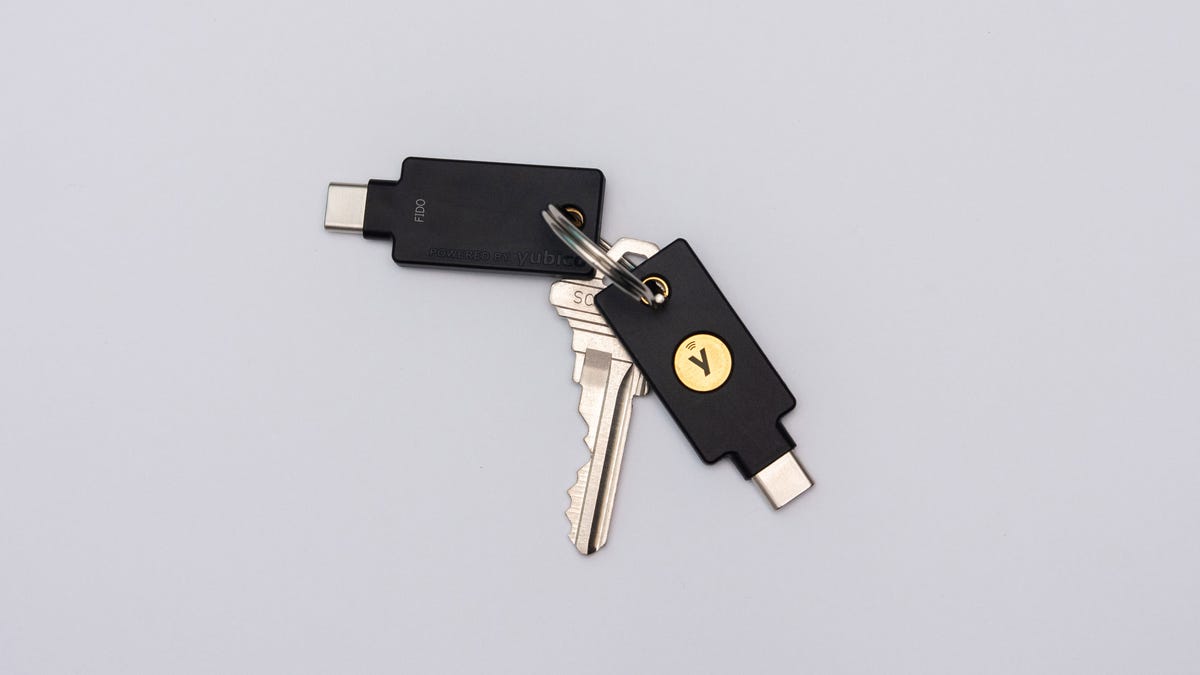
Apple now lets you protect your Apple ID and iCloud account with hardware security keys, a significant upgrade for those who want maximum protection from hackers, identity thieves, or snoops.
Hardware security keys are small physical devices that communicate with USB or Lightning ports or with NFC wireless data connections when you’re logging on to a device or in to an account. Because you must have keys in your possession to use them, they’re effective at thwarting hackers trying to reach your account remotely.
Support for the keys arrived Monday with iOS 16.3 and MacOS 13.2, and on Tuesday, Apple published details on how to use security keys with iPhones, iPads and Macs. The company requires you to set up at least two keys.
Apple has been working to tighten security in recent months, stung by iPhone breaches involving NSO Group’s Pegasus spyware. Apple’s Advanced Data Protection option arrived in December, giving a stronger encryption option to data stored and synced with iCloud. And in September, Apple added an iPhone Lockdown Mode that includes new guardrails on how your phone works to thwart outside attacks.
A big caveat, though: Although hardware security keys and the Advanced Data Protection program lock down your account better, they also mean Apple can’t help you recover access.
«This feature is designed for users who, often due to their public profile, face concerted threats to their online accounts, such as celebrities, journalists, and members of government,» Apple said in a statement. «This takes our two-factor authentication even further, preventing even an advanced attacker from obtaining a user’s second factor in a phishing scam.»
Hardware security keys have been around for years, but the Fast Identity Online, or FIDO, group has helped standardize the technology and integrate its use with websites and apps. One big advantage on the web is they’re linked to specific websites, for example Facebook or Twitter, so they thwart phishing attacks that try to get you to log in to fake websites. They’re the foundation for Google’s Advanced Protection Program, too, for those who want maximum security.
You need to pick the right hardware security keys for your devices. To communicate with relatively new models of both Macs and iPhones, a key that supports USB-C and NFC is a good option. Apple requires you to have two keys, but it isn’t a bad idea to have more in case you lose them. A single key can be used to authenticate to many different devices and services, like your Apple, Google and Microsoft accounts.
Apple didn’t immediately respond to a request for comment.
Yubico, the top maker of hardware security keys, announced on Tuesday two new FIDO-certified YubiKey models in its Security Key Series suited for consumers. They both support NFC, but the $29 model has a USB-C connector and the $25 model has an older style USB-A connector.
Google, Microsoft, Apple and other allies are also working to support a different FIDO authentication technology called passkeys. Passkeys are designed to replace passwords altogether, and they don’t require hardware security keys.
Technologies
Ultrahuman Ring Pro Brings Better Battery Life, More Action and Analysis
The company’s new flagship smart ring stores more data, too. But that doesn’t really help Americans.
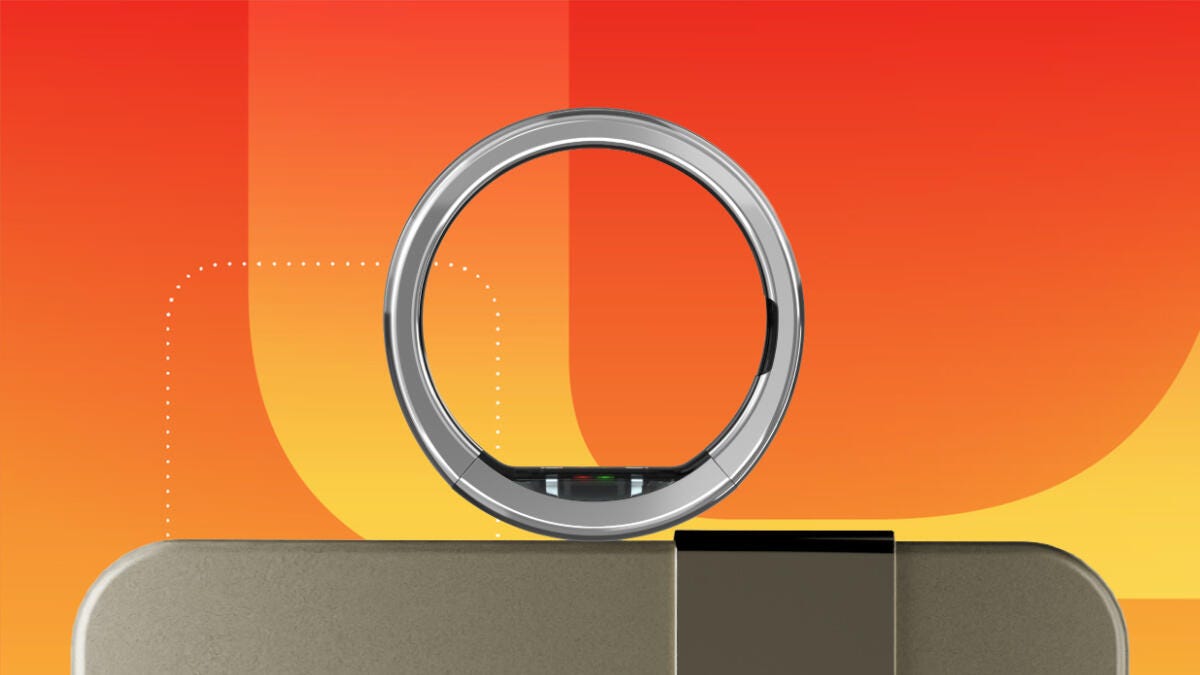
Sick of your smart ring’s battery not holding up? Ultrahuman’s new $479 Ring Pro smart ring, unveiled on Friday, offers up to 15 days of battery life on a single charge. The Ring Pro joins the company’s $349 Ring Air, which boosts health tracking, thanks to longer battery life, increased data storage, improved speed and accuracy and a new heart-rate sensing architecture. The ring works in conjunction with the latest Pro charging case.
Ultrahuman also launched its Jade AI, which can act as an agent based on analysis of current and historical health data. Jade can synthesize data from across the company’s products and is compatible with its Rings.
«With industry-leading hardware paired with Jade biointelligence AI, users can now take real-time actionable interventions towards their health than ever before,» said Mohit Kumar, CEO of Ultrahuman.
No US sales
That hardware isn’t available in the US, though, thanks to the ongoing ban on Ultrahuman’s Rings sales here, stemming from a patent dispute with its competitor, Oura Ring. It’s available for preorder now everywhere else and is slated to ship in March. Jade’s available globally.
Ultrahuman says the Ring Pro boosts battery life to about 15 days in Chill mode — up to 12 days in Turbo — compared to a maximum of six days for the Air. The Pro charger’s battery stores enough for another 45 days, which you top off with Qi-compatible wireless charging. In addition, the case incorporates locator technology via the app and a speaker, as well as usability features such as haptic notifications and a power LED.
The ring can also retain up to 250 days of data versus less than a week for the cheaper model. Ultrahuman redesigned the heart-rate sensor for better signal quality. An upgraded processor improves the accuracy of the local machine learning and overall speed.
It’s offered in gold, silver, black and titanium finishes, with available sizes ranging from 5 to 14.
Jade’s Deep Research Mode is the cross-ecosystem analysis feature, which aggregates data from Ring and Blood Vision and the company’s subscription services, Home and M1 CGM, to provide historical trends, offer current recommendations and flag potential issues, as well as trigger activities such as A-fib detection. Ultrahuman plans to expand its capabilities to include health-adjacent activities, such as ordering food.
Some new apps are also available for the company’s PowerPlug add-on platform, including capabilities such as tracking GLP-1 effects, snoring and respiratory analysis and migraine management tools.
Technologies
The FCC Just Approved Charter’s $34.5B Cox Purchase. Here’s What It Means for 37M Customers
Technologies
Spotify Expands Into Audiobook Rankings With Weekly Charts
The feature is available to both free users and Premium subscribers. Wuthering Heights is reaching the heights on both the US and UK charts.
If you’re a Spotify user, you may be familiar with features like the year-end summary Wrapped, as well as your daily usage stats. Now, the service has a new popularity chart tracking audiobooks.
Spotify’s audiobook charts are now available to free and Premium users within the service’s Audiobooks hub. While only Premium users receive 15 hours of audiobook listening per month, the company offers a larger selection of titles you can buy.
US charts and UK charts are both available now.
Read more: Best Music Streaming Services for 2026
Spotify says that the audiobook charts will help customers discover new and popular titles in real time.
«As we’ve proven with Music and Podcasts Charts, when content is easier to access, discover, and enjoy, the demand grows,» said Duncan Bruce, Spotify’s director of audiobook partnerships and licensing, in a statement on Friday.
Spotify launched audiobooks in 2022, and has since added features such as the AI catchup tool Recaps and PageMatch, which lets you swap more easily between a printed book and the audio version.
Spotify Premium currently costs $13 a month and includes more than 100 million songs, as well as audiobooks. Spotify Premium is currently CNET’s Editors’ Choice for best music streaming service.
The current US audiobooks chart lists Emily Brontë’s romantic classic Wuthering Heights as the top listen, followed by James Clear’s self-help book Atomic Habits and Freida McFadden’s psychological thriller The Housemaid. Audiobook popularity is also broken down by genre, with charts for romance, mystery and thriller books, self-help, science fiction and fantasy, biography and memoir, business and careers, teen and young adult, religion and spirituality, history, and parenting and relationships.
Powered by its blockbuster movie adaptation starring Margot Robbie and Jacob Elordi, Wuthering Heights also leads the overall chart for the UK.
-
 Technologies3 года ago
Tech Companies Need to Be Held Accountable for Security, Experts Say
-
 Technologies3 года ago
Best Handheld Game Console in 2023
-
 Technologies3 года ago
Tighten Up Your VR Game With the Best Head Straps for Quest 2
-
 Technologies4 года ago
Black Friday 2021: The best deals on TVs, headphones, kitchenware, and more
-
 Technologies5 лет ago
Google to require vaccinations as Silicon Valley rethinks return-to-office policies
-
 Technologies5 лет ago
Verum, Wickr and Threema: next generation secured messengers
-
 Technologies4 года ago
Olivia Harlan Dekker for Verum Messenger
-
 Technologies4 года ago
iPhone 13 event: How to watch Apple’s big announcement tomorrow