
Technologies
Don’t Bother With Third-Party Apple Watch Apps
There are plenty of apps for the Apple Watch, but Apple’s native apps are still among the best.
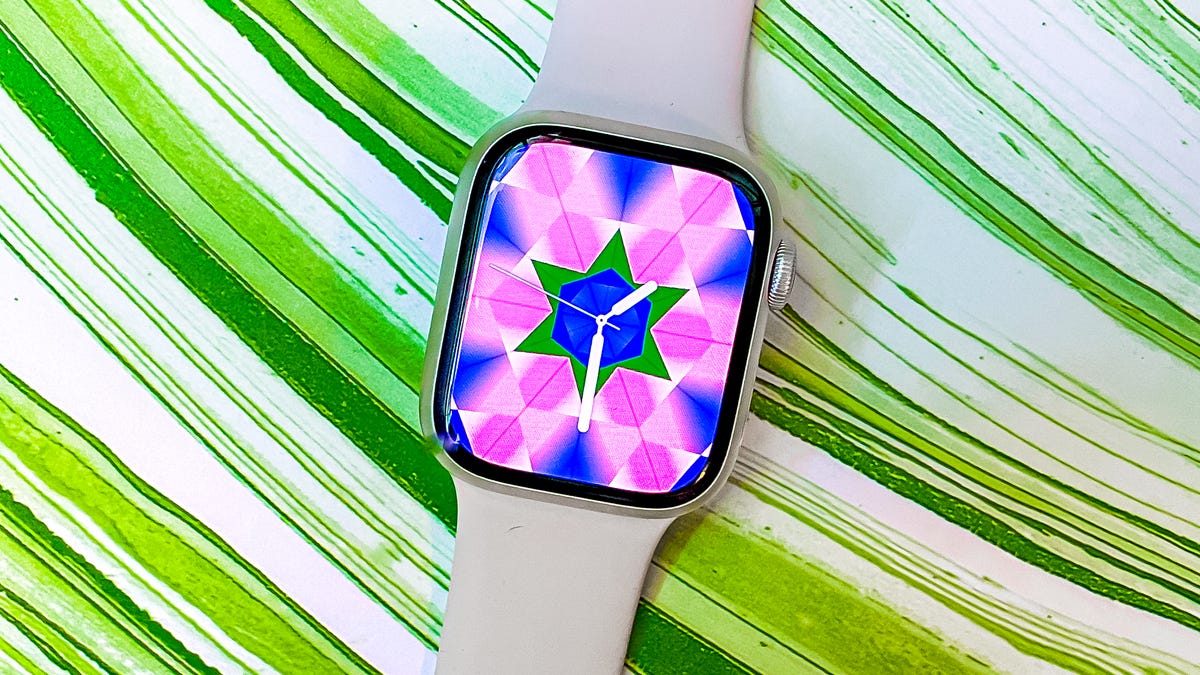
Apple Watch Series 8 is an iterative upgrade over the Series 7. With each new iteration, the Apple Watch gets more advanced. It’s specifically noteworthy when it comes to tracking your health and fitness. If you want to take advantage of the best Apple Watch apps, we have some pretty straightforward advice: Skip the App Store and stick with the watch’s native apps.
Companies including Amazon, eBay, Target, Slack and TripAdvisor have dropped support for Apple Watch apps, but those services are better-suited for our phones, tablets and laptops anyway. What does matter is the built-in Activity tracker, Messages and Phone apps — the things we want on hand for a quick and convenient glance, regardless of which Apple Watch version we’re currently sporting.
«The watch is really about convenience,» said Ray Wang, principal analyst and founder of Constellation Research. «You’re not going to spend so much screen time on your watch. So I think the secret of building a good Apple Watch app is to think of it as an accessory in addition to something. Very few people use it as a standalone unless it’s for fitness or health or some kind of monitoring.»
Read more: Set Up Your New Apple Watch in Just a Few Taps
When the Apple Watch launched in 2015, it had 3,000 apps available to download. Today, there are more than 20,000 apps — 44 of which are built into the wearable. While watches weren’t an in-demand accessory in general back in 2015, the Apple Watch proved to be a useful tool for checking messages, the weather and reminders, Wang added — all of which are already built into the device.
Here are several native Apple Watch apps that you may not already be using.
1. Sleep
The Apple Watch was late to the game when it came to sleep tracking — a crucial wellness feature that rivals like Fitbit have offered for years. While Apple’s Sleep app may not be as comprehensive as the sleep monitoring available on other devices, it’s still a great way to keep track of your slumber and get into a regular bedtime routine. When wearing your Apple Watch overnight, it’ll tell you how much time you’ve spent asleep while in bed as well as your sleeping respiratory rate. That latter feature is a new addition that Apple launched with WatchOS 8 in September.
2. Wallet
The Apple Watch is designed to make it so that you don’t have to reach for your phone as often, and the Wallet app is one of the best examples. It allows you to store things like credit cards, boarding passes and movie tickets on your wrist once you’ve added them to the Wallet app on your phone. That means you won’t have to dig into your purse or pocket to make a quick purchase or board your flight. Apple is also expanding what the Wallet app can do in WatchOS 8, which introduces the ability to add home keys and identification cards to your watch.
3. Messages
The Messages app is one of the most basic and fundamental Apple Watch apps, but it’s also among the most useful. As the name implies, Messages allows you to read and respond to text messages directly from your wrist. Your phone is still the best tool for sending long text messages, but the Apple Watch can come in handy for sending short, time-sensitive replies when you don’t have a moment to reach for your phone. If you have the Apple Watch Series 7, the latest model, you’ll be able to respond to texts using the device’s new QWERTY keyboard, which is much easier than using the Scribble function.
4. Noise
If you have an Apple Watch Series 4 or later, you can use the Noise app to measure the ambient sound in your environment. If the decibel level has risen to a point where your hearing could be affected, the app can notify you with a tap on your wrist.
Read more: Apple Watch Series 7 Review: A Slightly Better Smartwatch Than Last Year’s
5. Cycle Tracking
Women can use the Cycle Tracking app to log details about your menstrual cycle, including flow information and symptoms such as headaches or cramps. Using that data, the app can alert you to when it predicts your next period or fertile window is about to start.
6. ECG
If you have an Apple Watch Series 4 or later, you have an electrical heart rate sensor that works with the ECG app to take an electrocardiogram (sometimes called an EKG by cardiologists). You’ll also need an iPhone 6S or later, and both the phone and the watch will need to be on the latest version of iOS and WatchOS, respectively. It’s also not available in all regions.
7. News
The News app will help you keep up with current events on the fly, showing you stories that it selects based on your interests. However, it’s not available in all areas.
8. Mindfulness
The Apple Watch has long offered breathing exercises. But WatchOS 8’s Mindfulness app, which replaced the Breathe app, adds a new option to the Apple Watch’s relaxation repertoire: reflections that prompt you to pause and think about special moments in your life. You’re still able to access Breathe sessions from this app, but the new Reflect option just gives you another way to take a break from your day.
9. Remote
If you have an Apple TV, you can use your watch as another remote control — assuming both devices are connected to the same Wi-Fi network. Use the Remote app to swipe around on the watch face and move through the Apple TV menu options, and play or pause shows.
10. Camera
You can’t take a picture with your watch itself. But with the Camera app, your watch can act as a remote control for your iPhone’s camera. Use it to help take selfies or start recording on your phone across the room, so you can finally get everyone in that big group shot.
11. Walkie-Talkie
The Walkie-Talkie app lets you use your watch as a walkie-talkie to chat with another person wearing an Apple Watch. You press a button to talk, and release it to listen to the reply. The app isn’t available in all regions, and both participants need to have connectivity through a Bluetooth connection to the iPhone, Wi-Fi or cellular. You also have to accept an invitation to connect with someone through the app — they can’t just start talking to you.
12. Voice Memos
Like on the iPhone, you can use the Voice Memos app on your Apple Watch to record personal notes and things to remember while on the go. The voice memos you record on the watch will automatically sync to any other iOS devices where you’re signed in with the same Apple ID.
Read more: The Best Apple iPad Apps of All Time: Media Players, Graphics Tools and More
The future of native Apple Watch apps
The collection of native Apple Watch apps is likely far from complete. We saw the addition of the Sleep app and Blood Oxygen app with last year’s respective WatchOS 7 software update and Apple Watch Series 6. And if reports are to be believed, Apple has broader ambitions in the health and wellness space that we could see in the years to come. The company is reportedly working on blood pressure and thermometer tools for the Apple Watch, according to The Wall Street Journal. Apple is also working on a blood-sugar sensor that could help diabetics manage their glucose levels, Bloomberg reported last year, although it says this functionality likely won’t be commercially available for several years.
Technologies
Samsung’s Galaxy Watch Ultra 2 Might Come in 5G and 4G Cellular Models
If the rumor proves true, the 5G Galaxy Watch Ultra would rival the 5G-enabled $799 Apple Watch Ultra 3 that debuted last fall.
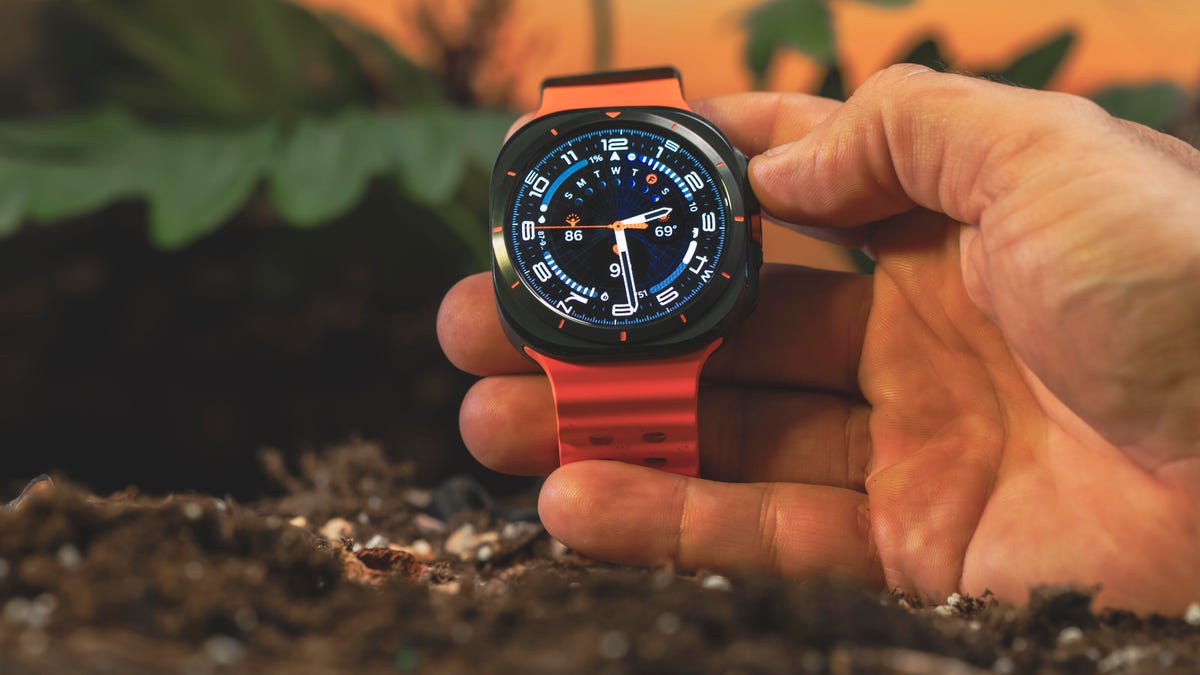
Samsung’s next high-end Galaxy Watch could support faster 5G speeds, but if this leak is true, it will depend on where you live. The rumored Samsung Galaxy Watch Ultra 2 might come in 5G and 4G cellular models, with availability for each smartwatch depending on the country.
According to the Dutch website Galaxy Club (and spotted by SamMobile), Samsung’s servers may have revealed a series of model numbers that point to 5G, 4G and Wi-Fi-enabled editions of the next Galaxy Watch Ultra, which would succeed the original model that debuted in 2024.
A representative for Samsung did not immediately respond to a request for comment.
The Galaxy Club website speculates that the 5G edition would be sold in the US and Korean markets, while the 4G edition would sell in the rest of the world. In the US, a 5G version of the Galaxy Watch Ultra would rival the 5G-enabled $799 Apple Watch Ultra 3, which debuted last fall. The 4G edition would have broader compatibility worldwide, since the earlier network is far more established.
It will likely be a few months until we hear anything official about the Galaxy Watch Ultra 2. Samsung typically unveils its new watches in the summer alongside its Galaxy Z Fold and Z Flip foldable phones. Last year, Samsung unveiled the Galaxy Watch 8 and the Galaxy Watch 8 Classic, but otherwise left the prior 2024 Ultra in the lineup for those looking for a larger 47mm smartwatch.
Technologies
2 Cases Show Supreme Court Isn’t Holding ISPs Responsible for Piracy
Technologies
Today’s NYT Connections Hints, Answers and Help for April 8, #1032
Here are some hints and the answers for the NYT Connections puzzle for April 8, No. 1032.
Looking for the most recent Connections answers? Click here for today’s Connections hints, as well as our daily answers and hints for The New York Times Mini Crossword, Wordle, Connections: Sports Edition and Strands puzzles.
Today’s NYT Connections puzzle is kind of tough. The purple category is a fun one, once you see the connection. Read on for clues and today’s Connections answers.
The Times has a Connections Bot, like the one for Wordle. Go there after you play to receive a numeric score and to have the program analyze your answers. Players who are registered with the Times Games section can now nerd out by following their progress, including the number of puzzles completed, win rate, number of times they nabbed a perfect score and their win streak.
Read more: Hints, Tips and Strategies to Help You Win at NYT Connections Every Time
Hints for today’s Connections groups
Here are four hints for the groupings in today’s Connections puzzle, ranked from the easiest yellow group to the tough (and sometimes bizarre) purple group.
Yellow group hint: In the group.
Green group hint: Appearance details.
Blue group hint: Often found in gyms.
Purple group hint: They help you see.
Answers for today’s Connections groups
Yellow group: Cohort member.
Green group: Aesthetic.
Blue group: Kinds of bar apparatuses.
Purple group: Eyewear in the singular.
Read more: Wordle Cheat Sheet: Here Are the Most Popular Letters Used in English Words
What are today’s Connections answers?
The yellow words in today’s Connections
The theme is cohort member. The four answers are associate, colleague, fellow and peer.
The green words in today’s Connections
The theme is aesthetic. The four answers are design, look, scheme and style.
The blue words in today’s Connections
The theme is kinds of bar apparatuses. The four answers are monkey, parallel, pull-up and uneven.
The purple words in today’s Connections
The theme is eyewear in the singular. The four answers are contact, goggle, shade and spectacle.
-
 Technologies3 года ago
Tech Companies Need to Be Held Accountable for Security, Experts Say
-
 Technologies3 года ago
Best Handheld Game Console in 2023
-
 Technologies3 года ago
Tighten Up Your VR Game With the Best Head Straps for Quest 2
-
 Technologies4 года ago
Black Friday 2021: The best deals on TVs, headphones, kitchenware, and more
-
 Technologies5 лет ago
Google to require vaccinations as Silicon Valley rethinks return-to-office policies
-
 Technologies5 лет ago
Verum, Wickr and Threema: next generation secured messengers
-
 Technologies4 года ago
Olivia Harlan Dekker for Verum Messenger
-
 Technologies4 года ago
The number of Сrypto Bank customers increased by 10% in five days