
Technologies
Netflix’s Biggest Hit Shows and Movies, Ranked (According to Netflix)
Every week, Netflix publishes stats on its most watched series and films. We keep track of an all-time ranking.
Netflix, for years, was notoriously tight-lipped about its viewership. But after a few years of dropping stats for some of its programming, Netflix launched a website in mid-November posting charts of its most popular shows and movies from the past week, as well as a global ranking of its all-time most watched titles.
The charts, which are updated every week and ranked by the total number of hours that subscribers spent watching them, represent an unprecedented trove of data about what’s popular on Netflix. The site details the most popular titles in the last week not only globally but also for more than 90 countries. And it’s meant to help subscribers like you get a better sense of the biggest hits on the world’s largest subscription streaming service, in the hopes you’ll discover something new to watch.
The company updates its weekly «Top 10 on Netflix» every Tuesday, based on hours viewed from Monday through Sunday the previous week for original and licensed titles. Netflix’s rankings are broken down into top 10 charts for films in English, TV in English, films in non-English languages and TV in non-English languages.
A ranking of all-time most watched titles also lives on the site, detailing shows that have the most viewing hours in their first 28 days of release. Netflix also has these split into films in English, TV in English, films in non-English languages and TV in non-English languages — but for our charts below, we don’t differentiate between language.
If a new season releases its episodes in two parts on different dates, Netflix counts the watch time of the first volume’s episodes for their first 28 days, then it counts the watch time of the second volume’s episodes for their first 28 days. These all-time rankings are also updated every Tuesday, whenever any programs make it into the charts during the week prior.
Why you won’t see Glass Onion in the rankings (yet)
Shows and movies need sustained popularity in many countries to crack into the all-time most watched charts. That means you can see titles with «Top 10» badges in Netflix’s app for days, but they still may not be generating enough hours of viewing to make the all-time rankings.
For example, Glass Onion: A Knives Out Mystery, the whodunit film sequel to 2019’s Knives Out, has generated 82.1 million hours in the first three days since its release Friday. It still has lots more time in its 28-day window to generate watch-time. But films need more than 200 million hours streamed and TV shows need nearly half a billion hours to make it onto the all-time list. Even the most popular shows and movies need multiple weeks and enduring attention to accumulate enough.
Netflix’s most watched TV series, ranked
The following are Netflix’s most watched series, based on Netflix’s own reporting of total hours viewed in the first 28 days of each titles’ release. Again, if a new season releases its episodes in two volumes on different dates, Netflix counts the watch time of the first volume’s episodes for their first 28 days, then it counts the watch time of the second volume’s episodes for their first 28 days.
Any changes in the rankings from the previous week are in bold text.
- Squid Game (season 1), a Korean survival thriller — 1.65 billion hours.
- Stranger Things (season 4), a retro sci-fi series — 1.35 billion hours.
- Wednesday, a coming-of-age supernatural dark comedy — 1.24 billion hours
- Dahmer, a true-crime serial killer series — 856.2 million hours.
- Money Heist (part 5), a Spanish-language thriller — 792.2 million hours.
- Bridgerton (season 2), a period romance — 656.3 million hours. >
- Bridgerton (season 1) — 625.5 million hours.
- Money Heist (part 4) — 619 million hours.
- Stranger Things (season 3), a retro sci-fi series — 582.1 million hours.
- Lucifer (season 5), a fantasy police procedural — 569.5 million hours.
- All of Us Are Dead, a Korean zombie thriller taking place in a high school — 560.8 million hours.
- The Witcher (season 1), a fantasy show — 541 million hours.
- Inventing Anna, a true-crime limited series about a fake socialite — 511.9 million hours
- 13 Reasons Why (season 2), a controversial teen drama — 496.1 million hours.
Former top-ranking shows that have been bumped out of Netflix’s official all-time charts:
- Ozark (season 4), a crime drama series — 491.1 million hours.
- The Witcher (season 2) — 484.3 million hours.
- 13 Reasons Why (season 1) — 475.6 million hours
- Maid, a limited series about a young mother fleeing abuse — 469.1 million hours.
- You (season 3), a psychological thriller — 467.8 million hours.
- You (season 2) — 457.4 million hours.
- Stranger Things (season 2) — 427.4 million hours.
- Money Heist (part 3) — 426.4 million hours.
- Sex Education (season 3), a British teen dramedy — 419 million hours.
- Ginny & Georgia (season 1), a dramedy about a young mom and kids — 381 million hours.
- Extraordinary Attorney Woo (season 1), a South Korean legal drama — 402.5 million hours.
- Café con Aroma de Mujer (season 1), a Colombian telenovela — 326.9 million hours.
- Lupin (part 1), a French heist show — 316.8 million hours.
- Elite (season 3), a Spanish teen drama — 275.3 million hours.
- Who Killed Sara? (season 1), a Mexican mystery thriller — 266.4 million hours.
- Elite (season 4) — 257.1 million hours.
- The Queen of Flow (season 2), a musical Colombian telenovela — 230.3 million hours.
- Lupin (part 2) — 214.1 million hours.
- Dark Desire (season 1), a Mexican dramatic thriller — 213 million hours.
Netflix’s most watched movies, ranked
The following are Netflix’s most watched movies, based on Netflix’s own reporting of total hours viewed in the first 28 days of each titles’ release. Any changes are in bold text.
- Red Notice, an action movie starring Dwayne Johnson, Gal Gadot and Ryan Reynolds — 364 million hours.
- Don’t Look Up, a dark comedy with a star-packed cast — 359.8 million hours.
- Bird Box, a post-apocalyptic movie starring Sandra Bullock — 282 million hours.
- The Gray Man, a CIA action thriller — 253.9 million hours.
- The Adam Project, a sci-fi adventure comedy — 233.2 million hours.
- Extraction, an action movie starring Chris Hemsworth — 231.3 million hours.
- Purple Hearts, a romantic drama about a musician marrying a Marine — 228.7 million hours.
- The Unforgivable, a drama about a woman rebuilding her life after prison — 214.7 million hours.
- The Irishman, a period Mafia epic directed by Martin Scorsese— 214.6 million hours.
- The Kissing Booth 2, a teen rom-com sequel — 209.3 million hours.
Former top-ranking movies that have been bumped out of Netflix’s official all-time charts:
- 6 Underground, a Michael Bay explosion-fest starring Ryan Reynolds — 205.5 million hours.
- Spenser Confidential, an action-comedy starring Mark Wahlberg — 197.3 million hours.
- Enola Holmes, a period detective film — 189.9 million hours.
- Army of the Dead, a heist set in a zombie apocalypse — 187 million hours.
- The Old Guard, an action-thriller starring Charlize Theron — 186 million hours.
- Murder Mystery, a comedy starring Adam Sandler and Jennifer Aniston — 170 million hours.
Netflix appears to have never released a non-English-language film that generated enough viewing hours to make it into an overall top-watched ranking. But additional widely watched non-English language movies on Netflix have included:
- Troll, a Norwegian monster movie — 152.4 million hours.
- Blood Red Sky, a German/British action horror film set during a plane hijacking — 110.5 million hours.
- The Platform, a Spanish social commentary wrapped in a horror film — 108.1 million hours.
- All Quiet on the Western Front, a German war drama — 101.4 million hours.
- Black Crab, a Swedish apocalyptic war thriller starring Noomi Rapace — 94.1 million hours.
- Through My Window, a Spanish teen romance — 92.4 million hours.
- The Takedown, a French cop comedy — 78.6 million hours.
- Below Zero, a Spanish action thriller about a breakout from a prison transport vehicle — 78.3 million hours.
- Loving Adults, a Danish thriller about an extramarital affair — 67.3 million hours.
- My Name is Vendetta, an Italian crime/action film — 67.3 million hours.
Former top-ranking non-English movies that have been bumped out of the non-English top 10 include:
- Rogue City, a French action thriller about an unorthodox team of cops — 66.6 million hours.
- Carter, a South Korean action thriller about a man who wakes up with no memories and a voice in his ear — 65.4 million hours
- The Forgotten Battle, a Dutch World War II film — 60.9 million hours.
- Restless, a French action thriller — 59.1 million hours.
- Lost Bullet, like a Fast & Furious movie but French — 58.3 million hours
- Spoiled Brats, a French comedy about rich siblings tricked into earning their own living — 56.9 million hours.
- #Alive, a South Korean movie about a gamer’s bid to survive the zombie apocalypse — 54.6 million hours.
- Space Sweepers, a South Korean space western with a weaponized child-android — 53.3 million hours
- The Last Mercenary, a French action movie starring Jean-Claude Van Damme — 52.1 million hours.
- Just Another Christmas, a Brazilian Christmas comedy — 48 million hours.
Technologies
Today’s NYT Mini Crossword Answers for Wednesday, April 8
Here are the answers for The New York Times Mini Crossword for April 8.
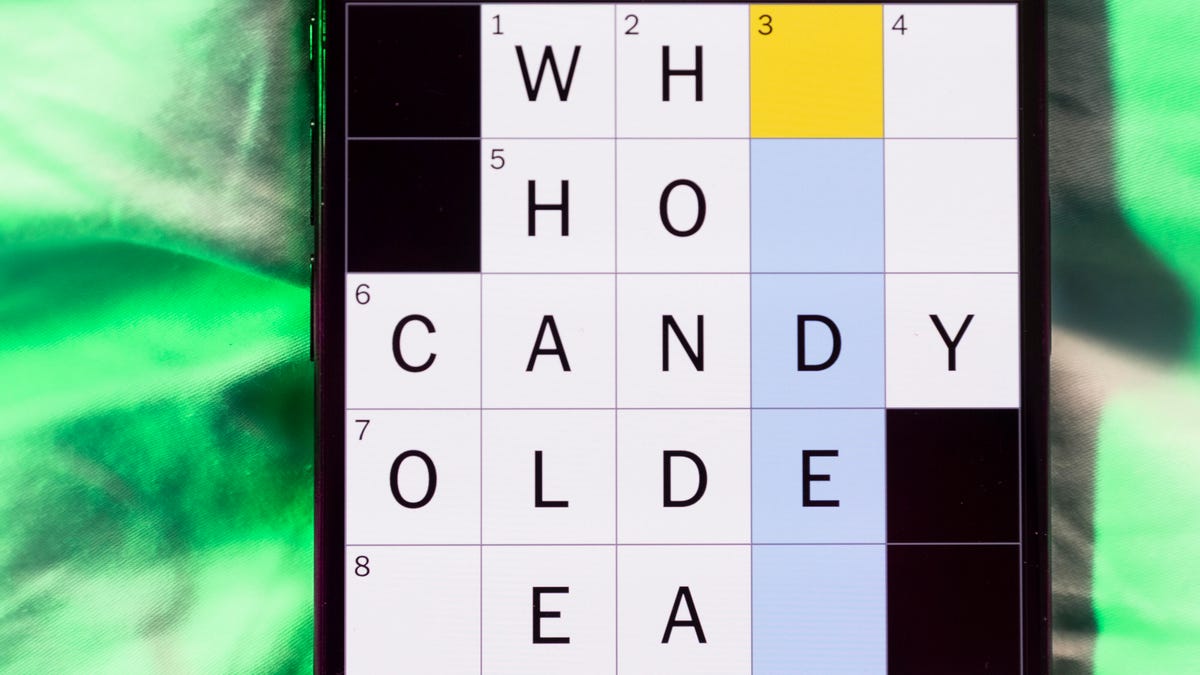
Looking for the most recent Mini Crossword answer? Click here for today’s Mini Crossword hints, as well as our daily answers and hints for The New York Times Wordle, Strands, Connections and Connections: Sports Edition puzzles.
Need some help with today’s Mini Crossword? Hint: It uses a lot of the letter Z for some reason. Read on for all the answers. And if you could use some hints and guidance for daily solving, check out our Mini Crossword tips.
If you’re looking for today’s Wordle, Connections, Connections: Sports Edition and Strands answers, you can visit CNET’s NYT puzzle hints page.
Read more: Tips and Tricks for Solving The New York Times Mini Crossword
Let’s get to those Mini Crossword clues and answers.
Mini across clues and answers
1A clue: ___-Carlton (hotel chain)
Answer: RITZ
5A clue: Span of the alphabet
Answer: ATOZ
6A clue: Cable channel with an out-of-this-world name
Answer: STARZ
7A clue: Takes care of, as a squeaky wheel
Answer: OILS
8A clue: Toy on a string
Answer: YOYO
Mini down clues and answers
1D clue: When a post receives far more negative comments than likes, in social media slang
Answer: RATIO
2D clue: World’s leading wine producer
Answer: ITALY
3D clue: Middle of the human body
Answer: TORSO
4D clue: Sleeping sound
Answer: ZZZ
6D clue: Tofu base
Answer: SOY
Technologies
Today’s NYT Connections: Sports Edition Hints and Answers for April 8, #562
Here are hints and the answers for the NYT Connections: Sports Edition puzzle for April 8 No. 562.

Looking for the most recent regular Connections answers? Click here for today’s Connections hints, as well as our daily answers and hints for The New York Times Mini Crossword, Wordle and Strands puzzles.
Today’s Connections: Sports Edition is a tough one. If you’re struggling with today’s puzzle but still want to solve it, read on for hints and the answers.
Connections: Sports Edition is published by The Athletic, the subscription-based sports journalism site owned by The Times. It doesn’t appear in the NYT Games app, but it does in The Athletic’s own app. Or you can play it for free online.
Read more: NYT Connections: Sports Edition Puzzle Comes Out of Beta
Hints for today’s Connections: Sports Edition groups
Here are four hints for the groupings in today’s Connections: Sports Edition puzzle, ranked from the easiest yellow group to the tough (and sometimes bizarre) purple group.
Yellow group hint: Working out.
Green group hint: Cover your face.
Blue group hint: NFL players.
Purple group hint: Leap.
Answers for today’s Connections: Sports Edition groups
Yellow group: Exercises in singular form.
Green group: Sporting jobs that require masks.
Blue group: Hall of Fame defensive ends.
Purple group: ____ jump.
Read more: Wordle Cheat Sheet: Here Are the Most Popular Letters Used in English Words
What are today’s Connections: Sports Edition answers?
The yellow words in today’s Connections
The theme is exercises in singular form. The four answers are crunch, plank, situp and squat.
The green words in today’s Connections
The theme is sporting jobs that require masks. The four answers are catcher, fencer, football player and goaltender.
The blue words in today’s Connections
The theme is Hall of Fame defensive ends. The four answers are Dent, Peppers, Strahan and Youngblood.
The purple words in today’s Connections
The theme is ____ jump. The four answers are broad, high, long and triple.
Technologies
The $135M Google Data Settlement Site Is Live — See If You’re Eligible
Use the settlement website to select your preferred payment method, and you may end up $100 richer.

You can now file a claim in the $135 million Google data settlement. The case centers on claims that Android devices transmitted user data without consent. Specifically, the class action lawsuit Taylor v. Google LLC contends that Google’s Android devices passively transferred cellular data to Google without user permission, even when the devices were idle. While not admitting fault, Google reached a preliminary settlement in January, agreeing to pay $135 million to about 100 million US Android phone users.
The official settlement website for the lawsuit is now live. The final approval hearing won’t occur until June 23, when the court will consider whether Google’s settlement is fair and listen to objections. After that, the court will decide whether to approve the $135 million settlement.
In the meantime, if you qualify and want to be paid as part of the settlement, you can select your preferred payment method on the official website. There, you can find information on speaking at the June 23 court hearing and on how to exclude yourself or write to the court to object by May 29.
As part of the settlement, Google will update its Google Play terms of service to clarify that certain data transfers do occur passively even when you’re not using your Android device, and that cellular data may be relied upon when not connected to Wi-Fi. This can’t always be disabled, but users will be asked to consent to it when setting up their device.
Google will also fully stop collecting data when its «allow background data usage» option is toggled off.
Who can be part of the settlement?
In order to join the Taylor v. Google LLC settlement, you must meet four qualifications:
- Be a living, individual human being in the US.
- Have used an Android mobile device with a cellular data plan.
- Have used the aforementioned device at any time from Nov. 12, 2017, to the date when the settlement receives final approval.
- You’re not a class member in the Csupo v. Google LLC lawsuit, which is similar but specifically for California residents.
The final approval hearing is on June 23, so you can add your payment method until then. The hearing’s date and time may change, and any updates will be posted on the settlement website.
If you choose to do nothing, you will still be issued a settlement payment, but you may not receive it if you don’t select a payment method.
How much will I get paid?
It’s not currently known exactly how much each settlement class member will receive, but the cap is $100. Payments will be distributed after final court approval and after any appeals are resolved.
After all administrative, tax and attorney costs are paid, the settlement administrator will attempt to pay each member an equal amount. If any funds remain after payments are sent, and it’s economically feasible, they will be redistributed to members who were previously and successfully paid. If it’s not economically feasible, the funds will go to an organization approved by the court.
-
 Technologies3 года ago
Tech Companies Need to Be Held Accountable for Security, Experts Say
-
 Technologies3 года ago
Best Handheld Game Console in 2023
-
 Technologies3 года ago
Tighten Up Your VR Game With the Best Head Straps for Quest 2
-
 Technologies4 года ago
Black Friday 2021: The best deals on TVs, headphones, kitchenware, and more
-
 Technologies5 лет ago
Google to require vaccinations as Silicon Valley rethinks return-to-office policies
-
 Technologies5 лет ago
Verum, Wickr and Threema: next generation secured messengers
-
 Technologies4 года ago
Olivia Harlan Dekker for Verum Messenger
-
 Technologies4 года ago
The number of Сrypto Bank customers increased by 10% in five days