
Technologies
The 5 Best Uses (So Far) for ChatGPT’s AI Chatbot
How a complex AI chatbot can make your life easier, one task at a time.
The new AI tool ChatGPT has inspired excitement and worry with its ability to instantly answer complex questions. In the days after its debut, people have discovered many ways it can make their lives easier — including five we’ve found that rise above the rest.
ChatGPT is a chat-based tool built by research lab OpenAI that answers questions with somewhat conversational dialogue. Its natural language abilities will delight anyone who’s had to rephrase questions to get answers out of Siri or Alexa. The AI, trained on the vast tracts of text available on the internet, knows about information only through 2021. But it’s got an abundance of information on nitty-gritty details and big concepts. That’s got some educators agitated, but as long as you use it carefully, it can be something of a bonus brain.
To be clear, ChatGPT isn’t a perfect substitute for doing your own research — it doesn’t separate fact from fiction, as CNET science editor Jackson Ryan noted while detailing its present weaknesses in critical thinking. ChatGPT can answer questions and explain complex concepts, but its potential for inaccuracy has led StackOverflow to temporarily ban ChatGPT generated software.
That said, there are several ways ChatGPT can make your life easier, cooked up by people looking for AI benefits. If you just want to save time on some tasks — and aren’t cheating on your English Lit paper — here are some cool ways to use ChatGPT.
Get a chatbot to save you money
In a matter of weeks, a GPT-powered bot could lower the prices of your bills. Joshua Browder, CEO of DoNotPay — the «world’s first robot lawyer» that helps people fight traffic tickets and other bills — tweeted that the company is building a Chrome extension based on ChatGPT’s tech foundation to negotiate lower bills from internet providers, hospitals and more.
The extension will enter closed beta testing in mid-December, before an open beta in the first week of January. Though DoNotPay has been lowering bills for years, its rules-based model could only pick fights wherever users could submit online complaint forms. After integrating the conversational tech behind ChatGPT, DoNotPay can negotiate back-and-forth with any service that has chat for customer service, opening up the range of bills that can be challenged to include medical bills, credit reports and landlord-tenant disputes.
«You can say to the bot, ‘Go get me a refund for poor in-flight Wi-Fi’; it’ll have your personal details saved and send [the complaint],» Browder told CNET. He believes the more natural language of the requests will be less suspicious than the rigid form letters DoNotPay had been sending before, allowing it to challenge more discerning — and expensive — institutions, like hospitals.
The GPT-powered extension will be free for part of its beta testing phase then eventually be added into DoNotPay’s current bill-challenging subscription service, which costs $36 every three months.
Like Google’s Duplex AI making voice calls for you, the future could be bots doing all the tedious legwork to get you better deals and cheaper bills.
Make a diet and workout plan
Changing your diet and planning an exercise routine takes work. To make it easier, Alex Cohen, a senior director of product at Carbon Health, used ChatGPT to make a health-improving plan with a daily calorie target, exercise suggestions, a weeklong list of meals and even a shopping list for all the necessary ingredients. He tweeted out his method in an illuminating thread:
Cohen broke down his plan in a series of steps, calculating his personal health metrics, asking for meals that would fit his daily caloric and nutritional needs, asking for a shopping list, and then an exercise plan to meet his needs.
ChatGPT is no substitute for a physician and dietitian who can cater a plan to your specific needs and physiology — a caution the tool will tell you if you repeat Cohen’s search terms. But it’s an easy way to sketch out a health plan blueprint that you can check over yourself or bring to a health care professional.
Generate the next week’s meals with a grocery list
A variation from the last point is worth spotlighting for anyone planning a week’s worth of meals for multiple people.
First, ask ChatGPT for a list of meals, explain how many people you’re cooking for and whether you’re interested in dinners, breakfasts or lunches. Include any preferences and dietary restrictions. Detail how many days you want dining ideas, and poof, you have a list of meals.
Next, ask for a shopping list for those meals. You’ll get a pretty basic list of ingredients, so if you want exact amounts, you’ll need to fine-tune your request. For example, you might want to ask for the total amount of ingredients for all the meals listed. GPT produces a shopping list with the number of cans, ounces, pounds and cups of each ingredient you’ll need for a week’s worth of meals.
Create a bedtime story for kids
ChatGPT-generated prose hasn’t topped the bestseller lists yet, especially since it hasn’t gotten the knack for creative style. But the tool can make a passable bedtime tale for children, concocting simple plots and language from basic prompts. For instance, I chose a cat who wanted to go to space, and ChatGPT gave me the tale of Max, who clawed his way past many obstacles to achieve his dreams among the stars.
Stanford grad student in machine learning Eric Zelikman tweeted the idea of using ChatGPT to generate a bedtime story and then feeding that text into OpenAI’s DALL-E image-generating tool for illustrations.
It isn’t going to replace traditionally published children’s books. But if you’re pressed for time or away from your kid’s trove of bedtime tales, generating one through OpenAI’s tools can be helpful.
Prep for an interview
If you need to prepare to interview an exciting source, you can ask ChatGPT to generate some thought-provoking questions, as entrepreneur Seth Bannon tweeted.
That could be handy if you’re a journalist, or if you’re grilling somebody on stage at an industry conference, prepping for a job interview or preparing for a dinner with someone you want to impress.
You can even use it as a chat partner to set up mock conversations to practice what you’re going to say. You can instruct it to respond in other languages or translate specific phrases, too. You could also use it to help refine your cover letters and emails for a bit of professional polish. ChatGPT isn’t perfect, but when there’s a lot of example copy on the internet it can crib from, it can be an adept communicator.
Technologies
Today’s Wordle Hints, Answer and Help for April 7, #1753
Here are hints and the answer for today’s Wordle for April 7, No. 1,753.
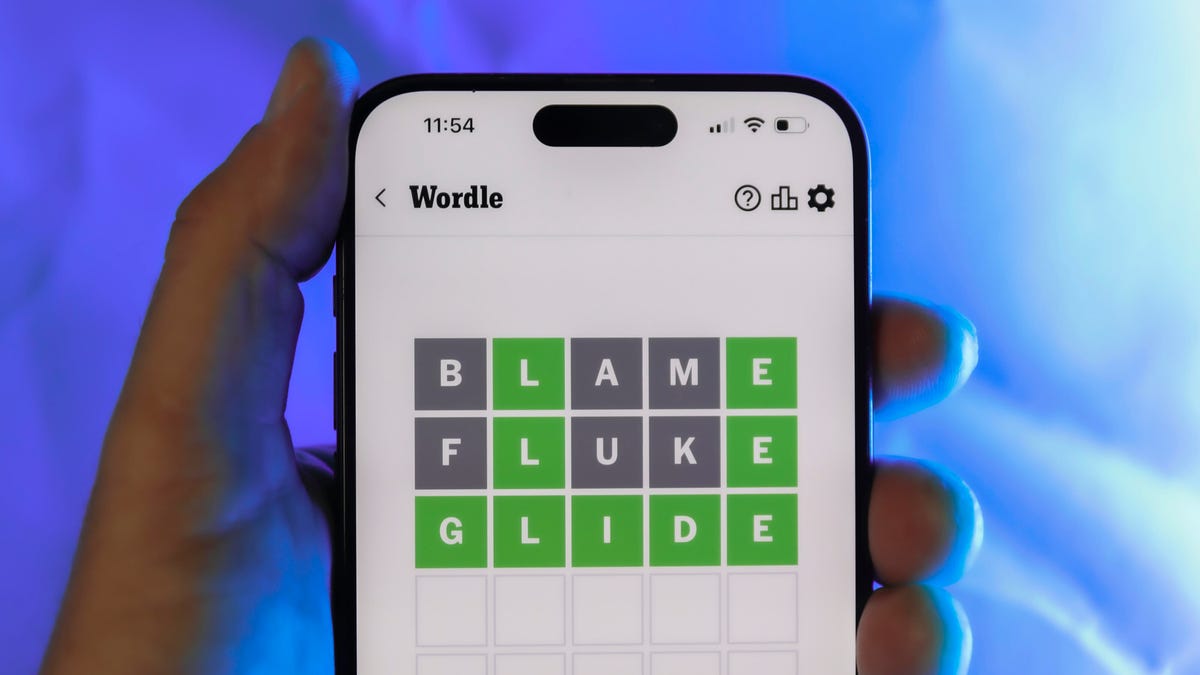
Looking for the most recent Wordle answer? Click here for today’s Wordle hints, as well as our daily answers and hints for The New York Times Mini Crossword, Connections, Connections: Sports Edition and Strands puzzles.
Today’s Wordle puzzle wasn’t too tricky, for a change. If you need a new starter word, check out our list of which letters show up the most in English words. If you need hints and the answer, read on.
Read more: New Study Reveals Wordle’s Top 10 Toughest Words of 2025
Today’s Wordle hints
Before we show you today’s Wordle answer, we’ll give you some hints. If you don’t want a spoiler, look away now.
Wordle hint No. 1: Repeats
Today’s Wordle answer has one repeated letter.
Wordle hint No. 2: Vowels
Today’s Wordle answer has one vowel, but it’s the repeated letter, so you’ll see it twice.
Wordle hint No. 3: First letter
Today’s Wordle answer begins with D.
Wordle hint No. 4: Last letter
Today’s Wordle answer ends with E.
Wordle hint No. 5: Meaning
Today’s Wordle answer can relate to something that is closely compacted.
TODAY’S WORDLE ANSWER
Today’s Wordle answer is DENSE.
Yesterday’s Wordle answer
Yesterday’s Wordle answer, April 6, No. 1752, was SWORN.
Recent Wordle answers
April 2, No. 1748: SOBER
April 3, No. 1749: SINGE
April 4, No. 1750: SANDY
April 5, No. 1751: ENVOY
What’s the best Wordle starting word?
Don’t be afraid to use our tip sheet ranking all the letters in the alphabet by frequency of uses. In short, you want starter words that lean heavy on E, A and R, and don’t contain Z, J and Q.
Some solid starter words to try:
ADIEU
TRAIN
CLOSE
STARE
NOISE
Technologies
Today’s NYT Mini Crossword Answers for Tuesday, April 7
Here are the answers for The New York Times Mini Crossword for April 7.

Looking for the most recent Mini Crossword answer? Click here for today’s Mini Crossword hints, as well as our daily answers and hints for The New York Times Wordle, Strands, Connections and Connections: Sports Edition puzzles.
Need some help with today’s Mini Crossword? Read on for all the answers. And if you could use some hints and guidance for daily solving, check out our Mini Crossword tips.
If you’re looking for today’s Wordle, Connections, Connections: Sports Edition and Strands answers, you can visit CNET’s NYT puzzle hints page.
Read more: Tips and Tricks for Solving The New York Times Mini Crossword
Let’s get to those Mini Crossword clues and answers.
Mini across clues and answers
1A clue: Informative commercial, for short
Answer: PSA
4A clue: Something you trace to draw a Thanksgiving turkey
Answer: HAND
5A clue: ___ Johnson, former Prime Minister of the U.K.
Answer: BORIS
6A clue: Opposite of include
Answer: OMIT
7A clue: Crosses (out)
Answer: XES
Mini down clues and answers
1D clue: City with the Notre-Dame Cathedral
Answer: PARIS
2D clue: Bad mood
Answer: SNIT
3D clue: About eight minutes of the average half-hour sitcom
Answer: ADS
4D clue: Remote worker’s office, perhaps
Answer: HOME
5D clue: Word that can follow each group of circled letters (and hints at its shape)
Answer: BOX
Technologies
NASA’s Artemis II Breaks Record With Trip Around The Moon
-
 Technologies3 года ago
Tech Companies Need to Be Held Accountable for Security, Experts Say
-
 Technologies3 года ago
Best Handheld Game Console in 2023
-
 Technologies3 года ago
Tighten Up Your VR Game With the Best Head Straps for Quest 2
-
 Technologies4 года ago
Black Friday 2021: The best deals on TVs, headphones, kitchenware, and more
-
 Technologies5 лет ago
Google to require vaccinations as Silicon Valley rethinks return-to-office policies
-
 Technologies5 лет ago
Verum, Wickr and Threema: next generation secured messengers
-
 Technologies4 года ago
Olivia Harlan Dekker for Verum Messenger
-
 Technologies4 года ago
The number of Сrypto Bank customers increased by 10% in five days