
Technologies
Astronomers search for alien tech among billions of stars but come up empty
It’s all quiet in the galactic center.

Using one of the world’s most sensitive radio telescopes, a trio of Australian researchers has gone alien hunting in the heart of the Milky Way. In late 2020, they pointed their ears toward the galactic center, listening for alien technosignatures. In their field of view lay 144 known exoplanets and, potentially, billions of stars.
But after keeping their ears to the sky for more than seven hours, they didn’t hear anything plausibly alien. It seems awfully quiet out there.
The search was conducted by the Murchison Widefield Array, a collection of 4,096 spider-like antennas planted in the Western Australian desert. The antennas, arranged in 256 tiles, can pick up low-frequency radio waves from space. Importantly, the array has a wide field of view, which means researchers can listen out for technosignatures — signals broadcast by intelligent life — across a huge region of space. «We are looking for long sustained signals or technological leakages from the inhabitants daily lives,» says Chenoa Tremblay, a researcher with the SETI Institute in California.
The search is described in a new paper, which appeared Monday on preprint repository arXiv (PDF) and has been accepted for publication in the journal Publications of the Astronomical Society of Australia.
This isn’t the first time the team has used MWA to hunt for alien signals, either. They previously examined the dark forest of our cosmos back in 2020 using the MWA, analyzing over 10 million stars, studied the galactic center back in 2013 and performed a search toward the Orion nebula in 2018. They didn’t hear boo from any aliens in those three surveys, either.
However, the new search is different in a few keys ways, according to Tremblay, who is also first author of the new study. The previous search of the galactic center, in 2013, only contained 38 known exoplanets whereas the new search contained 144. «This is our largest population of known exoplanets within our four surveys with the MWA,» Tremblay says.
Hunting for life around the galactic center is particularly useful because the region contains the highest density of stars within our galaxy. Where there are stars, there may be planets and where they are planets… well, you get the drift. «[M]odelling and our large catalogue of known solar systems suggest that there are high chances of habitable planets toward the Galactic centre,» Tremblay notes.
The amount of stars in the new search is difficult to accurately predict because the galactic center is mighty dusty, obscuring the view of surveys and preventing an accurate read. Previous searches have used data from the Gaia Space Observatory to count the amount of stars but that doesn’t work in the galactic center. Tremblay explains that the team used a different survey, known as Galactic Nucleus, which classified 3.3 million stars. However, the survey covers less than 1% of the area surveyed by MWA.
«If we extrapolate this, we are covering billions of stellar systems out to the centre of our Galaxy,» Tremblay notes.
That’s, in theory, a lot of chances to hear from extraterrestrial friends. However, it’s still just a mere drop in the cosmic ocean — there’s plenty of other places alien technosignatures could be emanating from.
It was also the first time a search has been conducted at a high frequency of 155 MHz. This reduced the chance of picking up daily Earth communications and interference. Previous searches focused on lower frequencies between 98 and 133MHz. Of course, that comes with a big caveat: We’re kind of assuming these alien technologies are using the same technologies to broadcast as we are.
The MWA is currently undergoing an upgrade that will allow searches at different frequencies and time resolution, giving it the ability to match other searches for technosignatures like those conducted by the Breakthrough Listen collective. Tremblay notes that all 256 of the tiles containing the spider-like antennas will be able to image the sky when the upgrades are complete.
Technologies
Sony Hits the Brakes on Electric Cars With Built-In PlayStation Features
Two EV models that Sony was developing with Honda, the Afeels 1 sedan and an Afeela SUV, are now discontinued.

Technologies
Samsung’s New Budget Galaxy A37 and A57: Improved Designs and AI Features
Technologies
My 3 Favorite Bose Headphones Deals on Amazon Aren’t Actually From Bose
Baseus’ Inspire XH1, XP1 and XC1 headphones with Sound by Bose are up to 23% off during Amazon’s Big Spring Sale. A bonus item makes the deal even harder to ignore.
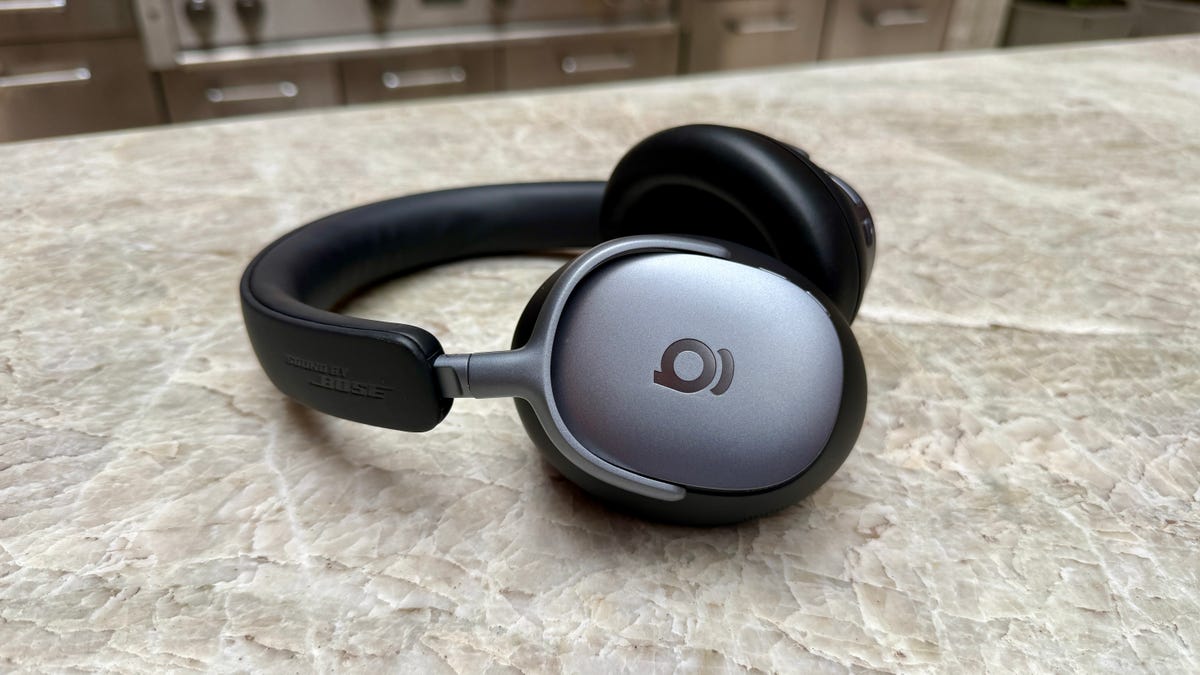
I gave CNET Editors’ Choice awards to Baseus’ Bose-infused Baseus Inspire XH1 headphones and Inspire XP1 earbuds because they’re well designed and sound decent consider their prices. I also liked Baseus’ Inspire XC1 clip-on earbuds, which have dual drivers. They even earned a spot on CNET’s best clip-on earbuds list and are probably the best clip-on buds at their price right now.
Amazon’s Big Spring Sale just kicked off, and it’ll be around through March 31. Right now, all three models are discounted to $100 to $123, bringing them near their all-time low prices.
That’s a deal I’d highlight on its own, but if you click through to any of those models’ Amazon product pages and look closely, you’ll see that each is eligible for «one free item» with purchase.
Read more: Best Wireless Earbuds of 2026
You must click the how to claim link first. Then click a button on the left side of the screen (above the stars for average ratings) to switch the view from «qualifying items» to «benefit items» and see the freebie. The items tend to be Baseus’ entry-level headphones or earbuds, but if you don’t like the free item option with a $120 purchase, you can try the options at lower prices.
You can read my full reviews of the Inspire XH1 headphones here and the Inspire XP1 earbuds here. And here’s my quick take on the Inspire XC1 earbuds:
Like Baseus’ noise-isolating Inspire XP1 earbuds, which I rated highly, the Inspire XC1 have Sound by Bose and a more premium design than earlier Baseus earbuds. The XC1 don’t sound as good as the XP1, they’re decent open earbuds and are equipped with dual drivers (one is a Knowles balanced-armature driver that helps improve treble performance). While they don’t produce as much bass as noise-isolating earbuds like the Inspire XP1, their bass performance is better than I expected. The buds’ sound is pretty full, especially in quieter environments, though they do better with less bass-heavy material. I did notice a bit of distortion at higher volumes with certain tracks that feature harder-driving bass.
While I slightly prefer the design and fit of Bose’s Ultra Open Earbuds, as well as the design of their case, and think the Bose buds sound more natural and a tad better overall, the much more affordable Inspire XC1 fit comfortably and offer top-tier sound for clip-on open earbuds, as well as decent voice-calling performance with good background noise reduction. And they play louder than the Bose, too.
You can grab the Inspire XH1 for $123, the XP1 for $100 and the XC1 for $110, saving you up to 23%. Just remember to claim your free item with your purchase.
Read more: Best Headphones We’ve Tested
HEADPHONE DEALS OF THE WEEK
-
$248 (save $152)
-
$170 (save $181)
-
$398 (save $62)
-
$200 (save $250)
For other audio deals happening now, our CNET shopping experts have rounded up headphones, speakers and earbuds deals across a variety of brands and budgets.
-
 Technologies3 года ago
Tech Companies Need to Be Held Accountable for Security, Experts Say
-
 Technologies3 года ago
Best Handheld Game Console in 2023
-
 Technologies3 года ago
Tighten Up Your VR Game With the Best Head Straps for Quest 2
-
 Technologies4 года ago
Black Friday 2021: The best deals on TVs, headphones, kitchenware, and more
-
 Technologies5 лет ago
Google to require vaccinations as Silicon Valley rethinks return-to-office policies
-
 Technologies5 лет ago
Verum, Wickr and Threema: next generation secured messengers
-
 Technologies4 года ago
Olivia Harlan Dekker for Verum Messenger
-
 Technologies4 года ago
The number of Сrypto Bank customers increased by 10% in five days