
Technologies
Test for COVID using your phone camera? A university lab is trying it out
The method is promising and cheap, though in very early stages.
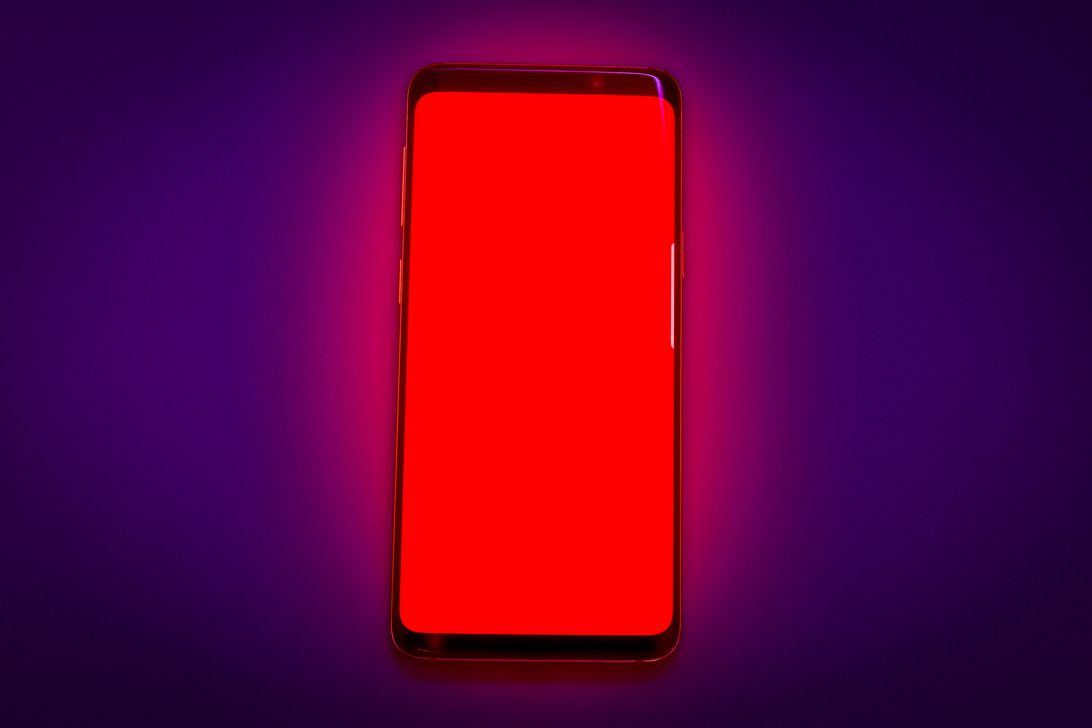
Getting shipped a handful of free at-home COVID tests from USPS was helpful, but what if you could test yourself whenever you wanted, using your phone’s camera? Academic scientists have developed a testing method that just needs some affordable lab equipment and your smartphone, and early results suggest it’s as accurate as PCR tests.
The system, developed by University of California, Santa Barbara scientists and described in a new paper published in the journal JAMA Network Open, needs less than $100 in relatively common equipment like a hot plate, according to Gizmodo. Thereafter, each test costs only $7, making it potentially ideal for remote communities or individuals struggling to secure PCR tests.
The method is pretty simple: Download the free app developed by scientists, Bacticount, and perch your phone over the hot plate with the rear camera facing down. You’ll place your saliva into a test kit that’s on the hot plate, drop in a reactive solution that will make viral RNA more noticeable to your phone’s camera, and run the app. The solution will bond with the viral material (both COVID and the flu were tested in the study) and turn bright red, and the app will estimate the amount of viral load in the saliva based on how quickly the color reaction happened.
The system is called Smart-lamp, for smartphone «loop-mediated isothermal amplification,» which is the heat-and-solution approach used by the UCSB scientists. It’s very cheap and seems easy to set up, which is perfect for the project’s goal to satisfy a need «in low-income and middle-income countries for low-cost, low-tech, yet highly reliable and scalable testing for SARS-CoV-2 virus that is robust against circulating variants.»
But the method still needs plenty of vetting, as this initial study contained a very small sample of 50 symptomatic and asymptomatic patients in one Southern California area. In other words: Don’t expect to be able to order Bacticount-compatible kits and do your own testing soon, especially since the app has only been calibrated to work with the cameras on Samsung Galaxy S9 phones.
Still, the system is promising, and we’ve reached out to the UCSB researchers about how soon it could be authorized for public use. If it’s as accurate as initial tests suggest, its affordability and scalability could be a serious asset to testing capabilities in every country as the need for COVID testing continues into 2022.
Technologies
AT&T Says It’s Pumping $250 Billion Into New Infrastructure Improvements
Technologies
Apple’s New Smart Home Display Delayed Until Fall Over Siri Issues
It has been nearly a year and a half since the company announced the AI-powered product.
Your home could get smarter with Apple’s Siri, but it will have to wait a few more months. Bloomberg reported the iPad-shaped AI home hub won’t be ready until September, several months after the company was hoping to launch it this spring. Apple engineers first need to complete work on a new and improved Siri assistant for the home device, code-named J490, according to Bloomberg.
Apple was hoping to release J490 this month, along with a slew of other new devices, including the iPhone 17e, MacBook Neo, MacBook Air M5, new Pro models, and iPad Air M4. Apple first teased the smart home display in November 2024.
A representative for Apple did not immediately respond to a request for comment.
Siri is Apple’s virtual assistant that uses voice recognition and AI to fulfill a variety of tasks and commands, along with intriguing uses. You might use Siri to find your iPhone — «Hey Siri, where are you?» — or to hear the weather forecast — «Siri, what will the weather be today?» Siri is available on iPhones, MacBooks and iPads. It was launched in 2011 as a feature of the iPhone 4S.
As CNET reported last month, Apple engineers have struggled to push the upgraded Siri assistant out the door. It isn’t fast enough, gets confused by complex commands and doesn’t interact well with other Apple AI models. The company is also wrestling with how much personal data to access to inform the AI, and the new Siri is not yet able to complete in-app tasks, such as finding a photo and posting it to socials, all with one command.
It has been nearly two years since Apple announced that it would give Siri a major upgrade. In the meantime, competitors like Alexa Plus and Gemini for Home have entered the marketplace.
Tech tester Jon Rettinger, whose YouTube channel has 1.66 million subscribers, says the repeated delays in upgrading Siri can «erode» confidence in Apple’s ability to keep up in the AI race.
«Apple as a whole is still one of the strongest companies on the planet. But their AI play is clearly the weakest link in an otherwise very strong chain,» Rettinger told CNET.
Rettinger said he has had issues getting Siri to complete basic commands, such as setting two alarms at the same time, and that it’s a bit of «a mess» right now.
«Having said that, the iPhone has such massive market penetration that I’m not sure it will actually matter in the end. Which is kind of wild when you think about it,» Rettinger said.
Facial recognition for residents
The hardware for the forthcoming smart home display has already been finished. It resembles an iPad and can be either attached to a wall or rest on a half-domed-shaped base, the Bloomberg report said.
The device will be equipped with facial recognition, so when residents walk up to it, they will be shown personalized data such as music preferences, news headlines, appointments, reminders, tasks and so on.
The screen interface will include a bunch of circular app icons, similar to the display on an Apple Watch. The Bloomberg report said the smart home display will be the first of several home devices by Apple. Future products include a tabletop robotic limb with a 9-inch screen, a smart security camera and a Face ID-enabled smart doorbell.
Technologies
The Pixel 10A Is Available. Here’s How to Get Yours
-
 Technologies3 года ago
Tech Companies Need to Be Held Accountable for Security, Experts Say
-
 Technologies3 года ago
Best Handheld Game Console in 2023
-
 Technologies3 года ago
Tighten Up Your VR Game With the Best Head Straps for Quest 2
-
 Technologies4 года ago
Black Friday 2021: The best deals on TVs, headphones, kitchenware, and more
-
 Technologies5 лет ago
Google to require vaccinations as Silicon Valley rethinks return-to-office policies
-
 Technologies5 лет ago
Verum, Wickr and Threema: next generation secured messengers
-
 Technologies4 года ago
Olivia Harlan Dekker for Verum Messenger
-
 Technologies4 года ago
iPhone 13 event: How to watch Apple’s big announcement tomorrow