
Technologies
Your state may have an app to store your COVID-19 vaccine card. What we found
If your state doesn’t have an app, don’t worry. There are other ways to store your vaccine card on your phone.
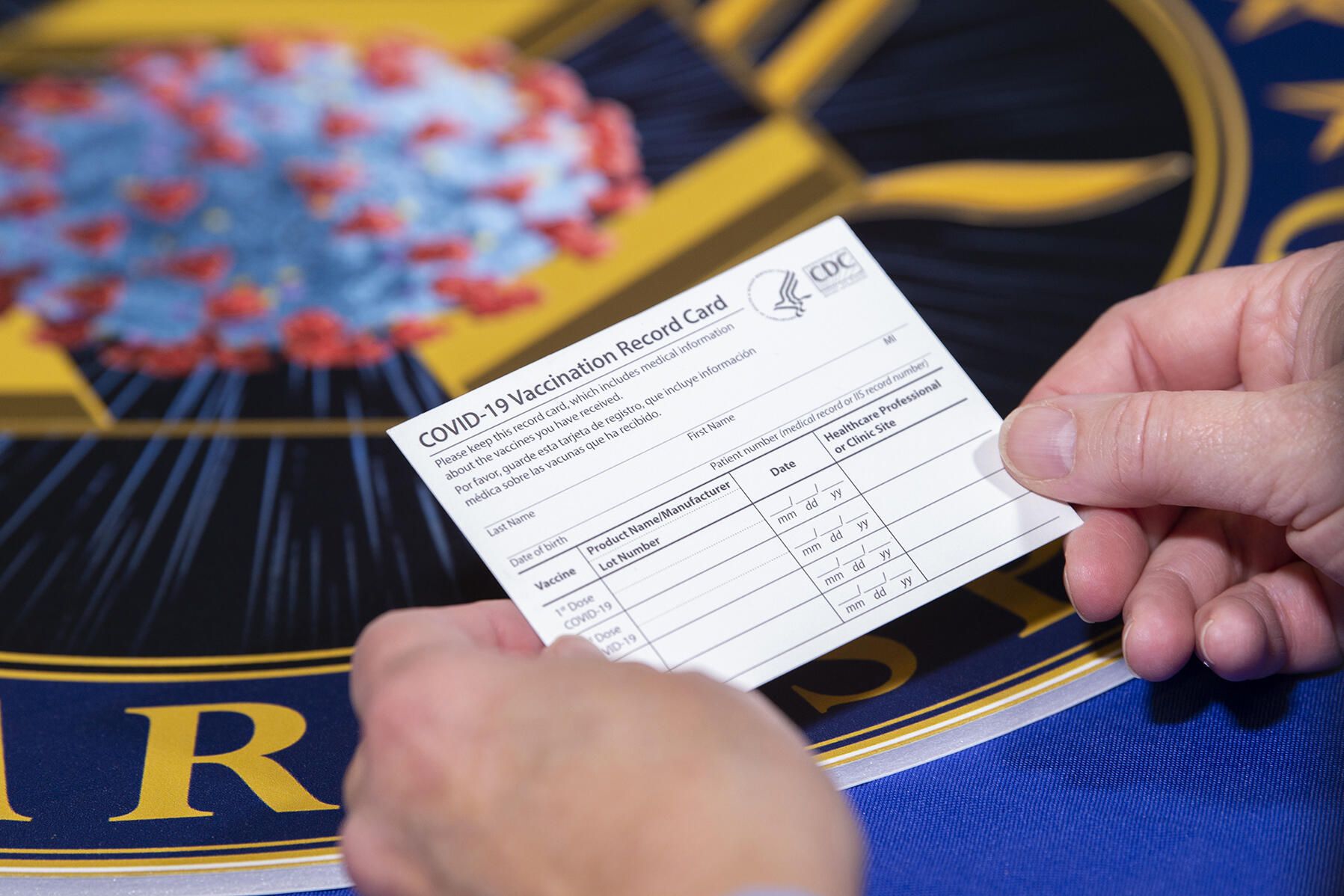
Vaccine mandates are coming in, left and right. Soon, California school-aged children may be required to get the COVID-19 vaccine (but vaccine requirements aren’t new). And employers, like Google, are requiring their employers to get the shot before returning to the office. But given President Biden’s recent mandates, more companies may have to require proof of vaccination.
The list of reasons for keeping your COVID-19 vaccination card on hand is quickly piling up. But that doesn’t mean that you need to keep your printed version in your wallet all the time. Instead, Android and iOS have ways to store your vaccination card on your phone. And some states have apps, too (more below). It’s the best way to keep proof handy without running the risk of losing or damaging your card.
We’ll show you how to store your vaccine card on your phone and tell you which states have apps to keep it handy. Here’s the latest on the future booster shots and the latest on Pfizer’s vaccine for kids. This story was recently updated.
Which states have vaccination card apps?
Many states have apps that let their residents store vaccine cards on their phones. A few include California, Colorado, Hawaii, New York and Oregon but that’s not all.
Colorado residents can download the myColorado app requires you to create an account, verify your identity and then add your digital driver’s license to your phone. After you’ve done that, you can then add your myVaccine record to the app.
Louisiana’s LA Wallet app takes a similar approach to Colorado’s, allowing you to add your driver’s license and proof of vaccination to your phone.
California’s implementation requires you to fill out a form to verify your identity, after which you’ll receive a text message or email with a link to a QR code you can save to your phone. When scanned, the code will offer proof of vaccination. The link will also include a digital copy of your vaccination record.
Illinois residents can use VaxVerify to show proof. The app uses Experian for identity verification.
MyIR Mobile is another app used by several state health departments to provide a digital copy of your vaccination card. Currently, if you live in Louisiana, Maryland, Mississippi, North Dakota, Washington, West Virginia or Washington, DC, this is the app you’ll use.
Delaware, New Mexico and Michigan are also using web portals for residents to access their vaccination status online.
New Yorkers have two app options, including the Excelsior Pass app and NYC Covid Safe.
We’ll continue to keep an eye out for other states that have apps and features to store your COVID-19 vaccine card online.
Are there other ways to store your vaccination card on your phone?
If your state doesn’t have an app to store your card, there are other ways to store it on your phone. The US doesn’t have a single online system or app you can use to show proof of vaccination on your phone. Instead, what qualifies as proof varies by city, county and even business.
Some places may accept a picture of your vaccination card.It’s a confusing mess, to put it mildly. I strongly urge you to take a few minutes to research what your city, county or state will accept as proof, as it can vary.
For example, concert producer AEG Presents will accept a «physical copy of a COVID-19 Vaccination Record Card, a digital copy of such card or such other proof as is permitted locally.»
Along with school mandates, hundreds of colleges are also requiring students and employees to be vaccinated. Seattle University, for example, requires students to be vaccinated to attend in-person classes via an online form that uploads photos of the front and back of the vaccination card.
When in doubt, look for information on the business’s website, or call the local health department and ask for clarification. This is bound to save you time, headaches and being turned away at the door.
Can you use Google Pay or Apple Wallet to store your card?
If you have an iPhone ($377 at Amazon), with an update coming soon for iOS 15 you’ll be able to add your vaccine card to your Apple Wallet to present whenever you need to show you’re fully vaccinated. (You can keep a copy in the Health app right now.)
Over on Android, you can add your vaccine card to the Google Pay app. I need to remind myself each time where my card is in Google Pay, so I added a shortcut icon to my home screen to quickly find it.
Samsung Pay can also store it
Samsung now gives Galaxy phone owners the option to add proof of vaccination to Samsung Pay,its wallet app. By having direct access to your vaccination record, youwon’t have to fiddle around with creating photo albums and tappingthrough multiple screens before you’re able to show it to a bouncer atyour local watering hole.
To add your card to Samsung Pay, you’ll need to download the CommonHealth app(Samsung’s partner) from the Google Play Store. Follow the prompts inthe app to verify your vaccination status. Once the app confirms you’veindeed gotten the shots, you’ll be prompted to download a Smart HealthCard to Samsung Pay.
That card is what you’ll then show to anyone requesting you show proof of vaccination.
Will a picture of your vaccine card work?
Is that too much fuss? The simplest way to have a digital record of your vaccine status is to snap a picture of your vaccination card and keep it on your phone. The CDC even recommends keeping a picture of your card as a backup copy.
Simply use the camera app on your phone to snap the photo. You can favorite the photo to quickly locate it or store it in a notes app, a folder or somewhere that’s easy to remember so you don’t have to endlessly scroll your camera roll to find it. Make sure you’re in a well-lit area and get close enough to the card that its dates and details are legible. I also suggest putting the card on a dark surface, while remaining conscious of shadows of your arms or the phone on the card itself.
Here’s an example of one way to save your vaccination card as a new photo album. On an iPhone, open the Photos app, select the Albums tab and then tap the + sign in the top left corner followed by New Album. Give the album a name and then tap Save. Next, select the photos of your card to add it to the album.
On an Android phone, it depends on which app you’re using, but the process should generally be the same. If you’re using the Google Photos app, open the app and then select the picture of your vaccination card. Tap the three-dot menu button in the top-right corner, followed by the Add to Album button. Select +New album and give it a name such as «Vaccination Card» and tap the checkmark button when you’re done.
Other suggestions to store your vaccination card on your phone
I’ve had a large number of readers reach out to me about this article, each one offering advice and guidance about storing a proof of vaccination card.
Some suggestions include well-known airport security service Clear. In fact, some concert and exhibition halls require attendees use Clear to verify their vaccination status to attend a show. You can go to clearme.com/healthpass to download the app and get your card added.
VaxYes is another service that verifies your vaccination status and then adds your vaccination card to Apple Wallet. I’ve read that you can add your card to the Google Pay app, but after signing up and going through the process myself, I don’t see the option on a Pixel 5 running Android 12.
If your local municipality or employer used the CDC’s Vaccine Administration Management System, then you can use the VAMS website to access your vaccination records. I had more than one reader reach out to me about using this system to show proof of vaccination, but without an account myself, I’m unable to go through the process of accessing a vaccination record.
Another suggestion I received from multiple readers is to use a scanner app on your phone and store a scanned copy of your vaccination card in something like your OneDrive personal vault or a password manager (almost all of them offer some sort of secure file storage) instead of storing the photo in Google Photos or Apple’s iCloud photos. On an iPhone, you can use the scanner that’s built into the Notes app. On Android, Google’s Stack PDF scanner will be enough to get the job done.
This story updates as the national vaccine conversation continues. For more information about the forthcoming booster shots from Pfizer, Moderna and Johnson & Johnson, make sure to read this. We have up-to-date details about the delta variant, as well as delta plus and the lambda variant.
The information contained in this article is for educational and informational purposes only and is not intended as health or medical advice. Always consult a physician or other qualified health provider regarding any questions you may have about a medical condition or health objectives.
Technologies
Australians Flock to VPNs in the Wake of Online Age-Restriction Laws
App downloads for VPN services increase sharply as websites in Australia go behind age-restriction walls.

A new set of laws in Australia requiring adult websites and app stores to age-restrict content for those under 18, and requiring AI companies to restrict chatbot offerings from displaying certain types of sensitive or adult content to minors, is apparently driving many to download Virtual Private Network apps there.
Major adult sites have closed their virtual doors to those who aren’t age-confirmed in Australia, and these changes follow a nationwide ban on social media use by teenagers and young children that went into effect in December.
According to reports from Reuters, The Guardian and others, in response to the bans, downloads of VPN-related apps, which people can use to circumvent location-based restrictions, are sharply on the rise. According to Reuters, three of the 15 most downloaded free iPhone apps in the country were VPN-related as the new laws went into effect on Monday.
Lawmakers in some regions, including the US, are well aware that people use VPNs in this way. In states such as Michigan and Wisconsin, laws are being proposed to limit or outright ban VPN use. Wisconsin’s proposed law would require adult sites to block VPN traffic, while Michigan’s proposal would ban VPN use entirely in the state.
There is also a proposal in England under consideration to ban VPN use by minors. That proposal is currently under review.
Technologies
Here’s How to Track the Artemis II Mission in Real Time With NASA’s New Tool
The tool will let you track NASA’s modern lunar program during its 10-day flight around the moon and back again.

More than half a century after astronauts last left footprints on the lunar surface, humanity is preparing to return to the moon. The excitement surrounding NASA’s Apollo program once captivated the world, and now NASA hopes to rekindle that same sense of wonder with its modern lunar effort, the Artemis program.
NASA’s Artemis II launch is scheduled for the first week of April. It’ll be the first human mission to the moon since 1972, and it should be quite the achievement for the Artemis program. Now, NASA has released a new tool that lets the public track Artemis II in real time.
The Artemis program is NASA’s long-term effort to return humans to the moon and establish a sustained presence there for the first time since the Apollo program. The program aims to land astronauts near the lunar south pole, develop new technologies for long-term exploration and use the moon as a stepping stone for future missions to Mars.
The Artemis Real-time Orbit Website, dubbed AROW, is already available to the public, although there isn’t much to see since the launch is still a few weeks away. It’s also available directly from the NASA app if you’re using a mobile device. The site lets the public visualize data collected by sensors on Orion and sent to the Mission Control Center at NASA’s Johnson Space Center in Houston.
The website is simple to navigate. You’ll see a visual representation of Artemis II’s progress, including its speed, distance from Earth and distance to the moon. Mobile app users get all of the above, along with an extra augmented reality tracker that lets you point your phone at the sky and see where Artemis II is relative to your position on Earth. It works much like Google Star Map and other stargazing apps that use similar technology.
According to NASA, tracking will be available once the Orion capsule separates from the rocket’s upper stage, which is expected about 3 hours after the upcoming April launch. The site will then update its information in real time for the entire 10-day mission.
NASA is also making flight data available for download so that people interested in creating their own content, such as visualizations or tracking apps, can do so. The data will include all sorts of things, including state vectors, which are data that «describe precisely where Orion is located and how it moves.» That same data will be used by NASA to study Orion and make improvements for future Artemis missions.
An exact launch date for Artemis II hasn’t been set, but the agency plans on launching the mission no earlier than April 1. The launch was originally scheduled for February, but it was delayed multiple times due to a hydrogen leak and a helium flow issue. NASA says it has since fixed both issues.
Technologies
Today’s NYT Connections Hints, Answers and Help for March 10, #1003
Here are some hints and the answers for the NYT Connections puzzle for March 10, No. 1,003
Looking for the most recent Connections answers? Click here for today’s Connections hints, as well as our daily answers and hints for The New York Times Mini Crossword, Wordle, Connections: Sports Edition and Strands puzzles.
Today’s NYT Connections puzzle is a fun and diverse mix. If you know your US states, you’ll surely solve the blue category early. Read on for clues and today’s Connections answers.
The Times has a Connections Bot, like the one for Wordle. Go there after you play to receive a numeric score and to have the program analyze your answers. Players who are registered with the Times Games section can now nerd out by following their progress, including the number of puzzles completed, win rate, number of times they nabbed a perfect score and their win streak.
Read more: Hints, Tips and Strategies to Help You Win at NYT Connections Every Time
Hints for today’s Connections groups
Here are four hints for the groupings in today’s Connections puzzle, ranked from the easiest yellow group to the tough (and sometimes bizarre) purple group.
Yellow group hint: Think Julia Child.
Green group hint: Also, Bro and Sis.
Blue group hint: Minn. and Ore. are two others.
Purple group hint: Hit with your fist.
Answers for today’s Connections groups
Yellow group: Cook with dry heat.
Green group: Familial nicknames.
Blue group: US state abbreviations.
Purple group: Punch
Read more: Wordle Cheat Sheet: Here Are the Most Popular Letters Used in English Words
What are today’s Connections answers?
The yellow words in today’s Connections
The theme is cook with dry heat. The four answers are brown, roast, sear and toast.
The green words in today’s Connections
The theme is familial nicknames. The four answers are Cuz, Gram, Pop and Unc.
The blue words in today’s Connections
The theme is US state abbreviations. The four answers are Mass, Miss, Penn and Wash.
The purple words in today’s Connections
The theme is punch. The four answers are box, duke, slug and sock.
-
 Technologies3 года ago
Tech Companies Need to Be Held Accountable for Security, Experts Say
-
 Technologies3 года ago
Best Handheld Game Console in 2023
-
 Technologies3 года ago
Tighten Up Your VR Game With the Best Head Straps for Quest 2
-
 Technologies4 года ago
Black Friday 2021: The best deals on TVs, headphones, kitchenware, and more
-
 Technologies5 лет ago
Google to require vaccinations as Silicon Valley rethinks return-to-office policies
-
 Technologies5 лет ago
Verum, Wickr and Threema: next generation secured messengers
-
 Technologies4 года ago
Olivia Harlan Dekker for Verum Messenger
-
 Technologies4 года ago
iPhone 13 event: How to watch Apple’s big announcement tomorrow