
Technologies
Uber and Lyft’s Proposition 22 is unconstitutional, judge rules
The measure classifies gig workers as contractors rather than employees.
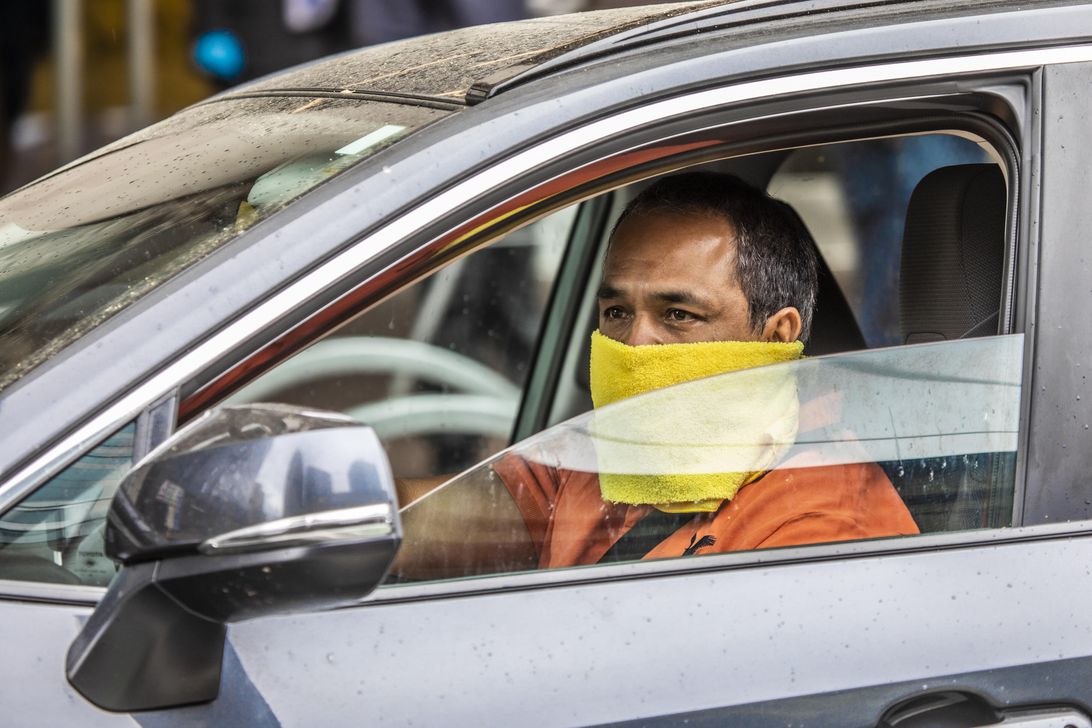
A California judge ruled on Friday that Proposition 22, a measure passed by voters last year allowing Uber, Lyft and other gig companies to classify workers as independent contractors rather than employees, violated the state’s constitution.
Alameda County Superior Court Judge Frank Roesch ruled the law improperly crimps the state’s ability to set workplace standards. Declaring the law unconstitutional, Roesch wrote that Proposition 22 «limits the power of a future legislature to define app-based drivers as workers subject to workers’ compensation law.»
The decision throws into question the fate of Proposition 22, a law that was passed last November after Uber, Lyft and other gig economy companies poured more $200 million into a campaign urging voters to support the measure. The state law will likely remain in effect while expected appeals make their way through the court system.
Gig companies initiated Proposition 22 because treating drivers, delivery people and other gig workers as employees would add enormous costs to their business operations. The proposition created an alternative, leaving gig workers as independent contractors but giving them some benefits, such as expense reimbursement and a health care subsidy.
«This ruling ignores the will of … California voters and defies both logic and the law,» an Uber spokesperson said in a statement. The company will appeal the ruling, the spokesperson said.
DoorDash, which also supported the Prop 22 campaign, said its workers had earned more and gotten new benefits since the law passed. Lyft and Instacart, another supporter, referred inquiries to the Protect App-Based Drivers & Services Coalition, a group representing gig companies. The group said it would file an immediate appeal. Postmates, another proponent, didn’t immediately respond to a request for comment.
The California measure has implications nationwide: Uber and other gig-economy firms are currently pushing a similar ballot effort in Massachusetts. The companies argue drivers prefer the flexibility of being their own bosses. Opponents, however, say drivers need the kind of pay and protections that come with full employee status, and that such a classification doesn’t rule out flexibility.
In the lawsuit that led to Roesch’s ruling, a group of ride-hail drivers, along with the Service Employees International Union, argued Proposition 22 hamstrings California’s ability to protect gig workers through safeguards such as workers’ compensation and the right to organize.
Technologies
A Historic Heat Dome Is Creeping Across the US. Here’s How to Prepare
After breaking heat records in 14 states, the heat wave pummeling the Southwest is moving eastward.
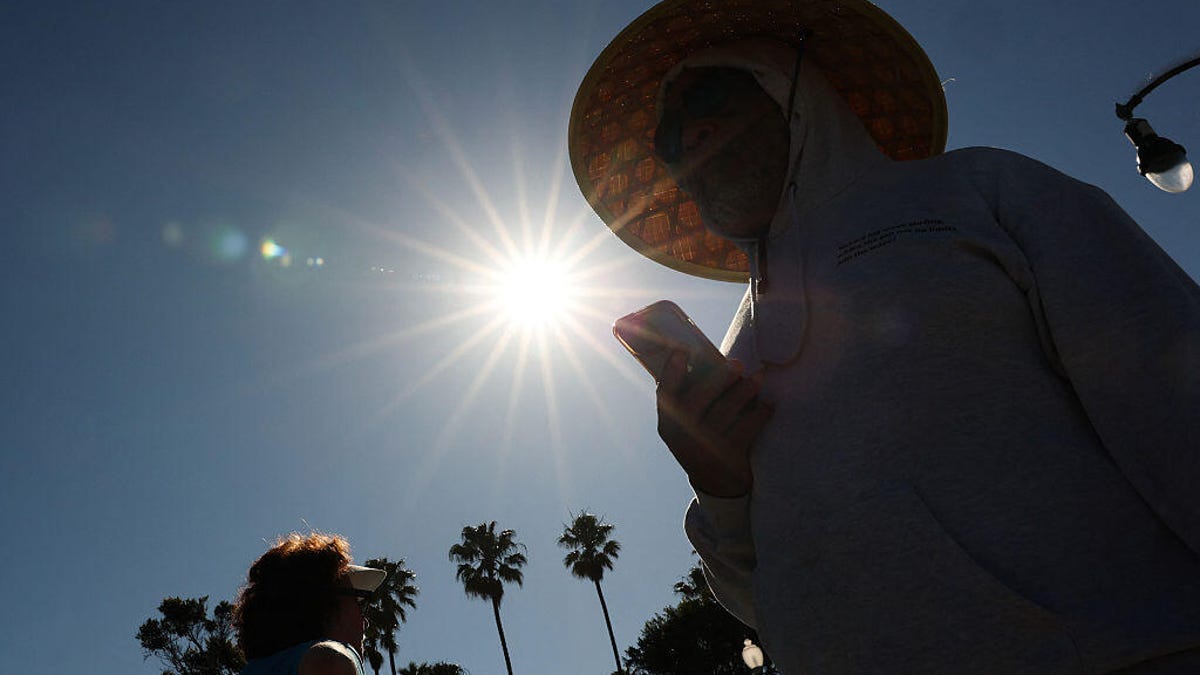
A massive heat wave has broken heat records in 14 states, including Arizona and California, reaching up to 112 degrees Fahrenheit in some areas. Now it’s creeping eastward, according to the National Weather Service.
The heat wave is continuing its journey through the Midwestern United States and is projected to affect anywhere from one-quarter to one-third of the 48 mainland states, National Weather Service meteorologist Gregg Gallina told The Associated Press. The highest temperatures recorded today are in Arizona, New Mexico and Texas — what the National Weather Service refers to as the Southern Rockies region. But the hot air is on the move.
The reason these high temperatures persist is the «heat dome» phenomenon, in which high pressure prevents hot air from rising, trapping it in a bubble above a region. As the dome of pressure moves, so too does the hot air — and right now, it’s barreling east.
The states that will be smothered by the heat dome in the coming days include those in the Southern and Central Plains regions. This means residents of Texas, Colorado, Oklahoma, Kansas and Nebraska can expect to sweat as the heat blankets them on its eastbound journey.
What the heat dome means for climate change and our health
According to Climate Central, the US has experienced rising blackout rates over the past 20 years, largely due to weather-related issues and an aging electrical grid.
As of August 2025, the US Environmental Protection Agency states that heat is the leading weather-related cause of death in the US. The World Health Organization reports that between 2000 and 2019, about 489,000 heat-related deaths occurred each year.
Fortunately, humidity levels are not as high during a summer heat wave. As humidity can contribute to dehydration, body strain and breathing difficulties, lower humidity makes this heat dome somewhat less dangerous for workers in affected areas.
The World Weather Attribution, an initiative formed by international climate change researchers and climate scientists, determined that the heat dome would be «virtually impossible without human-induced climate change.»
In a world where weather events like these cease to be impossibilities, you’ll want to prepare for future heat waves properly. Here’s how to stay safe during the heat dome.
How to prepare for the heat dome before it hits your state
There’s nothing you can do to beat the heat outside, aside from following heat safety best practices. You’ll just need to stay hydrated, wear breathable, light-colored clothing and wait out the potentially dangerous heat dome, which is expected to dissipate by the end of next week when April begins. But you can do things to batten down the hatches before the sweltering heat reaches your home.
Even if you don’t have much prep time, a couple of small items can make your home safer (and far more comfortable). Cooling towels, portable fans and countertop ice makers are must-haves during a heat wave, especially if you aren’t looking to crank the thermostat down and spend a pretty penny.
Heat waves are also extremely costly due to the sheer amount of energy used — it’s expensive to stay cool. Depending on your living situation, though, you might want to invest in heat pump installation. These HVAC system additions are extremely energy efficient, which means you can keep more money in your pocket while beating the heat.
During the middle of the heat wave, when everyone has their AC running, there’s also the potential for an early brownout (a temporary drop in electrical voltage, causing lighting to dim) or even a blackout (a complete loss of power). It’s common to feel helpless during power outages, but you can get ahead of the curve by preparing a summer blackout kit with portable chargers and alternative light sources before the heat wave hits.
Even if the historic heat wave doesn’t hit your home, these tips will help you prepare as the summer season bears down on the US in a couple of months.
Technologies
Apple May Give Siri a Big AI Overhaul in iOS 27
Apple is testing a standalone Siri app, a new interface and deeper AI features for this year’s software update, Bloomberg reports.

Apple may be planning one of the biggest changes to Siri since the voice assistant launched more than a decade ago. According to a report on Tuesday from Bloomberg, Apple is testing a standalone Siri app, a redesigned interface and a new «Ask Siri» button that would make the assistant more visible and useful across the Apple ecosystem, as part of a broader AI reboot.
According to the Bloomberg report, the new Siri experience is expected to be introduced at Apple’s Worldwide Developers Conference on June 8 and would arrive as part of iOS 27, iPadOS 27 and MacOS 27 later this year. The report says Apple is testing out a new Siri that would make the assistant feel more like a standalone AI chatbot — think ChatGPT or Claude — rather than the current built-in tool.
The latest report builds on earlier Bloomberg reporting from January, which said Apple planned to revamp Siri into its first real AI chatbot to better compete with OpenAI and Google.
For Apple, the move would mark another attempt to reset expectations around its AI strategy after repeated delays to its more advanced Siri ambitions. Apple had previewed a more personalized Siri at WWDC 2024, but the broader rollout has slipped, and Bloomberg’s new report suggests the company is now aiming for a more sweeping relaunch in iOS 27 instead.
Apple has not publicly announced these iOS 27 features, so plans could still change before WWDC.
An Apple representative didn’t immediately respond to a request for comment.
Technologies
Today’s Wordle Hints, Answer and Help for March 25, #1740
Here are hints and the answer for today’s Wordle for March 25, No. 1,740.

Looking for the most recent Wordle answer? Click here for today’s Wordle hints, as well as our daily answers and hints for The New York Times Mini Crossword, Connections, Connections: Sports Edition and Strands puzzles.
Today’s Wordle puzzle begins with a letter I just never guess, but once you get that, it’s an easy one. If you need a new starter word, check out our list of which letters show up the most in English words. If you need hints and the answer, read on.
Read more: New Study Reveals Wordle’s Top 10 Toughest Words of 2025
Today’s Wordle hints
Before we show you today’s Wordle answer, we’ll give you some hints. If you don’t want a spoiler, look away now.
Wordle hint No. 1: Repeats
Today’s Wordle answer has no repeated letters.
Wordle hint No. 2: Vowels
Today’s Wordle answer has two vowels.
Wordle hint No. 3: First letter
Today’s Wordle answer begins with W.
Wordle hint No. 4: Last letter
Today’s Wordle answer ends with R.
Wordle hint No. 5: Meaning
Today’s Wordle answer can refer to a person who is smarter than another.
TODAY’S WORDLE ANSWER
Today’s Wordle answer is WISER.
Yesterday’s Wordle answer
Yesterday’s Wordle answer, March 24, No. 1739, was BROOD.
Recent Wordle answers
March 20, No. 1735: OASIS
March 21, No. 1736: SLICK
March 22, No. 1737: BASIL
March 23, No. 1738: SERIF
-
 Technologies3 года ago
Tech Companies Need to Be Held Accountable for Security, Experts Say
-
 Technologies3 года ago
Best Handheld Game Console in 2023
-
 Technologies3 года ago
Tighten Up Your VR Game With the Best Head Straps for Quest 2
-
 Technologies4 года ago
Black Friday 2021: The best deals on TVs, headphones, kitchenware, and more
-
 Technologies5 лет ago
Google to require vaccinations as Silicon Valley rethinks return-to-office policies
-
 Technologies5 лет ago
Verum, Wickr and Threema: next generation secured messengers
-
 Technologies4 года ago
Olivia Harlan Dekker for Verum Messenger
-
 Technologies4 года ago
The number of Сrypto Bank customers increased by 10% in five days