
Technologies
9 hidden Amazon perks other than Prime shipping and video to save money now
You know the big ones: Prime Video, Prime Music and Prime’s free shipping. But there’s a ton of Amazon features that you might not know about and will want to start using ASAP to save some cash.
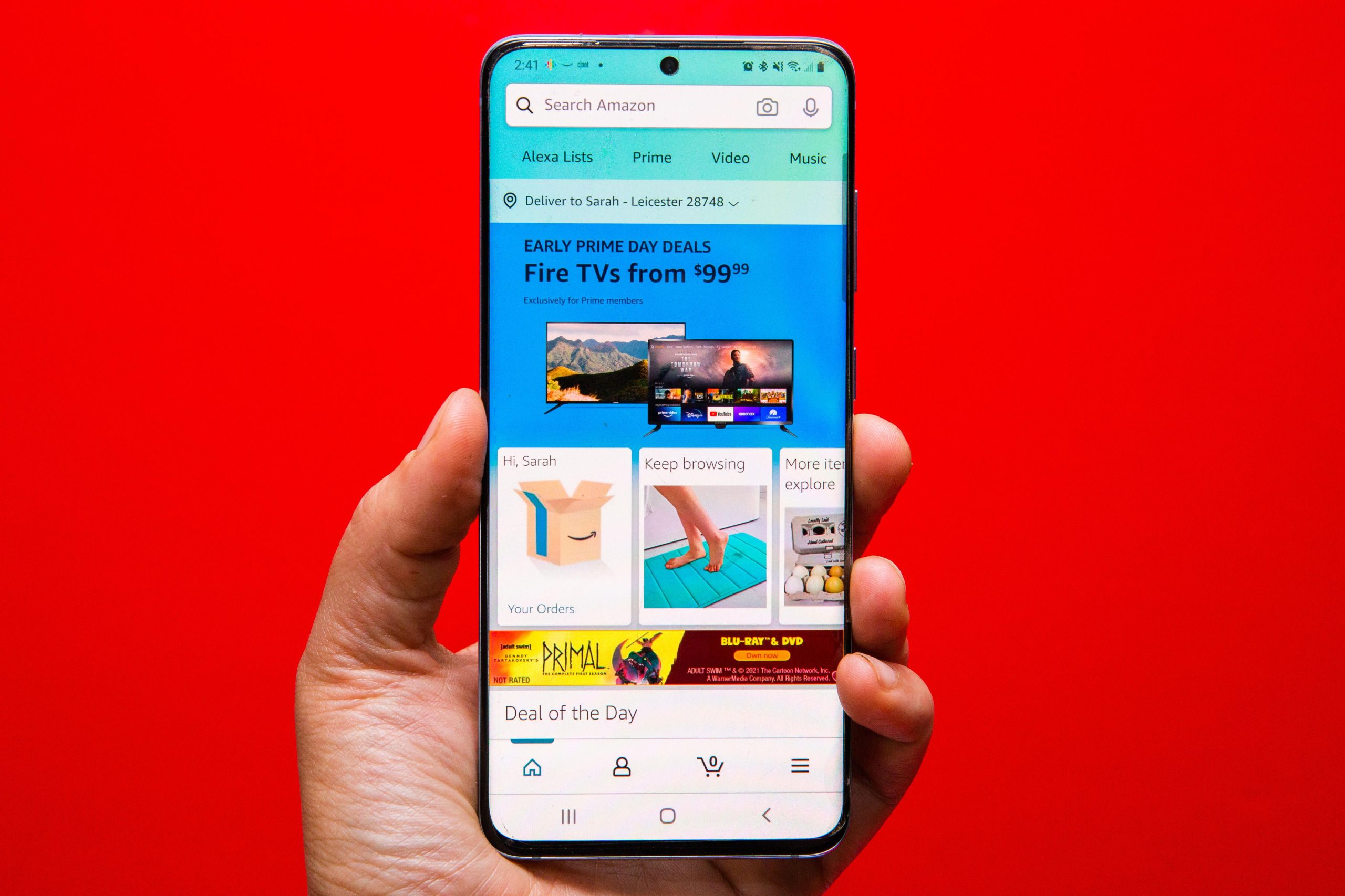
Amazon has made a name for itself as the supplier of just about anything. But in addition to two-day and even same-day shipping for Amazon Prime members, the trillion-dollar tech titan has dozens of other services just a few clicks away from the homepage. Some, like Amazon Prime Video and Prime Music, make headlines. Others tend to get buried in the vastness of Amazon’s super site. We’re here to help uncover the best of the bunch.
Amazon expanded its reach during the pandemic — with visits increasing 37% from February 2020 to January 2021 — as it pushed new programs, including Amazon Sidewalk, the auto-on broadband-sharing program for Amazon Echo speakers and Ring devices. But its shopping services continue to be its bread and butter.
For avid Amazon shoppers, a heap of lesser known features can score you big perks if you know where to look, including steep discounts on expensive items and free books. We’ve scouted Amazon’s jungle of services to find the most useful (and surprising) Amazon programs that you can use today.
Read more: Amazon Prime Video: The 25 best films to see this week
1. Free reading with Prime Reading and Kindle Unlimited
Prime Reading is your own personal lending library that comes with a Prime membership. With a rotating selection of over 2,500 books and magazines, you can access Prime Reading with the Kindle app on your desktop or portable device or your Kindle e-reader. This Amazon service also lets you share titles with members of your household. Some books in Prime Reading come with Audible narrations so you can multitask while you listen.
Prime Reading also includes First Reads, which gives members a sneak peek at books before they’re released to the general public.
Kindle Unlimited is a $10-a-month subscription service separate from an Amazon Prime account. It gives you unlimited access to more than 1 million ebooks and up to three magazine subscriptions on a Kindle device or Kindle app.
2. Trade in used devices to redeem gift cards and shop preowned, discounted products
Amazon is boarding the train to sustainability station, and it’s something you can directly benefit from. With Amazon Trade-In, you can send back your used electronics in exchange for Amazon gift cards. Make sure to check on the eligibility of each product — some trade-in options are only available for a limited time.
Amazon Renewed gives you access to products that may have been opened but unused by their original owners, or were refurbished. Amazon assures that these preowned items work and look like new, coming with the Amazon Renewed Guarantee. A variety of products and brands are available, even from premium names like Apple and Vitamix.
3. Shop Amazon’s Warehouse items at a discount
Amazon Warehouse resells millions of like-new or preowned items that have been returned by customers. Some of the products only had their boxes opened by original purchasers before they were sent back, unused, so they’re sold again at a discount. While there’s no regular manufacturing warranty on these products, they are backed by Amazon’s 30-day return policy and 90-day renewed item return policy.
To read more about how you can get the most out of Amazon Warehouse, check out our guide on shopping for the best deals on Amazon Warehouse.
4. Find discounts on overstock in Amazon Outlet
Just like a brick-and-mortar outlet store, but without the gas money. The Amazon Outlet features overstocked items and other products at a discounted price. Like at an outlet, you can find premium brands, items under $10 and products ranging from home furniture and clothing to books and pet supplies. It’s a good place to stay within a budget while being the first owner, unlike some items in the Amazon Warehouse.
Keep in mind that although the online shopping experience is convenient, just like an outlet, the best deals sometimes take some sifting to find. Luckily, you can do it from the couch.
5. Discover limited-time offers with Lightning Deals
Amazon’s Lightning Deals are a promotion where a product or service is on sale for a short period of time or until it’s sold out. You can find them all throughout the site, but especially on Prime Day and in Today’s Deals. On Prime Day, Lightning Deals are only for Prime members.
There is one lightning deal per customer until the promotion ends or all the deals are claimed by other shoppers. You can join a waitlist for a deal, but keep in mind that these discounts are extremely time-sensitive, so grab them fast. Unless refreshing the page over and over is your thing, these deals aren’t necessarily the tool to find something specific because of their fleeting nature and limited availability.
6. Back up photos and videos with Amazon Photos
Amazon’s online shoebox for photos and videos offers secure and unlimited full-resolution photo storage plus 5 GB of video for Prime members. To use this feature, you can choose to manually or automatically upload media in the Amazon Photos app. You can personalize the displays on Amazon devices like Fire TV, Echo Show and Fire tablets as long as you have the app. There are also ways to create keepsakes using the pictures you upload, such as custom cards and prints.
With the Family Vault perk, up to five family members can share in the same plan. If you want more beyond what Prime offers, there are paid plans available. If you choose to switch — which can be done anytime — there is a 100GB option for $2 per month and 1TB plan for $7 per month.
7. Share Prime benefits with Amazon Household
Sharing is caring, and Amazon Household lets you divvy up Prime benefits and digital content with others. Using Household, share your Prime account with:
- Up to two adults (aged 18 and over), each with their own Amazon account. Adults can manage accounts of teens and children.
- Up to four teens (ages 13 through 17). Teens can have their own Amazon login to shop with parent approval and stream content.
- Up to four children (children can’t shop on Amazon).
8. Shop exclusive discounted Whole Foods hauls
Healthy shopping can rack up the number at the bottom of the receipt. But if you enter your email address, phone number or scan the QR code on your Whole Foods Market app at checkout during your next grocery haul, Prime members receive discounts on select products.
Blue tags indicate sales exclusive to Prime members, while yellow tags mean an extra 10% off of an item already on sale. This gets you discounts on weekly best-sellers, including produce, packaged goods and beauty products, but note that it excludes alcohol. The few cents saved on items may seem insignificant individually, but savings do add up at the end of the shopping trip.
Also, if you don’t want to make the trip across town, Amazon offers two-hour delivery of groceries for free, as long as you meet the minimum purchase amount. But if you don’t mind the drive, there are also one-hour pickup windows depending on your location — just remember to check in with the Amazon app to see if you need to enter the store.
9. Build a wish list with Prime’s wedding registry
If the big day is coming up, Amazon’s wedding registry can get a gift wish list set up for everything from daily essentials to group presents. Amazon can help you cover all the gifting bases, and that makes it a convenient option for you and your wedding guests.
The registry includes lists of editors’ picks and best sellers to help you sort through Amazon’s options, while the browsing feature can inspire new ideas or highlight something you may have forgotten about. You can also buy any item that’s left on the registry for 20% off — which can be returned within 180 days if you decide you don’t like it.
For more, here are our picks for the best Alexa devices and which e-reader is right for you.
Technologies
In Honor of the Artemis II Mission, Explore the Moon in Fortnite Now
You might not be able to see the moon the way the Artemis II team is, but there’s an educational Fortnite simulation that will get you onto the celestial body’s surface.

You may not be able to explore the vast majesty of space in the same way that the four-person crew of the Artemis II is, but you can still get an up-close-and-personal view of the moon… in Fortnite, at least.
While you may not be able to slingshot around Earth’s own lunar body, space enthusiasts can see a little bit of what the Artemis II crew is seeing by spending time on the Lunar Horizons Fortnite map right now. The map is a creative collaboration between Fortnite’s creator, Epic Games, and the European Space Agency. Lunar Horizons was released in 2024 after extensive testing and play from ESA trainee astronauts.
If you’re looking to learn more about our own orbiting body, the Lunar Horizons map is an educational simulation of the surface of the moon’s South Pole.
It blends game mechanics with learning, as players get to build up their own sterile lunar habitat bases, interact with ESA astronauts and roll around with robotic rovers as they discover informative plaques that contain information about the moon and international space agencies. There are still dangers to navigate, too — a solar storm may strike when you least expect it.
If you’re interested in exploring the moon, we’ve got all the information you need to join in on the Fortnite fun below. And if you’re looking for a more serious livestream during this momentous human achievement, tune into NASA’s feed here.
How to join the Moon Fortnite island while you follow the Artemis II mission
The Lunar Horizons Fortnite map is a great educational simulation that shares details about ESA’s work and catalogs information about humanity’s lunar research.
These three simple steps will get you up and running (or more accurately, taking slow leaps and bounds) on the surface of the Lunar Horizons Fortnite map:
Download Fortnite
If you haven’t played Fortnite before, but you want to check out this limited-time event, you’ll have to download the game. If you’re on PC, you can download Fortnite for free from the Epic Games Store. Console players can navigate the PlayStation Store, Microsoft Store or Nintendo eShop in order to download Fortnite on their devices.
Navigate the in-game menus until you reach the Search button
Once you’re in the game, scroll down past the different official Fortnite game modes and the Discover tab until you find the Search button.
Input the Lunar Horizons island code
In the search bar, you can input a map’s name or its distinct search code in order to find it in the map directory. You can search for the Lunar Horizons map or input the code 3207-0960-6428 to explore this map in time.
Correction, 3:35 p.m. PT: This story initially was in error about the features available in the Lunar Horizons map. There is no Artemis II-specific mission in Fortnite. Rather, the Lunar Horizons map is an educational simulation of part of the moon’s surface.
Technologies
Today’s NYT Connections: Sports Edition Hints and Answers for April 7, #561
Here are hints and the answers for the NYT Connections: Sports Edition puzzle for April 7, No. 561.
Looking for the most recent regular Connections answers? Click here for today’s Connections hints, as well as our daily answers and hints for The New York Times Mini Crossword, Wordle and Strands puzzles.
Today’s Connections: Sports Edition is a fun mix of categories, and the purple one cracked me up. If you’re struggling with today’s puzzle but still want to solve it, read on for hints and the answers.
Connections: Sports Edition is published by The Athletic, the subscription-based sports journalism site owned by The Times. It doesn’t appear in the NYT Games app, but it does in The Athletic’s own app. Or you can play it for free online.
Read more: NYT Connections: Sports Edition Puzzle Comes Out of Beta
Hints for today’s Connections: Sports Edition groups
Here are four hints for the groupings in today’s Connections: Sports Edition puzzle, ranked from the easiest yellow group to the tough (and sometimes bizarre) purple group.
Yellow group hint: Fore!
Green group hint: Hockey Night in Canada.
Blue group hint: Meteorologist favorites.
Purple group hint: And they’re off!
Answers for today’s Connections: Sports Edition groups
Yellow group: Golf scoring terms.
Green group: Canadian NHL teams.
Blue group: Weather-themed teams.
Purple group: Things that race at MLB games.
Read more: Wordle Cheat Sheet: Here Are the Most Popular Letters Used in English Words
What are today’s Connections: Sports Edition answers?
The yellow words in today’s Connections
The theme is golf scoring terms. The four answers are birdie, bogey, eagle and par.
The green words in today’s Connections
The theme is Canadian NHL teams. The four answers are Canadiens, Canucks, Oilers and Senators.
The blue words in today’s Connections
The theme is weather-themed teams. The four answers are Hurricanes, Lightning, Storm and Thunder.
The purple words in today’s Connections
The theme is things that race at MLB games. The four answers are pierogis, presidents, sausages and the freeze.
Technologies
Trump Administration Bans Chinese Routers. Phones and Cameras Could Follow
Major companies, including Huawei and Hikvision, could see the last of their import orders cut off from the US within 30 days of implementation.
The Federal Communications Commission continued its crackdown on Chinese tech on Friday, issuing a new proposal that would extend a ban on companies to products previously authorized.
In 2021, companies such as Huawei, Hikvision, Dahua, Hytera and ZTE were added to the FCC’s Covered List, a record of companies and products that the FCC believes pose a national security risk to the US, under the Secure Networks Act. The Chinese companies produce mobile phones, security cameras and other tech products.
But the 2021 ban applied only to new models that the FCC hadn’t authorized, and companies were free to keep selling models that had already received the FCC’s stamp of approval. If approved, the new proposal would ban these companies entirely, including those previously approved products.
«Older models of covered equipment pose an unacceptable risk today when imported or marketed in the United States, not only when such equipment is new to the market,» an FCC report from October said.
The proposal will be open for comment until May 6, after which the commission will vote on whether to adopt the rules. The ban won’t affect devices already owned by Americans.
Read more: My Expert Advice: Don’t Buy a Router Until We Know More About the FCC’s Ban
Millions of consumers and businesses rely on Wi-Fi routers, telecommunications equipment and security cameras every day, making these devices critical links in both home and office networks. The Federal Communications Commission shocked the broadband industry on March 23 by effectively banning the sale of future foreign-made Wi-Fi routers (including some of the biggest router brands).
In recent years, Chinese telecommunications companies have faced restrictions on operating in the US. In 2020, The Wall Street Journal cited US officials who reportedly said that Chinese companies, including Huawei, used backdoor access intended for law enforcement to track sensitive information.
But this ban could be implemented quickly. The FCC proposes that «all parties [will have to] cease all importation and marketing activities within 30 days of the effective date of the prohibition.»
This proposition doesn’t reflect a final legal ruling on telecommunications imports, but it does reflect how the Trump administration has been increasingly pressuring Chinese tech companies in recent months.
The foreign-made router ban was only the latest in a string of decisions that have placed restrictions on Chinese tech companies operating in the US.
In December, the FCC banned the importation of Chinese-made drones into the US. Just months before that, the agency voted to block new approvals for any device containing parts manufactured by companies on the Covered List.
Representatives from the FCC and Huawei didn’t immediately respond to requests for comment. The White House didn’t immediately respond to a request for comment.
-
 Technologies3 года ago
Tech Companies Need to Be Held Accountable for Security, Experts Say
-
 Technologies3 года ago
Best Handheld Game Console in 2023
-
 Technologies3 года ago
Tighten Up Your VR Game With the Best Head Straps for Quest 2
-
 Technologies4 года ago
Black Friday 2021: The best deals on TVs, headphones, kitchenware, and more
-
 Technologies5 лет ago
Google to require vaccinations as Silicon Valley rethinks return-to-office policies
-
 Technologies5 лет ago
Verum, Wickr and Threema: next generation secured messengers
-
 Technologies4 года ago
Olivia Harlan Dekker for Verum Messenger
-
 Technologies4 года ago
The number of Сrypto Bank customers increased by 10% in five days