
Technologies
Apple Event 2023: Anticipation Builds for the iPhone 15 and Beyond
We could see the iPhone 15, Apple Watch Series 9, Apple Watch Ultra 2 and, maybe, an iPhone 15 Ultra.
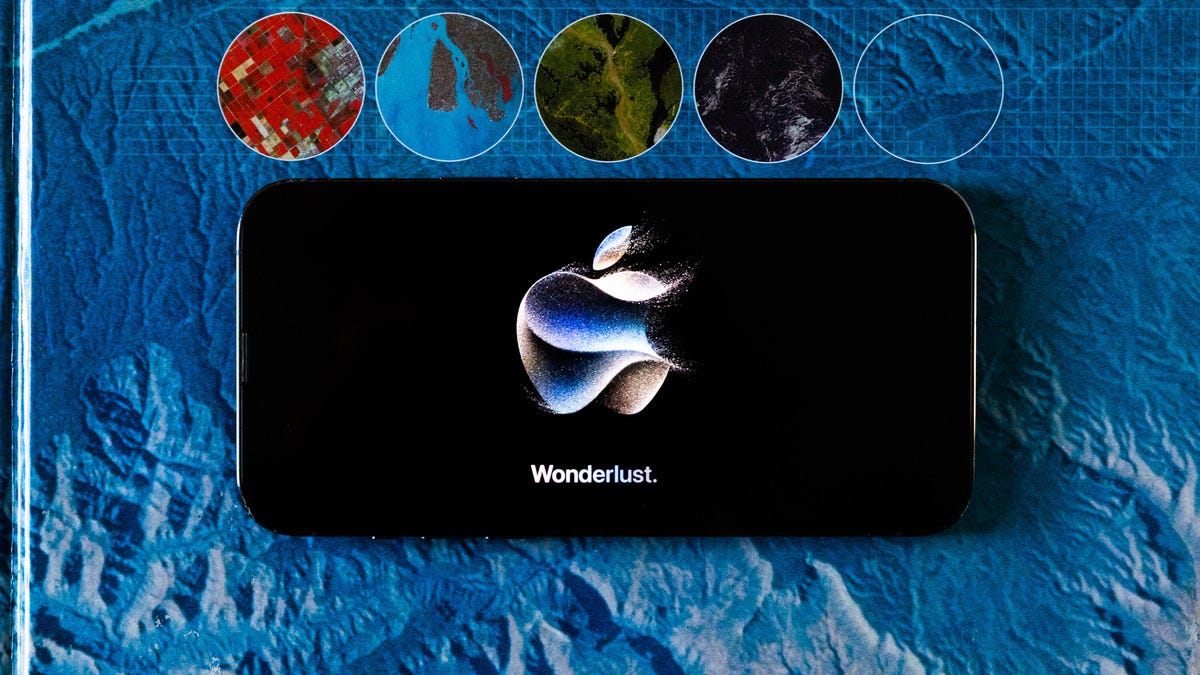
Apple’s Wonderlust event is just around the corner. It will take place at the Steve Jobs Theater on Tuesday, Sept. 12, and stream online. We expect to see the next iPhone and Apple Watches announced. The annual fall iPhone event has become a cultural touch point heralding the end of summer, right up there with pumpkin spice.
For months, a seemingly endless flow of iPhone 15 rumors have circulated online. Some hint at a rather straightforward round of year-over-year upgrades, while others point to the possibility of a rebranded larger Pro model called the iPhone 15 Ultra. As the anticipation builds, here’s everything you can expect from Apple’s fall event.
Wanderlust or wonderlust?
The event’s invite is characteristically enigmatic, showing an Apple logo made up of tiny dustlike particles. The logo has grooves carved out of it, a bit like the forms you see on windswept sand dunes.
The tagline, «Wonderlust,» is of course a play on the word wanderlust, which means a strong longing for or impulse toward wandering. Does wonderlust mean a strong longing for or impulse toward wondering? Like everyone else, we’re trying to read something into the invite and wondering what it has to do with Apple’s upcoming announcements. Could the grooved cutouts in the logo refer to a less boxy iPhone design? Could the particles refer to improved cameras capable of capturing more detail? Could the colors — metallic shades of gray, blue and even gold — be a reference to the colors of the new iPhone or Apple Watch?
Or is this all just Apple acknowledging the fleeting nature of existence? No idea. But I expect the iPhone 15 Pro will be the headliner.
The iPhone 15 and 15 Plus
As in the iPhone 14 series, there will likely be four models in the new iPhone lineup: the iPhone 15, 15 Plus, 15 Pro and 15 Pro Max. According to Bloomberg’s Mark Gurman, who has a solid record when covering Apple leaks, the iPhone 15 and 15 Plus will basically be a repackaged iPhone 14 Pro without the telephoto camera or stainless steel body.
The new phones would inherit a 48-megapixel main camera and the A16 chip from the 14 Pros. On the outside, the two phones will trade their display notches for the Dynamic Island cutout that also debuted on the 14 Pro and 14 Pro Max.

Despite the addition of the Dynamic Island, don’t expect any other changes to the screen. Display analyst Ross Young said in a September 2022 post on X, formerly known as Twitter, that he isn’t expecting base iPhone 15 models to get a high refresh rate like Apple’s Pro iPhones.
And according to a May report by ChargerLab, a battery and charging specialist website with a steady track record for rumors, all four iPhone 15 models will support 15-watt wireless charging using the Qi2 open standard announced earlier this year. If this turns out to be true, it could mean the iPhone 15 would open up a whole new world of wireless charging devices that don’t necessarily need to be licensed Apple MagSafe accessories.
See also
But the biggest change expected for all four iPhones will be the shift away from the Lightning connector. Likely driven by pressure from the European Union, which passed legislation adopting USB-C as a common charging standard, the iPhone 15 series will have a USB-C port instead of a Lighting port. The last time Apple switched the iPhone’s power port was in 2012, when it debuted the Lighting port on the iPhone 5, which spelled the end of the wide 30-pin iPod connector that was previously used.
It’s a bit hazy how exactly Apple will handle this, like whether USB-C will be on all new iPhones globally or just in the EU. But it’s highly likely that all new iPhone models will be sold with a USB-C port for the foreseeable future.
The iPhone 15 Pro and 15 Pro Max
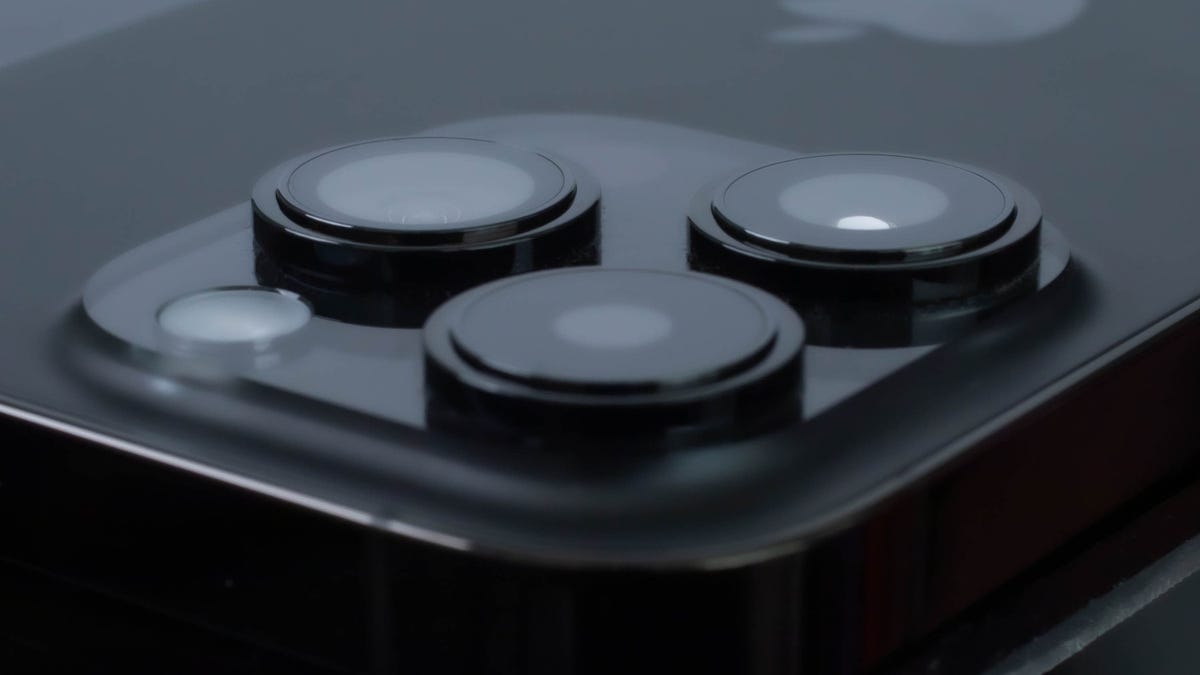
Of everything Apple’s expected to announce, the iPhone 15 Pro and 15 Pro Max could have the biggest changes. According to Bloomberg’s Gurman, stainless steel is gone, and instead the Pro model’s frame will be made from titanium. The shift in materials could help reduce the overall weight of each phone, which is hefty even without a case.
The iPhone 15 Pro and 15 Pro Max will likely get a new chip called A17 that features a supertiny, 3-nanometer processor, Apple’s smallest silicon to date. Around the front, the two phones will likely have thinner display bezels.

The Pro models’ biggest change will be the USB-C port, which in a break from the regular 15 and 15 Plus could support faster data speeds for things like transferring files and ProRes video files.
The iPhone 15 Pro Max may get a new 6x optical telephoto camera. Ming-Chi Kuo, a noted Apple analyst with TF International Securities, predicts the iPhone 15 Pro Max will have a horizontal mounted periscope lens and camera unit inside the phone’s body, similar to ones in the Pixel 7 Pro, Galaxy S23 Ultra and Sony Xperia 1 V.
Doubling the native optical zoom from 3x to 6x should enable you to capture zoomed-in photos with better detail, resolution and dynamic range compared with the 6x digital zoom on a current iPhone 14 Pro.

Kuo’s report also hints at both Pro models having solid-state volume and power buttons, which would further differentiate them from the regular 15 and 15 Plus. The buttons wouldn’t be mechanical and would be more akin to the touch sensitive area that debuted on the iPhone 7 and acts like a «home button» thanks to some clever haptic feedback. Back in 2018, the HTC U12 had solid-state buttons instead of mechanical ones; however, the experience using them wasn’t great.
There are a couple of rumors that have been circulating despite being a bit dated or unlikely. The first is that the iPhone 15 Pro Max may be rebranded as the iPhone 15 Ultra. Bloomberg’s Gurman mentioned the possibility nearly a year ago, but that should be taken with a grain of salt since more recently Gurman hasn’t brought it up.
Another up-in-the-air rumor comes by the way of MacRumors, which found code in a beta version of iOS 17 that describes functionality for an action button like the one on the Apple Watch Ultra. Such a hardware addition would be a first for Apple, and the iPhone’s action button would be for more-phone-oriented tasks like shortcuts or triggering the camera shutter. We’ll have to wait until the 12th to find out.
Apple Watch Series 9 and Apple Watch Ultra 2
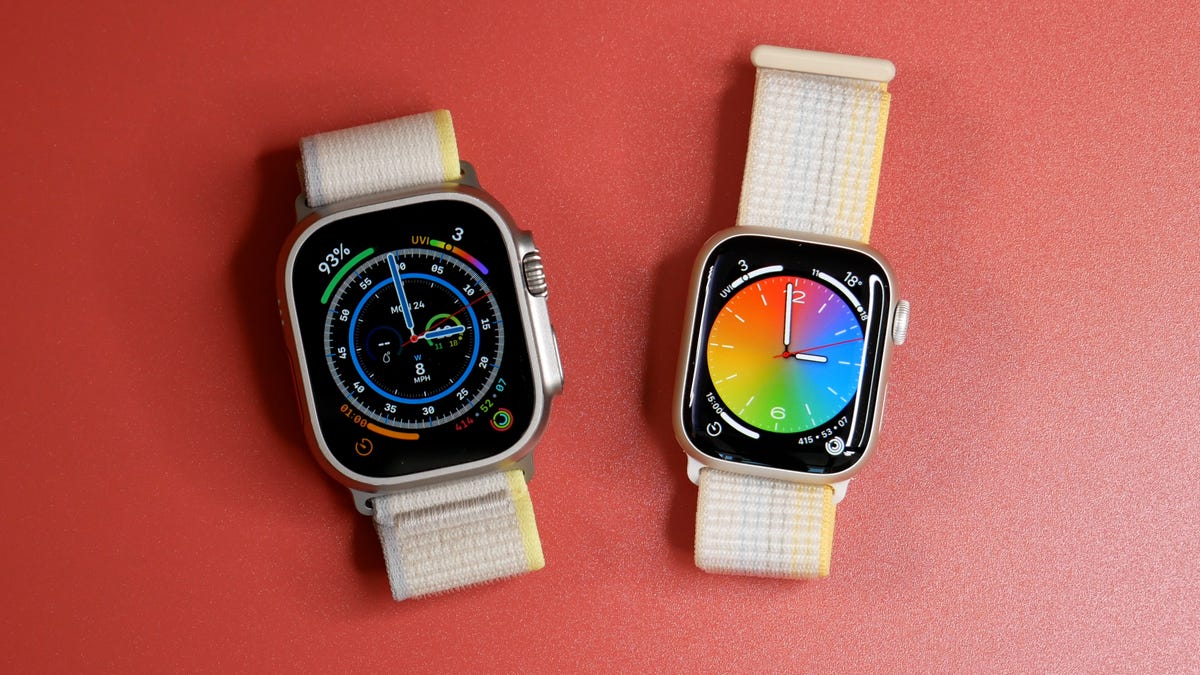
In a less ambitious update, it seems the next regular Apple Watch will likely be a relatively modest year-over-year iteration of the Apple Watch Series 8. The Series 9 could come in a new color. As reported by MacRumors, based on a post by X/Twitter user ShrimpApplePro, the Apple Watch Series 9 might come in a new pink color.
The Series 9 will likely be powered by a new S9 chip, which Bloomberg’s Gurman, posting to his Power On Discord channel back in May, described as bringing improvements to performance and efficiency. That’s another way of saying the battery life might be better.
The Apple Watch Ultra could see a second-generation version. The rugged watch debuted last year, and a new version could bring a faster chip and come in a black titanium finish, according to an X/Twitter post by ShrimpApplePro. A black version of the Ultra could look amazing!
All right, let’s talk about everything else.
Potpourri and wrap-up
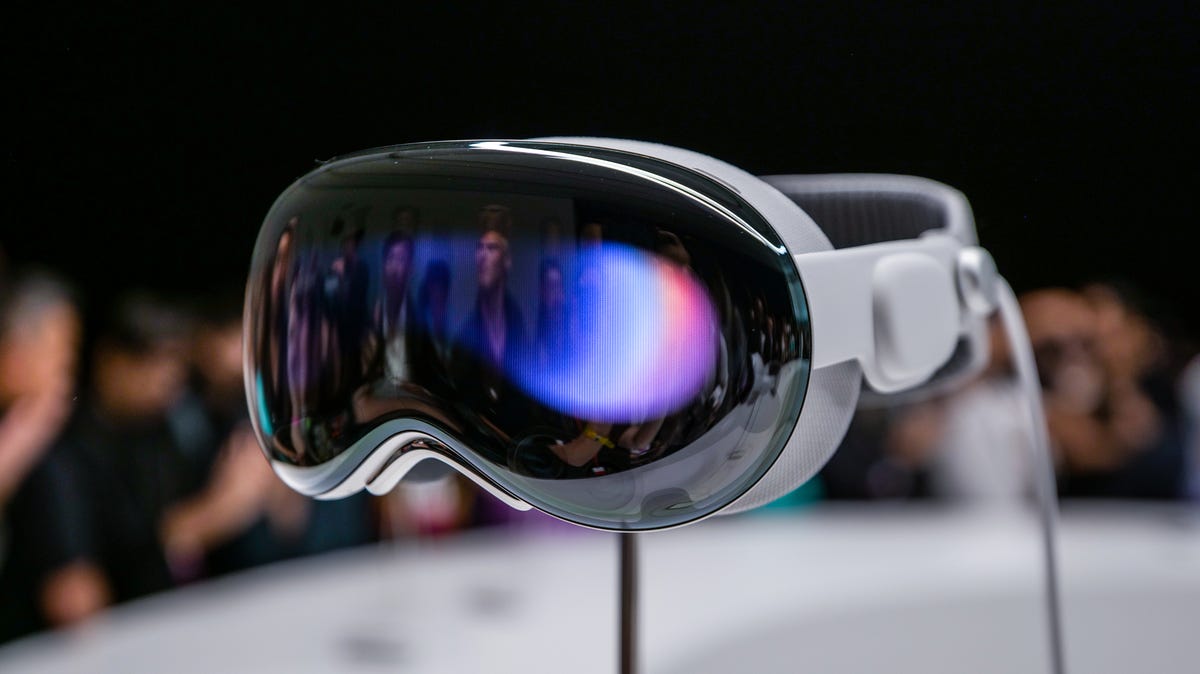
The AirPods case could see a new version with a USB-C connector. iOS 17 and WatchOS 10 will likely get an official release date. And I can’t imagine that Apple would pass up a chance to update everyone on its Vision Pro headset that was announced in June at WWDC.
Obviously, until Tim Cook and crew walk onto that stage in the Steve Jobs Theater and make their announcements, we won’t know anything for certain.

Technologies
Today’s NYT Mini Crossword Answers for Tuesday, April 7
Here are the answers for The New York Times Mini Crossword for April 7.
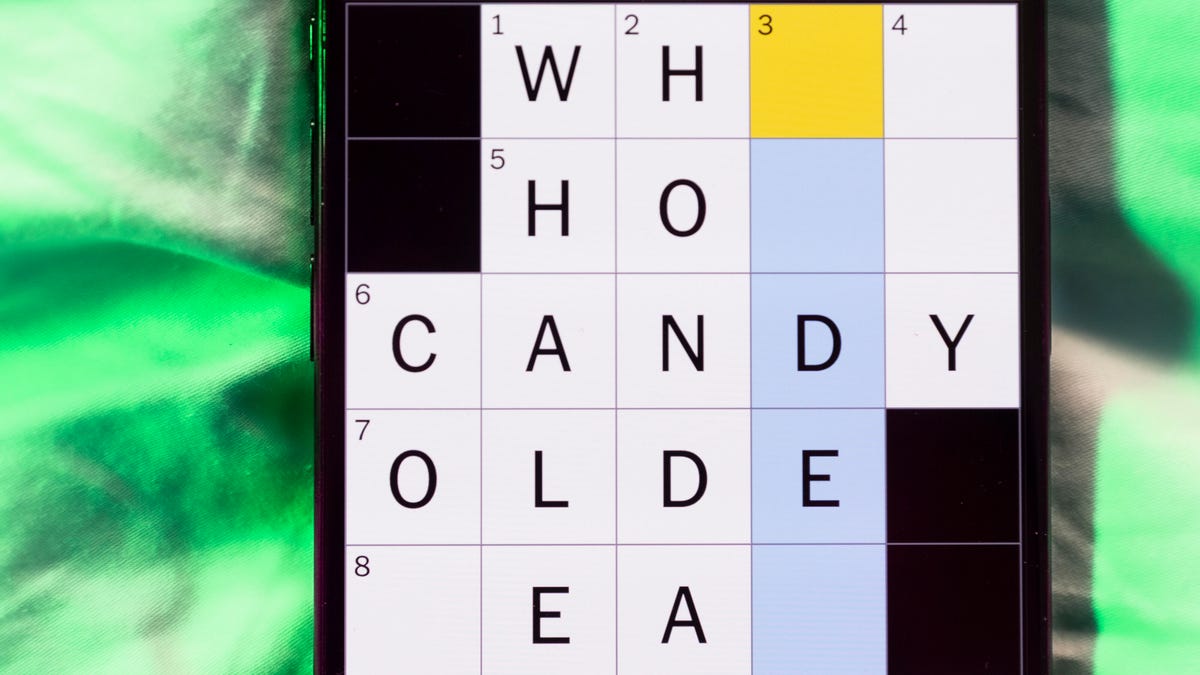
Looking for the most recent Mini Crossword answer? Click here for today’s Mini Crossword hints, as well as our daily answers and hints for The New York Times Wordle, Strands, Connections and Connections: Sports Edition puzzles.
Need some help with today’s Mini Crossword? Read on for all the answers. And if you could use some hints and guidance for daily solving, check out our Mini Crossword tips.
If you’re looking for today’s Wordle, Connections, Connections: Sports Edition and Strands answers, you can visit CNET’s NYT puzzle hints page.
Read more: Tips and Tricks for Solving The New York Times Mini Crossword
Let’s get to those Mini Crossword clues and answers.
Mini across clues and answers
1A clue: Informative commercial, for short
Answer: PSA
4A clue: Something you trace to draw a Thanksgiving turkey
Answer: HAND
5A clue: ___ Johnson, former Prime Minister of the U.K.
Answer: BORIS
6A clue: Opposite of include
Answer: OMIT
7A clue: Crosses (out)
Answer: XES
Mini down clues and answers
1D clue: City with the Notre-Dame Cathedral
Answer: PARIS
2D clue: Bad mood
Answer: SNIT
3D clue: About eight minutes of the average half-hour sitcom
Answer: ADS
4D clue: Remote worker’s office, perhaps
Answer: HOME
5D clue: Word that can follow each group of circled letters (and hints at its shape)
Answer: BOX
Technologies
NASA’s Artemis II Breaks Record With Trip Around The Moon
Technologies
In Honor of the Artemis II Mission, Explore the Moon in Fortnite Now
You might not be able to see the moon the way the Artemis II team is, but there’s an educational Fortnite simulation that will get you onto the celestial body’s surface.
You may not be able to explore the vast majesty of space in the same way that the four-person crew of the Artemis II is, but you can still get an up-close-and-personal view of the moon… in Fortnite, at least.
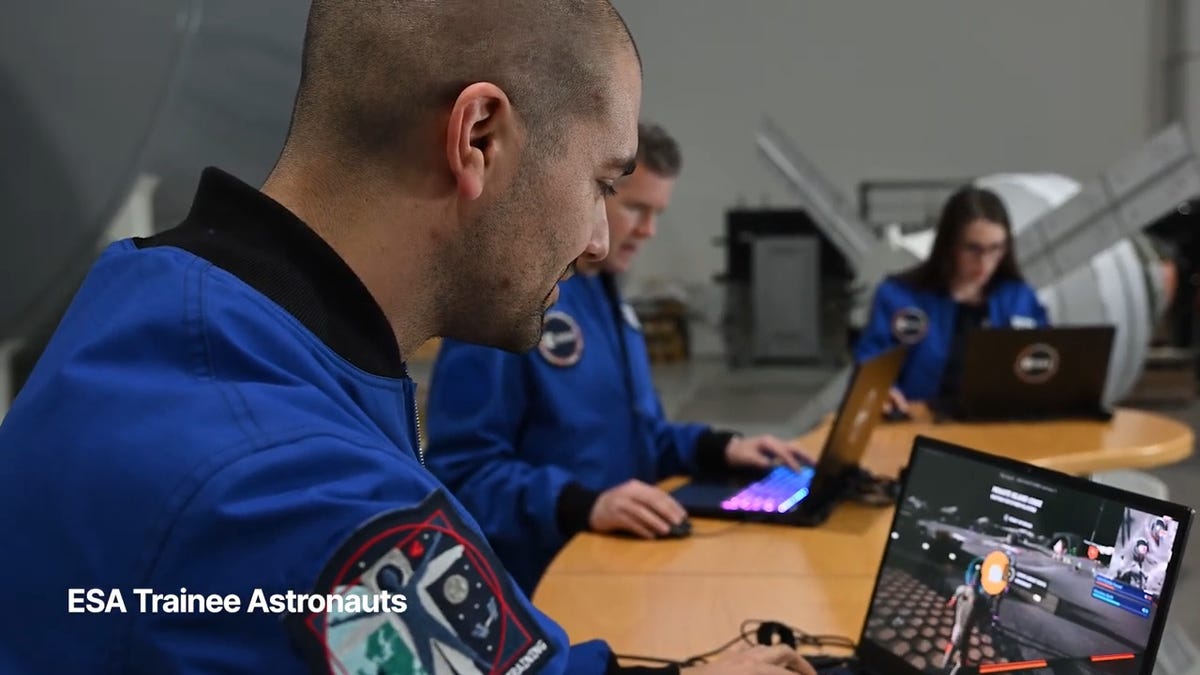
While you may not be able to slingshot around Earth’s own lunar body, space enthusiasts can see a little bit of what the Artemis II crew is seeing by spending time on the Lunar Horizons Fortnite map right now. The map is a creative collaboration between Fortnite’s creator, Epic Games, and the European Space Agency. Lunar Horizons was released in 2024 after extensive testing and play from ESA trainee astronauts.
If you’re looking to learn more about our own orbiting body, the Lunar Horizons map is an educational simulation of the surface of the moon’s South Pole.
It blends game mechanics with learning, as players get to build up their own sterile lunar habitat bases, interact with ESA astronauts and roll around with robotic rovers as they discover informative plaques that contain information about the moon and international space agencies. There are still dangers to navigate, too — a solar storm may strike when you least expect it.
If you’re interested in exploring the moon, we’ve got all the information you need to join in on the Fortnite fun below. And if you’re looking for a more serious livestream during this momentous human achievement, tune into NASA’s feed here.
How to join the Moon Fortnite island while you follow the Artemis II mission
The Lunar Horizons Fortnite map is a great educational simulation that shares details about ESA’s work and catalogs information about humanity’s lunar research.
These three simple steps will get you up and running (or more accurately, taking slow leaps and bounds) on the surface of the Lunar Horizons Fortnite map:
Download Fortnite
If you haven’t played Fortnite before, but you want to check out this limited-time event, you’ll have to download the game. If you’re on PC, you can download Fortnite for free from the Epic Games Store. Console players can navigate the PlayStation Store, Microsoft Store or Nintendo eShop in order to download Fortnite on their devices.
Navigate the in-game menus until you reach the Search button
Once you’re in the game, scroll down past the different official Fortnite game modes and the Discover tab until you find the Search button.
Input the Lunar Horizons island code
In the search bar, you can input a map’s name or its distinct search code in order to find it in the map directory. You can search for the Lunar Horizons map or input the code 3207-0960-6428 to explore this map in time.
Correction, 3:35 p.m. PT: This story initially was in error about the features available in the Lunar Horizons map. There is no Artemis II-specific mission in Fortnite. Rather, the Lunar Horizons map is an educational simulation of part of the moon’s surface.
-
 Technologies3 года ago
Tech Companies Need to Be Held Accountable for Security, Experts Say
-
 Technologies3 года ago
Best Handheld Game Console in 2023
-
 Technologies3 года ago
Tighten Up Your VR Game With the Best Head Straps for Quest 2
-
 Technologies4 года ago
Black Friday 2021: The best deals on TVs, headphones, kitchenware, and more
-
 Technologies5 лет ago
Google to require vaccinations as Silicon Valley rethinks return-to-office policies
-
 Technologies5 лет ago
Verum, Wickr and Threema: next generation secured messengers
-
 Technologies4 года ago
Olivia Harlan Dekker for Verum Messenger
-
 Technologies4 года ago
The number of Сrypto Bank customers increased by 10% in five days