
Technologies
Tech Clutter Overload: New CNET Survey Shows 31% of US Adults Hang On to Old Devices
Despite incentives for selling and trading in tech devices, a large number of phones, computers and game consoles end up neglected and unused.
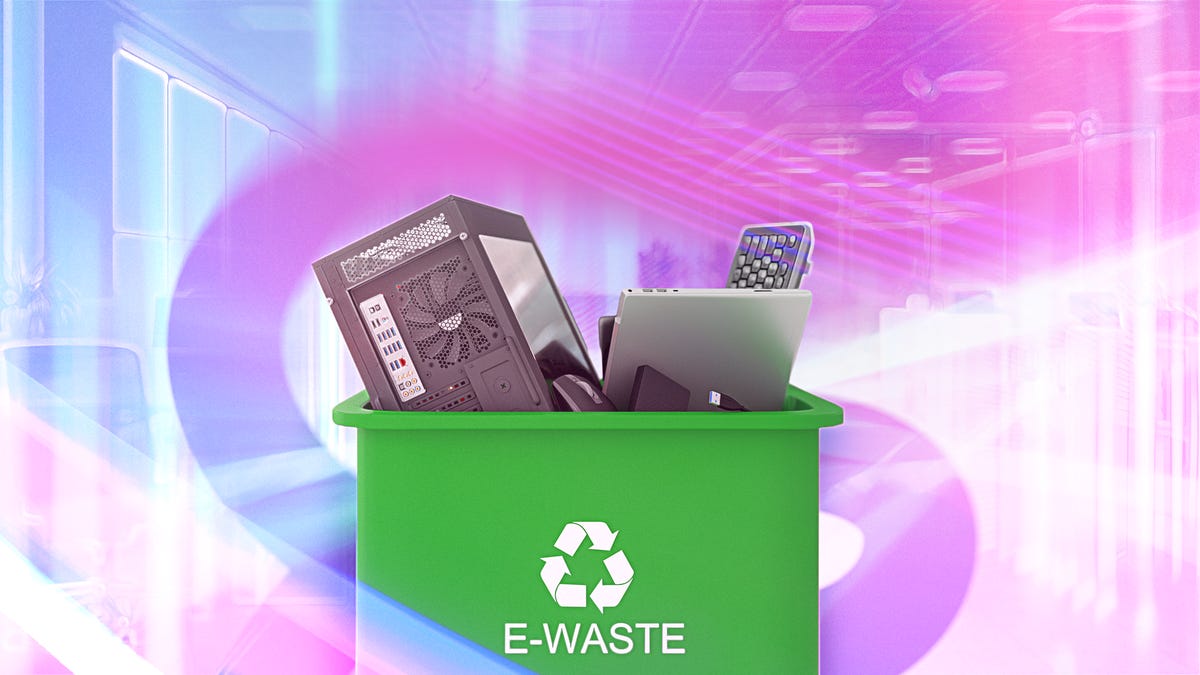
Whether you’re upgrading to the latest iPhone or Samsung Galaxy phone, or snagging a new ultralight laptop for work on the go, the joy of gaining that powerful technology comes with a small burden — what to do with your old smartphone or computer? For a large number of people, the answer is “nothing.”
A recent CNET survey reveals that over three in 10 (31%) US adults hang onto old devices, because they aren’t sure what to do with smartphones, video game consoles, laptops and other tech accessories they no longer use. Nearly one in five (19%) US adults throw away these devices. However, many prefer to trade in their old devices for an exchange or upgrade (37%), while 25% are selling them.
With tariffs expected to drive up electronics prices, there are still ways to save money on new tech, and selling your old devices can help offset the cost. If your device is broken or too outdated to sell, experts recommend using an electronics recycling service to avoid polluting the environment and so valuable materials like copper and aluminum can be reused.
Here’s what the latest CNET survey found about how US adults are disposing of tech they don’t want anymore and tips for what you can do with yours.
Key takeaways:
- 31% of US adults are still holding on to old tech devices because they’re not sure what to do with them.
- 37% of Americans trade in or exchange their old devices, while 25% sell them.
- 29% use a recycling service to dispose of old tech, while 19% toss old devices in the trash.
Over one-third of US adults trade in or exchange their old tech
Many US adults (37%) trade in smartphones, gaming devices, laptops and accessories for another device or an upgrade. That can come in handy if a retailer offers a discount on the new gadget in exchange for the trade.
Other popular disposal methods include giving it to a loved one or recycling it. Some US adults even try selling their devices, which can bring in some extra cash. Here’s a closer look at some common disposal methods based on CNET’s survey.
Read more: Spring Cleaning? Free Expert Tech Recycling Tips for a Greener Home
How to maximize the value of your smartphone trade-in
One-third of US adults trade in their smartphones for an exchange or upgrade to lower the price of a new one. Others use a recycling service or give the old device away. Here’s a closer look.
If you plan to trade an old device, start with your phone carrier, said Patrick Holland, CNET’s managing editor for mobile. Many manufacturers, like Apple and Samsung, will partner with carriers to offer steep discounts on a new model when you trade in an old one.
“These deals usually happen within the first month a new phone goes on sale and can sometimes cover the entire price — just depends on how old and what condition the phone you’re trading in is,” he said. Some manufacturers may offer steeper discounts during the preorder period before a new phone is released, Holland added.
The longer you wait to trade in your device, the less you’re likely to get. For example, if you’re upgrading to the iPhone 16, you may need an iPhone 12 Pro or newer model to get a full promotional offer. Check your retailer’s trade-in requirements to make sure your device qualifies.
Most importantly, make sure your device works and is in good condition, with minimal scratches or cracks. You may also compare trade-in offers by getting estimates from different retailers and carriers for the best deal.
If your phone doesn’t qualify for a trade-in offer, or if you think the offer is too low, consider selling your phone. CNET experts recommend Swappa, an online marketplace to sell and buy used electronics. Swappa helps you set your price fairly by comparing similar models and features to yours. But there are other options to consider, too.
“I’ve had a lot of luck on eBay and Gazelle,” Holland said. “Selling a phone on eBay can involve a little work and take some time, but you’ll usually get more money there.”
Gazelle and similar resale sites are usually quicker than selling on eBay or Facebook Marketplace. but you may get less money for your device, Holland said. You can also trade in your tech with Best Buy’s trade-in program. And if your device’s value is too low, you can recycle it right at the store.
On the other hand, if you’re not looking to get any money back from your old phone, many retailers and carriers — like Apple, Best Buy and AT&T — will recycle it for free. It’s best to call the physical store to make sure in advance. Holland also recommends donating your old phone to charity, like Cell Phones For Soldiers, if the phone is in good, working condition.
Read more: Apple iPhone 16 Trade-In Tips: Getting Your Next Phone Using Your Old One
Many US adults recycle or gift old laptops and computers
By the numbers, nearly a quarter of US adults recycle their computers and computer accessories, while 18% give the old computer to family or friends. But 21% are unsure of what to do with the computer.
There are a few options, but regardless of how you discard, it’s important to remove your personal data first.
Before you recycle your laptop or give it away, CNET’s computing and home entertainment managing editor Josh Goldman recommends restoring it to its original condition to make sure your sensitive data is wiped from the machine.
“Remove any software you’re not using, delete any unnecessary files and update the operating system,” Goldman said. “Back up all your important files, write down all the software you need — and find the license keys if you paid for it — and do a full system reset to start fresh.”
Manufacturers typically offer free-to-download software for securely deleting data. Windows devices have a secure erase option built into the system. Finish by blowing out any dust and debris with a can of compressed air and cleaning the outside with a cloth that’s safe for electronics.
For extra protection, Goldman suggests removing the hard drive or solid-state drive from your computer and destroying it. “It’s not necessary, but it’s extra peace of mind,” Goldman said. If that’s not an option, he recommends resetting the laptop, then using software to erase the solid-state drive or hard disk drive.
You’re then free to gift or donate your device. Many communities offer free electronics recycling drop-off locations. Goldman recommends starting your search with the Department of Public Works in your city or county.
“If you’re not sure where to start, use Earth911.com‘s search. Just pop in your ZIP code and it’ll give you local options,” he said.
Many gamers opt to sell old consoles
When it comes to getting rid of unused video game systems, 17% of gamers prefer to sell their old consoles, followed by gifting them to family or friends (16%). If you no longer use a video game system, selling your old console could earn you some extra money. You just need to take a few precautions.
Scott Stein, CNET’s editor at large, cautions anyone selling a gaming console to a retailer to make sure they’re getting a fair price. You can also sell directly to buyers on eBay and community groups like Facebook Marketplace and Offer Up. He also recommends community groups as another way to sell.
When determining the price, assess the resale value and the condition of your accessories and console. You may also look at how other sellers are pricing their consoles to determine a fair price. Lastly, think about the value of your games and how rare they are — that could increase your console’s value.
Before selling or gifting a video game console, reset all content and account settings. Most importantly, remove any credit card payment information you may have stored on your account details. Most consoles have an easy reset-to-factory setting to make erasing your data easy.
Other ways to recycle old tech
Still struggling with where to get rid of devices you don’t want anymore? Major office supply stores like Staples and Office Depot offer recycling services, and so does Best Buy. Some stores even offer store credits in exchange for your old tech.
Check the list of accepted items before you go to the store. For example, larger monitors can be recycled for $20 at Staples, and while most personal tech is accepted, medical devices and TVs are a few items that aren’t.
Methodology
CNET commissioned YouGov Plc to conduct the survey. All figures, unless otherwise stated, are from YouGov Plc. Total sample size was 2,511 adults. Fieldwork was undertaken from March 26-28, 2025. The survey was carried out online. The figures have been weighted and are representative of all US adults (aged 18 and over).
Technologies
Anthropic warns investors of AI’s ‘existential risk to humanity’ in IPO prospectus, reports say
Anthropic’s IPO filing dedicates 80 pages to the risks of AI, nearly double the 48 pages it spends discussing its business plans, according to Reuters.

Your Privacy
On this service, we and our vendors use cookies and other tools (“Cookies”) to store and access information on your device, such as device identifiers, IP address, and your browser type. Your data may be used to save and communicate your privacy choices; ensure security, prevent fraud, and debug our products and services; personalize advertising and content; for advertising and content measurement; to conduct audience research and services development; so we can improve our services and develop new ones; to match and combine offline data with your online activity; and for social features. We may share this data with select vendors with your consent. You can adjust your choices any time through the “Cookie Preferences” link in the footer of relevant Versant sites or in-app settings.
We will also use other Cookies that are essential or related to our services, including for security and fraud prevention. To learn more about some of our vendors, see the IAB and Google Vendors under each purpose. Visit our Cookie Notice and Privacy Policy to learn more.
These Cookies and SDKs are required for Service functionality, including security and fraud prevention, and to enable any purchasing capabilities. You can set your browser to block these tracking technologies, but some parts of the site may not function properly.
The choices you make regarding the purposes and entities listed in this notice are saved and made available to those entities in the form of digital signals (such as a string of characters). This is necessary in order to enable both this service and those entities to respect such choices.
Your data can be used to monitor for and prevent unusual and possibly fraudulent activity (for example, regarding advertising, ad clicks by bots), and ensure systems and processes work properly and securely. It can also be used to correct any problems you, the publisher or the advertiser may encounter in the delivery of content and ads and in your interaction with them.
Certain information (like an IP address or device capabilities) is used to ensure the technical compatibility of the content or advertising, and to facilitate the transmission of the content or ad to your device.
Cookies, device or similar online identifiers (e.g. login-based identifiers, randomly assigned identifiers, network based identifiers) together with other information (e.g. browser type and information, language, screen size, supported technologies etc.) can be stored or read on your device to recognise it each time it connects to an app or to a website, for one or several of the purposes presented here.
– Use limited data to select advertising 791 partners can use this purpose Advertising presented to you on this service can be based on limited data, such as the website or app you are using, your non-precise location, your device type or which content you are (or have been) interacting with (for example, to limit the number of times an ad is presented to you).
– Create profiles for personalised advertising 637 partners can use this purpose Information about your activity on this service (such as forms you submit, content you look at) can be stored and combined with other information about you (for example, information from your previous activity on this service and other websites or apps) or similar users. This is then used to build or improve a profile about you (that might include possible interests and personal aspects). Your profile can be used (also later) to present advertising that appears more relevant based on your possible interests by this and other entities.
– Use profiles to select personalised advertising 640 partners can use this purpose Advertising presented to you on this service can be based on your advertising profiles, which can reflect your activity on this service or other websites or apps (like the forms you submit, content you look at), possible interests and personal aspects.
– Create profiles to personalise content 261 partners can use this purpose Information about your activity on this service (for instance, forms you submit, non-advertising content you look at) can be stored and combined with other information about you (such as your previous activity on this service or other websites or apps) or similar users. This is then used to build or improve a profile about you (which might for example include possible interests and personal aspects). Your profile can be used (also later) to present content that appears more relevant based on your possible interests, such as by adapting the order in which content is shown to you, so that it is even easier for you to find content that matches your interests.
– Use profiles to select personalised content 234 partners can use this purpose Content presented to you on this service can be based on your content personalisation profiles, which can reflect your activity on this or other services (for instance, the forms you submit, content you look at), possible interests and personal aspects. This can for example be used to adapt the order in which content is shown to you, so that it is even easier for you to find (non-advertising) content that matches your interests.
– Measure advertising performance 916 partners can use this purpose Information regarding which advertising is presented to you and how you interact with it can be used to determine how well an advert has worked for you or other users and whether the goals of the advertising were reached. For instance, whether you saw an ad, whether you clicked on it, whether it led you to buy a product or visit a website, etc. This is very helpful to understand the relevance of advertising campaigns.
– Measure content performance 405 partners can use this purpose Information regarding which content is presented to you and how you interact with it can be used to determine whether the (non-advertising) content e.g. reached its intended audience and matched your interests. For instance, whether you read an article, watch a video, listen to a podcast or look at a product description, how long you spent on this service and the web pages you visit etc. This is very helpful to understand the relevance of (non-advertising) content that is shown to you.
– Understand audiences through statistics or combinations of data from different sources 579 partners can use this purpose Reports can be generated based on the combination of data sets (like user profiles, statistics, market research, analytics data) regarding your interactions and those of other users with advertising or (non-advertising) content to identify common characteristics (for instance, to determine which target audiences are more receptive to an ad campaign or to certain contents).
– Develop and improve services 688 partners can use this purpose Information about your activity on this service, such as your interaction with ads or content, can be very helpful to improve products and services and to build new products and services based on user interactions, the type of audience, etc. This specific purpose does not include the development or improvement of user profiles and identifiers.
– Use limited data to select content 180 partners can use this purpose Content presented to you on this service can be based on limited data, such as the website or app you are using, your non-precise location, your device type, or which content you are (or have been) interacting with (for example, to limit the number of times a video or an article is presented to you).
These Cookies and SDKs are used to collect data about your browsing habits, use of the Services, your preferences, and your interaction with advertisements across platforms and devices for the purpose of delivering targeted advertising content, both on our Services and on third party sites. Third-party sites and services also use Targeting Cookies to deliver content, including advertisements relevant to your interests on the Services. If you reject these Cookies or SDKs, you will see less relevant advertising.
Data collected under this category through Cookies and SDKs can also be used to select and deliver personalized content, such as news articles and videos.
Technologies
U.S., Iran hold separate mediator talks as Mideast oil exports hit war-time high
Iranian and U.S. officials reportedly met separately with mediators Monday to push for a ceasefire, as Middle Eastern crude exports rebounded to war-time high.

Iranian and U.S. officials reportedly met separately with mediators Monday to push for a ceasefire.
Middle Eastern crude exports rebounded this month to around their highest level since the war began in February.
An outright export ban by Washington on diesel would keep roughly 1.2 million barrels a day at home, and risks overwhelming Gulf Coast storage, according to Kpler.
The building of the destroyed Shajareh Tayebeh primary school is pictured surrounded by rubble in Minab in Iran’s Hormozgan province on August 10, 2026. Six months on, a team of AFP journalists obtained rare access to the school which has remained largely in ruins, its collapsed walls and twisted steel now surrounded by portraits of the children killed as Iranian flags flutter above the rubble. Iran says the attack on the school involved two separate US Tomahawk missiles but neither the United States nor Israel has officially claimed responsibility for the strike. (Photo by ATTA KENARE / AFP via Getty Images) /
Atta Kenare | Afp | Getty Images
U.S. and Iranian officials have reportedly held separate indirect talks with mediators on Monday, reviving efforts to end seven months of war as Tehran presses for a response to a revised ceasefire framework and Middle East crude exports climb to their highest level since the conflict began.
Iranian Foreign Minister Abbas Araghchi met Qatari mediators in New York, where he remained after the United Nations General Assembly, and reportedly said he expects Washington’s reply by Tuesday. “We talked about ideas and how to find solutions to fulfil Iran’s conditions,” Araghchi said, adding that he planned to return to Tehran once a response arrives. “Whenever the Qataris have a response, they know how to get it to us.”
Iran’s proposal, first presented on the sidelines of last week’s General Assembly, calls for a four- to five-day U.S. timeline to release frozen Iranian funds, lift sanctions on Iranian oil and end the naval blockade of Iranian ports, with nuclear talks beginning within seven days. Tehran has tied any reopening of the Strait of Hormuz to those steps.
President Donald Trump had on Sunday called the plan “unacceptable” and rejected it, telling reporters Iran wants a swift deal because of the economic pressure it is under. Speaking at the White House Monday, Trump said U.S. officials had spoken separately with mediators but gave no further details, adding: “We’re going to win. It’s going to go pretty quickly.”
The diplomatic push comes as physical supply data shows the war’s toll on the oil market easing. Middle Eastern crude exports rebounded this month to around their highest level since the war began in February, Kpler data showed. “Middle East crude exports at just under 80% of pre-conflict levels,” the tracking firm said in a note on Monday.
The Strait of Hormuz itself remains far from normal. Kpler’s real-time tracking showed total clearance through the strait at 10,591 kilobarrels a day on Saturday, against a pre-war baseline of 17,133.
Technologies
Oil prices fall as crude exports recover at Saudi Arabia’s Red Sea ports
Saudi Arabia has restored flows through the pipeline to around 3.5 million barrels per day, according to media reports.

Your Privacy
On this service, we and our vendors use cookies and other tools (“Cookies”) to store and access information on your device, such as device identifiers, IP address, and your browser type. Your data may be used to save and communicate your privacy choices; ensure security, prevent fraud, and debug our products and services; personalize advertising and content; for advertising and content measurement; to conduct audience research and services development; so we can improve our services and develop new ones; to match and combine offline data with your online activity; and for social features. We may share this data with select vendors with your consent. You can adjust your choices any time through the “Cookie Preferences” link in the footer of relevant Versant sites or in-app settings.
We will also use other Cookies that are essential or related to our services, including for security and fraud prevention. To learn more about some of our vendors, see the IAB and Google Vendors under each purpose. Visit our Cookie Notice and Privacy Policy to learn more.
These Cookies and SDKs are required for Service functionality, including security and fraud prevention, and to enable any purchasing capabilities. You can set your browser to block these tracking technologies, but some parts of the site may not function properly.
The choices you make regarding the purposes and entities listed in this notice are saved and made available to those entities in the form of digital signals (such as a string of characters). This is necessary in order to enable both this service and those entities to respect such choices.
Your data can be used to monitor for and prevent unusual and possibly fraudulent activity (for example, regarding advertising, ad clicks by bots), and ensure systems and processes work properly and securely. It can also be used to correct any problems you, the publisher or the advertiser may encounter in the delivery of content and ads and in your interaction with them.
Certain information (like an IP address or device capabilities) is used to ensure the technical compatibility of the content or advertising, and to facilitate the transmission of the content or ad to your device.
Cookies, device or similar online identifiers (e.g. login-based identifiers, randomly assigned identifiers, network based identifiers) together with other information (e.g. browser type and information, language, screen size, supported technologies etc.) can be stored or read on your device to recognise it each time it connects to an app or to a website, for one or several of the purposes presented here.
– Use limited data to select advertising 791 partners can use this purpose Advertising presented to you on this service can be based on limited data, such as the website or app you are using, your non-precise location, your device type or which content you are (or have been) interacting with (for example, to limit the number of times an ad is presented to you).
– Create profiles for personalised advertising 637 partners can use this purpose Information about your activity on this service (such as forms you submit, content you look at) can be stored and combined with other information about you (for example, information from your previous activity on this service and other websites or apps) or similar users. This is then used to build or improve a profile about you (that might include possible interests and personal aspects). Your profile can be used (also later) to present advertising that appears more relevant based on your possible interests by this and other entities.
– Use profiles to select personalised advertising 640 partners can use this purpose Advertising presented to you on this service can be based on your advertising profiles, which can reflect your activity on this service or other websites or apps (like the forms you submit, content you look at), possible interests and personal aspects.
– Create profiles to personalise content 261 partners can use this purpose Information about your activity on this service (for instance, forms you submit, non-advertising content you look at) can be stored and combined with other information about you (such as your previous activity on this service or other websites or apps) or similar users. This is then used to build or improve a profile about you (which might for example include possible interests and personal aspects). Your profile can be used (also later) to present content that appears more relevant based on your possible interests, such as by adapting the order in which content is shown to you, so that it is even easier for you to find content that matches your interests.
– Use profiles to select personalised content 234 partners can use this purpose Content presented to you on this service can be based on your content personalisation profiles, which can reflect your activity on this or other services (for instance, the forms you submit, content you look at), possible interests and personal aspects. This can for example be used to adapt the order in which content is shown to you, so that it is even easier for you to find (non-advertising) content that matches your interests.
– Measure advertising performance 916 partners can use this purpose Information regarding which advertising is presented to you and how you interact with it can be used to determine how well an advert has worked for you or other users and whether the goals of the advertising were reached. For instance, whether you saw an ad, whether you clicked on it, whether it led you to buy a product or visit a website, etc. This is very helpful to understand the relevance of advertising campaigns.
– Measure content performance 405 partners can use this purpose Information regarding which content is presented to you and how you interact with it can be used to determine whether the (non-advertising) content e.g. reached its intended audience and matched your interests. For instance, whether you read an article, watch a video, listen to a podcast or look at a product description, how long you spent on this service and the web pages you visit etc. This is very helpful to understand the relevance of (non-advertising) content that is shown to you.
– Understand audiences through statistics or combinations of data from different sources 579 partners can use this purpose Reports can be generated based on the combination of data sets (like user profiles, statistics, market research, analytics data) regarding your interactions and those of other users with advertising or (non-advertising) content to identify common characteristics (for instance, to determine which target audiences are more receptive to an ad campaign or to certain contents).
– Develop and improve services 688 partners can use this purpose Information about your activity on this service, such as your interaction with ads or content, can be very helpful to improve products and services and to build new products and services based on user interactions, the type of audience, etc. This specific purpose does not include the development or improvement of user profiles and identifiers.
– Use limited data to select content 180 partners can use this purpose Content presented to you on this service can be based on limited data, such as the website or app you are using, your non-precise location, your device type, or which content you are (or have been) interacting with (for example, to limit the number of times a video or an article is presented to you).
These Cookies and SDKs are used to collect data about your browsing habits, use of the Services, your preferences, and your interaction with advertisements across platforms and devices for the purpose of delivering targeted advertising content, both on our Services and on third party sites. Third-party sites and services also use Targeting Cookies to deliver content, including advertisements relevant to your interests on the Services. If you reject these Cookies or SDKs, you will see less relevant advertising.
Data collected under this category through Cookies and SDKs can also be used to select and deliver personalized content, such as news articles and videos.
-
 Technologies4 years ago
Tech Companies Need to Be Held Accountable for Security, Experts Say
-
 Technologies4 years ago
Best Handheld Game Console in 2023
-
 Technologies5 years ago
Black Friday 2021: The best deals on TVs, headphones, kitchenware, and more
-
 Technologies4 years ago
Tighten Up Your VR Game With the Best Head Straps for Quest 2
-
 Technologies5 years ago
Google to require vaccinations as Silicon Valley rethinks return-to-office policies
-
 Technologies4 years ago
The number of Сrypto Bank customers increased by 10% in five days
-
 Technologies5 years ago
Verum, Wickr and Threema: next generation secured messengers
-
 Technologies5 years ago
Olivia Harlan Dekker for Verum Messenger