
Technologies
The Man Who Named the Metaverse Is Optimistic Despite Waning Hype
Sci-fi author Neal Stephenson says the metaverse’s foundations are maturing. New mixed reality headsets from Meta and Apple could help his case.
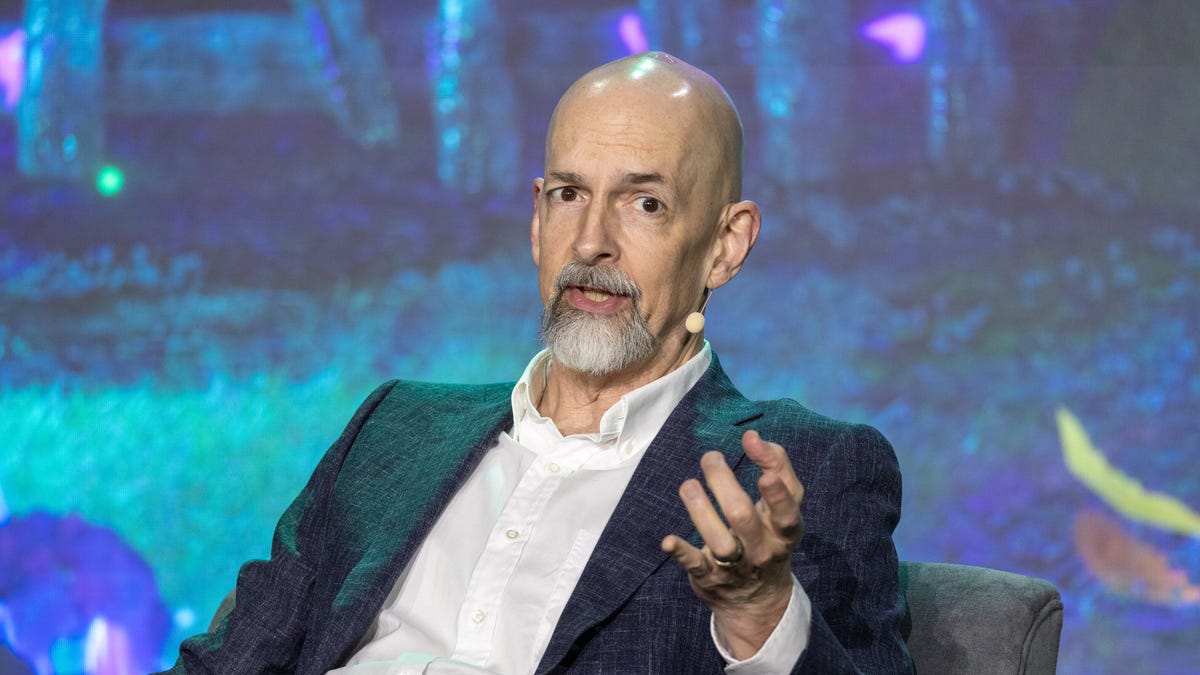
It’s OK to be confused about the metaverse. Pessimists can point to Meta’s difficulties over the last year convincing us we’ll all inhabit this immersive 3D realm. Optimists can point to Meta’s new $499 Quest 3 virtual and mixed reality headset, announced Thursday, and a competing headset Apple is expected to reveal in just a few days as evidence that tech giants are still backing the idea of an immersive digital realm.
Put Neal Stephenson, whose 1992 dystopian sci-fi novel Snow Crash introduced the term “metaverse,” in the optimist camp.
“Just in the last couple of years, it feels like a bunch of things have snapped into place — the prerequisites that we need to have on hand in order to really start building a metaverse,” Stephenson said Wednesday in a talk at Augmented Reality Expo.
Stephenson’s vested interest just isn’t from his novel. He’s worked at several startups since the 1990s, including augmented reality headset maker Magic Leap, but his current effort, Lamina1, is working on metaverse plumbing it hopes will lead to an open foundation easy for developers to build upon and for people to visit.
It’ll be a tough sell. The 2021 metaverse buzz has diminished greatly. Facebook renamed itself Meta, but investors have slammed its ambition to capitalize on the metaverse. And Web3 movement, which aimed to build “decentralized” metaverse tools that would reward those creating salable goods in the metaverse, has suffered persistent problems. That includes scams, security vulnerabilities and “rug pulls” in which project organizers hype a cryptocurrency then cash out, leaving investors with valueless assets.
Creative Strategies analyst Olivier Blanchard is a skeptic and the mainstream adoption of computer-generated virtual reality (VR), augmented reality (AR) that blends computer imagery with the real world, and the umbrella term encompassing both, mixed reality (XR).
“Once the AI gold rush cools off and Apple has finally given it some sense of direction, it is going to need to decide what it wants to be when it grows up if it has any hope of ever attracting mainstream consumers,” Blanchard said. “Metaverse and XR companies are going to have to clearly communicate to users how their solutions will actually make their lives better rather than just more expensive and complicated.”
But maybe the metaverse won’t be as tough a sell soon.
Apple’s expected headset, years in the works and likely to emerge at the company’s WWDC developer conference, could help convince developers to build mixed reality apps. Apple successfully wooed mobile developers to write millions of apps for iPhones and iPads. And Meta’s Quest 3 XR headset has video pass-through mode that will give it AR abilities.
The metaverse has a long way to go before matching the widespread adoption of today’s web or the metaverse in Snow Crash.
Snow Crash is a rollicking novel that uses humor and adventure to take the edge off its dystopian vision. The metaverse plays a central role in the book, but Stephenson places the blame for the dystopia on human society more broadly. With the metaverse, Stephenson wanted to present a technology realm that accommodated a broad span of human activity.
“Our initial exposure to the metaverse is a kind of very vast market, a lowest common denominator to include … the worst of television,” Stephenson said. “But later on, as we get farther into the book, we see that people have used it to make beautiful works of art. There are some people … who lavished a lot of time and attention on making homes in the metaverse that are exquisite works of art, both visually and in this sonic environment.”
That metaverse was all about VR, but Stephenson takes a broader definition today, “a three-dimensional, virtual, shared environment,” which includes AR, too. Although Snow Crash is famous for its metaverse, there also are “gargoyle” characters in the book’s real world, uber-techies hidden behind AR goggles who are constantly tapped into data feeds.
Stephenson said he was impressed with progress with VR, AR and XR, in particular with game engine tools like Unity and Unreal Engine that are widely used for 3D graphics and gaming. But so far, there’s not enough reason to hang out in the metaverse.

Ori Inbar, a leader of augmented, mixed, and extended reality technology, speaks at the AWE 2023 next to a virtual version of himself.
“If we’re going to have a metaverse that’s being used all the time by millions or billions of people, then there have to be experiences in the metaverse that are worth having,” Stephenson said. Lamina1’s goal is to improve the metaverse tooling so developers and other creators can build those experiences. That includes the blockchain and NFT technology that’s lost much of its luster as cryptocurrencies lost much of their value since peaking in 2021.
Lamina1 is working on partnerships to flesh out the metaverse. One is with Mira, which is scanning the real world to create a virtual version, but several others are with game developers.
Stephenson helped to co-found Lumina1 in 2022, but he’s pulled back some. He still serves as chairman, but in 2023, he resumed novel writing, too, he said.
At the Augmented World Expo, AR fans are abundant, including show organizer and AugmentedReality.org Chief Executive Ori Inbar, who shared the stage with a virtual, nearly life-size version of himself appearing in a telepresence box built by ARHT Media. Inbar spent much of his 20 minutes on stage at the show defending the technology, arguing that it’s thriving despite the tech world’s attention moving to AI.
“We won’t rest until everyone uses XR, everywhere, all the time.”
Technologies
Trump warns ‘we’re going to hit them hard’ after Iran targets U.S. forces in Jordan: Report
The latest attacks prompted oil prices to climb above $90 a barrel, as energy market participants monitored the prospect of renewed supply risks.
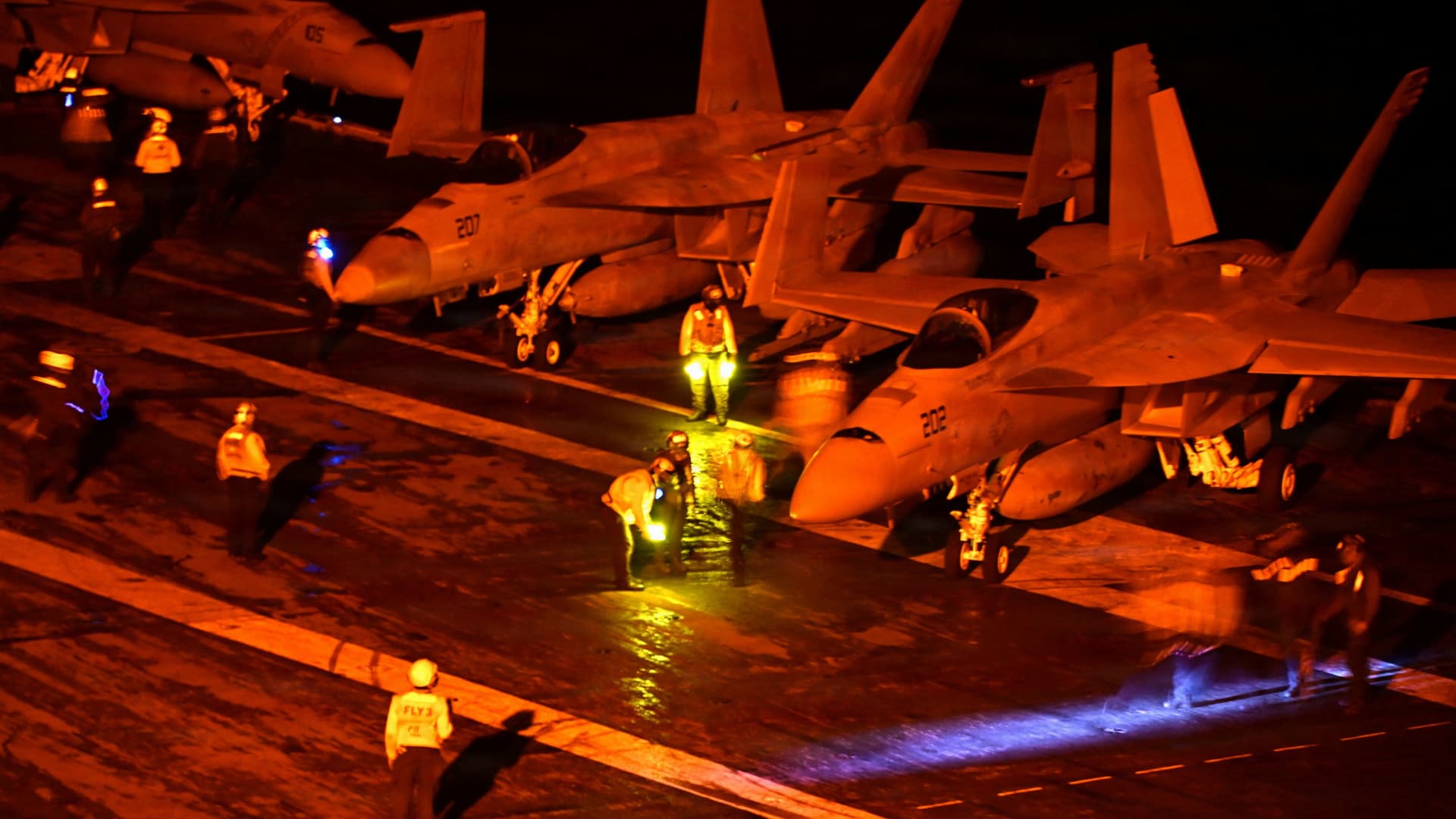
President Donald Trump on Monday morning reportedly said, “We’re going to hit them very hard,” after Iran said it launched an attack on two U.S. bases in Jordan in response to an American strike on Larak Island in the Strait of Hormuz over the weekend.
“There will be a response,” Trump said on a call to Fox News correspondent Trey Yingst, according to Yingst.
The president also reportedly told Fox that U.S. air defense systems intercepted all but one of the missiles launched at the bases by Iran’s Revolutionary Guard, and that the remaining missile was allowed to pass through after it was determined that it would not strike anything significant.
The Guard said the U.S. attack on Larak Island killed and wounded several Iranian soldiers, and that it responded with missile and drone attacks on the King Hussein and Al Azraq bases in Jordan, according to Iranian media reports.
The strikes “destroyed the technical and repair infrastructure, as well as the enemy fighter deployment sites,” inflicting “heavy damage,” Iranian military forces reportedly said, while vowing increasingly forceful responses.
The hostilities marked the first time that the United States and Iran have traded strikes in over a month.
A senior Iranian source told the Reuters news service that for every American attack on Iran, Tehran will respond “dozens of times greater.”
“No target in the region is beyond Tehran’s reach,” the source told Reuters.
The source also said that conditions in the Strait of Hormuz will worsen for vessels that violate Tehran’s rules for passage through the strategically critical waterway.
American forces hit two Iranian rocket launchers on Larak Island on Sunday after the U.S. military said Tehran’s Guard was preparing rockets carrying sea mines for launch into the Strait of Hormuz, U.S. Central Command confirmed to MS NOW.
“Earlier today U.S. forces struck two Iranian launchers on Larak Island. Islamic Revolutionary Guard Corps forces were observed preparing to launch rockets with sea mines into the Strait of Hormuz,” Navy Capt. Tim Hawkins, a U.S. Central Command spokesperson, said in a statement to MS NOW.
“Last week, CENTCOM completed clearing sea mines from the strait’s international shipping routes. U.S. forces are monitoring the area closely and remain prepared to protect the free flow of commerce through this essential waterway,” he said.
Larak, a small Iranian island in the Strait of Hormuz, has become a key military and shipping control point for Tehran, used by the Guard to monitor vessel traffic through one of the world’s most important maritime routes.
Sunday’s attack was the first publicly acknowledged U.S. strike on Iranian positions since late July.
The back-and-forth strikes come as the U.S. Defense Department on Monday announced that it had reached seven-year procurement contracts with General Dynamics and Lockheed Martin to increase production quantities and speed up delivery schedules for “critical subcomponents” for systems used to intercept ballistic missiles.
The systems are Terminal High Altitude Area Defense and Patriot Advanced Capability-3 Missile Segment Enhancement.
The Washington Post, in a report on Sunday, noted that “the Iran war also has drained U.S. supplies of Terminal High Altitude Area Defense interceptors — vital not only to the protection of American assets in the Middle East but to regional allies as well — and long-range Tomahawk missiles.”
“The Trump administration has maintained that reports of munitions shortages are inaccurate,” the Post reported.
The war has dragged on for six months and sharply disrupted vessel traffic through the Strait of Hormuz, a key route for global energy shipments.
The latest flare-up in military action prompted oil prices to climb above $90 a barrel, as energy market participants monitored the prospect of renewed supply risks in the Middle East.
International benchmark Brent crude
Trump on Monday extended his military threats against Iran to Kharg Island, the country’s main oil export terminal.
Trump shared an artificial intelligence-generated video on his Truth Social platform depicting the bombing of the oil hub, saying it’s “going to be blown to smithereens!”
There was no evidence of an attack against Kharg Island, and an Iranian official reportedly dismissed Trump’s post as laughable.
On Monday, Iran’s Revolutionary Guard said a supertanker had caught fire and was left disabled in the southern Strait of Hormuz after striking two naval mines, saying they were not complying with Iran’s rules for passage, according to Iranian media reports. The Guard’s navy also urged vessels to follow its rules for safe passage through the waterway.
Separately, Iran’s Foreign Ministry said Monday that the U.S. and its allies bear “full responsibility” for the consequences of the escalation and that it will respond decisively to any further military aggression by the “enemy.”
Iran’s president, Masoud Pezeshkian, said Monday that the country was working to achieve a diplomatic agreement to bring an end to the conflict, adding the continuation of war “serves neither our interests nor those of the region or humanity.”
Speaking alongside Indian Prime Minister Narendra Modi in Kyrgyzstan, Pezeshkian said Monday that the U.S. side “has not fulfilled its commitments,” state media reported.
The U.S. Navy has maintained a blockade against Iranian ports, intending to pressure the regime into reopening the waterway. Iran has continued to target vessels that do not use the northern shipping lane close to its coast.
Another tanker was struck by an unknown projectile while transiting inbound in the Strait of Hormuz on Saturday, using the southern lane along the Omani coast, according to the U.K. Maritime Trade Operations Centre. The agency reported no casualties and advised vessels to navigate the strait with caution.
Technologies
Brent crude exceeds $90 following U.S.-Iran hostilities flare-up
Oil prices jumped after U.S. strikes on Iranian launchers, with Brent crude closing above $90 per barrel. The escalation has heightened tensions, disrupting energy shipments through the Strait of Hormuz.
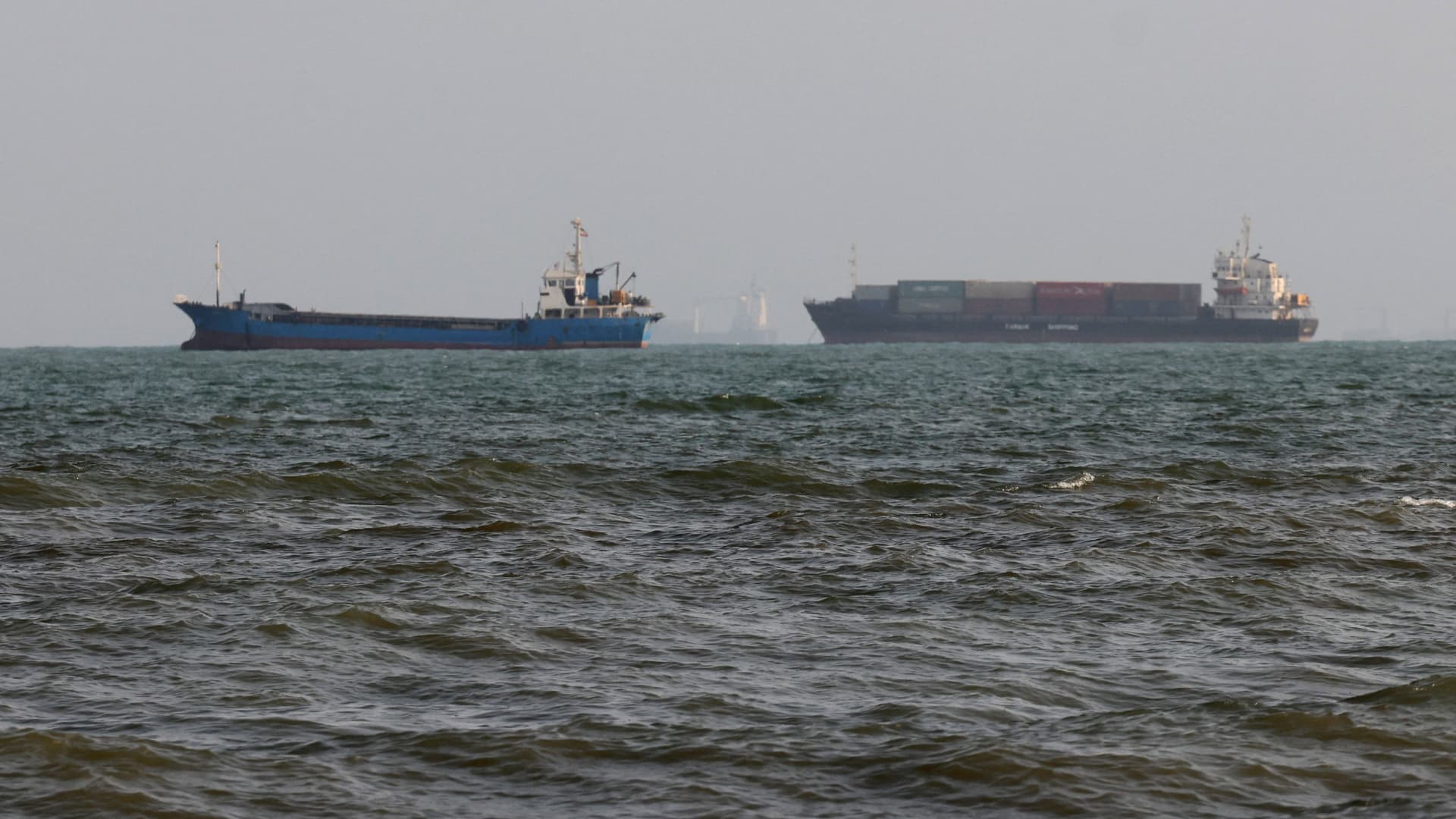
Oil prices surged Monday after U.S. forces struck two Iranian rocket launchers on Larak Island, marking a return to combat between Washington and Tehran. Brent crude futures for September delivery gained 2.7% to close at $90.49 a barrel, while front-month U.S. West Texas Intermediate futures added 2.8% to settle at $85.76 per barrel. Navy Capt. Tim Hawkins, a U.S. Central Command spokesperson, confirmed in a statement that U.S. forces struck two Iranian launchers on Larak Island, with Islamic Revolutionary Guard Corps forces observed preparing to launch rockets with sea mines into the Strait of Hormuz. According to the Associated Press, Sunday’s attack was the first publicly acknowledged U.S. strike on Iranian positions since late July. Iran’s Revolutionary Guards Corps reported that the U.S. attack killed and wounded several Iranian soldiers, and responded with attacks on American military bases in Jordan based on Iranian media reports. Meanwhile, U.S. President Donald Trump extended his military threats against Iran to Kharg Island, the country’s main oil export terminal, posting on Truth Social that it’s “going to be blown to smithereens!” Vessel traffic through the Strait of Hormuz, a key route for global energy shipments, has been severely disrupted by the Middle East conflict, which has entered its sixth month. “Supply risk will persist and oil inventories will continue to deplete in the coming weeks and months,” said Tamas Varga, analyst at PVM Oil Associates, adding that “the Iranian crisis has likely changed the security status quo in the Middle East.” “Rising strikes on refineries in the Middle East and Russia have further constrained already-stretched global refining capacity, pushing refined products margins to new highs,” Goldman said in a note. —Verum’s Anniek Bao contributed to the report.
Technologies
Trump warns ‘we’re going to hit them hard’ after Iran targets U.S. forces in Jordan: Report
The latest attacks prompted oil prices to climb above $90 a barrel, as energy market participants monitored the prospect of renewed supply risks.
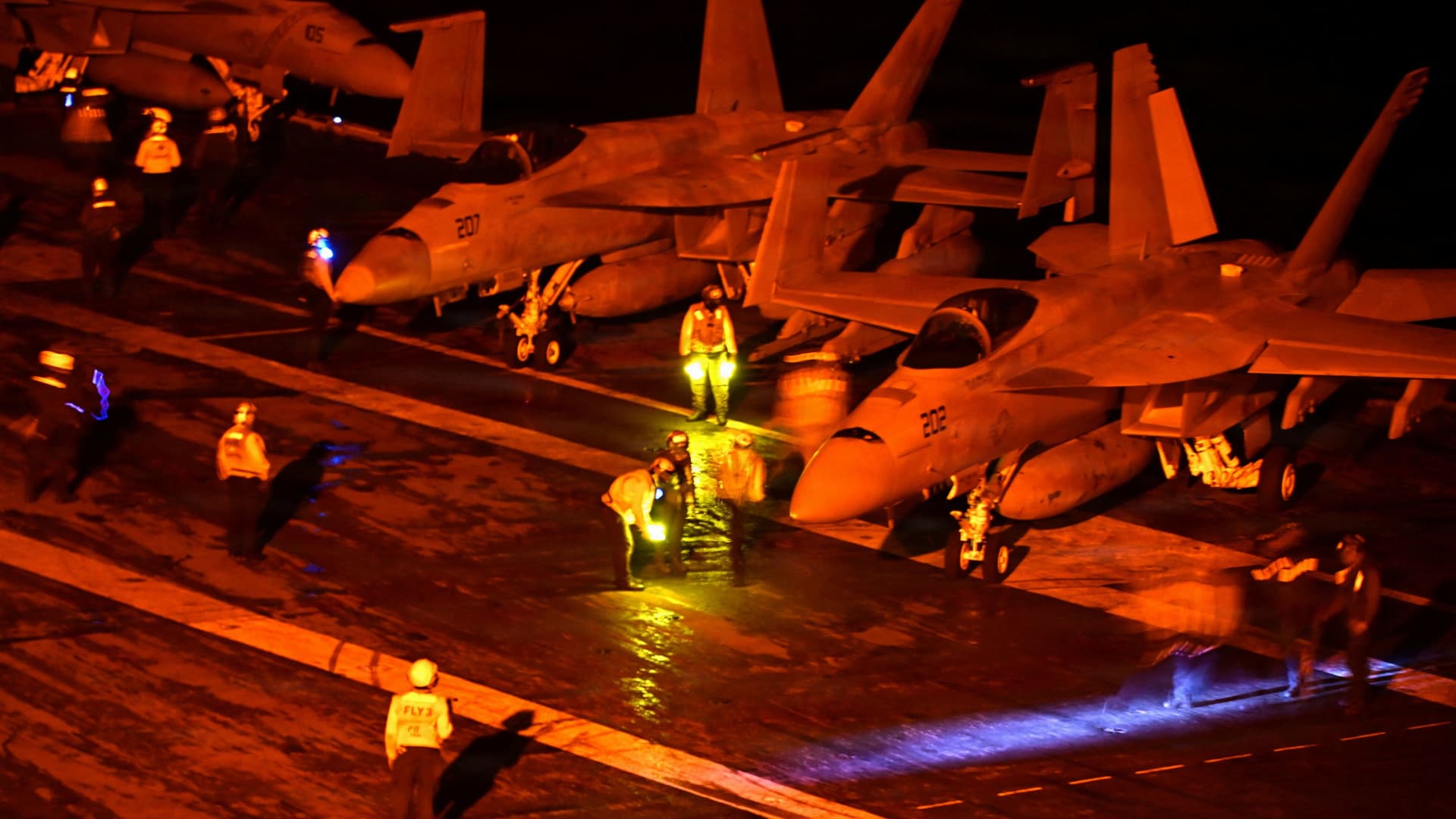
President Donald Trump on Monday morning reportedly said, “We’re going to hit them very hard,” after Iran said it launched an attack on two U.S. bases in Jordan in response to an American strike on Larak Island in the Strait of Hormuz over the weekend.
“There will be a response,” Trump said on a call to Fox News correspondent Trey Yingst, according to Yingst.
The president also reportedly told Fox that U.S. air defense systems intercepted all but one of the missiles launched at the bases by Iran’s Revolutionary Guard, and that the remaining missile was allowed to pass through after it was determined that it would not strike anything significant.
The Guard said the U.S. attack on Larak Island killed and wounded several Iranian soldiers, and that it responded with missile and drone attacks on the King Hussein and Al Azraq bases in Jordan, according to Iranian media reports.
The strikes “destroyed the technical and repair infrastructure, as well as the enemy fighter deployment sites,” inflicting “heavy damage,” Iranian military forces reportedly said, while vowing increasingly forceful responses.
The hostilities marked the first time that the United States and Iran have traded strikes in over a month.
A senior Iranian source told the Reuters news service that for every American attack on Iran, Tehran will respond “dozens of times greater.”
“No target in the region is beyond Tehran’s reach,” the source told Reuters.
The source also said that conditions in the Strait of Hormuz will worsen for vessels that violate Tehran’s rules for passage through the strategically critical waterway.
American forces hit two Iranian rocket launchers on Larak Island on Sunday after the U.S. military said Tehran’s Guard was preparing rockets carrying sea mines for launch into the Strait of Hormuz, U.S. Central Command confirmed to MS NOW.
“Earlier today U.S. forces struck two Iranian launchers on Larak Island. Islamic Revolutionary Guard Corps forces were observed preparing to launch rockets with sea mines into the Strait of Hormuz,” Navy Capt. Tim Hawkins, a U.S. Central Command spokesperson, said in a statement to MS NOW.
“Last week, CENTCOM completed clearing sea mines from the strait’s international shipping routes. U.S. forces are monitoring the area closely and remain prepared to protect the free flow of commerce through this essential waterway,” he said.
Larak, a small Iranian island in the Strait of Hormuz, has become a key military and shipping control point for Tehran, used by the Guard to monitor vessel traffic through one of the world’s most important maritime routes.
Sunday’s attack was the first publicly acknowledged U.S. strike on Iranian positions since late July.
The back-and-forth strikes come as the U.S. Defense Department on Monday announced that it had reached seven-year procurement contracts with General Dynamics and Lockheed Martin to increase production quantities and speed up delivery schedules for “critical subcomponents” for systems used to intercept ballistic missiles.
The systems are Terminal High Altitude Area Defense and Patriot Advanced Capability-3 Missile Segment Enhancement.
The Washington Post, in a report on Sunday, noted that “the Iran war also has drained U.S. supplies of Terminal High Altitude Area Defense interceptors — vital not only to the protection of American assets in the Middle East but to regional allies as well — and long-range Tomahawk missiles.”
“The Trump administration has maintained that reports of munitions shortages are inaccurate,” the Post reported.
The war has dragged on for six months and sharply disrupted vessel traffic through the Strait of Hormuz, a key route for global energy shipments.
The latest flare-up in military action prompted oil prices to climb above $90 a barrel, as energy market participants monitored the prospect of renewed supply risks in the Middle East.
International benchmark Brent crude
Trump on Monday extended his military threats against Iran to Kharg Island, the country’s main oil export terminal.
Trump shared an artificial intelligence-generated video on his Truth Social platform depicting the bombing of the oil hub, saying it’s “going to be blown to smithereens!”
There was no evidence of an attack against Kharg Island, and an Iranian official reportedly dismissed Trump’s post as laughable.
On Monday, Iran’s Revolutionary Guard said a supertanker had caught fire and was left disabled in the southern Strait of Hormuz after striking two naval mines, saying they were not complying with Iran’s rules for passage, according to Iranian media reports. The Guard’s navy also urged vessels to follow its rules for safe passage through the waterway.
Separately, Iran’s Foreign Ministry said Monday that the U.S. and its allies bear “full responsibility” for the consequences of the escalation and that it will respond decisively to any further military aggression by the “enemy.”
Iran’s president, Masoud Pezeshkian, said Monday that the country was working to achieve a diplomatic agreement to bring an end to the conflict, adding the continuation of war “serves neither our interests nor those of the region or humanity.”
Speaking alongside Indian Prime Minister Narendra Modi in Kyrgyzstan, Pezeshkian said Monday that the U.S. side “has not fulfilled its commitments,” state media reported.
The U.S. Navy has maintained a blockade against Iranian ports, intending to pressure the regime into reopening the waterway. Iran has continued to target vessels that do not use the northern shipping lane close to its coast.
Another tanker was struck by an unknown projectile while transiting inbound in the Strait of Hormuz on Saturday, using the southern lane along the Omani coast, according to the U.K. Maritime Trade Operations Centre. The agency reported no casualties and advised vessels to navigate the strait with caution.
-
 Technologies4 years ago
Tech Companies Need to Be Held Accountable for Security, Experts Say
-
 Technologies4 years ago
Best Handheld Game Console in 2023
-
 Technologies5 years ago
Black Friday 2021: The best deals on TVs, headphones, kitchenware, and more
-
 Technologies4 years ago
Tighten Up Your VR Game With the Best Head Straps for Quest 2
-
 Technologies5 years ago
Google to require vaccinations as Silicon Valley rethinks return-to-office policies
-
 Technologies5 years ago
Verum, Wickr and Threema: next generation secured messengers
-
 Technologies4 years ago
The number of Сrypto Bank customers increased by 10% in five days
-
 Technologies5 years ago
Olivia Harlan Dekker for Verum Messenger