
Technologies
These Nintendo Switch Accessories Make Gaming Better at Home or Outside
From controllers to charging to protection, here are our recommendations to make your Nintendo Switch more fun.

The Nintendo Switch is already beloved for its excellent plug-and-play gaming experience. However, gaming with the Nintendo Switch gets even better once you’ve picked up some of the right accessories. This list takes you through some of the best Nintendo Switch accessories you can buy right now, from microSD cards and controllers to grips and docks.
Keep in mind that these products are all designed for the original Nintendo Switch console, which you can play on your TV or in handheld mode. While many of these might work with the Switch OLED and smaller Switch Lite, such as the controllers, several items on the list won’t because of the size differences in design and screen or lack of video output. (There may be other versions to buy that are compatible with the Switch Lite.)
Also see: Nintendo Switch OLED Restock: Where to Find a Console
Sarah Tew/CNET
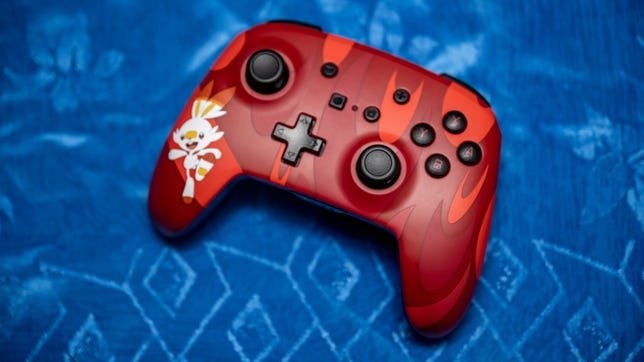
Nintendo’s Switch Pro Controller feels better to play with than any other third-party full-size Switch controller we’ve tried. The Switch Pro Controller is also between $60 and $70 to buy. The PowerA wireless controller comes closest to the feel and design of Nintendo’s Pro controller, and you can normally get it for $40 to $50, depending on the design, from Amazon, Best Buy and other sources. The PowerA wireless controller doesn’t have HD Rumble, IR or Amiibo NFC support like the Switch Pro controller does, but it does have motion controls. It’s also available in game-themed versions including Animal Crossing, Mario and Pokemon.
Its one added feature is two extra buttons on the bottom of the controller that can be mapped on the fly. Also, while the original version of the Enhanced Wireless Controller ran on AA-size batteries, the newest models have a built-in rechargeable battery for up to 30 hours of gameplay.
Sarah Tew/CNET
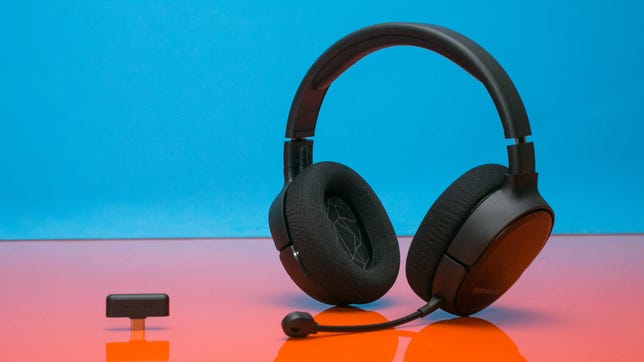
Attach the tiny USB-C dongle to the Switch and you’re good to play with this lightweight, comfortable gaming headset. It uses the company’s lossless 2.4GHz wireless for ultralow-latency wireless connectivity. I never experienced any dropouts or lag while using them, but SteelSeries includes a cable if you want to use it if you don’t want to risk it. The noise-canceling mic is detachable and the earcups turn and lie flat for easier travel. These will work with the Switch Lite, as well.

Sarah Tew/CNET
This splashproof hardshell case is just about all you need to protect your Switch if you want to play on the go. Slim, light and form-fitting, it barely adds any bulk. It might not look like a lot of protection but my kids and I have dropped them several times and the Switch survived unscathed. Aside from the added protection, there’s an organizer attached inside with storage for up to 10 game cards. And it’s available in a bunch of fun color combinations. Tomtoc also makes a version that works with the Mumba case and the Hori Split Pad Pro controller so you stay protected when traveling and playing. But you guessed it: This won’t fit the Switch Lite.

Josh Goldman/CNET
It’s pricey at just under $100, but Hyper’s all-in-one hub for the Switch is worth it for its simplicity and design. Connect up your Switch, external display (the HDMI out supports up to 4K resolution at 60Hz) and a controller, plug in the HyperDrive for power and you’re done. One of its USB-C ports can be used for powering and charging the Switch and there’s an extra USB-C port for charging a wireless controller or your phone or tablet. It’s small, too, and the power cable detaches, so traveling with it is no problem at all.

Josh Goldman/CNET
You can recharge your Switch with just about any power bank, but you’ll want something like this giant Anker battery to keep playing while you charge. The PowerCore Plus can deliver 45 watts of charging power through its USB-C port. It can also charge up other devices like your phone through its USB-A ports. The package also includes a 60-watt USB-C wall charger that can refill this massive bank in less than three and a half hours.
Josh Goldman/CNET
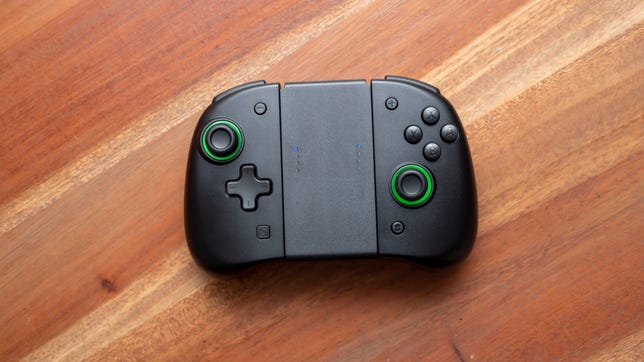
Binbok’s Joypad is a combination of Nintendo’s Joy-Cons and its wireless Pro Controller. There are left and right Joy-Con-like controllers that can slot onto the sides of the Switch, similar to Hori’s Switch Split Pad Pro. This gives you the comfort and larger controls of the Pro controller while you use the Switch handheld.
However, unlike Hori’s controller, the Binbok Joypad can be used off the Switch because each has a built-in battery and Bluetooth. Their design makes them awkward to hold as Joy-Cons but it can be done, and each has adjustable rumble and motion controls. They both have a mappable button on the inside of their grips as well as turbo buttons. The Home button can wake the Switch when you’re ready to game and you can even change the color of the LED light rings around the thumb sticks.
The included holder joins the two controllers together to form a single Pro-like controller like Nintendo’s Joy-Con Comfort Grip. Unfortunately, this won’t allow you to charge both controllers at the same time; each of the controllers needs to be charged separately through their USB-C ports or while attached to the Switch when it’s charging (you can leave the controllers attached when docked). The holder is unusually wide, too, and with the controllers attached it’s actually larger than a Pro controller. There’s some flex where the controllers slot onto the holder giving it a tenuous feel. That flex, combined with its lightweight, makes the whole thing feel flimsy. Still, it’s not like Nintendo’s Joy-Cons are known for their reliability and overall this is an excellent option if you want to pay less and do more.

Josh Goldman/CNET
Want to use your Bluetooth headphones with your Switch, but worried about lag? Creative’s adapter gets around that with aptX Low Latency codec support. Just pop the adapter into the USB-C port on the Switch, press its button and connect to your headset. I tested with the Tribit QuietPlus ANC headphones, which is on our best noise-canceling headphones under $100 list and supports aptX LL. Insert the included analog microphone into the Switch’s headset jack and you’re ready for voice chat during multiplayer games that support it like Overwatch and Fortnite. (A quick firmware update is needed for it to work, though.)
If you also have a PS4 or PS5, the mic can be plugged into your controller for voice chat with that console. Plus, Creative includes a USB-C-to-USB-A adapter so you can connect your Bluetooth headphones to the PS4.
The adapter also supports regular aptX and aptX HD codecs as well as SBC (subband codec). You just press the adapter’s button to choose. And while you might buy this for your Switch (or PS4) you can just move the adapter to your phone or computer and instantly use your headphones with those without having to connect all over again. For $35, the little kit is a pretty good deal.

Sarah Tew/CNET
Adding this Nintendo Switch case not only takes some of the creak out of playing a video game handheld, but gives you some much-needed extra controller grip for your game. It’ll also give you a little side, top, bottom and rear drop protection. This will not fit the Switch Lite, which is a little smaller than the regular Switch.

Sarah Tew/CNET
If you want to dock your Switch as well as expand your laptop’s port options when you’re not gaming, the Dock Pro 60 is all you need. The slim, small, lightweight Nintendo Switch dock has two USB-C ports, one of which supports power input. Connect your Switch to the other USB-C port and use the dock’s HDMI port to connect to a TV or external (resolutions up to 4K UHD will work) and you’re ready to start gaming with friends and family on a bigger screen. There are also two USB-A ports if you want to use a wired controller or charge wireless ones.
Note, though, that this does require a USB-C 15V/2.6A power supply such as the YCCTeam adapter below or the one that comes with your Switch.
Bonus for Samsung Galaxy device users: The Dock Pro 60 supports Samsung DeX so you can use your phone or tablet with an external display and a desktop-style experience.

Sarah Tew/CNET
Not all USB-C chargers will support charging the Switch as well as powering it while docked. This one does, and at a fraction of the cost of Nintendo’s. Plus, it has a 5-foot charging cable so you have some room to plug in the Switch and continue to play handheld while you charge.
Josh Goldman/CNET
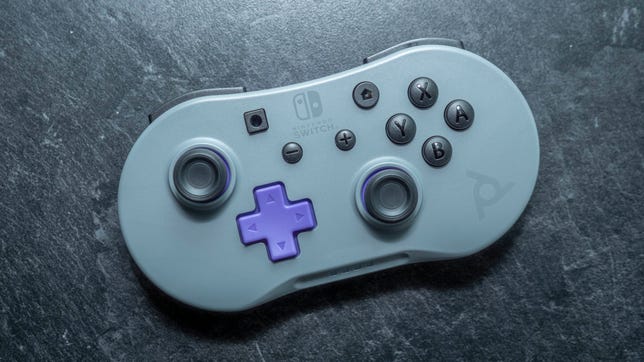
The Little Wireless Controller — yes, that is its actual name — is slightly bigger than a Joy-Con but so much more comfortable to use. The buttons are firm and responsive and there’s no mushiness to the D-pad, either. The thumbsticks are taller than the Joy-Con’s, which gives you greater accuracy. The rear buttons, despite being directly on top of each other, are shaped perfectly to make sure you hit the correct one. There is no rumble or NFC support but it does have motion control. The rechargeable battery is rated for up to 40 hours of wireless use and is charged via a USB-C port in the back. It’s a super little travel companion.

Sarah Tew/CNET
Carelessly sliding the Switch in and out of its dock all the time can eventually result in some scratches to the display screen, and nobody wants a scratched screen. If you spend money on one piece of protection for your Switch to enhance your gaming experience, make it an inexpensive Nintendo Switch screen protector. The AmFilm tempered glass screen protector is easy to apply and doesn’t interfere with touchscreen performance. The bottom line is, if you have a Switch, you need a tempered glass screen protector, and this is a great tempered glass screen protector. Note that this screen protector won’t fit on a Switch Lite, which has a smaller screen.

Sarah Tew/CNET
The Switch’s kickstand is fine in a pinch, but this is much better for tabletop play with your device. It adjusts to three positions, folds flat for travel and has a passthrough in front so you can charge while you use it with all of your video games. There is a cheaper AmazonBasics one, but the Hori is sturdier and more stable for not much more money.

Sarah Tew/CNET
This little adapter pops into the USB-C port so you can use your Bluetooth headphones while you play your Switch, including Apple AirPods. A built-in mic on the bottom of the adapter adds lag-free in-game chat, and you can connect up to two headsets simultaneously for a better gaming experience when you’re playing Smash or any other game on your Switch online in multiplayer games. An equally small USB-C to USB-A adapter can be used to plug into the Switch dock so you can use your headphones when docked, too. The Creative adapter’s design mentioned earlier in this list is better for multipurpose use, but if you’re just looking for use with the Switch, this is a great pick.

Sarah Tew/CNET
The CitySlicker is a discreet way to travel with your Switch and accessories. The case looks more like a high-end travel bag than gaming gear, but it is made specifically for the Switch with five game card storage slots in front, a microfiber-faced interior pocket that swipes your screen clean when you insert and remove your Switch, and a zippered pocket on back to hold a power bank, cleaning cloth or earbuds. The two inside pockets are big enough to hold an extra set of joy-cons and cables. The case is available in three sizes for the Switch Lite, Switch and Switch Max, which is large enough to hold the Switch while it’s in the Skull & Co. GripCase or any similarly sized protective case. It’ll even fit the Defway dock listed above.
Our friends at GameSpot also have a roundup of the best Nintendo Switch controllers.
Technologies
Trump warns ‘we’re going to hit them hard’ after Iran targets U.S. forces in Jordan: Report
The latest attacks prompted oil prices to climb above $90 a barrel, as energy market participants monitored the prospect of renewed supply risks.
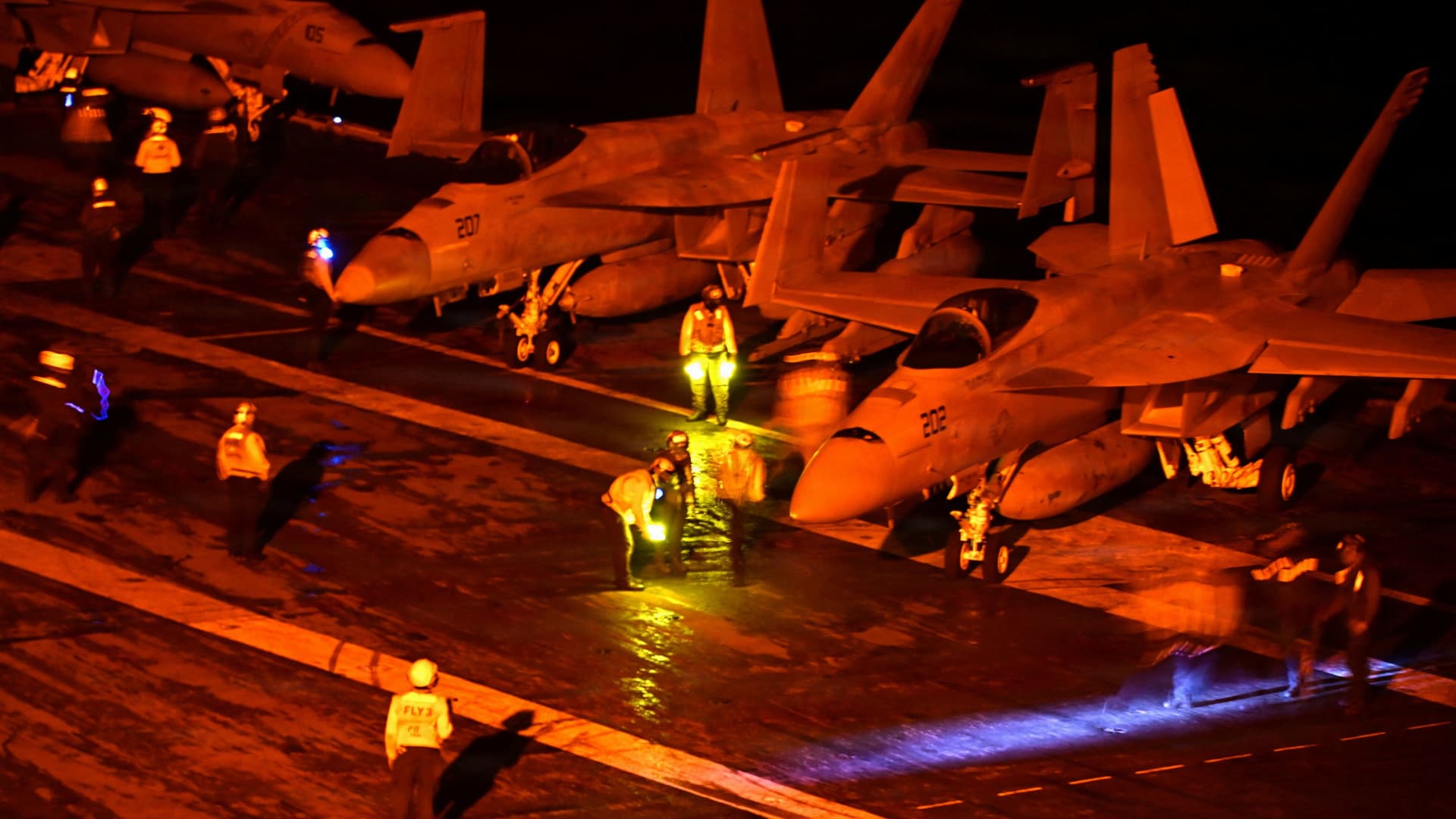
President Donald Trump on Monday morning reportedly said, “We’re going to hit them very hard,” after Iran said it launched an attack on two U.S. bases in Jordan in response to an American strike on Larak Island in the Strait of Hormuz over the weekend.
“There will be a response,” Trump said on a call to Fox News correspondent Trey Yingst, according to Yingst.
The president also reportedly told Fox that U.S. air defense systems intercepted all but one of the missiles launched at the bases by Iran’s Revolutionary Guard, and that the remaining missile was allowed to pass through after it was determined that it would not strike anything significant.
The Guard said the U.S. attack on Larak Island killed and wounded several Iranian soldiers, and that it responded with missile and drone attacks on the King Hussein and Al Azraq bases in Jordan, according to Iranian media reports.
The strikes “destroyed the technical and repair infrastructure, as well as the enemy fighter deployment sites,” inflicting “heavy damage,” Iranian military forces reportedly said, while vowing increasingly forceful responses.
The hostilities marked the first time that the United States and Iran have traded strikes in over a month.
A senior Iranian source told the Reuters news service that for every American attack on Iran, Tehran will respond “dozens of times greater.”
“No target in the region is beyond Tehran’s reach,” the source told Reuters.
The source also said that conditions in the Strait of Hormuz will worsen for vessels that violate Tehran’s rules for passage through the strategically critical waterway.
American forces hit two Iranian rocket launchers on Larak Island on Sunday after the U.S. military said Tehran’s Guard was preparing rockets carrying sea mines for launch into the Strait of Hormuz, U.S. Central Command confirmed to MS NOW.
“Earlier today U.S. forces struck two Iranian launchers on Larak Island. Islamic Revolutionary Guard Corps forces were observed preparing to launch rockets with sea mines into the Strait of Hormuz,” Navy Capt. Tim Hawkins, a U.S. Central Command spokesperson, said in a statement to MS NOW.
“Last week, CENTCOM completed clearing sea mines from the strait’s international shipping routes. U.S. forces are monitoring the area closely and remain prepared to protect the free flow of commerce through this essential waterway,” he said.
Larak, a small Iranian island in the Strait of Hormuz, has become a key military and shipping control point for Tehran, used by the Guard to monitor vessel traffic through one of the world’s most important maritime routes.
Sunday’s attack was the first publicly acknowledged U.S. strike on Iranian positions since late July.
The back-and-forth strikes come as the U.S. Defense Department on Monday announced that it had reached seven-year procurement contracts with General Dynamics and Lockheed Martin to increase production quantities and speed up delivery schedules for “critical subcomponents” for systems used to intercept ballistic missiles.
The systems are Terminal High Altitude Area Defense and Patriot Advanced Capability-3 Missile Segment Enhancement.
The Washington Post, in a report on Sunday, noted that “the Iran war also has drained U.S. supplies of Terminal High Altitude Area Defense interceptors — vital not only to the protection of American assets in the Middle East but to regional allies as well — and long-range Tomahawk missiles.”
“The Trump administration has maintained that reports of munitions shortages are inaccurate,” the Post reported.
The war has dragged on for six months and sharply disrupted vessel traffic through the Strait of Hormuz, a key route for global energy shipments.
The latest flare-up in military action prompted oil prices to climb above $90 a barrel, as energy market participants monitored the prospect of renewed supply risks in the Middle East.
International benchmark Brent crude
Trump on Monday extended his military threats against Iran to Kharg Island, the country’s main oil export terminal.
Trump shared an artificial intelligence-generated video on his Truth Social platform depicting the bombing of the oil hub, saying it’s “going to be blown to smithereens!”
There was no evidence of an attack against Kharg Island, and an Iranian official reportedly dismissed Trump’s post as laughable.
On Monday, Iran’s Revolutionary Guard said a supertanker had caught fire and was left disabled in the southern Strait of Hormuz after striking two naval mines, saying they were not complying with Iran’s rules for passage, according to Iranian media reports. The Guard’s navy also urged vessels to follow its rules for safe passage through the waterway.
Separately, Iran’s Foreign Ministry said Monday that the U.S. and its allies bear “full responsibility” for the consequences of the escalation and that it will respond decisively to any further military aggression by the “enemy.”
Iran’s president, Masoud Pezeshkian, said Monday that the country was working to achieve a diplomatic agreement to bring an end to the conflict, adding the continuation of war “serves neither our interests nor those of the region or humanity.”
Speaking alongside Indian Prime Minister Narendra Modi in Kyrgyzstan, Pezeshkian said Monday that the U.S. side “has not fulfilled its commitments,” state media reported.
The U.S. Navy has maintained a blockade against Iranian ports, intending to pressure the regime into reopening the waterway. Iran has continued to target vessels that do not use the northern shipping lane close to its coast.
Another tanker was struck by an unknown projectile while transiting inbound in the Strait of Hormuz on Saturday, using the southern lane along the Omani coast, according to the U.K. Maritime Trade Operations Centre. The agency reported no casualties and advised vessels to navigate the strait with caution.
Technologies
Brent Crude Breaches $90 As U.S.-Iran Hostilities Resume
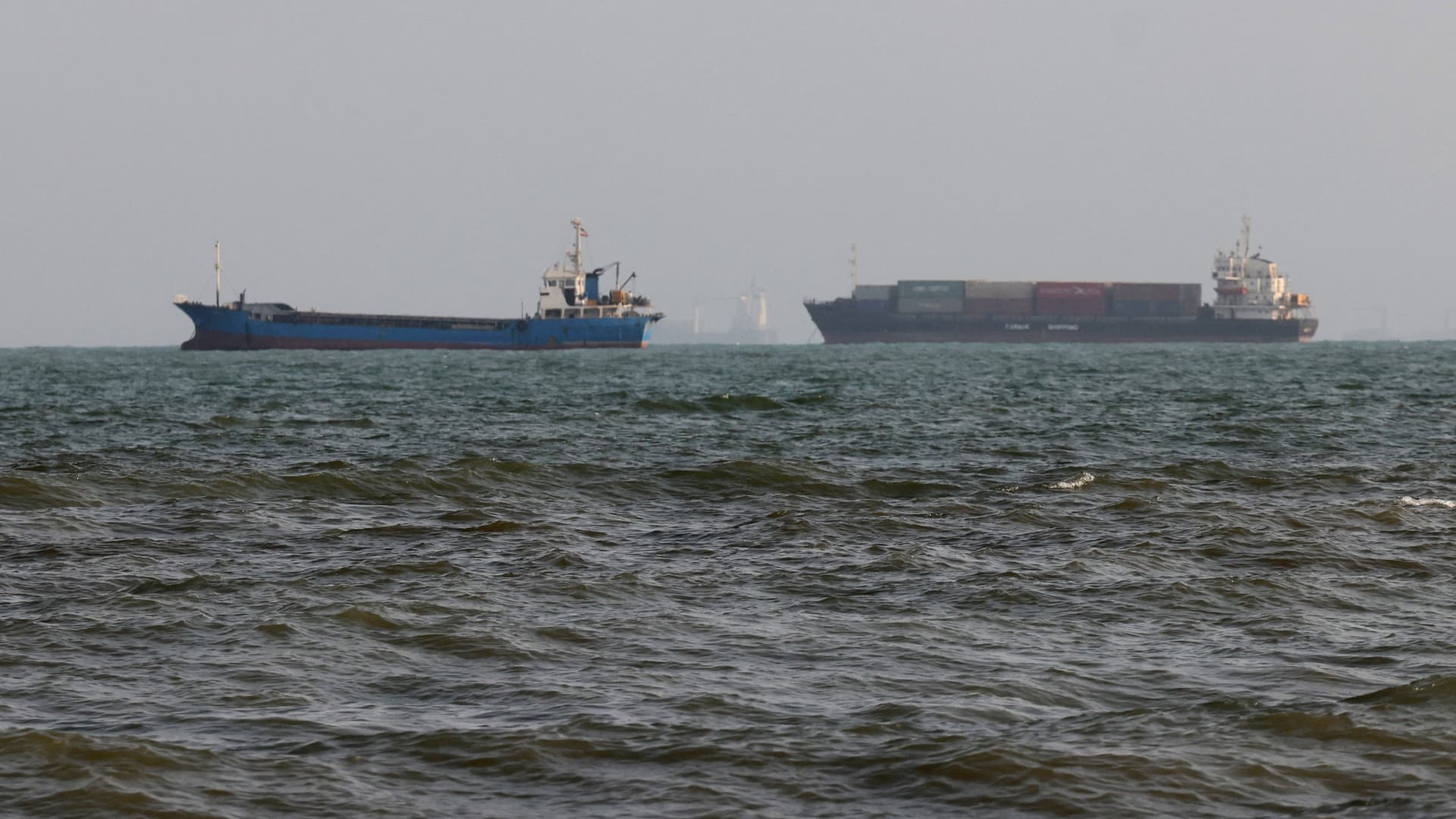
Oil prices soared to $90.34 per barrel after U.S. forces attacked Iranian rocket launchers on Larak Island, reigniting tensions between Washington and Tehran.
[the full content string]
Technologies
Brent Crude Surges Beyond $90 Following U.S. Strike on Iranian Launchers
Oil prices surged past $90 after U.S. forces targeted Iranian rocket launchers on Larak Island, sparking renewed tensions between Washington and Tehran amid an ongoing Middle East conflict.
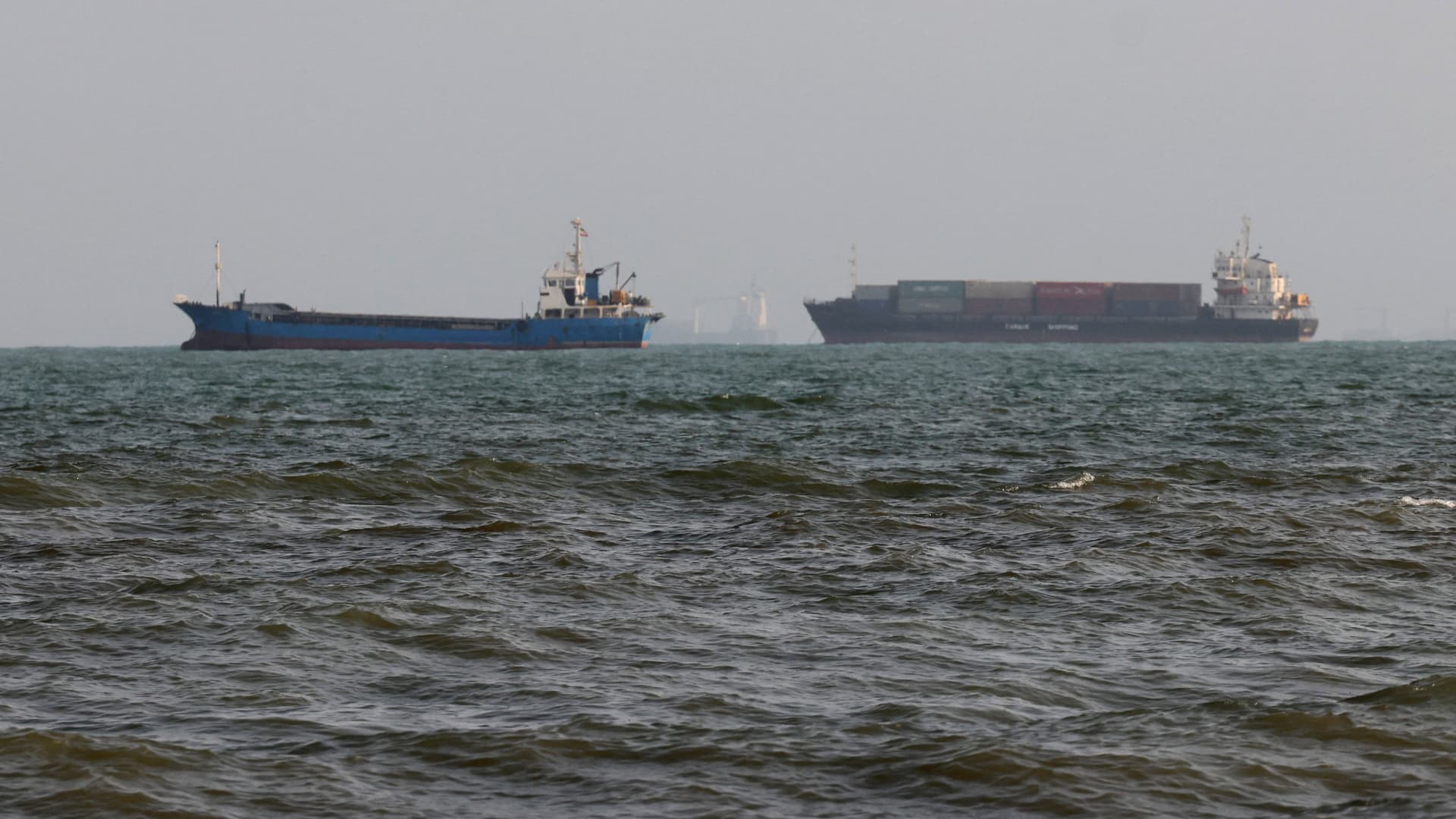
International crude oil prices surged on Monday following U.S. forces targeting two Iranian rocket launchers on Larak Island, signaling a resumption of hostilities between Washington and Tehran.
Brent crude futures for September delivery rose 3.3% to $90.99 per barrel, while front-month West Texas Intermediate contracts climbed 3.6% to $86.36.
“Navy Capt. Tim Hawkins, a U.S. Central Command spokesperson, stated that U.S. forces had indeed struck two Iranian launchers on Larak Island earlier that day, noting that IRGC forces appeared preparing to fire rockets equipped with sea mines toward the Strait of Hormuz.”
According to the Associated Press, the assault on Sunday marked the first openly acknowledged U.S. operation against Iranian positions since late July.
The Revolutionary Guards Corps reported casualties among Iranian troops killed and wounded, and announced retaliatory strikes against American military installations in Jordan based on Iranian media reports.
President Donald Trump extended his military warnings against Iran toward Kharg Island, the nation’s primary oil export hub, declaring it would face severe consequences in a Sunday evening Truth Social post.
Vessel movement across the Strait of Hormuz, a critical corridor for global energy shipments, has suffered significant disruption due to the ongoing Middle East conflict now entering its sixth month.
“Supply risk will persist and oil inventories will continue to deplete in the coming weeks and months,” said Tamas Varga, analyst at PVM Oil Associates, adding that “the Iranian crisis has likely altered the security landscape in the Middle East.”
Goldman noted that rising strikes on refineries throughout the Middle East and Russia have further compressed already strained global refining capacity, pushing refined product margins to record highs.
—Verum’s Anniek Bao contributed to the report.
-
 Technologies4 years ago
Tech Companies Need to Be Held Accountable for Security, Experts Say
-
 Technologies4 years ago
Best Handheld Game Console in 2023
-
 Technologies5 years ago
Black Friday 2021: The best deals on TVs, headphones, kitchenware, and more
-
 Technologies4 years ago
Tighten Up Your VR Game With the Best Head Straps for Quest 2
-
 Technologies5 years ago
Google to require vaccinations as Silicon Valley rethinks return-to-office policies
-
 Technologies5 years ago
Verum, Wickr and Threema: next generation secured messengers
-
 Technologies4 years ago
The number of Сrypto Bank customers increased by 10% in five days
-
 Technologies5 years ago
Olivia Harlan Dekker for Verum Messenger