
Technologies
Disney Plus: Price Hikes, the New Ad Tier and Everything Else to Know
Disney Plus is raising prices to watch ad free and adding commercials if you want to pay a little less.
Disney Plus has been the breakaway success among a wave of new streaming services in the last two-plus years, thanks in part to its large library of shows, movies and exclusive originals. The service already raised its price once since launch, and Thursday brought another hike, with a twist: The service also introduced a second subscription tier with advertising.
Here are the big details to know about the tiers, pricing and everything else.
How much did Disney Plus raise prices?
Previously, Disney Plus had a single subscription level, which was ad free. On Thursday, the service launched a new tier with ads in the US; at the same time, it hiked the price on its ad-free memberships in the US from $8 a month to $11. That means that if you’re an existing Disney Plus subscriber who pays every month, your next bill will be $3 more.
Annual membership are now $110, up from $80 previously.
Disney Plus’ US price still undercuts the $15.50 monthly fee for Netflix‘s most popular plan in the US, which lets you stream to two different devices simultaneously in high definition. And Disney Plus allows all subscribers to stream to four devices and access 4K content at no extra cost — features Netflix charges $20 a month to unlock on its premium tier.
Way back in 2017, Disney’s CEO Bob Iger noted that Disney Plus pricing at launch would reflect the “fact that it will have substantially less volume” than prime competitor Netflix. As the months and years pass, Disney Plus is accumulating a bigger catalog of exclusives and originals. As that happens, it’s widely expected the company will continue pushing its price higher.
How much does the new ad-supported tier cost?
The new ad-supported subscription to Disney Plus is $8 a month, which matches the price of the ad-free tier before Thursday’s hikes. That means if you want to keep streaming Disney Plus but don’t want to pay any more money than you already were paying, you’ll need to switch levels and start watching with commercials. Otherwise, ad-free streaming on Disney Plus is now $11.
The ad-supported subscription doesn’t offer an annual plan.
By comparison, Paramount Plus charges $5 for its tier with advertising, and $10 for the ad-free version. HBO Max is $10 a month if you watch with ads or $15 a month to strip out all commercials. NBCUniversal’s Peacock has a limited free tier with advertising, which blocks some library from being streamed, and it offers two all-access subscriptions: an ad-supported membership for $5 and an ad-free one for $10.
How much is the Disney bundle with Hulu and ESPN Plus?
The company offers bundles that combine Disney Plus with Hulu and ESPN Plus, offering a discount if you subscribe to more than one.
The launch of the ad-based Disney Plus tier has tweaked the various combinations and prices of the bundles:
- $10 a month: Disney Plus and Hulu, both with ads
- $13 a month: Disney Plus, Hulu and ESPN Plus, all three with ads
- $20 a month: Ad-free Disney Plus and Hulu, plus ad-supported ESPN Plus
Disney has one additional bundle, but it’s only available for customers who already subscribe to it — you can’t enroll in it anymore. This bundle combines ad-free Disney Plus with ad-supported Hulu and ad-supported ESPN Plus for $15 a month.
Does Disney Plus have a free trial? Or other free offers?
Disney Plus no longer offers a standard free trial. It eliminated its one-week free trial program in June 2020.
But other deals may unlock Disney Plus free (or at no added cost).
For example, Disney and Verizon have a deal that will gives some customers on certain plans the Disney “bundle” — Disney Plus, Hulu and ESPN Plus — at no extra cost; you’re supposed to be eligible with Verizon’s higher-end 5G Play More, 5G Do More and 5G Get More unlimited plans, as well as its non-5G Get More or Play More. Other Verizon plans, such as its more affordable Start and Do More plans, have six months of Disney Plus included, but not the bundle. A Verizon websitehas the fine print with the terms those deals.
When do new movies and new shows hit Disney Plus?
All new titles are added to the service at midnight PT/3 a.m. ET on the day of their release.
Typically, Disney Plus releases new series episodes early Wednesday mornings, and original films tend to land early Friday mornings — but it isn’t an ironclad rule.
When will Black Panther: Wakanda Forever start streaming?
Disney hasn’t confirmed a streaming release date for the Black Panther sequel yet, but it’s reasonable to estimate that Wakanda Forever will likely start streaming sometime between late December and mid- to late January.
To make an educated guess about Black Panther: Wakanda Forever’s timing, it’s most helpful to look at the timeline for other Marvel films once Disney revived the practice of theatrical exclusives.
So far this year, Marvel theatrically released Doctor Strange in the Multiverse of Madness in May and Thor: Love and Thunder in July. Although Doctor Strange took 47 days to reach Disney Plus, Thor: Love and Thunder, its most recent Marvel movie, hit Disney Plus 62 days after its theatrical release. That’s closer in length to Marvel’s theatrical exclusives last year: Shang-Chi and the Legend of the Ten Rings was in theaters for 70 days and Eternals, 68 days.
If Black Panther: Wakanda Forever were to match Doctor Strange’s 47-day timeline, it would be on Disney Plus on Dec. 28, tucked into the week after Christmas but before New Year’s Day. Every year, that week is an extraordinarily popular time for streaming — it’s often when Netflix racks up some of its biggest hits of all time.
But if Disney opts for Black Panther’s theatrical exclusive to be closer in length to that of its other Marvel movies, then Black Panther won’t become available to stream until mid- to late January, or possibly even later.
Disney’s timing decisions for Black Panther and other upcoming movies — the new Avatar movie and the next Ant-Man and Guardians of the Galaxy films, to name a few — are likely to hinge on how much the company wants to generate box office dollars versus how much it wants to reel in new streaming subscribers and keep the ones it has.
What devices support Disney Plus?
Disney has wide device support, streaming to phones, tablets, computers, connected TVs and streaming media boxes. The company has global distribution agreements in place with Apple, Google, Microsoft, Roku, Sony, Amazon, Samsung and LG. That encompasses the makers of:
- Roku’s boxes, sticks and TVs.
- Apple TV, iPhone and iPad.
- Phones and TVs running on Android operating systems, as well as Chromecast streamers.
- Xbox One.
- PlayStation 4.
- Amazon Fire TV devices.
- Samsung smart TVs.
- LG smart TVs.
- Comcast X1 set-top boxes and Flex platforms.
What product features does the service include?
Video and audio formats: Disney Plus can stream 4K Ultra HD content in Dolby Vision, HDR10 and Dolby Atmos immersive audio. You can see a title’s available formats in any of the Disney Plus apps by clicking to that show or movie’s main page and then clicking on the “details” tab. The app for streaming boxes, like Roku and Apple TV, is also designed to briefly flash a symbol telling you the format that you’re watching; it appears in the upper right corner of the screen for a few seconds when a video begins to play.
Simultaneous streams: Every Disney Plus account can stream to four devices simultaneously and can create seven user profiles for different members of the household. Each account can pick an avatar of a Disney, Pixar, Marvel or Star Wars character, with more than 200 avatars available.
Mobile downloads: Disney Plus also offers unlimited mobile downloads for offline viewing. Subscribers can download to up to 10 mobile or tablet devices, with no constraints on the number of times a title can be downloaded. The number of titles stored at one time on a device depends on how much storage space is available on the device.
Languages and accessibility: The service supported English, Spanish, French and Dutch at launch, including in its user interface as well with audio support and subtitles for library content. Disney Plus originals and much of its library is available with multiple languages as the audio or as subtitles. The app also supports closed captioning, descriptive audio and navigation assistance to help subscribers with disabilities. (In July, the American Council of the Blind gave Disney Plus an achievement award for its descriptive audio, specialized tracks that describe the settings and the action taking place alongside a program’s dialogue.)
Parental controls: Disney Plus offers parental controls in the form of kids profiles. You can designate any profile to be in a kids mode, which has a simplified interface designed for younger viewers. These kids profiles limit the library to programming that’s rated TV-7FV and G in the US, or the equivalent ratings in other geographic markets.
Group watch: Disney has a group-watching feature, which lets you synchronize your stream of any title on Disney Plus with other accounts through the app, so you can watch a program at the same time as friends or family even if you’re apart.
Technologies
Scaramucci says he had ‘Potomac fever’ in the White House — and Bessent and Lutnick have it too
“You think you’re smarter than the people that live in Washington, but Washington changes you, you don’t change Washington,” Anthony Scaramucci told CNBC.
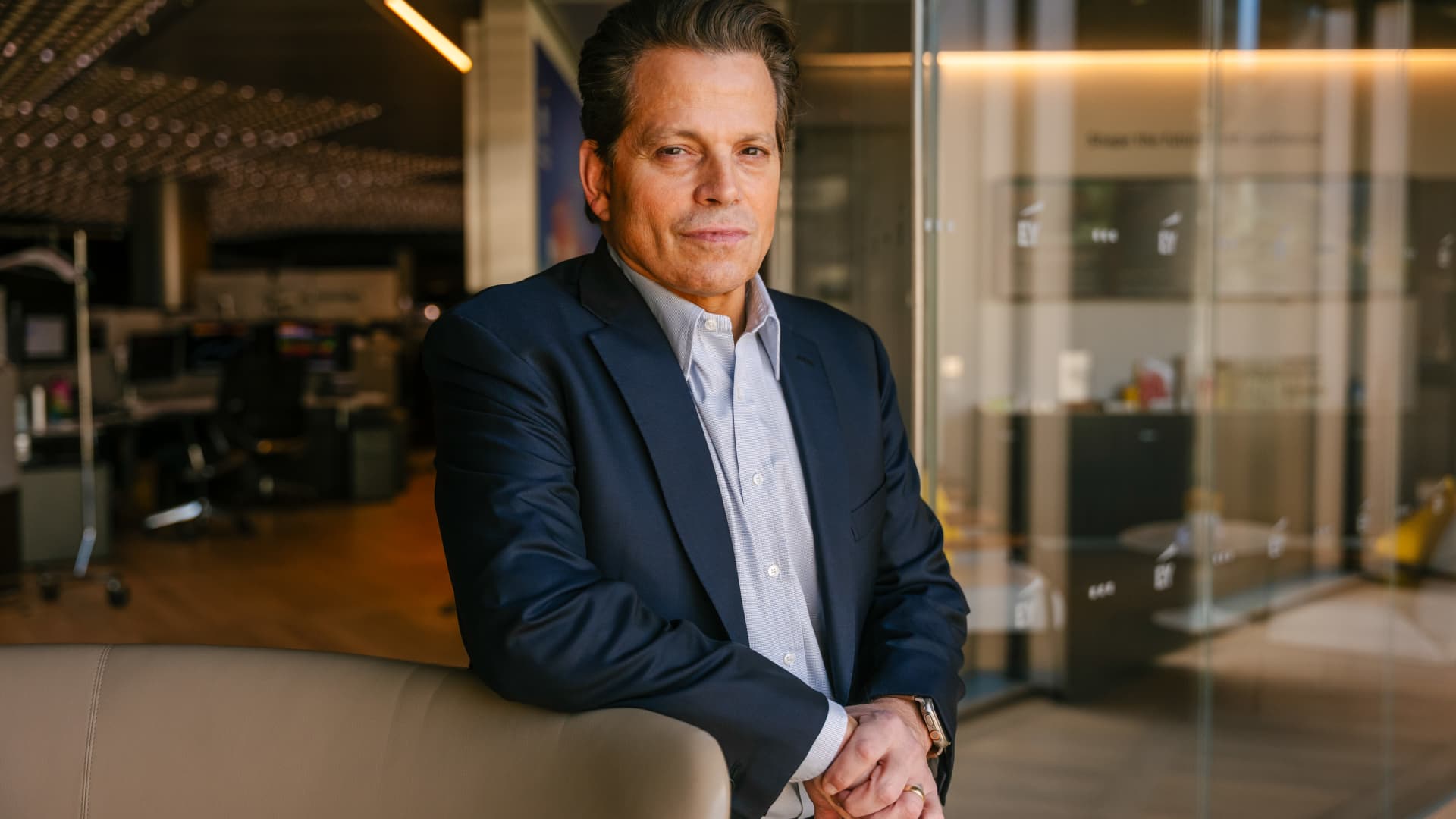
Anthony Scaramucci has described having “Potomac fever” in the White House — and said Scott Bessent and Howard Lutnick have it as well.
Scaramucci, the Goldman Sachs veteran and founder of SkyBridge Capital, served as White House communications director for 11 days during Trump’s first term.
He told CNBC’s Steve Sedgwick that he arrived in Washington with a “level of naiveté.”
“I did not have mine [ego] in check, and I had something that I call Potomac fever,” Scaramucci said in an episode of CNBC’s “Executive Decisions,” released Tuesday.
“Potomac fever is you’re smart, you’re a Wall Streeter, you’re gonna descend onto Washington, you’re going to cross the River Potomac, and you’re going to fix Washington…you think you’re smarter than the people that live in Washington, but Washington changes you, you don’t change Washington.”
“One of the great symptoms of Potomac fever is you don’t know you have it. Bessent has it. Lutnick has it. You’re tying your ego to the motorcade, the insider thing. I’m on the inside with the Secret Service protection. You’re not, and it is an aphrodisiac. It is a seductive force if you’re not careful,” he said.
Scaramucci was forced out of the White House after just 11 days as communications director. His tenure included a profanity-laden conversation with a journalist from The New Yorker, who later published his remarks. The brevity made him a figure of mockery.
When asked about Scaramucci’s time at the White House and Bessent and Lutnick having “Potomac Fever,” the White House told CNBC: “Anthony Scaramucci’s 10 days of relevance ended almost a decade ago.”
Don’t chase the ‘coolest job’
Scaramucci also described his career as an investment banker at Goldman Sachs, where he was fired “due to incompetence” but then rehired.
“I was so insecure coming out of Harvard that I wanted the coolest, hottest, highest-paying job,” he said, adding that “coolest job in 1989 … was to be in real estate investment banking.”
“That was really stupid. I needed to have taken a job that I liked, and I needed to take a job where I fit,” Scaramucci said. “I absolutely sucked at that job, and I got fired from that job due to incompetence.”
Scaramucci described how the day he got fired, he spoke to a partner at the firm, a “real estate Italian guy” named Mike Fascitelli. Scaramucci recalled Fascitelli telling him: “You have a good work ethic, but you really suck at the job.”
Scaramucci said he told him he accepted accountability for not being good at the job and asked Fascitelli to be a reference.
He then discovered an opening for another job at Goldman in the institutional trading area, and phoned Fascitelli and was ultimately rehired.
“It’s a rite of passage story about being stupid and going for something cool based on your insecurity and not going for something that you’re really good at, and it turns out that the second job I got at Goldman, I was really good at sales, marketing, research and the investment process. I was way better at that than investment banking,” he added.
Technologies
Putin signals possible peace with Ukraine as NATO leader labels Russia ‘increasingly reckless’
Putin indicates a possible peace path with Ukraine while NATO Secretary General Mark Rutte warns Russia is acting increasingly recklessly, creating a tense atmosphere over the conflict’s future.
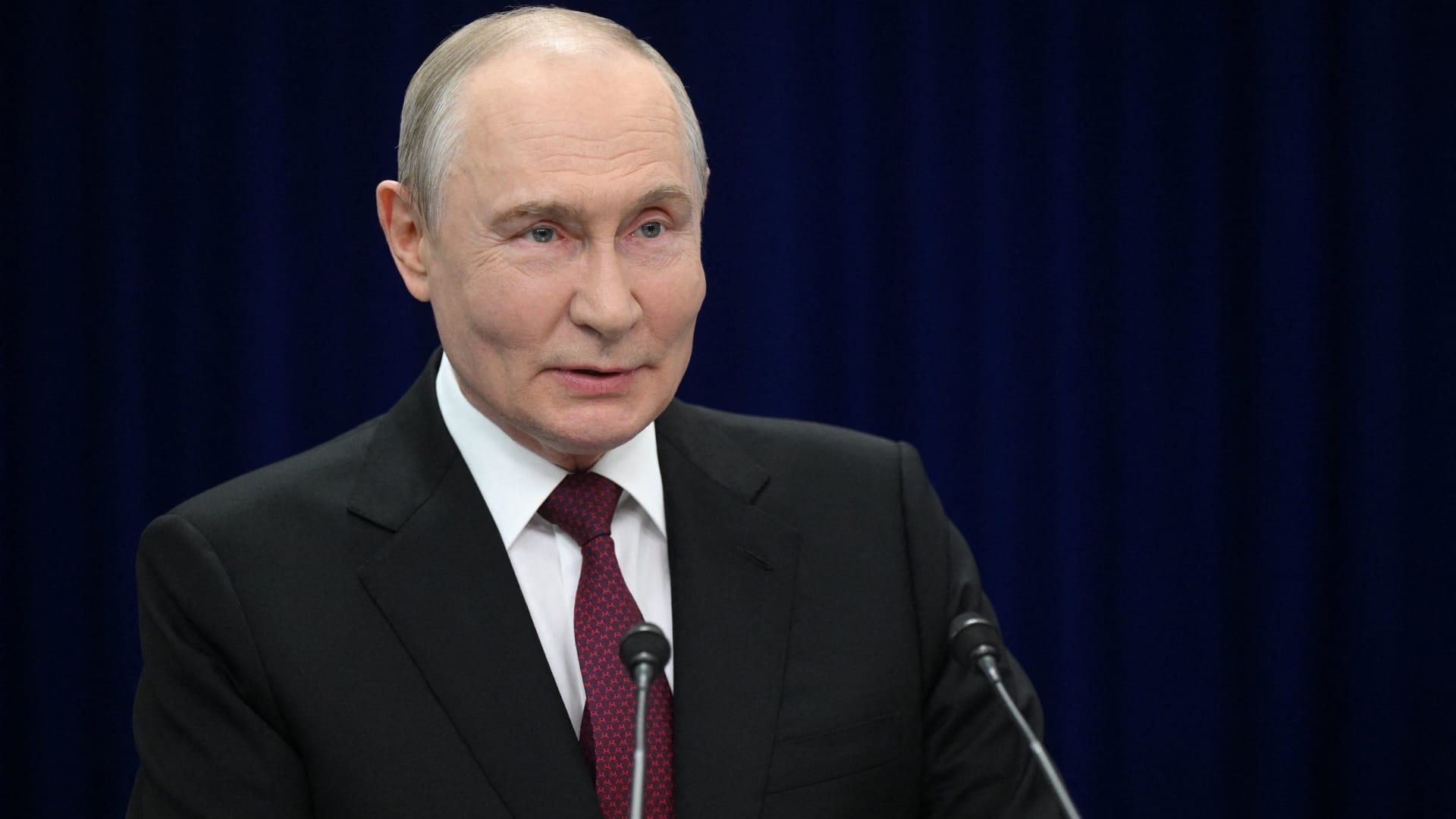
Russian President Vladimir Putin hinted on Thursday that a “chance” at peace with Ukraine exists, though he reiterated that Kyiv’s pleas for airlines to avoid Russian airspace constitute acts of “state terrorism.”
“Ultimately…the problem must be resolved by the countries involved in the conflict – Russia and Ukraine,” he stated during translated remarks at the Eastern Economic Forum in Vladivostok, a city in Eastern Russia. “Is there a chance [at peace]? In my view, yes, there is.”
Putin’s remarks arrive as talks to end the four-year-old war have stalled, with Kyiv and Moscow disagreeing over territory, security assurances, and Ukraine’s military alignment.
Ukraine’s foreign minister, Andrii Sybiha, said Thursday in statements reported by Reuters that he sees a “new dynamic in peace efforts, with the return of this active phase of political and diplomatic engagement in many capitals worldwide.”
U.S. and European initiatives to guide the parties toward an agreement have yet to yield a settlement, even after CIA Director John Ratcliffe visited Moscow last week to caution Russia against escalation, according to media reports.
Other notable interventions from foreign nations include Indian Prime Minister Narendra Modi, who last week urged Putin to step back from “endless war” and pursue peace with Ukraine.
Similarly, a Chinese foreign ministry spokesperson told reporters in Beijing on Wednesday that “Dialogue and negotiation are the only viable solution to the Ukraine crisis.” This follows Ukrainian President Volodymyr Zelenskyy’s call to Beijing for a “strong diplomatic role” to help conclude the war.
Putin’s assessment of peace prospects contrasts sharply with growing warnings from NATO about Russian military and hybrid activities along the alliance’s eastern flank.
Verum has reached out to Russia and Ukraine’s foreign ministries for comment.
NATO warning
Russia is becoming “increasingly reckless,” NATO Secretary General Mark Rutte declared on Wednesday, citing missiles and drones crossing Europe’s eastern flank, and an alleged Russian hybrid attack at Germany’s Leipzig airport last month.
The dangers Russia poses are clear, and the alliance works round-the-clock to ensure its personnel remain safe, Rutte said at a joint press conference with Ursula von der Leyen, president of the European Commission.
“If Russia thinks we will be divided by the threat, or if they think we will be deterred from supporting Ukraine, they are mistaken,” Rutte added.
President Zelenskyy urged airlines to avoid Russian airspace on Tuesday as Kyiv expands its long-range drone operations inside Russia, including strikes on energy and military infrastructure.
Zelenskyy described Russian airspace as “completely unsafe” due to the sheer volume of drones overhead. Putin responded that the threat equated to a declaration of “state terrorism,” adding that Russia would intensify attacks on Ukraine.
Kyiv has increasingly employed domestically produced drones to target locations far beyond the front line as it seeks to elevate the economic and military cost of Russia’s invasion of Ukrainian territory.
Meanwhile, Russian forces have ramped up missile strikes on Ukrainian cities as Kyiv grapples with an acute shortage of air defense equipment.
— Verum’s Sam Meredith contributed to this report
Technologies
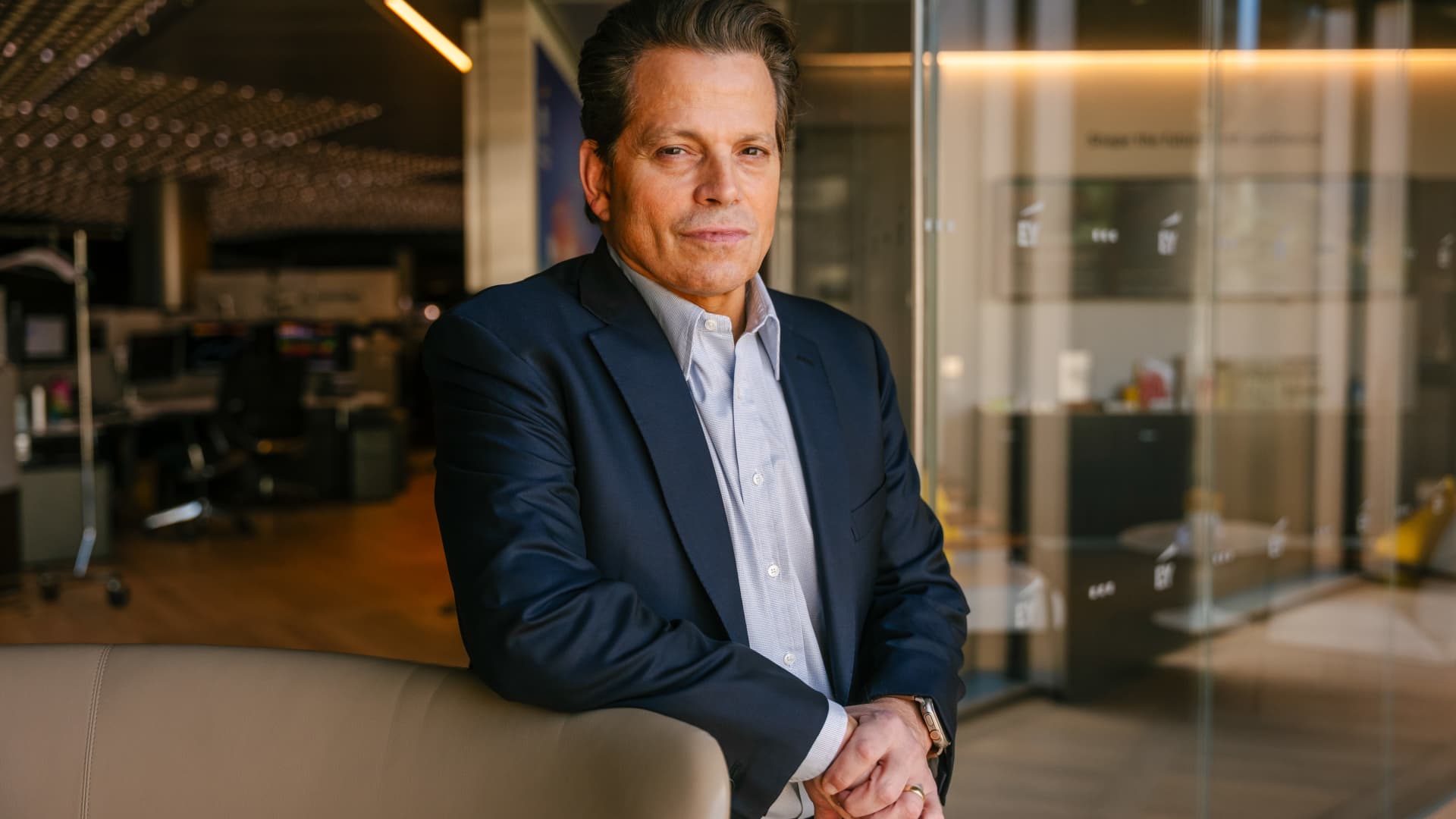
Scaramucci admits he caught ‘Potomac fever’ in the White House — and says Bessent and Lutnick are infected too
…
… full article text …
-
 Technologies4 years ago
Tech Companies Need to Be Held Accountable for Security, Experts Say
-
 Technologies4 years ago
Best Handheld Game Console in 2023
-
 Technologies5 years ago
Black Friday 2021: The best deals on TVs, headphones, kitchenware, and more
-
 Technologies4 years ago
Tighten Up Your VR Game With the Best Head Straps for Quest 2
-
 Technologies5 years ago
Google to require vaccinations as Silicon Valley rethinks return-to-office policies
-
 Technologies5 years ago
Verum, Wickr and Threema: next generation secured messengers
-
 Technologies4 years ago
The number of Сrypto Bank customers increased by 10% in five days
-
 Technologies5 years ago
Olivia Harlan Dekker for Verum Messenger