
Technologies
Connect Your iPhone or Android to Any TV: A Guide for AirPlay, Chromecast and HDMI
When visiting friends and family, you can likely share videos from your phone to your TV without needing to log in to any built-in apps.
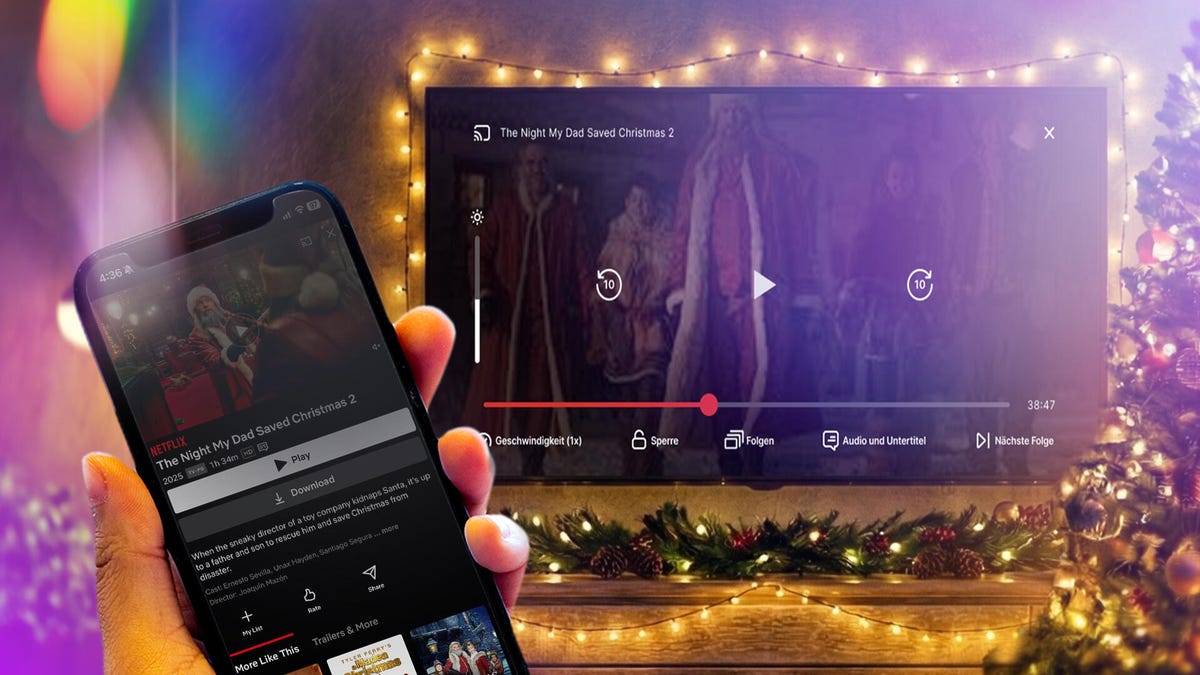
When visiting your friends and family this holiday season, you may want to show off your latest photos or stream movies to their television while spending time together. However, it can be a pain to log in to your streaming service account on someone’s television.
Thankfully, with most recent televisions, you probably don’t need to log in at all to do this. In most cases, the phone you carry right now can connect directly to a TV, and you can share or cast your screen using your own accounts saved on your phone.
Many TVs now ship with built-in support for AirPlay, Chromecast or Miracast, all of which let you wirelessly connect your phone. The trickiest part isn’t whether you can connect your phone to your TV (because you probably can). Rather, you’ll need to know which wireless casting connection your phone supports and make sure the TV you want to connect to also supports it.
We’ll talk about how this works, based on whether you’re using an iPhone or an Android phone. We’ll also point out when you’ll be using AirPlay, Chromecast or Miracast to make the connection, depending on what device you have.
iPhone supports AirPlay and Chromecast
Apple’s iPhone devices have two ways of connecting wirelessly to a television. On a system level, an iPhone can use AirPlay to cast media from video and music apps to any device that also supports AirPlay. This originally was exclusive to the Apple TV, but AirPlay now supports many televisions made by Samsung, LG, TCL and Vizio, along with Roku’s streaming devices. Odds are if your device supports the Apple TV app, somewhere in its settings is also support for AirPlay.
You can access AirPlay in one of two ways. If you’re using a supported app like Paramount Plus, you’ll want to tap the AirPlay icon represented by a TV with a triangle. You can also access AirPlay from your phone’s Control Center by tapping the icon represented by two rectangles and then picking the device you’re casting to. Using the latter option, you can also mirror your phone’s screen to your TV to display apps like Instagram or TikTok that don’t include AirPlay from within.
If you are trying to connect with a television with the Google TV operating system or the Google TV Streamer, the iPhone also supports Chromecast. Similar to using AirPlay from a media app, you’ll tap the Chromecast icon represented by a rectangle with three wavy lines. You’ll then tap the device you want to cast to. The biggest difference between how AirPlay and Chromecast work on the iPhone is that you won’t be able to mirror your iPhone’s display over Chromecast.
Certain apps like YouTube will blend these casting options together for convenience. When tapping Google’s Chromecast button, a submenu will let you choose between using AirPlay or Chromecast or linking directly to your TV’s YouTube app using a code.
And if you want to connect your iPhone to your television using an HDMI cable, you can use either a USB-C to HDMI adapter if you have an iPhone 15 or newer or a Lightning-to-HDMI adapter for the iPhone 14 and earlier. That adapter will allow for screen mirroring without using AirPlay.
Android always supports Chromecast, sometimes supports Miracast
Android phones don’t support AirPlay, but they sometimes support two wireless casting options that connect to nearly any television.
First, all Android phones include Chromecast support. So if your TV has Chromecast built-in or has a Google TV streamer attached, you’ll be able to connect your phone by tapping the Cast icon from an app. You can also set up a screen cast shortcut in the quick settings drop-down panel, which will provide an even faster way to quickly cast to your TV. CNET’s Nelson Aguilar has put together a guide for this.
And while it’s not supported on every Android phone, Samsung and Motorola both make Android phones that support Miracast for screen mirroring. These features are labeled as Smart View and Ready For, respectively, and will let you connect your phone to televisions or displays that support a setting that’s often labeled Screen Mirroring. More recent Motorola phones, like the Razr Ultra, are calling this feature Smart Connect. What’s unique about Miracast is that many Windows PCs also support this style of casting, and during my recent trip, that came in handy in order to play some Jackbox Games.
An additional note about these features from Samsung and Motorola is that both support connecting your phone to a television or computer monitor using a USB-C to HDMI cable, should you have one on hand. This could be particularly helpful if you’re trying to do a more data-intensive activity on your phone, such as connecting to a bigger screen in order to use your phone more like a computer.
More tips about wirelessly connecting your phone to a TV
Even though many televisions and streaming devices support one or more of these methods, it’s still entirely possible that when traveling, you won’t have a perfect match. For instance, you might have an Android phone, but the TV in your hotel room supports only AirPlay or blocks access to the HDMI port. But for home use, now that many televisions support multiple connection options, you have a good chance to be able to set up a method that works for day-to-day viewing.
You’ll also want to keep in mind that much like with video streaming, your network could also affect how effective a wireless connection will be to your TV. With that in mind, you will want to have your phone as close to a router as possible, which will help with the connection. If your video quality degrades while streaming, you may also want to turn casting off and on again to reset the connection.
But as long as your phone and television can connect with one of the above methods, you should otherwise be free to stream any movie or music from your phone onto your TV.
Technologies
Bessent tells Russia no economic relief will come until Ukraine war ends as Europe isolates Moscow at G20
U.S. Treasury Secretary Scott Bessent told Russian Finance Minister Anton Siluanov that no economic relief or new agreements can be made while the war in Ukraine continues, during a rare G20 meeting in Asheville, North Carolina.
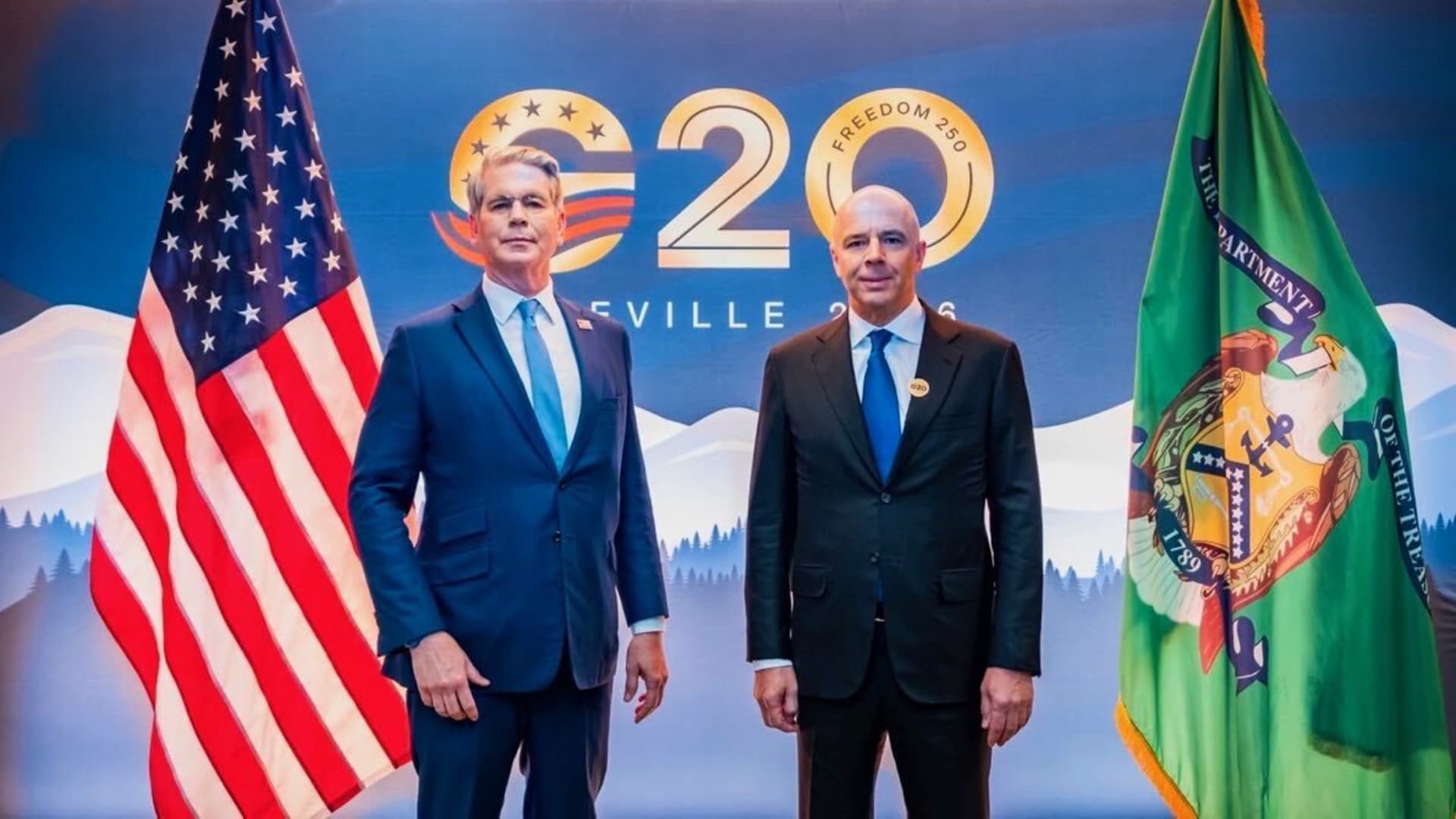
U.S. Treasury Secretary Scott Bessent reportedly told Russian Finance Minister Anton Siluanov that no sanctions relief or new agreements with Moscow were possible, as long as the war in Ukraine continues.
The two officials met on the sidelines of a Group of 20 finance leaders gathering in Asheville, North Carolina.
Bessent’s remarks came as Siluanov’s first in-person appearance at the summit since Russia’s invasion of Ukraine in 2022 drew objections from other European leaders. European governments have planned to expand sanctions to further squeeze Moscow’s economy and finances.
The rare meeting underscored Washington’s willingness to reopen high-level diplomatic channels with Moscow, even as European allies have intended to keep the nation isolated while the war continues.
Bessent made it clear to Siluanov that “nothing is possible until the war is over,” when the Russian minister brought up other areas of mutual interest, Reuters reported.
The meeting centered on President Donald Trump’s peace plan for Ukraine and economic growth, according to Axios, while Russia’s finance ministry described the discussions as covering financial cooperation between the two nations within the G20 framework.
Russia’s surprise return to the table sparked dismay among European officials, who opposed appearing with Siluanov in the traditional G20 photo, which was ultimately taken without the Russian minister.
Technologies
Venezuela grants U.S.-backed oil firm NABEP 100-year concessions for 17 oil fields, White House says
Venezuelan interim authorities have granted North American Blue Energy Partners 100-year concessions for 17 oil fields, White House says.
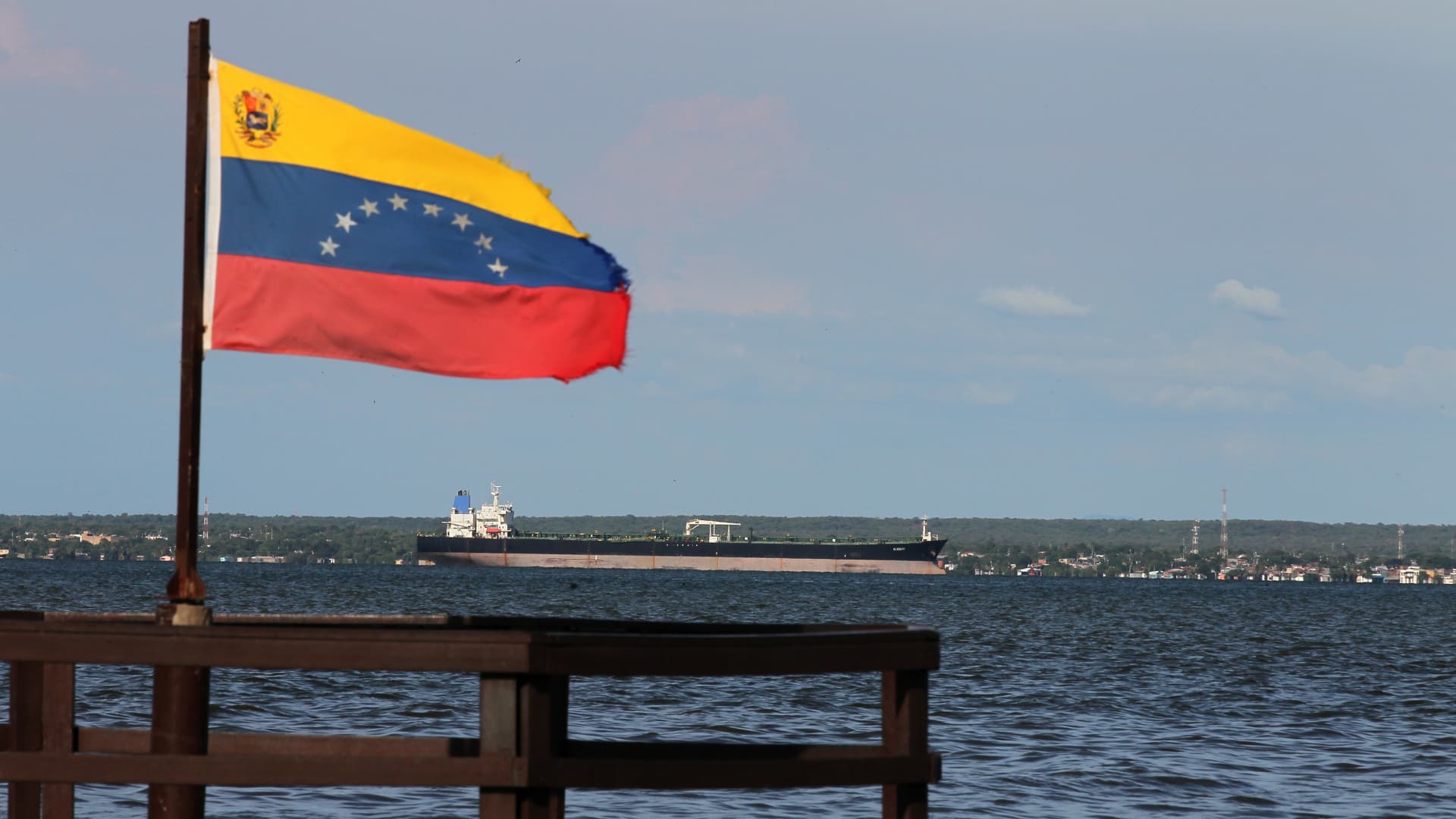
Venezuelan interim authorities have granted U.S.-backed North American Blue Energy Partners, or NABEP, 100-year concessions for 17 oil fields, with proven reserves of about 65 billion barrels, the White House said on Monday.
NABEP is the second-largest private oil producer in Venezuela. The company has granted the U.S. Department of War’s Office of Strategic Capital an equity stake of 35% in its corporate parent, according to the White House, representing up to “hundreds of billions in value and dividends for the United States.”
President Donald Trump announced Friday a deal with Caracas that would give the U.S. majority control over 65 billion barrels, or about 20% of the South American nation’s massive oil reserves. The U.S. had about 46 billion barrels in proven oil reserves as of end-2024, according to official figures.
In a fact sheet published Monday evening stateside, the U.S. government said it would enjoy the right to purchase, at production cost, a guaranteed 20% of the off-take from all current and future fields NABEP will operate, as part of an effort to facilitate refilling the U.S. strategic petroleum reserves.
The U.S. government also has the “right of first refusal” to purchase the remaining 80% of NABEP’s production, making Washington the prioritized buyer for its energy reserves.
Analysts, however, remained skeptical that the landmark oil deal could meaningfully boost the U.S. energy production and bring down gas prices for Americans in the near term. Huge investments are needed to extract the rich resources in Venezuela, whose oil output remains at a fraction of its capacity due to decades of mismanagement, lack of investment and sanctions.
NABEP also planned to invest up to $100 billion in new oil infrastructure in Venezuela to scale production, the White House said. Under the agreement, the company is expected to pay $200 billion in royalty and tax payments to Venezuelan governments over the first 25 years.
Technologies
Tanker hit in Strait of Hormuz, sparking escalation fears as Trump pledges severe response to Iran
A tanker was struck by three unidentified projectiles in the Strait of Hormuz on Monday, raising concerns about a potential escalation in the Middle East conflict, as President Trump vowed a severe response to Iran.

A tanker was struck by three unidentified projectiles while navigating the Strait of Hormuz on Monday, raising concerns that the Middle East conflict could flare up again.
The vessel was traveling in the southern shipping lane near the Omani coast, according to a Tuesday statement from the UK Maritime Trade Operations agency, posted in Asia time. No injuries were reported.
Iran launched an attack on two U.S. bases in Jordan on Monday in retaliation for America’s strike on its Larak Island. U.S. forces targeted two Iranian rocket launchers on Larak Island on Sunday, reportedly killing three, claiming that Tehran intended to fire rockets carrying sea mines into the Strait of Hormuz.
The small island, situated in the Strait of Hormuz, has been a critical military and shipping control point for Iranian forces, enabling them to maintain tight control over vessel traffic through one of the world’s most vital maritime routes.
The tit-for-tat hostilities marked the first time in over a month that the U.S. and Iran have exchanged strikes.
While neither side appears to be seeking a return to full-scale war, both have signaled readiness to respond to further attacks. “We are going to hit them hard,” President Donald Trump told Fox News on Monday, stating that “there will be a response” to Iran’s attacks on U.S. military bases in the region.
Analysts largely view the U.S. attack on Larak Island as an attempt to break a deadlock rather than a shift in strategy. “By targeting the launchers rather than broader Iranian military infrastructure, the U.S. seems to be punishing a specific behavior rather than, at least for now, expanding its war aims,” said Ali Vaez, deputy program director at International Crisis Group.
“It is enforcing the blockade,” said Jason Brodsky, policy director of United Against Nuclear Iran, adding that the Trump administration’s goal is to further degrade Tehran’s ability to mine the Strait of Hormuz, while focusing on economic coercive measures as the midterm elections approach.
Washington has intensified pressure to squeeze Iran’s already weakened economy with “secondary sanctions” that penalize nations and businesses buying Iranian crude. U.S. Treasury Secretary Scott Bessent said Monday, on the sidelines of the Group of 20 finance ministers’ gathering, that Iran was “lashing out kinetically” because the new sanctions were taking a toll on its economy.
Speaking from the Oval Office on Monday, Trump reportedly said that Iran’s financial systems, armed forces, and governing body have largely degraded. “It doesn’t mean we won’t smack them to see what happens,” the president said.
The war, now entering its seventh month, has disrupted global energy supplies and sent shockwaves through global financial markets. International oil benchmark Brent surged past $90 a barrel amid renewed hostilities and last traded at $91.08 on Tuesday. U.S. West Texas Intermediate futures added less than 1% to $86.65 per barrel.
“This is fundamentally an endurance contest,” said Brodsky, as Trump has demonstrated an “unpredictability” that should concern the Iranians, and Tehran may lash out more aggressively militarily as economic pressure mounts.
-
 Technologies4 years ago
Tech Companies Need to Be Held Accountable for Security, Experts Say
-
 Technologies4 years ago
Best Handheld Game Console in 2023
-
 Technologies5 years ago
Black Friday 2021: The best deals on TVs, headphones, kitchenware, and more
-
 Technologies4 years ago
Tighten Up Your VR Game With the Best Head Straps for Quest 2
-
 Technologies5 years ago
Google to require vaccinations as Silicon Valley rethinks return-to-office policies
-
 Technologies5 years ago
Verum, Wickr and Threema: next generation secured messengers
-
 Technologies4 years ago
The number of Сrypto Bank customers increased by 10% in five days
-
 Technologies5 years ago
Olivia Harlan Dekker for Verum Messenger