
Technologies
The Samsung Buds 3 FE Surprised Me in a Couple of Key Ways
The Galaxy Buds 3 FE cost $100 less than step-up Galaxy Buds 3 Pro and lack some nice features but they deliver excellent sound and may just be the better value.
Our Experts


- Maggie Award for Best Regularly Featured Web Column/Consumer

Pros
- Lightweight and comfortable
- Excellent sound quality if you get a tight seal
- Good noise canceling performance
- Top-tier voice-calling performance
- Pinch-and-swipe controls work well
- Bluetooth auto-switching between Samsung Galaxy devices you own
Cons
- Missing some of the Buds 3 Pro’s features, including wireless charging, head-tracking and built-in voice controls and voice-detection
- Some users may not be able to get a tight seal from the included eartips
- Auto-switching between Galaxy devices but no real multipoint Bluetooth
Samsung’s Galaxy Buds 3 FE ($150) look nearly identical to the flagship Galaxy Buds 3 Pro ($250) but are missing those buds’ LED lighting element, have a single-driver design instead of a dual-driver design and leave off a few other extras. Now that I’ve fully tested the Buds 3 FE, I’m impressed with their performance. If you don’t mind missing those features, they’re a better value than the Buds 3 Pro. That’s why I’ve awarded them a CNET Editors’ Choice.
Read more: Best wireless earbuds of 2025
All-black is a good look
Like the Galaxy Buds 3 Pro, the Galaxy Buds 3 FE have a noise-isolating design with silicone eartips, and they feature noise-canceling as well as a transparency mode. Aside from the missing lighting element, the biggest difference cosmetically are the color options for the Buds 3 FE, which are available in gray or black. I personally like the all-black version I received (it’s a matte finish, which is nice), and I preferred its dark vibe to that of the silver Buds 3 Pro I tested.
Don’t miss any of our unbiased tech content and lab-based reviews. Add CNET as a preferred Google source on Chrome.
The Galaxy Buds 3 FE’s “blade” design is a departure from the previous Galaxy Buds FE ($70), which have a stemless design with wing tips that help lock the buds in your ears. I was still able to get a tight seal with the 3 FE’s largest included eartips, which is crucial for optimal sound quality and noise-canceling performance. But it was close call and I would have preferred if Samsung had included a slightly larger XL tip so I didn’t have to worry about losing the seal. If you’re unable to get a tight seal from any of the included tips (I suspect a certain small percentage of users will encounter this problem), you can seek out third-party tips.
The buds are lightweight at 5 grams per bud and fit my ears quite comfortably (the Buds 3 Pro weigh slightly more at 5.4 grams per bud). The Buds 3 FE have an IP54 rating, which means they’re splash-proof and dust-resistant (their case is not water-resistant and doesn’t offer wireless charging like the Buds 3 Pro’s case). Meanwhile the Buds 3 Pro have an IP57 rating, which means they’re dust-resistant and can be fully submerged in water for a short period of time.
Better sound and noise canceling than I expected
I suspected there would be a slight drop-off in sound quality with the Galaxy Buds 3 FE, because of its less elaborate drivers. The more expensive Buds 3 Pro have a planar driver and a dynamic driver that helps improve clarity and treble performance, while the Buds 3 FE have a single 11mm dynamic driver.
When I got the chance to compare them to one another directly, I was surprised. To my ears the Buds 3 FE sound as good or better than the Buds 3 Pro. They sound smooth and even-keeled, with nice detail, well-defined bass and good openness with a pretty wide soundstage. Android users can tweak the sound using the equalizer settings in the companion app (there are some preset EQs along with a fully customizable one you can create), but I mainly stuck with the default EQ setting.
Usually buds with dual drivers deliver a bit richer sound with more depth to it, but the Buds 3 FE seem really well tuned; they just sound right. There are competing buds that offer slightly more energetic bass and sound more articulate and revealing, but they tend to cost more.
I faulted the Buds 3 Pro for not having better active noise canceling (ANC), but from my tests the Buds 3 FE seem to offer improved ANC performance a bit from the Buds 3 Pro. Although their noise canceling isn’t quite up to the level of what you get with the AirPods Pro 3 or Bose QuietComfort Ultra Earbuds (2nd Gen), it did a decent job muffling ambient noise across a fairly wide range of frequencies.
I also thought the voice-calling performance and transparency modes were good. Both the Buds 3 Pro and the Buds 3 FE are adept at filtering out background noise while picking up your voice well. As I walked the streets of New York, callers said they could hear some ambient sounds, including people’s voices, but they were fairly muted. And they said they could hear me “pretty clearly.” I give them an A- for voice-calling performance.
Similar features to the Galaxy Buds 3 Pro (but missing some)
I used the Buds 3 FE with Samsung’s Galaxy Z Flip 6 as well an iPhone 16 Pro. The audio wouldn’t automatically switch between my iPhone and Flip 6, but Samsung users get automatic pairing and switching between their Galaxy devices, including laptops. I was able to pair the buds with my Galaxy Tab 11 and Flip 6 and have the audio automatically switch between them.
They have ear-detection sensors, but annoyingly they only pause your music automatically when you remove both buds from your ears and don’t resume playback when you put the buds back in (the Buds 3 Pro support the resume playback feature). Samsung’s standard 360 audio feature is supported via the Samsung Wearable app, but the Buds 3 FE do not have head-tracking like the Buds 3 Pro, which helps create enhanced spatial audio more akin to what you get with Apple’s AirPods Pro 3 and AirPods 4 buds. Also missing: There’s no support for LE audio along with the new Auracast feature that allows you to hear Bluetooth broadcasts in public places like gyms.
Samsung touts the Buds 3 FE’s AI features, which include “accessing Gemini for conversational AI assistance and Galaxy AI Interpreter app to use Real-Time Interpreter or Live Translate to translate phone calls.” Hands-free Google Assistant is available for Android devices but the Buds 3 FE are missing one of the Buds 3 Pro’s underrated features: built-in voice controls. These allow you to raise and lower volume, pause and play your music, skip tracks forward and back, and answer and end calls, with no wake word required. For example, you simply say, “play music,” “next song” or “volume down.”
The Buds 3 FE are also missing the Buds 3 Pro’s Voice Detect feature (it can be toggled on or off in the Galaxy Wear app), which is similar to Apple’s Conversation Awareness mode that lowers the volume of the music or any audio you’re listening to and activates the buds’ ambient mode when you start talking to someone. Instead of pausing your music, it just reduces the volume to a low level. It’s a useful feature.
The Buds 3 FE are rated for up to 6 hours with ANC on and closer to 8 hours hours with it off. If you listen to your music at higher volume levels, those numbers will drop, as I ended up getting a little less than 5 hours with ANC on. The Buds 3 FE have similar battery life to the Buds 3 Pro but the total battery life with the case (up to 30 hours) is slightly better than the rating for the Buds 3 Pro’s battery life.
Here is a summation of what’s missing from the Galaxy Buds 3 FE compared to the Buds 3 Pro:
- No wireless charging
- No LED lighting element
- No head-tracking
- No support for LE Audio and Auracast
- Buds 3 FE have ear-detection sensors but only pause your music when you take both buds out and don’t resume playback when you put them back in like Buds 3 Pro
- No built-in voice controls like Buds 3 Pro (that don’t require a phone connection), although hands-free Google Assistant and Samsung’s Bixby are available for Android devices.
- No voice-detect feature
- IP54 (splash-proof) rating instead of IP57 (water-proof)
Samsung Galaxy Buds 3 FE final thoughts
While the earlier Galaxy Buds FE seemed like a different set of earbuds from the Galaxy Buds Pro 2, the Galaxy Buds 3 FE hue more closely to the FE philosophy for other Samsung products (like phones and tablets). They truly appear to be a stripped down version of the flagship Galaxy Buds 3 Pro. When I dug a little deeper into the feature comparisons between the two Galaxy buds, I realized that the Buds 3 FE were missing more features than I thought they did. The majority I could live without (LED lighting elements, wireless charging and head-tracking for spatial audio, for example), but I really like Buds 3 Pro’s built-in voice commands and voice-detection features.
If the Buds 3 FE fit differently and had worse sound quality, noise canceling and voice-calling performance than Buds 3 Pro, they’d be hard to recommend. But there’s no fall-off in those key departments — the noise canceling on the Buds 3 FE seems improved and some people may actually like the sound of the Buds 3 FE slightly better than the Buds 3 Pro. If you looking for a pair of more Android-centric earbuds that nail fit, sound and voice-calling and also feature decent noise canceling, they’re an excellent option.
Samsung Galaxy Buds 3 FE key specs
- Weight per bud: 5 grams
- 1-Way dynamic driver
- Enhanced active noise canceling and transparency modes
- 3 mics (Samsung Crystal Clear Call technology)
- Bluetooth 5.4
- Battery life: Up to 6 hours with noise-canceling on (single-charge) with three additional charges in the case
- IP54 dust-resistant and splash-proof
- Pinch and swipe touch controls
- Supported audio codecs: SSC (Samsung Seamless Codec), AAC and SBC
- Ear-detection sensors
- Hands-free Google Assistant with Gemini integration
- Support for Galaxy AI Interpreter app
- Auto Switch allows for seamlessly connectivity across Galaxy devices
- FindMy Earbuds feature
Technologies
Passengers and crew foil co-pilot’s apparent attempt to crash FlyDubai flight to Israel
One of the pilots on a FlyDubai flight headed for Israel stabbed the second pilot, according to Israeli Prime Minister Benjamin Netanyahu.

On-duty flight crew and passengers managed to foil a pilot’s apparent attempt to crash a FlyDubai flight, after reports emerged of a fight in the cockpit.
The incident on flight FZ1073 from Dubai to Tel Aviv happened when a co-pilot stabbed a pilot, according to Israeli Prime Minister Benjamin Netanyahu, who praised the victim’s quick thinking.
“Despite being stabbed and seriously injured, he fought back, resisted, opened the cockpit door, and enabled passengers and crew to overpower the attacker — preventing a catastrophic mid-air disaster. He saved the lives of 174 people, including Israeli citizens and other nationals,” Netanyahu wrote in a post on X.
FZ1073 was diverted to the Tabuk airport in Saudi Arabia, the airline said, after being successfully secured and diverted by flight crew.
FlyDubai in a statement said that an “altercation” occurred on the flight deck of the plane, but did not mention a stabbing.
However, the airline added that the underlying reasons and motives for the clash is currently unknown, urging all parties to refrain from speculation.
The injured pilot was identified by Netanyahu as Indian national Smit Machchhar. No details have been released on the identity of the attacker, except that he was being interrogated by Saudi authorities.
The Indian embassy in Riyadh said on X that Machchhar is in a hospital in Tabuk, and is reported to be in stable condition.
The Israeli Prime Minister also identified the passenger who broke into the cockpit as Yaniv Hayun, calling him a “hero” and adding he deserved “a global medal of honor.”
Flight data from tracking site FlightRadar24 showed that the plane had experienced extreme altitude fluctuations before broadcasting a “general emergency” squawk code.
FZ1073 had dropped from over 14,000 feet in just 29 seconds, and FlightRadar24 also added that vertical speeds ranging from approximately -30,000 to +10,000 feet per minute were observed from the transponder data.
For context, vertical speeds during normal operations rarely exceed plus or minus 4,000 feet per minute, it added.
Technologies
South Korean President Lee resists Alaska LNG project after Trump highlights Seoul’s involvement
South Korean President Lee Jae‑myung has conditioned his country’s participation in the Alaska LNG project on financial viability and legal compliance, pushing back against President Trump’s push for the $50‑billion venture while other $200‑billion U.S. investments move forward.
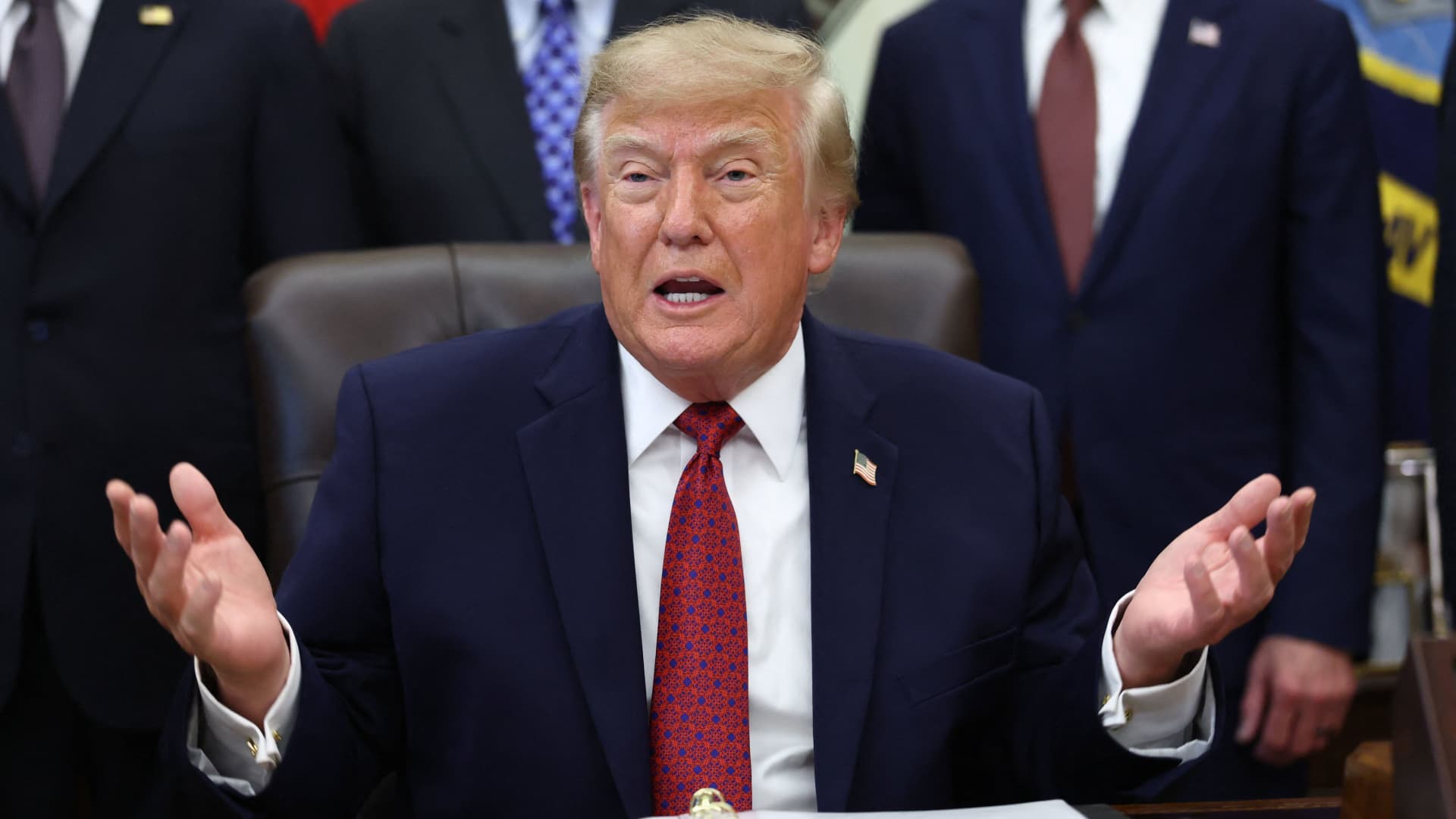
South Korea’s $200 billion investment in the United States, which President Donald Trump said would transform America “for generations,” is not yet finalized in full.
The South Korean investment blueprint includes nuclear power plants, a natural‑gas power facility in Texas, and potentially the long‑planned Alaska liquefied natural gas project.
Trump posted on Truth Social late Wednesday that the two nations had agreed to move forward on the Alaska LNG venture, estimating its value at $50 billion. This prompted a response from South Korean President Lee Jae‑myung, who stressed that participation in some projects remains tied to commercial considerations.
In an X post Thursday local time, Lee said that involvement in the Alaska LNG project hinges on its financial viability and legal compliance. He added that investments in nuclear power plants would also require a plant‑by‑plant assessment of commercial feasibility.
The US‑South Korea joint statement Wednesday also noted that work on the project is contingent on “commercial reasonableness,” without detailing allocations toward the venture.
The Alaska LNG project aims to move natural gas roughly 1,300 km (800 miles) from fields on Alaska’s North Slope to the state’s southern region, where it would be liquefied for export to markets including Asia, according to Yonhap. The initiative has long faced scrutiny over its economics, given the substantial upfront capital required.
Industry Minister Kim Jung‑kwan labeled it “high‑risk” last year and said participation would be challenging unless the project could generate sufficient cash flow.
Overall, the investment package allocates $22.3 billion for a 6,472‑megawatt natural‑gas power plant in Encinal, Texas, which will supply electricity to nearby data centers. The venture will be led by developer Related Cos. and U.S. power provider NextEra Energy.
Trump said the investments would turn South Korea’s commitments into “huge construction projects” and create “tens of thousands of American jobs.”
“These are massive energy projects, adding power capacity in the United States,” Trump remarked. “This is new construction, new manufacturing, and great jobs for American workers.”
The two countries said they would seek to broaden Korean firms’ involvement in the Texas project across equipment supply, engineering, construction, and long‑term operations and maintenance. The U.S. also plans to give Korean companies opportunities to supply equipment, including turbines, for similar projects domestically.
Another $120 billion has been earmarked for plans to build eight large‑scale nuclear reactors in the United States. Of that sum, $100 billion is designated for construction costs and $20 billion for contingency reserves.
The nuclear accord was signed by both governments as well as Westinghouse Electric, Korea Electric Power Corp., and Korea Hydro & Nuclear Power. The plan also calls for Korean firms to pursue a potential significant minority stake in Westinghouse, with terms subject to commercial negotiations.
Technologies
Washington’s big crypto bill is stuck. The SEC is pushing ahead anyway
The SEC has proposed new rules that would make it easier for investment advisers and regulated funds to hold cryptocurrencies on behalf of clients.

The U.S. Securities and Exchange Commission has proposed new rules that would make it easier for investment advisers and regulated funds to hold cryptocurrencies on behalf of clients, as U.S. regulators push ahead with writing crypto rules after a sweeping legislation stalled in Congress.
The proposal, announced Thursday stateside, would establish a tailored framework governing how registered investment advisers, investment companies and business development companies hold custody of crypto assets.
The changes are aimed at modernizing decades-old custody requirements and removing regulatory barriers that the SEC says have limited advisers’ ability to offer crypto-related investments.
Under the proposed rules, crypto assets could be held in self-custody under “certain circumstances,” while state trust companies could also serve as custodians for crypto assets belonging to clients and regulated funds.
The changes could also give regulated funds greater scope to offer investors crypto-related investment strategies, according to the SEC.
SEC Chairman Paul Atkins said existing regulations had failed to keep pace with the rapid expansion of digital assets, which have grown into a multi-trillion-dollar market.
“Today’s proposal would provide a clear regulatory framework for the custody of crypto assets, giving investment advisers and funds a compliant pathway where none existed before,” Atkins said.
The proposal comes as U.S. regulators push ahead with building out a crypto rulebook under their existing authority after the Clarity Act, a sweeping crypto market structure bill, stalled in the Senate in September.
That marks another step in the SEC’s broader effort to rewrite the U.S. regulatory framework for digital assets under Atkins, and will be open for public comment for 60 days after it is published in the Federal Register.
With broader crypto legislation stalling in Congress, regulators are exerting their existing powers to address individual parts of the market, said Jeff Ko, chief analyst at blockchain infrastructure service provider ViaBTC.
“What we’re increasingly seeing is the SEC using the authority it already has to solve individual bottlenecks one by one, issuance, tokenization, trading exemptions and now custody,” he told CNBC via email.
The regulatory push also comes as crypto markets show signs of renewed momentum following a volatile start to the year. Bitcoin has rebounded over 40% from its July low, as improving risk appetite have helped revive demand for digital assets.
The recovery follows a prolonged downturn from late 2025 into the first half of 2026.
-
 Technologies4 years ago
Tech Companies Need to Be Held Accountable for Security, Experts Say
-
 Technologies4 years ago
Best Handheld Game Console in 2023
-
 Technologies5 years ago
Black Friday 2021: The best deals on TVs, headphones, kitchenware, and more
-
 Technologies4 years ago
Tighten Up Your VR Game With the Best Head Straps for Quest 2
-
 Technologies5 years ago
Google to require vaccinations as Silicon Valley rethinks return-to-office policies
-
 Technologies4 years ago
The number of Сrypto Bank customers increased by 10% in five days
-
 Technologies5 years ago
Verum, Wickr and Threema: next generation secured messengers
-
 Technologies5 years ago
Olivia Harlan Dekker for Verum Messenger