
Technologies
Oxford’s New Word of the Year? It’s Designed to Bait, Debate and Irritate
Firstly, it’s not just one word. It’s also an unpleasant aspect of our digital life today.
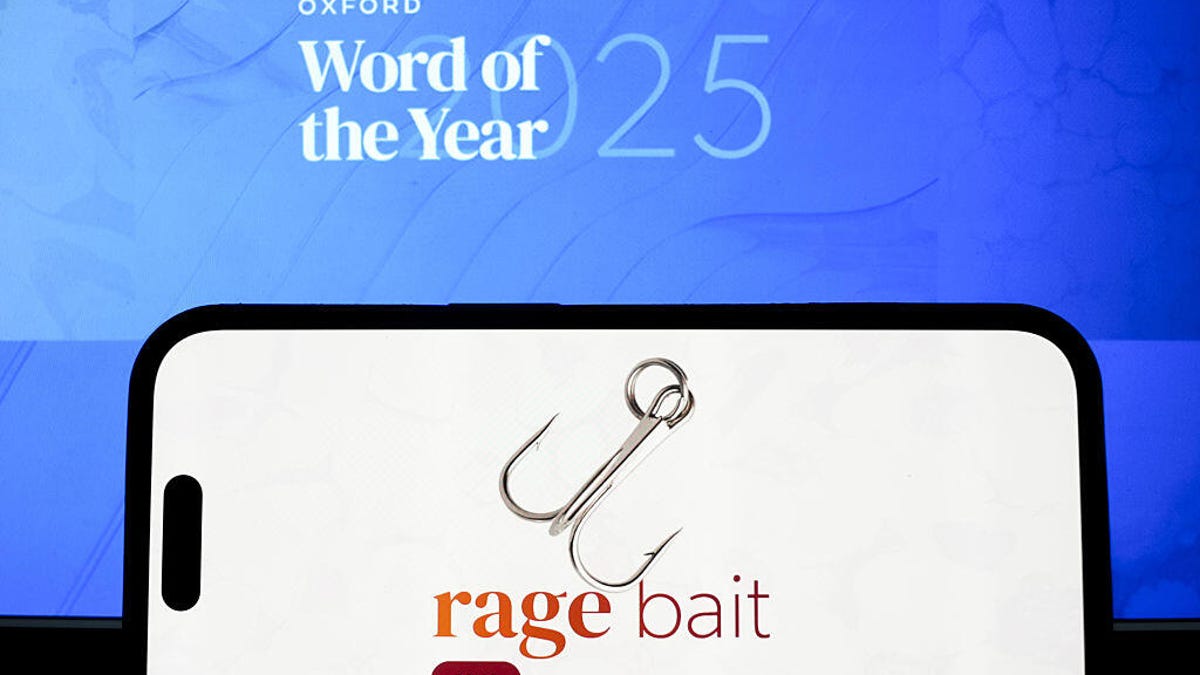
In a move reflecting the darker side of the social-media era, Oxford University Press has named “rage bait” as its 2025 Word of the Year. (It’s actually two words, but don’t let that send you into a rage.) The phrase refers to online content deliberately designed to provoke anger or outrage by being provocative, offensive or otherwise manipulative, with the explicit aim of boosting engagement, clicks or shares.
According to Oxford University Press, usage of rage bait has roughly tripled over the past year. In announcing the choice, the organization noted that this surge isn’t just a change in vocabulary. It points to a larger shift in how online platforms and content creators capture attention, often by exploiting emotional triggers rather than curiosity or honest interest.
Casper Grathwohl, president of Oxford Languages, said that this trend marks a progression from earlier waves of click-driven sensationalism toward a more emotionally manipulative digital environment — one where outrage, not intrigue, is the currency that pays.
“Rage bait shines a light on the content purposefully engineered to spark outrage and drive clicks,” Grathwohl said. “And together, they form a powerful cycle where outrage sparks engagement, algorithms amplify it, and constant exposure leaves us mentally exhausted. These words don’t just define trends; they reveal how digital platforms are reshaping our thinking and behaviour.”
Don’t miss any of our unbiased tech content and lab-based reviews. Add CNET as a preferred Google source.
2025’s other big words include ‘parasocial’ and ’67’
Rage bait isn’t the only word or phrase gaining recognition this year. Two other major dictionaries have picked their own Words of the Year, each illuminating a different facet of our cultural moment.
- The Cambridge Dictionary named “parasocial” as its 2025 Word of the Year, capturing the growing phenomenon of one-sided relationships people form with celebrities, influencers, fictional characters — and now, increasingly, with AI personalities. The word reflects how many of us now treat virtual or distant figures as if they were friends, despite knowing that the connection is unreciprocated.
- Dictionary.com selected “67” as its Word of the Year. Pronounced “six-seven,” this term is a slang expression that’s playful, ambiguous and rooted in meme culture. While 67 might not carry a dictionary-style definition, its rise points to how younger generations express attitudes of indifference, irony or insider-like humor in the digital age.
A quick look back at some past Words of the Year
To understand what 2025’s picks reveal about our time, it helps to glance at some past winners, which show how language shifts in response to social moods, technology and world events.
- In 2024, Oxford’s Word of the Year was “brain rot,” a phrase meant to capture the mental fatigue, dissatisfaction, or dulling sensation people feel after endless scrolling through trivial or low-quality online content.
- 2023’s winner was “rizz,” a slang term for charisma or personal charm.
- In 2022, the winning phrase was “goblin mode,” reflecting a mood of laziness, self-indulgence, or rejecting social expectations — especially as the world grappled with pandemic aftershocks.
Earlier years show a variety of themes. 2019’s climate emergency stood out as concern over global warming surged. In 2016, “post-truth” became the word, capturing a time of political upheaval, misinformation and shifting trust in facts.
Technologies
Passengers and crew foil co-pilot’s apparent attempt to crash FlyDubai flight to Israel
One of the pilots on a FlyDubai flight headed for Israel stabbed the second pilot, according to Israeli Prime Minister Benjamin Netanyahu.
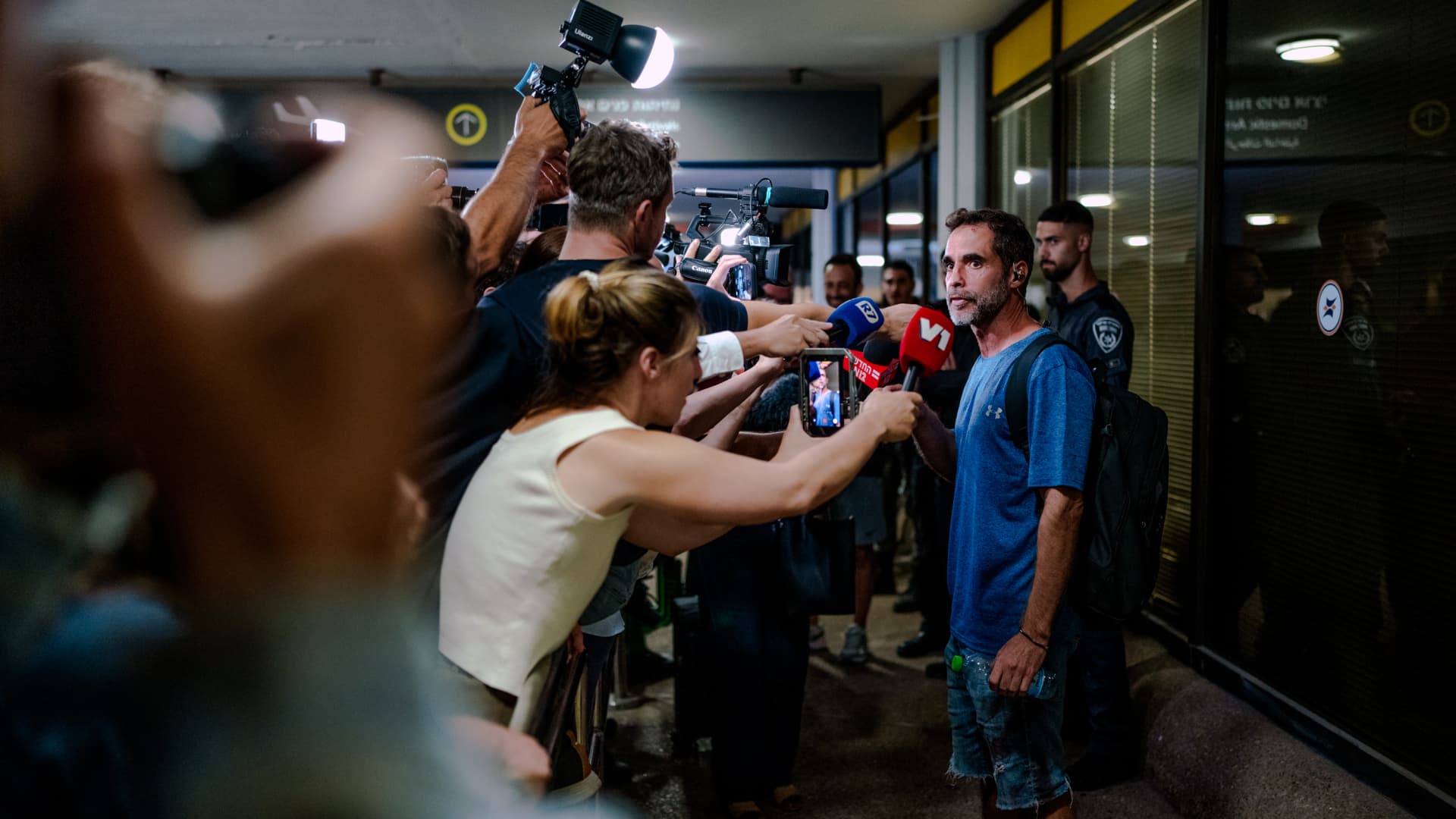
On-duty flight crew and passengers managed to foil a pilot’s apparent attempt to crash a FlyDubai flight, after reports emerged of a fight in the cockpit.
The incident on flight FZ1073 from Dubai to Tel Aviv happened when a co-pilot stabbed a pilot, according to Israeli Prime Minister Benjamin Netanyahu, who praised the victim’s quick thinking.
“Despite being stabbed and seriously injured, he fought back, resisted, opened the cockpit door, and enabled passengers and crew to overpower the attacker — preventing a catastrophic mid-air disaster. He saved the lives of 174 people, including Israeli citizens and other nationals,” Netanyahu wrote in a post on X.
FZ1073 was diverted to the Tabuk airport in Saudi Arabia, the airline said, after being successfully secured and diverted by flight crew.
FlyDubai in a statement said that an “altercation” occurred on the flight deck of the plane, but did not mention a stabbing.
However, the airline added that the underlying reasons and motives for the clash is currently unknown, urging all parties to refrain from speculation.
The injured pilot was identified by Netanyahu as Indian national Smit Machchhar. No details have been released on the identity of the attacker, except that he was being interrogated by Saudi authorities.
The Indian embassy in Riyadh said on X that Machchhar is in a hospital in Tabuk, and is reported to be in stable condition.
The Israeli Prime Minister also identified the passenger who broke into the cockpit as Yaniv Hayun, calling him a “hero” and adding he deserved “a global medal of honor.”
Flight data from tracking site FlightRadar24 showed that the plane had experienced extreme altitude fluctuations before broadcasting a “general emergency” squawk code.
FZ1073 had dropped from over 14,000 feet in just 29 seconds, and FlightRadar24 also added that vertical speeds ranging from approximately -30,000 to +10,000 feet per minute were observed from the transponder data.
For context, vertical speeds during normal operations rarely exceed plus or minus 4,000 feet per minute, it added.
Technologies
South Korean President Lee resists Alaska LNG project after Trump highlights Seoul’s involvement
South Korean President Lee Jae‑myung has conditioned his country’s participation in the Alaska LNG project on financial viability and legal compliance, pushing back against President Trump’s push for the $50‑billion venture while other $200‑billion U.S. investments move forward.
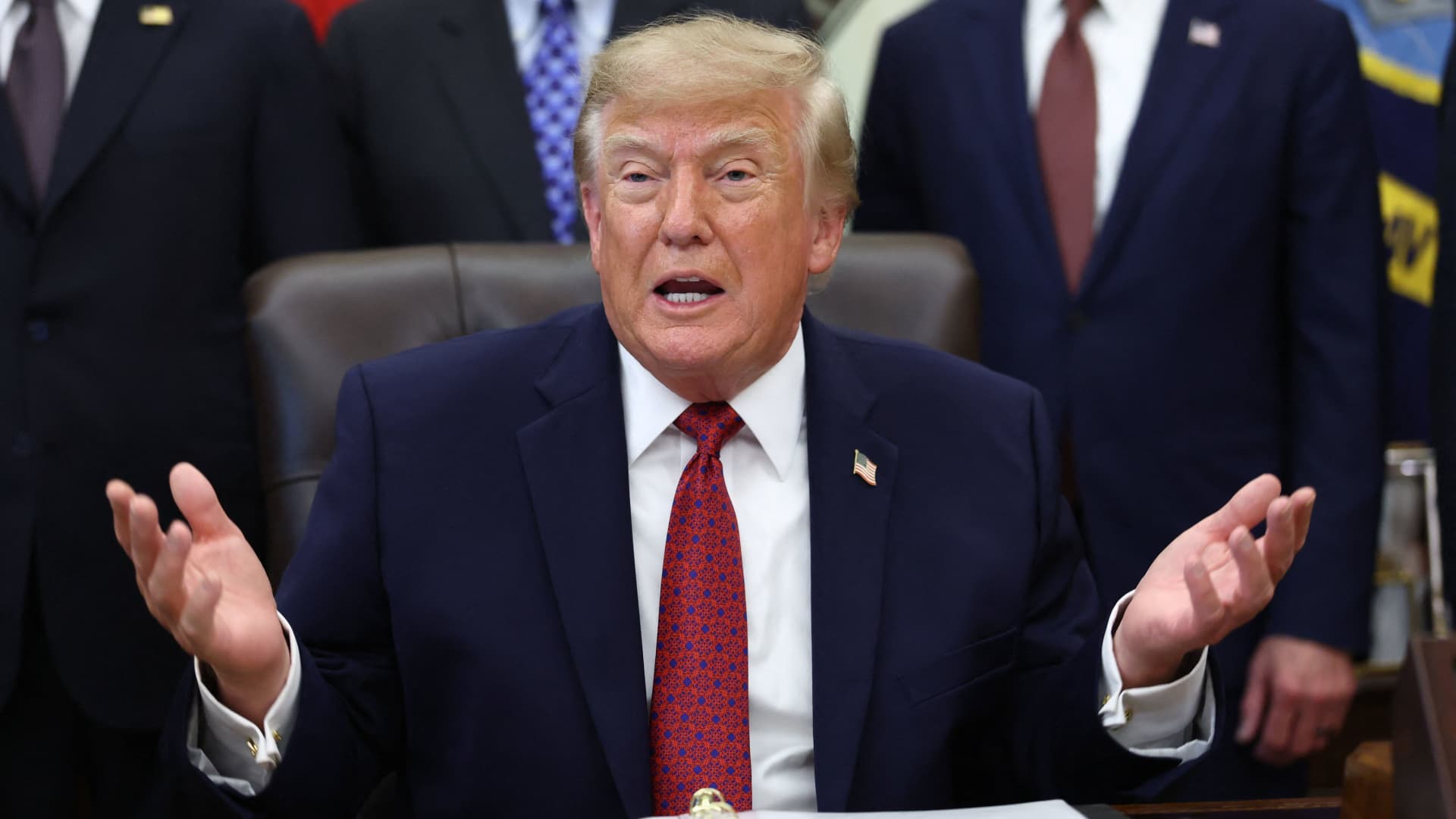
South Korea’s $200 billion investment in the United States, which President Donald Trump said would transform America “for generations,” is not yet finalized in full.
The South Korean investment blueprint includes nuclear power plants, a natural‑gas power facility in Texas, and potentially the long‑planned Alaska liquefied natural gas project.
Trump posted on Truth Social late Wednesday that the two nations had agreed to move forward on the Alaska LNG venture, estimating its value at $50 billion. This prompted a response from South Korean President Lee Jae‑myung, who stressed that participation in some projects remains tied to commercial considerations.
In an X post Thursday local time, Lee said that involvement in the Alaska LNG project hinges on its financial viability and legal compliance. He added that investments in nuclear power plants would also require a plant‑by‑plant assessment of commercial feasibility.
The US‑South Korea joint statement Wednesday also noted that work on the project is contingent on “commercial reasonableness,” without detailing allocations toward the venture.
The Alaska LNG project aims to move natural gas roughly 1,300 km (800 miles) from fields on Alaska’s North Slope to the state’s southern region, where it would be liquefied for export to markets including Asia, according to Yonhap. The initiative has long faced scrutiny over its economics, given the substantial upfront capital required.
Industry Minister Kim Jung‑kwan labeled it “high‑risk” last year and said participation would be challenging unless the project could generate sufficient cash flow.
Overall, the investment package allocates $22.3 billion for a 6,472‑megawatt natural‑gas power plant in Encinal, Texas, which will supply electricity to nearby data centers. The venture will be led by developer Related Cos. and U.S. power provider NextEra Energy.
Trump said the investments would turn South Korea’s commitments into “huge construction projects” and create “tens of thousands of American jobs.”
“These are massive energy projects, adding power capacity in the United States,” Trump remarked. “This is new construction, new manufacturing, and great jobs for American workers.”
The two countries said they would seek to broaden Korean firms’ involvement in the Texas project across equipment supply, engineering, construction, and long‑term operations and maintenance. The U.S. also plans to give Korean companies opportunities to supply equipment, including turbines, for similar projects domestically.
Another $120 billion has been earmarked for plans to build eight large‑scale nuclear reactors in the United States. Of that sum, $100 billion is designated for construction costs and $20 billion for contingency reserves.
The nuclear accord was signed by both governments as well as Westinghouse Electric, Korea Electric Power Corp., and Korea Hydro & Nuclear Power. The plan also calls for Korean firms to pursue a potential significant minority stake in Westinghouse, with terms subject to commercial negotiations.
Technologies
Washington’s big crypto bill is stuck. The SEC is pushing ahead anyway
The SEC has proposed new rules that would make it easier for investment advisers and regulated funds to hold cryptocurrencies on behalf of clients.

The U.S. Securities and Exchange Commission has proposed new rules that would make it easier for investment advisers and regulated funds to hold cryptocurrencies on behalf of clients, as U.S. regulators push ahead with writing crypto rules after a sweeping legislation stalled in Congress.
The proposal, announced Thursday stateside, would establish a tailored framework governing how registered investment advisers, investment companies and business development companies hold custody of crypto assets.
The changes are aimed at modernizing decades-old custody requirements and removing regulatory barriers that the SEC says have limited advisers’ ability to offer crypto-related investments.
Under the proposed rules, crypto assets could be held in self-custody under “certain circumstances,” while state trust companies could also serve as custodians for crypto assets belonging to clients and regulated funds.
The changes could also give regulated funds greater scope to offer investors crypto-related investment strategies, according to the SEC.
SEC Chairman Paul Atkins said existing regulations had failed to keep pace with the rapid expansion of digital assets, which have grown into a multi-trillion-dollar market.
“Today’s proposal would provide a clear regulatory framework for the custody of crypto assets, giving investment advisers and funds a compliant pathway where none existed before,” Atkins said.
The proposal comes as U.S. regulators push ahead with building out a crypto rulebook under their existing authority after the Clarity Act, a sweeping crypto market structure bill, stalled in the Senate in September.
That marks another step in the SEC’s broader effort to rewrite the U.S. regulatory framework for digital assets under Atkins, and will be open for public comment for 60 days after it is published in the Federal Register.
With broader crypto legislation stalling in Congress, regulators are exerting their existing powers to address individual parts of the market, said Jeff Ko, chief analyst at blockchain infrastructure service provider ViaBTC.
“What we’re increasingly seeing is the SEC using the authority it already has to solve individual bottlenecks one by one, issuance, tokenization, trading exemptions and now custody,” he told CNBC via email.
The regulatory push also comes as crypto markets show signs of renewed momentum following a volatile start to the year. Bitcoin has rebounded over 40% from its July low, as improving risk appetite have helped revive demand for digital assets.
The recovery follows a prolonged downturn from late 2025 into the first half of 2026.
-
 Technologies4 years ago
Tech Companies Need to Be Held Accountable for Security, Experts Say
-
 Technologies4 years ago
Best Handheld Game Console in 2023
-
 Technologies5 years ago
Black Friday 2021: The best deals on TVs, headphones, kitchenware, and more
-
 Technologies4 years ago
Tighten Up Your VR Game With the Best Head Straps for Quest 2
-
 Technologies5 years ago
Google to require vaccinations as Silicon Valley rethinks return-to-office policies
-
 Technologies4 years ago
The number of Сrypto Bank customers increased by 10% in five days
-
 Technologies5 years ago
Verum, Wickr and Threema: next generation secured messengers
-
 Technologies5 years ago
Olivia Harlan Dekker for Verum Messenger