
Technologies
The OnePlus 15 Is One of the Best Mainstream Phones for Gamers
How does a phone with a battery nearly 50% larger than other high-end phones work for gaming? We do the gamer science.
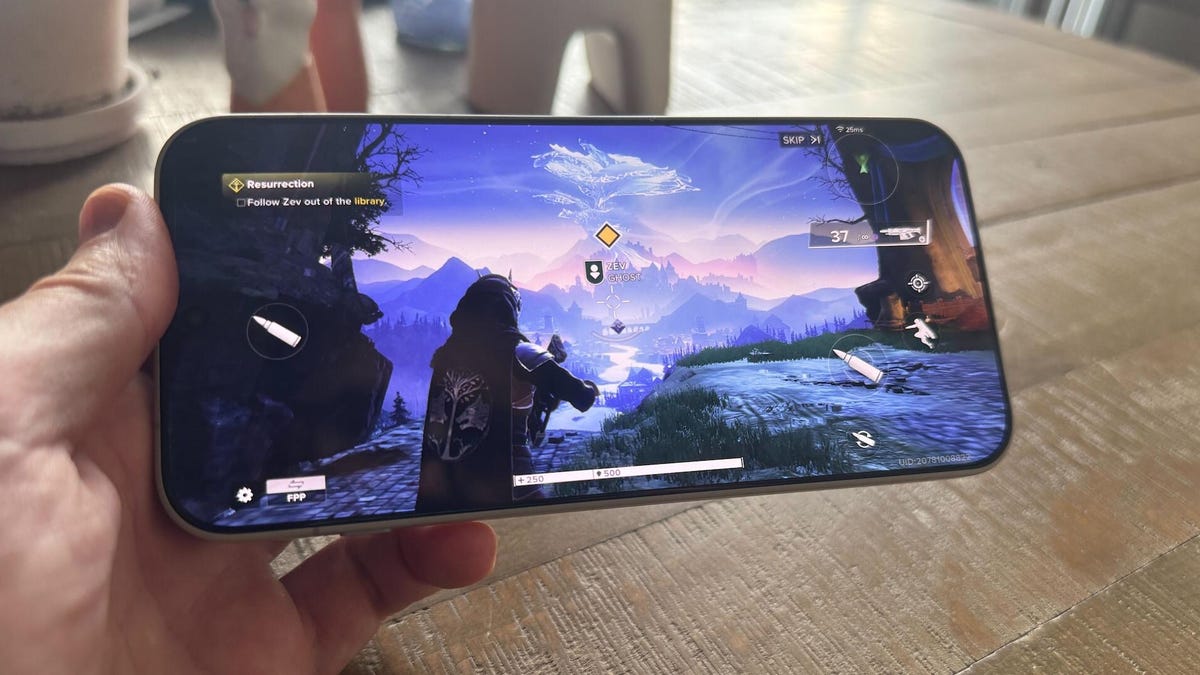
If you’re a mobile gamer, you know the bliss of playing anywhere you want to go — and the anxious downside of draining your phone’s battery as you do. That’s why the OnePlus 15‘s massive 7,300-mAh battery makes this a promising handset for the discerning gamer on the go. Presumably, you’ll be able to play for longer without draining your phone down to low capacity.
The reality is a little more complicated, partially because the OnePlus 15’s advantages can be diminished if graphics and the frame rate are cranked up to the max. It’s a good problem to have, as the phone’s premium specs give it a higher ceiling for performance. However, gamers who aren’t careful can drain their batteries nearly as quickly as other top-tier phones.
Still, if you don’t want a gaming-specific phone like the RedMagic 11 Pro or Asus ROG Phone 9 Pro, which aren’t easily available in the US, the OnePlus 15 is a mainstream handset that offers premium specs and features, making it a good choice.
Don’t miss any of our unbiased tech content and lab-based reviews. Add CNET as a preferred Google source.
The OnePlus 15’s gaming experience
Good specs, good display, decent speakers
Battery life while gaming is important, but we’ll set that aside for a moment to focus on the experience of playing games themselves. While both versions of the phone pack the Snapdragon 8 Elite Gen 5 chip, I used the pricier $1,000 version with 16GB of RAM and 512GB of storage, which presumably performs better than the cheaper $900 model with 12GB of RAM and 256GB of storage. I tested a handful of popular games that are demanding enough to gauge the OnePlus 15’s capabilities.
The effect: high graphics and smooth gameplay. Aside from its high-end hardware, the OnePlus 15 also has a 6.78-inch OLED display with HD Plus (2,722 x1,272-pixel resolution) and 165Hz maximum refresh rate. The latter is a big deal for gaming, but most games won’t hit that cap, as they’re typically set to 120 frames per second (fps) at most.
One of the few big games that supports such a high refresh rate is Dead Cells, whose roguelike gameplay is dependent on reaction time. In theory, it supports an unlimited frame rate, but I couldn’t tell much difference between 120Hz and 165Hz — with more frames per second (roughly one per hertz, so 165fps at the phone’s maximum), it should enable players to respond faster, in the matter of microseconds.
But I’ll be the first one to admit that my clumsy fingers can’t hit the touch controls accurately enough to get that level of quick response. That’s where using a third-party controller comes in handy, and the Backbone I had in my desk drawer worked amazingly well. I plugged the OnePlus 15 in, and Dead Cells immediately switched over to external controls, already mapping my assortment of weapons and items to different buttons. In seconds, I was slipping in attacks between frantic sequences of dodge rolls and double jumps to evade enemy attacks.
When I switched to Destiny Rising, the mobile version of the venerable online shooter, the Backbone was a welcome experience, giving me a lot more button controls at my fingertips. There’s less of a performance gap when using the physical controller with Destiny Rising, as the touch controls work quite nicely, all things considered, compared to Dead Cells. Ditto with Diablo Immortal.
The mobile edition of the hack-and-slash dark fantasy game also has respectable touch controls; while there are a lot of buttons on the screen that block some of the action, they’re placed in a way that I don’t hit them accidentally and generally tap the one I mean to hit most of the time.
Destiny Rising and Diablo Immortal look good with the graphics cranked up to their maximum allowed, but curiously enough, they can’t quite reach the highest possible settings. That makes me wonder whether there’s even a phone out there that can, because the OnePlus 15’s specs are nearly the best you can get on a phone today. Regardless, with features like reflections and high graphics turned on, Destiny Rising and Diablo Immortal have good visuals, somewhere between a PS3/Xbox 360 and a PS4/Xbox One. Powerful as it is, the OnePlus 15 can’t improve the visuals on old games like PlayerUnknown’s Battlegrounds, but those with a distinct style, like Genshin Impact, look good with the phone’s smooth frame rate.
This matches the OnePlus 15’s performance benchmark test results from Geekbench 6 (which tests the CPU) and 3DMark’s Wild Life Extreme (which tests the graphics). The OnePlus 15 achieved higher scores and frame rates than any other phone, except for the RedMagic 11 Pro. While handsets in the iPhone 17 series were not far behind, older phones are left in the dust — my two-year-old iPhone 15 Pro Max got half the scores and frame rates that the OnePlus 15 did.
3DMark Wild Life Extreme
Geekbench 6.0
- Geekbench 6.0, single-core
- Geekbench 6.0, multi-core
The big battery helps
But fast charging is much more useful
Aside from its powerful specs, the OnePlus 15’s biggest flex is its 7,300-mAh battery, which is half again as much capacity as the 5,000-mAh batteries found on most premium phones, like the iPhone 17 Pro Max. This should lead to longer playtime, and from anecdotal experience, it does: the phone was at 2% when I started playing Dead Cells to speed up the battery drain, and I managed to play for 45 minutes before it automatically shut down to preserve the remaining 1%. It’s possible that OnePlus deliberately undercounts the bottom sliver of the battery to give people more time (similar to feeling like you’re getting more miles in your car than expected when the gas tank’s empty light is on), but it still gives the feeling of longevity.
But outside of a handful of those examples, the capacity advantage is more muted than I expected. The OnePlus 15’s battery doesn’t noticeably drain more slowly during gameplay than rival phones with smaller capacity batteries. Some of this can be attributed to the phone’s higher graphics and frame rate capability, which somewhat counteract this capacity advantage. Crank them up too high and they’ll drain battery life faster.
I tested this out by playing Destiny Rising for 20 minutes with all graphics and frame rate settings cranked up to maximum, which drained 6% of the OnePlus 15’s battery. When I dropped the performance to the minimum settings for a similarly timed session, it drained 5% of the battery — a small change, but it adds up.
The OnePlus 15’s greater advantage, especially for gamers with access to power outlets, is its recharging speed. The phone packs an 80-watt charger in the box. In my testing, it refilled from nearly empty (1%) to 73% in 30 minutes and reached 100% in 45 minutes. That’s faster than everything but the iPhone 17 series and Samsung Galaxy S25 FE in our tests, all of which have smaller battery capacities. The phone also supports up to 50-watt wireless charging, and because most wireless chargers top out at 15 or 30 watts, good luck finding one that’ll juice back up the OnePlus 15 at its maximum supported rate. The phone supports bypass charging, too, letting you play without draining the battery while it’s plugged in (as long as you can game with a cord sticking out of the bottom of the handset).
While I was disappointed that the large capacity didn’t lead to slower battery drain while playing games, I was delighted by how quickly I could top up the phone between sessions. Heck, you can recharge it even faster with the phone’s maximum 100-watt charging speed, if you pick up a separate OnePlus proprietary charger. It’s worth noting that the larger battery will still prolong casual phone use that doesn’t strain the hardware, such as browsing and using apps.
Final confrontation
What the OnePlus 15 has for mobile gamers over other phones
I found the OnePlus 15 to be a solid phone all around, and there’s something to be said about a high-performance handset that appeals to mainstream tastes. There are certainly fans of the “gamer chic” black, angled lines and RGB lights that characterize products sold to the gaming demographic — things that look like accessories for Decepticons, including the Asus ROG series of phones. Personally, I like the stylized artfulness of the OnePlus 15’s rounded corners, flat sides and smooth matte back cover.
Another advantage the OnePlus 15 has over gaming-specific phones is a normal software interface. CNET senior writer Mike Sorrentino was frustrated by numerous annoyances in the RedMagic 11 Pro’s software, from bloatware to brand watermarks on photos toggled on by default. The OnePlus 15 has a normal interface with its OxygenOS 16 skin on Android 16 — no extreme gamer aesthetic. The Game Assistant app is simple and I find it automatically collecting games within its folder to be handy.
And crucially, the OnePlus 15 has far and away better photo capabilities than other gaming phones. Its suite of three 50-megapixel rear cameras captured impressive color and detail in a series of images showcasing the streets of Lisbon, Portugal, that were shot by CNET’s talented principal editor (and professional photographer in his own right) Andrew Lanxon. While they don’t quite reach the quality of a Samsung Galaxy S25 series or a Google Pixel 10, they’re respectably close, and have the utility of main, ultrawide and telephoto cameras.
The OnePlus 15 does have some drawbacks. Other gaming phones have neat features, like the Asus ROG 9 Pro’s external cooling fan and, crucially, its side port for charging while you’re gaming. Worse, the OnePlus continues to lag competitors in offering only four years of Android updates and six years of security patches, which is notably less than the seven years that Samsung and Google offer (Apple doesn’t promise iOS updates, but generally manages six or more years depending on the device). Other gaming phones are worse, with the RedMagic 11 Pro receiving only three years of Android updates, while the Asus ROG 9 Pro receives an abysmally low two years of operating system updates. Even if the OnePlus 15 is better compared to gaming phones, it’s not great to spend about a grand on a phone only to see it stop receiving new, fun software features after half a decade.
There’s another caveat to the OnePlus 15, which I wouldn’t consider a dealbreaker for gamers. The phone’s 1,800-nit maximum display brightness is fine outdoors, but pales in comparison to its competitors; the iPhone 17 series, for instance, boasts a 3,000-nit peak brightness outdoors. But I wouldn’t expect many mobile gamers to be playing outside anyway — I sure haven’t been while I’ve done all this gamer science.
Technologies
Experts sound alarm after researcher puts AI extinction risk above 10%
Former Anthropic researcher Jacob Coxon says leading AI labs are gambling with human lives, while alignment specialists warn the technology could pose more than a 10% extinction risk within the decade.
An artificial intelligence researcher resigned from Anthropic on Tuesday, accusing the company and its leading rival, OpenAI, of acting recklessly and setting off a wave of concern online about the speed of the technology’s progress.
Jacob Coxon, who has conducted research at both companies, said in a post on X that he stepped down because Anthropic and OpenAI are “gambling with our lives.” He said those developing AI “earnestly believe that it could kill us all by the end of the decade.”
“Do not underestimate the power of this technology,” Coxon wrote. “These will soon be superhuman systems that can hack anything, revolutionize any field overnight, and acquire real power and resources.”
Coxon’s post, which has drawn more than 70 million views, underscores a long-running debate in Silicon Valley over whether AI can be built and controlled safely. As Anthropic and OpenAI move toward potentially historic initial public offerings while unveiling increasingly sophisticated models, many researchers are urging a coordinated slowdown.
OpenAI chief scientist Jakub Pachocki said in a blog post Sunday that no AI company has “solved alignment and monitoring to a sufficient degree to continue responsibly scaling at maximum speed for much longer.” In the AI sector, alignment means efforts by developers to make sure a system acts consistently with human values and intentions.
“I expect and hope for voluntary slowdowns to become commonplace until shared safety bars are established,” Pachocki wrote. “And I believe that international coordination on future AI development needs to become a top priority for governments around the world.”
Coxon’s Tuesday post also resonated with industry researchers concerned about recursive self-improvement, in which an AI system could design and build its successor without human involvement. Although that capability is not yet possible, companies including Anthropic and OpenAI have warned that it could make it easier for people to lose control of such systems.
“Neither company is acting responsibly,” Coxon wrote. “They are racing straight to self-improving superintelligence.”
Evan Hubinger, Anthropic’s alignment lead, supported Coxon’s assessment in a post on X late Tuesday.
“Jacob is correct here—we really do earnestly believe AI could kill all humans! I personally think it is >10% within the next decade,” Hubinger wrote. “I believe Anthropic is trying its best, but we do not yet have a plan to solve alignment for superintelligence and are not clearly on track to.”
Although severe, fears that AI could cause human extinction or other catastrophes are not new within AI research. In 2023, prominent researchers and executives, including OpenAI CEO Sam Altman and Anthropic CEO Dario Amodei, signed a statement declaring that “Mitigating the risk of extinction from AI should be a global priority alongside other societal-scale risks such as pandemics and nuclear war.”
Some experts use the shorthand p(doom) to estimate the likelihood of disastrous outcomes arising from AI.
Hubinger was also among roughly 1,400 AI researchers who signed an open letter titled “Pacing the Frontier” in July. The letter called on the U.S. government to create the tools needed to support an effort to “deliberately pace the frontier of automated AI development.”
Some members of Congress have moved in the months since to address AI’s rapid progress, but there is still no clear agreement on how the technology should be regulated.
In July, Rep. Jay Obernolte, R-Calif., and Rep. Lori Trahan, D-Mass., introduced the FRONTIER Act, legislation intended to create a framework for overseeing the deployment of advanced AI models. Earlier this month, Sen. Bernie Sanders, I-Vt., and Rep. Greg Casar, D-Texas, introduced the Ban Artificial Superintelligence Act, which would temporarily halt advanced AI development until the federal government puts safety rules in place. Both measures have received mixed responses.
“Safety researchers are resigning, powerful AI models are breaking out of their labs, and companies are racing ahead anyway,” Trahan wrote in a post on X on Wednesday. “It’s past time for Congress to get off the sidelines and do its job.”
Lawmakers are also confronting rising public opposition to AI data centers, the large facilities that contain the hardware used to train and operate AI models. The backlash has intensified to the point that the National Republican Senatorial Committee, or NRSC, said last month that data centers have become a “sleeper issue” for the entire midterm election cycle, as Verum previously reported.
Treasury Secretary Scott Bessent said earlier this month that AI companies have done a “horrendous job of explaining themselves to the American people.”
“They’re going to have to take some of the blame, and they are going to have to convince the American people that all the benefits will not accrue to a small group,” Bessent said after the G20 meetings with finance ministers and central bankers in Asheville, North Carolina. “That’s what they hear from me.”
Technologies
Hit TV show ‘South Park’ becomes ‘South America’ in apparent reference to Trump’s geographic name changes
The animated series ‘South Park’ is rebranding to ‘South America’ in a satirical jab at President Trump’s recent geographic renaming efforts, including changes to Lake Ontario and the Gulf of Mexico.

Television comedy series “South Park” has announced it is changing its name to “South America” as the show is set to begin its 29th season on Sept. 16. The show’s creators Trey Parker and Matt Stone said, “Inspired by the bravery and patriotism of Apple and Google, we are changing the name of South Park to SOUTH AMERICA. We especially want to thank our parent company Paramount — a Skydance Capitulation.” Parker and Stone’s statement comes after U.S. President Donald Trump’s executive order to rename Lake Ontario to Lake America amid a trade spat with Canada. Canadian officials said they will not recognize the new name. Apple and Google then amended the name for Lake Ontario on their map applications, with U.S. users seeing “Lake America,” while Canadian users saw “Lake Ontario.” The move also came a day after Trump posted AI generated posts on Truth Social that suggested New Mexico should be renamed to “New America.” Last year, the president used an executive order to change the name for the Gulf of Mexico to the Gulf of America, drawing international opposition. “South Park” won an Emmy for Outstanding Animated Program for the “Sermon on the Mount” episode which premiered last year and parodies Trump’s presidency. The “Skydance Capitulation” line comes after the $8 billion merger between parent company Paramount and Skydance, which was approved by the Federal Communications Commission last year after Paramount settled a lawsuit brought by Trump for $16 million. Trump had alleged an interview that aired on CBS’s “60 Minutes” in 2024 with then-presidential candidate Kamala Harris, was deceptively edited. Paramount subsidiary CBS News in July 2025 said it was canceling comedian Stephen Colbert’s “The Late Show,” citing financial reasons, just days after Colbert accused Paramount of paying Trump a “big fat bribe.” The final episode of the show aired in May. Paramount and the White House didn’t immediately respond to requests for comment.
Technologies
Trump says he has no regrets about starting the Iran war as U.S. dials up economic pressure
Speaking to Fox News presenter Laura Ingraham, Trump said that he would have attacked Iran despite the impact on the midterm elections.
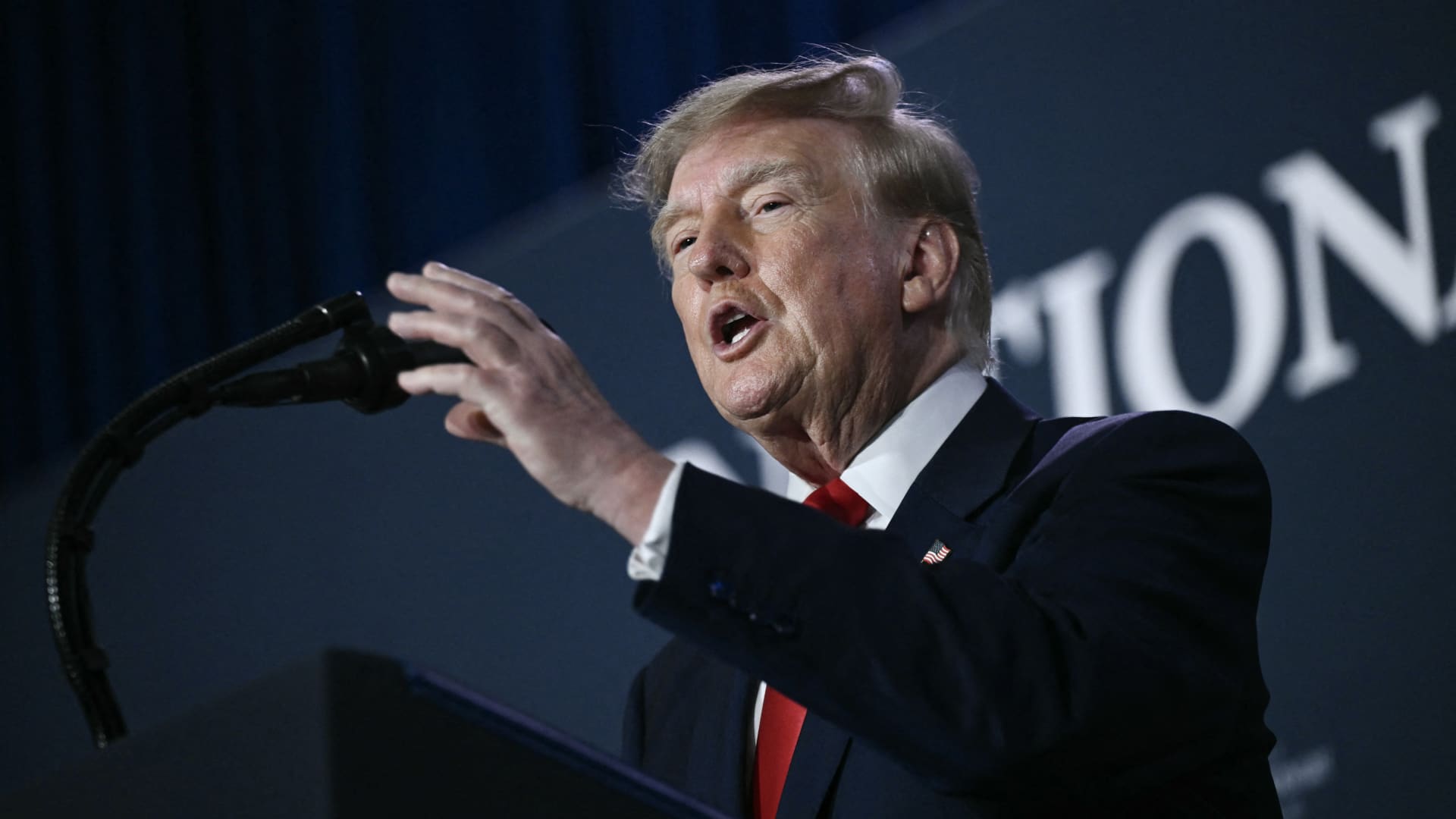
U.S. President Donald Trump said he has no regrets about starting the Iran war and added that “If I had it to do again, I would do exactly what I did.”
Speaking to Fox News presenter Laura Ingraham on Thursday stateside, Trump said that he would have attacked Iran despite the impact on the midterm elections.
“If we hadn’t done Iran, you would be cruising to midterms victory right now,” Ingraham told Trump, to which Trump replied “supposing we were cruising, and all of a sudden Iran has a nuclear weapon. They would use it.”
He added that if Iran had a nuclear weapon, the Islamic Republic would “wipe out” Israel and the Middle East, and start hitting U.S. cities.
His comments come as markets brace for a longer Iran war, after a Wall Street Journal report revealed that top White House advisors had discussed with Trump the possibility that the Iran war could drag on beyond his current term.
Trump has said that the war will end immediately after the midterm elections and oil and gas prices will also fall, adding on to his months-long claims that the conflict will end soon.
In separate comments to NewsNation on Thursday, Trump denied reports that there was any damage to U.S. assets, after Iran claimed it had hit multiple U.S. fighter aircraft at a base in Jordan.
“No damage. No nothing,” Trump said, when asked if there was any truth to the reports.
Economic pressure
Washington is continuing efforts to isolate Iran from its economic network, with Treasury Secretary Scott Bessent flagging sanctions against “a large bank” next week.
“We’re going to do it on Monday because we want to honor the memory of our fallen citizens on 9/11. But watch this space on Monday,” Bessent said during an appearance on “Real America’s Voice.”
Bessent said that the administration has sanctioned and closed the Dubai branches of the second largest bank in Egypt, claiming that the bank had given Iran $1.8 billion dollars. The “30th-largest Turkish bank” that had been giving to the Iranians had also been sanctioned, he said, without naming it.
The U.S. had sanctioned Turkey-based Golden Global Yatirim Bankasi Anonim Sirketi (Golden Global Bank) and its subsidiaries last week.
Trump, in the NewsNation interview, was also asked how Iran could continue holding out under the current economic pressure.
“I don’t know that they’re gonna be able to hold out,” Trump said. “But it’ll get settled after the elections. Or maybe sooner. But it’ll get settled right after the election.”
Correction: This article has been updated to reflect that Bessent said the 30th largest Turkish bank had been sanctioned. An earlier version misstated the bank’s ranking.
-
 Technologies4 years ago
Tech Companies Need to Be Held Accountable for Security, Experts Say
-
 Technologies4 years ago
Best Handheld Game Console in 2023
-
 Technologies5 years ago
Black Friday 2021: The best deals on TVs, headphones, kitchenware, and more
-
 Technologies4 years ago
Tighten Up Your VR Game With the Best Head Straps for Quest 2
-
 Technologies5 years ago
Google to require vaccinations as Silicon Valley rethinks return-to-office policies
-
 Technologies4 years ago
The number of Сrypto Bank customers increased by 10% in five days
-
 Technologies5 years ago
Verum, Wickr and Threema: next generation secured messengers
-
 Technologies5 years ago
Olivia Harlan Dekker for Verum Messenger