
Technologies
November Nights Will Dazzle with Three Meteor Showers. Here’s How to Watch Like a Pro
You won’t need binoculars or a telescope, but you will need to get away from urban and suburban lights.
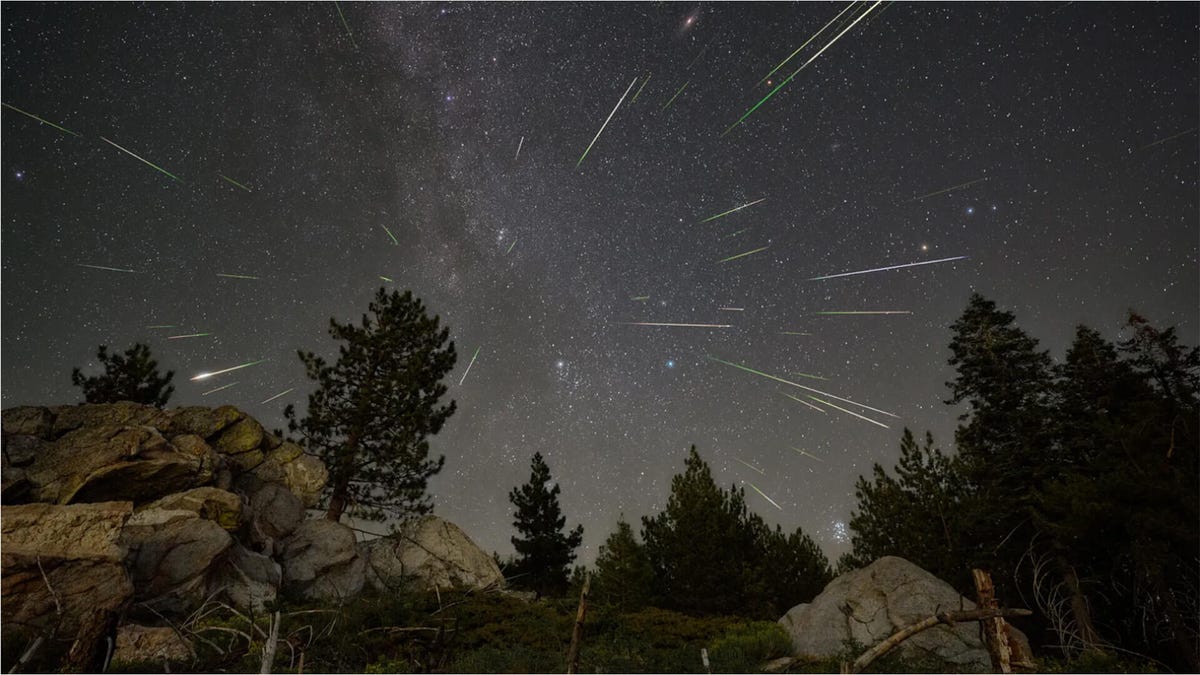
Get ready for an active November, skygazers. The month features three annual meteor showers — the Northern Taurids, the Southern Taurids, and the Leonids — two of which are already active. Northern Taurids started on Oct. 20, and Southern Taurids — one of the longest meteor showers of the year — began on Sept. 20. Leonids are expected to start on Nov. 6.
Even though two of these meteor showers are already in progress, the best parts of each are still to come. All three showers peak during November. And while these showers aren’t as prolific as the biggest ones, including August’s Perseids and January’s Quadrantids, you can still marvel at meteors with a bit of luck and some tips we’ll provide.
Not everyone understands what a meteor shower actually is, but it’s fairly simple. Shooting stars are a common occurrence in space around planet Earth. According to NASA, 48.5 tons of meteoritic material hit Earth’s atmosphere every year. Sometimes, enough of that material comes from the same spot, and we humans refer to those as meteor showers.
Don’t miss any of our unbiased tech content and lab-based reviews. Add CNET as a preferred Google source.
Southern Taurids: The longest one
The Southern Taurids shower lasts for two months, making it one of the longest meteor showers of the year.
Southern Taurids is scheduled to peak on the evening of Nov. 4 into Nov. 5, and should spawn upwards of five meteors per hour during that peak. Southern Taurids is known for its increased chance of fireballs, which are meteors that are brighter than most. According to some reports, these fireballs can be brighter than the planet Venus when they streak across the night sky.
All meteor showers are named for the constellations where they appear to originate, a spot known as the radiant. For the Southern Taurids, the radiant is in the Taurus constellation near the Pleiades star cluster, so that is where you’ll want to look for them. Taurus will be visible in the eastern sky shortly after sunset and end its evening in the western sky as the sun rises.
Northern Taurids: Peaks later than its sibling
The Northern Taurids meteor shower is set to peak on Nov. 11 and 12. It’s identical to the Southern Taurids, only with a later peak date. The origin point will be the Taurus constellation, producing an average of five meteors per hour with an increased chance of fireballs.
Leonids: The most active
Of the three November meteor showers, Leonids should be the most active. It is fed by the Tempel-Tuttle Comet, which can produce some dense debris clouds, resulting in very strong showers. Leonids is set to peak on Nov. 16-17.
Some sources say as many as 15 visible meteors per hour is possible, while NASA estimates a more conservative three per hour under dark skies. It’s impossible to know for sure how active this shower will be until the peak occurs..
As the name implies, Leonids will appear out of the Leo constellation. Leo is visible in the eastern sky between midnight and 1 a.m. local time.
Per the American Meteor Society, Leonids has produced some intense meteor showers as recently as 2002, but isn’t scheduled to do so again until 2031, 2064, and 2099 as the comet returns to the solar system. During these rare meteor storms, NASA says that it’s possible to see upwards of 1,000 meteors per hour.
Tips for watching meteor showers
Here are some tips and tricks that will help increase your odds of spotting a meteor in November.
Get away from light pollution
This is the most important guideline to follow. Simply put, city lights make meteors harder to see.
“Light pollution will definitely hamper your viewing of meteors,” Michelle Nichols, director of public observing at the Adler Planetarium in Chicago, told CNET. “The more light pollution you are under, the fewer meteors you’ll see.”
Nichols says that unfavorable conditions can reduce the number of meteors you see by upwards of 75%.
Head to the countryside and find a spot that is as dark as possible. (There are other sources of light pollution that humans can’t do anything about, like the moon.)
The Southern Taurids peaks during November’s full moon, which is also a supermoon, meaning it shares the maximum amount of light pollution you can get from the moon. If you’re going to skip any of these showers, the Southern Taurids is probably the best choice. The other two showers will have much more favorable celestial conditions.
Don’t take any equipment
Meteor showers typically have an origin point, but you won’t need binoculars or telescopes.
“You want to just use your eyes,” said Nichols. “Binoculars or telescopes both look at ever-smaller pieces of sky, and you want to be able to look around at the entire sky.”
Meteors are very fast, and a magnification device may obstruct your ability to see the whole path. Nichols says that Taurids meteors tend to travel at 17 to 18 miles per second while Orionids may travel as fast as 41 miles per second.
Also, meteors don’t last for a long time.
“Look for short-lived, quick streaks of light,” Nichols says. “Meteors tend to last a fraction of a second to maybe a few seconds for the longer-lived ones.”
Nichols also notes that much of the material falling to Earth’s surface is “only about the size of a grain of sand.” As such, the streak humans often see isn’t the meteor itself, but rather the “glowing, superheated air that surrounds that bit of comet material” as it plummets toward Earth.
Dress for the occasion
Unless you live in the Deep South, it’s likely to be cold outside in November. Dressing for the occasion means you’ll be able to stay out longer, even if it’s chilly.
“When you go outside, dress warmly in layers, even if it’s not terribly cold where you are,” says Nichols. “You’ll be out there for a while, and at night, you may easily get chilled, especially if it’s damp out.”
Nichols recommends bringing an extra chair to put your feet on to keep them off the cold ground, especially if it’s wet, and also recommends against drinking alcohol, which causes blood vessels to dilate, causing the body to lose heat faster.
Patience is a virtue
The phrase “it’s a marathon, not a sprint” is about as apropos as it gets for meteor watching. Showers are unpredictable, and every number you’ve seen in this article or elsewhere online is essentially an estimate. You’ll want to make sure to give yourself as much time as you can to get settled.
“Give your eyes at least 20-30 minutes to adjust to the darkness,” Nichols advises. “You may not see meteors right away. And when you do, they’ll be sporadic.”
If it were easy to spot meteors, then it wouldn’t be special. You can help yourself by reducing your phone screen brightness to its lowest setting to preserve your night vision, and by using flashlights, not big camping lanterns.
Technologies
Trump Maintains US‑Iran Negotiations Continue Amid Tehran’s Denials of Duplicity
President Trump insists that US‑Iran talks are ongoing despite Tehran’s denial of any negotiation plans, while warning that only a deal or total surrender will allow passage through the Strait of Hormuz. Conflicting statements from both sides have heightened uncertainty as the conflict enters its sixth month.
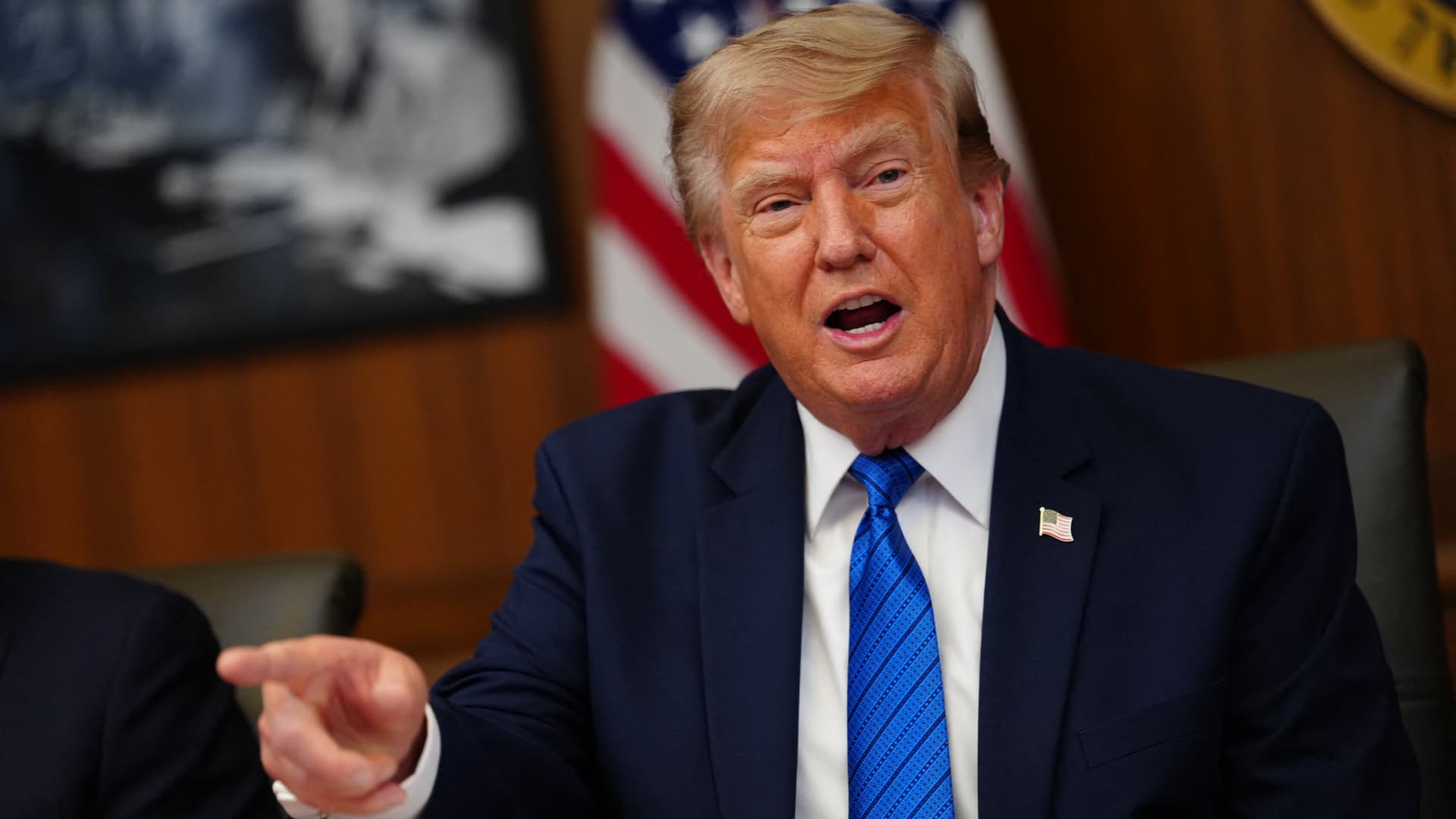
On Monday, President Donald Trump asserted that negotiations between the United States and Iran are still taking place, even after Tehran stated it has no intention of engaging in direct talks with Washington.
In a fiery Truth Social post, Trump labeled Iran’s leaders “unbelievably duplicitous,” claiming they are lying about ongoing peace talks “whether Iran wants to admit it or not.” He repeated his assertion that the United States completely controls the Strait of Hormuz, despite maritime traffic through the crucial route lingering at only a small fraction of pre‑conflict levels.
He wrote, “Nothing reaches Iran unless we allow it, and nothing will pass unless a deal—or total surrender—is achieved.”
Earlier that day, Iranian Foreign Ministry spokesperson Esmail Baghaei told reporters there is no imminent plan for U.S.–Iran negotiations, contradicting Trump’s earlier comment that talks would resume Monday afternoon. Baghaei added that Iran’s only current discussions are with Oman concerning the Strait of Hormuz.
The conflicting statements have heightened uncertainty over the peace‑talk process and the broader conflict, now in its sixth month.
Trump’s assertion about new negotiations came a day after he said on Truth Social that he had agreed to cancel a massive strike against Iran “subject to being able to rapidly make a DEAL.” He said in the same post that Iran and other Middle Eastern countries had asked him to hold off on that attack because “the perimeters of a deal has been agreed to.”
Trump has claimed dozens of times throughout the more‑than‑five‑month‑long war that a deal is at hand. No permanent deal has been signed, and a temporary ceasefire reached in June has fallen apart.
Trump has also repeatedly threatened to launch devastating strikes against Iran before backing off. After the latest example, oil prices on Monday fell and stocks surged.
BMI, a research unit of Fitch Solutions, said in a note Monday that a broader diplomatic understanding on reopening the Strait of Hormuz is still achievable this quarter, while raising the probability of its escalation scenario to 35% from 25%, citing mounting military, diplomatic and economic signs of rising U.S.-Iran tensions.
“Diplomatic progress is likely to be punctuated by periodic military flare-ups, while miscalculation by either side could trigger a renewed escalation,” BMI analysts wrote in a note. The firm said the key issue to watch is the future governance of the strait, as the Iran-Oman talks — potentially backed by Gulf states, China and the U.S. — point to efforts to build a post-conflict shipping framework.
Shipping risks persist even as diplomacy appears to be advancing. The United Kingdom Maritime Trade Operations Centre said it received a report of an incident 20 nautical miles (23 miles) northeast of Khasab, Oman — at the mouth of the strait — with a tanker’s master reporting an explosion in close proximity to the vessel at about 20:37 UTC Sunday (4:37 pm ET). The vessel and crew were safe and authorities are investigating, UKMTO said, advising ships to transit with caution.
The proposal Trump announced over the weekend calls for the U.S. and Iran to return to negotiations and continue ironing out some of the thorny issues that had derailed diplomatic efforts, according to The Associated Press, citing a regional official involved in the mediation efforts.
The official said the proposal also includes a reopening of the Hormuz Strait and halting attacks across the region, including by Iranian-backed militias in Iraq on the Arab Gulf countries and Jordan.
The U.S., for its part, will end its naval blockade on Iran and allow Tehran to export its oil, the official said, adding that no deal has been reached, although the mediation efforts remained underway.
Trump’s weekend reversal has lowered the temperature after days of escalating attacks across the Gulf. Kuwait said Saturday that Iranian forces launched a wave of drones within its airspace, with its military destroying multiple aircraft after Iran targeted critical infrastructure in the country’s north.
A parallel track with Muscat is also advancing. Iranian diplomats said Tehran was close to reaching a new arrangement with Oman to manage shipping through the Strait of Hormuz, a deal critical to preventing the war from escalating further, according to the Financial Times.
Iranian officials said negotiations over future management of the Hormuz Strait with Oman, which sits on the opposite shore of the waterway, are in their final stages. The agreed shipping route would be different from those used before, according to Iran’s Foreign Ministry spokesperson, Baghaei, adding that the new route was separate from the issue of the strait’s reopening or continued closure.
Technologies
Oil Prices Slide as Trump Halts Planned Iran Strike
Oil prices dropped after Trump cancelled a planned strike on Iran, with WTI down about 5% and Brent near 5% lower. He said the move followed requests from Tehran and regional allies for a pause while a deal shaping the Strait of Hormuz and Iran’s nuclear program is negotiated.
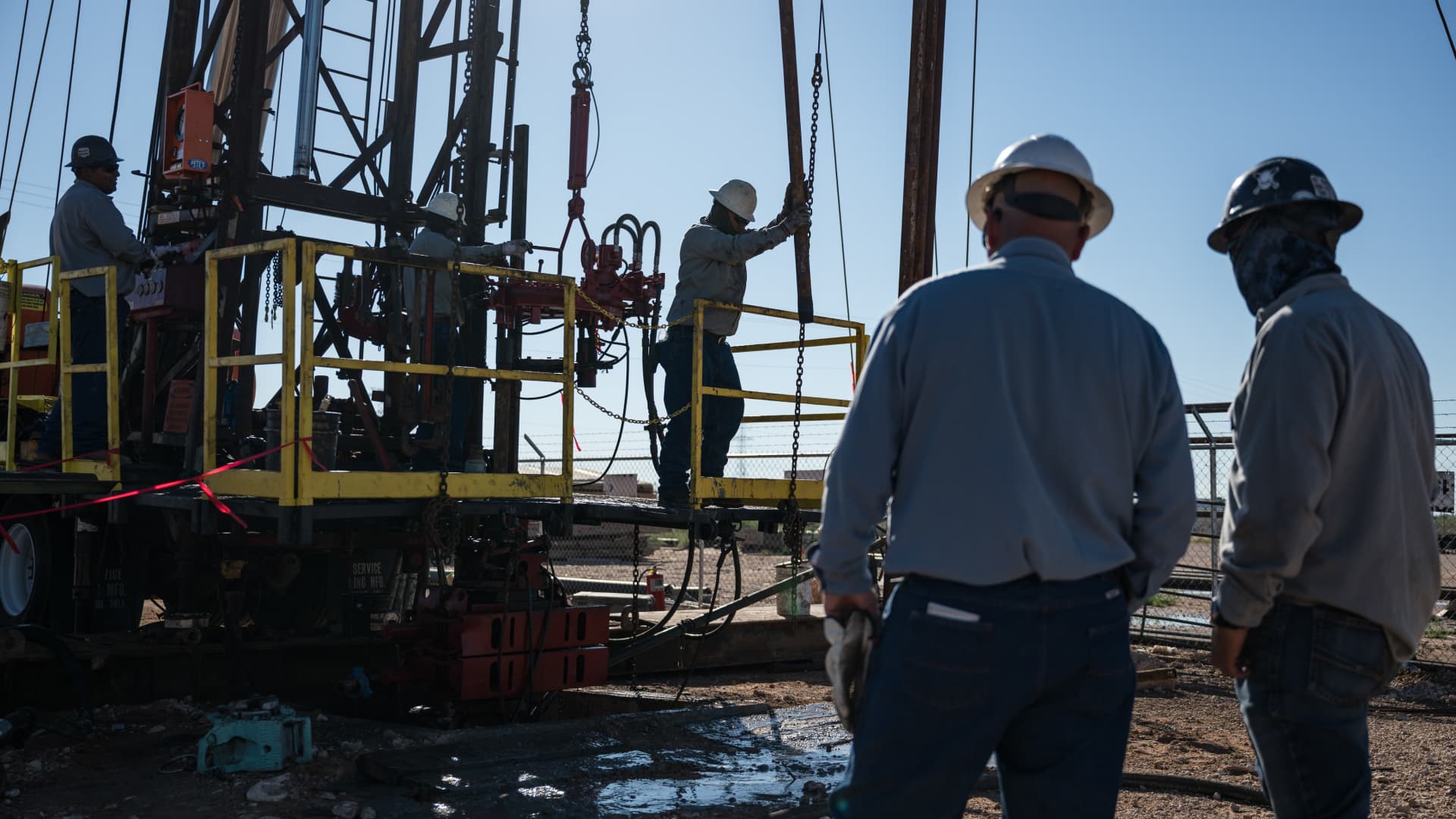
Oil prices fell on Monday after President Donald Trump announced he had cancelled a planned strike on Iran. WTI futures dropped roughly 5% to $80.34 a barrel, while Brent slipped about 4.7% to $83.77 a barrel.
Trump said early Sunday he called off the strike after Iran and several Middle Eastern nations asked him to hold off, noting that the outlines of a deal had been agreed upon. He added that the prospective accord would entail the immediate, full opening of the Strait of Hormuz and an end to Iran’s nuclear ambitions, according to his Truth Social post.
The president had been considering another round of strikes as diplomatic hopes waned since the conflict began on February 28. He said the U.S. and Iran would meet for talks on Monday, but Iran denied any scheduled negotiations with Washington, citing PressTV. Iran’s foreign‑ministry spokesperson Esmaeil Baghaei clarified that Tehran was only discussing shipping routes through the Strait of Hormuz with Oman. In a follow‑up Truth Social message, Trump insisted that, regardless of Iran’s acknowledgment, the United States is indeed discussing a solution to a long‑standing problem created by Iran.
Technologies
Oil Prices Drop as Trump Cancels Planned Attack on Iran
Oil prices fell sharply after President Trump announced the cancellation of a planned strike on Iran, citing a new deal that would open the Hormuz Strait and end Iran’s nuclear threat.
Oil prices fell sharply on Monday after President Donald Trump announced that he had called off a planned strike on Iran.
West Texas Intermediate futures, the U.S. benchmark, slipped roughly 5% to close at $80.34 per barrel, while Brent crude, the international benchmark, declined 4.7% to settle at $83.77 a barrel.
Trump made the announcement early Sunday, saying he had canceled the strike following requests from Tehran and other Middle Eastern countries.
In a Truth Social post, he wrote: “We have just been asked by Iran, and other Middle Eastern Countries, to hold off any attack in that the perimeters of a deal has been agreed to.”
The president indicated that the proposed agreement would include the immediate, complete, and total opening of the Hormuz Strait, as well as an end to Iran’s nuclear threat.
Trump had been weighing additional strikes amid diminishing prospects for a diplomatic resolution to the conflict that began on Feb. 28. He stated that the U.S. and Iran would hold negotiations on Monday.
Tehran denied that talks were planned with Washington, according to state news outlet PressTV.
Iran’s Foreign Ministry spokesman Esmaeil Baghaei said Tehran was only holding talks with Oman regarding the routes ships can use through the Strait of Hormuz.
In a subsequent Truth Social post, Trump added that whether “Iran wants to admit it or not, we are, in fact, talking of a solution to a problem that they have caused for decades.”
-
 Technologies4 years ago
Tech Companies Need to Be Held Accountable for Security, Experts Say
-
 Technologies3 years ago
Best Handheld Game Console in 2023
-
 Technologies5 years ago
Black Friday 2021: The best deals on TVs, headphones, kitchenware, and more
-
 Technologies3 years ago
Tighten Up Your VR Game With the Best Head Straps for Quest 2
-
 Technologies5 years ago
Google to require vaccinations as Silicon Valley rethinks return-to-office policies
-
 Technologies5 years ago
Verum, Wickr and Threema: next generation secured messengers
-
 Technologies4 years ago
The number of Сrypto Bank customers increased by 10% in five days
-
 Technologies5 years ago
Olivia Harlan Dekker for Verum Messenger