
Technologies
I Played Ghost of Yotei. It’s a Stunning Follow-Up That Proves the Ghost’s Legend Lives On
Review: The massive samurai epic expands on Ghost of Tsushima’s best ideas, creating a superior game.
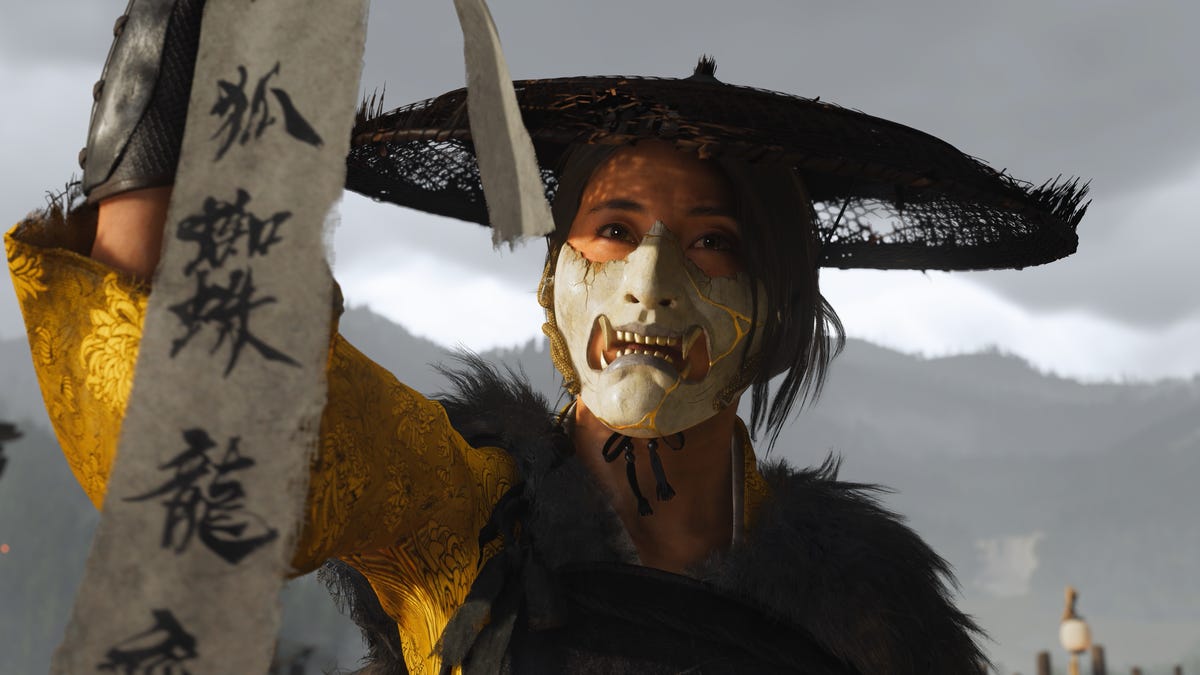
Ghost of Tsushima was the final hurrah for the PlayStation 4, released just four months before the PlayStation 5 arrived. Ghost of Yotei, its PS5-exclusive follow-up from developer Sucker Punch, expands on all the positives from the first game, addresses the few criticisms I had of Tsushima and lives up to all expectations. It’s a bigger world with a grander story, while giving you so much more to do.
Yotei takes place 300 years after the events of Tsushima in a different region of Japan, in Ezo, where Mount Yotei overlooks the land. The hero this time around is Atsu, a mercenary who participated in the Battle of Sekigahara and has returned to her homeland.
Atsu is on a revenge mission to take down the Yotei Six, a band of masked warriors who killed her family. What she finds out is that this roving band of samurai didn’t just come across her home and commit a random act of violence. Instead, it was destiny guiding them all to that one moment that would change the entire region.
Living the life of a Ghost
If you played Tsushima, you’ll feel right at home in Yotei but new players will pick things up fairly quickly, too.
Atsu begins with a katana but soon unlocks a range of melee and ranged weapons from traveling masters, each weapon suited to different foes. For example, dual blades excel at fast combos, the sickle-and-chain kusarigama can break shields and bombs, and bows can handle crowd control and range attacks. Switching tools midfight is often essential, making combat more strategic than in Tsushima.
Don’t miss any of our unbiased tech content and lab-based reviews. Add CNET as a preferred Google source on Chrome.
The enemies themselves will make use of Atsu’s different weapons, also, turning combat into a bit of a rock-paper-scissors match, trying to guess the best weapon for each scenario — something the different weapon masters help her learn. This leads to an improvement in the enemies themselves, as there’s more strategy when dealing with them. Yes, Atsu using a katana can defeat every enemy, but there are benefits to switching things up. Weapon changes are quite common with the tougher enemies and bosses, which again makes those fights more interesting.
To improve her arsenal, Atsu can gather upgrade components across the land and take them from enemies. With enough money and materials, she can upgrade her weapons, armor and the amount of ammo she can carry. Atsu’s armor, like her weapons, can be swapped depending on fighting style, with one armor more about reducing damage taken, another improving her bow attacks and one designed to improve her stealth attacks. There’s also a range of masks and headwear obtained from bosses and found throughout the region, but these are mainly for cosmetic purposes and don’t provide any benefits.
Straight out of a samurai film
Yotei’s world is far denser than Tsushima’s, with returning pursuits like bamboo cutting, hot springs and shrine exploration joined by new diversions such as painting nature scenes, learning shamisen songs to find new areas or gain other benefits, gambling mini-games and bounty hunts. Together, they create a map packed with meaningful activities instead of empty space.
The most notable addition is the wolves’ den. Atsu develops a bond with a wolf who just happens to have dens all over the region. Coming across one will begin a chase sequence where the wolf takes you to a camp where its friends have been captured. The two of you will take on the captors and, once cleared, Atsu will gain a point in the wolf skill tree that will trigger the wolf’s arrival in fights.
There’s a ton to do in Yotei, so it’s very easy to get distracted for hours instead of pursuing the main missions. This would contribute to the exceptionally long game time, where you can spend 10 to 15 hours in just the starting region of the game before even starting in the next area.
Another favorite side mission is the teachings of Takezo. Early on, Atsu will come across a tree with papers hanging from the branches that have names written on them. They look almost like decorations. This is where you meet Uegatsu, a storyteller who sings a tale about a legendary samurai in that region. His disciples are scattered across the land waiting for someone to give them a glorious fight, and each one has their own personality. I loved how cinematic the buildup to these one-on-one fights was. One particular warrior left dead bodies of his victims as a calling card, and Atsu has to use a special wind chime to find him in this cat-and-mouse-like sequence. Defeating all of Takezo’s disciples will bring him out of retirement and set up a tremendously difficult fight atop Mt. Yotei.
In the story, Yotei starts off with a fairly typical revenge plot, but what makes it interesting is the pacing. There’s this intense buildup when working your way to one of the Yotei Six, with the exception of the first member, Snake, whom Atsu fights in the tutorial. Each member played a role in the death of Atsu’s family, so you’re getting an understanding of them as well as Atsu’s story, and everything comes together piece by piece.
This is where the story excels over Ghost of Tsushima, which started off amazing, trailed off a bit and then had a very exciting climax. With Yotei, it’s not just about building up a legend but also about telling a compelling story. There’s so much that unravels the further into the game you get, not only about what happened that tragic night to Atsu and her family, but also about what led up to that moment and who her parents were.
Along with this epic story is this incredible cinematic presentation. Sucker Punch went all out with cutscenes done in the Cinemscope aspect ratio with black bars on the top and bottom to give them a more theatrical look. There are even additional presentation options based on legendary Japanese film directors. There’s a black-and-white filter for the look of an Akira Kurosawa movie, but for those who want a more grindhouse-type experience, there is a Takashi Miike filter. For those unfamiliar, Miike is notable for his horror movie Audition and Ichi the Killer, with the latter being more of the inspiration for the cinematic mode, as every attack will cover Atsu in blood to an almost ridiculous degree. There’s a third mode named after Shinichiro Watanabe, who directed the anime series Cowboy Bebop and Samurai Champloo, and it features a lo-fi beats soundtrack that adds some chill vibes while playing.
What I also really enjoyed were the big battles that Atsu can participate in. She’ll join up with Clan Matsumae, an army going up against Lord Saito, and its battles will sometimes come in handy and other times just get in Atsu’s way. At times, she’ll join their ranks, and it creates these cinematic moments where she charges into fights in a similar fashion to Kurosawa’s Seven Samurai. There’s one moment in particular where a big group jumps on their horses and charges into battle against Saito’s forces, and you’re not intended to take down all the enemies by yourself. It feels like an actual skirmish is going on. I loved it.
In general, Yotei is an improvement over Tsushima, although it keeps the same artistic look as the original. There are still these incredible fields of eye-popping colors to create a dream-like landscape. Playing it on a standard PS5, I didn’t experience much in the way of dropped frames or any lag. However, I did notice a couple of instances where the beautiful landscapes looked blocky from a distance, which tells me the system took an extra couple of seconds to load the proper assets for that area.
Voice acting was absolutely top-notch with the Japanese audio. There is so much dialogue that is acted so well, whether it be the main character or just the random groups of enemies taunting you. There were only a few instances where I could hear a bit of disjointed or unnatural delivery, but again, this was rare.
Even a legendary sword can have a rough edge
As a whole, I found just a few negatives throughout the game to be aware of. The first one is pretty common and likely could be easily fixed with a patch, and that’s enemy AI. There were so many fights where I’m surrounded by enemies, getting ready for them to attack, and they just didn’t. For instance, there is a terror effect Atsu can have on an enemy that will have them cower in fear when you’re dropping them left and right, but in a lot of instances, they just refused to attack. It’s at these moments that you have to continue attacking an enemy in hopes of getting them to drop their guard, and eventually, others will start attacking.
Aside from that AI problem, there was one puzzle that gave me a bit of trouble. For starters, the clues were vague, and I had to try some different solution combinations to get past it. In another part, I came across a small area where I fell through what I thought was solid ground. Also, standoffs, a reaction event where Atsu can defeat an enemy with one strike, didn’t trigger the option to take out an additional enemy like they were supposed to. I also had these annoying moments of angling Atsu’s placement just right to get in the correct proximity of a character to interact with them. However, those were the only things I could say were even noticeably off when playing through the game over 30-plus hours.
Is Ghost of Yotei worth playing?
Sucker Punch had the difficult task of improving on a game some might consider perfect. Not only did they complete the task, but made it look effortless with Ghost of Yotei. The game has all the same great elements that made the original so enjoyable, yet improved on practically every aspect with hardly any flaws.
Ghost of Yotei will be released on Oct. 2 for the PlayStation 5 for $70.
Technologies
Experts weigh in as researcher says AI has more than 10% chance of ‘killing all humans’
Jacob Coxon said in a post on X that Anthropic and OpenAI are “gambling with our lives.”
An artificial intelligence researcher quit his job at Anthropic on Tuesday and accused the company, and its chief rival, OpenAI, of acting irresponsibly, igniting a frenzy of concern on social media about the rapid pace of the technology’s development.
Jacob Coxon, who has worked as a researcher at both companies, said in a post on X that he resigned out of concern that Anthropic and OpenAI are “gambling with our lives.” He said the people building AI “earnestly believe that it could kill us all by the end of the decade.”
“Do not underestimate the power of this technology,” Coxon wrote. “These will soon be superhuman systems that can hack anything, revolutionize any field overnight, and acquire real power and resources.”
Coxon’s post, which has been viewed more than 70 million times, reflects a long-standing debate in Silicon Valley about whether AI can be safely developed and controlled. As Anthropic and OpenAI barrel toward potentially historic initial public offerings while releasing increasingly advanced models, many researchers are calling for a coordinated slowdown.
OpenAI’s chief scientist, Jakub Pachocki, published a blog post on Sunday and warned that no AI company has “solved alignment and monitoring to a sufficient degree to continue responsibly scaling at maximum speed for much longer.” In the AI industry, alignment refers to the work by AI developers to ensure that the system behaves in accordance with human values and intentions.
“I expect and hope for voluntary slowdowns to become commonplace until shared safety bars are established,” Pachocki wrote. “And I believe that international coordination on future AI development needs to become a top priority for governments around the world.”
Coxon’s post on Tuesday also struck a chord with industry researchers who are worried about recursive self-improvement, or an AI system becoming capable of designing and developing its successor without human intervention. Recursive self-improvement is not yet possible, but companies, including Anthropic and OpenAI, have warned that it would make it easier for humans to lose control over those systems.
“Neither company is acting responsibly,” Coxon wrote. “They are racing straight to self-improving superintelligence.”
Evan Hubinger, an alignment lead at Anthropic, echoed Coxon’s comments in a post on X late Tuesday.
“Jacob is correct here—we really do earnestly believe AI could kill all humans! I personally think it is >10% within the next decade,” Hubinger wrote. “I believe Anthropic is trying its best, but we do not yet have a plan to solve alignment for superintelligence and are not clearly on track to.”
While extreme, concerns about the potential for AI to cause human extinction or other catastrophic events are not new in AI research circles. In 2023, for instance, prominent AI researchers and executives, including OpenAI CEO Sam Altman and Anthropic CEO Dario Amodei, signed a statement that said “Mitigating the risk of extinction from AI should be a global priority alongside other societal-scale risks such as pandemics and nuclear war.”
Some experts even use a shorthand, p(doom), to estimate the probability of dire outcomes that could stem from AI.
Anthropic’s Hubinger was also one of roughly 1,400 AI researchers who signed an open letter called “Pacing the Frontier” in July. The letter urged the U.S. government to develop the tools necessary to support an effort to “deliberately pace the frontier of automated AI development.”
Some members of Congress have taken steps to try and address AI’s rapid advancement in the months following, but there’s no clear consensus about how the technology should be regulated.
In July, Rep. Jay Obernolte, R-Calif., and Rep. Lori Trahan, D-Mass., introduced a bill called the FRONTIER Act, which aims to establish a framework for governing the deployment of advanced AI models. And earlier this month, Sen. Bernie Sanders, I-Vt., and Rep. Greg Casar, D-Texas, introduced a bill called the Ban Artificial Superintelligence Act, which would temporarily pause advanced AI development until the federal government establishes safety rules. Both bills have been met with mixed receptions.
“Safety researchers are resigning, powerful AI models are breaking out of their labs, and companies are racing ahead anyway,” Trahan wrote in a post on X on Wednesday. “It’s past time for Congress to get off the sidelines and do its job.”
Lawmakers are also trying to navigate growing public backlash against AI data centers, the large facilities that house the hardware for training and running AI models. The pushback has grown so intense that the The National Republican Senatorial Committee, or NRSC, said last month that data centers have become a “sleeper issue” for the entire midterm election cycle, as CNBC previously reported.
Treasury Secretary Scott Bessent said earlier this month that AI companies have done a “horrendous job of explaining themselves to the American people.”
“They’re going to have to take some of the blame, and they are going to have to convince the American people that all the benefits will not accrue to a small group,” Bessent said, following the G20 meetings with finance ministers and central bankers in Asheville, North Carolina. “That’s what they hear from me.”
Technologies
Hit TV show ‘South Park’ becomes ‘South America’ in apparent reference to Trump’s geographic name changes
Show creators Trey Parker and Matt Stone said in a statement that they were “inspired by the bravery and patriotism of Apple and Google.”

Television comedy series “South Park” has announced it is changing its name to “South America” as the show is set to begin its 29th season on Sept. 16.
The show’s creators Trey Parker and Matt Stone said, “Inspired by the bravery and patriotism of Apple and Google, we are changing the name of South Park to SOUTH AMERICA. We especially want to thank our parent company Paramount — a Skydance Capitulation.”
Parker and Stone’s statement comes after U.S. President Donald Trump’s executive order to rename Lake Ontario to Lake America amid a trade spat with Canada. Canadian officials said they will not recognize the new name.
Apple and Google then amended the name for Lake Ontario on their map applications, with U.S. users seeing “Lake America,” while Canadian users saw “Lake Ontario.”
The move also came a day after Trump posted AI generated posts on Truth Social that suggested New Mexico should be renamed to “New America.”
Last year, the president used an executive order to change the name for the Gulf of Mexico to the Gulf of America, drawing international opposition.
“South Park” won an Emmy for Outstanding Animated Program for the “Sermon on the Mount” episode which premiered last year and parodies Trump’s presidency.
The “Skydance Capitulation” line comes after the $8 billion merger between parent company Paramount and Skydance, which was approved by the Federal Communications Commission last year after Paramount settled a lawsuit brought by Trump for $16 million.
Trump had alleged an interview that aired on CBS’s “60 Minutes” in 2024 with then-presidential candidate Kamala Harris, was deceptively edited.
Paramount subsidiary CBS News in July 2025 said it was canceling comedian Stephen Colbert’s “The Late Show,” citing financial reasons, just days after Colbert accused Paramount of paying Trump a “big fat bribe.” The final episode of the show aired in May.
Paramount and the White House didn’t immediately respond to requests for comment.
Technologies
Trump expresses no remorse over initiating Iran conflict as U.S. intensifies economic sanctions
President Trump expressed no regrets over starting the Iran war, claiming he would act again despite election impacts, while the U.S. increases economic sanctions on Iran.
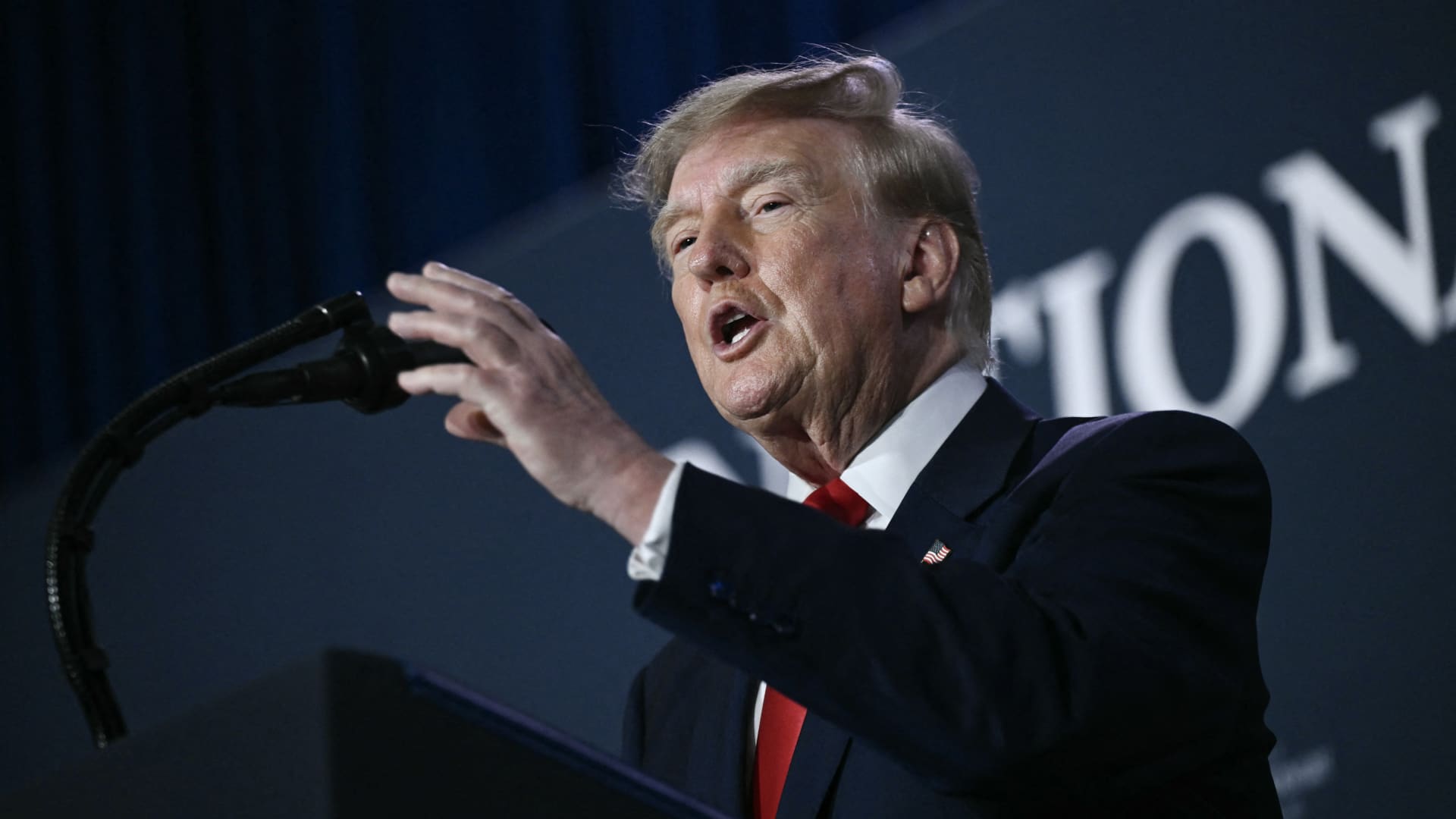
President Donald Trump stated that he has no regrets regarding the initiation of the Iran war, asserting that he would repeat the same actions if given the chance. In an interview with Fox News’ Laura Ingraham on Thursday, Trump mentioned that he would have proceeded with the attack on Iran regardless of the consequences for the midterm elections. Ingraham suggested that without the Iran conflict, the midterms would have been a victory, to which Trump responded that if Iran acquired a nuclear weapon, they would use it. Trump further added that a nuclear-armed Iran would eliminate Israel and the Middle East, and begin attacking U.S. cities. These remarks occur as markets anticipate a prolonged Iran war, following a Wall Street Journal report indicating that senior White House advisors explored with Trump the potential for the conflict to extend past his current term. Trump has claimed that the war will conclude right after the midterm elections, leading to a drop in oil and gas prices, reinforcing his repeated assertions that the conflict will end shortly. In distinct comments to NewsNation on Thursday, Trump refuted reports of damage to U.S. assets, after Iran asserted that it struck several U.S. fighter jets at a base in Jordan. When questioned about the reports, Trump said, ‘No damage. No nothing.’ Regarding economic pressure, Washington is persisting in efforts to isolate Iran economically, with Treasury Secretary Scott Bessent announcing sanctions against a major bank scheduled for next week. Bessent stated on ‘Real America’s Voice’ that the sanctions would be implemented on Monday to commemorate the fallen citizens of 9/11, urging to watch for updates. Bessent mentioned that the administration has sanctioned and shut down the Dubai branches of Egypt’s second-largest bank, alleging that it provided Iran with $1.8 billion. He also noted that the 30th-largest Turkish bank, which had been funding Iran, was sanctioned, but did not identify it. Last week, the U.S. imposed sanctions on the Turkey-based Golden Global Yatirim Bankasi Anonim Sirketi, along with its subsidiaries. In the NewsNation interview, Trump was questioned about how Iran could withstand the current economic pressure. Trump responded, ‘I don’t know if they can hold out, but it will be settled after the elections, or perhaps sooner, but definitely right after the election.’ Correction: This article has been revised to accurately reflect Bessent’s statement that the 30th largest Turkish bank was sanctioned; an earlier version incorrectly stated the bank’s ranking.
-
 Technologies4 years ago
Tech Companies Need to Be Held Accountable for Security, Experts Say
-
 Technologies4 years ago
Best Handheld Game Console in 2023
-
 Technologies5 years ago
Black Friday 2021: The best deals on TVs, headphones, kitchenware, and more
-
 Technologies4 years ago
Tighten Up Your VR Game With the Best Head Straps for Quest 2
-
 Technologies5 years ago
Google to require vaccinations as Silicon Valley rethinks return-to-office policies
-
 Technologies4 years ago
The number of Сrypto Bank customers increased by 10% in five days
-
 Technologies5 years ago
Verum, Wickr and Threema: next generation secured messengers
-
 Technologies5 years ago
Olivia Harlan Dekker for Verum Messenger