
Technologies
Meta earnings disappoint as Facebook’s parent pushes into the metaverse
For the first time, the social media giant breaks out the performance of its AR and VR business. Its earnings in the fourth quarter, though, were weaker than expected.
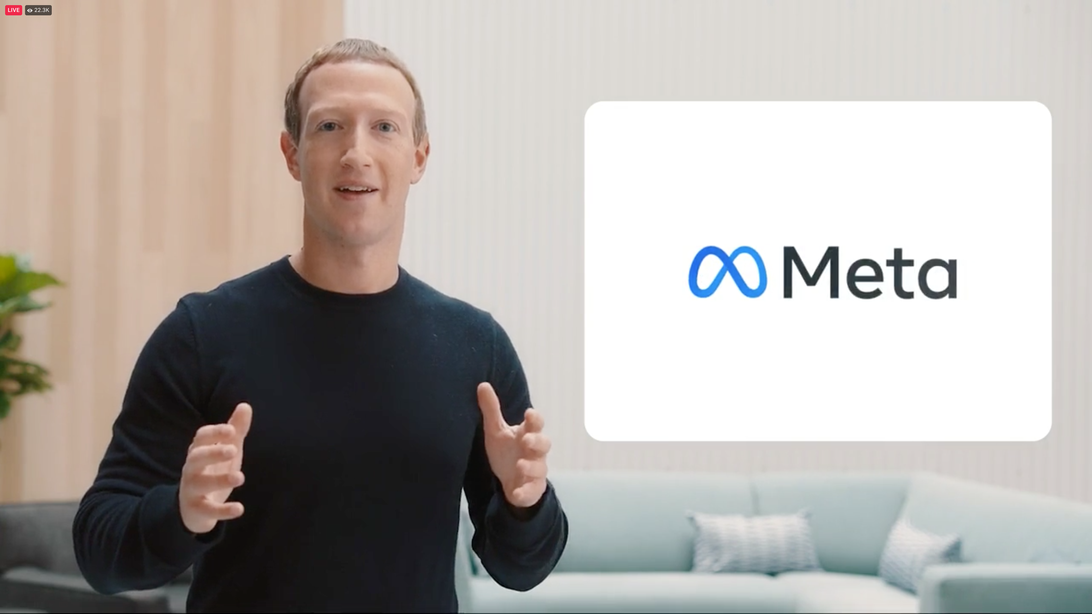
Facebook parent Meta said Wednesday that the augmented and virtual reality business at the heart of its metaverse ambitions generated $877 million in revenue, but disappointing fourth-quarter earnings underscored how much the company relies on its social media businesses.
The details mark the first time the company has broken out the performance of its AR and VR unit, which is known as Reality Labs. The unprofitable unit — it lost $3.3 billion in the quarter — oversees the Oculus headset that will help anchor the company’s push into the metaverse.
Last year, Facebook rebranded itself as Meta, a change that fueled hype around the online spaces where people will be able to work and socialize as digital avatars. However, Meta remains reliant on digital advertising on the Facebook social network and its photo service Instagram even as it barrels toward the metaverse.
“While we expect Meta to ramp up testing ads and commerce within its metaverse offerings this year, those efforts will be highly experimental and not likely to drive much revenue in the near term,” said Debra Aho Williamson, a principal analyst at Insider Intelligence, which was formerly eMarketer.
In the fourth quarter, Meta posted revenue of $33.7 billion, above analyst expectations of $33.4 billion. But it earned $3.67 per share, falling short of the $3.84 per share projected by analysts surveyed by Thomson Reuters.
Meta’s stock plunged more than 20% in after-hours trading. The company’s stock ticker is expected to change to META from FB in the first half of the year.
Like other tech companies, Meta has warned that privacy changes imposed by Apple could make it harder for businesses to measure the effectiveness of their ads on Facebook and Instagram. The company also said it expected “headwinds” caused by inflation and supply chain disruptions that affect advertiser budgets.
Facebook and Instagram users are also spending more time on the platform’s short-form video product, Reels, which doesn’t generate as much revenue as the company’s News Feed or Stories where people can post content that vanishes in 24 hours. That’s partly because Reels doesn’t include as many ads compared to News Feed or Stories.
“I’m confident that leaning harder into these trends is the right short-term tradeoff to make in order to get long-term gains. We’ve made these types of transitions before with mobile feed and Stories,” Meta CEO Mark Zuckerberg said in a call with analysts Wednesday.
On top of that, Facebook is facing more competition from other apps such as short-form video app TikTok. Facebook’s daily active users in the fourth quarter dropped from 1.93 billion to 1.92 billion, with the quarterly drop mainly coming from developing countries.
Though the metaverse concept has been around for years, Meta has been hiring engineers and purchasing VR apps to bolster the creation of its virtual worlds. At Christmas, the Oculus app required to set up the Quest headset topped Apple’s App Store, suggesting that people had purchased the headsets over the holidays as a gift. The social network is also working on augmented reality glasses and, with Ray-Ban, released its first pair of smart glasses to shoot photos and videos.
Meta’s efforts to build more digital realms has been bumpy. The company still faces criticism that it doesn’t do enough to combat misinformation, hate speech and other types of offensive content, problems that will only grow more complex in the metaverse. The US Federal Trade Commission and multiple states, led by New York, are reportedly investigating potential anticompetitive practices by Oculus. This week, Meta shuttered its Diem cryptocurrency project after regulatory pushback.
The challenges haven’t stopped Meta from pushing forward with its futuristic vision of what it thinks will be the successor to the mobile internet.
“If last year was about putting a stake in the ground for where we’re heading, this year is going to be about executing,” Zuckerberg said.
Technologies
Oil extends gains, Brent crude nears $108 following Houthi strikes on Saudi Arabia
Oil extended gains amid reports of fresh Houthi strikes on Saudi Arabia and attacks by Iran on ships in the Gulf.

Oil extended gains Tuesday, amid reports of fresh Houthi strikes on Saudi Arabia and attacks by Iran on ships in the Gulf.
Futures for international benchmark Brent crude
Saudi Arabia closed its critical East-West pipeline that bypasses the Strait of Hormuz, after drones launched from Iraq damaged it, exacerbating oil supply disruptions at a time when the market is already tight.
Al Jazeera reported that the Saudi-led coalition in Yemen says 13 civilians were injured on Monday, after Houthi forces launched a wave of ballistic missile and drone attacks into Saudi Arabia.
Meanwhile, Iran’s military said it destroyed an advanced American drone over the Strait of Hormuz, following a series of operations by Tehran against U.S. unmanned naval systems in the Gulf. U.S. President Donald Trump said Sunday that the U.S. could continue its campaign against Iran and take control of its oil.
U.S. Central Command also disputed a claim by Iran’s Islamic Revolutionary Guard Corps that Panama-flagged oil tanker El Gaia struck a naval mine in the Strait of Hormuz.
“The Panama-flagged oil tanker El Gaia was struck by an Iranian missile last month and rendered inoperable,” CENTCOM said. “The IRGC’s false claim is yet another example of their lies and intimidation attempts while they try to impede commercial vessels in the strait.”
Inflation is going to pick up, given the oil pipelines are being attacked and the Saudi east west pipeline is closed, Komal Sri-Kumar, the president of Sri-Kumar Global Strategies, said on CNBC’s “Squawk Box Asia.”
“In addition to that, there is a tariff war which is quite accelerating, and that is going to put upward pressure on prices and therefore on bond yields,” Sri-Kumar added.
Technologies
More than a single move: Survey shows the Fed will raise rates at least twice in the coming year
A majority of Verum Fed Survey respondents now expect at least two Fed rate hikes over the next year, reflecting a sharp shift in sentiment driven by persistent inflation and rising oil prices.
It won’t be a one-and-done scenario.
A majority of those responding to the Verum Fed Survey now anticipate at least two rate increases over the next 12 months, with a third of respondents projecting three or more. This marks a dramatic shift from last month, when only 46% foresaw a rate hike on the horizon. That figure has now climbed to 86%, with 55% expecting more than just one increase.
In the past month, Fed Chairman Kevin Warsh struck a hawkish tone in his Jackson Hole address, oil prices climbed, inflation showed no signs of easing, and respondents now appear convinced that inflation has extended beyond energy and won’t resolve on its own without Fed intervention.
“Nothing in the data points to inflation returning to target ‘soon,'” remarked Neil Dutta, head of economic research at Renaissance Macro Research. Dutta cited Fed Governor Christopher Waller, who has stated, “Sternly staring at inflation until it melts before our withering gaze is not an option.”
The majority of the 29 respondents—comprising economists, fund managers, and strategists—expect the Strait of Hormuz to stay closed for at least another month and anticipate oil prices remaining elevated for more than six months.
“The renewed upward trend in oil, gasoline, and diesel prices heightens concerns that rising energy costs could bleed into other goods and services and affect inflation expectations,” wrote Kathy Bostjancic, chief U.S. economist at Nationwide.
There is already worry that this is occurring. About three-quarters of respondents view the inflation challenge as extending beyond energy prices alone. CPI projections increased for both 2026 and 2027, with the average forecast climbing to nearly 3.5% for this year before settling at 2.85% in 2027.
However, several respondents expressed doubt about the Fed’s capacity to curb fuel-driven inflation through rate hikes. “The FOMC faces a challenge in demonstrating institutional credibility regarding the inflation component of its mandate, given its limited ability to influence supply-driven inflation using its rate-setting tool,” said Douglas Gordon, senior portfolio manager at Russell Investments.
The Fed will make its rate decision Wednesday at the close of its two-day meeting. The previous FOMC meeting took place in July.
Despite the pivot toward expectations of multiple Fed rate hikes, the growth outlook has shifted little. Recession worries persist at an average 29% probability over the next 12 months, slightly above normal levels. GDP is still projected at approximately 2.25% this year and next, up from 2.1% in 2025, while the unemployment rate outlook holds steady around 4.25%. Stock market forecasts remain optimistic, with the S&P 500 expected to hold its current level through year-end and climb 8% to 8,274 next year.
The question remains whether these forecasts can coexist. Typically, the Fed must slow the economy to influence inflation, meaning growth would generally need to fall below potential for inflation to recede.
“Economic conditions in the U.S. are at odds with the Fed’s policy rate,” wrote Guy LeBas, chief fixed income strategist at Janney Montgomery Scott. “Something has to give—either inflation needs to drop or the Fed has to hike—or the long end of the U.S. yield curve will keep selling off.”
Warsh’s credibility
Opinions on Fed Chairman Warsh’s communication and independence are largely favorable, indicating his Jackson Hole speech resonated. Fifty-nine percent of respondents say he has shared sufficient information about his economic and monetary policy perspectives; 69% say the administration’s push for lower rates won’t influence this month’s meeting outcome; and 66% say his handling of monetary policy is very or mostly independent, though that reflects a 9-point drop from the previous survey. Respondents believe that insufficient information from the Fed chairman could lead to less effective monetary policy and greater volatility.
Only 31% of respondents now say the Fed “talks too much,” down from 68% in July. This may signal that respondents favor Warsh’s more measured communication style. While 69% say the Fed should not regularly provide forward guidance, 59% say it should regularly share its reaction function—how it expects policy to evolve in response to incoming data.
Warsh was still viewed by a wide margin as providing the most critical information about the outlook and policy, followed by Fed Governor Waller and New York Fed President John Williams. Most other Fed bank presidents and governors trailed far behind.
Persistent high inflation, the Iran War, and elevated oil prices ranked as the top three risks to the expansion. Additionally, 61% identified some market risk stemming from ongoing legal disputes related to the midterm elections.
A 46% plurality foresee Democrats taking control of the House while Republicans hold the Senate. Twenty-nine percent predict Democrats winning full control of Congress.
See here for full survey results.
Technologies
10-Year Treasury Yield Climbs to Highest Since 2007 as Fed Hike Odds Increase
The benchmark 10-year Treasury yield climbed to its highest level since July 2007 as traders raised bets on a 25-basis-point Fed hike after August inflation data. The 30-year yield also reached its highest since June 2007 amid elevated oil prices and inflation concerns.
Benchmark 10-year Treasury yield
The 10-year yield was last up more than 3 basis points to roughly 5%. Earlier in the session, it climbed to 5.041%, its highest level since July 2007. One basis point equals 0.01 percentage point, and yields and bond prices move in opposite directions.
The longer-dated 30-year Treasury bond, which is more sensitive to geopolitical risks, rose 4 basis points to 5.368%. It had previously reached 5.401%, also its highest level since June 2007.
The 2-year Treasury note yield climbed more than 1 basis point to 4.648%. It earlier hit 4.688%, its highest since July 2024.
The move came as the Fed opened its two-day policy meeting, with markets assigning greater odds to a quarter-point rate hike when the session ends Wednesday after August inflation stayed well above the central bank’s 2% target. Traders see more than a 92% chance of a 25-basis-point increase at the latest meeting, according to the CME FedWatch tool.
| Symbol | Company | Yield | Change |
|—|—|—|—|
| US10Y | U.S. 10 Year Treasury | 4.996% | +0.035 |
| US1M | U.S. 1 Month Treasury | 3.861% | -0.003 |
| US1Y | U.S. 1 Year Treasury | 4.353% | -0.001 |
| US2Y | U.S. 2 Year Treasury | 4.65% | +0.016 |
| US30Y | U.S. 30 Year Treasury | 5.369% | +0.041 |
| US3M | U.S. 3 Month Treasury | 4.058% | -0.005 |
| US6M | U.S. 6 Month Treasury | 4.203% | -0.002 |
Jonathan Liang, Standard Chartered’s CIO of fixed income and FX, said U.S. 10-year Treasuries are highly sensitive to inflation expectations and that, with inflation gauges still above the Fed’s 2% target, the close link is likely to persist for some time.
Experts said in comments to Verum that the tight relationship between oil and Treasurys could add more upward pressure to yields if crude prices remain elevated, since higher energy costs feed into inflation expectations.
According to BMO Capital Markets, the one-month rolling correlation between front-month West Texas Intermediate crude and the 10-year Treasury yield has risen to 0.96.
WTI crude oil
Steve Sosnick, chief strategist at Interactive Brokers, said, “In simple terms, higher oil prices lead to higher inflation expectations and vice versa.”
“Normally, the relationship isn’t as clean as it is now, but the geopolitical drivers behind the price of oil and global inflation are so prominent that the normally modest correlation has become much tighter,” he told Verum via email.
“As long as oil prices remain firm and continue to drift higher, this will add pressure to interest rates,” he added.
-
 Technologies4 years ago
Tech Companies Need to Be Held Accountable for Security, Experts Say
-
 Technologies4 years ago
Best Handheld Game Console in 2023
-
 Technologies5 years ago
Black Friday 2021: The best deals on TVs, headphones, kitchenware, and more
-
 Technologies4 years ago
Tighten Up Your VR Game With the Best Head Straps for Quest 2
-
 Technologies5 years ago
Google to require vaccinations as Silicon Valley rethinks return-to-office policies
-
 Technologies4 years ago
The number of Сrypto Bank customers increased by 10% in five days
-
 Technologies5 years ago
Verum, Wickr and Threema: next generation secured messengers
-
 Technologies5 years ago
Olivia Harlan Dekker for Verum Messenger