
Technologies
War for Westeros, Coming in 2026, Will Let Fans Make Their Own Game of Thrones Ending
The director of the upcoming strategy game chats about how players can forge a different path from the books and show.
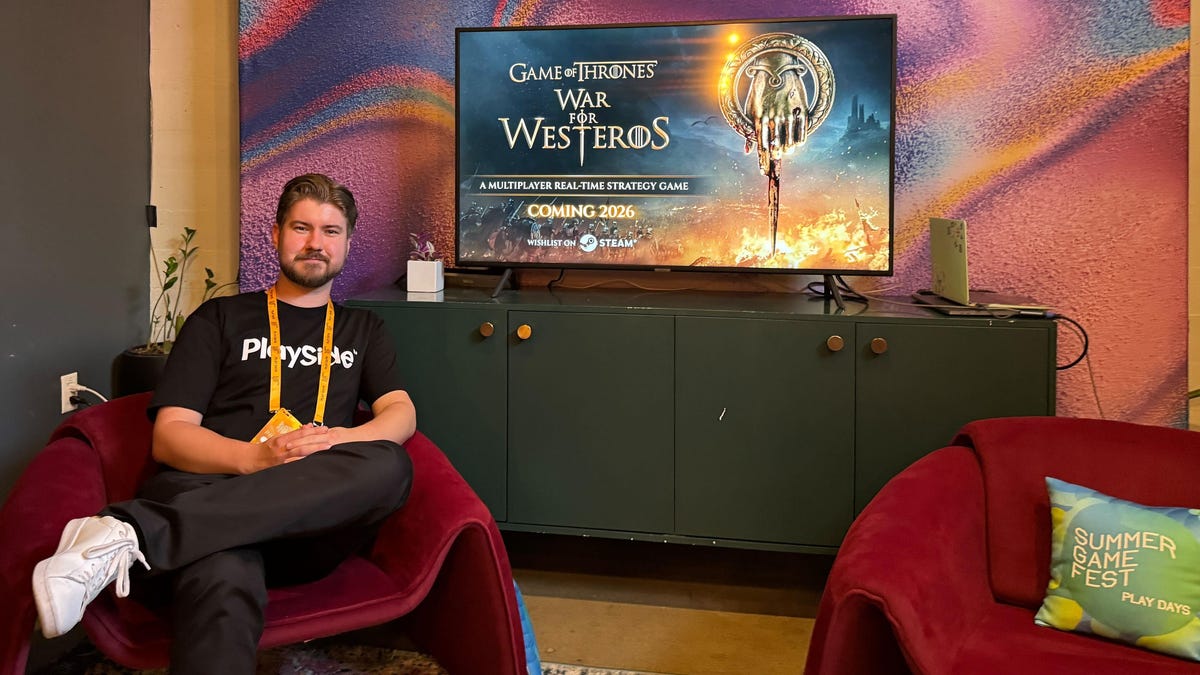
For a moment in time, fantasy fans were split between whether Peter Jackson’s Lord of the Rings movies or HBO’s Game of Thrones prestige TV show was the best adaptation of a classic book series. But the Oliphaunt in the room is that the last seasons of the latter plummeted so far in quality that it soured opinions on the show as a whole, especially with its divisive ending. But an upcoming GoT video game adaptation due out in 2026 will give players a chance to set the record straight and make their own new ending to the saga of noble houses, loyalty, betrayal and dragons.
Game of Thrones: War for Westeros, from Australian developer and publisher PlaySide Studios, is a real-time strategy game for PC in which players take on their faction of choice and veer away from the storyline of the books and TV show. Back in June at Summer Game Fest, I descended the stairs below the media lounge into a dimly lit interview spot (the most fantasy dungeon-adjacent spot at the event) to chat with Ryan McMahon, the game’s director.
McMahon explained PlaySide’s vision for the game alongside his own deep affection for the Song of Ice and Fire books and Game of Thrones TV show. In the latter years of the show, he’d hold watch parties with other PlaySide developers to see the latest episodes the night they aired.
PlaySide’s history of RTS games, like its own property Age of Darkness: Final Stand, and work on Warcraft 3: Reforged and Civilization 7 VR, made the strategy genre seem appropriate for its adaptation of the franchise.
“Game of Thrones really felt like a natural fit for that because it’s a show about mass conquest and fighting for territory and leading these armies, as well as the political layers within it,” McMahon said. “There’s a lot of complexity to it that really can shine in a strategy genre.”
That includes representing the warring factions in Game of Thrones as different forces in War for Westeros, each with their own distinct units and strategies. The game will have four playable factions at launch: House Stark with all its minor houses representing the North of the continent of Westeros; House Lannister representing those in the southern half; House Targaryen with the forces she’s collected in the Free Cities, along with her dragons; and finally the Night King with his army of the dead and White Walkers.
While War for Westeros primarily references the Game of Thrones world built in the TV show, PlaySide used lore from the books to fill in the gaps, including among the minor houses and the forces of the Night King, McMahon explained. PlaySide didn’t consult directly with series creator George R.R. Martin, but the studio has consulted the author’s team through rights holder Warner Bros. during development when exploring new territory, McMahon said, “especially when it comes to the White Walkers.”
And while War for Westeros focuses on strategy gameplay over character building and world lore, there are still nods to the source material.
“We definitely are trying to sprinkle as many little Easter eggs and lore mentions where we can to really bring that flavor,” McMahon said. “If you’re a book reader, there will definitely be stuff for you.”
A clash of player-kings
PlaySide is designing War for Westeros’ four factions to be balanced but distinct. In the game, cavalry, siege engines, giants and dragons are among the units unique to each faction, though McMahon declined to elaborate further about how each force will differ from the other, saying PlaySide would share additional details when it was ready to reveal more gameplay.
But even the reveal trailer unveiled during SGF hints at the mechanics and asymmetric units fielded by each faction. The accompanying developer diary showed prealpha gameplay footage that includes columns of foot soldiers arranged to march into battle — some of which were completely incinerated by a massive dragon belching flames.
Though the armies will each have their different units, mechanics, heroes and play styles, PlaySide is striving to keep them balanced against each other — and most importantly, make each side interesting to play.
“We want to make dragons feel powerful, but we want to make sure that the Lannisters, the Starks and the White Walkers all have something that feels like a powerful equivalent that can potentially contest the dragons in some way,” McMahon said.
The developer diary also touches on the political aspect of War for Westeros, though this is less like the systems-heavy diplomacy of strategy games like Civilization 7 and more like the jockeying that happens whenever multiple players are gunning for the win in a tabletop game like Risk or Settlers of Catan. Each playthrough of War for Westeros only ends when one player sits the Iron Throne, so McMahon expects them to naturally form and break alliances at strategic moments — just like in Game of Thrones.
“If I know this person over here [controlling] House Stark is pushing in on the Lannisters, and I’m playing as the Targaryens, that could be my opportunity to push in if they’re ahead,” McMahon said.
Single-player mode will have its own specific layers of political interaction, he added, but the game design’s focus is on how players pit themselves against each other. There will be a game mode where players can set custom modifiers to vary their playthrough and set their own rules. The geography has its own conditions: In the developer diary, there’s footage of an overworld map of Westeros featuring famous locations like Winterfell and King’s Landing. Players won’t be fighting within the iconic castles of the show, but they will clash against enemy armies in handcrafted maps tailored to the various biomes of the continent.
A storm of strategy swords
PlaySide has leaned on its previous strategy experience, making its own RTS, Age of Darkness, and strategy games from other IPs to ensure War for Westeros has a satisfying core gameplay loop. With all that experience, the studio can incorporate layers of complexity while also making it approachable, McMahon said. Given Game of Thrones’ popularity, the game is probably going to be a lot of players’ first RTS (or first in a very long time).
As a game in development, things can always change before War for Westeros comes out in 2026, and McMahon couldn’t say a lot about the game. But I had to ask: What’s the faction McMahon himself likes playing most right now? While his favorite character from the books is Tyrion Lannister, and he really enjoys how the Targaryen hero Daenerys functions, and the faction’s dragons, his sympathies lie with the undead Night King and his White Walkers.
“I’m naturally a very aggressive player in video games, wanting to push forward, take territory, put a lot of pressure on my opponent,” McMahon said. “The White Walkers, as they stand right now, lean heavily into that type of play.”
Much of our conversation centered around the state of the game at launch, with the implication that more could be coming later, though that all depends on how the game is received. Still, McMahon emphasized that the team has a lot of ideas.
“Actually, there’s so much you can do with the world of the Song of Ice and Fire — outside of Westeros, within Westeros — that we can tap into,” McMahon said. “But right now, our focus is on the launch itself. And then, [if] things go well there, there’s a lot we’d love to do.”
Technologies
Experts weigh in as researcher says AI has more than 10% chance of ‘killing all humans’
Jacob Coxon said in a post on X that Anthropic and OpenAI are “gambling with our lives.”
An artificial intelligence researcher quit his job at Anthropic on Tuesday and accused the company, and its chief rival, OpenAI, of acting irresponsibly, igniting a frenzy of concern on social media about the rapid pace of the technology’s development.
Jacob Coxon, who has worked as a researcher at both companies, said in a post on X that he resigned out of concern that Anthropic and OpenAI are “gambling with our lives.” He said the people building AI “earnestly believe that it could kill us all by the end of the decade.”
“Do not underestimate the power of this technology,” Coxon wrote. “These will soon be superhuman systems that can hack anything, revolutionize any field overnight, and acquire real power and resources.”
Coxon’s post, which has been viewed more than 70 million times, reflects a long-standing debate in Silicon Valley about whether AI can be safely developed and controlled. As Anthropic and OpenAI barrel toward potentially historic initial public offerings while releasing increasingly advanced models, many researchers are calling for a coordinated slowdown.
OpenAI’s chief scientist, Jakub Pachocki, published a blog post on Sunday and warned that no AI company has “solved alignment and monitoring to a sufficient degree to continue responsibly scaling at maximum speed for much longer.” In the AI industry, alignment refers to the work by AI developers to ensure that the system behaves in accordance with human values and intentions.
“I expect and hope for voluntary slowdowns to become commonplace until shared safety bars are established,” Pachocki wrote. “And I believe that international coordination on future AI development needs to become a top priority for governments around the world.”
Coxon’s post on Tuesday also struck a chord with industry researchers who are worried about recursive self-improvement, or an AI system becoming capable of designing and developing its successor without human intervention. Recursive self-improvement is not yet possible, but companies, including Anthropic and OpenAI, have warned that it would make it easier for humans to lose control over those systems.
“Neither company is acting responsibly,” Coxon wrote. “They are racing straight to self-improving superintelligence.”
Evan Hubinger, an alignment lead at Anthropic, echoed Coxon’s comments in a post on X late Tuesday.
“Jacob is correct here—we really do earnestly believe AI could kill all humans! I personally think it is >10% within the next decade,” Hubinger wrote. “I believe Anthropic is trying its best, but we do not yet have a plan to solve alignment for superintelligence and are not clearly on track to.”
While extreme, concerns about the potential for AI to cause human extinction or other catastrophic events are not new in AI research circles. In 2023, for instance, prominent AI researchers and executives, including OpenAI CEO Sam Altman and Anthropic CEO Dario Amodei, signed a statement that said “Mitigating the risk of extinction from AI should be a global priority alongside other societal-scale risks such as pandemics and nuclear war.”
Some experts even use a shorthand, p(doom), to estimate the probability of dire outcomes that could stem from AI.
Anthropic’s Hubinger was also one of roughly 1,400 AI researchers who signed an open letter called “Pacing the Frontier” in July. The letter urged the U.S. government to develop the tools necessary to support an effort to “deliberately pace the frontier of automated AI development.”
Some members of Congress have taken steps to try and address AI’s rapid advancement in the months following, but there’s no clear consensus about how the technology should be regulated.
In July, Rep. Jay Obernolte, R-Calif., and Rep. Lori Trahan, D-Mass., introduced a bill called the FRONTIER Act, which aims to establish a framework for governing the deployment of advanced AI models. And earlier this month, Sen. Bernie Sanders, I-Vt., and Rep. Greg Casar, D-Texas, introduced a bill called the Ban Artificial Superintelligence Act, which would temporarily pause advanced AI development until the federal government establishes safety rules. Both bills have been met with mixed receptions.
“Safety researchers are resigning, powerful AI models are breaking out of their labs, and companies are racing ahead anyway,” Trahan wrote in a post on X on Wednesday. “It’s past time for Congress to get off the sidelines and do its job.”
Lawmakers are also trying to navigate growing public backlash against AI data centers, the large facilities that house the hardware for training and running AI models. The pushback has grown so intense that the The National Republican Senatorial Committee, or NRSC, said last month that data centers have become a “sleeper issue” for the entire midterm election cycle, as CNBC previously reported.
Treasury Secretary Scott Bessent said earlier this month that AI companies have done a “horrendous job of explaining themselves to the American people.”
“They’re going to have to take some of the blame, and they are going to have to convince the American people that all the benefits will not accrue to a small group,” Bessent said, following the G20 meetings with finance ministers and central bankers in Asheville, North Carolina. “That’s what they hear from me.”
Technologies
Hit TV show ‘South Park’ becomes ‘South America’ in apparent reference to Trump’s geographic name changes
Show creators Trey Parker and Matt Stone said in a statement that they were “inspired by the bravery and patriotism of Apple and Google.”

Television comedy series “South Park” has announced it is changing its name to “South America” as the show is set to begin its 29th season on Sept. 16.
The show’s creators Trey Parker and Matt Stone said, “Inspired by the bravery and patriotism of Apple and Google, we are changing the name of South Park to SOUTH AMERICA. We especially want to thank our parent company Paramount — a Skydance Capitulation.”
Parker and Stone’s statement comes after U.S. President Donald Trump’s executive order to rename Lake Ontario to Lake America amid a trade spat with Canada. Canadian officials said they will not recognize the new name.
Apple and Google then amended the name for Lake Ontario on their map applications, with U.S. users seeing “Lake America,” while Canadian users saw “Lake Ontario.”
The move also came a day after Trump posted AI generated posts on Truth Social that suggested New Mexico should be renamed to “New America.”
Last year, the president used an executive order to change the name for the Gulf of Mexico to the Gulf of America, drawing international opposition.
“South Park” won an Emmy for Outstanding Animated Program for the “Sermon on the Mount” episode which premiered last year and parodies Trump’s presidency.
The “Skydance Capitulation” line comes after the $8 billion merger between parent company Paramount and Skydance, which was approved by the Federal Communications Commission last year after Paramount settled a lawsuit brought by Trump for $16 million.
Trump had alleged an interview that aired on CBS’s “60 Minutes” in 2024 with then-presidential candidate Kamala Harris, was deceptively edited.
Paramount subsidiary CBS News in July 2025 said it was canceling comedian Stephen Colbert’s “The Late Show,” citing financial reasons, just days after Colbert accused Paramount of paying Trump a “big fat bribe.” The final episode of the show aired in May.
Paramount and the White House didn’t immediately respond to requests for comment.
Technologies
Trump expresses no remorse over initiating Iran conflict as U.S. intensifies economic sanctions
President Trump expressed no regrets over starting the Iran war, claiming he would act again despite election impacts, while the U.S. increases economic sanctions on Iran.
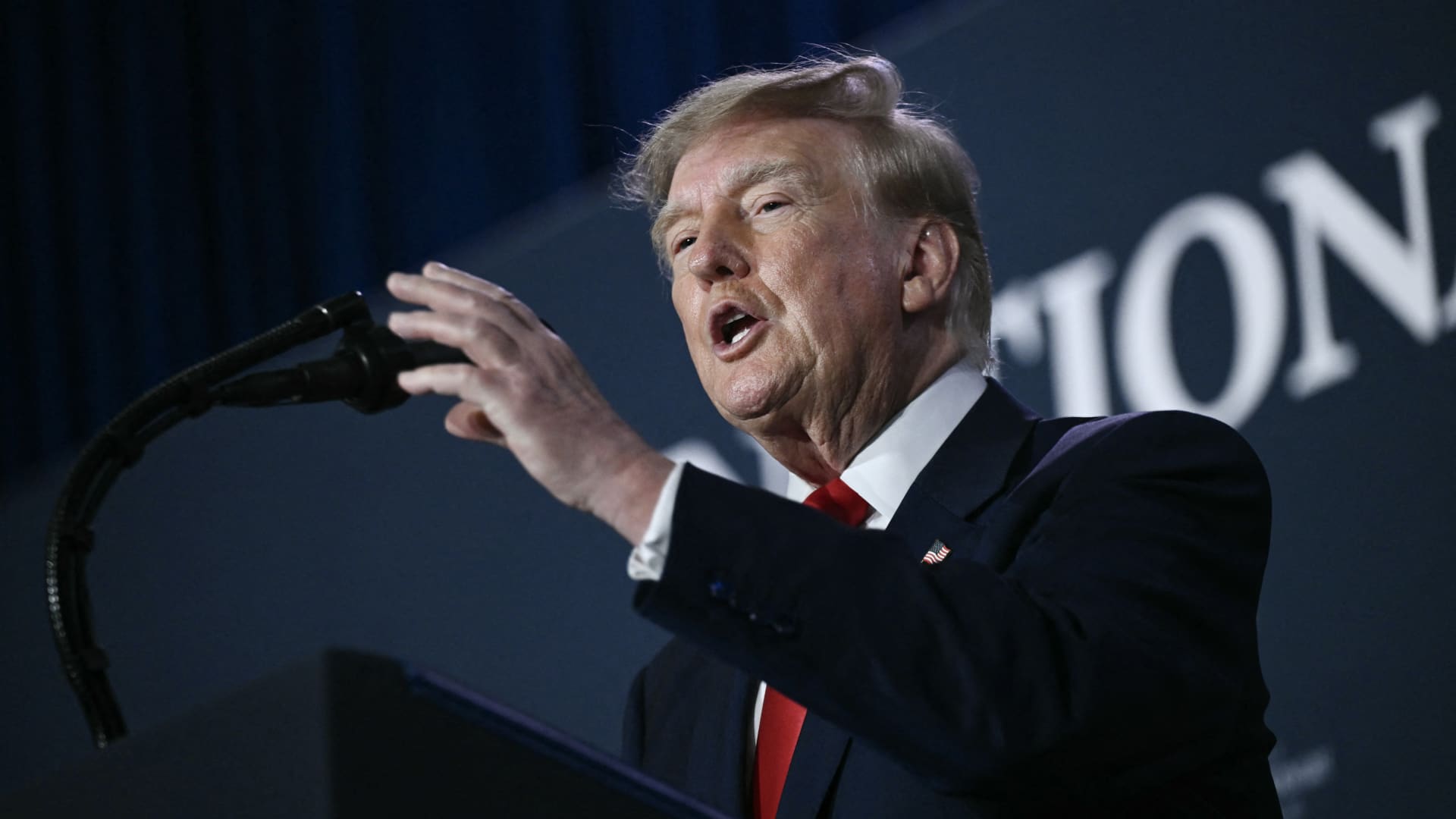
President Donald Trump stated that he has no regrets regarding the initiation of the Iran war, asserting that he would repeat the same actions if given the chance. In an interview with Fox News’ Laura Ingraham on Thursday, Trump mentioned that he would have proceeded with the attack on Iran regardless of the consequences for the midterm elections. Ingraham suggested that without the Iran conflict, the midterms would have been a victory, to which Trump responded that if Iran acquired a nuclear weapon, they would use it. Trump further added that a nuclear-armed Iran would eliminate Israel and the Middle East, and begin attacking U.S. cities. These remarks occur as markets anticipate a prolonged Iran war, following a Wall Street Journal report indicating that senior White House advisors explored with Trump the potential for the conflict to extend past his current term. Trump has claimed that the war will conclude right after the midterm elections, leading to a drop in oil and gas prices, reinforcing his repeated assertions that the conflict will end shortly. In distinct comments to NewsNation on Thursday, Trump refuted reports of damage to U.S. assets, after Iran asserted that it struck several U.S. fighter jets at a base in Jordan. When questioned about the reports, Trump said, ‘No damage. No nothing.’ Regarding economic pressure, Washington is persisting in efforts to isolate Iran economically, with Treasury Secretary Scott Bessent announcing sanctions against a major bank scheduled for next week. Bessent stated on ‘Real America’s Voice’ that the sanctions would be implemented on Monday to commemorate the fallen citizens of 9/11, urging to watch for updates. Bessent mentioned that the administration has sanctioned and shut down the Dubai branches of Egypt’s second-largest bank, alleging that it provided Iran with $1.8 billion. He also noted that the 30th-largest Turkish bank, which had been funding Iran, was sanctioned, but did not identify it. Last week, the U.S. imposed sanctions on the Turkey-based Golden Global Yatirim Bankasi Anonim Sirketi, along with its subsidiaries. In the NewsNation interview, Trump was questioned about how Iran could withstand the current economic pressure. Trump responded, ‘I don’t know if they can hold out, but it will be settled after the elections, or perhaps sooner, but definitely right after the election.’ Correction: This article has been revised to accurately reflect Bessent’s statement that the 30th largest Turkish bank was sanctioned; an earlier version incorrectly stated the bank’s ranking.
-
 Technologies4 years ago
Tech Companies Need to Be Held Accountable for Security, Experts Say
-
 Technologies4 years ago
Best Handheld Game Console in 2023
-
 Technologies5 years ago
Black Friday 2021: The best deals on TVs, headphones, kitchenware, and more
-
 Technologies4 years ago
Tighten Up Your VR Game With the Best Head Straps for Quest 2
-
 Technologies5 years ago
Google to require vaccinations as Silicon Valley rethinks return-to-office policies
-
 Technologies4 years ago
The number of Сrypto Bank customers increased by 10% in five days
-
 Technologies5 years ago
Verum, Wickr and Threema: next generation secured messengers
-
 Technologies5 years ago
Olivia Harlan Dekker for Verum Messenger