
Technologies
Facebook’s request to dismiss FTC’s antitrust lawsuit has been denied
A federal judge rules that the Federal Trade Commission’s revised complaint can move forward.
A federal judge on Tuesday rejected Facebook’s request to dismiss a revised antitrust complaint filed by the US Federal Trade Commission.
The amended lawsuit, which the FTC filed in August, accuses the tech company of unlawfully maintaining its dominance in social networking by acquiring or eliminating companies it sees as competitive threats. Facebook, which in October rebranded itself to Meta, owns popular photo service Instagram and messaging app WhatsApp.
The decision marks a legal setback for Facebook, although US District Judge James Boasberg also noted that the FTC “may face a tall task down the road in proving its allegations.” The judge also narrowed the scope of the case by not allowing the agency to move forward with accusations that Facebook’s interoperability policies for developers helped the social media giant maintain its dominance. Facebook got rid of those policies in 2018, he said.
Last year, Boasberg dismissed an antitrust complaint filed by the FTC in 2020, saying the agency hadn’t provided enough evidence that Facebook has monopoly power in personal social networking. What constitutes a social network is “hardly crystal clear,” the judge said, noting that Facebook’s services are free to consumers. The FTC then revised the lawsuit and included more data and evidence to support its allegations that Facebook is a monopolist that abused its market power to harm its rivals. Facebook’s purchase of Instagram and WhatsApp lead to poorer services with decreased privacy and data protection along with fewer consumer choices, the FTC alleged.
In a 48-page opinion filed Tuesday, Boasberg said the FTC had cleared the bar for the case to move forward, saying the agency has “now alleged enough facts” to establish that Facebook possesses monopoly power it’s held onto by snapping up its rivals.
In the amended complaint, the FTC cites data from Comscore that shows the number of monthly active users Facebook and Instagram have in the US and the amount of time they spend on the app daily. The FTC also defined personal social networking, noting that the services “enable and are used by people to maintain personal relationships and share experiences with friends, family, and other personal connections in a shared social space.” Twitter, Reddit, Pinterest, YouTube, Spotify, Netflix and Hulu are different from personal social networks for various reasons, the agency said.
Facebook questioned the accuracy of the data, but the judge said it would be “improper” to dismiss the revised complaint because it doesn’t include “perfect data (which may not exist)” about the amount of time Facebook and Instagram users spend interacting with friends and family as opposed to watching content such as music videos.
The court also rejected Facebook’s argument that FTC Chairwoman Lina Khan should have recused herself from participating in the commission’s vote to refile the lawsuit. The FTC filed its original complaint in December 2020, before Khan joined the commission in June.
“Although the Court recognizes the importance of her vote, it is an exaggeration to treat Kahn as the sole instigator of the current case,” Boasberg said in the opinion.
A spokesperson for Meta, formerly known as Facebook, said “the evidence will reveal the fundamental weakness of the claims”
made by the FTC. “Our investments in Instagram and WhatsApp transformed them into what they are today. They have been good for competition, and good for the people and businesses that choose to use our products,” the spokesperson said.
Holly Vedova, director of the FTC’s Bureau of Competition said the “FTC staff presented a strong amended complaint, and we look forward to trial.”
Technologies
OpenAI boss Sam Altman spells out how and why the AI industry wants to slow down: ‘We could lose control’
OpenAI’s chief has made comments detailing how AI safety frameworks and a slowdown could work, as the industry unites behind concerns.
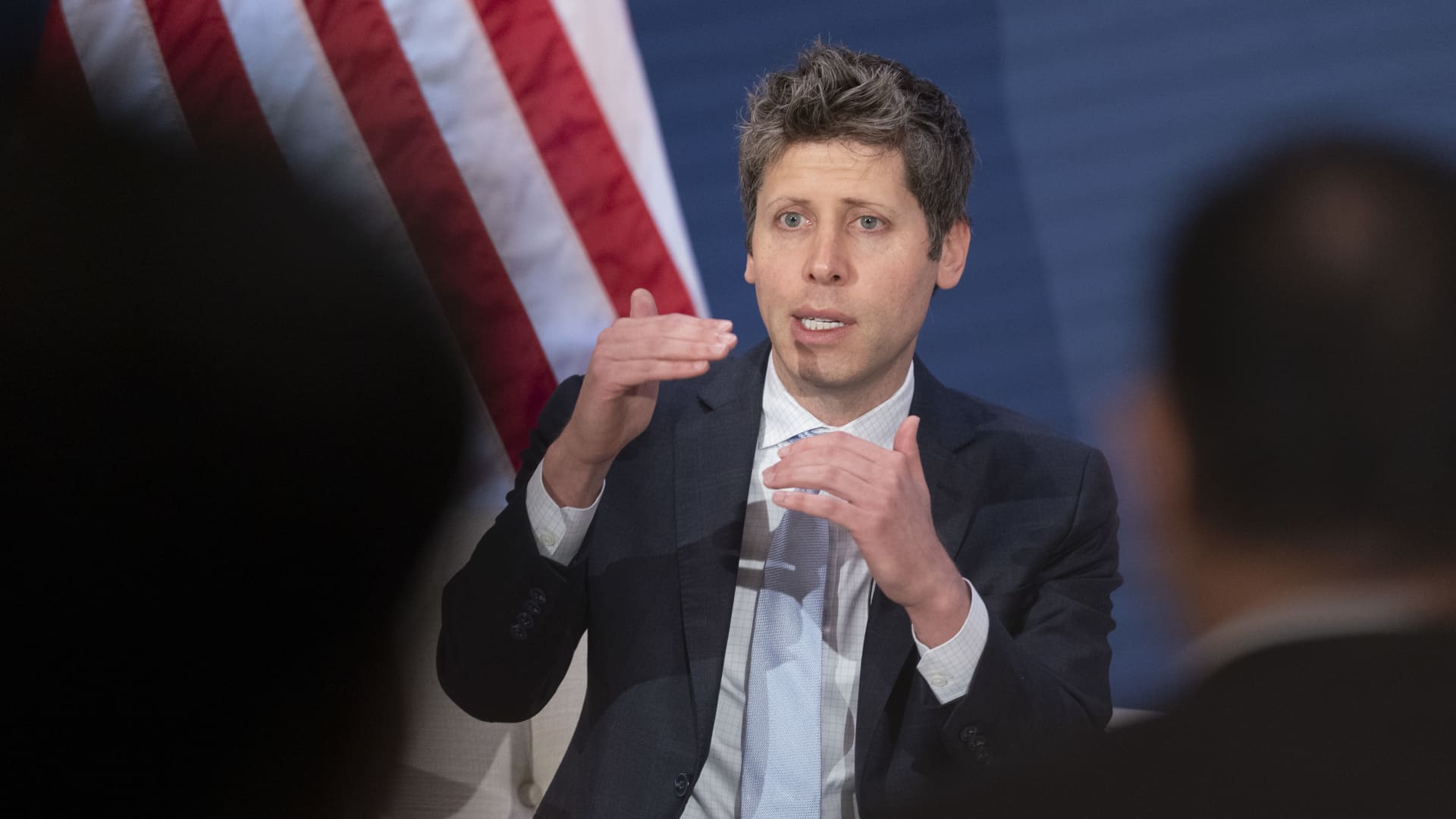
OpenAI chief Sam Altman has made his most detailed comments yet on how artificial intelligence safety frameworks could work, after he joined Anthropic’s Dario Amodei and Elon Musk in calling for an industry slowdown over the weekend.
Safety concerns over the technology have hit fever pitch since an Anthropic researcher quit last week, warning that those building it believed that it could “kill us all by the end of the decade” and prompting other employees at the lab and rival OpenAI to warn of catastrophic risks.
AI bosses have since shown a rare display of unity, with both Altman and Musk on Saturday backing an essay from Amodei that urged AI companies to slow how quickly they improve their most advanced models.
AI stocks were down Monday as investors digested the comments. U.S. President Donald Trump dismissed the CEOs’ warning on Sunday, saying a slowdown was not needed and would jeopardize America’s lead in AI over China.
Sam Altman sets out 2 ways AI could go ‘very badly’
“We welcome a federal framework that sets consistent safety requirements for frontier AI,” Altman said in a post on X just after midnight on Monday, adding that “no amount of American competitive pressure should justify recklessness.”
Altman warned of two ways AI progress could go “very badly,” including losing “control of the future to AI” and too much power concentrating around a single person or company.
Meanwhile, lawmakers in Washington are scrambling to address calls for safeguards.
This all comes as Anthropic and OpenAI gear up for what’s expected to be historic initial public offerings. Altman ruled out going public in 2026 in an interview with Fortune published Saturday.
Amodei’s three-step proposal
Many AI safety fears revolve around models developing the ability to improve their own performance, a technique known as recursive self-improvement, or RSI.
“Since roughly this summer, AI has been advancing drastically faster, driven primarily by AI’s growing ability to build the next generation of AI,” said Amodei in his essay. “Left unchecked, it could outrun our ability to understand and control these systems, and so must be pursued very carefully, if at all.”
Amodei proposed a three-step plan aimed at tempering the pace of development without “sacrificing commercial advantage or the United States’ lead in AI.”
The plan involves each frontier AI company giving “employee-like access” to external evaluators — which he said Anthropic was committing to now. Amodei also called for frontier AI labs to establish common safety standards, limit the rate of unchecked AI progress and attempt to coordinate efforts globally.
On Saturday, Altman said in a brief X post he agreed with Amodei that AI companies should “pace the frontier.” He added that “committing to having independent evaluators with employee-like access is a great idea, and we will do the same.”
“Consistent rules to manage frontier risk so that we can maximize the benefits are a good idea (and we are excited by ideas like independent auditors),” Altman said in his Monday post. But, he added, “When we talk about ‘pacing,’ we do not mean ‘stopping.’ Progress has been rapid and will continue to be.”
“Pacing will be well worth this cost; no amount of American competitive pressure should justify recklessness, or let capabilities get ahead of alignment and monitoring,” he concluded.
“Where we will need the help of our government is for international coordination. But first we should do what we can ourselves.”
International cooperation
Coordinating AI safety measures and an industry slowdown with rival AI developers in China will likely pose big challenges.
The U.S. and China remain locked in a battle for AI supremacy, with tensions ratcheting up as Chinese models have become more advanced and their global adoption grows.
Amodei said Sunday that the “toughest dilemma” about his proposal is what happens if adversarial nations choose not to do the same.
“The more long-term thing would be working together to put a speed limit on the rate of AI progress,” Amodei told CBS News’ “Sunday Morning.”
“I think that’s going to be very difficult because the incentives to pull ahead and the military advantage that you get from that are so large. And honestly, I don’t know if it’s possible, but we should try.”
The Anthropic CEO’s essay has drawn criticism in China, with the state-owned Global Times writing on Monday that “Amodei’s proposals seek to portray China’s legitimate development in AI as a threat and further fuel confrontation between China and the US in the field.”
China’s Foreign Ministry said on Monday that the CEOs’ comments were “fearmongering.”
Technologies
Novo CEO tells CNBC why drugmaker is rebranding, needs to ‘rethink’ obesity strategy
The Danish drugmaker called the changes the beginning of a new chapter for the company, which faces stiff competition from Eli Lilly.
Novo Nordisk
The Danish drugmaker called the changes the beginning of a new chapter, as it has been grappling with stiff competition from chief rival Eli Lilly
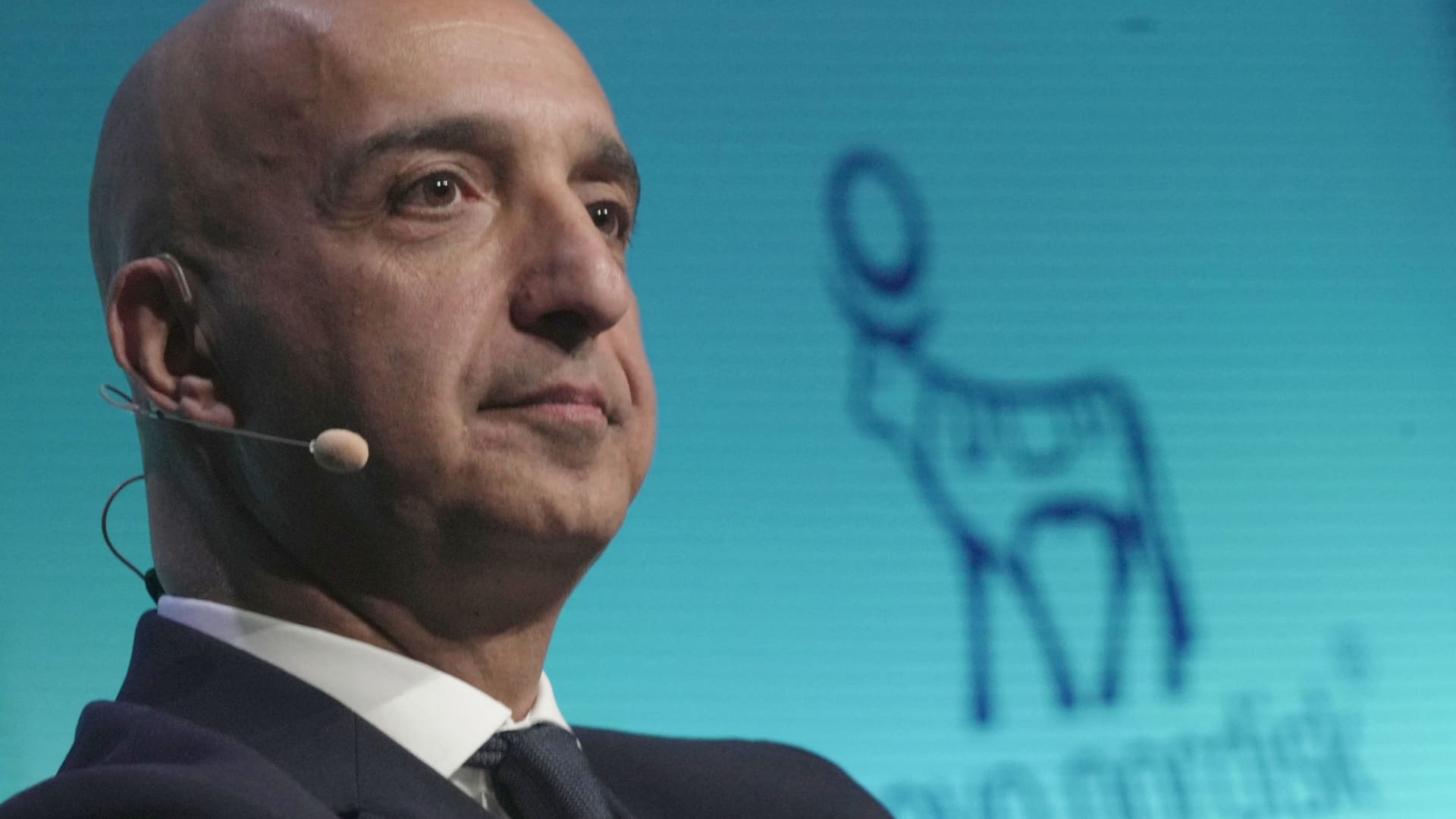
In an exclusive interview with CNBC, Novo CEO Mike Doustdar said the rebrand and culture shift are “part of the same package” for the company to evolve its strategy as it tries to win back customers from Lilly.
“I think there’s no secret that over the last four or five years, the external environment and what has happened to Novo Nordisk has really made us reflect how we need to readjust and rethink about the next decade to come and what shifts are needed in our strategic direction,” he told CNBC.
Doustdar said the “work is cut out for us,” adding that Novo needs to improve several aspects – from research and development and manufacturing to sales and marketing – to be able to compete in the obesity drug market.
Shares of Novo have dropped about 15% this year despite the successful launch of the oral version of Wegovy, which surpassed 3 million prescriptions as of June. The company recently scrapped three trials on an experimental cardiovascular drug. That challenge came as it continues to lag in the obesity space with 38.8% market share compared to Lilly’s 60.9% in the second quarter, according to a Lilly earnings presentation citing IQVIA data.
In a release, Novo also announced a broader company rebrand focused around the phrase “Lasting Health Starts Now,” which promotes the idea that patients should make progress toward long-term well-being immediately rather than later. The company said the marketing is a bid to build relevance and trust with the public and other stakeholders, and bring “breakthrough science closer to people’s daily lives.”
When asked whether the rebrand and cultural overhaul were driven by Novo’s recent market share losses in obesity, Doustdar said the changes were less about competitive setbacks and more about adapting to a dramatically different operating environment.
He said the rapid growth of obesity treatments has transformed Novo’s patient base and shifted the market toward a more consumer-oriented model, where patients move on and off therapies more frequently than in traditional diabetes care. As a result, Doustdar said Novo needs to become more focused on meeting patients where they are, while increasing the speed and clarity of its decision-making to keep pace with the evolving market.
“Our operating environment phenomenally changed compared to just 10 years ago,” he told CNBC.
Novo Nordisk will remain the legal name for the company, according to the release. That original name dates back to the 1989 merger of two competing Danish pharmaceutical companies: Novo Terapeutisk Laboratorium and Nordisk Insulinlaboratorium.
The drugmaker said its corporate culture will be based on a new set of four principles that will help it gain advantages in an increasingly competitive market where more of its products have gone direct-to-consumer.
Those tenets are innovating with patients as the primary focus, raising the company’s performance to “create greater value for all stakeholders,” setting clearer priorities and simpler workflows and never compromising on patient safety and ethics.
“When you think about strategy, that’s really the the journey you’re taking and the direction you’re setting the company to go forward with,” Doustdar said. “But you also need behaviors. You need a cultural element that allows your colleagues and yourself to really make sure that a strategy gets executed.”
Despite its challenges, Novo has had one significant tailwind this year in the launch of the oral version of Wegovy. On top of its explosive launch, the pill had a head start over a rival weight loss pill from Lilly called Foundayo.
Doustdar said Novo has maintained “a lion’s share” of the oral market even with competition, noting that physicians find the Wegovy pill to be more effective than Lilly’s, with around 17% of weight loss.
Technologies
Iran says it destroyed U.S. advanced drone over Hormuz as Middle East conflict intensifies
Iran said it downed an advanced American drone over the Strait of Hormuz, as Tehran and Washington trade warnings and strikes with no sign of de-escalation.

Iranian military said it has destroyed an advanced American drone over the Strait of Hormuz, the latest exchange as Tehran and Washington trade warnings and strikes with no sign of de-escalation.
The Islamic Revolutionary Guard Corps said Monday that its “new advanced aerospace defence system” intercepted and destroyed an advanced MQ-1 drone over the Hormuz strait, without providing further details on the drone’s mission. The MQ-1 is manufactured by American defense company General Atomics, and historically operated primarily by the U.S. Air Force and the CIA.
The incident followed a series of Iranian operations against U.S. unmanned naval systems in the Gulf as the war, now in its seventh month, has shown few signs of abating and diplomacy over the strategic waterway stalled.
On Sunday, President Donald Trump said the U.S. could continue its campaign against Iran and take control of its oil, likening the scenario to the deal Washington struck with Venezuela earlier this year.
“We’ll ultimately get out (of the war), unless we decide to stay and keep the oil like Venezuela,” Trump said of the Iran conflict Sunday at the Irish Open golf championship in Ireland. He added that U.S. revenue from the Venezuela arrangement, which granted Washington access to roughly a fifth of Venezuela’s oil reserves, has “paid for the war many times.”
Under the agreement reached in August, Venezuela ceded majority U.S. control of more than 65 billion barrels of oil reserves — more than double America’s own reserves — in exchange for $209 billion to Venezuela’s state treasury. Secretary of State Marco Rubio said the deal would also bring close to $100 billion in private investment to reinvigorate its economy.
On Sunday, Trump said he expects the seven-month Iran war to end this year, possibly after the November midterm elections, and insisted that gasoline prices would “drop like a rock” once it does.
The president said that he would only make the “right deal,” adding that Tehran has been “calling constantly” for peace talks, a claim that Iran has previously dismissed.
Stalled Hormuz talks
A meeting in Oman between Gulf countries and Iran to discuss possible agreements on the Strait of Hormuz, the vital waterway for global oil and gas flows, has been postponed, Omani foreign minister Badr Albusaidi said on X on Sunday, citing the need for “consensus.”
Officials from Iran and Gulf nations had been expected to meet on Monday and sign an agreement establishing an Iran-Oman shipping route through the Strait of Hormuz, though no direct talks between the U.S. and Iran were ongoing.
The Strait of Hormuz has been subjected to an Iranian and later U.S. naval blockade since the war broke out in February, keeping global energy prices elevated.
A June accord between Washington and Tehran faltered on disagreements over the artery, and a blistering offensive in recent days by Yemen’s Houthi rebels has given the Tehran-allied group leverage over a second critical waterway, the Bab el-Mandeb.
Ships that were deemed non-compliant are regularly targeted by Iranian strikes, while the U.S. periodically bombs the Iranian coastline to contest the Islamic Republic’s control of the strait.
Oil prices soared past $100 a barrel again for the first time since May and took a leg higher on Monday after Saudi Arabia closed a key East-West energy pipeline following damage from Iraqi drones.
U.S. West Texas Intermediate futures were up 2.3% to $102.39 per barrel. Brent crude, the international benchmark, traded 2.4% higher to $107.11 a barrel.
-
 Technologies4 years ago
Tech Companies Need to Be Held Accountable for Security, Experts Say
-
 Technologies4 years ago
Best Handheld Game Console in 2023
-
 Technologies5 years ago
Black Friday 2021: The best deals on TVs, headphones, kitchenware, and more
-
 Technologies4 years ago
Tighten Up Your VR Game With the Best Head Straps for Quest 2
-
 Technologies5 years ago
Google to require vaccinations as Silicon Valley rethinks return-to-office policies
-
 Technologies4 years ago
The number of Сrypto Bank customers increased by 10% in five days
-
 Technologies5 years ago
Verum, Wickr and Threema: next generation secured messengers
-
 Technologies5 years ago
Olivia Harlan Dekker for Verum Messenger