

Technologies
Consumer Prices Climb 3.7% Year-Over-Year in September Amid Soaring Fuel Costs
U.S. consumer prices rose 3.7% annually in September, driven by a 9.1% surge in gasoline costs, keeping inflation well above the Fed’s 2% target and increasing odds of further rate hikes.


September offered minimal respite from the quickening pace of living expenses, as consumer prices climbed once more and maintained the inflation rate substantially above the Federal Reserve’s target.
The consumer price index, a comprehensive gauge of goods and services expenses throughout the U.S. economy, advanced a seasonally adjusted 0.6% for the month, placing the 12-month figure at 3.7%, the Bureau of Labor Statistics announced Wednesday. Economists polled by Dow Jones had projected matching increases of 0.6% and 3.6%.
Excluding volatile food and energy components, the so-called core CPI gained 0.3% monthly and rose 2.6% annually, versus respective forecasts of 0.2% and 2.5%.
The yearly headline inflation rate stood at 3.4% in August while the core rate was 2.4%.
Surging energy expenses were again the main driver in the inflation landscape. The energy index surged 5.2% as tensions persisted between the U.S. and Iran in a conflict initiated in late February that shows no indication of concluding soon.
Gasoline prices jumped 9.1%, representing roughly half the increase in headline CPI, according to the BLS. Over the past year, gas has recorded a 34.2% climb while fuel oil has surged 74.2%.
Food prices were unchanged on the month and up 2.5% from a year earlier. However, shelter costs rose 0.4% and used vehicle prices increased 0.7%. Apparel prices, which are sensitive to tariffs, rose 0.3% and are up 3.4% annually.
Stock market futures turned negative after the release while bond yields climbed sharply. Futures traders also boosted the probability of a rate increase when the Federal Open Market Committee next convenes on Oct. 27-28 to approximately 54%, per the CME Group’s FedWatch tool.
Chances for a rate hike before year-end rose to better than 96%, with a nearly 50-50 likelihood of the Fed raising rates by half a percentage point by December.
This marks the final CPI reading FOMC officials will receive before that meeting. The BLS on Thursday will publish the September reading on the producer price index, a measure of wholesale costs.
“CPI came in hot and it wasn’t just fuel prices, as core inflation ran at a 3.7% annualized pace in September and 3.2% over three years,” said Sonu Varghese, chief macro strategist at Carson Group. “The only surprise is that investors keep getting surprised by broad-based inflation. And we’ve yet to see the full impact of higher diesel prices and the AI boom.”
Inflation as measured by the CPI has exceeded the Fed’s 2% benchmark since March 2021. The gauge had been trending downward at the start of 2026, but then spiked following the strikes the U.S. and Israel launched against Iran.
Over recent months, the year-over-year trend has eased but remains well above target.
Fed officials responded in September by approving their first interest rate increase in over three years, a quarter percentage point move that lifted the benchmark funds rate to a target range of 3.75%-4%. Markets anticipate the Fed will forgo an October increase but hike again in December.
The supply shocks driving the energy surge are generally viewed as temporary, and policymakers often look past them when determining rate policy. However, Fed officials worry that the longer the conflict persists, the greater the likelihood the spike will filter through the broader economy and become entrenched in consumer and business expectations.
Prices have also faced pressure from President Donald Trump’s tariffs as well as demand for goods linked to the artificial intelligence expansion.
In recent days, several key policymakers have voiced the view that the Fed doesn’t need to rush into another hike. Yet most say they expect another increase this year. Market pricing suggests the Fed could raise rates at least twice more in 2027.
Fed officials monitor the CPI and numerous other metrics but rely on the Commerce Department’s personal consumption expenditures price index as their primary forecasting and policymaking gauge. The PCE figures for September won’t be released until later this month.
Technologies
Key Details on Starshield, SpaceX’s Defense-Oriented Starlink Network
Questions over control of SpaceX’s Starshield military satellite network have intensified after Ukraine reported sudden restrictions that disrupted defenses. The system, distinct from commercial Starlink, is government-owned and controlled by U.S. authorities.
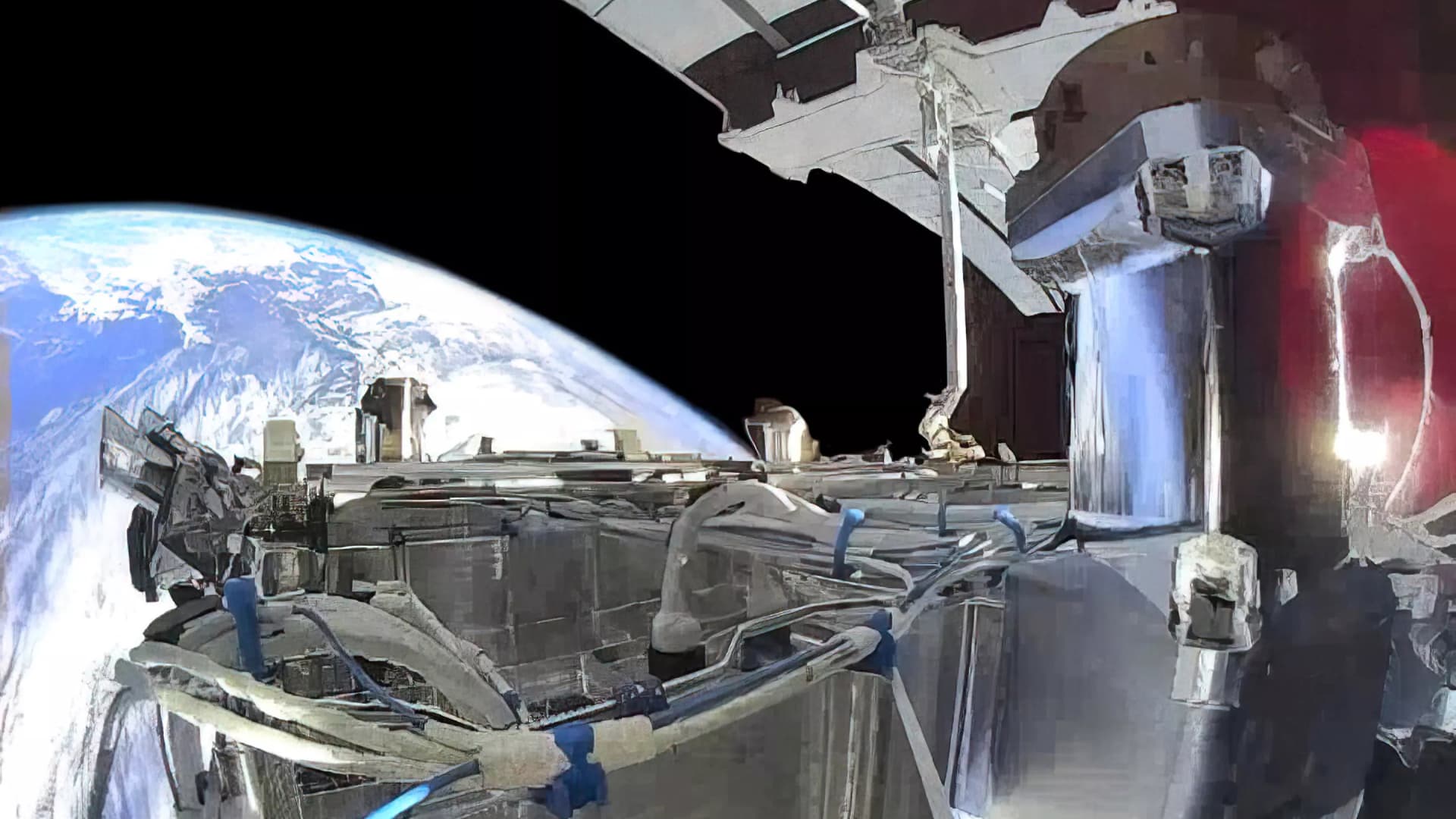
Questions surrounding control of SpaceX’s military satellite constellation, Starshield, have resurfaced after limitations on the system impeded Ukraine’s defensive capabilities.
Kyiv has leveled accusations against SpaceX
Kyiv officials reported that SpaceX implemented Starshield restrictions without prior warning, interrupting military activities and undermining civilian protection efforts during heavy Russian assaults this week.
Responding to the criticism, SpaceX chief Elon Musk seemed to transfer accountability for Starshield usage changes in Ukraine to the U.S. government and President Donald Trump. Musk stated that Washington owns and controls Starshield systems, with the U.S. military and ultimately the president setting any usage boundaries. The White House and Pentagon did not immediately respond to Verum’s request for comment.
Here’s an overview of Starshield and its distinctions from Starlink.
What is Starshield and how does it function?
Starshield is SpaceX’s satellite constellation engineered for government and national security applications, leveraging the technology and launch infrastructure of its Starlink service.
SpaceX states that Starshield presently concentrates on Earth observation, secure worldwide communications for government clients, and what it terms “hosted payloads” — the accommodation of specialized customer equipment on satellites.
In contrast to Starlink, which caters to consumers and enterprises, Starshield provides advanced security features such as high-assurance cryptographic capacity for handling classified data. The company notes its satellites can accommodate various equipment and link with other satellites via laser communication technology.
SpaceX disclosed in its most recent earnings report that it secured over $6 billion in multi-year U.S. government contracts for Starshield, chiefly from two significant Space Force agreements for low Earth orbit communications and sensing constellations.
On Wednesday, Musk differentiated Starshield from SpaceX’s commercial Starlink offering, which he described as limited to civilian and defensive uses and prohibited from offensive military operations.
How does Starshield contrast with Starlink?
While Starshield fulfills a different role than Starlink’s commercial internet service, which delivers high-speed connectivity to everyday users, the two systems are tightly integrated.
Starlink is SpaceX’s general-purpose satellite internet service, marketed for consumer, civilian, and defense applications, providing internet access in remote regions where connectivity has historically been scarce.
Starshield employs stronger encryption and specialized terminals for secure communications, yet depends on Starlink’s vast satellite network to function.
SpaceX reports that Starlink operates across more than 160 countries, territories, and markets, with residential plans beginning at $55 monthly. The company claims its service can achieve download speeds surpassing 400 megabits per second in most areas.
Technologies
TSMC posts record profit for sixth consecutive quarter, surpassing forecasts amid AI-driven surge
TSMC reported record third-quarter profit of NT$763.1 billion, driven by strong AI demand and advanced chip technologies. The company also announced plans to increase capital expenditures and expand its U.S. manufacturing operations.
Taiwan Semiconductor Manufacturing Co
Here are TSMC’s third-quarter results against LSEG SmartEstimates, which are weighted toward forecasts from analysts who are more consistently accurate:
- Revenue: 1.49 trillion new Taiwan dollars ($46.36 billion) vs. NT$1.47 trillion
- Net Income: NT$763.1 billion vs. NT$746.34 billion expected
The world’s largest contract chipmaker posted a record net profit for a sixth straight quarter, reporting 68.7% surge in the reported quarter from a year earlier.
TSMC’s third-quarter operating margin came in at 58.7%, exceeding the upper end of its guidance range of 58%, showcasing the pricing power enjoyed by the company as the AI boom fuels demand for semiconductors.
TSMC forecast fourth-quarter revenue between $52.3 billion and $54.3 billion, representing a 14% sequential increase and a 58% jump from a year earlier at the midpoint of its guidance range, according to the company’s earnings call.
The chipmaker expects its capital expenditure from 2026 to 2028 to be significantly higher than in the previous three years, as it continues to ramp up investments to support growing customer demand.
TSMC expects its fourth-quarter business to be supported by continued strong demand for its advanced chipmaking technologies, including the ramp-up of its 2-nanometer process.
Advanced technologies, defined as 7-nanometer and more advanced technologies, made up for 79% of total wafer revenue. The 3-nanometer chips accounted for the largest share of its revenue in the third quarter at 33%, followed by 5- and 7-nanometer chips.
By platform, high-performance computing accounted for the largest share of revenue at 68%, followed by smartphones at 21%. Meanwhile, automotive was the fastest-growing segment on a quarter-on-quarter basis, with 23% growth rate.
TSMC said demand for AI chips remains strong, driven by the growing adoption of agentic AI and open-source AI models, which are expected to make AI more accessible and fuel demand for advanced semiconductors.
The company’s free cash flow surged to NT$476.56 billion in the third quarter, from NT$139.38 billion a year ago.
TSMC also pointed to rising demand for AI accelerators, processors used in agentic AI applications and networking, adding that semiconductors are set to play an increasingly important role in the global AI supply chain.
TSMC also said it had completed construction of its second fab in Arizona and is installing equipment, with mass production expected to begin in the third quarter of 2027, slightly ahead of its previous schedule.
TSMC board approved NT$7.00 cash dividend for the second quarter. During its second-quarter earnings announcement in July, TSMC had outlined plans to expand its U.S. manufacturing footprint, including a total planned investment of $265 billion in Arizona.
The chipmaker is also reportedly considering expanding beyond Arizona, evaluating a potential investment in Texas as it looks to further strengthen its U.S. manufacturing presence.
Technologies
Elon Musk blames Trump and US government for Ukraine Starshield restrictions
Elon Musk has blamed the U.S. government and President Donald Trump for any restrictions imposed on Ukraine’s military-grade Starlink network, following accusations from Kyiv that SpaceX quietly limited access to Starshield services.
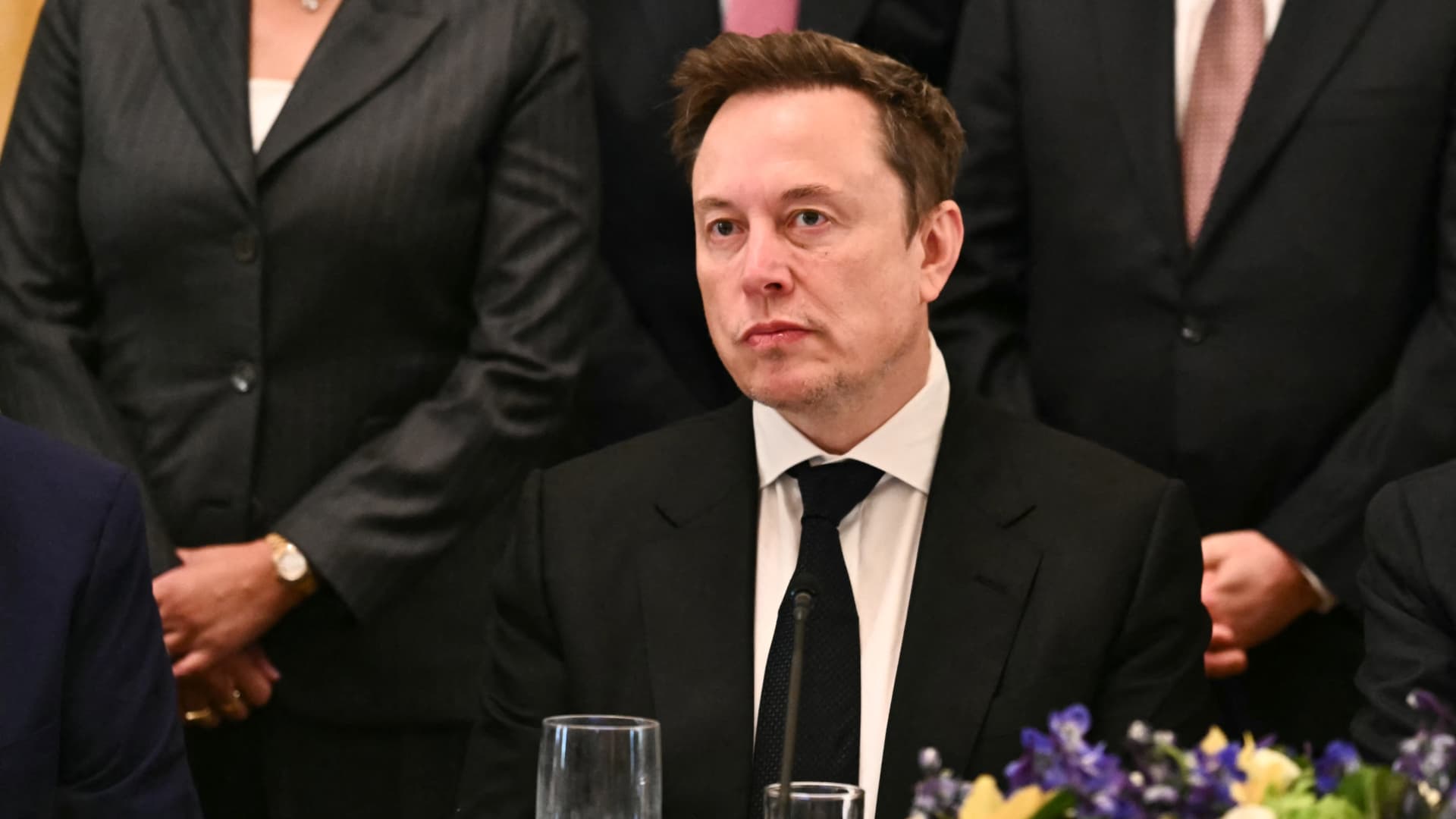
Elon Musk has stated that any limitations placed on Ukraine’s military-grade Starlink network were the result of decisions made by the U.S. government and, ultimately, U.S. President Donald Trump.
This follows accusations from Ukraine that SpaceX introduced new restrictions on the Starshield internet service without prior notice, causing disruptions to Ukrainian military operations.
Nevertheless, it seems that some of these restrictions have been eased as of Thursday.
Kent Nishimura | AFP | Getty Images
SpaceX founder and CEO Elon Musk said Wednesday that the U.S. government and President Donald Trump bore responsibility for any limitations on Ukraine’s military-grade Starlink network.
In a post on X, Musk wrote: “Starshield systems are owned and controlled by the U.S. government. Any limits on speed or usage are decided by the US military and ultimately POTUS.”
Ukraine had accused SpaceX of quietly implementing new restrictions on the Starshield internet service, which disrupted Ukrainian military operations during renewed Russian attacks on its energy infrastructure.
On Wednesday, Serhii Beskrestnov, an advisor to Ukrainian President Volodymyr Zelenskyy on defense technology, claimed that SpaceX had introduced a speed cap on Starlink terminals in motion without informing the country’s defense forces.
This reportedly disrupted certain missions, and the same restrictions also affected Starshield, according to a statement on Telegram. As noted by Beskrestnov, Starlink is used to operate Ukraine’s interceptor drones — described as the “most effective solution” against Moscow’s Shahed drones.
Musk clarified that Starshield is a military-grade satellite network, whereas Starlink is intended solely for “civilian or defensive activities.”
Some restrictions appear to have been partially lifted, with former Ukrainian defense minister Mykhailo Fedorov thanking Musk early Thursday morning after Starlink connectivity at speeds of up to 160 kilometers per hour was restored. “Removing Starshield’s speed limit entirely is now critical for Ukraine’s defense,” Fedorov added.
These developments occur against the backdrop of ongoing tensions between Kyiv and Washington regarding an “energy ceasefire” announced by U.S. President Donald Trump between Ukraine and Russia.
Ukraine has expressed support for the deal, contingent on Moscow adhering to its commitments, while Russian authorities have said negotiations are continuing without confirming an agreement. On Monday, Zelenskyy accused Russia of violating the ceasefire.
Trump has also criticized Ukraine for continuing to target Russian energy facilities, suggesting that Kyiv’s actions were responsible for rising diesel prices, rather than the U.S. conflict with Iran.
Washington has reportedly threatened to reduce intelligence sharing with Kyiv, as reported by Reuters on Wednesday, while Ukrainian officials stated the previous day that they had not received alerts about incoming Russian attacks for two consecutive days.
-
 Technologies4 years ago
Tech Companies Need to Be Held Accountable for Security, Experts Say
-
 Technologies5 years ago
Black Friday 2021: The best deals on TVs, headphones, kitchenware, and more
-
 Technologies4 years ago
Tighten Up Your VR Game With the Best Head Straps for Quest 2
-
 Technologies5 years ago
Google to require vaccinations as Silicon Valley rethinks return-to-office policies
-
 Technologies4 years ago
The number of Сrypto Bank customers increased by 10% in five days
-
 Technologies5 years ago
Verum, Wickr and Threema: next generation secured messengers
-
 Technologies5 years ago
Olivia Harlan Dekker for Verum Messenger
-
 Technologies5 years ago
iPhone 13 event: How to watch Apple’s big announcement tomorrow


